Mealybugs on Curry Leaf Plant: Causes, Checks & Fixes
Quick answer
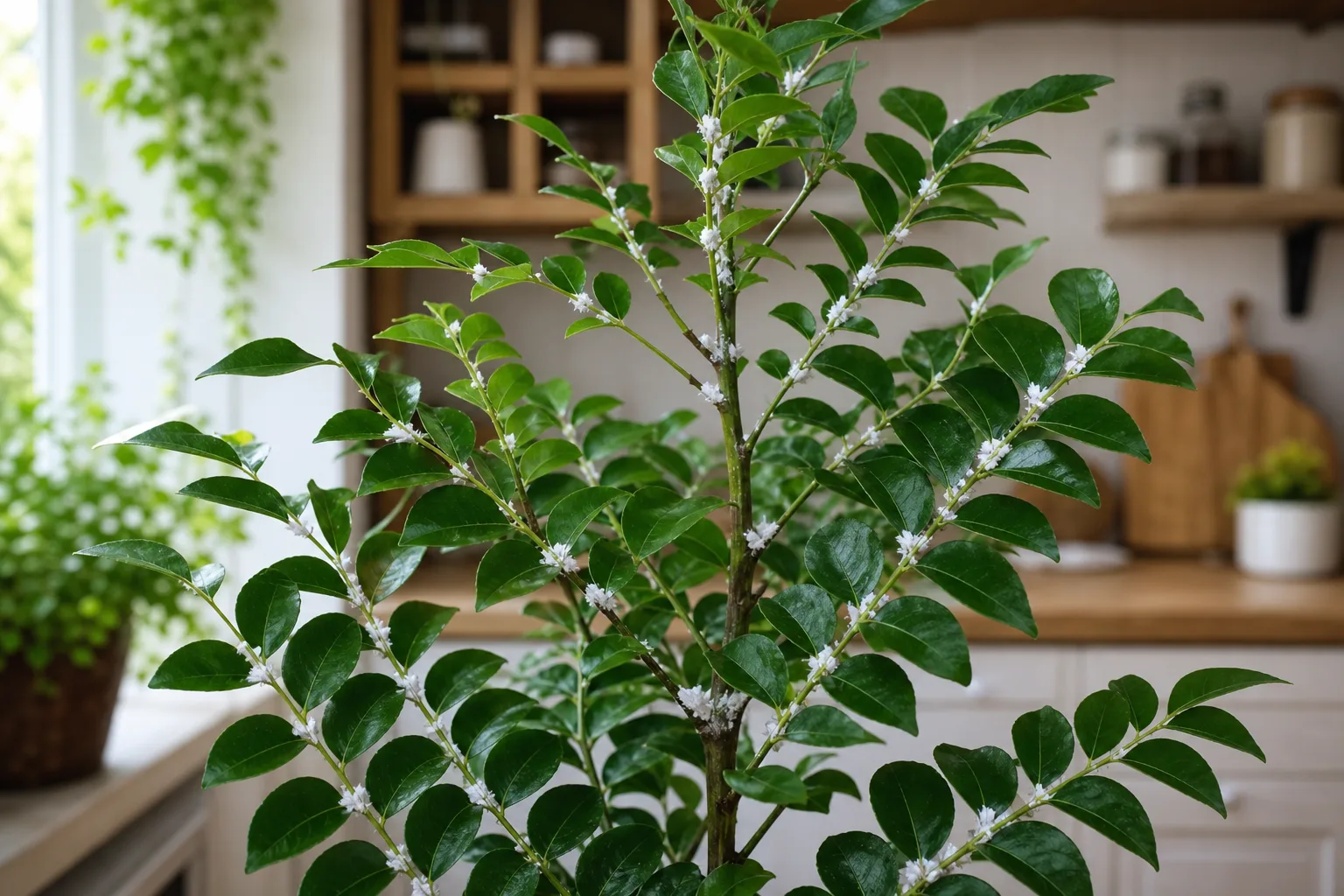
Mealybugs on curry leaf plant form white cottony masses in leaflet axils, along rachis joints, and in woody branch crotches on Murraya koenigii. First step: isolate the pot and dab every visible cluster with a cotton swab dipped in 70% isopropyl alcohol-then confirm live insects before any spray, since leaves are harvested for cooking.
Mealybugs on Curry Leaf Plant: Causes, Checks & Fixes
This guide covers mealybugs on Curry Leaf Plant. See also the general Mealybugs guide, watering, and light pages for this plant.
Mealybugs on Curry Leaf Plant: Causes, Checks & Fixes
Quick answer
Mealybugs on curry leaf plant (Murraya koenigii) are sap-sucking insects that hide in the narrow spaces a pinnate compound leaf creates-where each glossy leaflet meets the central rachis, in woody branch crotches, and sometimes at the soil line on mature stems. Because you harvest these aromatic leaflets for cooking, start with contact treatment that reaches the pest without coating whole shoots in spray residue.
First step: move the pot away from other kitchen herbs and dab every visible white cluster with a cotton swab dipped in 70% isopropyl alcohol. Run the swab along the rachis and into each leaflet joint where colonies tuck out of sight. Let treated foliage dry in bright light the same day.
If live mealybugs remain after three weekly alcohol sessions, add insecticidal soap labeled for edible herbs-never household dish soap. Treat early; mealybugs excrete honeydew that can lead to sooty mold even when individual leaflets look only slightly dull.
Why Curry Leaf Plant gets mealybugs
Curry leaf is a warm-climate Rutaceae shrub with odd-pinnate leaves-typically 11 to 21 thin, ovate, shiny dark green leaflets per compound leaf. Each rachis offers dozens of protected joints where mealybugs aggregate in somewhat hidden locations on stems and in branch crotches. Woody fork points on older container plants are easy to miss during quick watering passes.
Most infestations arrive rather than appear from nowhere. Mealybugs hitchhike on nursery stock, cuttings from another gardener, or pots brought inside after summer outdoors. Indoor ornamentals are especially vulnerable because year-round mild temperatures favor mealybug populations and natural enemies are absent. A colony that looked minor on a balcony tree can spread across compound leaves within weeks once the pot sits in dry heated winter air.
Over-fertilizing during the March–October growing season adds risk. Monthly balanced feeding supports harvestable flushes, but excess nitrogen coupled with regular irrigation stimulates tender new growth where mealybugs prefer to lay eggs. Stress from underwatering on Curry Leaf Plant during a heat wave does not cause mealybugs directly, but weakened plants recover more slowly once sap loss drains vigor from multiple rachises.
Ants complicate the cycle on outdoor patio pots. Ants protect honeydew-producing insects from natural enemies and may farm mealybugs on woody stems before you notice white wax higher on the plant.
What mealybugs look like on Curry Leaf Plant
Curry leaf foliage is pinnately compound, so mealybug damage looks different from broad-leaf kitchen herbs like basil or tulsi.
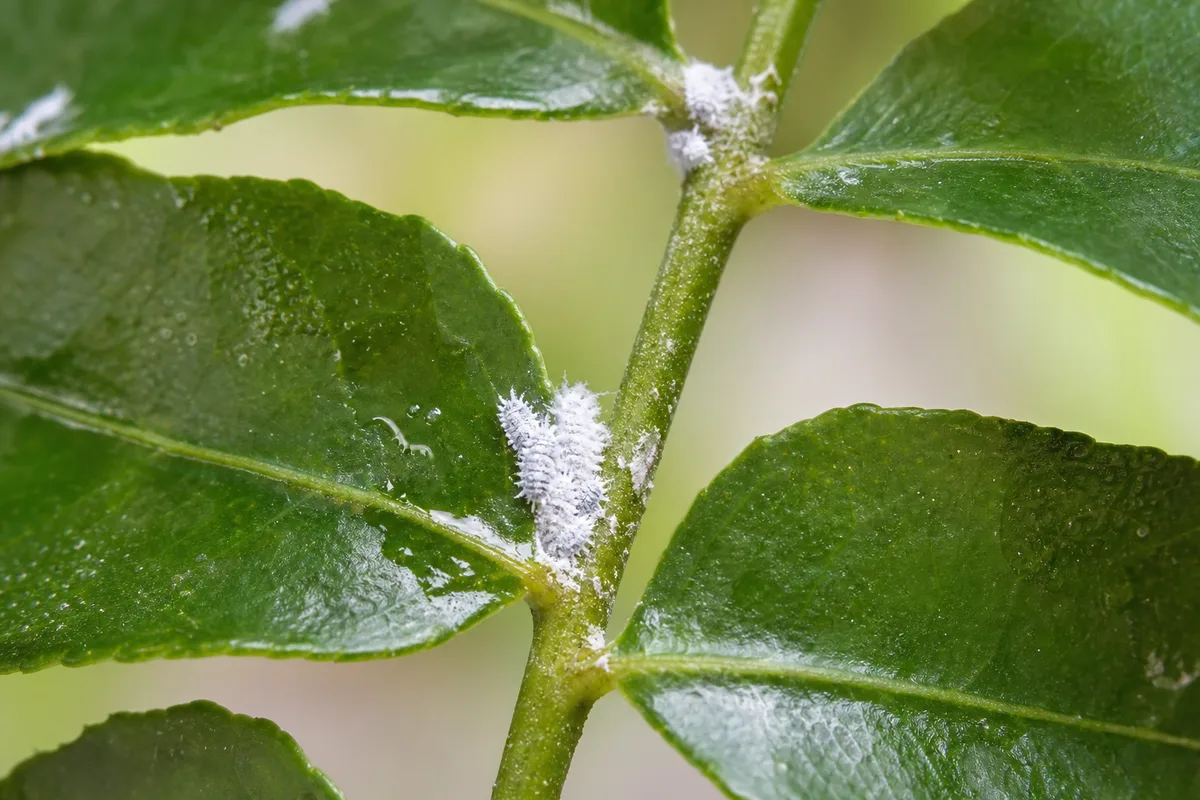
Mealybugs symptoms on Curry Leaf Plant - compare with healthy tissue on the same plant.
Typical mealybug signs:
- Soft white insects 2–4 mm long covered in cottony wax, often in clusters
- White fluffy masses where leaflets attach to the rachis, at rachis tips on new flushes, and in woody branch crotches
- Waxy tufts at the soil line on mature stems or around drainage holes on plastic pots
- Shiny sticky honeydew on lower leaflets, pot rims, or the table beneath the plant
- Yellowing or dropping leaflets when feeding is heavy on one compound leaf
- Black sooty mold growing on honeydew patches; it wipes off and does not penetrate glossy leaflet tissue
- Slow spring flush when colonies coat multiple rachises on an outdoor tree
What healthy curry leaf looks like for comparison:
- Firm dark-green glossy leaflets with strong curry aroma when crushed
- Uniform compound leaves without localized stickiness or wax clusters
- No ant activity climbing woody stems
Heavy feeding on a flush you planned to harvest can leave leaflets pale and unusable in cooking even after insects die-another reason to catch colonies while they are still on one branch.
How to confirm the cause
Work through these checks in order before spraying anything chemical on edible foliage.
- Location on the plant - Mealybugs favor protected joints. If white material is only on random old woody bark with no clustering in leaflet axils, consider scale or mineral crust instead.
- Alcohol swab test - Touch a cotton swab to a white tuft. Mealybugs crushed with alcohol leave a pinkish smear; mineral dust or dried sap does not.
- Movement check - Young crawlers may shift when disturbed; dried residue and natural leaf shine do not. Use a hand lens on rachis joints.
- Honeydew check - Rub a sticky leaflet between fingers. Honeydew feels tacky and may pick up black sooty mold dust. Normal glossy leaflets are not sticky.
- Compound-leaf inspection - Lift each rachis and examine where leaflets meet the midrib. Spider mites cause bronze stippling and fine webbing in dry winter air, not cottony wax.
- Root-mealy check - If the plant declines with few aboveground insects, inspect the soil line and root ball when Curry Leaf Plant repotting guide. Ground mealybugs live in soil and are harder to detect than aboveground colonies.
- Look-alike exclusion - Use the table below before treating.
| What you see | Likely cause | Key difference on Murraya |
|---|---|---|
| White cottony tufts in leaflet axils | Mealybugs | Pink smear when crushed; clusters in rachis joints |
| Soft green or black insects on new rachis tips | Aphids | Pear-shaped, no wax coat; on tender spring flush |
| Immovable brown bumps on woody stems | Scale | Hard shell; does not smear pink with alcohol |
| Bronze stippling + fine webbing | Spider mites | Dry winter air; no honeydew shine |
| White crust on soil or pot rim | Salt/mineral buildup | Gritty, not fluffy; no insects under lens |
| White cast skins in sticky residue | Aphid molt skins | Live aphids or pear shapes present on new growth |
If you confirm cottony colonies in protected joints with honeydew or a pink alcohol smear, you have mealybugs-not a nutrient deficiency or fungal leaf spot.
First fix for Curry Leaf Plant
Isolate the pot and dab every visible mealybug with a cotton swab dipped in 70% isopropyl alcohol.
This single step kills mealybugs on contact by dissolving their waxy coating. Work methodically along each compound leaf-slide the swab into leaflet axils and along the rachis where narrow gaps hide colonies. Repeat every five to seven days for at least three weeks to catch newly hatched crawlers that lack heavy wax.
While treating:
- Move the pot at least several feet from other kitchen herbs until you see no live insects for seven days.
- Bag and discard pruned stems so heavily coated that alcohol cannot reach every crevice.
- Test alcohol on one leaflet first and wait 24–48 hours before treating the whole plant-phytotoxicity is possible on stressed foliage.
- Avoid dabbing in direct midday sun on hot days; stressed glossy leaflets burn more easily.
If alcohol dabs alone fail after three weekly rounds, apply insecticidal soap or neem oil labeled for herbs and vegetables. Soaps and oils kill by contact and have no residual activity, so coat every leaflet underside and rachis joint until the solution drips. Repeat every five to seven days for three cycles. Spray in late evening so leaves dry overnight.
Harvest hold: Wait at least 24 hours after alcohol dabs or any spray before cooking with treated leaflets. Rinse harvested leaves under tap water as you normally would. Lower stems that were never treated are fine if you verify they are insect-free.
Do not reach for systemic insecticides like imidacloprid on a plant you eat. Systemics move through sap and can persist in tissue-unacceptable for culinary herbs even when label wording seems permissive.
Step-by-step recovery
Once isolation and the first alcohol session are done, follow this sequence:
- Days 1–21 - Alcohol dab every five to seven days. Inspect rachis joints with a lens after each session. Bag pruned infested stems; do not compost them near healthy curry leaf pots.
- Day 7 check - If live mealybugs remain on more than one compound leaf, add insecticidal soap on alternating weeks-not soap and alcohol on the same day.
- Ant control (outdoor pots only) - If ants are farming honeydew, trap ants on the pot exterior with sticky tape away from foliage. Removing mealybugs cuts the ants’ food supply over time.
- Sooty mold cleanup - After insects are gone, wipe coated leaflets with a damp cloth or rinse once. Mold stops spreading once honeydew stops.
- Harvest hold - Pause cooking harvests from treated flushes until sprays dry and you pass one clean inspection. Mature lower leaflets on untreated stems are fine if verified insect-free.
- Root-mealy escalation - If the plant stalls with few aboveground insects, unpot in spring and inspect roots. Discard severely infested soil and repot into fresh mix per our soil guide.
Recovery timeline
Expect visible improvement within one to two treatment cycles if you reach all hidden colonies.
- After first alcohol session - Many adults die on contact; honeydew stops accumulating on new tissue within days.
- Week 1–2 - Yellowing on lightly fed leaflets may slow as sap pressure normalizes. Heavily coated leaflets may drop.
- Week 3–4 - New flushes should open clean with firm leaflets and no sticky residue. If wax reappears only on one rachis, continue dabbing another week before escalating to soap.
- Month 2+ - Woody stems remain; damaged leaflets can be stripped for cooking or pruned to encourage bushier replacement growth.
Judge success by clean new growth, not by old leaflet appearance. Curry leaf rebounds quickly from tip pruning when roots are healthy and the plant sits in full sun.
What not to do
- Do not spray household dish soap or detergent. Homemade soap sprays can burn leaves and leave unsafe residues on edible foliage.
- Do not apply alcohol or soap to wilted, sunburned, or drought-stressed plants. Wait until the pot is evenly moist and leaflets are firm.
- Do not harvest and cook leaflets the same day you dab alcohol or spray pesticides-even organic contact products need time on the surface.
- Do not ignore ants on outdoor pots. They protect mealybugs from predators and signal colonies you may not yet see on upper branches.
- Do not fertilize heavily while fighting an active infestation. Soft new nitrogen-rich shoots give surviving mealybugs fresh feeding sites.
- Do not assume one treatment finished the job. Repeat applications are usually necessary because contact treatments miss eggs and insects tucked in rachis joints.
Curry Leaf Plant care cross-check
Mealybugs exploit sheltered joints, but chronic reinfestation often tracks back to placement and feeding rhythm.
- Light - Curry leaf needs six or more hours of direct sun. Weak light produces pale, soft shoots that recover slowly after treatment. See our light guide.
- Watering - Water when the top 3–5 cm of mix dries. Overwatered pots in dim corners grow soft tissue; chronically dry pots stress the plant without preventing mealybugs. Match rhythm to our watering guide.
- Fertilizer - Monthly balanced feeding from March through October is enough. Flush salts if leaf margins brown, but do not add extra nitrogen during an active mealybug outbreak. See fertilizer guidance.
- Airflow - Crowded herb shelves trap humid air against compound leaves. Space pots so you can inspect both sides of each rachis.
- Seasonal moves - Inspect thoroughly before bringing outdoor pots inside for winter; that transition is a common entry point for crawlers hiding in branch forks.
How to prevent mealybugs next time
Prevention on an edible shrub is mostly about early detection-not constant spraying.
- Quarantine new plants and cuttings for two weeks before placing them beside your main harvest plant.
- Scout leaflet axils and woody branch forks weekly during spring and late-summer flushes; early detection keeps minor colonies from coating whole rachises.
- Rinse leaflets monthly with plain water during active growth to dislodge the first few crawlers before they reproduce.
- Avoid excess nitrogen that pushes soft, pale flushes-stick to monthly feeding at label strength.
- Inspect before seasonal moves between balcony and indoor windows so you do not import a dormant colony into dry winter air.
- Wipe pot rims and stakes when mealybugs have been present-egg sacs can linger on hard surfaces.
When to worry
Most curry leaf mealybug problems resolve with persistent alcohol dabs and one round of contact sprays. Escalate when:
- Colonies cover most compound leaves and old leaflets yellow across multiple woody stems
- Crawlers appear on several plants in the same herb collection
- Sooty mold coats so much leaflet surface that growth stalls
- The plant declines with few aboveground insects-suspect root mealybugs at the soil line
- You need harvestable leaves within days for cooking and cannot wait out a three-week treatment cycle-in that case, prune infested tips hard, dab remaining stems, and cook from lower clean leaflets while new growth establishes
Replacing a severely weakened young plant is sometimes faster than nursing woody stems that no longer produce aromatic leaflets. For established trees, hard tip pruning after insect control often produces a cleaner, bushier harvest plant within one warm season. Full species context: curry leaf plant overview.
When to use this page vs other Curry Leaf Plant guides
- Curry Leaf Plant watering guide - Use for routine moisture checks before assuming mealybugs is the main issue.
- Curry Leaf Plant problems hub - Browse all 16 common issues on this species.
- Yellow Leaves on Curry Leaf Plant - Different entry point when symptoms overlap with mealybugs.
- Slow Growth on Curry Leaf Plant - Different entry point when symptoms overlap with mealybugs.
- Spider Mites on Curry Leaf Plant - Different entry point when symptoms overlap with mealybugs.