Slow Growth on Curry Leaf Plant: Causes, Checks & Fixes
Quick answer
Slow growth on curry leaf plant is often normal winter dormancy below about 15°C (59°F)-not a death sentence. If temperatures are warm and no new shoots appear for weeks, insufficient direct sun is the most common fixable cause. First step: note the season and room temperature, then count direct sun hours on the leaves before repotting or feeding.
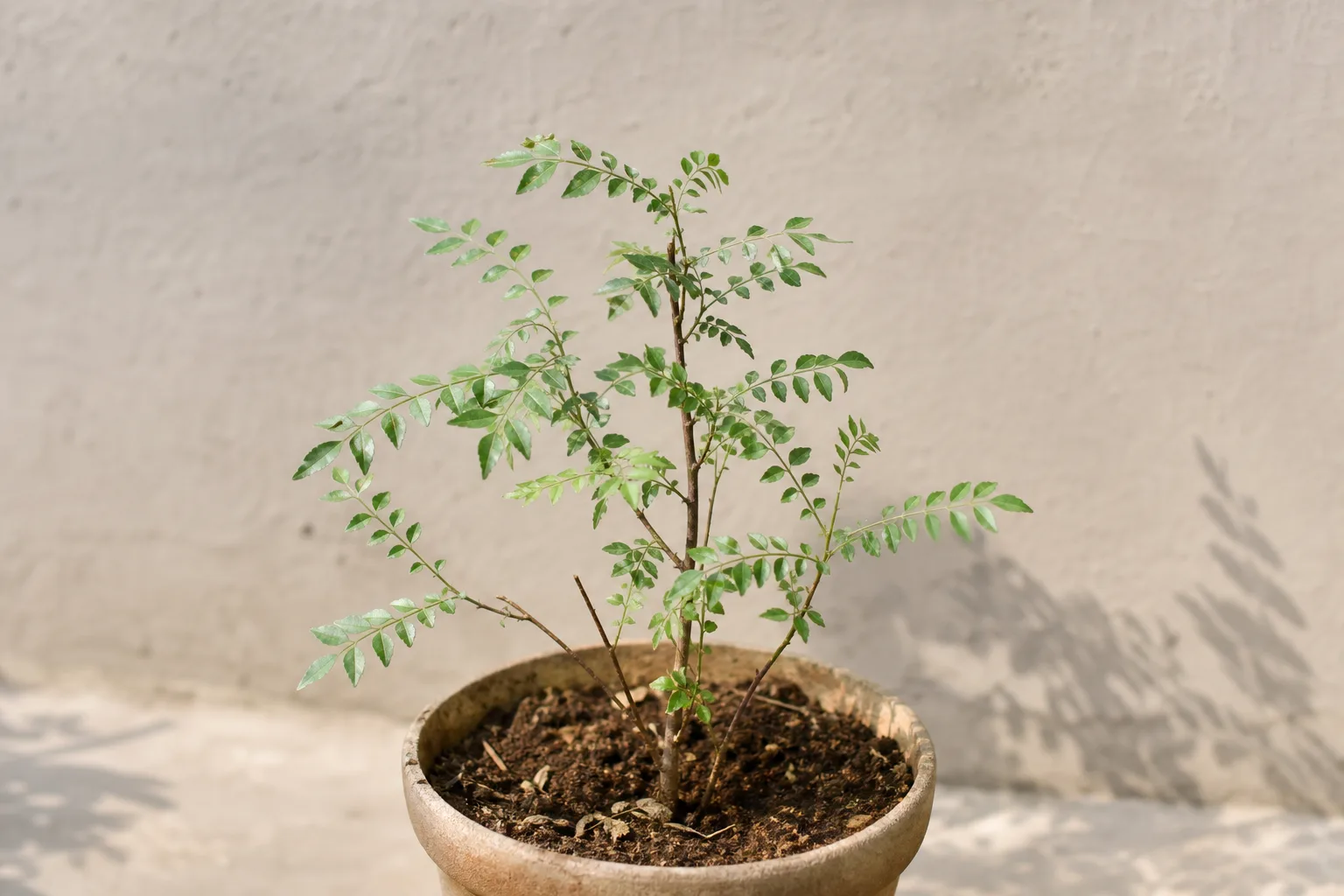
Slow Growth on Curry Leaf Plant: Causes, Checks & Fixes
This guide covers slow growth on Curry Leaf Plant. See also the general Slow Growth guide, watering, and light pages for this plant.
Slow Growth on Curry Leaf Plant: Causes, Checks & Fixes
Quick answer
Murraya koenigii (curry leaf plant) is a moderate, not fast, grower even in ideal conditions-a small tropical tree from the Indian subcontinent and Sri Lanka that pushes new compound leaves steadily when warm, bright, and well fed, and pauses or drops foliage when cool nights arrive. Many growers panic when a pot looks static for weeks, but the first question is not “what fertilizer?” - it is whether the plant is resting on schedule or actually stalled.
First step: check season and temperature before changing anything. If nights are below about 15°C (59°F) and the plant has dropped leaves or stopped extending shoots, you are likely seeing normal winter dormancy-keep roots barely moist, skip fertilizer, and wait for spring. If temperatures stay warm and no new shoots appear for three or more weeks while stems stay firm, count direct sun hours on the leaves - curry leaf needs full sun to partial shade outdoors, which indoors means six or more hours of direct sun during active growth, not a bright corner across the room. See the curry leaf overview for full species context.
What slow growth looks like on curry leaf plant
Slow growth on Murraya koenigii is less about one dramatic symptom and more about the absence of expected progress - no new compound leaves at stem tips, harvest cuts that fail to regrow, or a seedling that barely gains height over months.
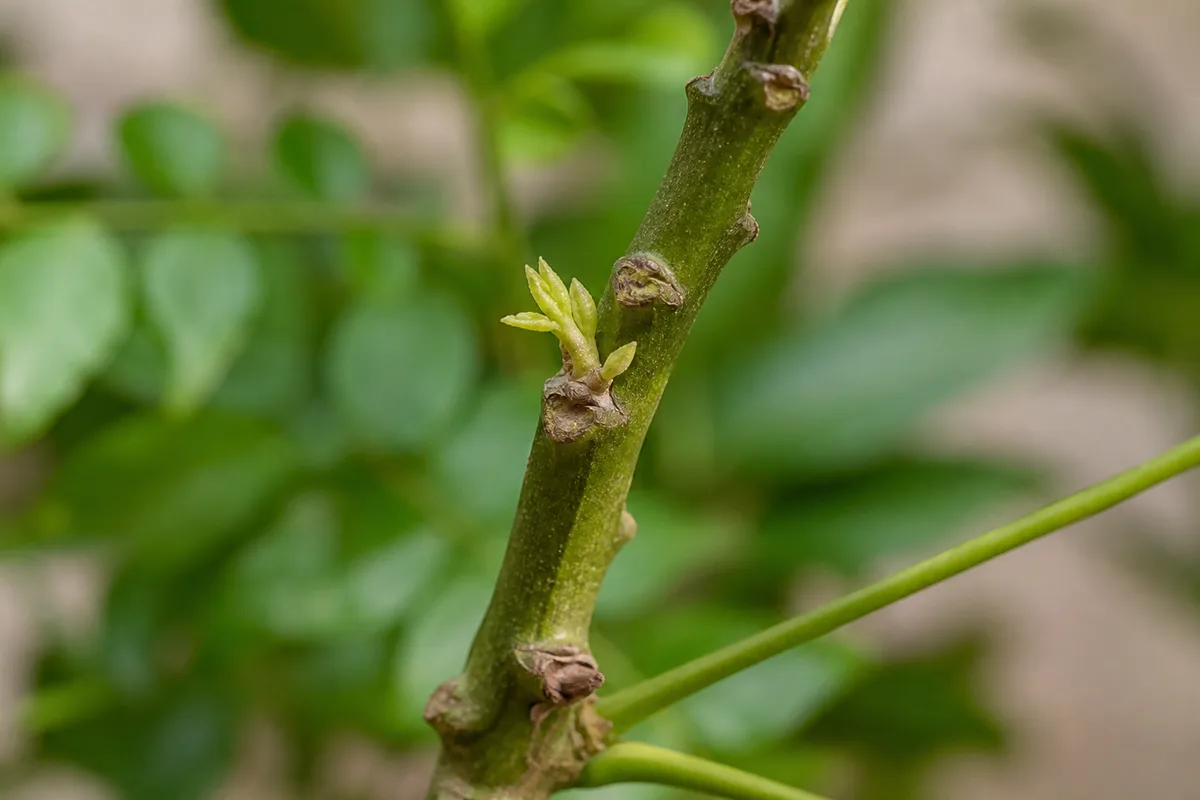
Slow Growth symptoms on Curry Leaf Plant - compare with healthy tissue on the same plant.
Signs you are dealing with a true stall (not just a slow species):
- No new shoots at active nodes for three or more weeks during warm months when the plant should be growing
- Harvest sites stay bare - moderate picking normally triggers fresh side shoots within one to three weeks in good light; silence means something cultural is off
- Smaller, paler new leaflets on the few shoots that do appear - often paired with long gaps between leaf pairs (see leggy growth)
- Static pot weight and dry surface while you keep watering on a summer schedule - roots may be circling, compacted, or too cold to absorb
- Yellow new leaves with green veins on an otherwise stalled plant - classic iron chlorosis pattern in alkaline soil, not simple nitrogen hunger
Normal slow periods you should not mistake for failure:
- Winter dormancy - most foliage drops, bare woody stems remain firm, growth stops when nights cool and days shorten (Logee’s notes interveinal yellowing and leaf loss in cool indoor conditions)
- First-year seedling taproot phase - young plants often invest months in root establishment before visible top growth accelerates
- Post-repot pause - two to four weeks of little new growth after Curry Leaf Plant repotting guide is common while roots settle
- Gamthi or dwarf cultivars - naturally slower and more compact than standard seedlings
Why curry leaf plant gets slow growth
Murraya koenigii stalls when energy capture, root function, or seasonal rhythm falls out of sync. Unlike a pothos, this species will not grow on ambient room brightness alone.
Insufficient direct sun
Light is the strongest driver of leaf production on a harvest crop. UC Master Gardeners recommend full sun to partial shade for outdoor specimens; for flavor and steady shoots indoors, interpret that as six to eight hours of direct sun on the leaves during active growth. Below that threshold, internodes stretch, new leaflets stay small, and regrowth after harvest slows to a crawl - the same light deficit that causes not enough light and leggy stems.
Cool temperatures and winter dormancy
Curry leaf is winter hardy only in USDA Zones 10–12. In cooler homes, sustained temperatures in the high 50s °F and below send the plant into dormancy - leaves yellow and drop, and top growth stops entirely until warmth returns. Logee’s reports that cool temperatures trigger interveinal chlorosis and dormancy, and recommends reducing watering on a bare resting plant rather than forcing growth. Cold window sills at night can stall roots even when foliage looks fine by day.
Under-fertilizing during active season
Container curry leaf plants lose nutrients to leaching and harvest. During warm months with strong light, light feeding every four to six weeks supports replacement growth - see the fertilizer guide. Starvation shows as pale, thin new leaves and slow tip extension, but fertilizer cannot fix dim light or winter rest.
Root-bound container or cold root zone
A pot full of circling roots dries unevenly, resists new uptake, and limits shoot production even when you water correctly. Roots pressed against a cold exterior wall or frosty window pane behave like a cool-season stall - top growth stops while stems stay woody and firm. Missouri Botanical Garden notes root rot when soils stay too damp, which produces a different pattern (sour soil, soft stems) - see root rot.
Iron deficiency in alkaline soil
Yellow new leaves with green veins, especially after months of hard tap water, point to iron chlorosis in rising soil pH - not nitrogen deficiency. Adding more balanced fertilizer without correcting iron worsens the stall. Cross-check yellow leaves when this pattern appears.
Recent repot, move, or harvest shock
Sudden moves from shop dim light to harsh sun, repotting during cool weather, or stripping entire branches bare in one session can pause growth for weeks. The plant is reallocating resources - distinguish this from chronic cultural failure by timing and whether new buds stay firm.
What usually is not the primary cause
Spider mites, aphids, and fungus gnats can weaken growth, but they usually leave visible signs - stippling, honeydew, or soil algae - before growth stalls completely. Chronic overwatering on Curry Leaf Plant causes yellowing and root damage first; pure slow growth with firm green older leaves and dry appropriate soil rarely starts as a pest problem.
How to confirm the cause - step-by-step checklist
Work through these checks in order. One honest reading beats guessing from a single yellow leaf.
- Season and thermometer - Is it late fall through early spring with nights below about 15°C (59°F)? Firm bare stems with no soft crown strongly suggest dormancy, not death. Warm room, long days, and still no shoots point to a fixable stall.
- Direct sun duration - On a clear day, log when direct sun hits the leaves and when it leaves. Under six hours outdoors or four hours through glass during active growth months means light is the prime suspect.
- New growth point - Inspect the tip bud and upper nodes. A firm, plump bud waiting for warmth differs from a dry, brittle tip on a neglected plant.
- Post-harvest response - Note when you last picked leaves. No regrowth after three or more weeks in summer sun warrants a light and moisture audit before any other change.
- Soil moisture at depth - Push a finger 3–5 cm into the mix per the watering guide. Heavy wet soil in a dim room suggests root stress; dusty dry soil throughout suggests drought stress masquerading as stagnation.
- Root-bound test - Slip the plant partly from the pot. A solid root mat with little visible soil, or roots circling the surface, confirms a container limit. Sour smell or black mushy roots redirect to root rot diagnosis.
- Iron pattern check - Yellow newest leaflets with dark green veins on an otherwise stalled plant in old alkaline mix supports iron chelate, not repotting alone.
- Plant age - Seedlings under one year may simply be in taproot establishment; patience in warm bright conditions is appropriate if roots look white and firm.
First fix for curry leaf plant
If temperatures are warm and the plant is not in obvious winter dormancy, move it to the brightest direct-sun location you can provide today - south- or west-facing glass with the leaves receiving real sunbeams, or outdoors in a frost-free sunny spot after gradual acclimation. Do not repot, fertilize, or increase watering in the same week.
That single change addresses the most common fixable stall in harvest-focused Murraya culture. Indoor winter growers who cannot reach six hours of natural sun should add a full-spectrum grow light on a 12–14 hour timer per the light guide - but fix placement before buying hardware when any direct window sun is still available.
If the plant is clearly dormant - cool room, leafless woody stems, firm nodes - the first fix is the opposite: reduce watering to barely moist, hold all fertilizer, and protect from cold drafts until spring warmth returns. Panic repotting or feeding a bare winter plant is the mistake that turns normal rest into root damage.
Step-by-step recovery
After the first fix, wait two weeks and judge by new growth, not old leaves.
Light-limited stall (warm season):
- Move to six or more hours of direct sun or add supplemental lighting as above.
- Rotate the pot weekly for even exposure.
- When new compound leaves emerge with normal size and gloss, resume half-strength balanced fertilizer every four to six weeks through early fall only.
- Pinch the first strong new shoot above a node to encourage bushiness if the plant was single-stemmed.
Root-bound stall:
- Repot in spring or early summer into a container one size larger with a well-draining slightly acidic mix.
- Tease circling roots gently; trim only black or mushy tissue.
- Water once thoroughly, then let the top 3–5 cm dry before the next soak.
- Expect a two-to-four-week pause before steady new shoots - do not feed until new growth is visible.
Iron chlorosis stall:
- Confirm yellow-new / green-vein pattern on newest leaves only.
- Apply iron chelate as label directs to moist soil or as a foliar spray.
- Address alkaline water long term with rainwater or acidifying amendments if the pattern returns.
Dormant winter plant:
- Keep above 15°C (59°F) when possible; avoid frost entirely.
- Water lightly every 10–14 days for a medium pot - soil should not stay wet.
- Resume normal watering and spring feeding when new buds swell and days lengthen.
Make one major correction at a time so you can read the plant’s response. Stacking repot, prune, feed, and pesticide on the same day obscures which change helped.
Recovery timeline
Recovery pace depends on which limit you corrected.
| Situation | Realistic timeline | Success signal |
|---|---|---|
| Light increase in warm weather | First new compound leaves in 2–4 weeks | Larger, glossier leaflets on shorter internodes |
| Grow-light supplementation in winter | 3–6 weeks if temperatures stay warm | New shoots at nodes that were bare |
| Root-bound repot in spring | 4–6 weeks to steady shoot production | White new root tips and tip growth together |
| Iron correction | 2–3 weeks for greening new leaves | Newest leaflets lose yellow between veins |
| Winter dormancy | Months until spring warmth | Swelling buds, then first spring flush |
| Seedling taproot phase | 6–12 months before vigor jumps | Gradual height gain without wilting or rot |
Old leaves that yellowed during the stall do not green up again - judge progress on new tissue only. A plant that holds firm wood and produces one healthy compound leaf after months of silence is recovering even if the silhouette still looks sparse.
Lookalike symptoms - slow growth vs. leggy vs. dormancy vs. root rot
| Pattern | Slow growth (cultural stall) | Leggy growth | Winter dormancy | Root rot |
|---|---|---|---|---|
| New shoots | Absent or tiny and pale | Present but stretched | Absent - plant bare or nearly bare | Absent; crown may soften |
| Stem texture | Firm woody stems | Long thin stems reaching toward light | Firm bare wood | Soft base, possible blackening |
| Leaves | Few small leaflets; may stay green on older wood | Small pale leaflets far apart | Most or all leaves dropped | Yellowing, wilting, dropping |
| Soil smell | Normal earthy | Often wet in dim corners | Dry to lightly moist | Sour, musty, or anaerobic |
| Season | Warm months stall | Any season in low light | Cool short days | Any season if overwatered |
| First fix | More direct sun | More direct sun + pinch | Less water, no feed, wait | Stop water, inspect roots, repot |
Leggy growth and light-limited slow growth share the same root cause - insufficient direct sun - but leggy plants still extend weak stems while a pure stall may show no extension at all. Dormancy mimics death but firm wood and seasonal timing separate it from rot.
What not to do
- Do not fertilize a dormant, bare, or recently repotted plant - salts on inactive or damaged roots burn fine root hairs and delay spring recovery.
- Do not repot on day one unless roots are clearly circling, sour, or mushy. Unnecessary repotting during cool weather adds shock to an already resting plant.
- Do not increase watering on a leafless winter stick - wet cold soil is how healthy dormant Murraya develops root rot.
- Do not assume death and discard after winter leaf drop - wait until spring warmth and check for firm buds before composting.
- Do not stack light moves, repotting, pruning, and feeding in one weekend - you will not know which action helped or hurt.
How to prevent slow growth next time
Match everyday care to how Murraya actually grows: a sun-loving, warm-season foliage tree in a pot, not a shade-tolerant kitchen herb.
- Light: Provide six to eight hours of direct sun during active growth - brightest south or west window indoors, full sun patio outdoors in frost-free months, plus grow lights in winter if needed (curry leaf light guide).
- Temperature: Keep roots above about 40°F (4°C) for active metabolism - roughly 15°C (59°F) or warmer for steady growth; move pots off cold sills on winter nights.
- Water: Follow moisture-at-depth checks - wet summer rhythm in dim winter light is a common hidden stall trigger.
- Feed: Every four to six weeks at half strength from spring through early fall only when new growth is active; pause completely in dormancy (fertilizer guide).
- Harvest: Pick moderately above nodes so regrowth stays continuous - frequent heavy stripping without adequate light stalls the plant’s recovery rhythm.
- Repot: Refresh root room every two to three years in spring before peak growth, using well-drained mix.
- Monitor: Weekly checks on newest shoots catch a light deficit weeks before the canopy looks empty.
When slow growth persists after light, temperature, and root checks in warm weather, consult your local extension office or master gardener helpline - chronic stall on an otherwise firm plant occasionally points to soil pH or pest issues worth expert eyes.
When to use this page vs other Curry Leaf Plant guides
- Curry Leaf Plant watering guide - Use for routine moisture checks before assuming slow growth is the main issue.
- Curry Leaf Plant problems hub - Browse all 16 common issues on this species.
- Not Enough Light on Curry Leaf Plant - Different entry point when symptoms overlap with slow growth.
- Leggy Growth on Curry Leaf Plant - Different entry point when symptoms overlap with slow growth.
- Yellow Leaves on Curry Leaf Plant - Different entry point when symptoms overlap with slow growth.