Overwatering on Cebu Blue Pothos: Causes, Checks & Fixes
Quick answer
Overwatering on Cebu Blue Pothos means the root zone stays wet too long-often from calendar watering, low light, or cachepots in winter. First step: stop watering until the top 3–5 cm of mix dries and the pot feels noticeably lighter; do not pour on wilted leaves when soil is already damp.
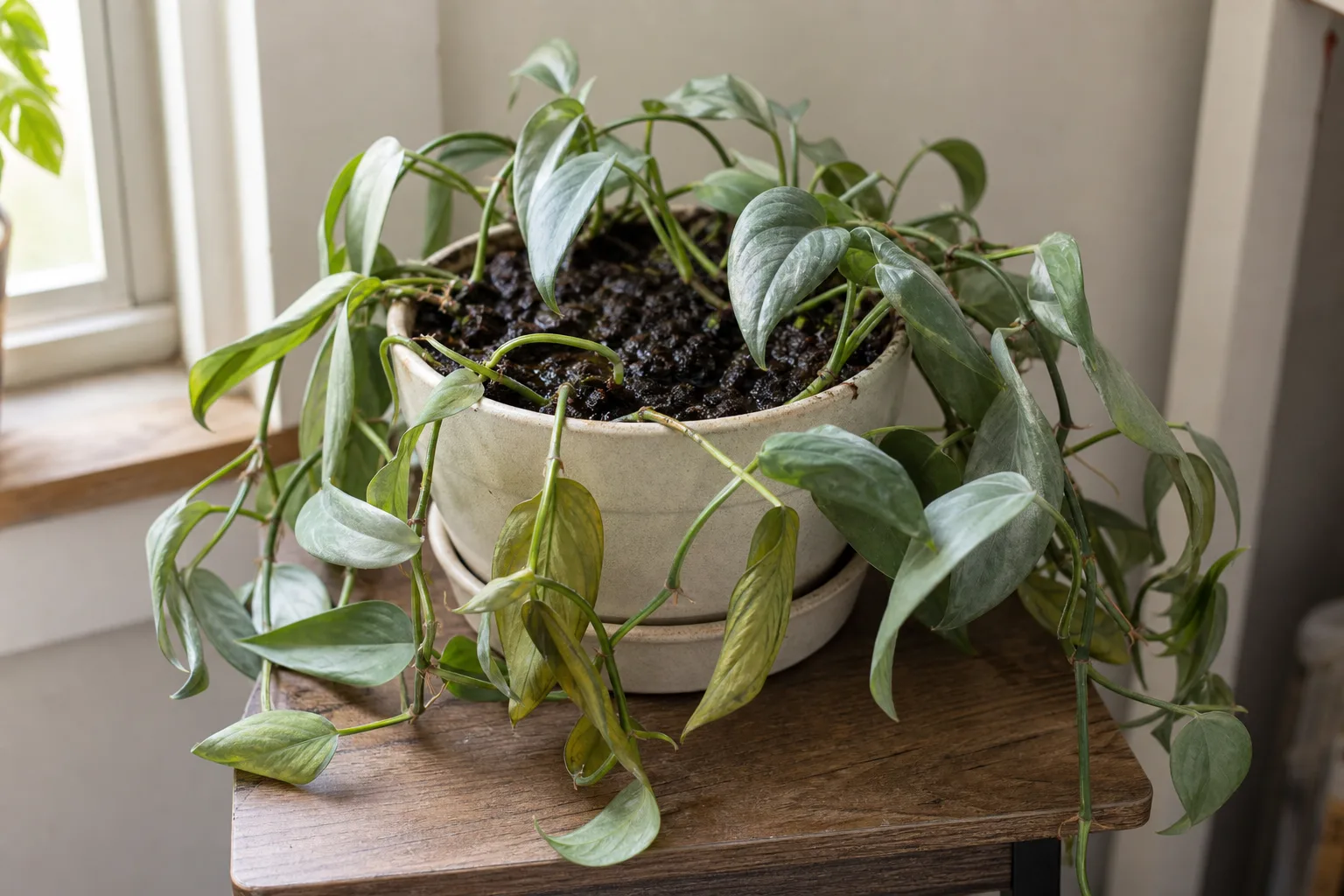
Overwatering on Cebu Blue Pothos: Causes, Checks & Fixes
This guide covers overwatering on Cebu Blue Pothos. See also the general Overwatering guide, watering, and light pages for this plant.
Overwatering on Cebu Blue Pothos: Causes, Checks & Fixes
Quick answer
Overwatering on Cebu Blue Pothos (Epipremnum pinnatum ‘Cebu Blue’) is the classic aroid trap: limp, silvery-blue leaves while the soil stays wet and the pot feels heavy. That pattern means damaged roots cannot move water upward-not that the vine is thirsty. Adding another drink on wilted foliage when mix is already damp accelerates rot.
First step: stop watering until the top 3–5 cm of mix dries and the pot feels noticeably lighter. That depth matches the Cebu Blue watering guide dry-down target. Do not interpret every droop as drought-dry soil + wilt = underwatering; wet soil + wilt = overwatering or root rot.
For year-round rhythm and seasonal ranges, see watering. For mushy stems and sour soil, see root rot. For overlapping droop patterns, see wilting and yellow leaves.
What overwatering looks like on Cebu Blue Pothos
On this climbing aroid from Cebu Island, overwatering rarely starts with crisp brown tips-that pattern more often traces to drought or low humidity. The classic Cebu Blue overwatering picture looks like this:
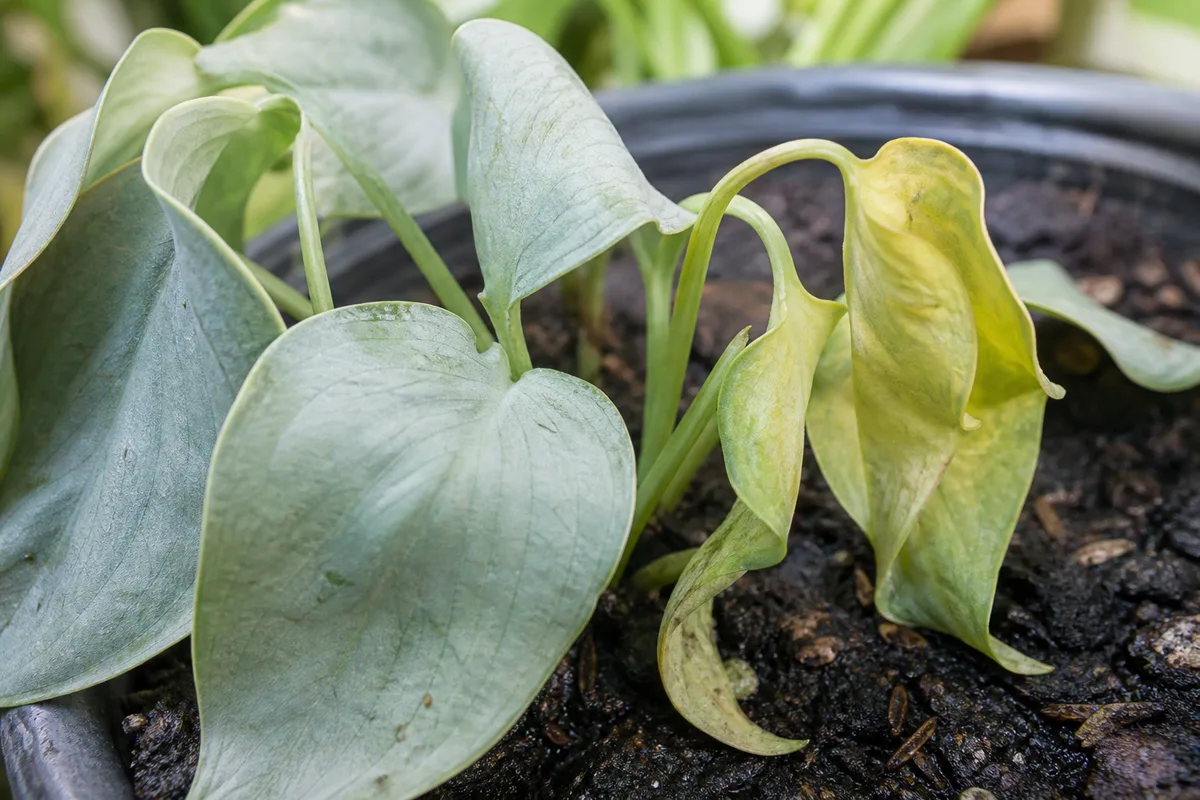
Limp soft arrow-shaped leaves with dull silvery-blue color over constantly damp mix - wet soil plus wilt means roots cannot move water, not thirst.
- Limp, soft vines with arrow-shaped leaves that hang straight down while the mix stays dark and cool
- Soft yellow leaves, often starting on the oldest lower foliage and progressing upward when roots stay oxygen-starved
- Silvery-blue sheen turning dull or grey-green under chronic wet stress-the glaucous color fades before stems fail
- Pot stays heavy and cool several days after watering; surface mix clings and feels cold to the touch
- Fungus gnats hovering near the pot when soil never dries-see fungus gnats when flies are the main annoyance
- Sour or swampy smell from the drainage hole
- Soft or darkened tissue at the stem base where the vine meets the soil line-not a rosette crown, but the trailing stem’s anchor point
- New growth stalls or emerges small and pale at vine tips
- White mold fuzz on constantly damp surface peat-sometimes overlaps with mold on soil
What it does not look like: A feather-light pot, dry mix 3–5 cm down, and thin papery leaves that perk after a soak usually mean underwatering instead. Crispy brown tips with appropriate dry-down often trace to low humidity or water quality-not overwatering. Gradual sag over days may overlap with drooping leaves-always check pot weight first.
Why Cebu Blue Pothos gets overwatered
Cebu Blue is sold as forgiving pothos culture, but Epipremnum pinnatum still needs oxygen at the roots between drinks. Its native habitat is humid forest understory on Cebu Island-not a bog. Clemson HGIC recommends airy, well-draining soil and letting the mix dry between each watering for Epipremnum species indoors. When the root zone stays saturated, overwatering decreases oxygen available for root growth and Pythium and Phytophthora-the oomycete pathogens behind most aroid root rot-gain a foothold. NC State Extension notes that overwatering on E. pinnatum can lead to fungal and bacterial diseases and root rot.
Several Cebu Blue–specific factors keep pots wet longer than a calendar suggests:
Calendar watering is the leading trigger. A vine that dried every seven days in bright summer light may take fourteen or more in a dim winter corner, but many owners keep the same pour schedule. Clemson HGIC identifies overwatering and poor drainage as primary triggers for root and stem rots in houseplants.
Low light slows dry-down. A Cebu Blue moved away from a window or into a north-facing room uses less water while you keep watering on the old rhythm-see not enough light when placement is part of the chain. Low light plus wet soil produces yellow lower leaves reliably on this species.
Winter heating in dim rooms compounds the trap: warm air above the pot, cool wet mix below, and shortened daylight mean evaporation stalls while you interpret limp leaves as thirst.
Oversized pots and cachepots hide the problem. A modest root ball in a large decorative container holds a wet zone at the base that never dries while the top inch looks acceptable. Cachepots that trap runoff after bottom-watering keep the bottom anaerobic for days.
Heavy peat mix without perlite dries on the surface while the core stays saturated-a common reason the finger test says “dry on top, wilt below.”
Climbing vs. trailing confusion. A Cebu Blue on a moss pole with mature leaves transpires faster and may need water sooner in summer-that is normal thirst when the top 3–5 cm is dry. Overwatering still shows as wet heavy soil with limp yellowing leaves, not a light pot.
Compared with Golden Pothos (E. aureum), Cebu Blue often shows stress sooner in low light paired with slow-draining mix, even though both are Epipremnum vines with similar soak-and-dry culture.
Lookalike symptoms to rule out
| Symptom pattern | Likely cause | Key differentiator |
|---|---|---|
| Limp leaves + heavy pot + wet soil 3–5 cm down | Overwatering | Yellow lower leaves, soft stem base, fungus gnats |
| Limp leaves + light pot + dry soil | Underwatering | Leaves perk within hours after a full soak |
| Yellow lower leaves only, firm stem, appropriate dry-down | Normal senescence or age | One leaf every few weeks; soil rhythm healthy |
| Crisp brown tips, firm turgid leaves, moist soil | Low humidity | Winter heater air; edges brown without overall wilt |
| General droop, soil either wet or dry | Wilting / drooping leaves | Broader symptom hub-start with soil moisture |
| Limp leaves + wet soil + sour smell + soft stem base | Root rot | Past simple overwatering-unpot and trim |
The emergency mistake is watering a wilted Cebu Blue without reading the soil. Dry soil + drooping = underwatering. Wet soil + drooping = overwatering or root rot. That pairing prevents most aroid watering errors on this cultivar.
How to confirm overwatering (5-step moisture audit)
Work through these checks in order before changing anything else:
- Pot weight - Lift the container. Heavy and cool days after watering supports overwatering. A light pot with wilt may mean drought instead-a heavy pot signals moisture remains.
- Moisture at 3–5 cm depth - Insert a finger or wooden skewer into the mix to the second knuckle. Cool, clinging mix at that depth means wait. Dry upper layer with a firm stem base may mean underwatering. The watering guide uses this depth as the standard dry-down check for Cebu Blue.
- Drainage holes and saucer - Confirm holes are open. Lift the nursery pot from any cachepot and check for standing water in the outer sleeve. Empty reservoirs within thirty minutes of every soak.
- Leaf pattern and smell - Yellowing starting on lower leaves with wet mix fits overwatering. Sour odor at the drainage hole suggests anaerobic soil and possible rot. Even yellowing with dry mix may mean drought, low light, or age-see yellow leaves.
- Stem base and root spot-check - Press gently at the soil line where the vine enters the mix. Firm tissue with wet mix is overwatering you can fix with dry-down. Soft tissue means unpot immediately-you are past simple overwatering into root rot. Wear gloves when handling cut tissue-Cebu Blue contains calcium oxalate crystals and is toxic to cats and dogs if chewed, like other Epipremnum species.
If soil is moist 3–5 cm down and leaves keep declining after you stop watering for one full dry cycle, proceed to the moderate or severe first-fix branch below.
First fix for Cebu Blue Pothos
Stop watering until the top 3–5 cm of mix dries and the pot feels noticeably lighter. That single pause is the correct first action for most cases-not fertilizer, not repotting, and not another soak because leaves look limp on already-damp soil.
Then choose the branch that matches severity:
Mild overwatering - firm stem, no sour smell
- Hold all water until the top 3–5 cm dries completely-often 7 to 14 days in bright growth, longer in winter dim corners.
- Move the plant to brighter indirect light if it sits in deep shade; slow evaporation worsens wet soil without helping the vine recover.
- Empty every saucer and cachepot after the last accidental pour.
- Lift the pot daily so you learn the weight shift from “too wet” to “ready.”
- Resume with one thorough soak only when the dry-down test passes-water until drainage runs clear, then stop.
Most mild Cebu Blue cases recover without repotting if the stem base stays firm.
Moderate overwatering - yellowing leaves, heavy pot, firm stem base
- Complete the mild dry-down steps above.
- After the top 3–5 cm dries, spot-check roots by sliding the plant out partway. Healthy roots are white or tan and firm. A few dark soft tips on an otherwise firm root ball can be trimmed with sterilized scissors; repot into fresh airy mix only if a significant portion is mushy.
- Increase airflow around the pot and ensure the mix includes perlite or bark for drainage-airy, well-draining soil is standard for pothos indoors.
- Hold fertilizer until new growth appears.
Severe overwatering - soft stem base, sour smell, mushy roots
- Unpot immediately. Shake away loose mix and trim all brown mushy roots back to firm tissue with sterilized scissors.
- If the stem base is soft, cut upward until you reach solid green firm tissue. Lay the plant on a paper towel in bright indirect light for 30–60 minutes so cuts callus.
- Repot into fresh well-draining mix with drainage holes mandatory-use a container only slightly larger than the remaining root mass.
- Wait five to seven days after repotting before the first light soak, then resume the 3–5 cm dry rhythm. See root rot for the full recovery protocol.
Recovery example: A trailing Cebu Blue on a north shelf in January showed limp silvery leaves and two yellow lower leaves on soil that stayed damp ten days after the last pour. The owner stopped watering, moved it to bright indirect light, and emptied a cachepot that had been holding runoff. After twelve days the top 3–5 cm dried, the pot felt noticeably lighter, and the first firm new tip leaf unfurled three weeks later-old yellow leaves did not green again, but new growth carried the healthy blue-grey sheen.
Recovery timeline
Mild overwatering: Once soil oxygen returns, existing leaves may firm slightly within 3–7 days, but judge success by stable new growth at vine tips rather than old yellow foliage-recovery is measured by turgid new leaves.
Moderate overwatering with some root damage: Expect 2–4 weeks before consistent new leaves appear if the stem base stayed firm throughout.
Severe cases after root trim and repot: New growth may take 4–8 weeks in warm bright conditions. Damaged yellow leaves and soft stems will not revert; the vine rebuilds from healthy nodes above the soil line.
Signs recovery is working: Pot weight drops on a predictable rhythm after watering, new unfurling leaves are glossy and silvery, and fungus gnat numbers fall once the surface dries between drinks.
Signs the problem is worsening: Continued collapse after a proper dry cycle, spreading yellow leaves on damp mix, sour smell returning, or soft stem tissue-escalate to root rot intervention.
What not to do
Do not water because leaves look limp when soil is already wet-that is the fastest path from overwatering to rot on Cebu Blue.
Avoid fertilizing a waterlogged plant; salts on failing roots make stress worse.
Do not repot into a larger pot “to help drying”-extra mix volume keeps the center wet longer.
Skip daily shallow sips after overwatering; they keep the surface damp without fixing oxygen at the root zone.
Do not mist instead of correcting soil moisture-roots need a dry-down cycle, not a brief leaf film.
Avoid leaving the pot in a full saucer or cachepot after any watering session.
Do not assume all pothos behave identically-copying Golden Pothos timing on a dim-room Cebu Blue in winter often overwaters the slower-drying pot.
How to prevent overwatering on Cebu Blue Pothos
Build prevention around how your pot dries in your room, not a generic weekly alarm:
- Water only when the top 3–5 cm of mix dries-roughly 7–10 days in bright active growth, 10–14 days in winter, faster for moss-pole climbers in summer per the watering guide.
- Use the calendar as a reminder to check, not as a command to pour.
- Weigh the pot when freshly watered versus dry; the difference becomes obvious within a few weeks.
- Empty saucers and cachepots within thirty minutes of every soak.
- Match winter frequency to slower dry-down when plants move away from windows or room heat drops-see not enough light when placement slows evaporation.
- Use well-draining mix with perlite; avoid heavy straight peat in low-light corners.
- Repot into appropriately sized containers-only one size up when roots fill the current pot.
- Watch climbing specimens on moss poles more closely in summer-they dry faster than trailing pots nearby, but that is thirst when the 3–5 cm test reads dry-not permission to keep soil permanently damp.
When to escalate to root rot
Move to the root rot guide if:
- The stem base at the soil line dents under light pressure or smells foul
- A root check shows brown mushy tissue across much of the root ball
- Leaves keep yellowing after the top 3–5 cm has dried properly and the pot feels light
- Fungus gnats persist in large numbers despite dry surface cycles-see fungus gnats for the pest overlap
One yellow lower leaf on an otherwise firm vine with a healthy dry-down cycle can wait for a watering adjustment. Multiple yellow leaves plus wet soil and soft stem tissue cannot.
Conclusion
Overwatering on Cebu Blue Pothos is a wet-soil problem with a clear first fix: stop watering until the top 3–5 cm dries and the pot lightens, and never treat wilt on damp mix as thirst. This Epipremnum pinnatum cultivar wants soak-and-dry rhythm in airy mix-not permanently damp soil in a dim winter corner or a cachepot that never drains. Confirm with the five-step moisture audit, use the triage table to rule out underwatering, and let new silvery tip growth tell you recovery worked when old yellow leaves cannot.
Related Cebu Blue Pothos guides
- Overview - full indoor care hub
- Watering - 3–5 cm dry rule and seasonal rhythm
- Underwatering - dry-soil wilt lookalike
- Root rot - mushy roots and stem-base failure
- Yellow leaves - symptom overlap on lower foliage
- Fungus gnats - wet-soil consequence
- Wilting - broader droop diagnosis
- Not enough light - slow dry-down cause
- Overwatering on Golden Pothos - E. aureum comparison