Low Humidity on Cebu Blue Pothos: Causes, Checks & Fixes
Quick answer
Cebu Blue Pothos (*Epipremnum pinnatum* 'Cebu Blue') tolerates average home humidity but shows brown tips and slower growth below about 40% RH. First step: move the pot off heating vents, radiators, and sunny winter glass-then raise ambient humidity toward 50–70% with a humidifier or pebble tray, not extra watering.
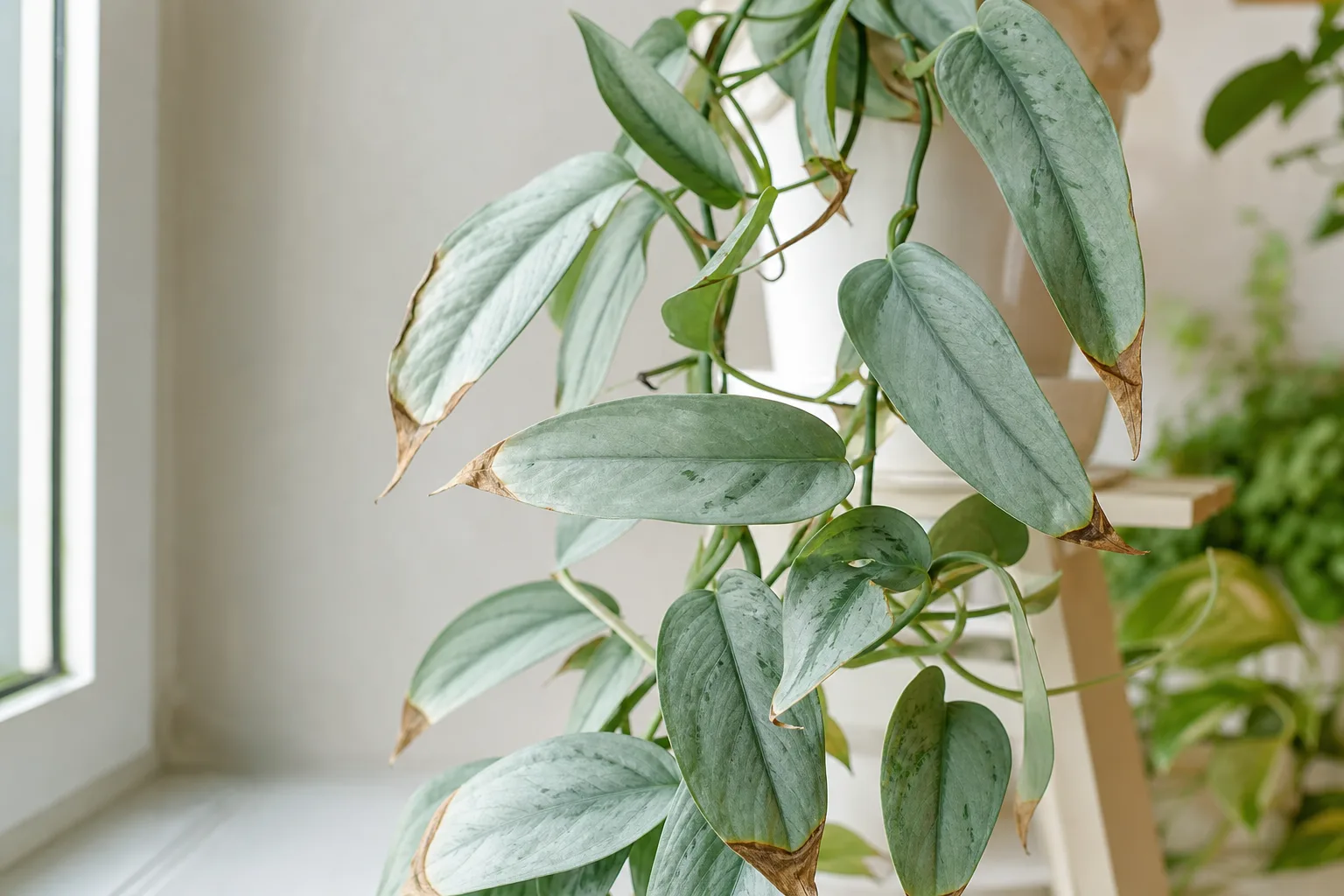
Low Humidity on Cebu Blue Pothos: Causes, Checks & Fixes
This guide covers low humidity on Cebu Blue Pothos. See also the general Low Humidity guide, watering, and light pages for this plant.
Low Humidity on Cebu Blue Pothos: Causes, Checks & Fixes
Quick answer
Cebu Blue Pothos - Epipremnum pinnatum ‘Cebu Blue’ - is a Philippine climbing aroid that prefers moderate humidity and warm, draft-free air. It tolerates average indoor dryness better than calatheas or ferns, but extended winter heat still pulls rooms into the 20–30% range and shows up as crisp brown leaf tips, slower growth, and higher spider mite risk.
First step: move the pot off forced-air vents, radiators, and direct contact with sunny winter glass. Local dry zones cause faster damage than the rest of the room suggests. Once placement is stable, raise ambient humidity toward 50–70% with a humidifier or pebble tray-not extra watering. See the Cebu Blue overview for full humidity targets; do not flood the pot when only leaf edges look dry.
Does Epipremnum pinnatum ‘Cebu Blue’ need high humidity?
No - it does not need greenhouse humidity. Target 50–70% relative humidity for fastest growth and the largest leaves on a moss pole; 30–50% is workable in many homes when light and watering are correct. Stress patterns often appear when RH stays below about 40% for weeks: brown tips, duller blue sheen, smaller new leaves, and spider mites in warm, dry conditions.
Compared with prayer plants, Cebu Blue is forgiving. Its narrow, arrow-shaped juvenile leaves still transpire actively-especially on long trailing stems or climbing sections with larger foliage-so dry microclimates matter even when the species is labeled “easy.”
What low humidity looks like on Cebu Blue Pothos
Dry-air damage on Cebu Blue has a recognizable pattern:
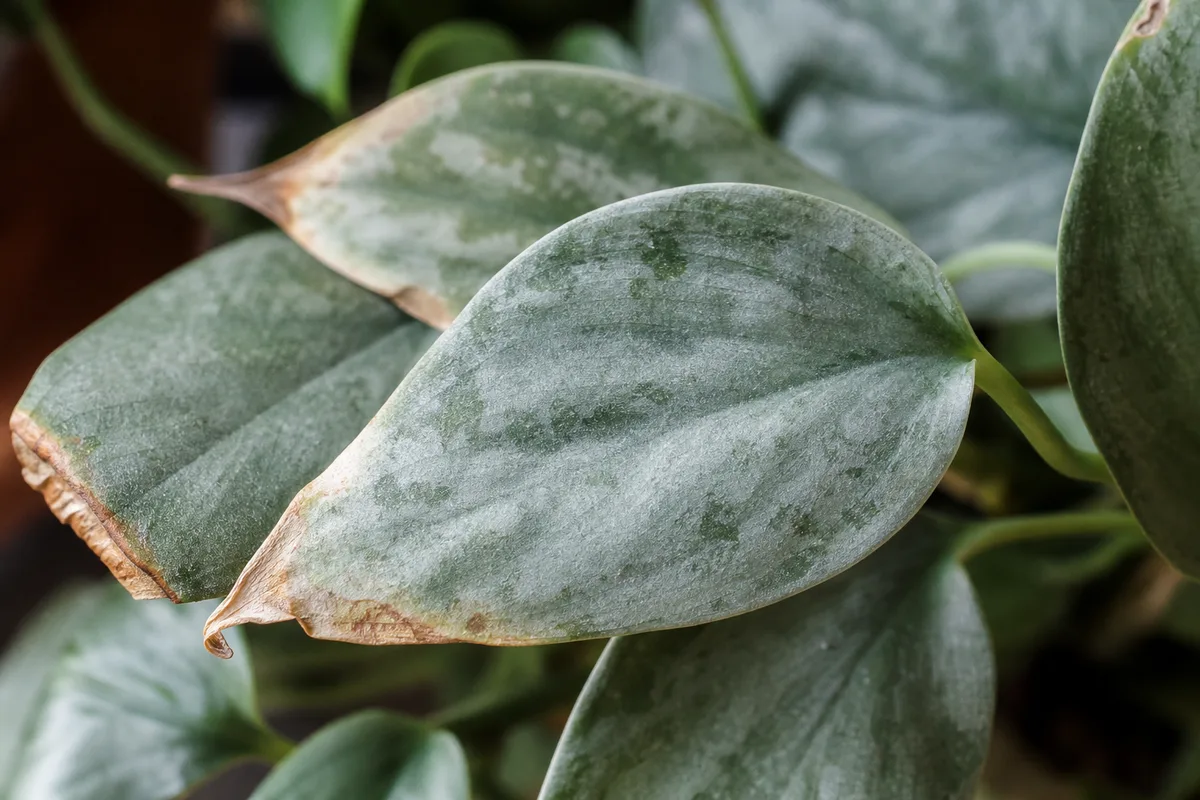
Brown, papery leaf tips and margins on otherwise firm glossy Cebu Blue foliage - damage often worst on leaves nearest heating vents or sunny winter glass.
- Brown, papery tips and margins on otherwise firm, glossy blue-green leaves
- Damage worse on leaves nearest a heat register, radiator, or sunny winter window
- Stems stay firm; the vine does not collapse the way it does with root rot on Cebu Blue Pothos
- No webbing, sticky residue, or moving specks on leaf undersides (unless mites have already moved in)
- Slower new growth or slightly smaller fresh leaves during a dry heating season
- Duller glaucous coating when dry air compounds with marginal light-blue sheen fades faster than on a well-lit, humid plant
On moss-pole specimens, the largest climbing leaves lose moisture fastest. Trailing baskets with long vines often crisp at the farthest tips first-those leaves sit in the driest air above heat sources. Juvenile arrow-shaped leaves show edge burn before mature fenestrated foliage, but both forms react to the same dry microclimate.
This is usually low severity. Cebu Blue rarely dies from dry tips alone. Left through a full heating season, however, margins can spread, new leaves stay small, and dry indoor air increases spider mite pressure on stressed foliage.
Why Cebu Blue Pothos reacts to dry air
E. pinnatum evolved in warm, humid forest from the Philippines through tropical Asia. The ‘Cebu Blue’ cultivar keeps juvenile lance-shaped leaves with a waxy blue coating indoors unless the vine climbs and matures. That coating reads best under bright indirect light-but strong light plus dry air increases transpiration, so a south-facing sill in January can crisp edges even when the room average looks acceptable.
Several home triggers stack on Cebu Blue:
Winter forced-air heating pulls whole-room humidity well below what most tropical houseplants prefer. Ceiling vents and radiator updrafts create pockets drier than your thermostat suggests.
Sunny glass in cold months heats leaf tissue on one side while air stays dry. Foliage touching cold window glass at night adds another stress layer-see the Cebu Blue light guide for placement that avoids scorch plus dry-air compounding.
Trailing and climbing habit. Long vines and moss-pole leaves expose more surface area farther from the pot. Tips at the end of a 1.5 m runner crisp before the base shows stress.
AC and fireplace drafts dry leaves locally. Hot and cold air from vents can damage plant cells on related Epipremnum species-the same placement mistakes affect Cebu Blue.
How to confirm dry air vs. other causes
Work through these checks in order:
- Hygrometer reading - Place a meter near the canopy for 24 hours. Below 40% during heating season supports dry-air stress; 50–70% suggests humidity is adequate and another cause is primary.
- Microclimate scan - Note heat registers, radiators, fireplace drafts, AC streams, and foliage touching sunny or cold glass. One-sided crisping strongly points to placement, not whole-plant disease.
- Damage pattern - Even brown margins on multiple leaves fit humidity. Random spots, yellow halos, or bleached patches on the window-facing leaf face do not.
- Soil moisture - Stick your finger 3–5 cm into the mix. Appropriately dry soil with firm stems means extra water is not the fix. Soggy mix with yellowing leaves points to overwatering.
- Newest leaves - Sharp brown lines on fresh growth with otherwise good RH may be tap-water minerals-see brown tips. Uniform margin crisping with dry air fits humidity.
- Pest inspection - Check undersides for stippling and webbing. Dry air encourages spider mites but pests still leave distinct signs separate from simple edge burn.
Confirmed diagnosis: firm stems, normal watering rhythm, humidity below 40% (or a known dry microclimate), margin-focused browning that worsened when heat ran, and no pest webbing.
Suspected but not confirmed: wilting with very dry soil throughout (underwatering), wet soil and soft stems (root stress), or bleached patches on leaves facing harsh direct sun (light scorch).
Symptom lookalike table
| What you see | Likely cause | Where to read more |
|---|---|---|
| Crisp margins, moist soil, RH below 40% or near a vent | Low humidity | This page |
| Sharp brown lines on newest leaves with adequate RH | Tap-water mineral or salt burn | Brown tips |
| Wilting, very light pot, dry soil throughout | Underwatering | Underwatering |
| Yellow leaves, soft stems, sour wet mix | Overwatering / root stress | Overwatering |
| Bleached or tan patches on window-facing leaf face | Direct sun scorch | Light guide |
| Stippling, webbing, dull gray-green leaves in dry heat | Spider mites | Spider mites |
First fix for Cebu Blue Pothos
Move the pot several feet away from heating vents, radiators, and direct contact with sunny or cold window glass.
This single placement change removes the driest microclimate without risking root rot. Shift hanging baskets off ceiling vent paths and pull trailing stems back from radiator ledges. If the only bright spot is a harsh south sill, filter light with a sheer curtain or move the pot 60–90 cm back from the glass-bright indirect light supports recovery better than hot dry glass.
After relocation, set up a humidifier or pebble tray to hold 50–70% RH when room air stays dry. A cool-mist humidifier 1–2 m from the plant is more reliable than misting. For a pebble tray, keep the pot base above the water line so roots never sit in runoff. Grouping plants shares transpiration and raises local moisture slightly.
While humidity stabilizes:
- Hold your normal watering rhythm - top 3–5 cm dry before watering per the watering guide.
- Do not mist heavily as the only fix; misting may not meaningfully raise humidity and wet leaves in dim corners can spot overnight.
- Inspect undersides weekly if air was dry for weeks-mites exploit the same conditions.
Step-by-step recovery
Once placement and humidity are addressed:
- Stabilize light - Bright indirect light helps new leaves expand cleanly in humid air. Avoid bouncing the pot daily between rooms.
- Trim cosmetic damage - Snip fully brown tips with clean scissors if you prefer a neat look. Crisped tissue will not re-green.
- Flush salts if tips persist - White crust on soil plus brown tips may combine dry air with soluble salt buildup. Leach the pot with plain water and pause fertilizer until new growth looks clean.
- Treat spider mites if present - Raising humidity alone will not clear an established infestation; follow the spider mites guide while keeping air moist.
- Hold Cebu Blue Pothos repotting guide and feed - Do not repot or fertilize a stressed vine until new arrow-shaped leaves emerge without edge burn and the plant has been stable two to three weeks.
Recovery timeline
Within one to two weeks of steadier humidity and better placement, leaf edges should stop getting worse.
New blue-toned leaves with clean margins are the real success signal-expect them in two to four weeks during active growth. Cool winter months slow the timeline.
Permanent damage: browned tissue on old leaves does not turn green again. Judge recovery by fresh growth at the vine tips, not repaired edges.
Worsening signs: yellowing across whole leaves while soil stays wet, soft stems at the soil line, widespread leaf drop, or mite webbing spreading-those mean a different or additional problem and need a new diagnosis path.
What not to do
Do not water more because leaf tips look dry while the soil is already moist-Cebu Blue rots in wet mix like other Epipremnum species. Avoid heavy evening misting in low light. Do not blast a humidifier directly onto leaves 24 hours a day; aim for room-level moisture. Skip fertilizer as a first response to brown tips. Do not assume humidity if pests, wet soil, direct sun, or tap-water burn better explain the pattern. Do not over-humidify a waterlogged pot-soggy roots fail even in humid air.
Cebu Blue care cross-check
Humidity fixes work best when the rest of the routine matches this plant:
- Light: Bright indirect light; see the light guide for window placement.
- Water: Top 3–5 cm dry before watering; roughly every 7–10 days in summer, less in winter.
- Soil: Well-draining mix with perlite; soggy roots mimic drought stress above ground.
- Temperature: Comfortable at 18–29°C (65–85°F); avoid drafts and cold air per NC State guidance.
- Humidity target: 50–70% for fastest growth; 30–50% often tolerable; act when RH stays below ~40% with visible tip burn.
How to prevent dry-air stress next winter
- Check a hygrometer in October before damage appears, not after half the vine has crisp edges.
- Run a humidifier or maintain a pebble tray through heating season.
- Keep trailing and climbing foliage away from vents and radiator ledges.
- Group plants on the same shelf to share moisture.
- Maintain bright indirect light so new leaves expand fully in humid air.
- Wipe leaves occasionally to remove dust so stomata function efficiently on the glaucous surface.
- Inspect leaf undersides weekly in dry months for early mites.
When to worry
Low humidity alone rarely kills Cebu Blue Pothos. Treat it as urgent when:
- Stems soften or blacken while soil is wet
- More than a third of leaves yellow and drop within a week
- Spider mites or mealybugs spread despite humidity improvements
- New growth stays stunted for a month after you fixed placement and moisture
Those patterns suggest root failure, pest takeover, or chronic low light-not just dry winter air.
Conclusion
Low humidity on Cebu Blue Pothos announces itself on leaf tips and margins long before the vine fails. Scan for vent and sunny-glass placement first, then raise ambient moisture toward 50–70% with a humidifier or pebble tray while keeping the normal dry-down watering rhythm. Old brown tips will not heal-judge success by the next clean, blue-toned arrow leaves unfurling at the growing tips. When symptoms overlap with wet soil, pests, or mineral burn, use the linked guides rather than stacking humidity fixes alone.
When to use this page vs other Cebu Blue Pothos guides
- Cebu Blue Pothos watering guide - Use for routine moisture checks before assuming low humidity is the main issue.
- Cebu Blue Pothos problems hub - Browse all 16 common issues on this species.
- Brown Tips on Cebu Blue Pothos - Different entry point when symptoms overlap with low humidity.