Yellow Leaves on Cebu Blue Pothos: Causes, Checks & Fixes
Quick answer
Yellow leaves on Cebu Blue Pothos often trace to wet soil, dim light fading the blue sheen, or normal aging on the oldest nodes along a trailing vine. First step: check whether the pot is heavy and wet or light and dry before you change watering or light.
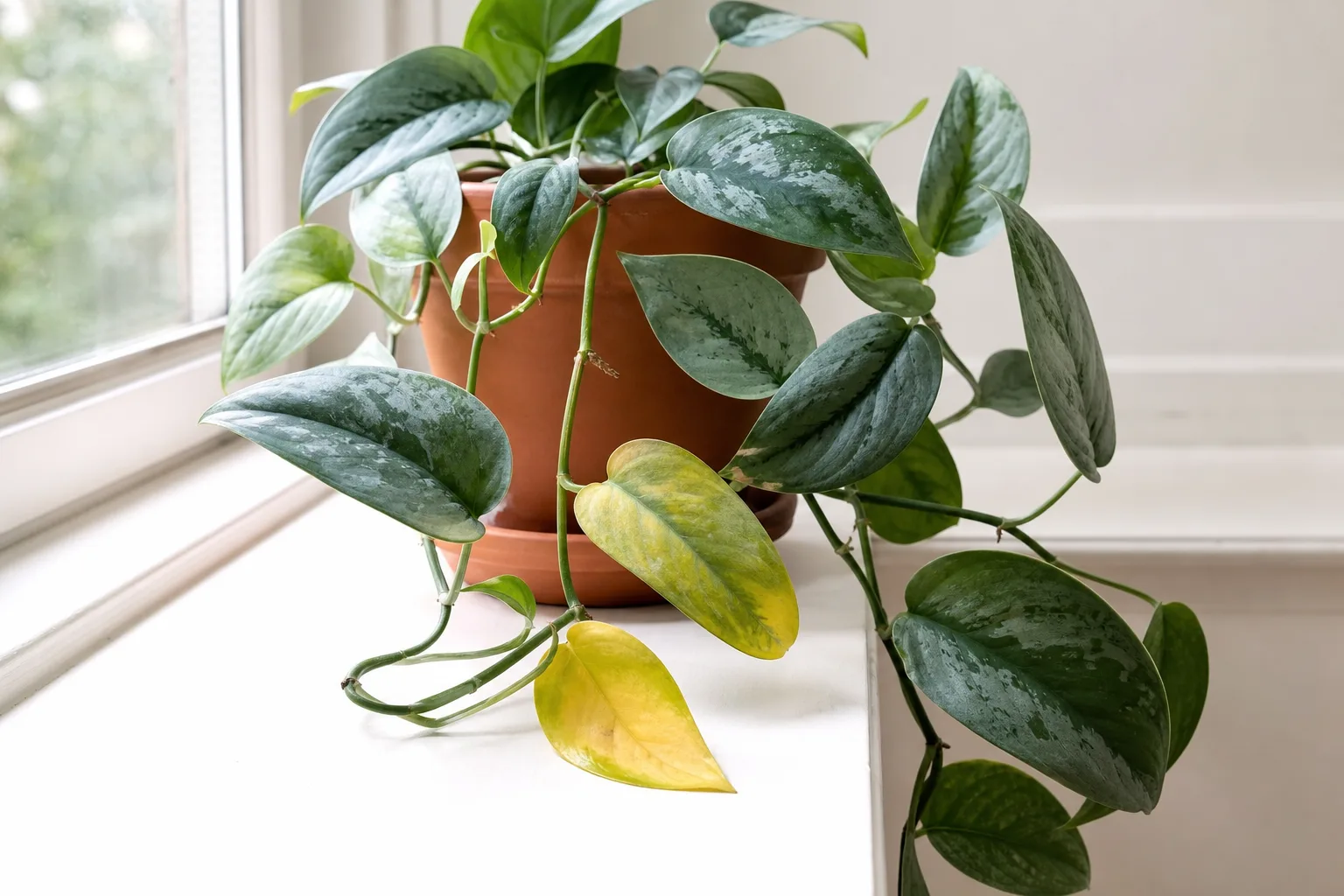
Yellow Leaves on Cebu Blue Pothos: Causes, Checks & Fixes
This guide covers yellow leaves on Cebu Blue Pothos. See also the general Yellow Leaves guide, watering, and light pages for this plant.
Yellow Leaves on Cebu Blue Pothos: Causes, Checks & Fixes
Quick answer
Yellow leaves on Cebu Blue Pothos (Epipremnum pinnatum ‘Cebu Blue’) usually come from one of three places: chronically wet soil, too little light fading the blue sheen, or normal aging on the oldest nodes along a trailing vine. This climbing aroid is less neglect-tolerant than Golden Pothos-it shows stress through colour loss before crisp brown edges appear.
First step: lift the pot and probe the top 2–3 cm of mix. A heavy wet pot with yellowing leaves points to overwatering. A light dry pot with fading blue and limp leaves points to drought. Yellow only on the lowest node while new blue-tinted leaves emerge at the tip is usually normal senescence.
For baseline care rhythm, see the Cebu Blue Pothos overview. For wet-soil rescue depth, see overwatering and root rot.
Yellow leaves vs. other Cebu Blue problems
| Pattern | Pot / soil | Leaf appearance | Likely cause |
|---|---|---|---|
| Lower node yellow only | Normal weight, appropriate moisture | Oldest leaf yellows; new tips blue-green | Normal vine senescence |
| Multiple yellow leaves, heavy pot | Wet, cool mix | Blue sheen fading; limp vines | Overwatering / root stress |
| Pale yellow upper leaves, leggy vine | Dry or normal moisture | Thin soft leaves; long internodes | Low light ± underwatering |
| Yellow after repot | Recently disturbed | Wilt despite moisture; firm stem base | Transplant shock |
| Yellow with black mushy stems | Wet, sour smell | Stem soft at soil line | Root rot |
NC State Extension describes Cebu Blue as a tropical vine with blue-green juvenile foliage needing bright filtered light and well-drained soil-conditions that explain why both water and light mistakes yellow this cultivar faster than solid-green pothos.
What yellow leaves look like on Cebu Blue Pothos
Cebu Blue is a vining aroid with nodal growth along trailing or climbing stems-not a basal rosette plant. Yellowing follows the vine architecture:
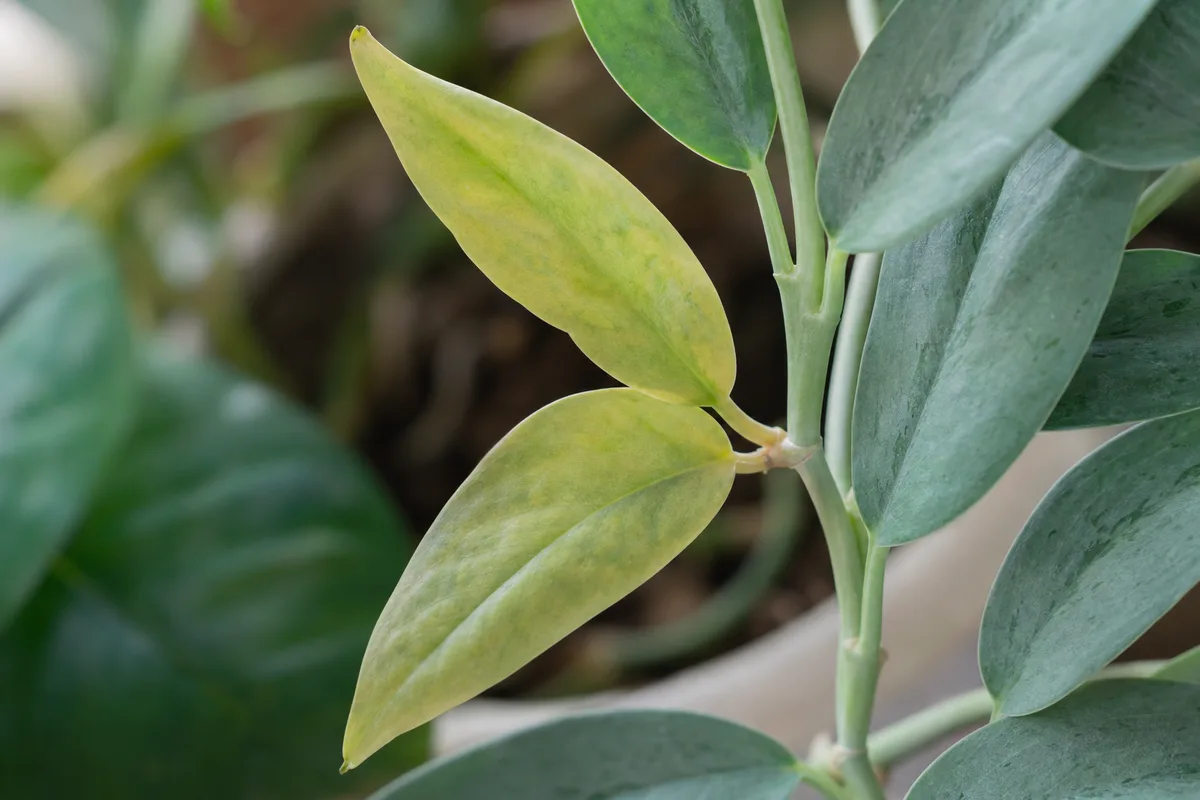
Pale yellow lower leaves with faded glaucous blue sheen at proximal nodes - compare with blue-green tips still emerging at the vine apex.
Normal senescence:
- One or two oldest leaves at the lowest nodes near the soil yellow first
- Leaf may drop cleanly while apical nodes produce new blue-green foliage
- Stems firm; soil moisture appropriate; no sour smell
Overwatering yellowing:
- Multiple leaves yellow-not just the bottom node
- Blue glaucous sheen fades to plain green or pale yellow across several leaves
- Limp vines on wet soil-the wilt-on-wet-soil trap
- Lower leaves yellow while mix stays damp for days
- Possible fungus gnats at soil surface
Low-light yellowing:
- Leggy internodes with smaller new leaves
- Blue sheen disappears; foliage looks flat green or yellow-green
- Often affects newer leaves higher on the vine, not just the base
- Soil may be correctly moist-light is the limiting factor
Underwatering contribution:
- Thin, soft leaves with crispy edges after drought
- Light pot; mix dry 2–3 cm down
- Cebu Blue rebounds after a soak but repeated dry cycles yellow lower leaves
Transplant-shock yellowing:
- Several leaves yellow within one to two weeks after repotting or a nursery-to-home move
- Mix may feel evenly moist; vines can look limp despite water
- Stem base stays firm; no sour smell from drainage holes
- Often hits leaves that were oldest or most stressed before the move
Juvenile vs. mature sheen: Indoors, Cebu Blue usually keeps narrow lance-shaped juvenile leaves with the distinctive silvery-blue coating. On a moss pole, mature leaves grow larger and may fenestrate-the blue tone can read deeper on new mature foliage, while stressed juvenile leaves on a trailing vine fade to olive-green first. A healthy juvenile tip should still show a visible glaucous shimmer when you tilt it toward a window; flat yellow-green on every new leaf means light or water stress, not “waiting for maturity.”
Damaged yellow tissue does not green up again. Recovery means new leaves at vine tips show the characteristic blue-green shimmer.
Why Cebu Blue Pothos gets yellow leaves
Overwatering on forgiving-vine assumptions. Growers treat Cebu Blue like drought-tolerant Golden Pothos. Clemson HGIC warns that root rot follows overwatering or poorly draining soil on pothos relatives, and yellow leaves are often caused by overwatering before low fertility. Cebu Blue stores less water in thin juvenile leaves and yellows when roots sit anaerobic-NC State Extension notes that overwatering on E. pinnatum can lead to fungal and bacterial diseases and root rot.
Low light fading the blue sheen. The glaucous coating that makes this cultivar distinctive needs bright indirect light. Clemson HGIC notes that lower light may cause variegated and specialty pothos cultivars to lose coloring. In dim corners, leaves pale and yellow-green before they develop full size-often mistaken for nutrient deficiency.
Normal node senescence on long vines. As trailing stems lengthen, the plant sheds oldest leaves at proximal nodes to prioritize new apical growth. This is expected on mature vines, not a crisis.
Transplant shock after repotting. Fresh mix holds moisture differently than old peat, and root hairs break during handling. Several Cebu Blue leaves often yellow at once while the vine adjusts-even when you repotted into appropriate aroid mix. The trap is treating post-repot limpness on already-wet mix as thirst. Firm stems, earthy smell, and new tips after two to three weeks mean patience; sour mix and soft stem bases mean root rot inspection the same day.
Cool drafts and winter slowdown. Fast-growing summer vines use less water in winter. Calendar watering on wet mix yellows lower leaves while the owner assumes the plant is hungry. Hot and cold air from vents can dry out leaves and damage plant cells on pothos-yellowing near a winter heater draft is often environmental, not disease.
Compared with Golden Pothos (E. aureum), Cebu Blue often shows stress sooner in low light paired with slow-draining mix, even though both are Epipremnum vines with similar soak-and-dry culture.
How to confirm the cause
Work through these checks in order:
- Pot weight and soil probe - Press finger 2–3 cm deep. A heavy pot signals moisture remains; heavy wet pot with yellow leaves = pause watering. Light dry pot with limp faded leaves = thorough soak.
- Pattern on the vine - Single oldest node yellowing with healthy blue new tips = senescence. Widespread yellow on wet soil = overwatering. Pale upper leaves with leggy growth = light check.
- Blue sheen assessment - Hold new growth to light. Loss of silvery coating with long internodes confirms low light involvement.
- Stem firmness - Soft stems at soil line on wet mix = inspect roots for root rot.
- Rebound test - If dry, one thorough soak should perk leaves within hours if roots are healthy. No improvement on wet soil means stop watering, not more.
- Repot timing - Yellowing started within two weeks of repotting with firm stems and no sour smell = transplant shock watch. Spread on wet sour mix = unpot.
| Urgency | Signals | First action |
|---|---|---|
| Routine | One bottom leaf; firm vine; healthy blue tips | Remove spent leaf; no watering change |
| This week | Multiple yellow on wet heavy pot; fungus gnats | Stop watering; brighter spot to dry mix |
| Same day | Soft stem base; sour smell; yellow climbing tips on wet soil | Unpot and inspect roots |
First fix for Cebu Blue Pothos
Match the first action to the confirmed cause-do not stack fixes.
If overwatering (heavy wet pot, multiple yellow leaves):
Stop watering until the top 2–3 cm of mix dry completely. Move to brighter indirect light to speed dry-down. Inspect roots if vines stay limp after the mix dries. See overwatering for full recovery steps.
If underwatering (light dry pot, thin limp leaves):
Water thoroughly until excess drains; empty the saucer. Move out of direct sun while leaves rehydrate. See underwatering if wilting recurs.
If low light (leggy vine, faded blue, pale new leaves):
Move to medium or bright indirect light per our light guide. Do not fertilize as a substitute for brightness.
If normal senescence (one old bottom leaf, firm vine, healthy new tips):
Remove the yellow leaf cleanly. No watering or light change needed.
If transplant shock (yellowing after repot, firm stem base, no sour smell):
Hold watering until the top 2–3 cm of new mix dries-do not pour on limp leaves just because you repotted. Keep bright indirect light, skip fertilizer for four to six weeks, and avoid moving the pot again. If stems stay firm and new blue-tinted leaves appear within two to three weeks, no further action. If mix stays wet and stems soften, treat as overwatering and inspect roots.
Recovery timeline
Fully yellow leaves will not re-green-they drop or you remove them. Judge recovery by new blue-tinted leaves at apical nodes along the trailing stems, not by old blade color.
| Cause | What to expect | Signs you are on track |
|---|---|---|
| Overwatering (mild) | Yellowing stops spreading in 1–2 weeks after dry-down; new blue-tinted leaves in 3–6 weeks | Pot lightens between drinks; firm stem base; gnats decrease |
| Underwatering | Perk within hours of soak; surviving leaves firm over days | Top 2–3 cm dries on a predictable rhythm |
| Low light | New growth shows blue sheen within 2–4 weeks after brighter placement | Shorter internodes; larger new arrow leaves |
| Senescence | Immediate once old leaf is removed; vine continues growing | No spread beyond one node every few weeks |
| Transplant shock | Stabilization in 2–3 weeks; first firm new tip leaf often by week 3–4 | Earthy smell; no softness climbing the stem |
Signs the problem is worsening: yellowing climbs toward apical tips on wet soil, stems mushy at the soil line, or new leaves stay pale and small after four weeks in corrected light and water.
Salvage example: A trailing Cebu Blue in a north-facing room showed faded olive new growth and one yellow lower leaf on a heavy pot. Probing showed damp mix 2–3 cm down despite a weekly calendar schedule. The owner stopped watering for twelve days until the pot lightened, moved the basket three feet closer to an east window, and saw the first silvery-blue new leaf in twenty-one days-old yellow tissue never re-greened.
Lookalike symptoms to rule out
| Symptom pattern | Likely cause | Key differentiator |
|---|---|---|
| Yellow lower leaves + heavy wet pot | Overwatering | Limp vines; blue sheen fades; fungus gnats |
| Limp leaves + light dry pot | Underwatering | Leaves perk within hours after a full soak |
| Yellow lower leaves only, firm stem, healthy dry-down | Normal senescence | One leaf every few weeks at lowest node |
| Pale stretched vine, flat green new leaves | Not enough light | Long internodes; soil moisture may be fine |
| Yellow after repot, firm stems, earthy mix | Transplant shock | No sour smell; new tips in 2–3 weeks |
| Yellow + soft stem + sour wet mix | Root rot | Mushy roots on inspection; escalate same day |
| General droop, soil either wet or dry | Wilting | Broader symptom hub-start with pot weight |
What not to do
- Fertilize yellow stressed vines without confirming cause-weak roots cannot use nutrients
- Assume all yellow leaves need more water-limp vines on wet soil need less
- Treat Cebu Blue exactly like Golden Pothos drought tolerance-it yellows sooner
- Remove all yellow leaves at once on a stressed plant-keep foliage until new growth is established
- Water heavily after repotting “to help it settle” when mix is already moist-that extends transplant shock into rot territory
- Judge recovery by old yellow blades-watch apical nodes for new silvery growth
How to prevent yellow leaves next time
- Water when top 2–3 cm are dry per our watering guide
- Keep medium to bright indirect light so blue sheen stays vivid-see light
- Use airy aroid mix with perlite per our soil guide
- Empty saucers within 30 minutes after every drink
- Expect occasional bottom-node yellowing on long trailing vines-normal vine biology
- After repotting, wait for the top of fresh mix to dry before the next drink; do not resume your old calendar on wet new peat
- Rotate hanging baskets a quarter turn weekly so one side does not lose sheen from uneven light
When to worry
Escalate when yellowing spreads weekly on wet soil, stems soften at the soil line, or new tips stay small and pale after light and watering corrections. Those patterns point to advancing root failure-open our root rot guide before the vine collapses entirely.
Routine monitoring is enough if one old leaf yellows at the lowest node on a long trailing vine, stems stay firm, and blue-green leaves keep emerging at the tip.
Related Cebu Blue Pothos guides
- Overview - full indoor care hub and species biology
- Watering - 2–3 cm dry rule and seasonal rhythm
- Light - keeping the glaucous blue sheen vivid
- Overwatering - wet-soil yellowing and dry-down fixes
- Underwatering - light dry pot and limp faded leaves
- Root rot - mushy roots when wet-soil yellowing advances
- Not enough light - leggy vines and sheen fade before full yellowing
- Repotting - when to repot without triggering shock
- Wilting - broader droop diagnosis when cause is unclear
Conclusion
Yellow leaves on Cebu Blue Pothos are a pattern-recognition problem on a trailing tropical vine-not a mystery disease. Lift the pot, read wet versus dry, note whether the glaucous blue sheen is fading on new growth, and distinguish one old leaf at a proximal node from widespread stress climbing the stem. Fix the confirmed branch first-usually dry-down, light, transplant patience, or senescence cleanup-and measure success by new silvery leaves at the apical nodes, not by waiting for yellow tissue to re-green.
FAQs
Why is my Cebu Blue Pothos losing its blue color and turning yellow?
Fading glaucous blue sheen plus pale yellow upper leaves usually means low light-not a nutrient problem. Cebu Blue needs brighter indirect light than Golden Pothos to keep the silvery coating. If blue fades while soil stays wet and lower leaves yellow, check overwatering before moving the plant.
Is it normal for older Cebu Blue Pothos leaves to turn yellow?
Yes, on a long trailing vine the oldest leaves at proximal nodes near the soil line yellow and drop while apical nodes keep producing new blue-green growth. That pattern on one or two bottom leaves with firm stems and healthy new tips is normal senescence-not an emergency.
How can I confirm overwatering vs. underwatering on Cebu Blue Pothos?
Overwatering: heavy wet pot, yellow leaves on damp mix, possibly limp vines despite moisture. Underwatering: light dry pot, thin soft leaves that perk after a thorough soak. Cebu Blue is less drought-forgiving than Golden Pothos-do not wait for crispy leaves before watering a dry pot.
Will yellow Cebu Blue Pothos leaves turn green again?
Fully yellowed or browned leaf tissue does not revert. Recovery means yellowing stops spreading, new leaves emerge with blue-green sheen, and trailing nodes resume steady growth. Judge success by new foliage at the vine tips, not old yellow leaves.
Why did my Cebu Blue Pothos turn yellow after repotting?
Repotting disturbs fine feeder roots and changes how fresh mix holds moisture-several leaves often yellow within one to two weeks even when you used appropriate aroid mix. Firm stems, earthy smell, and new blue-tinted tips after two to three weeks mean transplant shock, not rot. Yellowing that spreads on wet sour mix with soft stem bases needs same-day root inspection per the root rot guide.
How do I prevent yellow leaves on Cebu Blue Pothos next time?
Water when the top 2–3 cm of mix feel dry, keep medium to bright indirect light so the blue sheen stays vivid, use airy well-draining aroid mix, and empty saucers after every drink. Check soil before watering-Cebu Blue yellows faster than Golden Pothos when roots sit wet or light is too dim.