Cebu Blue Pothos Light Needs: Best Window, Sun, and Warning
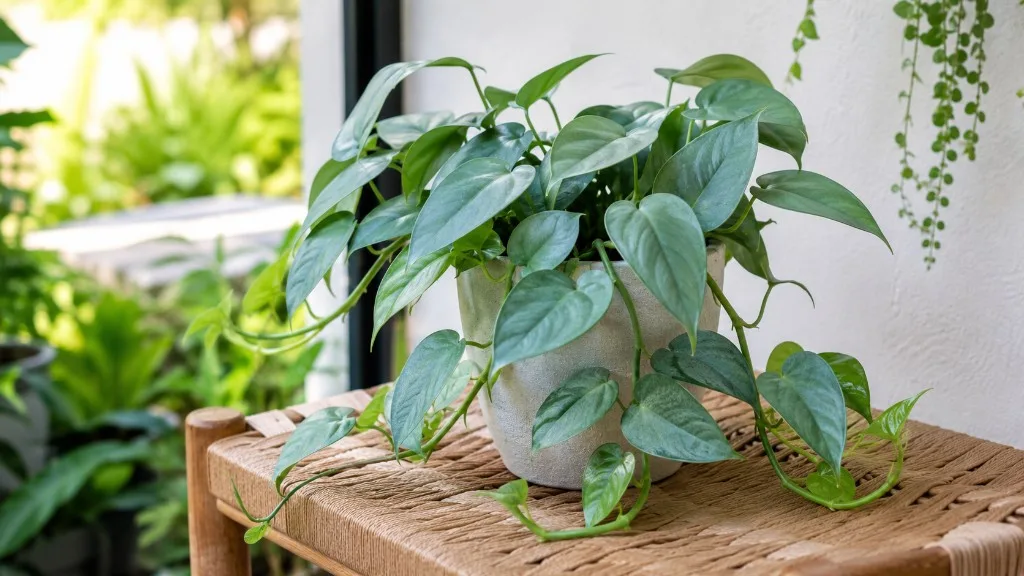
Cebu Blue Pothos Light Needs: Best Window, Sun, and Warning Signs
Cebu Blue Pothos Light Needs: Best Window, Sun, and Warning Signs
Cebu Blue Pothos (Epipremnum pinnatum ‘Cebu Blue’) is sold beside Golden Pothos in the same aisle and often treated like the same plant. It is not. The silvery-blue foliage that makes Cebu Blue worth the shelf space is a light-sensitive trait, and this cultivar tolerates dim corners far less gracefully than its golden cousin. Give it the right brightness and you get firm new leaves, compact internodes, and that metallic blue-green sheen collectors chase. Park it where the room merely looks bright and you get olive-green stretching, bare vines, and a plant that survives on reputation instead of vigor.
The practical goal is straightforward: place Cebu Blue where it receives bright indirect light for most of the day - strong enough that new growth stays compact and colorful, soft enough that leaves do not bleach or crisp on the sun-facing side. In most homes that means an east or west window with the pot within a few feet of the glass, or a filtered south exposure if afternoon heat is managed. When the window cannot deliver enough daily light, especially in winter, a full-spectrum grow light on a timer is the reliable backup.
This guide focuses on placement decisions you can make today: which window, how much direct sun is safe, when to add artificial light, how brightness affects climbing and fenestration, and how to read the plant’s own warning signs before color and form collapse.
How Much Light Cebu Blue Pothos Actually Needs
Cebu Blue is a tropical climbing aroid from the rainforest understory of Cebu Island in the Philippines. In habitat it grows up tree trunks beneath a canopy that filters harsh midday sun while still delivering high total daily brightness. That ecology translates indoors as bright, indirect sunlight - not a dark hallway, and not a south-facing pane with unfiltered afternoon beams baking the leaves.
NC State Extension lists Epipremnum pinnatum for partial shade - direct sun for only part of the day, roughly two to six hours - and notes that ‘Cebu Blue’ leaves typically remain in the juvenile form when the plant trails freely. Unlike Golden Pothos in dim corners, Cebu Blue does not stay full or colorful in low light for extended periods. For mature, fenestrated leaves on a moss pole, bright indirect light with climbing support is effectively required.
If you want measurable shorthand, horticultural lighting references for Epipremnum (the genus Cebu Blue belongs to) suggest canopy targets around 80–200 µmol/m²/s PPFD and a daily light integral (DLI) of roughly 4–7 mol/m²/day for healthy foliage growth. You do not need a quantum sensor to keep one happy on a windowsill, but those numbers explain why a dim “survival spot” and a productive spot are different categories even when both feel acceptable to human eyes.
The Short Answer for Busy Growers
If you only remember three rules, use these. Best window: place the pot within 2–4 feet (60–120 cm) of an east- or west-facing window, or behind a sheer curtain on south if afternoon sun is strong. Direct sun: a few hours of gentle morning sun is often fine once the plant is acclimated; avoid harsh midday or afternoon beams on unadapted leaves. When the window is not enough: add a full-spectrum LED grow light 12–18 inches (30–45 cm) above the canopy and run it 10–14 hours daily on a timer.
Judge success by new growth, not old leaves. Within two to three weeks of better light, new foliage should emerge firmer, closer-spaced on the vine, and more distinctly silvery-blue. Long bare sections between leaves, dull olive coloring, and leaves that shrink with each new node mean the current placement is a holding pattern, not a growth setting.
Why This Aroid Is More Picky Than Golden Pothos
Epipremnum aureum (Golden Pothos) earned its reputation as an indestructible houseplant partly because it tolerates low light longer without obvious collapse. Cebu Blue shares the genus name “pothos” in common speech but is Epipremnum pinnatum, a different species with different visual priorities. The glaucous, silvery-blue cuticle that defines the cultivar is expensive for the plant to maintain. In weak light, chlorophyll production and leaf expansion still happen, but the blue-gray waxiness fades toward plain green. In excessive direct sun, the same surface bleaches or scorches before the plant can acclimate.
There is a second difference collectors care about: mature morphology. Cebu Blue can develop larger leaves with fenestrations along the margins when it climbs a moss pole or plank in strong, consistent light. That transformation is not a fertilizer trick or a humidity meme alone - it is a light-driven developmental shift tied to the plant behaving like a canopy climber instead of a stranded trailer in shade. NC State Extension notes that when allowed to grow on a stake or moss pole, Cebu Blue leaves mature and become fenestrated like the species - a shift that requires adequate light, not fertilizer alone.
Finally, light sets the pace for water use. A bright Cebu Blue photosynthesizes actively and dries its pot faster. A dim Cebu Blue grows slowly, holds moisture longer, and is more vulnerable to root stress if you keep watering on the schedule that worked near the window. Light is the throttle for the whole care system, not a standalone variable.
Best Window Placement for Cebu Blue Pothos
Indoor Cebu Blue fails most often because the pot sits where the room looks bright rather than where the plant receives enough photons for enough hours. Window direction is a starting clue, not the finish line. Distance from glass, outdoor obstructions, sheer curtains, season, and neighboring furniture all change the real exposure at the leaf surface.
Place Cebu Blue on the brightest unobstructed window where leaves do not cook against hot glass. In the northern hemisphere, that is often east for gentle direct morning sun plus bright indirect day, west for strong afternoon light that may need diffusion in summer, south with a sheer curtain or several feet of setback, and north only if you accept that supplemental lighting will likely be required for compact growth.
Rotate the pot a quarter turn every week so vines do not lean hard toward the glass. Leaning is the plant reporting directional starvation - all windows are one-sided light sources.
East, West, South, and North Windows Compared
An east-facing window is the sweet spot in many homes. Morning sun tends to be bright but cooler than late-day sun. Cebu Blue often thrives close to the pane, receiving one to three hours of direct morning beams followed by steady indirect light. If east-window plants still stretch or lose blue sheen, the issue is usually distance - move closer - or winter insufficiency - add a grow light rather than jumping to harsh west exposure.
A west-facing window can produce excellent color and growth in spring and fall and become risky in midsummer. Late-afternoon sun carries heat as well as intensity. West works when you monitor for bleached patches, crisp margins, or sudden leaf curl during peak hours. A sheer curtain or pulling the pot 6–12 inches (15–30 cm) back from the hottest zone often preserves brightness without scorch.
A south-facing window delivers the strongest winter sun at mid-latitudes and the most intense summer afternoon load. South is excellent through a sheer curtain or with the plant 4–6 feet (1.2–1.8 m) back from unfiltered glass. Unfiltered south panes in hot climates are a common scorch vector, especially right after a plant moves from a shaded nursery bench to your brightest room without acclimation.
A north-facing window rarely provides enough intensity for compact Cebu Blue on its own. North may sustain slow, leggy growth for a while, especially in summer at high latitudes, but treat north windows as grow-light territory if you want the plant to look like the photos that sold you on the cultivar.
Compass labels are shortcuts. A south window blocked by a neighboring building may lose to an unobstructed east window. Evaluate the actual beam pattern on a clear day rather than trusting orientation alone.
How Far From the Window Should the Pot Sit?
Distance matters more than beginners expect because light intensity drops sharply as you move into the room. A Cebu Blue on a bookshelf six feet from a south window is not receiving south-window light; it is living in the shadow economy of reflected room brightness.
A practical starting range for bright indirect placement is within 2–4 feet (60–120 cm) of the glass on east or west exposures, or slightly farther back on south if the beam is strong. Hanging the pot in the window zone or on a suction shelf can work when floor space is tight, but watch for cold winter glass touching leaves and overheated summer glass radiating heat into the canopy.
Use a simple field test on a clear day. In the morning and mid-afternoon, check whether direct sunbeams touch the foliage and for how long. Brief morning contact on acclimated plants is often beneficial. Hours of harsh afternoon contact on fresh nursery plants is a recipe for bleaching. If the plant receives only a short sunbeam but looks bright to your eyes the rest of the day, you may still be below the DLI target - watch new internode length for the real verdict.
Direct Sun: What Cebu Blue Can Tolerate
“Cebu Blue burns in direct sun” is only half true. Unacclimated leaves formed in lower light will scorch when thrust into strong beams. Gradually acclimated plants often handle a few hours of gentler direct sun, especially morning exposure, without losing their look. Clemson HGIC notes that leaf scorch and tip dieback on pothos often follow intense light or low humidity, so harsh direct sun is a common scorch vector - especially without acclimation. The nuanced version is: direct sun is a seasoning, not the main course.
Think rainforest canopy again. Cebu Blue evolved with dappled, filtered brightness, not open desert sun. Indoors, the closest honest analog is bright window light with short morning sun or south light softened by sheer fabric that mimics leaf-filtered rays.
Morning Sun vs Afternoon Sun
Morning sun is lower angle, cooler, and shorter in duration at the leaf surface. Many Cebu Blues on east windows receive one to three hours of direct morning light and maintain excellent color when the rest of the day is bright indirect. If your plant came from a greenhouse with shade cloth, still acclimate even to morning sun - the angle change from production bench to home window is real.
Afternoon sun is the danger zone in hot climates. West and unfiltered south exposures can push leaf temperatures high enough that moisture loss outpaces root supply, producing crisp edges even when soil is damp. Afternoon sun also washes out the blue-gray tone, leaving a pale, tired green that reads as “too much light” rather than healthy brightness.
If afternoon sun is your only strong window, use a sheer curtain, move the plant back from the pane, or shift to a grow light for the brightest hours instead of fighting scorch all summer.
How to Acclimate to Brighter Light
Sudden moves are how good plants get bad reputations. When you bring Cebu Blue home from a shaded nursery or move it from a dim office to your brightest window, increase exposure over 10 to 14 days when possible. University of Minnesota Extension warns that jumping too quickly into bright sun can scorch shade-tolerant plants like pothos, producing pale patches or crisp edges.
Start by placing the pot in the target room but farther from the glass for three to four days. Move 6 inches (15 cm) closer every few days while watching the newest leaf for bleaching or curl. If damage appears, step back and proceed slower. Do not simultaneously repot, fertilize heavily, and chase the sun - one variable at a time makes diagnosis possible.
For outdoor summer shade-porch culture in mild climates, use the same logic: an hour of morning outdoor shade, then longer periods over two weeks, never jumping from a dark living room to full patio sun in one afternoon. Outdoor exposure is optional; the principles apply whenever intensity jumps.
Low-Light Limits and What Happens Over Time
Cebu Blue can survive in medium or even lower indirect light for a while. Survival is not the same as the plant you bought. NC State Extension classifies Epipremnum pinnatum for partial shade, but ‘Cebu Blue’ juvenile foliage thins and stretches when light is insufficient - move to brighter indirect exposure when vigor stalls.
In chronic low light, expect a predictable sequence. Internodes lengthen as the vine stretches toward the brightest source. New leaves emerge smaller than older ones, sometimes noticeably so within a few nodes. Blue-silver color dulls toward olive or flat green because the plant prioritizes photosynthetic area over waxy glaucous display. Lower leaves yellow and drop as the plant sheds foliage it cannot support energetically. Bare vines develop, which beginners often blame on fertilizer when the real issue is photon deficit.
Low light also amplifies watering mistakes. A slow plant in a dim corner uses less water. If you keep watering on the schedule from its former bright spot, soil stays wet longer, roots struggle, and yellow leaves get misdiagnosed as “overwatering on Cebu Blue Pothos personality” instead of low-light root stagnation. Fix light first, then adjust water to match the slower metabolism.
How long is “extended” low light? There is no universal day count. Watch three consecutive new leaves. If each is smaller, paler, or farther apart on the vine than the last, the placement has already crossed from tolerance into decline. Do not wait for collapse.
Grow Lights When Natural Light Falls Short
When a window cannot deliver enough daily light - common on north exposures, deep rooms, and October through March at mid-latitudes - a full-spectrum LED grow light is the most reliable fix. Cebu Blue does not need exotic purple bloom spectra. A full-spectrum white LED rated for seedlings, herbs, or houseplants provides the PAR bandwidth foliage needs and looks acceptable in living spaces.
Position the fixture so light reaches the whole canopy, not just the top inch of vine. Trailing plants on shelves often receive light on the upper stems while lower leaves starve. A slightly larger panel or periodic rotation solves uneven coverage.
PPFD, DLI, and Practical Targets for Home Growers
PPFD measures instantaneous light intensity at the leaf surface in µmol/m²/s. DLI measures the total useful light accumulated across a full day in mol/m²/day. Cebu Blue behaves like other Epipremnum species in lighting guides: aim for roughly 80–200 µmol/m²/s at the canopy during the lit period to land near 4–7 DLI over the day, depending on hours run.
You do not need to obsess over math for a single windowsill plant. Use the numbers as guardrails. If a phone PAR estimate or budget meter reads well below 80 at the top leaf for the entire photoperiod, expect stretching. If readings exceed ~250 sustained at close range, watch for bleaching and raise the fixture.
Combine window light and supplemental light when possible. A grow light above the plant plus a bright side window often produces the most even, compact growth because the vine receives both overhead fill and directional natural spectrum across the day.
Fixture Height, Hours, and Timer Setup
A workable starting setup: place a full-spectrum LED 12–18 inches (30–45 cm) above the top leaves, run it 12–14 hours per day, and allow 10–12 hours of darkness overnight. Plants still use circadian signaling; constant 24-hour light is not an upgrade.
Use a timer. Consistency beats heroic weekend light binges. If new growth after two weeks is still long between nodes or dull in color, lower the fixture 1–2 inches (2.5–5 cm) or add one hour to the schedule - not both at once. If leaves look bleached, tightly cupped, or crisp at the tips only under the lamp, raise the fixture 2–3 inches (5–7.5 cm) or shorten the photoperiod slightly.
Heat management matters less with modern LEDs than with old incandescent “grow bulbs,” but enclosed fixtures or small cabinets can still cook leaves. If wilting appears on moist soil only under the lamp, check canopy temperature before watering again.
Light, Climbing, and Fenestration Goals
Cebu Blue is often sold as a trailing basket plant, but its most dramatic form appears when it climbs. On a moss pole, plank, or trellis, leaves can grow larger and more textured, sometimes developing fenestrations along the margins as the plant shifts toward mature morphology. That transformation is not guaranteed in a dim corner even with a pole present - the pole provides structure; light provides the energy budget for expensive leaf development.
If your goal is the large, split foliage you see in collector photos, treat bright indirect light as non-negotiable and keep the moss pole in the same bright zone as the top of the vine. Shading the pole behind a couch while the window is three meters away produces a climbing plant in name only.
Fenestration - the development of splits and lobing on mature leaves - depends on age, genetics, support, humidity, and light working together. No single factor guarantees splits. Light is the factor most beginners under-supply because the plant still produces small entire juvenile leaves in shade, creating the illusion that “it just has not fenestrated yet” when the real issue is insufficient energy.
In bright, consistent indirect light with a moist moss pole and stable humidity, Cebu Blue can progress toward larger, more divided foliage over seasons. In low light, the same plant may trail indefinitely with thumb-sized leaves and no splits. If you increase light for fenestration goals, acclimate gradually and expect the change on new leaves only - old small leaves will not retrofit.
Seasonal Light Changes Indoors
Window light is not static. Winter lowers sun angle, shortens day length, and reduces intensity even on south glass. Cebu Blue that thrived six inches from an east window in June may stretch by February in the same spot. Summer brings the opposite risk on west and south: heat and scorch if the plant sat safely back in January but now receives brutal afternoon beams.
Plan two seasonal habits. In late autumn, move Cebu Blue to the brightest available pane or add or extend grow-light hours before stretching begins. In late spring, watch west and south exposures for first scorch days and deploy sheer curtains or slight setback before leaves bleach.
Do not compensate for weak winter light by overwatering or over-fertilizing. Fix photons first. If the plant is already leggy entering winter, a prune after light improves encourages bushier regrowth; pruning alone in dim conditions often yields thin new shoots that stretch again.
Warning Signs Your Cebu Blue Has the Wrong Light
Cebu Blue reports light problems on new tissue first. Old scorched leaves will not green up again. Old stretched internodes will not shorten. Watch the newest leaf and the next node after a cut.
Make one placement change, then wait 10–14 days before stacking changes to watering, fertilizer, or pot size. Light stress and water stress symptoms overlap; changing everything at once turns diagnosis into guesswork.
Symptoms of Too Little Light
Long gaps between leaves on new growth are the classic under-lighting signal. The vine invests in length to escape shade. Smaller new leaves than older ones confirm chronic deficit even if the plant still looks “fine” from across the room. Dull olive or flat green color replacing silvery-blue sheen means the glaucous display is no longer worth the energy cost in current conditions. Leaning hard toward the window or grow lamp shows directional starvation. Slow emergence of new leaves after watering and warmth are adequate points to photons, not roots. Bare lower vines with active tip growth often mean the plant abandoned leaves it cannot support - a common low-light pattern misread as normal pothos aging. Yellow lower leaves on moist soil in a dim corner frequently pair low light with reduced water use; raising light often matters more than Cebu Blue Pothos repotting guide.
Fixes: move closer to glass, remove shading objects, add or lower a grow light, extend photoperiod on the timer, and prune leggy tips after light improves so side shoots emerge compact.
Symptoms of Too Much Light or Heat Stress
Bleached white or tan patches on the sun-facing leaf surface indicate photodamage. Crisp, dry margins that appear soon after a move to a brighter window suggest scorch or heat load, not underwatering on Cebu Blue Pothos. Loss of blue tone with a washed, pale look can mean excess light as well as too little - color fails at both extremes. Downward curling during peak sun hours may be a protective response to intensity or heat. Sudden leaf collapse or widespread yellowing after a quick move to harsh south or west sun often signals shock rather than disease. Wilting on moist soil at midday near hot glass may be root-zone or leaf heat, not drought - especially in dark pots on sunny sills.
Fixes: pull back from the pane, add a sheer curtain, shift to morning-only east exposure, acclimate gradually rather than jumping from shade to blaze, and avoid dark containers that heat roots. If damage is severe on a small plant, trim to healthy tissue and reintroduce brightness slowly.
Conclusion
Cebu Blue Pothos rewards honest bright indirect light with compact vines, firm new leaves, and the silvery-blue foliage that justifies the name. It is more light-hungry and less forgiving in shade than Golden Pothos, and it shows the difference on every new node. In most homes the winning placement is close to an east or west window, with gentle morning sun acceptable when acclimated and harsh afternoon beams filtered or avoided. When windows fall short - especially north exposures and winter months - a full-spectrum LED on a 10–14 hour timer, positioned 12–18 inches above the canopy, is the practical substitute for rainforest-filtered brightness.
The plant will tell you the truth before any care calendar will. Short internodes, distinct blue-green new leaves, steady vine growth without bare sections, and larger foliage on a moss pole in bright conditions mean your light plan is working. Stretching, shrinking leaves, color washout, and scorch mean the current spot is survival mode, not display mode. Fix light first, read new growth for two weeks, then adjust watering to match the brighter or dimmer reality. That sequence is how a Cebu Blue stays worth the counter space instead of becoming another generic green trailer.
When to use this page vs other Cebu Blue Pothos guides
- Cebu Blue Pothos overview - Start here for whole-plant context before deep-diving this topic.
- Cebu Blue Pothos problems hub - Jump to symptom-specific fix guides when this care topic does not resolve the issue.
- Not Enough Light on Cebu Blue Pothos - Escalate here when light adjustments are not enough.
- Leggy Growth on Cebu Blue Pothos - Escalate here when light adjustments are not enough.
Related Cebu Blue Pothos guides
- Cebu Blue Pothos overview
- Cebu Blue Pothos watering
- Cebu Blue Pothos soil
- Cebu Blue Pothos propagation
- Cebu Blue Pothos fertilizer
- Cebu Blue Pothos repotting
- Not Enough Light on Cebu Blue Pothos
- Leggy Growth on Cebu Blue Pothos
- Cebu Blue Pothos problems
Related tool
Try the Plant Problem Diagnosis Tool with cebu-blue-pothos pre-selected to estimate needs for your setup.