Cebu Blue Pothos Fertilizer: When, How, and Mistakes
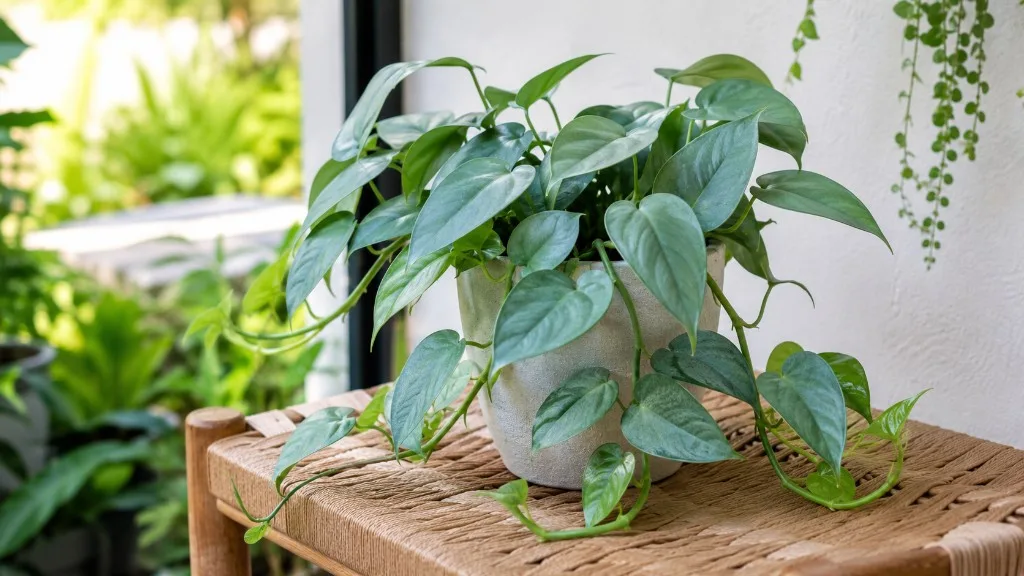
Cebu Blue Pothos Fertilizer: When, How, and Mistakes
Cebu Blue Pothos Fertilizer: When, How, and Mistakes
Why Cebu Blue Pothos Needs Light, Consistent Feeding
Cebu Blue Pothos - botanically Epipremnum pinnatum ‘Cebu Blue’ - is an Araceae aroid from tropical and subtropical Asia to the Pacific, where it climbs rainforest trees using aerial roots and draws nutrients from leaf litter, rainwater, and the thin organic layer on bark. Indoors it is often sold as a trailing houseplant, but given a moss pole and Cebu Blue Pothos light guide it can push vines up to 3 m with noticeably larger, more mature foliage. That growth rate matters for fertilizer because fast-growing aroids pull nitrogen and potassium steadily from a finite root zone in a pot, not from forest soil that constantly renews itself.
In commerce, Cebu Blue is frequently grouped with pothos care advice because it shares the same genus habits as Golden Pothos (Epipremnum aureum): tolerant of average home conditions, sensitive to salt buildup, and quick to show brown tips when feeding gets heavy-handed. South Dakota State University Extension notes that pothos are not heavy feeders, but potting soil contains very little nutrition on its own, so a bi-monthly balanced feed during active growth is usually enough - with feeding withheld during dormant winter months. (South Dakota State University Extension) Cebu Blue fits that profile. It is not a plant you force with concentrate. It is a plant you supplement lightly while it is visibly growing.
Cebu Blue Pothos fertilizer decisions come down to two variables: which NPK ratio you choose and how diluted the dose actually is. NC State Cooperative Extension is direct about houseplants generally: apply fertilizer at recommended rates or less, never to dry potting mix, and reduce or stop feeding in winter when growth nearly stops. Many indoor growers get excellent results diluting to half strength and applying every other watering during spring and summer. (NC State Cooperative Extension) That framework maps cleanly onto Cebu Blue. The plant punishes impatience more than it punishes occasional skips.
If light, water, and drainage are already aligned, a modest feeding rhythm replaces what watering leaches out and what new leaves consume. If those basics are wrong, fertilizer becomes salt in a stressed root zone. The sections below walk through type, timing, amount, recovery, and the mistakes that show up on Cebu Blue Pothos overview again and again.
Reading the NPK Label for Epipremnum Pinnatum
Every fertilizer bottle displays three numbers - N-P-K - for nitrogen, phosphorus, and potassium. Those macronutrients drive leaf production, root development, and overall plant resilience. Reading them correctly is the difference between firm silver-blue foliage on sturdy stems and a pale, leggy vine that never matures even when you feed on schedule.
Nitrogen and the Silver-Blue Foliage
Nitrogen fuels chlorophyll and new leaf expansion. Cebu Blue Pothos is grown almost entirely for foliage: narrow juvenile leaves with a distinctive silver-blue sheen, maturing to broader blades when the plant climbs. During spring and summer, nitrogen is typically the nutrient the plant uses most as it extends vines and unfurls new leaves. A nitrogen-short plant grows slowly, internodes stretch, and new foliage arrives smaller and paler than the leaves above it.
More nitrogen is not automatically better. Excess nitrogen on fast aroids often produces soft, fast extension without the firm texture or mature leaf size you want on a climbing specimen. The goal is steady replacement, not a growth spike. If newest leaves are full-sized, evenly colored, and the vine feels sturdy, your current nitrogen delivery is probably adequate. If growth is pale and thin after months in the same pot and light, investigate water and light before increasing nitrogen.
Phosphorus, Potassium, and Climbing Growth
Phosphorus supports root establishment and energy transfer; potassium strengthens cell walls, improves drought tolerance, and helps the plant move sugars and water efficiently. On Epipremnum pinnatum, aerial roots attaching to a moss pole increase the root surface area that must stay healthy. Potassium becomes more relevant when the plant is actively climbing and producing larger leaves, because the vascular demand rises with leaf mass.
Indoor Cebu Blue rarely flowers, so high-phosphorus “bloom booster” formulas are usually unnecessary unless you are deliberately experimenting on a mature, well-lit climber. A balanced NPK remains the default. Some growers prefer a slightly nitrogen-forward ratio such as 3-1-2 for foliage aroids, which is reasonable for Cebu Blue in bright light. What matters more than the middle number on the label is dilution and frequency. Half-strength balanced feed on moist soil beats full-strength bloom formula every time on this plant.
Best Fertilizer Types for Cebu Blue Pothos
The best Cebu Blue Pothos fertilizer is one you can dilute precisely, apply to moist soil, and pause cleanly when growth slows. Liquid water-soluble formulas win on control. Slow-release granules and organic options can work, but they remove the fine dial indoor growers need on a salt-sensitive aroid in a small pot.
Balanced 10-10-10 or 20-20-20 at Half Strength
A balanced 10-10-10 or 20-20-20 liquid houseplant fertilizer diluted to half the label strength is the most reliable default for Cebu Blue. The two label numbers differ in concentration, not in nutrient philosophy - 20-20-20 simply requires more water per dose to reach the same parts-per-million as 10-10-10. Pick whichever quality houseplant formula you already own and dilute consistently.
Half strength means mixing the label dose with an equal volume of extra water. If the bottle says one teaspoon per quart for monthly feeding, use one teaspoon per two quarts for Cebu Blue. Many experienced growers go to quarter strength when feeding every two weeks or when combining feeding with every other watering. NC State Extension explicitly warns that strong fertilizer salt concentrations can burn and dehydrate roots, and accidental over-application should be corrected by leaching - running plain water through the medium several times. (NC State Cooperative Extension)
Organic options such as fish emulsion, liquid kelp, or worm castings top-dressed lightly can supplement micronutrients, but they are harder to dose predictably in small pots. If you use organics, treat them as a mild addition, not a replacement for a clear dilution schedule, and watch for odor, gnats, and uneven release. Synthetic liquid at half strength remains the easiest path to consistent results on Cebu Blue.
How Often to Fertilize Cebu Blue Pothos Through the Year
Timing matters more than brand. Epipremnum pinnatum ‘Cebu Blue’ has a clear active season in most homes - roughly spring through summer - and a slowdown when days shorten and rooms cool. Feed when the plant is using nutrients. Stop when it is not.
Spring and Summer: Every 4 to 6 Weeks
During active growth, fertilize every 4 to 6 weeks with half-strength balanced liquid on already moist soil. That interval matches how most Cebu Blue plants grow indoors: fast enough to need replacement, not so fast that monthly full doses stack salts. A plant on a moss pole in bright indirect light at the warmer end of the range may justify feeding closer to every 4 weeks. A trailing plant in moderate light can stretch toward 6 weeks without deficiency if newest leaves stay firm and well-colored.
An alternate approach favored by NC State Extension is half strength every other watering during spring and summer. That works if your Cebu Blue Pothos watering guide is steady and you never let the dose creep above half strength. The failure mode is accidental doubling - feeding weak solution so often that salts accumulate anyway. If you choose the every-other-watering method, flush with plain water monthly to leach excess salts, and skip feed entirely on weeks when the plant looks stressed, recently repotted, or dry.
Fall and Winter: Pause or Feed Very Lightly
From late autumn through early spring, pause fertilizer entirely on most Cebu Blue plants. Growth slows, transpiration drops, and unused nutrients become salt in the pot. South Dakota State Extension recommends refraining from feeding pothos during dormant winter months. (South Dakota State University Extension) Cebu Blue follows the same rule in a typical home.
The exception is a plant under strong grow lights or in a bright, warm room that is still pushing obvious new leaves weekly. In that case, you may feed once every 8 to 10 weeks at quarter to half strength - not on the summer schedule. If you are unsure, look at the vine: no new unfurling leaves for several weeks means stop feeding regardless of the calendar.
| Season | Frequency | Strength | Notes |
|---|---|---|---|
| Spring–Summer (active growth) | Every 4–6 weeks | Half-strength balanced liquid | Apply only to moist soil; flush monthly if feeding often |
| Fall (slowing growth) | Reduce or skip | - | Last summer feed should not roll into October unchanged |
| Winter (dormant) | None in most homes | - | Resume when new growth is clearly visible |
| Winter under strong grow lights | Every 8–10 weeks at most | Quarter to half strength | Watch for salt crust; flush if tips brown |
How Much Fertilizer Is Enough
“Enough” on Cebu Blue Pothos is the smallest dose that keeps newest leaves full-sized and evenly colored without building crust on the soil surface. It is not the label’s maximum monthly rate. Pothos relatives are light feeders relative to heavy bloomers or fast herb crops. Your job is replacement, not acceleration.
A practical volume rule: use enough diluted solution to wet the root zone thoroughly once, the same way a normal watering does, then let the pot drain completely. You are not trying to soak the leaves or flood the saucer repeatedly. One pass, full drainage, done. Measuring with a small syringe or teaspoon keeps the concentrate consistent week to week.
If you are debating whether to increase the dose, check these three signals before changing anything: new leaf size relative to the previous pair, stem firmness, and soil surface condition. Increase only when new leaves are persistently small and pale and light and water are already correct and the plant has not been repotted in the last month. Decrease when tips brown, crust appears, or growth looks soft and pale immediately after feeding. When in doubt, less wins on Cebu Blue. Skipping one month is safer than doubling after a slow spell.
Step-by-Step: How to Fertilize Without Burning Roots
Feeding safely is a short sequence. Skipping steps is how brown tips happen.
First, check the calendar and the plant. If it is winter and growth has stalled, stop here. If the plant was repotted in the last four to six weeks, skip unless new leaves show clear deficiency while older leaves remain dark green. If leaf tips are already brown or the soil has a white crust, flush and recover before feeding again.
Second, check soil moisture. NC State Extension is explicit: do not apply fertilizer to dry potting mix. (NC State Cooperative Extension) If the top few centimeters are dry, water with plain water first, let excess drain, and feed the same day or the next day when the mix is evenly moist - not soggy, not dust-dry.
Third, mix half-strength solution in your watering can. Stir well. Use room-temperature water. If you fed within the last three weeks and growth looks normal, you may not need to feed at all; check newest leaves instead of the calendar.
Fourth, pour slowly at the soil line in a ring just inside the pot rim. Avoid splashing concentrate on leaves; fertilizer residue on silver-blue foliage can leave marks and invites fungal spotting in humid setups.
Fifth, let the pot drain fully. Empty the saucer. Do not let the plant sit in runoff; that concentrates salts right back at the root zone.
Sixth, note the date on your phone or plant journal. Consistency matters less than avoiding accidental double feeds in the same month.
Once per month during the feeding season, consider a plain-water flush: water until free drainage runs clear, drain, repeat lightly. That leaches accumulated salts and keeps the EC of the mix from creeping upward even when your individual doses are modest.
Matching Fertilizer to Light, Water, and Soil
Fertilizer never operates alone. Cebu Blue Pothos in bright indirect light photosynthesizes more, transpires more, and uses nutrients faster than the same plant in a dim corner. In low light, reduce frequency before you reduce dilution - a pale vine in shade is usually a light problem, not a hunger problem.
Water mediates delivery. Nutrients move with the water film around roots. overwatering on Cebu Blue Pothos keeps roots in low-oxygen conditions where they cannot uptake minerals and may rot; adding fertilizer does not fix that. underwatering on Cebu Blue Pothos followed by strong feed burns dry roots on contact. Align feeding with the same moisture checks you use for watering: top few centimeters dry, pot lighter, water thoroughly - and only then feed on the next moist cycle if the schedule calls for it.
Soil mediates retention. A well-draining potting mix with roughly 20% perlite, targeting pH 6.0–6.5, drains freely and avoids the anaerobic pockets that make feeding risky. Fresh Cebu Blue Pothos repotting guide mix often includes a starter nutrient charge; NC State Extension notes that recently purchased or repotted plants may have sufficient fertilizer for two to three months. (NC State Cooperative Extension) Skip supplemental feed after repotting unless new growth clearly pales while older leaves stay deep green.
Temperature matters too. Cebu Blue slows below roughly 15°C and can show mushy leaves and root stress in cold, wet mix. Fertilizer applied to a chilled, slow plant sits unused and becomes salt by spring. Warm, stable rooms keep metabolism aligned with your feeding calendar.
Climbing Support and Higher Nutrient Demand
Juvenile Cebu Blue leaves are narrow and silvery. Climbing plants with aerial roots attached to a moss pole often produce larger, broader foliage and, in some specimens, fenestrations as they mature - though fenestrations are not guaranteed indoors and depend heavily on light, age, and genetics. Climbing is not a fertilizer trick. It is a growth mode that changes how much leaf mass the vine builds.
When a Cebu Blue is actively climbing and unfurling larger leaves every few weeks, nutrient draw rises modestly. That does not mean full-strength feed. It means you should stay consistent on the 4-week end of the schedule rather than drifting to 6 weeks, and you should ensure potassium is present via a balanced formula so stems and aerial roots stay firm. If the plant is still juvenile and trailing in moderate light, the standard 4-to-6-week half-strength rhythm is sufficient.
Do not chase mature foliage with bloom boosters. Mature leaf size comes from vertical support, bright indirect light, stable humidity around 45–60% or higher, and time - not from phosphorus spikes. Over-feeding while chasing fenestrations is a common way growers burn tips right when the plant starts looking promising.
Signs Your Feeding Routine Is Working
A well-fed Cebu Blue Pothos signals health across the whole vine, not in one dramatic surge. New leaves match or slightly exceed the size of the previous pair on a climbing plant, or stay proportionate on a trailing juvenile. The silver-blue color stays even without yellowing between veins. Stems feel firm, nodes are visible but not wildly stretched, and aerial roots on a moss pole stay plump and white-tipped rather than shriveled.
The soil surface looks like soil, not chalk. The pot does not smell sour. After a feed, the plant does not wilt the next day. Growth continues through summer at a pace that matches your light level - fast in bright conditions, moderate in average rooms.
Evaluate newest growth monthly instead of chasing a rigid calendar. If the last two or three leaves are well-formed and the vine is extending steadily, your current dose and interval are working. If growth is pale and thin after months in the same pot, rule out low light and inconsistent watering before increasing fertilizer. Nutrition stress and salt stress can both pale leaves; context separates them. Salt stress often pairs with crispy tips and crust; deficiency more often shows uniform pale new leaves on an otherwise healthy older vine.
Signs of Over-Fertilization and Salt Buildup
Over-fertilization is the most common nutrition mistake on pothos relatives, and Cebu Blue shows it early. Brown or crispy leaf tips and edges, especially on newer foliage, are often the first sign. A white or yellowish crust on the soil surface or pot rim is the clearest indicator of salt accumulation. Sudden leaf drop on otherwise firm stems, distorted or brittle new leaves, and wilting despite moist soil appear when salts pull water away from roots through osmotic stress - the same “burn” mechanism NC State Extension describes when warning against deliberate over-fertilization. (NC State Cooperative Extension)
Some growers misread these signs as underwatering or low humidity and feed again, which worsens the cycle. If tips browned right after your last feed, or crust is visible, assume salt stress first. Yellowing lower leaves with wet soil may be overwatering; yellowing with crust and tip burn is often salt.
Under-fertilization happens but is less common indoors on Cebu Blue when the plant is in fresh mix and bright light. Slow growth, uniformly pale new leaves, and older leaves holding color while new ones stay small can indicate mild hunger - after you rule out low light, drought stress, and root rot on Cebu Blue Pothos. Do not increase fertilizer on a plant with sour-smelling soil, collapsing stems, or blackened roots.
Flushing the Pot: A Recovery Protocol
When salt stress appears, stop feeding immediately and leach the pot:
- Move the pot to a sink, tub, or outdoor hose area where free drainage is possible.
- Run plain room-temperature water slowly through the soil for several minutes until it drains freely. Aim for roughly three to four pot volumes total, poured in passes rather than one violent flood.
- Let the pot drain completely between passes. Do not leave it sitting in runoff.
- Repeat once more within 48 hours if crust remains or drainage still looks cloudy.
- Withhold all fertilizer for 4 to 6 weeks. Water normally on your usual schedule. Damaged leaf edges will not revert green, but new leaves should emerge clean.
- Resume at quarter to half strength on the longer end of the 4-to-6-week range, and include a monthly plain-water flush through the rest of the growing season.
If the mix smells sour, stays wet for days, or roots look dark and mushy when you inspect, repot into fresh well-draining mix instead of flushing alone. Do not add fertilizer at repot time. Wait until the plant shows active growth again.
Fresh stem cuttings and newly rooted propagations should not receive concentrate. Let cuttings root in plain water or moist medium until they push new leaves, then wait an additional few weeks before starting half-strength feed on the normal summer schedule.
Under-Fertilizing vs Other Care Problems
Pale leaves send growers straight to the fertilizer bottle, but Cebu Blue Pothos yellows or fades for several reasons that fertilizer cannot fix. Overwatering produces yellow leaves with soft stems and sour soil. Low light produces small, pale new growth with long internodes. Cold drafts and temperatures below 15°C slow metabolism and mimic deficiency. Root rot stalls the whole vine while older leaves may still look temporarily green.
Use a simple diagnostic order: moisture first, then light, then roots and temperature, then nutrition. If the top of the mix stays wet for days, fix drainage and watering before feeding. If the vine stretches toward a window and new leaves shrink, add light before nitrogen. If you repotted last month into fresh mix, patience beats another dose.
True under-fertilization on an otherwise healthy Cebu Blue is subtle: steady light and water, no salt crust, no rot smell, but new leaves stay noticeably smaller and lighter green for multiple cycles. In that case, move from 6-week to 4-week intervals at the same half strength rather than jumping to full label rate. One modest step, then reassess on the next two leaves.
Common Cebu Blue Pothos Fertilizer Mistakes
These errors recur in homes where the plant otherwise looks fine until tips crisp overnight:
Feeding dry soil. Concentrated salts on dry roots burn fast. Water first, then feed on moist mix.
Using full label strength. Houseplant labels assume outdoor beds and large root volumes. Half strength is the baseline; quarter strength is safer for frequent weak feeds.
Feeding on a calendar while the plant is dormant. Winter fertilizer sits unused and becomes salt by spring. Pause when unfurling stops.
Doubling up after a missed month. Two doses do not equal recovery. One normal half-strength feed on schedule is enough.
Slow-release pellets plus liquid feed in the same small pot without tracking total input. Salts stack silently until tips brown.
Feeding immediately after repotting into mix with starter charge. Wait four to six weeks unless deficiency is obvious on new growth only.
Chasing fenestrations or mature leaves with heavy phosphorus while light and a moss pole are still inadequate. You get soft growth and burned tips, not splits.
Splashing fertilizer on foliage. Residue on silver-blue leaves can scar and invites fungal issues. Pour at the soil line only.
Ignoring pet safety when storing concentrates. Cebu Blue is toxic to cats and dogs via calcium oxalate crystals, the same risk profile as Golden Pothos. Fertilizer storage and spill cleanup matter in pet households even though feeding does not change toxicity. (ASPCA)
Treating every brown tip as humidity trouble. On a fed plant in summer, tips often mean salt. Flush before buying a humidifier.
One final mistake: feeding a stressed plant - drought-wilted, sun-scorched, or pest-damaged - to “help it recover.” Rest and plain water come first. Fertilizer is for active growth, not rescue.
Conclusion: A Simple Fertilizer Rule for Cebu Blue Pothos
If this guide collapses to one line, it is this: half-strength balanced fertilizer every 4 to 6 weeks on moist soil during active spring-and-summer growth, then stop. Choose 10-10-10 or 20-20-20 diluted to half the label rate, water the plant first if the mix is dry, and flush with plain water monthly while you are feeding synthetics through summer. Pause entirely in fall and winter unless the plant is clearly growing under strong light. Resume at half strength when new leaves unfurl reliably in spring.
Cebu Blue Pothos is a fast aroid, not a heavy feeder. It rewards the grower who replaces nutrients lightly, watches newest leaves for the first sign of salt, and keeps feeding subordinate to light, water, and drainage. Match the dose to visible growth, not enthusiasm, and the silver-blue vine will do the rest - whether trailing from a shelf or climbing a moss pole toward larger, mature foliage.
When to use this page vs other Cebu Blue Pothos guides
- Cebu Blue Pothos overview - Start here for whole-plant context before deep-diving this topic.
- Cebu Blue Pothos problems hub - Jump to symptom-specific fix guides when this care topic does not resolve the issue.
Related Cebu Blue Pothos guides
- Cebu Blue Pothos overview
- Cebu Blue Pothos watering
- Cebu Blue Pothos light
- Cebu Blue Pothos soil
- Cebu Blue Pothos propagation
- Cebu Blue Pothos repotting
- Cebu Blue Pothos problems
Related tool
Try the Fertilizer Dilution Calculator with cebu-blue-pothos pre-selected to estimate needs for your setup.