Cebu Blue Pothos (Epipremnum pinnatum) Watering Guide
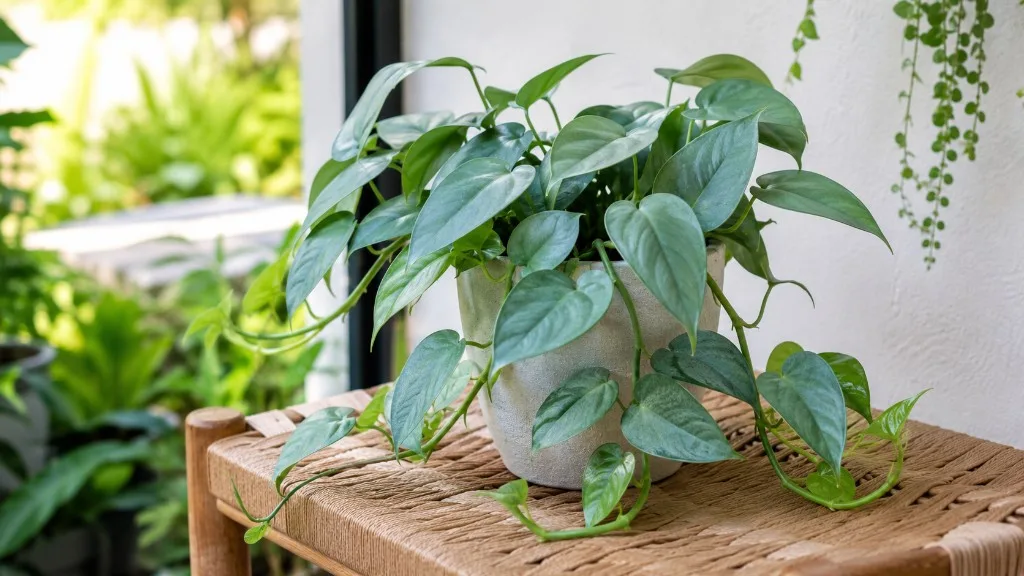
Cebu Blue Pothos (Epipremnum pinnatum) Watering Guide
Cebu Blue Pothos (Epipremnum pinnatum) Watering Guide
Cebu Blue Pothos watering succeeds when you treat Epipremnum pinnatum ‘Cebu Blue’ as its own plant - not a color swap on Golden Pothos care tags. The silvery-blue vine from Cebu Island in the Philippines shares the pothos aisle and the forgiving reputation, but its climbing growth habit, narrower juvenile leaves, and faster stress response in dim corners change how fast your pot dries and how misleading wilt can be. Yellow lower leaves and limp stems often trace back to a root zone that stayed wet too long while you kept a weekly pour schedule built for a different species in a brighter room.
North Carolina Extension describes Cebu Blue as a climbing evergreen perennial that prefers bright indirect sunlight, moist well-drained soil, and support for long trailing stems - and warns that overwatering causes fungal and bacterial diseases leading to root rot. Clemson HGIC puts the genus-wide rule plainly: allow soil to dry between each watering, then water thoroughly so moisture reaches all roots and drains freely.
This guide translates those extension principles into a Cebu Blue–specific routine: moisture checks that work on aroid mix, seasonal ranges with a month-by-month Northern Hemisphere reference, how moss-pole training shifts thirst, what to do when leaves wilt on wet soil, and when to cross-check light, soil, the overview hub, and problem pages before changing three variables at once.
Reviewed by LeafyPixels Review Board · Author: sai-ananth · Methodology: Recommendations checked against NC State Extension, Clemson HGIC, UF/IFAS, University of Minnesota Extension, and MSU Extension houseplant guidance, then aligned with LeafyPixels Cebu Blue cluster data.
Quick Answer: When to Water Cebu Blue Pothos
Water Cebu Blue Pothos when the top 3–5 cm (1–2 inches) of mix has dried and the pot feels noticeably lighter - not because a calendar reminder fired. Clemson HGIC recommends watering pothos only when the top 1.5 to 2 inches of soil have dried out, then soaking until excess drains. For most indoor Cebu Blue plants in bright filtered light during active growth, that rhythm lands around every 7–10 days in spring and summer and every 10–14 days in fall and winter, always confirmed by finger, weight, or chopstick checks first.
The soak-and-drain pattern matters as much as the interval. One full irrigation that wets the entire root ball, followed by a real partial dry-down, matches how tropical aroids handle rain in habitat. Permanently damp mix - especially in low light or an oversized pot - is the fastest route to yellow leaves and root rot.
Why Cebu Blue Watering Confuses Even Pothos Veterans
Most generic pothos advice targets Golden Pothos (Epipremnum aureum), the office vine with broad heart-shaped leaves and high shade tolerance. Cebu Blue is Epipremnum pinnatum, a different species with lance-shaped silvery foliage that often stays in juvenile form until you give it a moss pole or trellis. Clemson HGIC notes that E. pinnatum cultivars like Cebu Blue develop larger fenestrated leaves when grown vertically on a support - and that climbing habit increases leaf surface area and transpiration even when the pot size stays the same.
The second confusion is symptom overlap. A thirsty Cebu Blue wilts. An overwatered Cebu Blue with failing roots also wilts. Clemson HGIC’s indoor watering factsheet warns that wilting is not always a thirst signal: root injury from too much water reduces uptake, so foliage droops while mix stays wet - and adding more water worsens the damage. Without reading soil moisture first, you cannot know which problem you are solving.
A third trap is the “low-maintenance” label. Cebu Blue tolerates a missed drink better than a fern, but it does not tolerate weeks of oxygen-poor, saturated soil. Pythium and Phytophthora - oomycete pathogens behind most aroid root rots - thrive when overwatering decreases oxygen available for root growth. UF/IFAS identifies Phytophthora as the most common disease in commercial pothos production, spreading readily in wet conditions.
Epipremnum pinnatum vs Golden Pothos: What Changes Your Schedule
Botanists now treat E. aureum and E. pinnatum as separate species - NC State Extension explains that plants once labeled E. pinnatum ‘Aureum’ are correctly E. aureum today. For watering, the practical differences are habit and stress timing, not a different species code on a care tag.
Cebu Blue often shows moisture stress sooner in low light paired with heavy mix than Golden Pothos in the same corner, because the narrower leaves and climbing physiology respond quickly when roots lack oxygen. Golden Pothos may look acceptable for weeks in dim conditions while soil stays wet at depth; Cebu Blue yellows lower leaves earlier when the same anaerobic pattern develops. If you copied Golden Pothos intervals after moving Cebu Blue away from a window, you are likely overwatering relative to actual water use.
Both species share the same core framework: partial dry-down, full soak, complete drainage, in airy well-draining soil. The Cebu Blue–specific adjustment is checking more honestly when the plant climbs, when winter light drops, or when you have just repotted into a larger container.
The Moisture Check Routine for Cebu Blue Pothos
Calendar reminders are useful only as prompts to inspect the pot. Light, humidity, pot material, root mass, and season all change evaporation and uptake, so a vine that needed water every six days in July may need fourteen in January. The rule that holds: water only when the root zone is approaching dry, confirmed by at least two independent checks.
For Cebu Blue in standard well-draining indoor mix, target the moment when the upper 3–5 cm has lost most moisture while the lower root ball still holds slight humidity. You are not waiting for the entire pot to go dust-dry, and you are not watering because the surface looks pale while the center remains wet.
Finger Depth in Aroid Mix
Insert a clean finger to the second knuckle - roughly 3–5 cm. You are distinguishing three states on Cebu Blue’s typical peat- or coco-based aroid blend:
- Dry at the fingertip, cool but not damp below: water now. The upper layer has dried and fine roots are approaching the right moisture window.
- Cool and slightly damp at depth: wait. Recheck in 24–48 hours.
- Wet or cold throughout, dark surface: do not water. Mix is retaining water faster than the plant uses it - inspect drainage and light before the next pour.
Run the check at a consistent time of day for a few cycles and you will learn your home’s rhythm faster than any printed interval. Morning checks compare more cleanly because overnight temperatures are stable.
Reading Pot Weight After a Full Soak
Lift the container immediately after a thorough watering and notice the heft. Lift again every day or two. A Cebu Blue ready for water feels noticeably lighter than the freshly soaked state - the shift is tactile, not a precise percentage. Weight checks excel when the plant sits in a decorative cachepot that hides the soil surface, or when you maintain several pothos cultivars and want a fast comparison without disturbing each mix.
If you have never tracked weight, try one full dry-down cycle on a 15 cm nursery pot. You will feel the transition from saturated to ready in your hands, and that memory outlasts any generic “water weekly” sticker.
Chopstick Probe for Chunky Bark Mixes
Push a plain wooden chopstick or bamboo skewer to the pot bottom. Leave it ten minutes, pull it out, and read the stain line:
- Dark, damp tip: lower root zone still wet - wait.
- Evenly tan, no moisture line: ready for a full soak.
- Dry tip, damp mid-section: common in bark-heavy soil mixes where water channels down the sides; a slow top soak or one-time bottom rewet can fix uneven hydration.
Electronic moisture meters vary in chunky aroid blends; use a probe as tiebreaker when finger and weight disagree.
Seasonal Watering Schedule and Month-by-Month Checks
No honest guide can give one number for every home. What follows are starting check ranges for a healthy Cebu Blue in well-draining mix with drainage holes, bright indirect light, and room temperatures between 18–29°C (65–85°F). Confirm with the three checks above and adjust.
| Season | Typical interval | Dry-down target | Notes |
|---|---|---|---|
| Spring–summer (active growth) | Every 7–10 days | Top 3–5 cm dry | Brighter light pulls toward shorter end |
| Fall (slowing growth) | Every 10–12 days | Top 4–5 cm dry | Stretch checks as days shorten |
| Winter (low growth) | Every 10–14 days | Top 5 cm+ dry | Reduce volume; never desiccate entire root ball |
| After repotting | Wait 5–7 days for first soak | Slightly damp throughout | Disturbed roots need settle time |
| Climbing on moss pole | Often 1–2 days sooner in summer | Same depth test | More leaf area increases transpiration |
Northern Hemisphere month-by-month check rhythm (treat as reminders to inspect, not pour):
| Month | What changes indoors | Check focus |
|---|---|---|
| Jan–Feb | Short days, heating air | Longer dry-down; lighter winter volume |
| Mar | Daylength rising | Resume tighter checks as new growth appears |
| Apr–May | Active push | 7–10 day checks common in bright rooms |
| Jun–Aug | Peak light and warmth | Watch moss-pole specimens closely |
| Sep | Growth slowing | Extend interval as light softens |
| Oct–Nov | Heating/draft shifts | Revisit placement before watering habit |
| Dec | Low growth | Wet soil + dim room = overwatering risk |
Spring and Summer Active Growth
From roughly March through September in the Northern Hemisphere, Cebu Blue pushes new leaves on a trailing vine or up a support, and the pot dries on a steadier rhythm. In bright filtered light - for many homes, an east window a few feet from glass or a west window with afternoon monitoring - most plants in 15–18 cm pots want water every 7–10 days after the top 3–5 cm dries. Water until excess runs from drainage holes, empty the saucer within thirty minutes, and do not return until the upper profile dries again.
This is the season to watch climbing plants closely. A Cebu Blue that moved from a small trailing pot to a moss pole with expanding foliage is effectively a larger plant using more water, even if the container size stayed the same. New leaves shrinking, internodes lengthening, or soil drying a day or two faster than before usually signals normal thirst - not disease - when weight and finger checks agree the pot is light.
Fall and Winter Slowdown
As daylight drops and indoor heating shifts air moisture, growth slows. The same summer volume on the same weekly habit will overwater the plant in November. Let the top 5 cm or more dry between sessions, then water with roughly half to two-thirds of your summer volume - enough to rehydrate the root ball without saturating cold soil for days.
Winter failure modes run both directions. Overwatering in a dim room produces yellow lower leaves, darkening stems, and fungus gnats. underwatering on Cebu Blue Pothos in a hot dry room with a heater underneath produces crispy edges and limp vines that recover slowly after one thorough soak. If foliage looks healthy but the pot is light and the top is dry, water. If leaves yellow and soil stays damp four days after the last session, stop watering and inspect roots.
How Much Water to Use and How to Apply It
When checks say “water now,” water deeply and evenly. Pour room-temperature water slowly across the soil surface until it runs freely from drainage holes, then stop. Let the pot drain 10–15 minutes and empty any saucer or cachepot reservoir. Shallow sips that wet only the top centimeter train shallow roots and leave the lower root ball chronically dry - a common reason Cebu Blue looks fine for weeks, then suddenly wilts despite “regular” watering.
Volume follows pot size, not enthusiasm. A 12 cm pot may need 200–300 ml to fully wet the mix; a 20 cm pot may need 500–800 ml. Watch drainage holes, not a measuring cup. As soon as water runs steadily from the bottom, the column is saturated; extra pouring mainly flushes salts.
Clemson HGIC recommends applying water until it runs out of the bottom of the pot and not letting the pot sit in runoff. Water temperature should stay between 62 and 72 °F - roughly room temperature - because cold shocks warm tropical roots.
Top Watering vs Bottom Watering for Cebu Blue
Top watering should be your default. It wets the entire soil column, pushes stale air out of the root zone, and carries accumulated fertilizer salts down through the pot - matching how rain reaches forest-floor roots from above.
Bottom watering has two legitimate uses on Cebu Blue. First, rewetting a hydrophobic root ball that pulled away from pot edges after a long dry spell - set the pot in 2–3 cm of water for 20–30 minutes until the surface darkens, then drain fully. Second, cautious rehydration when you want to avoid compacting loose mix. Bottom watering is a poor permanent system: it encourages shallow rooting, allows salt buildup in the upper layer, and hides trouble if the pot always sits in residual water. If you bottom-water regularly, flush from the top monthly.
Light, Humidity, Pot Size, and Moss-Pole Climbing Effects
Watering is the last step in a chain. Thirst is set by how fast the plant loses water through leaves - transpiration - and transpiration is driven by light, humidity, temperature, and leaf area. Cebu Blue prefers bright indirect light and Clemson HGIC lists pothos humidity preference at 50 to 70% - though average homes at 30–60% are tolerated with stable watering checks.
Light is the strongest indoor variable. A Cebu Blue on a bright east windowsill may dry in six days. The same cultivar three meters into a living room may take fourteen. Low light not only slows drying; it weakens recovery from minor root stress, which is why overwatering and dim corners produce yellow leaves so reliably. If the pot stays wet longer than ten days in summer, improve light before you change the watering can.
Pot size and material change physics. Terracotta breathes and dries faster. Glazed ceramic and plastic retain moisture longer. An oversized pot after enthusiastic repotting holds a large water reservoir relative to root mass, so the center stays wet while the surface looks dry.
Juvenile Trailing vs Mature Climbing Dry-Down
A young trailing Cebu Blue in a 12 cm pot with modest leaf count dries differently from a moss-pole specimen with twice the leaf area in the same diameter container. The climber transpires more in bright summer rooms, often shortening the interval by one to two days even though the species label on the nursery tag did not change.
Juvenile trailing plants in medium light may tolerate slightly longer dry-down at the surface because total water demand stays lower - but they also have less root mass to buffer mistakes, so complete desiccation hurts faster. Mature climbing plants with fenestrated foliage drink heavily when actively growing; weight checks become more reliable than calendar memory. After training onto a pole, expect two to three weeks of adjustment before you trust a new rhythm.
Worked example: A Cebu Blue in a 15 cm plastic pot on an east windowsill in July might move from a seven-day dry-down as a small trailer to a five-day rhythm three weeks after moss-pole installation - not because the rules changed, but because leaf area and root activity increased. A duplicate plant trailing on the same shelf might still need nine days. Same species, different form, different checks.
Overwatering vs Underwatering: Signs and Triage Table
Leaves tell a story, but soil tells the truth first. Use this table before you pick up the watering can.
| Symptom | Overwatered | Underwatered |
|---|---|---|
| Soil 2–3 days after watering | Still wet, heavy, sometimes sour-smelling | Already light and dry |
| Fungus gnats | Often present near surface | Usually absent |
| Leaf color | Soft yellow, often lower leaves first | Dull or grey-green, brown tips |
| Leaf texture | Limp, soft, sometimes translucent at base | Thin, papery, curled inward |
| Stem at soil line | Mushy, dark, may collapse | Firm, may look slightly shriveled |
| Roots (if visible) | Brown, mushy, foul-smelling | Tan or white but dry and brittle |
| Posture after watering | Stays wilted if roots are failing | Perks up within hours |
The emergency mistake is watering a wilted plant without reading the soil. Wet plus wilt equals root damage - see overwatering and root rot. Light plus dry equals thirst - soak and drain, then resume partial dry-down.
University of Minnesota Extension describes the same paradox for houseplants generally: a wilted plant with moist soil often signals root problems from chronically wet conditions, not a need for more water.
Root Rot Recovery Protocol
Root rot follows a predictable pattern on aroids: wet, oxygen-poor soil activates Pythium and Phytophthora, feeder roots soften, and the plant cannot move water upward - so it wilts even though mix is wet. Clemson HGIC lists overwatering and poor drainage as primary triggers for these rots. Recovery is possible if firm stem tissue and healthy roots remain.
Step 1 - Stop watering and unpot. Shake away loose mix. Healthy roots are white or tan, firm, and elastic. Rotted roots are brown or black, mushy, and sour-smelling.
Step 2 - Trim aggressively. Cut all mushy roots back to firm tissue with sterilized scissors. If the stem base is soft, cut upward until you reach solid tissue. Air-dry cuts 30–60 minutes in bright indirect light.
Step 3 - Repot into fresh airy mix. Use well-draining blend per the soil guide - for example, quality potting mix amended with perlite and optional orchid bark. Clean pot only slightly larger than remaining roots; drainage holes are mandatory.
Step 4 - Hold water briefly, then resume carefully. Wait five to seven days after repotting before the first light soak, then let the top 3–5 cm dry before the next. Hold fertilizer until new growth appears. Many recoveries show a new leaf within several weeks in warm bright conditions.
If the stem is hollow, black, and collapsing with a rotten smell, salvage healthy cuttings above the rot line per the propagation guide instead of trying to save saturated tissue.
Water Type, Temperature, and Salt Flushing
Cebu Blue is moderately sensitive to fluoride, chlorine, and hard-water minerals in municipal tap water. Damage appears as brown, crispy leaf tips on otherwise healthy vines - permanent on affected tissue, recurring on new growth if the source stays the same. MSU Extension notes that plants irrigated with fluoridated city water can develop fluoride toxicity with necrosis at leaf tips and margins, and that damage is irreversible once it appears. Clemson HGIC adds that some houseplants are sensitive to fluoride or chlorine in tap water and recommends letting water stand 24 hours before use - which helps chlorine but not fluoride.
For most growers, filtered tap water, rainwater, or distilled water reduces tip burn. If you fertilize regularly, flush the soil every four to six weeks by watering heavily until roughly twice the normal volume runs through and out the bottom - Clemson HGIC lists periodic drenching to leach salts as one step to decrease salt buildup.
Pet safety note: Cebu Blue contains calcium oxalate crystals and is toxic to cats and dogs if chewed, like other Epipremnum species. Keep vines out of reach.
Common Cebu Blue Pothos Watering Mistakes
- Watering on a fixed weekly schedule. Fix: use the calendar only as a reminder to check finger depth and pot weight.
- Leaving water in the saucer or cachepot. Fix: empty all runoff within thirty minutes of every soak.
- Misting leaves instead of watering soil. Fix: mist does not hydrate roots; soak when mix is dry at depth.
- Repotting into a much larger pot and watering on the old rhythm. Fix: wait five to seven days, then lighter soaks until you learn new dry-down.
- Using ice-cold tap water. Fix: fill the can and let it reach room temperature before pouring.
- Treating Cebu Blue like Golden Pothos in a dim corner. Fix: adjust interval and improve light before assuming the species is “easy.”
- Ignoring seasonal light changes in fall. Fix: when plants move away from windows, extend checks and cut volume.
- Chasing yellow leaves with fertilizer while soil stays wet. Fix: correct moisture first; feed only when roots are healthy and growth is active.
- Assuming wilt always means thirst. Fix: wet soil plus wilt equals pause watering and inspect roots.
- Relying on self-watering pots without monitoring reservoir level. Fix: wicking systems can keep mix too wet for aroids in low light - verify top 3–5 cm still dries between cycles.
Conclusion
Water Cebu Blue Pothos by confirming partial dry-down at 3–5 cm depth, then delivering one full soak with complete drainage - not by memorizing “once a week” or copying Golden Pothos habits from a dim shelf. Use summer and winter ranges as check reminders, watch moss-pole specimens more closely in active growth, and read wilt together with soil moisture: heavy wet pot → wait; light dry pot → soak. When yellow leaves, gnats, or mushy stems appear, pause watering, inspect roots, and repot into fresh airy mix if needed. Pair this rhythm with honest light and soil choices and Cebu Blue rewards you with fast silvery growth - trailing from a shelf or climbing a pole with leaves larger than you expected.
Quick diagnostic checklist: Pot heavy and cool days after watering → do not add water; check drainage and light. Pot light, top dry, firm stems → soak and drain. Wilt on wet soil → root problem, not thirst. Wilt on dry soil → thorough soak, then consistent partial dry-down.
How this guide was reviewed: Written by sai-ananth and reviewed by the LeafyPixels Review Board on 2026-06-15. Species data from NC State Extension - Cebu Blue. Watering and disease principles cross-checked with Clemson HGIC pothos care, Clemson HGIC indoor watering, Clemson HGIC houseplant diseases, UF/IFAS pothos Phytophthora, University of Minnesota Extension houseplant watering, and MSU Extension fluoride toxicity. See editorial methodology for the full process.
When to use this page vs other Cebu Blue Pothos guides
- Cebu Blue Pothos overview - Start here for whole-plant context before deep-diving this topic.
- Cebu Blue Pothos problems hub - Jump to symptom-specific fix guides when this care topic does not resolve the issue.
- Overwatering on Cebu Blue Pothos - Escalate here when watering adjustments are not enough.
- Underwatering on Cebu Blue Pothos - Escalate here when watering adjustments are not enough.
- Root Rot on Cebu Blue Pothos - Escalate here when watering adjustments are not enough.
Related Cebu Blue Pothos guides
- Cebu Blue Pothos overview
- Cebu Blue Pothos light
- Cebu Blue Pothos soil
- Cebu Blue Pothos propagation
- Cebu Blue Pothos fertilizer
- Cebu Blue Pothos repotting
- Overwatering on Cebu Blue Pothos
- Underwatering on Cebu Blue Pothos
- Root Rot on Cebu Blue Pothos
- Wilting on Cebu Blue Pothos
- Drooping Leaves on Cebu Blue Pothos
- Mold on Soil on Cebu Blue Pothos