Mold on Soil on Cebu Blue Pothos: Causes, Checks & Fixes
Quick answer
Fluffy white or gray mold on Cebu Blue Pothos soil is usually harmless saprophytic fungus on wet organic matter-not a leaf disease. First step: scrape the visible mold, then pause watering until the top 3–5 cm of mix feels dry.
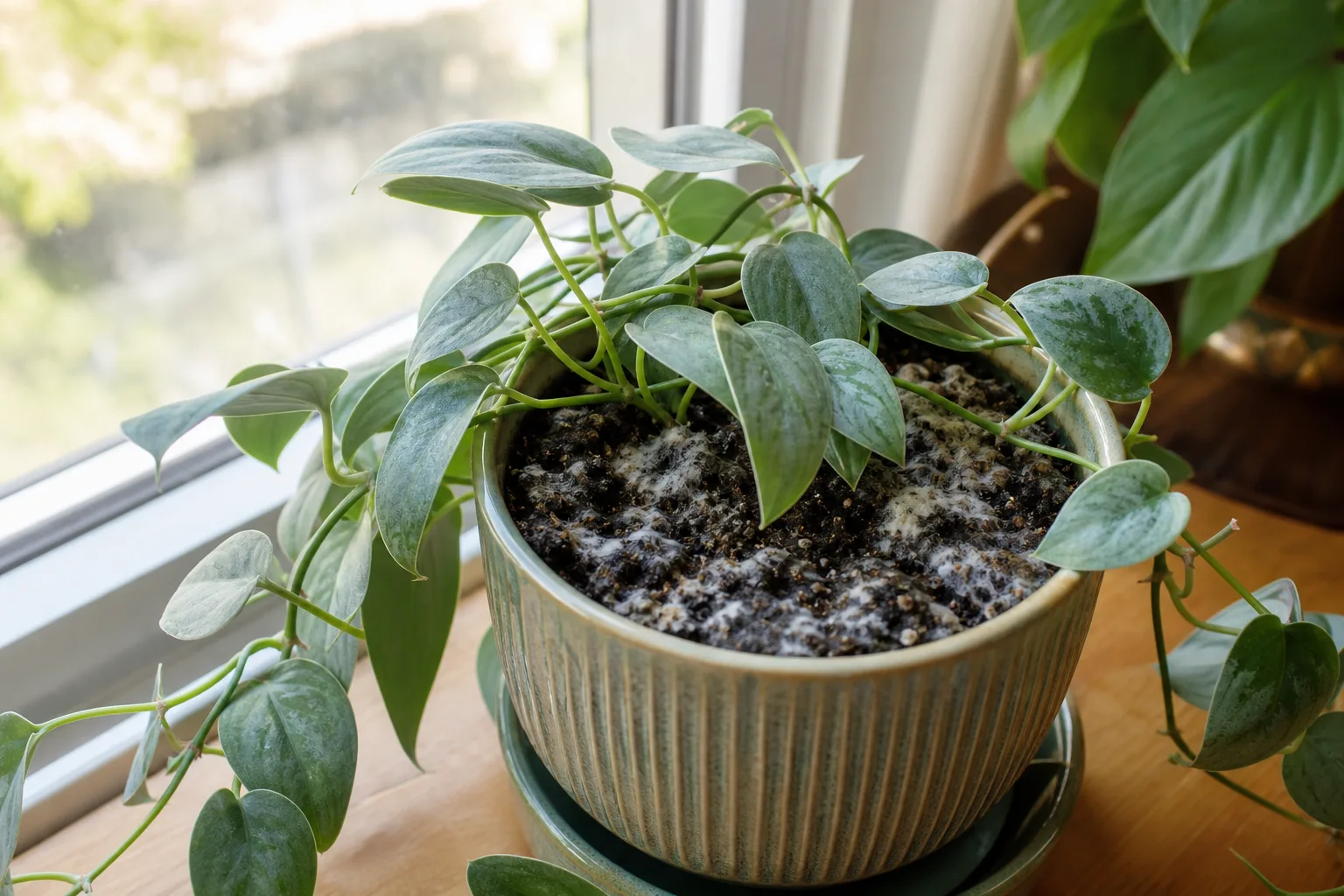
Mold on Soil on Cebu Blue Pothos: Causes, Checks & Fixes
This guide covers mold on soil on Cebu Blue Pothos. See also the general Mold on Soil guide, watering, and light pages for this plant.
Mold on Soil on Cebu Blue Pothos: Causes, Checks & Fixes
Quick answer
White or gray fuzzy patches on Cebu Blue Pothos (Epipremnum pinnatum ‘Cebu Blue’) potting mix look alarming, but they are usually saprophytic fungi breaking down organic matter in constantly moist soil-not a mold infection of the silvery-blue leaves themselves. Your vine can look perfectly healthy above the rim while the surface tells you the wet-dry cycle is off.
First step: scrape off the visible mold with a spoon, discard it in the trash, and pause watering until the top 3–5 cm of mix feels dry to the touch. That depth matches the Cebu Blue watering guide dry-down target. Cebu Blue tolerates missed drinks better than chronically soggy roots. Do not reach for fungicide until you have confirmed the plant is declining and ruled out simple overwatering.
For year-round rhythm, see watering. For wet heavy soil with limp leaves, see overwatering and root rot. For small flies with the mold, see fungus gnats.
Why Cebu Blue Pothos soil grows mold
Cebu Blue is a climbing aroid from humid forest understory on Cebu Island-not a bog plant. Like other Epipremnum species, it stores moisture in stems and roots and survives brief dry spells, but that same forgiveness makes calendar watering easy in dim rooms where the top layer stays damp for two weeks or longer.
Surface mold appears when three conditions overlap:
- Persistent moisture on the topsoil from overhead watering, poor drainage, or a decorative cache pot holding water in the saucer
- Organic debris from fallen silvery-blue leaves, old peat, or bark fines that fungi can colonize
- Limited airflow around crowded hanging baskets, moss-pole setups pushed against walls, or shelf clusters
Saprophytic fungi feed on dead organic matter in potting soil and do not harm living plants. The mold is a moisture and hygiene signal, not proof that your Cebu Blue has a foliar disease.
Cebu Blue is especially prone to this pattern when:
- Trailing vines drop leaves onto the soil surface, where they decay in the damp layer-this is a trailing aroid, not a rosette plant, so spent foliage lands on the mix from above
- Low-Cebu Blue Pothos light guide extends the dry-down window; many homes water every seven days while the plant only needs a drink every ten to fourteen days in shade per the watering guide
- Heavy peat-based nursery mix in an oversized pot holds water at the surface long after the owner thinks the plant is “due” for water
- Cache pots without drainage trap runoff and keep the upper layer saturated
- Moss-pole climbers with larger leaves transpire faster in bright summer light but can still show mold if you mist the pole heavily while the pot surface also stays wet
The same wet conditions that grow mold also invite fungus gnats, which feed on fungi and decaying organic matter in damp soil. Mold and gnats often show up together on Cebu Blue-not because the mold caused the gnats, but because both thrive in the same environment.
Compared with Golden Pothos (E. aureum), Cebu Blue often shows stress sooner in low light paired with slow-draining mix, even though both are Epipremnum vines with similar soak-and-dry culture.
What mold on soil looks like on Cebu Blue Pothos
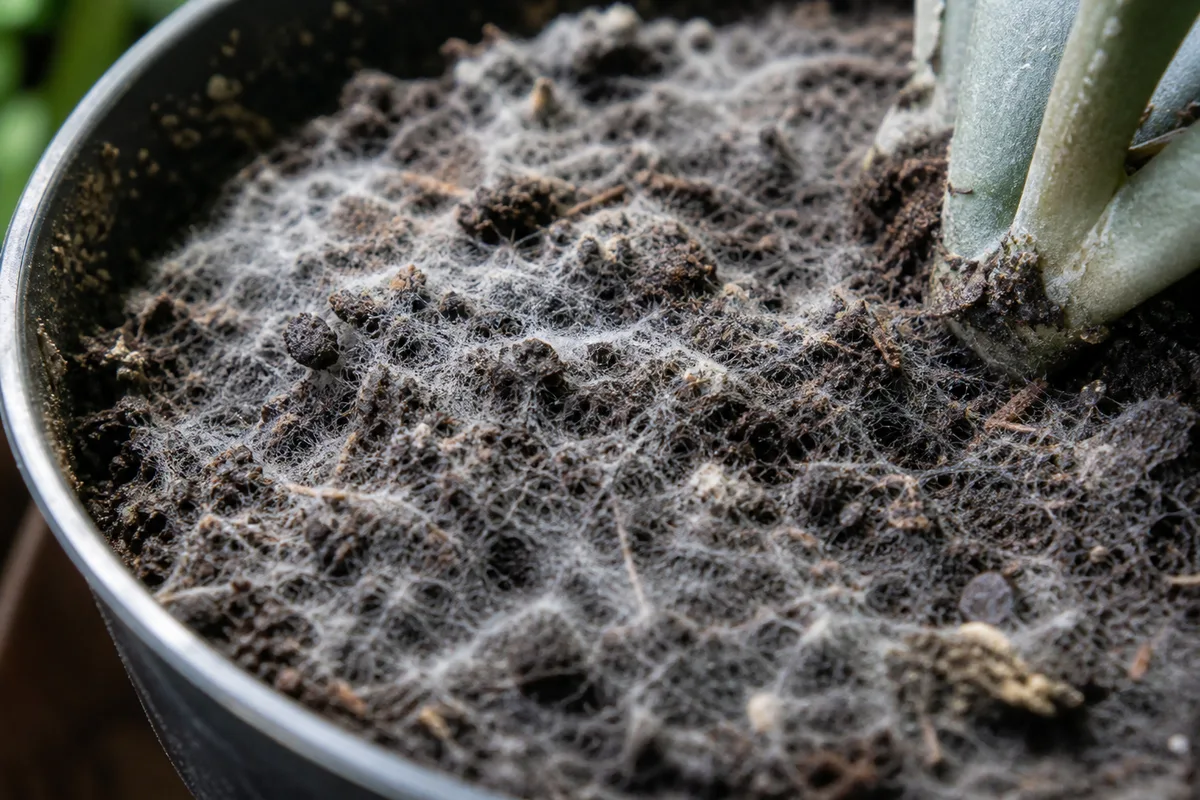
White or gray fuzzy saprophytic mold on the top 1–2 cm of potting soil - usually harmless surface fungus signaling the wet-dry cycle is off, not a leaf disease.
Typical harmless surface mold:
- White, gray, or occasionally tan fuzzy or thread-like growth on the top 1–2 cm of soil
- Patchy coverage that may spread after watering or in humid rooms
- Healthy silvery-blue arrow-shaped leaves on firm vines above the soil line
- No musty rotten smell when you sniff near the drainage hole
Signs the wet soil is stressing the plant-not just hosting cosmetic fungus:
- Lower leaves turning soft yellow while soil stays wet
- Soft, collapsed tissue at the stem base where the trailing vine meets the soil-not a central rosette crown
- Limp vines despite moist mix-a classic overwatering pattern on aroids
- Tiny black flies rising when you water or shift the pot
- Green slimy algae on the soil surface and pot rim-different organism, same moisture problem
Surface mold on healthy Cebu Blue rarely climbs stems or leaf blades. If you see fuzzy growth on living silvery foliage, that is a different problem-usually high humidity with poor airflow-not the same as white film on potting mix alone.
How to confirm the cause
Work through these checks before changing pots or spraying chemicals:
- Plant vigor - Are new silvery-blue leaves unfurling firm? Firm stems and active tip growth suggest the roots are still functioning despite surface mold.
- Soil moisture depth - Push your finger 3–5 cm into the mix. If it feels cool and damp several days after the last watering, the pot is drying too slowly for your room and light level.
- Pot weight - Lift the container. A heavy pot days after watering indicates saturated mix; a light pot with mold may mean you recently watered the surface while deeper soil was still wet.
- Debris scan - Look for yellowed Cebu Blue leaves, petiole stubs, or bark chunks on the soil surface feeding the fungus.
- Drainage check - Confirm the pot has open holes and that no standing water sits in the saucer or outer decorative sleeve.
- Gnat test - Tap the pot rim or water lightly; if small flies hover, chronic surface moisture is confirmed.
- Root smell (only if leaves are declining) - If multiple leaves yellow or the stem base softens, gently slide the root ball partway out. Sour, rotten odor means investigate root rot-not just scrape mold.
Firm stems vs mushy nodes
| What you find | Likely diagnosis | Next step |
|---|---|---|
| Firm vine at soil line + surface fuzz only | Cosmetic saprophytic mold | Scrape, dry top 3–5 cm, remove debris |
| Soft stem base + wet heavy soil + yellow leaves | Overwatering or early root decline | Stop watering; see overwatering |
| Sour smell + black mushy roots on spot-check | Root rot | Follow root rot protocol |
| Flies every watering + surface stays damp | Fungus gnat habitat | Dry surface + traps; see fungus gnats |
If the plant is vigorous, only the surface is fuzzy, and soil dries reasonably between waterings, you have confirmed cosmetic saprophytic mold tied to recent overwatering or debris-not an emergency repot.
First fix for Cebu Blue Pothos
Scrape off the moldy top layer, then let the upper 3–5 cm of potting mix dry before you water again.
Use a spoon or small trowel to remove roughly the top 1 cm of affected soil and discard it in the trash-not the compost pile, where spores can spread indoors. Epipremnum contains calcium oxalate crystals and is toxic to cats and dogs; wear gloves when scraping moldy soil if pets may contact the pot rim or discarded mix. Wipe the pot edge if mold clung to the rim. Do not replace the scraped layer with wet mix; leave the surface open to air.
Then stop watering until the top 1.5 to 2 inches of soil feel dry-the same depth as the 3–5 cm checkpoint in the watering guide. On Cebu Blue in medium indirect light, that often means waiting seven to ten days in active growth; in low winter light it may take ten to fourteen days. The plant will tolerate this pause better than another soak into already wet roots.
This single step addresses the immediate fungus food source and starts correcting the moisture rhythm. Secondary actions come only after the surface stays dry for several days.
Step-by-step recovery
Once you have scraped mold and paused watering:
- Remove fallen leaves and vine debris from the soil surface so fungi have less organic matter to colonize. Keep the soil surface free of dead leaves and stems.
- Empty saucers and cache pots within thirty minutes of watering so the bottom of the mix is not re-saturated from below.
- Shift to bottom-watering or soil-line watering if overhead pours keep the surface soggy on trailing vines. Set the pot in a bowl of water for fifteen to thirty minutes, then lift it out and drain fully.
- Improve airflow by spacing crowded Cebu Blue pots on shelves or running gentle room circulation-stagnant humid pockets slow surface drying, especially around moss poles in corners.
- Brighten indirect light slightly if the plant sits in deep shade. More light increases water use without requiring direct sun that bleaches the silvery-blue sheen.
- Refresh only the top inch with dry, well-draining mix after the rest of the pot has dried-optional if mold was mild and the scrape removed most growth.
- Set yellow sticky traps if fungus gnats appeared with the mold; traps catch adults while drying soil breaks the larval cycle.
- Inspect roots only if the stem base softens or yellowing spreads despite a dry surface. Trim black mushy roots, repot into fresh airy mix, and use a right-sized pot-not an emergency step for cosmetic mold alone.
Do not fertilize a stressed Cebu Blue hoping to push new growth. Salt buildup and soft tissue from overwatering both worsen when fertilizer is added to wet, damaged roots.
Recovery timeline
Surface mold should not reappear within one to two weeks once the top layer stays dry and debris is cleared. You may see a faint musty smell fade as the mix aerates.
Fungus gnat counts usually drop within two to three weeks of consistent surface drying. Full gnat control can take a month because of overlapping generations.
Judge Cebu Blue recovery by new growth, not old soil appearance:
- New silvery-blue leaves unfurl firm within two to three weeks
- Vines stop limping between waterings
- Yellowing stops spreading from lower leaves
Persistent mold every few days after scraping means the watering rhythm or pot setup still keeps the surface wet-adjust care before Cebu Blue Pothos repotting guide.
Lookalike symptoms to rule out
| What you see | Likely cause | Key differentiator |
|---|---|---|
| White fuzzy mat on soil only | Saprophytic mold | Firm vines; no sour smell |
| Green slimy film on surface | Algae | Needs constant light moisture; feels slick, not cottony |
| Hard white or tan crust | Mineral deposits | From hard tap water or excess fertilizer-not fluffy threads |
| White cotton on stem nodes | Mealybugs | Attached to living tissue, not scattered across soil |
| Dry white dust on leaf blades | Powdery mildew | On foliage, not potting mix |
| Yellow leaves + mushy stem base + sour smell | Root rot | Declining plant tissue, not cosmetic surface fuzz alone |
Mistakes to avoid
Do not drench the pot with fungicide or cinnamon for harmless surface mold-the environmental fix is drying soil, not killing spores that will return while conditions stay wet.
Do not keep watering on the same schedule because “pothos likes moisture.” Cebu Blue prefers soil allowed to dry between each watering; calendar watering in cool, dim rooms is the most common mold trigger.
Do not leave spent trailing leaves on the soil to “compost in place.” They decay into fungus food in closed indoor pots.
Do not assume mold proves the bag of potting soil was contaminated. Spores are ubiquitous indoors; they grow when moisture and organic matter meet.
Do not repot on day one for a healthy plant with surface fuzz. Repotting into fresh mix without fixing watering often brings mold back within weeks.
Do not ignore fungus gnats as harmless because the plant looks fine. Gnats signal the same wet conditions that eventually stress aroid roots.
Do not scrape mold into an indoor compost bin where spores can spread to other pots.
How to prevent mold on Cebu Blue Pothos soil
Match watering to how fast your pot dries in your light:
- Check the top 3–5 cm before every drink instead of counting days
- In bright indirect light, expect roughly seven to ten days between waterings; in low winter light, ten to fourteen days is common per the watering guide
- Use well-draining mix with perlite and a pot only slightly larger than the root ball-see soil for mix guidance
- Bottom-water or pour at the soil line to keep the surface drier on trailing specimens
- Promptly remove yellow or dropped leaves from trailing vines
- Space pots for airflow on shelves, moss poles, and hanging hooks
- Empty saucers after every watering
A dry surface between waterings is the most reliable long-term mold prevention on Cebu Blue-not periodic scraping alone.
When to worry
Escalate beyond scraping and drying when:
- The stem base turns mushy at the soil line while mix is wet
- Many silvery leaves yellow within days despite your pause in watering
- The plant wilts with wet soil-a sign damaged roots cannot take up water
- Mold returns within forty-eight hours of scraping and you already extended the dry interval-inspect roots and pot size
- Strong rotten smell comes from the drainage hole
Those patterns point to overwatering injury or root rot, not cosmetic saprophytic mold alone. Follow the root rot guide to trim affected roots, repot into fresh airy mix, and reduce watering frequency going forward.
Cosmetic white fuzz on vigorous Cebu Blue with firm vines is not urgent. Fix moisture, clear debris, and monitor new growth.
Conclusion
Mold on Cebu Blue Pothos soil is usually a harmless saprophytic fungus telling you the surface stayed wet too long-often from calendar watering, fallen silvery leaves from trailing vines, or slow drying in low light. Scrape the visible growth, let the top 3–5 cm of mix dry, and remove debris before reaching for fungicides or repotting. If stems stay firm and new silvery-blue leaves keep unfurling, the plant is fine; if yellowing and softness follow the mold, treat the wet roots-not just the fuzzy top layer. For ongoing rhythm, return to the watering guide.
When to use this page vs other Cebu Blue Pothos guides
- Cebu Blue Pothos watering guide - Use for routine moisture checks before assuming mold on soil is the main issue.
- Cebu Blue Pothos problems hub - Browse all 16 common issues on this species.
- Fungus Gnats on Cebu Blue Pothos - Different entry point when symptoms overlap with mold on soil.
- Overwatering on Cebu Blue Pothos - Different entry point when symptoms overlap with mold on soil.
- Root Rot on Cebu Blue Pothos - Different entry point when symptoms overlap with mold on soil.