Slow Growth on Cebu Blue Pothos: Causes, Checks & Fixes
Quick answer
Cebu Blue Pothos is a fast-growing vine when light, water, and roots align-worry when no new nodes appear across a warm bright season and the silvery blue sheen fades toward plain green. First step: compare newest leaf color and internode spacing to your window placement before fertilizing or repotting.
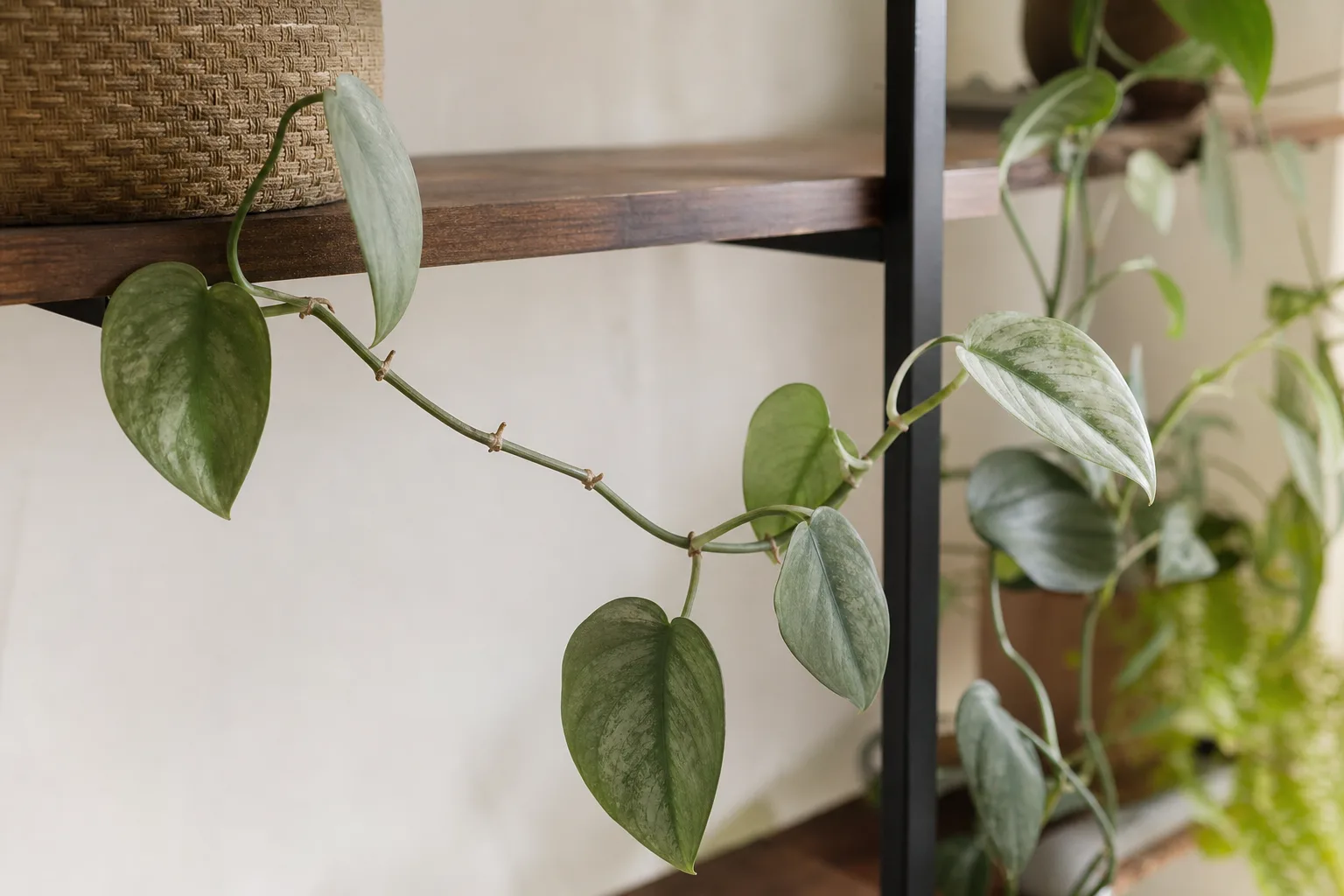
Slow Growth on Cebu Blue Pothos: Causes, Checks & Fixes
This guide covers slow growth on Cebu Blue Pothos. See also the general Slow Growth guide, watering, and light pages for this plant.
Slow Growth on Cebu Blue Pothos: Causes, Checks & Fixes
Quick answer
Cebu Blue Pothos (Epipremnum pinnatum ‘Cebu Blue’) is marketed as a fast-growing vine-and in bright indirect light with healthy roots, it usually is. Worry when no new nodes appear across a warm bright season and the silvery blue sheen on newest leaves fades toward plain green with long gaps between leaves.
First step: stand at the plant’s spot at midday and ask whether leaves receive real plant-facing brightness-not just a bright-looking room. Compare the color and spacing on the freshest leaves against vines closer to the window. Faded blue, shrinking new leaves, and bare internodes almost always mean light is the limiting factor on Cebu Blue before fertilizer, repotting, or a moss pole will help.
What normal fast growth looks like on Cebu Blue Pothos
Understanding baseline pace prevents panic over a healthy trailing juvenile or a normal winter pause.
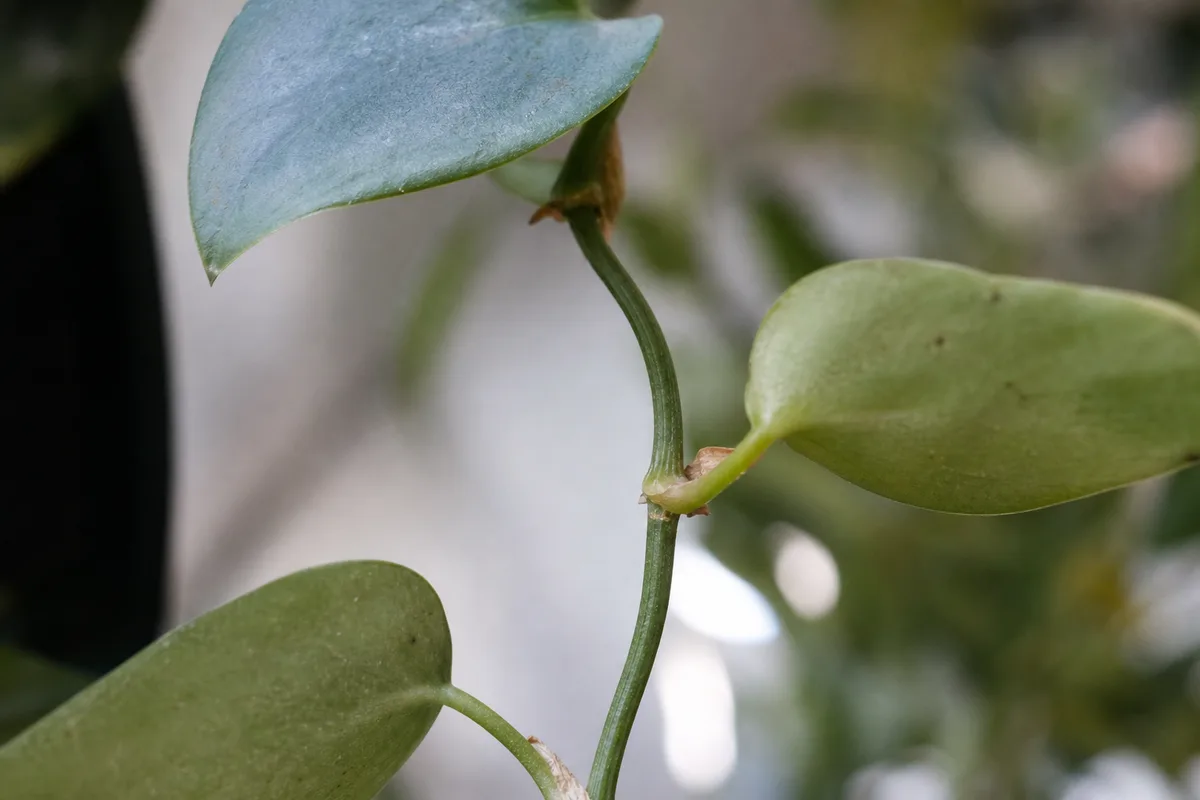
Long gap between nodes with small faded new leaves - blue glaucous sheen lost on newest growth compared to older blue-toned foliage above.
Expected pace indoors
NC State Extension describes Epipremnum pinnatum cultivars as easy to grow and low maintenance houseplants. Cebu Blue specifically trails 5 to 6 feet indoors with narrow, lance-shaped blue-green juvenile leaves. In bright indirect light during active months, many homes see a new leaf or node every two to four weeks along extending vines-not daily growth, but steady visible progress when you mark where the tip last was.
That pace outruns slower aroids and most scindapsus, though Cebu Blue is less bulletproof than Golden Pothos (E. aureum) in dim corners. The species stores water in stems and pushes extension quickly when photosynthesis keeps up. If your vine added several nodes across spring and summer with firm blue-tinted new leaves, growth is probably fine even if individual leaves stay small.
Seasonal winter slowdown
Growth naturally eases when daylight shortens and indoor temperatures dip. From late fall through early spring, Cebu Blue may hold existing foliage for weeks without obvious extension-especially in north-facing rooms or homes kept cooler than about 65°F (18°C). Clemson HGIC notes pothos relatives prefer 70 to 85°F days and slow when conditions cool. A firm vine with stable color and no yellowing through winter is usually resting, not failing.
Resume diagnostic concern when longer days return, temperatures stabilize above roughly 65°F, and still no new nodes appear for six to eight weeks while lower-light Golden Pothos nearby continue extending.
Juvenile trailing form vs. mature leaves on a moss pole
Owners often confuse small trailing juvenile leaves with a growth stall. Cebu Blue leaves typically remain in the juvenile form when the plant trails freely. If allowed to grow on a stake or moss pole, leaves mature and become fenestrated like the species-mature blades can reach 12 to 20 inches long in favorable conditions.
A hanging basket with compact arrow-shaped blue leaves that still adds nodes steadily is healthy juvenile growth, not slow growth. Expecting Monstera-sized split leaves without climbing support and strong light is a maturity expectation problem, not a pathological stall. See the overview and light guide for moss-pole training-not as a first fix for a dim, stalled vine.
When slow growth is actually a problem
Abnormal stall on Cebu Blue usually combines absence of new nodes with at least one stress signal:
- No new leaves across a warm bright season - the vine tip stays bare while weeks pass in spring or summer
- Faded blue sheen and long internodes - newest leaves look olive-green, smaller than the ones above, with noticeably empty stem between nodes
- Wet soil plus stall in a dim corner - mix stays damp for a week or more while growth stops; roots may be failing in low-oxygen conditions
- Whole vine pale and limp on heavy wet pot - overlaps root stress; see root rot if the crown softens
- New growth coated in webbing or stippling - spider mites stall extension on stressed vines in dry air
Not a problem: winter pause with firm leaves, steady small juvenile leaves on a trailing vine that still adds nodes, or slow fenestration development on a moss pole in adequate light-mature morphology takes time.
Why Cebu Blue Pothos slows down
Low light beyond tolerance
Cebu Blue’s silvery coating is a light-sensitive trait. In weak light, the plant still produces chlorophyll but thins the glaucous wax, stretches internodes toward the brightest source, and shrinks new leaves. Pothos prefer bright indirect light but tolerate lower lighting-though lower light may cause variegated varieties to lose coloring. Cebu Blue shows that loss as blue fade and bare vines more visibly than Golden Pothos in the same dim shelf.
Low light also slows pot drying. Owners who keep a summer watering rhythm in a dark corner create chronic wet mix-roots stop functioning and growth stalls on soil that never fully dries.
Root-bound in a fast grower
Cebu Blue can fill a pot within one to two growing seasons in bright light. Repotting may be required about every 2 to 3 years under normal conditions-but a vigorous specimen may need it sooner. When roots circle densely, water runs straight through, new leaves arrive smaller, and extension pauses despite good light. Lift the root ball gently; a solid mass of white roots with little visible mix suggests repotting, not fertilizer.
Overwatering in shade
Overwatering will cause fungal and bacterial diseases which can lead to root rot on E. pinnatum. In dim corners where the plant uses little water, saturated mix blocks oxygen. Growth stops while soil stays wet-a different pattern from winter dormancy, which usually pairs with drier, slower-use pots.
Cold drafts and sub-55°F exposure
Cebu Blue prefers warm temperatures; hot and cold air from vents and windows can damage plant cells. Growth slows noticeably below about 60°F (16°C) even when foliage looks intact. A plant beside a winter windowsill or AC vent may produce no new nodes until warmth stabilizes.
Spider mites and pest pressure
Monitor for spider mites on Epipremnum pinnatum. Dry indoor air plus a stressed vine invites mites on new growth tips-the exact tissue you need for recovery. Webbing, stippled leaves, and stalled nodes together warrant inspection before you increase water or feed.
Expecting fenestration without climbing support
Without a moss pole and adequate light, Cebu Blue stays in juvenile form by design. Fertilizer and patience will not produce large split leaves on a trailing vine in a dim room. That is morphology, not a fixable stall-though light improvement still speeds node production on juvenile vines.
Lookalike symptoms to rule out
| Pattern | What it looks like | Likely cause | Where to read |
|---|---|---|---|
| Leggy stretch | Long bare internodes, small pale leaves reaching toward light | Insufficient light (etiolation) | Leggy growth |
| Winter pause | No new nodes for weeks, firm existing leaves, stable color, cool short days | Seasonal dormancy | Resume checks in spring |
| Root rot collapse | Yellowing lower leaves, soft stems, sour wet mix, sudden limpness | Chronic overwatering | Root rot |
| Juvenile trailing | Small blue leaves, steady new nodes, no fenestration | Normal immature form | Overview |
| Not enough light | Blue fade, compact stall without extreme stretch | Light below productive threshold | Not enough light |
Leggy growth and slow growth overlap on Cebu Blue-both often trace to light. Leggy emphasizes stretch toward a window; slow growth emphasizes no new nodes at all or shrinking new leaves on a vine that stopped extending entirely.
How to confirm the cause
Work through these checks before changing more than one variable:
- Season and temperature - Is it late fall through early spring, or is the room below about 65°F? If yes, pause may be normal. If warm bright weeks pass with no nodes, continue.
- Newest leaf color - Strong blue-green glint on fresh leaves means light is probably adequate. Olive-green, matte, or smaller-than-the-last-leaf new growth points to light first.
- Internode spacing on the last three nodes - Measure gaps along the newest section. Long empty stem with tiny leaves confirms light stress; compact spacing with no new tip suggests root or water issues.
- Window placement - Stand where the plant sits at midday. If you would not comfortably read there without a lamp, the vine is likely below productive brightness. Compare with the light guide placement targets.
- Soil moisture rhythm - Insert a finger 3–5 cm deep per the watering guide. Mix wet for seven or more days in a dim spot suggests overwatering stall. Bone-dry pots that stay light for weeks suggest drought stress slowing growth.
- Pot weight and roots - Heavy pot that never lightens, or water running straight through instantly, suggests root-bound or failed mix. Slide the plant out; dense root circling warrants repotting.
- Pest check - Inspect new growth tips and leaf undersides with a phone light for webbing, stippling, or scale.
Confirmed light-limited stall: faded blue, long internodes, dim placement, wet or dry soil secondary. Confirmed root-bound stall: good light, shrinking new leaves, roots circling, water runs through fast. Confirmed wet-soil stall: dim corner, soggy mix, possible yellow lower leaves.
First fix for Cebu Blue Pothos
Move the plant-or add a grow light-so newest leaves receive bright indirect light for most of the day before you fertilize, repot, or install a moss pole.
Practical placement: within 2 to 4 feet of an east- or west-facing window, or behind a sheer curtain on south if afternoon sun is harsh. If no suitable window exists, add a full-spectrum LED 12 to 18 inches above the canopy for 10 to 14 hours daily. Bright indirect light supports healthy foliage growth indoors.
Acclimate over 10 to 14 days if the plant lived in deep shade-sudden harsh sun scorches silvery leaves. Judge success by the next one to three new leaves: firmer texture, shorter internodes, and visible blue tone mean the first fix is working. If light was already strong, shift to the root and moisture branch below instead of burning leaves with more sun.
Step-by-step recovery by cause
Light-limited stall
- Improve placement or add a grow light as above; acclimate gradually.
- Adjust watering to match new light-brighter spots dry faster; dim corners need less frequent drinks.
- After two to three healthy new leaves appear, prune one long bare section if the vine looks uneven-optional, not day-one.
- Consider a moss pole only once extension resumes and light is stable.
Root-bound stall
- Confirm circling roots and fast dry-through when watering.
- Repot into the next pot size only-one to two inches wider-with well-drained mix per the repotting guide.
- Water thoroughly once, then return to the top-3–5-cm-dry rhythm.
- Hold fertilizer for four to six weeks until new growth is obvious.
Wet-soil stall in shade
- Stop watering until the top half of the mix dries; empty cachepots and saucers.
- Move to brighter indirect light so the pot can dry predictably.
- If yellow lower leaves spread on still-wet mix, inspect roots-see overwatering and root rot.
- Resume watering only when the top 3–5 cm is dry.
Cold-stall
- Move away from windowsills, AC vents, and exterior doors.
- Keep daytime temperatures in the 65 to 85°F range where possible.
- Wait two to three weeks after stability before expecting new nodes.
Pest-related stall
- Rinse leaf undersides and isolate from other plants.
- Confirm active mites or scale before spraying.
- Correct light and watering alongside pest treatment-stressed vines relapse if habitat stays dim and wet.
Nutrient limitation (only after light is confirmed)
If light is adequate, roots are healthy, and new leaves stay small and pale yellow-green for months in the same pot, a modest feed may help. Use half-strength balanced fertilizer on moist soil every four to six weeks in active months per the fertilizer guide-never on dry mix or a stressed stall.
Recovery timeline
Light correction on a fast-growing Cebu Blue often shows the first firm new leaf within two to four weeks once placement improves during warm months. Internode spacing tightens on leaves three through five; older bare sections do not fill in.
Root-bound repot may pause growth for one to two weeks, then resume a normal two-to-four-week node rhythm in good light.
Wet-soil recovery takes two to six weeks if roots are mostly intact; mushy roots extend the timeline and may require trimming.
Winter pause resolves with spring light and warmth-allow four to six weeks after conditions improve before deciding the stall is pathological.
Pest recovery tracks treatment success on new growth; old damaged leaves may not enlarge.
Judge progress by new nodes and blue tone on the freshest leaves, not by old bare stem filling in.
What not to do
Do not fertilize a stalled Cebu Blue before confirming light and root health-fertilizer applied to dry potting mix can damage roots and adds salt without fixing shade-limited growth. Do not repot, prune heavily, and feed on the same day; make one care correction at a time so you can read the plant’s response. Do not install a moss pole alone in a dim corner and expect faster extension. Do not remove healthy leaves because “nothing is happening”-on a fast-growing vine, foliage fuels recovery. Do not assume Golden Pothos tolerance applies; Cebu Blue fades and stalls sooner in the same low-light spot.
How to prevent abnormal slow growth next time
Place Cebu Blue where it receives bright indirect light most of the day-see the light guide for window specifics. Water when the top 3–5 cm of mix is dry, adjusting frequency when you move the plant brighter or dimmer. Repot before roots circle densely in a fast-growing specimen-typically every one to two years in vigorous setups. Keep temperatures stable between 65 and 85°F away from vents. Plan for a moss pole if you want mature leaves, not as a substitute for brightness. Inspect new growth tips weekly during active months for mites. Cross-check routine care against the overview hub when multiple symptoms appear.
Cebu Blue slow growth cross-check
| Check | Healthy baseline | Stall red flag |
|---|---|---|
| New nodes in warm months | Every 2–4 weeks in bright indirect light | No new nodes for 6–8+ weeks |
| Newest leaf color | Distinct silvery blue-green | Dull olive, matte, shrinking size |
| Internodes | Compact on recent growth | Long bare gaps, tiny new leaves |
| Soil in dim spots | Dries within 7–10 days | Stays wet 7+ days |
| Roots | White tips, room to grow | Dense circling, water runs through |
| Season | Slower in winter, firm leaves | No spring resumption |
Related Cebu Blue guides
- Cebu Blue overview - fast growth baseline and juvenile vs. mature form
- Light needs - placement, grow lights, blue-sheen diagnostics
- Fertilizer - when feed helps vs. hurts
- Not enough light - stall vs. light threshold
- Leggy growth - stretch toward windows
- Repotting - root-bound in a fast grower
- Root rot - wet-soil stall with yellowing
- Propagation - restart from a healthy cutting if the crown fails