Leggy Growth on Cebu Blue Pothos: Causes, Checks & Fixes
Quick answer
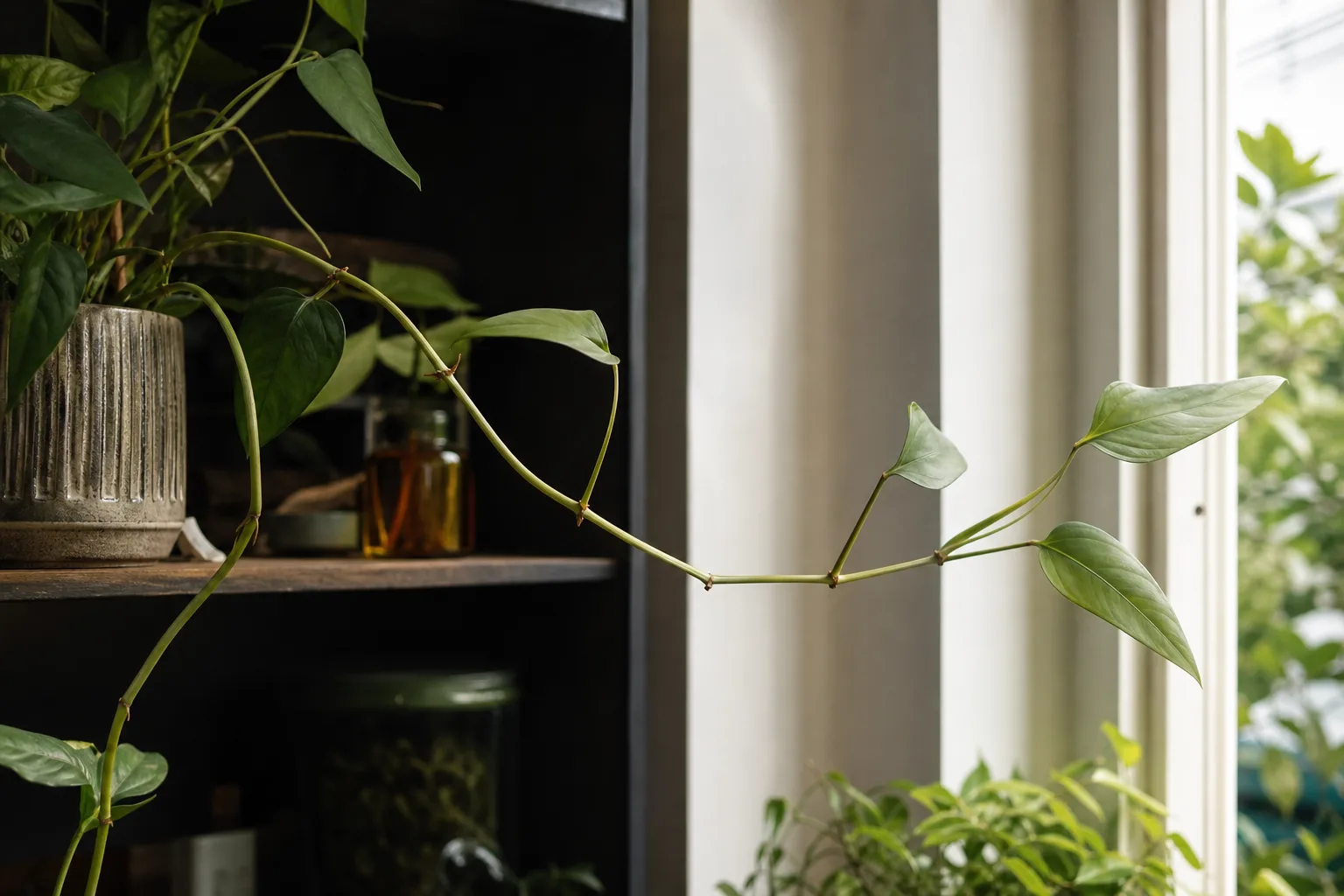
Leggy growth on Cebu Blue Pothos is etiolation: the vine stretches toward light, leaving long gaps between small arrow-shaped leaves and washing out the silver-blue sheen. First step: move the pot to the brightest indirect spot in your home-within a few feet of an east or west window-then wait for one new leaf set before pruning stretched sections above a node.
Leggy Growth on Cebu Blue Pothos: Causes, Checks & Fixes
This guide covers leggy growth on Cebu Blue Pothos. See also the general Leggy Growth guide, watering, and light pages for this plant.
Leggy Growth on Cebu Blue Pothos: Causes, Checks & Fixes
Quick answer
Leggy growth on Cebu Blue Pothos (Epipremnum pinnatum ‘Cebu Blue’) is etiolation-the vine elongates stems and widens gaps between leaves while hunting for more light. You will see long bare sections, small arrow-shaped juvenile foliage, loss of the signature silver-blue glaucous sheen, and vines tilting toward the brightest corner of the room. This cultivar is marketed beside Golden Pothos as an easy trailer, but it is less forgiving in dim corners where generic pothos might merely slow down.
First step: move the pot to the brightest indirect location you can offer-typically within a few feet of an east or west window-without hot direct sun on the leaves. Hold watering steady for two weeks, watch the next leaf set for tighter spacing, then prune stretched sections above a node if you want a bushier silhouette. Stretched internodes never shorten on their own; new compact growth proves the fix worked.
For placement thresholds and window direction detail, see not enough light on Cebu Blue Pothos. For cut placement and timing, see Cebu Blue Pothos pruning.
What leggy growth looks like on Cebu Blue Pothos
Etiolation shows up through stem length, leaf size, and color-not flowers. This species rarely blooms indoors. Recognize these patterns on a Cebu Blue before you repot, fertilize, or stack other fixes:
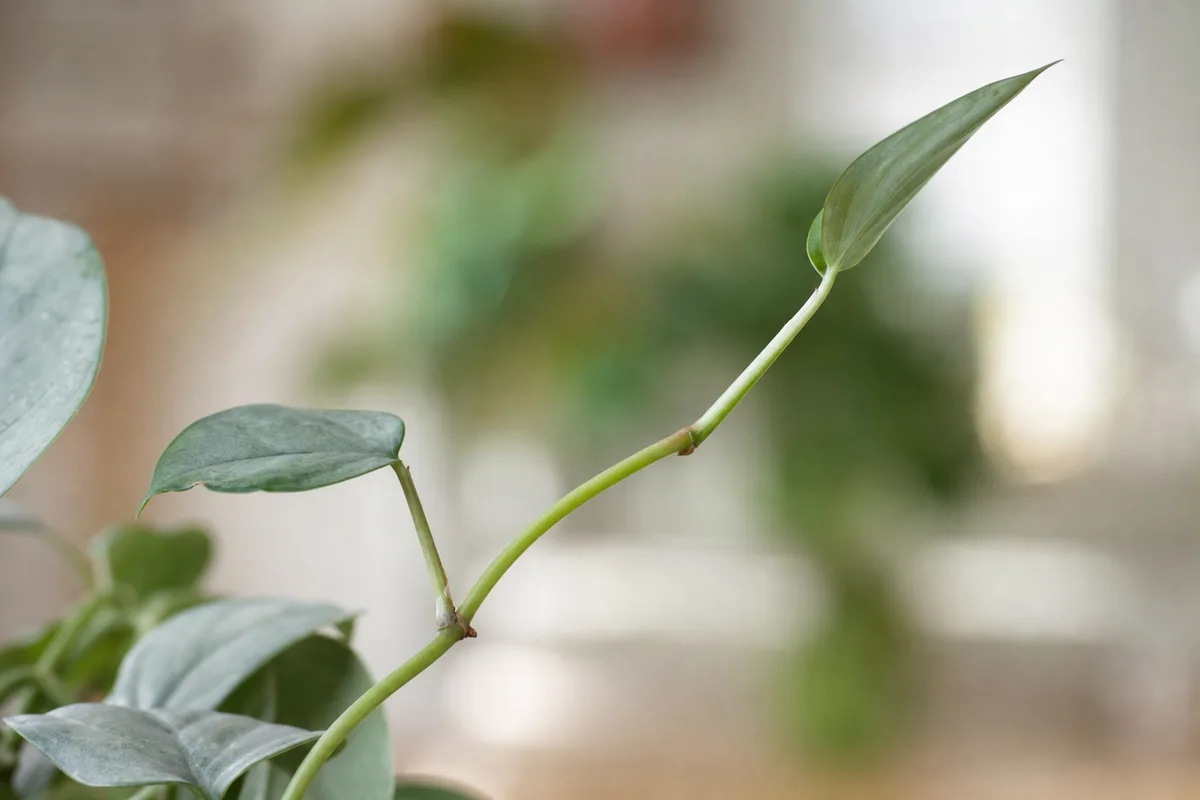
Stretched internodes with 5–15 cm or more of bare stem between small juvenile arrow leaves - silver-blue sheen fades to plain green as the vine reaches toward brighter light.
Long bare vines and stretched internodes
Healthy Cebu Blue in good light produces nodes every few centimetres along the vine. In etiolation, indoor plants stretch and lean toward light when intensity is too low, leaving 5–15 cm or more of bare stem between small leaves. Hanging baskets look sparse; tabletop pots tilt toward the window. The plant is reallocating energy to reach brighter conditions-not “growing happily” in a dark shelf.
Silver-blue color fade
Juvenile leaves carry a waxy blue-green or silvery cast from epicuticular wax. In dim rooms that sheen washes out to flat medium green long before the vine collapses. Pothos in low light eventually loses desirable leaf qualities such as brightness and variegation-on Cebu Blue, color loss is often the first warning before severe stretch.
Small juvenile arrow leaves
New leaves stay compact and arrow-shaped instead of enlarging. At light levels around 50 foot-candles, new pothos leaves stay small; 150 fc or more maintains leaf size and color. Cebu Blue kept as a trailing juvenile in a hallway may show months of tiny foliage while a sibling at a bright east window produces noticeably larger blades on the same watering schedule.
Leaning and one-sided growth
Vines consistently point toward a single light source. Rotate the pot 180°; if new tips bend back toward the window within two weeks, light-not fertilizer-is the limiter. Variegated and specialty pothos cultivars lose coloring and density in lower light faster than plain Golden Pothos in the same dim spot.
Crispy brown patches on sun-facing leaves are not the leggy signature-they usually mean direct sun scorch. If only window-side leaves bleach or brown, pull the pot back from glass rather than adding more light.
Why Cebu Blue Pothos gets leggy growth
Epipremnum pinnatum is a tropical climbing vine native to Southeast Asia and the Pacific. In the wild it ascends tree trunks toward filtered canopy light. The ‘Cebu Blue’ cultivar from Cebu Island keeps juvenile arrow leaves when trailing but can produce larger, fenestrated adult foliage when climbing in bright conditions-neither form develops well in interior shade chosen because pothos are “low-light plants.”
Common triggers in homes:
- Decor-first placement - Bookshelves, hallway hooks, and bathroom corners far from windows often fall below 100 foot-candles, below what many foliage plants need to maintain compact form.
- Assuming all pothos tolerate the same dim spots - Golden pothos may hang on longer. Cebu Blue often stretches and greens out while a Golden beside it merely slows-same room, different cultivar response.
- Winter daylight drop - The window that worked in June may deliver half the intensity by December without any change in your watering calendar.
- Dirty glass, heavy curtains, or outdoor shade - Light intensity decreases rapidly with distance from the source and with anything that filters the pane.
- Low light plus unchanged watering - When photosynthesis drops, the plant draws less moisture. Wet mix in a dark spot invites yellow lower leaves-a pattern that mimics overwatering but starts with stretch and lean.
Over-fertilizing a plant already etiolating in shade adds salt stress without fixing node spacing. Root-bound pots can slow growth but rarely cause the dramatic window-lean and internode stretch that define leggy Cebu Blue.
How to confirm the cause
Work through these checks before pruning or repotting:
- Window distance and direction - Stand where the pot sits. More than 1.5–2 m (5–6 ft) from a window is usually low light for active Cebu Blue growth. Note east, west, north, or filtered south exposure.
- Internode ruler - Measure the gap between the last three leaves on a growing tip. Gaps widening over time confirm etiolation; stable short gaps on pale leaves may point to not enough light without severe stretch yet.
- Lean test - Rotate the pot; new growth bending back toward the window within two weeks confirms light seeking.
- Soil dry-down - Press a finger into the top 3–5 cm. Chronic wetness with pale limp vines in a dim shelf suggests low light slowing water use-see overwatering if yellowing spreads on soggy mix.
- New leaf inspection - Small leaves with long bare sections behind them on an otherwise stable pot confirm chronic etiolation. Mushy stems with sour smell point to root rot instead.
- Shadow test at midday - A faint or absent hand shadow means the spot is too dim for the blue color and compact growth you bought this plant for.
If vines are full and green but growth stalled through winter only, read slow growth on Cebu Blue Pothos before assuming etiolation.
First fix for Cebu Blue Pothos
Move the pot to brighter indirect light today. That is the single first action-not prune, repot, and fertilize on the same afternoon.
Choose the brightest location that avoids hot direct rays:
- East-facing window - Strong morning light, softer afternoon; often ideal for Cebu Blue.
- West-facing window - Pull the pot 0.5–1 m back from glass or use a sheer curtain.
- North-facing window - Acceptable if it is the brightest unshaded exposure in the room; add a grow light in winter if nodes stall.
- South-facing window - Keep the vine behind a sheer curtain or 1–2 m inside so leaves never cook in midday sun.
Increase exposure gradually if the plant lived in very dim light for months-a sudden jump into a hot south window can scorch foliage even though the plant wanted more light overall. A week at an intermediate bright shelf, then the final spot, is safer.
Hold watering steady for the first two weeks unless mix is clearly soggy. Brighter light increases evaporation; recheck the top 3–5 cm before each drink rather than keeping an old calendar schedule.
When to add a grow light
If the brightest honest spot is still far from glass-a basement office, interior hallway, or north room-mount a full-spectrum LED grow light 15–30 cm above the foliage for 12–14 hours daily. Raise the lamp if leaf edges bleach. Supplemental light stops further stretch; it does not shrink existing bare internodes.
When to prune above a node
Wait until at least one new leaf unfurls in the brighter spot so you know light is adequate. Then trim each leggy vine just above a node with clean scissors, leaving at least one healthy leaf on the remaining stem. The node below your cut should sprout a tighter branch. Full cut placement and propagation steps live on the Cebu Blue pruning guide.
Recovery timeline
Judge recovery on new growth, not old stretched stems:
- 1–2 weeks - Lean may slow; the plant stops looking worse. No fertilizer response yet.
- 3–6 weeks - Next leaves should show tighter spacing and stronger blue-green color if light is adequate.
- 2–3 months - Regular node production through the growing season suggests the fix worked. Old stretched internodes remain long permanently unless you pruned them.
- After pruning - A new shoot from the node below your cut may appear within 2–4 weeks in warm bright conditions; winter is slower.
If six weeks pass in a clearly brighter spot with no new growth and continuing yellowing on wet soil, unpot and inspect roots-light was not the only problem.
Lookalike symptoms
| What you see | More likely cause | Quick check |
|---|---|---|
| Long vines leaning toward window | Leggy growth / etiolation | Move to bright indirect light; see light guide |
| Pale color, short gaps, no dramatic stretch | Not enough light (early) | Not enough light guide |
| Crispy brown patches on sun-facing leaves | Too much direct sun | Pull back from glass or add sheer curtain |
| Yellow leaves, soggy mix, sour smell | Overwatering / root rot | Stop watering; inspect roots |
| Wilting, dry mix, faded blue color | Underwatering | Water when top 3–5 cm dries |
| Slow growth in winter only, stable spacing | Seasonal rest | Normal if color stays fair |
Leggy reach plus silver-blue fade together strongly favor etiolation. A single yellow lower leaf on dry soil may be normal aging.
What not to do
- Pruning before improving light - Cut stems in dim corners regrow leggy again. Fix placement first; prune for shape second.
- Fertilizing a stretched plant in shade - Salt buildup on inactive roots adds stress. Wait for new leaf growth before feeding at half strength.
- Repotting on day one - Repotting does not create light. Change placement, observe, then repot in spring only if roots need space.
- Stacking repot, prune, and pesticide the same day - Make one care correction at a time so you can read the plant’s response.
- Judging recovery on old bare internodes - They never shorten. Success is compact new leaves or fresh shoots from pruned nodes.
- Parking it in a dark corner because “pothos are low-light plants” - Cebu Blue is sold for color and form. Dim survival produces the leggy basket you are trying to fix.
How to prevent leggy growth next time
- Place new Cebu Blue purchases within a few feet of a window from day one-not in a holding spot until you find the right place.
- Rotate the pot weekly so vines grow evenly and you notice lean before internodes stretch severely.
- Clean windows in fall before daylight shrinks; shorten watering when growth slows in dim winter corners.
- Add grow lights in north rooms or deep floor plans; 12–14 hours of supplemental light prevents winter stretch.
- Use a moss pole in bright light if you want larger leaves-trailing alone in dim light keeps juvenile foliage indefinitely. See Cebu Blue light requirements for placement detail.
- Reassess after furniture moves - A shifted sofa or new blinds can drop intensity by half without you noticing.
Treat compact growth as a location you can verify with internode spacing, blue sheen, and weekly lean checks-not a label on the nursery tag.
When to worry
Leggy growth alone is rarely fatal, but these combinations need faster action:
- Many yellow leaves plus wet, sour mix in a dark room - Risk of root rot. Stop watering, improve light, and inspect roots if yellowing spreads.
- No new growth for six or more months through spring and summer in a spot you thought was bright-the location is still too dim or another stressor (pests, rot) is active.
- Continued collapse after four weeks in verified bright indirect light - Look for spider mites on leaf undersides or soft brown roots from chronic overwatering in the old dim spot.
A stretched but stable plant in a hallway is a shape and vigor issue you can correct over one growing season-not an emergency unless wet soil and yellowing accelerate at the same time.
Conclusion
Leggy Cebu Blue Pothos is a light problem wearing a shape problem. Etiolation stretches internodes, fades the silver-blue sheen, and leaves bare vines that will never compact on their own. Move the pot to bright indirect light first, confirm the fix on the next leaf set, then prune above nodes if you want density sooner. Pair that sequence with honest watering for the new light level and you turn a sparse trailer back into the glaucous vine you bought-without repotting, fertilizing, or guessing in a dim corner.
Related Cebu Blue Pothos guides
- Not enough light - pale color and placement when stretch is mild
- Light requirements - window direction, foot-candles, grow lights
- Pruning - node cuts, propagation, bushiness
- Slow growth - stalled nodes without dramatic stretch
- Overview - full indoor care hub