How to Prune Cebu Blue Pothos: When, Where & What to Cut
How to Prune Cebu Blue Pothos: When, Where & What to Cut
How to Prune Cebu Blue Pothos: When, Where & What to Cut
First, remove only dead, damaged, or clearly rotting stems with clean sharp scissors - cut back into firm green tissue just above a healthy node. Cebu Blue Pothos (Epipremnum pinnatum ‘Cebu Blue’) stores energy in its vines, but every cut is still a wound. A quick sanitation pass tells you what is actually alive before you shorten anything for shape.
Quick Answer
Prune Cebu Blue Pothos for shape and density in late spring through early summer, when the plant is actively growing. Make cuts 5–10 mm (about ¼ inch) above a visible node - the slightly swollen point where a leaf attaches and aerial roots may form. Limit routine shaping to no more than one-third of total foliage per session. Emergency removal of mushy, pest-infested, or fully dead stems can happen any time. Pruning encourages branching at nodes but does not by itself produce large fenestrated adult leaves; those develop when a mature plant climbs a moist support in Cebu Blue Pothos light guide over time (NC State Extension).
What Pruning Does for Cebu Blue Pothos
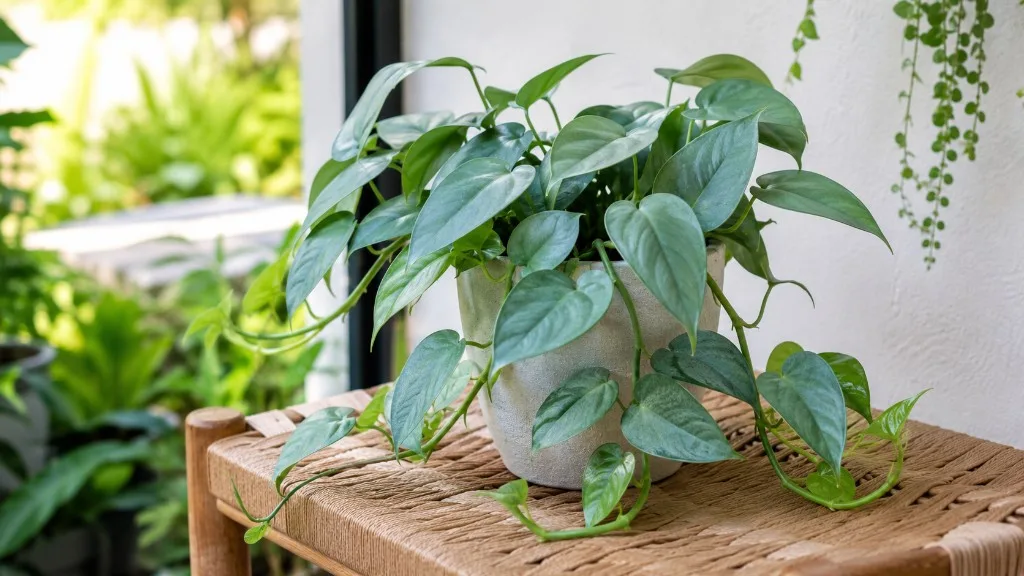
Cebu Blue is a fast-growing tropical vine in the arum family. In most homes it stays in the juvenile phase - narrow, silvery blue-green leaves on long trailing or climbing stems. NC State Extension notes that leaves remain juvenile unless the plant is allowed to climb a stake or moss pole, where they can mature into larger, fenestrated foliage.
Pruning serves four practical jobs on Cebu Blue Pothos overview:
- Redirects growth by breaking apical dominance at the cut, waking buds at nodes below
- Removes failing tissue before pests or rot spread along soft stems
- Shortens leggy runners that have shed lower leaves and left a bare crown
- Supplies propagation material - healthy node cuttings root readily by stem cutting
Pruning does not replace better light. Long bare internodes are almost always a placement problem. Trimming without brighter filtered light often produces another round of stretched regrowth within weeks.
When to Prune Cebu Blue Pothos
Best season for shaping cuts
Late spring through early summer is the ideal window for structural pruning in most indoor setups. Daylight is increasing, temperatures are stable, and new leaves are already opening. NC State Extension recommends pruning foliage in spring or early summer to maintain size and shape. University of Minnesota Extension likewise treats early spring as the right moment for light pruning on leggy pothos-type vines, with new shoots often appearing within weeks.
Early autumn can work as a second option if your plant still pushes steady new growth and indoor temperatures stay above roughly 18°C (65°F) with good light.
Avoid major reshaping in late autumn and winter unless you have no choice. When light drops and growth slows, hard cuts can leave bare stems unchanged for months. That idle period looks alarming but is often simple dormancy, not plant death.
Cuts that cannot wait
Some trimming should not wait for spring:
- Blackened, mushy, or rotting stems - cut back into firm green tissue above a healthy node; sterilize blades between cuts on diseased material
- Stems with heavy active pest infestation - remove the worst sections once you have a treatment plan for the rest
- Fully brown, dry leaves - snap or snip at the petiole base any time; they no longer photosynthesize
Cosmetic shaping can wait for active growth. Health and sanitation cuts happen immediately.
What to Check Before You Cut
Walk the whole plant in good light before touching shears:
- Nodes and internodes - locate swollen points where leaves attach; Cebu Blue branches from nodes, not bare stem tissue
- Leaf quality - yellow climbing a stem, brown mechanical damage, or pest residue on undersides
- Base density - compare bare crown versus lush trailing tips
- Root stress signals - persistent wilting with wet soil, sour smell, or recent cold draft damage
If the plant is wilted and the mix has stayed wet for days, fix watering and drainage first. Pruning a suffocating root system adds stress without solving the cause.
Wear gloves if you have sensitive skin. Like other Epipremnum species, Cebu Blue contains calcium oxalate crystals and is toxic if chewed (NC State Extension; ASPCA). Bag trimmings promptly and keep propagation jars away from pets.
The First Cut to Make
Start with the worst failing stem, not the longest healthy vine. Follow a blackened or pest-damaged section back toward the pot until you reach firm green tissue and a healthy node. Make one clean cut just above that node, wipe your blade with alcohol, and step back.
Only after dead and diseased material is gone should you plan cosmetic shortening on leggy runners. Removing healthy length first is how growers accidentally take off too much in one session.
How to Prune Cebu Blue Pothos Step by Step
- Sterilize bypass shears or sharp scissors with 70% isopropyl alcohol
- Remove failing stems back to firm green tissue above nodes
- Identify the longest leggy vine and trace it toward the soil line
- Choose a node one or two points above the bare section where you want new branching
- Cut 5–10 mm above the node at a slight angle so water does not pool on the face
- Pause and assess before shortening additional vines - you can always remove more later
- Collect vigorous green trimmings for propagation; discard yellowed or rotting pieces
Work from the outside in on tangled multi-vine plants. On moss poles, gently untangle stems before cutting so you do not sever the wrong strand wrapped behind the support.
Where to cut on the stem
A node is the slightly swollen ring on the stem where a leaf meets the vine and aerial roots may emerge. Cebu Blue produces new shoots from nodes, not from random internode tissue.
- Shortening a rooted vine in the pot: cut above the node so the parent plant keeps the bud
- Making a propagation cutting: cut below the node on the piece you remove, leaving the node on the cutting with one or two leaves above it
Cutting too far above a node leaves a stub that often browns and dies back. Cutting below the node removes the bud you need for replacement growth. University of Minnesota Extension recommends trimming leggy stems just above a leaf node on pothos and philodendrons for fuller regrowth.
Trailing baskets vs moss-pole climbers
Trailing plants in hanging baskets: shorten the longest strands by up to one-third, spread across several vines rather than one dramatic chop. If the base is sparse, prioritize cuts on the longest bare runners to force shoots near the soil line.
Climbing plants on a moss pole: shorten vines that have outgrown the pole or wander sideways, cutting above nodes where you want lateral fill. Leave enough length to re-tie with soft ties - never crank stems tight against the pole. After pruning, guide the tip back up the moist pole so aerial roots can reattach. Consistent pole moisture supports the mature leaf transition better than pruning alone.
Pinching vs hard pruning
Pinching - removing the soft growing tip above the newest leaf - gently reduces apical dominance with minimal stress. During active growth, pinching every few weeks on young plants builds density before legginess sets in.
Hard pruning removes substantial vine length or more than one-third of total foliage. Reserve it for severe legginess or tangled reclamation, and only during active season with steady aftercare.
Decision rule: if internodes are still short and leaves are full-sized, pinch. If you see feet of bare stem or noticeably smaller leaves than six months ago, shear above selected nodes.
How Much You Can Safely Remove
The practical ceiling is one-third of total foliage per session. Leaves are the photosynthetic engine; stripping too many at once - especially outside active growth - forces a long stall while the plant rebuilds reserves.
If the specimen needs major renovation, plan two or three lighter sessions spaced three to four weeks apart during spring and summer. Dead, mushy, or fully brown tissue does not count toward the one-third cap and should be removed completely.
What Not to Cut
- Healthy nodes you want for regrowth - never cut below the node on a vine you intend to keep
- The only remaining green leader on a very sparse plant without a backup node below - build density with pinches first
- Fresh new unfurling leaves at vine tips unless they are clearly damaged
- Aerial roots actively gripping a moist moss pole unless you are deliberately repositioning that section
Do not apply wound sealants on soft aroid stems. Open cuts heal better with airflow than trapped moisture under paste.
Pruning Yellow, Brown, or Damaged Growth
A single yellow lower leaf is often normal senescence - snip it at the petiole base. Worry when yellowing climbs a stem or pairs with soft tissue, since that pattern can signal root stress or disease.
Remove brown mechanical damage, sun scorch, or pest-injured sections back to firm green stem above a node. Never compost visibly diseased cuttings indoors; bag and discard them.
If legginess returned within weeks after your last trim, the driver is almost always insufficient light, not a need for more aggressive shears.
Using Pruning Cuttings for Propagation
Healthy shaping trimmings are ideal propagation stock. Select sections with at least one node and one to two leaves. Strip any leaf that would sit below water or bury the node in mix. NC State Extension lists stem cutting as the recommended propagation method for Epipremnum pinnatum.
Water: submerge the node in room-temperature water, refresh weekly, keep leaves above the line. Roots often appear in two to four weeks during warm bright conditions.
Moist sphagnum or airy aroid mix: nest the node in lightly moist medium with moderate humidity; avoid saturation.
Do not propagate from yellowed, pest-infested, or rotting stems removed for health reasons.
Aftercare and Recovery
Pruned Cebu Blue needs steady conditions, not a care overhaul:
- Light: keep bright indirect light consistent; do not jump into harsh direct sun or a dark corner right after cutting
- Water: follow your normal dry-top test; heavily pruned plants transpire less until new leaves open, so the pot may dry more slowly
- Fertilizer: hold feeding two to three weeks after anything beyond a light pinch; resume diluted balanced fertilizer once new leaves emerge at cut nodes
- Moss poles: keep supports consistently moist during recovery so aerial roots stay active
Recovery timeline and success signs
Moderate cuts during active season often show new shoots in two to four weeks. Correcting severe legginess may take six to eight weeks and sometimes a second light trim as side branches establish. Winter cuts may show little outward change until spring regardless of care.
Success looks like: small green buds swelling at nodes below cuts, new leaves opening at normal size for your light level, and stable firm stems without spreading black tissue at wound sites. Soft wet blackening at a cut means remove farther back, sterilize tools, and improve airflow.
Mistakes to Avoid
- Cutting more than one-third of healthy foliage in one session, especially in winter
- Stub cuts far above nodes or mid-internode cuts that kill the vine above with no replacement bud
- Pruning during active root rot on Cebu Blue Pothos, severe drought, or right after Cebu Blue Pothos repotting guide - stabilize care first
- Dirty shared tools between sick and healthy plants
- Expecting instant fenestration after a hard trim - mature split leaves need climbing support, age, and strong indirect light
- Leaving attractive cuttings where pets can chew them - Cebu Blue is toxic to cats and dogs
When Not to Prune
Postpone cosmetic shaping when:
- No new leaves have opened for weeks and soil dries unusually slowly - treat as dormant
- The plant is wilted with chronically wet mix - address roots before cutting
- You just repotted or moved it into a much brighter window - let it settle one to two weeks
- Pests are unchecked and removing foliage would leave too little photosynthetic area - treat and reassess
Health cuts on rotting tissue are the exception; those should not wait.
Conclusion
Cebu Blue Pothos pruning comes down to timing, node placement, and moderation. Shape the plant in late spring or early summer, cut just above healthy nodes with sterile sharp tools, and take no more than one-third of foliage per session. Pinch soft tips for ongoing bushiness; reserve harder cuts for reversing bare bases or reclaiming tangled vines. Use vigorous trimmings for propagation, pause fertilizer briefly, and keep light steady while new shoots establish.
The plant tells you when it needs help - stretched internodes, sparse crowns, and damaged tissue are clearer signals than any calendar. Respond with precise cuts rather than aggressive ones, and adjust light so regrowth stays compact whether the vine trails from a basket or climbs toward mature silvery-blue foliage.
When to use this page vs other Cebu Blue Pothos guides
- Cebu Blue Pothos overview - Start here for whole-plant context before deep-diving this topic.
- Cebu Blue Pothos problems hub - Jump to symptom-specific fix guides when this care topic does not resolve the issue.
- Leggy Growth on Cebu Blue Pothos - Escalate here when pruning adjustments are not enough.
- Slow Growth on Cebu Blue Pothos - Escalate here when pruning adjustments are not enough.
- Brown Tips on Cebu Blue Pothos - Escalate here when pruning adjustments are not enough.