Brown Tips on Cebu Blue Pothos: Causes, Checks & Fixes
Quick answer
Brown tips on Cebu Blue Pothos (*Epipremnum pinnatum* 'Cebu Blue') usually mean dry winter air, too much direct sun on silvery arrow leaves, chronic underwatering, salt buildup, or spider mites-not a single disease. First step: check soil moisture and whether damage faces a hot window or heating vent before watering more or fertilizing.
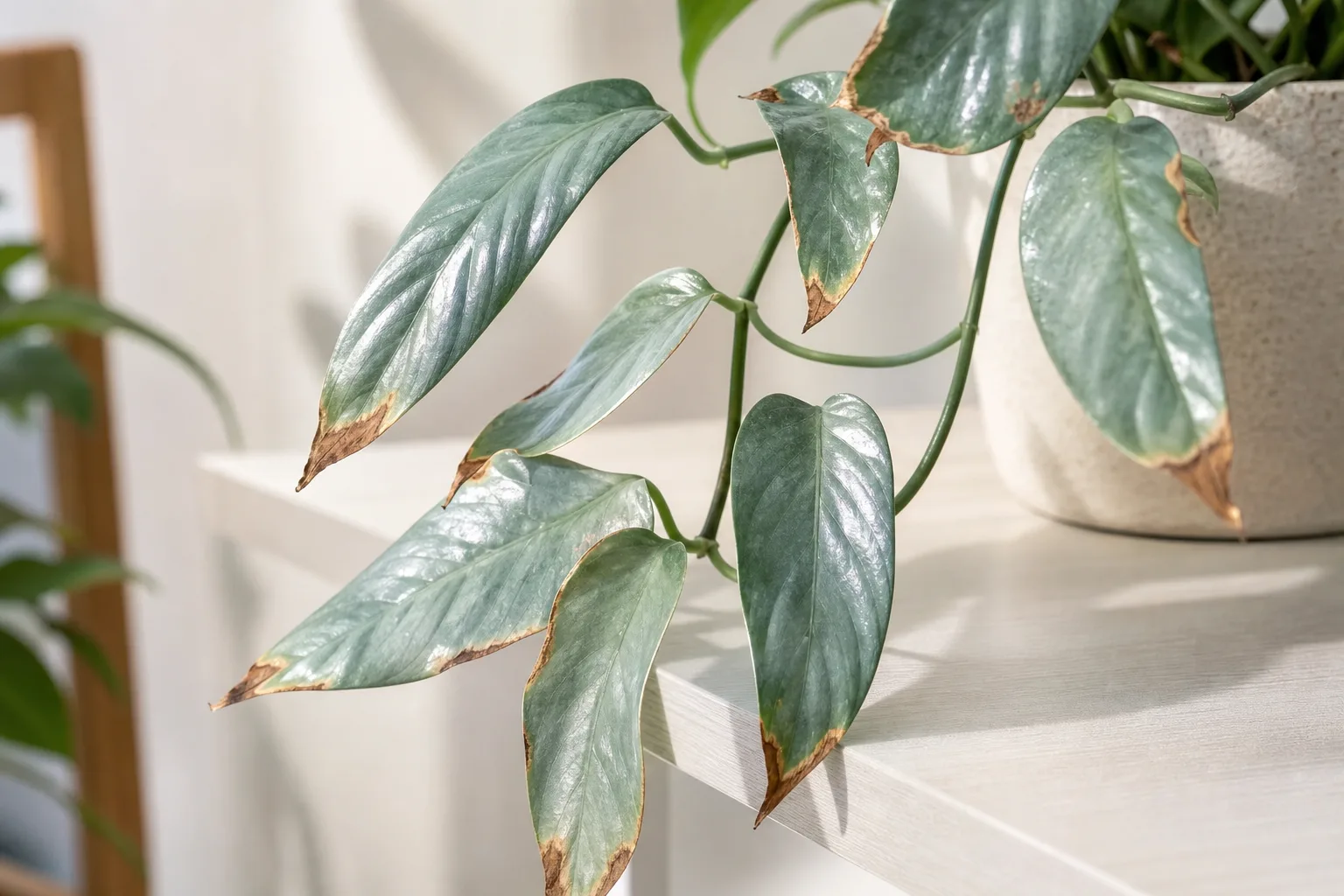
Brown Tips on Cebu Blue Pothos: Causes, Checks & Fixes
This guide covers brown tips on Cebu Blue Pothos. See also the general Brown Tips guide, watering, and light pages for this plant.
Brown Tips on Cebu Blue Pothos: Causes, Checks & Fixes
Quick answer
Cebu Blue Pothos - Epipremnum pinnatum ‘Cebu Blue’ - shows brown leaf tips when environmental stress outpaces what its narrow, arrow-shaped foliage can tolerate. The glaucous blue coating that makes this cultivar distinctive also makes sun damage and moisture loss visually obvious on the leaf margins.
On this fast-growing vine, brown tips usually trace to one of five patterns: winter dry air below about 40% RH, direct afternoon sun through west- or south-facing glass, chronic underwatering in a light pot, salt or fertilizer buildup, or spider mite stippling at leaf edges in warm, dry conditions. Overwatering is less common for tip burn alone but can brown margins when roots are failing-often with yellowing elsewhere.
First step: check soil moisture at 3–5 cm depth and note which side of each leaf faces the window or a heating vent. A heavy, wet pot with soft yellow lower leaves needs less water and possibly root inspection-not more humidity. A light, dusty-dry pot with crisp tips needs a thorough soak. Even brown margins with normal soil moisture point to dry air or sun scorch before you reach for fertilizer.
Full species context: Cebu Blue Pothos overview.
What brown tips look like on Cebu Blue Pothos
Cebu Blue leaves are small to medium, lance- or arrow-shaped, and glossy with a silvery blue-green sheen in good light. Tip damage appears on the pointed end of the leaf or along the margin-not as random spots in the leaf center unless pests or disease are involved.
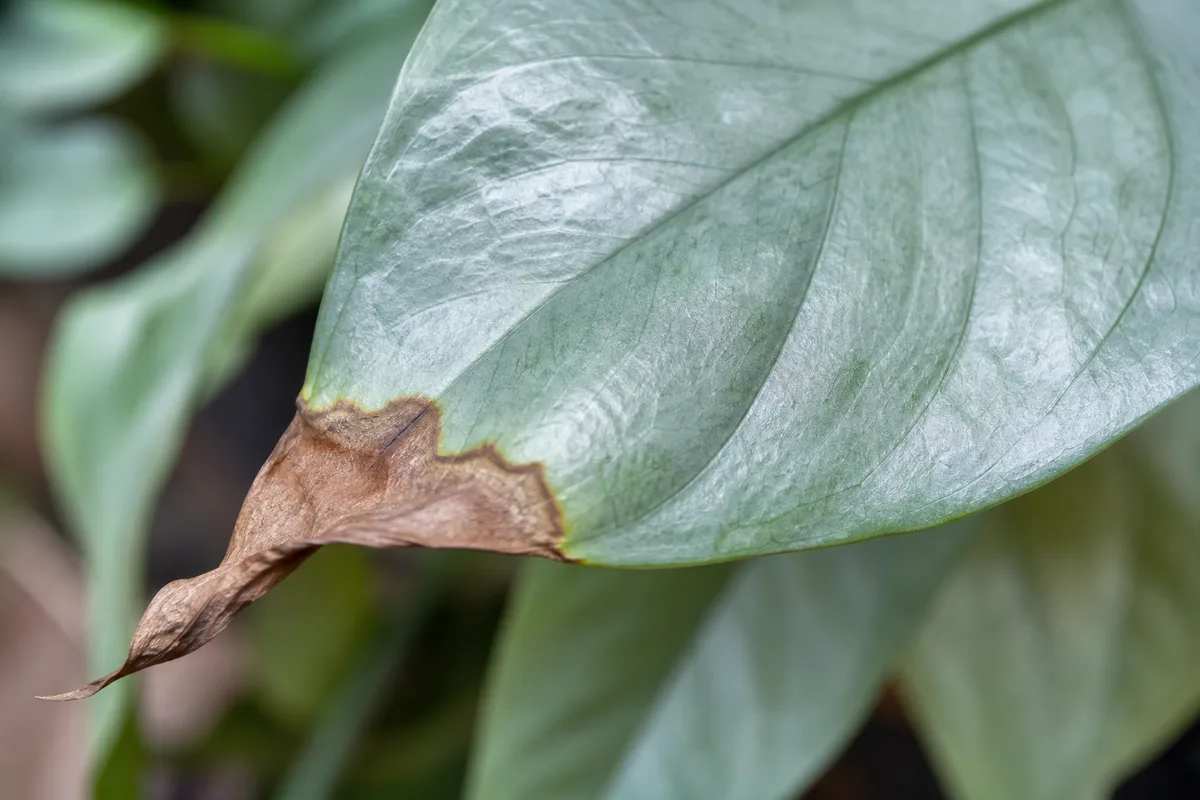
Even tan-to-brown band at the leaf tip or margin on glaucous arrow-shaped foliage - common from dry winter air, sun scorch, underwatering, or salt buildup on Epipremnum pinnatum ‘Cebu Blue’.
Dry-air or humidity stress (most common in heating season):
- Even tan-to-brown band at the leaf tip, sometimes creeping slightly down both margins
- Papery, dry texture on otherwise firm green tissue
- Often affects multiple leaves at once, worst on vines nearest radiators, forced-air vents, or winter window glass
- Soil moisture normal; stems stay firm
Sun scorch through glass:
- Bleached, silvery, or tan patches on the window-facing side of the leaf, not just the very tip
- Damage concentrated on leaves that receive midday or afternoon direct sun
- May follow a recent move from a dim shelf to a bright sill without acclimation
- See the light guide for placement
Underwatering / drought stress:
- Crisp brown tips plus limp or slightly curled leaves
- Pot feels very light; top 3–5 cm of mix is dusty dry
- Fast-growing trailing vines in small pots dry out quickly in bright windows
- May overlap with yellow leaves on lower foliage
Salt or fertilizer burn:
- Sharp brown lines on newest leaves even when watering and humidity look fine
- White crust on soil surface or pot rim
- Follows frequent feeding without flushing the pot
Spider mite edge damage:
- Fine yellow or bronze stippling near margins, sometimes with delicate webbing on undersides
- Worsens in warm, dry air near heaters or sunny glass
- Differs from uniform crisp tips-see spider mites on Cebu Blue
Overwatering / root stress (rule out before adding water):
- Brown or soft margins with wet mix, limp texture, and yellowing lower leaves
- Not classic “tip burn only”-roots are the primary problem
Why Cebu Blue Pothos gets brown tips
Cebu Blue is a Philippine climbing aroid that prefers bright indirect light, warm temperatures, and moderate humidity with moist, well-drained soil-not desert dryness and not waterlogged peat. Its juvenile arrow leaves have limited water storage compared with thick succulent foliage, so tips-the last point vascular tissue supplies-brown first when stress hits.
Fast growth increases water demand. In bright indirect light, Cebu Blue extends vines quickly. A trailing plant in a 12 cm pot can dry from top to bottom in a few days while you still follow a weekly watering habit from a dimmer season. Tip burn on an otherwise healthy blue vine often means the dry-down rhythm is too slow, not that the species is fragile.
Winter heating dries air faster than roots. Forced-air furnaces pull indoor RH well below what most tropical houseplants prefer while soil in a cool corner may still hold moisture. The same watering that worked in September can leave crisp margins in January even when you are not underwatering-because the stress is atmospheric. Below about 40% RH for weeks, brown tips and spider mite risk rise together.
Glaucous leaves show sun damage clearly. The waxy coating that creates Cebu Blue’s metallic color does not protect against unfiltered afternoon sun. Harsh rays bleach and scorch exposed tissue on west- and south-facing sills-often worse than on darker-leaved Golden Pothos in the same window because the damage reads as pale patches plus brown edges on the arrow blade.
Salt buildup mimics environmental burn. Frequent fertilizer without leaching concentrates soluble salts at the root zone. New leaves emerge with necrotic tips while older foliage still looks acceptable-a pattern that humidity fixes alone will not correct.
How to confirm the cause
Work through these checks in order. One matched pattern beats guessing from a single brown tip.
- Soil moisture and pot weight - Push a finger or skewer 3–5 cm into the mix. Water Epipremnum when the top 1 to 2 inches dry before soaking thoroughly. A light, dusty-dry pot supports underwatering. A heavy, cool, wet pot with yellow lower leaves points to overwatering-see watering guide before adding humidity fixes.
- Light direction and recent moves - Note which leaf face points toward glass. Bleached or tan patches on the window side fit sun scorch. If you moved the plant closer to a south or west window within the last two weeks, light stress is a prime suspect.
- Humidity and microclimate - Place a hygrometer near the canopy for 24 hours. Readings below 40% during heating season, or a pot directly above a vent, support low humidity even when room average looks acceptable.
- Fertilizer history - White soil crust, frequent feeding, or repotting into slow-release mix without adjusting dose suggests salt burn. Flush before feeding again.
- Leaf undersides - Magnifying glass or phone macro: stippling, moving specks, or fine silk confirm mites, not dry air alone.
| Pattern | Most likely cause | Next step |
|---|---|---|
| Crisp tips, moist soil, RH below 40% or near vent | Low humidity | Move off vent; humidifier or pebble tray |
| Bleached patches on window-facing leaf face | Sun scorch | Pull back from glass; filter afternoon sun |
| Crisp tips, very light pot, dry top 3–5 cm | Underwatering | Thorough soak; adjust dry-down rhythm |
| Sharp brown lines on newest leaves, white soil crust | Salt / fertilizer burn | Flush pot; pause feed 6–8 weeks |
| Stippling + webbing on undersides | Spider mites | Rinse foliage; treat per mite guide |
| Soft margins, wet soil, yellow lower leaves | Root stress / overwatering | Stop watering; inspect roots |
Confirmed diagnosis means the pattern, soil reading, light exposure, and humidity data all point to the same cause-not just one brown tip on an old leaf.
First fix for Cebu Blue Pothos
Match one correction to your diagnosis-do not stack repotting, fertilizer, pesticide, and a watering overhaul on the same day.
If soil is dusty dry and the pot is light: Water thoroughly until a little runs from the drainage hole, then empty the saucer. Check again in two days; adjust toward watering when the top 3–5 cm dries, not on a fixed calendar. Fast vines in bright windows often need water several days sooner than the same plant in a dim corner.
If RH is below 40% or the pot sits on a vent or radiator ledge: Move the plant off the dry microclimate first. Then raise ambient humidity toward 50–70% with a humidifier or pebble tray-not extra watering. See the dedicated low-humidity guide for hardware setup.
If window-facing leaves show bleached or scorched patches: Move the pot 60–90 cm (2–3 feet) back from south- or west-facing glass, or hang a sheer curtain that filters afternoon rays. Acclimate over one to two weeks if the plant lived in deep shade-sudden harsh sun on existing leaves burns faster than new growth hardens.
If salt crust or heavy feeding history fits: Flush the pot with plain water at two to three times pot volume, let it drain fully, and pause fertilizer for six to eight weeks. Judge the next new leaves only.
If mites are confirmed: Isolate the vine, rinse leaf undersides, and follow the spider mites guide while keeping air from staying bone-dry.
If soil is wet and stems are limp: Do not water. Let the top half of the mix dry, inspect roots for mushy brown tissue, and correct drainage before any other fix.
Recovery timeline
Brown tip tissue will not re-green-damaged leaves rarely recover fully. Trim fully crisp ends with clean scissors if you prefer a neat look, or leave cosmetic damage alone.
Within one to two weeks of the correct single fix, active browning should stop spreading to new tissue.
Within two to three weeks, the next one to three arrow leaves should emerge without fresh tip damage when the cause is environmental (humidity, sun, or watering). Judge success by new growth, not old leaf color.
Sun scorch: Existing bleached patches remain; new leaves under filtered light should open clean within two to four weeks.
Salt flush: Allow six to eight weeks before expecting consistently clean new foliage.
Spider mites: Stippling on old leaves may persist; new growth should stay clean within two to three weeks of consistent treatment and steadier humidity.
If tips keep browning on every new leaf after you corrected the primary stressor, re-run the confirmation table-overlapping causes (dry air plus underwatering, or mites plus low humidity) are common on fast vines in winter windows.
What not to do
Do not increase watering because tips look dry while the soil is already moist-overwatering wet soil suffocates roots on Cebu Blue like other Epipremnum species. Do not fertilize a stressed vine to “push new growth”; salt burn and weak roots worsen. Do not move a scorched plant deeper into a dim corner without fixing sun exposure first-low light fades the blue sheen and slows recovery. Do not mist heavily as your only humidity strategy; wet leaves in dim corners can spot overnight. Do not assume brown tips always mean underwatering when a hygrometer reads 25% beside a heater. Do not compost trimmed brown leaves indoors if pets might access the pile-calcium oxalate crystals irritate mouths the same as healthy tissue.
How to prevent brown tips next time
- Water on dry-down, not calendar: Top 3–5 cm dry before a full soak; see watering guide.
- Filter afternoon sun: Bright indirect light maintains blue color; harsh direct rays scorch arrow leaves.
- Track winter RH: Run a humidifier or pebble tray when heating season pulls air below about 40%.
- Keep vines off vents and sunny glass contact in winter.
- Feed lightly and flush salts if you fertilize every four to six weeks during active growth.
- Inspect undersides weekly in dry months for early mites.
- Acclimate gradually when moving from a dim shelf to a brighter window.
When to worry
Brown tips alone rarely kill Cebu Blue Pothos. Treat as urgent when:
- Stems soften or blacken while soil stays wet
- More than a third of leaves yellow and drop within a week
- Spider mites or mealybugs spread despite treatment and humidity improvements
- New growth stays stunted or distorted for a month after you fixed water, light, and air
- A pet ingests a large amount of leaf tissue and shows ongoing vomiting or difficulty swallowing
Those patterns suggest root failure, pest takeover, or chronic misplacement-not cosmetic tip burn alone.
Related Cebu Blue Pothos guides
- Cebu Blue overview - light, humidity, and growth habit
- Watering - dry-down rhythm and seasonal adjustments
- Light - window placement and acclimation
- Low humidity - winter dry air and humidifier setup
- Yellow leaves - overlapping moisture and root stress
- Spider mites - stippling and webbing at leaf edges
Conclusion
Brown tips on Cebu Blue Pothos are a location and rhythm problem more often than a mysterious disease. Read the leaf: window-facing bleaching points to sun; even crisp margins with normal soil point to dry air; a light pot points to thirst; sharp lines on new growth point to salts; stippling points to mites. Fix one matched cause, then watch the next blue-toned arrow leaves unfurl clean. Old brown tips will not heal-success is silent new growth at the vine tips.