Root Rot on Cebu Blue Pothos: Causes, Checks & Fixes
Quick answer
Root rot on Cebu Blue Pothos (Epipremnum pinnatum 'Cebu Blue') is decayed roots in chronically wet mix-often in oversized pots or dim winter rooms where a trailing vine dries too slowly at the stem base. First fix: stop watering, unpot, and inspect roots. Trim mushy tissue, air-dry cuts, then repot into fresh perlite-heavy aroid mix sized to remaining roots.
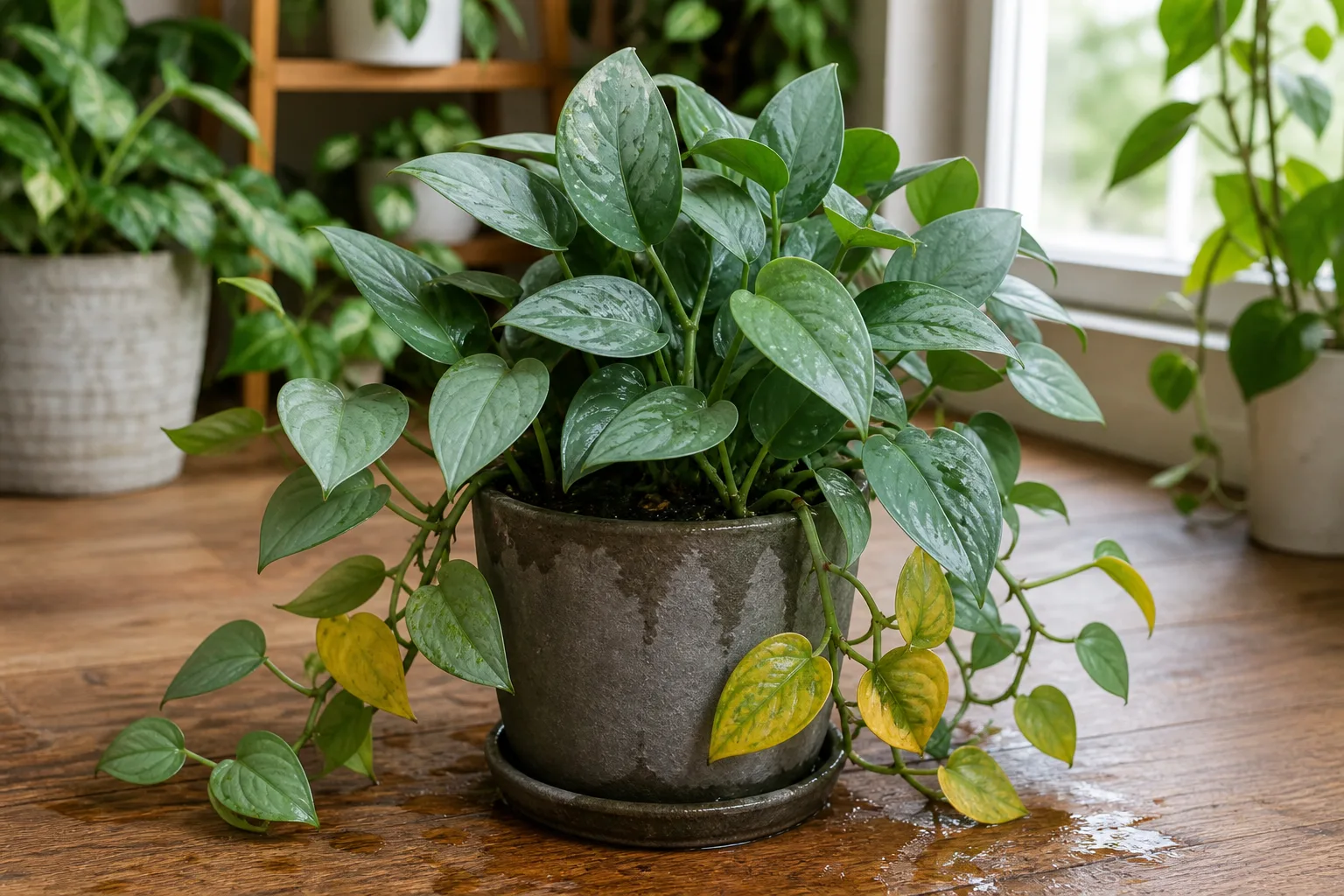
Root Rot on Cebu Blue Pothos: Causes, Checks & Fixes
This guide covers root rot on Cebu Blue Pothos. See also the general Root Rot guide, watering, and light pages for this plant.
Root Rot on Cebu Blue Pothos: Causes, Checks & Fixes
Quick answer
Root rot on Cebu Blue Pothos (Epipremnum pinnatum ‘Cebu Blue’) is root tissue decay caused by soil that stays too wet too long-not a random leaf disease. This trailing tropical vine climbs and creeps in nature; indoors it often hangs from baskets or climbs moss poles. Its shallow aroid roots need oxygen between drinks. When a cool, dim winter room slows evaporation-or an oversized decorative pot holds water at the stem base-the same watering rhythm that worked in summer keeps roots saturated for weeks, and overwatering will cause fungal and bacterial diseases which can lead to root rot.
First fix: stop all watering immediately, empty standing water from saucers and cachepots, and unpot to inspect roots. Do not repot blindly or fertilize a failing vine. If roots are mushy, trim to firm tissue, let cut surfaces air-dry, and repot into fresh perlite-heavy aroid mix in a pot sized to what remains. If most roots are total loss but upper vine segments still have firm nodes, propagate cuttings instead.
For early wet-soil stress before roots decay, start with the overwatering guide. This page is for confirmed or strongly suspected root decay-mushy roots, sour smell, yellow lower leaves on heavy wet mix.
Root rot vs. overwatering vs. underwatering on Cebu Blue
These problems share symptoms but need different urgency on a trailing vine.
| Situation | Start here | Why |
|---|---|---|
| Wet soil, yellow lower leaves; roots not yet inspected | Overwatering | Dry-down and drainage fixes may be enough |
| Unpot reveals brown, mushy roots or sour-smelling mix | This page | Trim-and-repot or propagation required |
| Yellow lower leaves on damp mix; stem base still firm | Overwatering first; inspect if limpness persists | Roots may still be intact |
| Light dry pot, limp crisp leaves that perk after soak | Underwatering | Roots usually firm |
| Soft stem base, sour mix, collapse on wet soil | This page | Advanced rot-act within days |
The watering guide covers seasonal rhythm so wet soil does not recur after recovery.
What root rot looks like on a trailing Cebu Blue vine
Cebu Blue shows stress on oldest leaves nearest the soil line before vine tips fail-because rot starts at the anchor point where the trailing stem meets mix, not at a central rosette crown.
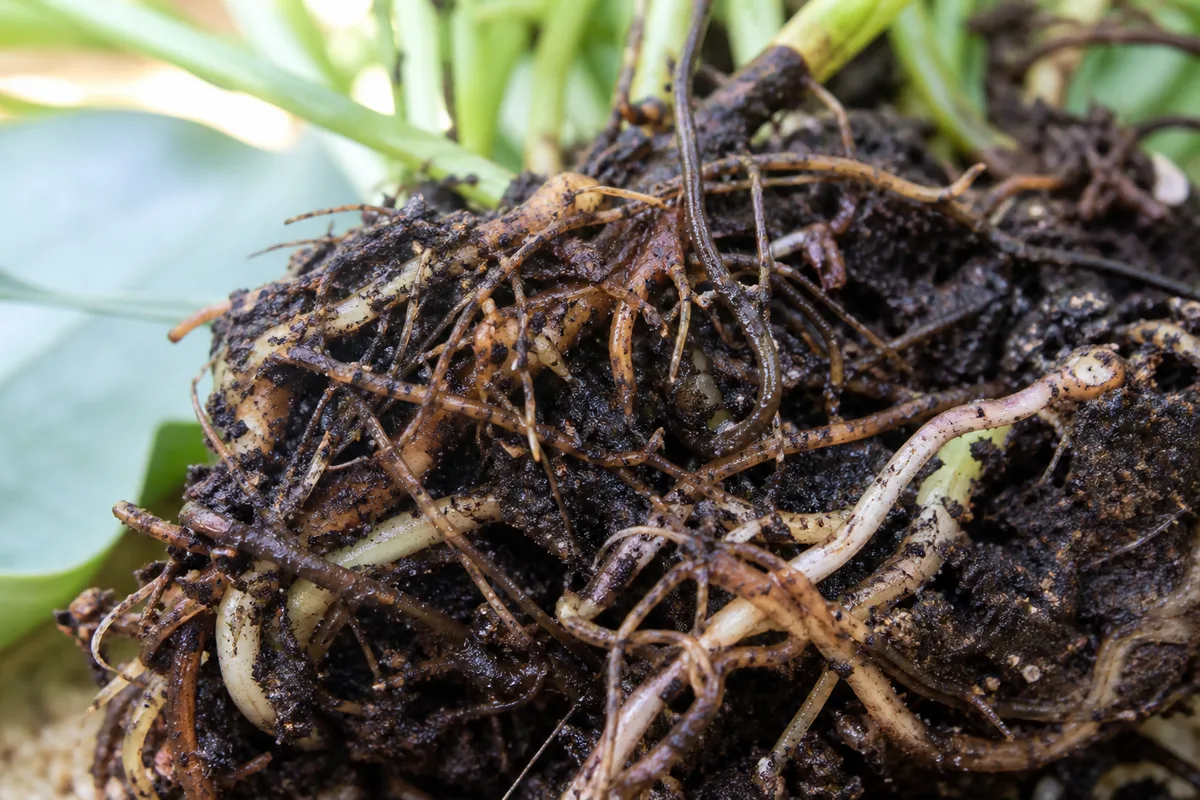
Brown translucent mushy roots alongside firm white healthy tissue - unpot and rinse mix away to confirm rot before trim-and-repot.
Early root rot signs:
- Lower arrow-shaped leaves turn yellow or pale while upper vine tips still look green briefly
- Leaves droop despite wet, heavy mix-not a light, dry pot
- Pot stays noticeably heavy and cool many days after the last watering
- Mix smells sour or musty at drain holes
- Silvery-blue sheen turning dull or grey-green under chronic wet stress-the glaucous coating fades before stems fail
- Fungus gnats hover when soil stays continuously wet
Advanced root rot signs:
- Blackening or softness climbing the vine from the soil line upward along the stem
- Whole-vine collapse while mix remains damp
- Unpotting reveals brown, translucent, or mushy roots instead of firm white or tan tissue
- White mold or algae on the soil surface after prolonged saturation-sometimes overlaps with mold on soil
What root rot is not: limp leaves on a light, dry pot with mix dry 3–5 cm down point to underwatering, not decay. The wet-soil paradox-wilting on saturated mix-is the hallmark of failing roots that can no longer absorb water. That confusion drives many owners to water more and worsen rot. See wilting when droop patterns overlap.
Why Cebu Blue Pothos (Epipremnum pinnatum) gets root rot
Root rot is almost always a culture problem-watering frequency, pot size, drainage, and light-not a random infection.
Calendar watering and winter slowdown
The leading indoor trigger is overwatering during cool, dim months. A Cebu Blue in bright indirect light through summer may need water every seven to ten days. The same trailing vine in a January hallway may hold moisture for two weeks or longer. Watering every Sunday without a soil check keeps roots oxygen-starved while lower leaves go limp.
Oversized pots and dense mix
Gift-store Cebu Blues often arrive in decorative pots far larger than their root mass. Heavy peat mix without perlite, shallow roots in a deep wet cylinder, and cachepots that trap runoff all keep the root zone anaerobic. Cebu Blue is generally less tolerant of chronic neglect than Golden Pothos even though both store water in stems.
Stem water storage delays visible wilt
Epipremnum vines store water in stems and leaves, so foliage can stay firm for days after feeder roots fail. That delay is dangerous-do not trust green vine tips alone when soil stays wet and heavy. Inspect roots if lower leaves yellow or the mix smells sour.
Low light extends wet cycles
Dim corners slow transpiration so mix stays wet longer after each drink. Leggy stretch toward windows often coincides with the same low-light conditions that extend wet cycles-see the light guide for placement fixes after recovery.
Oxygen-starved roots
When soil stays saturated, roots growing in waterlogged soil may die because they cannot absorb the oxygen needed to function normally. Damaged roots cannot move water to leaves even when you water faithfully-which is why the plant wilts on wet soil.
How to confirm root rot
Work through these checks in order. One unpot inspection beats weeks of guessing from yellow leaves.
- Moisture direction - Wet, heavy pot + limp lower leaves = root trouble. Dry, light pot = look elsewhere.
- Top-inch probe - Damp mix 3–5 cm down with limp lower leaves confirms oversaturation or failing roots.
- Smell - Sour or foul odor at drain holes strongly suggests decay in the root zone.
- Stem-base feel - Soft tissue where the trailing stem meets soil means rot is advancing upward along the vine.
- Unpot and rinse - Slide the plant out gently. Shake or rinse away wet mix. Healthy roots are firm, white or tan with fine feeder roots; rotted roots are mushy, brown, or translucent.
- Node check - Press vine segments above the soil line. Firm nodes with healthy leaves may salvage even when base roots fail.
| Finding | Diagnosis | Next step |
|---|---|---|
| Firm white roots, wet mix only | Early overwatering stress | Overwatering dry-down |
| Some mushy roots, firm stem base | Root rot-moderate | Trim and repot (below) |
| Mostly mushy roots, firm upper vine | Advanced rot | Trim + repot or propagate top cuttings |
| Soft stem climbing from soil on sour wet mix | Critical | Propagate firm nodes immediately |
First fix: stop the wet cycle
Stop watering immediately. That single action matters more than repotting on day one.
- Empty all standing water from saucers, cachepots, and decorative outer pots.
- Move to brighter indirect light if the vine sits in deep shade-avoid harsh direct sun on stressed leaves.
- Unpot within 24–48 hours if the mix smells sour, the stem base is soft, or limpness persists on wet soil after you stop watering.
- Do not fertilize. Do not water because leaves look wilted when mix is already wet-too much water will lead to root rot, not underwatering.
Repotting without inspecting roots hides the damage. Inspection without stopping water keeps decay active.
Step-by-step recovery
1. Unpot and assess
Remove the vine from its pot. Rinse or gently shake away old mix so you can see the full root system and where stems anchor at the soil line. Note how much tissue is firm versus mushy and whether blackening has climbed the vine.
2. Trim all decayed tissue
Using clean, sharp scissors, cut away every brown, black, slimy, or hollow root until you reach firm, white or tan tissue. Remove soft lower leaves or stem sections that feel mushy at the base-they will not recover and can harbor rot. Wear gloves-Cebu Blue sap contains calcium oxalate crystals irritating to skin and toxic to cats and dogs if ingested. Sterilize blades between cuts if rot is advanced.
If you removed more than half the root mass, expect a longer recovery and keep mix barely moist afterward.
3. Air-dry cut surfaces
Lay the trimmed plant on clean paper towels in bright indirect light for 24–48 hours so root cuts callus and surface moisture evaporates. This reduces reinfection when you repot. Skip air-drying only if roots were barely touched and the stem base was not involved.
4. Repot into fresh airy aroid mix
Choose a clean pot with drainage holes sized to remaining roots-not a larger container for the desired vine length. Fill with fresh well-drained aroid mix with perlite and bark; details are on the Cebu Blue soil guide. Repotting steps and cachepot rules are on the repotting guide. After root surgery, prioritize drainage over decorative pot size.
5. Water cautiously during recovery
Do not soak a freshly trimmed vine. Lightly moisten the new mix if it is dusty, then wait about one week before the first careful drink if major roots were removed. When you resume, water only when the top 3–5 cm of mix dries-the same checkpoint as the watering guide-and empty saucers within thirty minutes.
6. Judge success by new growth
Old yellow leaves rarely green up again. Recovery means firm new leaves unfurling along the vine, stable pot weight between waterings, and no spreading softness climbing from the soil line. Rotate the pot a quarter turn each time you water so new growth stays even.
Salvage example: A trailing Cebu Blue in a 15 cm cachepot showed two yellow lower leaves and sour-smelling mix after winter calendar watering. Unpotting revealed roughly 60% mushy roots and a firm stem base. The owner trimmed to white tissue, air-dried cuts overnight, repotted into a 10 cm pot with roughly equal parts potting mix, perlite, and bark, and propagated the top two nodes in water. New root tips appeared on cuttings in eighteen days; the trimmed parent pushed its first firm silvery leaf four weeks later.
When to propagate instead of repot
If roots are nearly total loss but upper vine segments still have firm nodes and healthy leaves, salvage the plant through propagation rather than forcing a hollow base to reroot.
- Identify the highest point where the stem is still firm-cut 4 to 6 inches above any soft or blackened tissue.
- Take cuttings with at least one node below the lowest leaf you remove; strip leaves that would sit below the waterline or bury in perlite.
- Root in clean water (change weekly) or moist perlite in bright indirect light following the propagation guide.
- Pot into airy mix when roots reach 1 to 2 inches long.
- Discard the rotted base and infected mix-do not compost soggy rot indoors.
Stem cuttings can be easily rooted when placed in soil or water, but they should have at least one node to root properly on Epipremnum vines. This path routinely succeeds when rot is caught before softness reaches every node on the salvageable section. For genus-level rescue depth with species caveats, see pothos root rot.
Recovery timeline
Mild rot after trim and repot - Mix stabilizes within one to two weeks; first firm new leaves often appear in two to four weeks at warm room temperatures (65–85 °F / 18–29 °C).
Moderate rot with major root removal - Expect three to six weeks before confident new growth. Keep mix barely moist; cool rooms slow root regeneration.
Severe stem-base involvement - Soft tissue climbing the vine on chronically sour mix may be fatal for the parent plant. Propagate firm nodes within days.
Signs recovery is working: pot weight drops appropriately between waterings, new silvery-blue leaves emerge firm along the vine, sour smell fades, fungus gnat activity decreases.
Signs rot is winning: blackening climbs the stem, the vine collapses further, wilt on wet mix despite trim, no new firm leaves after six weeks in warm light.
Lookalike symptoms
| Signal | Root rot | Underwatering | Overwatering (early) | Yellow leaves (other) |
|---|---|---|---|---|
| Pot weight | Heavy, cool | Light | Heavy, cool | Variable |
| Mix moisture | Wet | Dry | Wet | Often wet or dry |
| Leaf pattern | Lower yellow, limp on wet | Limp, thin on dry | Lower yellow | Pattern varies |
| Root inspection | Mushy, dark | Firm if checked | Often firm | N/A |
| First action | Trim and repot | Thorough soak | Stop watering | Diagnose cause |
The yellow leaves guide covers overlapping causes with wet-vs-dry decision trees-use it when moisture direction is unclear before you unpot.
What not to do
Do not keep watering limp leaves when mix is already wet. Do not repot into dense garden soil or a larger pot hoping it helps drying-that traps more wet mix around damaged roots. Do not fertilize waterlogged or freshly trimmed vines. Do not delay unpotting when the mix smells sour and the stem base softens. Do not compost infected mix indoors. Do not handle trimmed tissue bare-handed around pets-Cebu Blue is toxic if ingested; see the overview for placement guidance.
How to prevent root rot next time
Prevention is seasonal watering plus drainage-not a single trick.
- Water only when the top 3–5 cm of mix dries-finger probe, pot weight, or skewer-not a fixed calendar
- Use airy aroid mix with perlite and bark; confirm open drain holes on every pot
- Empty saucers and cachepots within thirty minutes of every soak
- Size pots to the root mass, not the desired trailing length
- Match dry-down depth to season on the watering guide
- Give bright indirect light so the mix cycles predictably-see the light guide
If chronic wetness preceded rot, watch for fungus gnats and mold on soil after recovery-they follow saturated mix.
When rot is too advanced
Treat as urgent when blackening climbs the vine from the soil line, most roots are mushy on inspection, or the plant collapses on wet soil despite stopping water.
Propagate immediately if the base is hollow but upper nodes remain firm-waiting rarely saves the parent vine.
Accept loss if softness has spread through every node and no firm cutting material remains. Learn from the pot setup: mix type, pot size, and winter watering rhythm.
For borderline cases-firm stem base, less than half of roots mushy-you have a reasonable trim-and-repot window if you act within days.
Related Cebu Blue Pothos guides
- Overwatering - wet-soil stress before confirmed root decay
- Watering - seasonal rhythm and dry-down targets
- Soil - perlite-amended aroid mix after root surgery
- Repotting - routine repot timing and cachepot rules
- Propagation - node salvage when roots are total loss
- Underwatering - dry pot lookalike
- Wilting - limp vine triage
- Yellow leaves - lower-leaf yellowing causes
- Fungus gnats - wet-soil follow-on pest
- Cebu Blue overview - species ID, pet toxicity, and care hub
- Pothos root rot - genus-level rescue depth (with species caveat)
Conclusion
Root rot on Cebu Blue Pothos is a stop-watering, inspect-roots, trim-to-firm-tissue emergency on a trailing vine-not a mystery leaf disease. Root rot is a common houseplant issue caused by overwatering or poorly draining soil. Confirm decay by unpotting: mushy dark roots and sour wet mix on limp lower leaves mean repot or propagate nodes, not another soak. Match post-recovery watering to season on the watering guide, use airy mix from the soil guide, and propagate firm upper cuttings if the base is gone. Act within days when blackening climbs the stem-delay turns salvage into loss.