Fungus Gnats on Cebu Blue Pothos: Causes, Checks & Fixes
Quick answer
Fungus gnats on Cebu Blue Pothos mean the potting mix has stayed wet long enough to host larvae in the top inch-adults rise when you bump the pot, and the silvery juvenile leaves that stay cool in the canopy slow the surface dry-down. First step: stop watering until the top 3–5 cm of mix are dry, and set a yellow sticky trap at the rim.
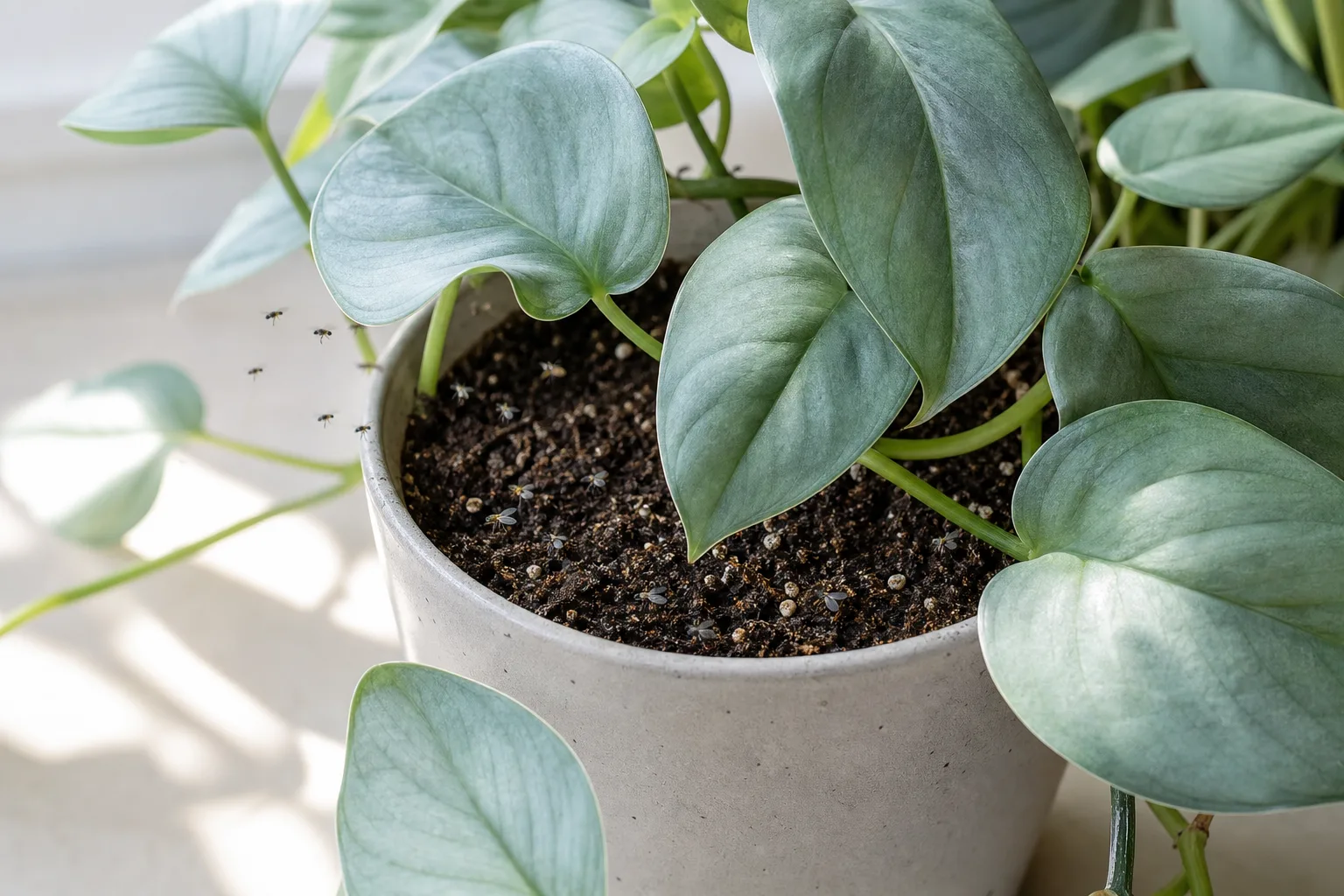
Fungus Gnats on Cebu Blue Pothos: Causes, Checks & Fixes
This guide covers fungus gnats on Cebu Blue Pothos. See also the general Fungus Gnats guide, watering, and light pages for this plant.
Fungus Gnats on Cebu Blue Pothos: Causes, Checks & Fixes
Quick answer
Cebu Blue Pothos (Epipremnum pinnatum ‘Cebu Blue’) is not Golden Pothos in a silvery costume. The cultivar’s elongated juvenile leaves carry a dense, glaucous epicuticular wax layer-the trait that gives the foliage its blue-grey metallic sheen-and that same wax slows transpiration from the canopy and keeps leaf temperature a touch lower than a thin, glossy Golden Pothos leaf in the same room. When you combine a cooler canopy with a peat-rich aroid mix and an elevated hanging basket, the top 1–2 inches of soil stay moist long enough for fungus gnat larvae to complete a generation, even on a healthy-looking vine.
First step: stop watering until the top 3–5 cm of mix are completely dry, and place a yellow sticky trap at the pot rim. Gnats are a moisture signal, not a leaf disease. Spraying Cebu Blue foliage will not reach the larvae in soil. For the full dry-check workflow, see our Cebu Blue Pothos watering guide. The same pest in general is covered on our fungus gnat symptom hub, and the genus-wide perspective lives on Pothos fungus gnats and Golden Pothos fungus gnats.
Why Cebu Blue Pothos gets fungus gnats
Fungus gnats need moist organic soil to reproduce. Colorado State Extension notes that adult females lay eggs in cracks of growing media, especially peat-rich mixes that hold surface moisture, and that the larvae stay in the top 2 to 3 inches of growing medium feeding on fungi, algae, and decaying matter-and chewing roots when populations are high. UC IPM reports a complete generation can be produced in roughly 17 days at 75 °F, so a perpetually damp pot can host several overlapping cohorts indoors.
Cebu Blue invites this problem through care mistakes tied to the species, not generic pothos care:
Glaucous canopy keeps leaf humidity high above the pot
The blue-silver sheen on Cebu Blue is structural, not pigment-it comes from a dense epicuticular wax layer on the juvenile leaves that is thicker than the cuticle on Golden Pothos or Marble Queen. That wax reduces water loss through the leaf, which is why Cebu Blue holds its foliage turgor longer between drinks. The trade-off shows up around the pot: the canopy stays cooler and slightly more humid than a thin-leaved pothos in the same room, and that microclimate reduces evaporative pull on the surface soil below. The top inch stays damp just long enough for fungus gnat eggs to hatch and larvae to feed even when the deeper mix is approaching ready-to-water.
Cool canopy plus lower light extends surface drying
Cebu Blue needs brighter indirect light than Golden Pothos to keep its metallic sheen, but collectors often place it deeper in a room to protect the wax from accidental brush contact. In those dimmer positions the vine stretches, the blue tone fades toward plain green as NC State Extension notes juvenile trailing form requires adequate light, and water use drops because each leaf has less photosynthetic surplus. A pot that dries in five days under a bright east window may stay wet for nearly two weeks in a hallway-just enough for multiple gnat generations to overlap.
Moss-pole and shingling setups trap moisture around the base
Cebu Blue climbs with adhesive aerial roots. Trailing pots are common, but many collectors train it onto a moss pole, cedar plaque, or cork slab to trigger the mature, fenestrated form. Two pot shapes make gnat trouble worse:
- Tall, narrow nursery pots under moss poles keep the soil column constantly moist in the middle while the surface looks dry, because the pole and the dense aerial roots shade the surface from airflow.
- Cachepots and decorative sleeves without drainage hold reservoir water against the root zone, so even a careful top-watering schedule returns more moisture than the mix uses between cycles.
Cebu Blue Pothos light guide and Cebu Blue Pothos repotting guide cover placement and mix choices when the canopy sits on a support.
Water propagation jars and new introductions
Cuttings rooted in water on a windowsill breed fungus gnats when water is not changed weekly. UC IPM reports fungus gnats commonly arrive on newly purchased or recently repotted houseplants, and one infested nursery pot can spread adults to every Cebu Blue on the same shelf. The silvery Cebu Blue is a frequent online order, and shipped nursery media is a documented gnat pathway.
Dense, aged peat mix
Old potting soil breaks down and retains more moisture. CSU Extension recommends re-potting when media has degraded and holds water too long. Cebu Blue in long-unrepotted collector pots often sits in compacted peat that never dries a full week indoors-even when the vine keeps producing new juvenile leaves along the support.
Bottom-watering paradox. Bottom watering hydrates roots while the top layer can stay soggy if you never let it dry between sessions-exactly where eggs and larvae concentrate in the top inch.
Gnats rarely mean your Cebu Blue leaves are infected. They mean the soil environment is wrong-and on this species, that same environment eventually leads to yellow leaves and root rot if ignored. Mold on the soil surface often appears in the same wet pots.
What fungus gnats look like on Cebu Blue Pothos
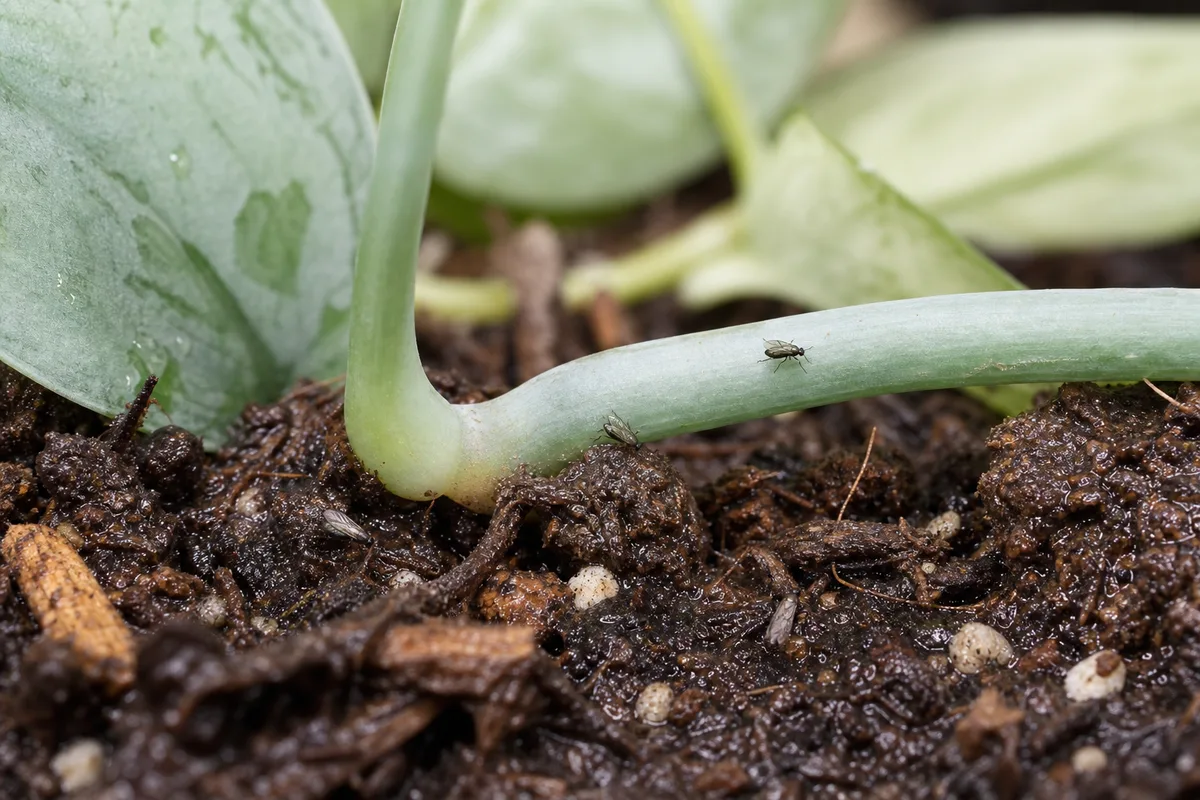
Tiny dark mosquito-like flies resting on wet soil surface and pot rim - adults rise when you water or bump the pot; larvae live in the damp top inch of mix, not on glaucous leaves.
Adult flies and larval stage in soil
Adult flies:
- Tiny dark mosquito-like insects, roughly 1/8 inch long, with long legs
- Rise in a cloud when you water, repot, or bump a hanging basket
- Rest on soil surface, pot rim, nearby windows, or lower vine nodes
- Do not bite people or pets
Larval stage in soil:
- Translucent wormlike larvae with dark head capsules in the top inch of mix
- Visible when you scrape back wet surface soil or flip a potato test slice
- Sometimes algae or green film on constantly wet soil surface
What you will not see on glaucous Cebu Blue leaves
- Webbing (spider mites)
- White fuzzy clusters (mealybugs)
- Sticky honeydew patches (aphids or scale)
- Leaf spots or holes from gnat feeding-damage happens below soil
Cebu Blue has smooth, glossy, glaucous foliage with a waxy blue coating-not fuzzy or velvety texture. Gnats do not live on those leaves, and foliar sprays will not control larvae in soil.
Plant symptoms when overwatering overlaps
- Yellow lower leaves from root stress-often the first visible sign on Cebu Blue before vines wilt
- Slightly limp trailing stems despite wet mix-damaged roots move less water
- Slow new growth and fading blue sheen in winter when gnats peak indoors
- Sour or musty smell from anaerobic wet soil
On a healthy established Cebu Blue, vines stay firm while gnats annoy you at the soil line. That separation helps confirm you are dealing with a soil pest, not a foliar disease.
How to confirm the cause
Work through these checks in order:
- Flight pattern - Do insects appear when you disturb the pot, not when you shake leaves? Fungus gnats live in soil. Fruit flies hover near kitchen fruit. Whiteflies fly from foliage when stems are shaken.
- Soil moisture - Stick a finger 3–5 cm deep per our watering guide. If the top layer has stayed wet for days, gnat habitat is confirmed. Dry mix with flying insects may mean a recent overwater or larvae still pupating.
- Potato slice test - CSU Extension recommends inserting 1 cm potato wedges into the surface. Check the underside after a few days for larvae feeding. This confirms larvae in your Cebu Blue mix, not just random flies in the room.
- Sticky trap count - Place a yellow sticky card at soil level. Catching small dark flies over 24 to 48 hours confirms active adults breeding in that pot.
- Drainage check - Lift the pot. Are drainage holes open? Is a cachepot holding water? Does the saucer stay full?
- Root smell and firmness - If yellow leaves appear, unpot carefully. Firm white roots with a mild gnat count point to early stress. Mushy brown roots and sour smell mean root rot overlapping with gnats-a more urgent problem.
If traps stay empty, soil dries normally, and flies only appear near the kitchen, your Cebu Blue may not be the source. Check other houseplants on the same shelf before treating.
First fix for Cebu Blue Pothos
Stop watering and let the top 3–5 cm of potting mix dry completely. Place one yellow sticky trap at the pot rim.
That single cultural change hits both life stages: dry surface soil kills eggs and larvae while reducing new egg laying, and traps remove egg-laying females. UC IPM lists allowing soil to dry between waterings as the primary fungus gnat management tactic.
Do not spray Cebu Blue leaves on day one-larvae are not on foliage, and water spots on smooth glaucous leaves can leave permanent marks. Do not repot immediately unless mix is clearly degraded and never dries. Do not pour hydrogen peroxide or insecticide drench before adjusting water, because wet soil after treatment resets the problem.
Test dryness with your finger at 3–5 cm, not a calendar. A Cebu Blue in bright indirect light per the light guide may need a week of drying; one in a low corner may need two.
Step-by-step recovery
After the initial dry-and-trap step, work through these in order based on severity:
- Resume watering only when dry - When the top 3–5 cm are dry, water thoroughly until excess drains, then empty the saucer. Bottom watering can keep the surface drier while still hydrating roots-useful for trailing Cebu Blue where top watering soaks the whole surface every time.
- Replace sticky traps weekly - Monitor whether adult counts drop. Rising catches after a dry spell may mean larvae are still maturing-stay the course.
- Apply BTI if larvae persist - Wisconsin Horticulture Extension recommends products containing Bacillus thuringiensis subsp. israelensis (BTI), such as Mosquito Bits, as soil drenches. Apply with enough water to reach the top 2 to 3 inches where larvae live. Repeat every five to seven days for two to three weeks because BTI does not affect eggs or pupae.
- Top-dress or repot if mix never dries - Add a half-inch layer of coarse sand or fine gravel to slow surface moisture, or repot into fresh airy mix with perlite if old peat stays soggy for a week or more in normal indoor light.
- Move to brighter indirect light if possible - Faster drying cycles help Cebu Blue use water and break gnat reproduction. Avoid jumping from deep shade to direct sun-glaucous leaves scorch in hot windows.
- Quarantine heavily infested pots - Isolate the worst pot from other houseplants until trap counts fall for two consecutive weeks.
- Address root rot only if confirmed - Trim mushy roots, repot dry into fresh mix, and withhold water if inspection finds decay. Gnat treatment alone will not fix rotted roots.
Skip fertilizer until new growth looks normal for two weeks. Stressed Cebu Blue roots do not need extra salts while recovering from wet soil.
Recovery timeline
You should see fewer adults on sticky traps within one to two weeks once the surface stays dry. Larval generations overlap, so CSU Extension notes the full life cycle can complete in three to four weeks at room temperature-expect two to six weeks of consistent drying plus larval control before counts stay low.
Judge progress by trap counts and whether the top inch dries between waterings-not by whether every fly disappears overnight. One moist watering can restart the cycle.
Cebu Blue leaves that yellowed from root stress will not green up again, but new growth at vine tips should look firm and blue-toned once soil moisture stabilizes. If vines keep wilting while mix stays wet, inspect roots rather than adding more gnat products.
Lookalike symptoms to rule out
Fruit flies hover near food waste and ripening fruit, not consistently at a Cebu Blue pot. Vinegar traps catch fruit flies; they do not work for fungus gnats per Wisconsin Extension.
Shore flies also breed in wet media but have shorter, bristle-like antennae and are more common in greenhouses. Home Cebu Blue infestations are almost always fungus gnats.
Whiteflies fly from leaves when disturbed and leave sticky honeydew. Cebu Blue leaves stay clean with gnats alone.
Spider mites cause stippling and fine webbing on leaf undersides in hot dry air-the opposite habitat from fungus gnats.
Mold on soil surface often appears alongside gnats in wet pots but is a separate fungus issue. Drying the mix helps both-see mold on soil for the overlap.
Mistakes to avoid
Do not spray Cebu Blue foliage for soil gnats-it wastes product, can leave water spots on smooth glaucous leaves, and misses larvae.
Do not keep watering on your old schedule while adding traps. Moist surface soil defeats every other control.
Do not assume gnats killed your Cebu Blue if stems are soft and soil smells sour-that pattern is root rot requiring inspection, not just fly control.
Do not stop treatment after adults disappear for a few days. Pupae in soil can restart the population within a week.
Do not use garden soil or unsterilized compost in Cebu Blue pots-UC IPM warns that incompletely composted organic matter often carries gnat eggs.
Do not leave Cebu Blue sitting in full saucers after watering-tip out the catch tray within thirty minutes of each soak so the root zone can dry.
Do not compensate for yellow leaves with extra water while fighting gnats-that deepens the wet-soil cycle gnats and overwatering both exploit.
Cebu Blue care cross-check
Use this quick audit against your normal Cebu Blue routine:
| Check | Healthy target | Gnat-friendly mistake |
|---|---|---|
| Water timing | Top 3–5 cm dry before each drink | Calendar watering every few days regardless of dryness |
| Light | Bright indirect; blue sheen on new leaves | Dark corner plus frequent watering |
| Mix | Airy, well-draining with perlite | Old peat that stays wet a week |
| Pot | Drainage holes open; saucer emptied | Cachepot with no drainage |
| Propagation | Cuttings in water changed weekly | Cuttings in stagnant water breeding flies |
| New plants | Quarantined two to three weeks | Placed directly on the Cebu Blue shelf |
Cebu Blue wilts when thirsty-that is your permission to water. If the plant looks fine but soil is always wet, you are watering too often for your conditions. Full targets are in our watering guide.
How to prevent fungus gnats on Cebu Blue Pothos
Water by touch, not habit. Clemson HGIC indoor watering guidance emphasizes letting soil dry appropriately between drinks-exactly the practice that breaks gnat cycles.
Use fresh well-draining mix when repotting. Add perlite to standard bagged potting soil so Cebu Blue pots dry evenly.
Remove fallen leaves and debris from the soil surface. Decaying organic matter feeds larvae.
Inspect new Cebu Blue and nursery pots before placing them near existing plants. Treat or isolate any pot that releases flies when bumped.
Consider yellow sticky traps as permanent monitors on shelves with many plants-early catches prevent full infestations.
In fall and winter, CSU Extension notes gnats often peak because Cebu Blue slows growth and uses less water while watering habits stay the same. Cut back frequency when days shorten.
When to worry
Standard gnat control is enough when a mature Cebu Blue has firm stems, normal new tips, and only moderate fly counts-but no sour soil or widespread yellowing.
Treat as urgent when:
- Soil smells rotten and roots feel mushy on inspection
- More than a third of leaves yellow or wilt while mix stays wet
- Fresh Cebu Blue cuttings or newly rooted propagations collapse-larvae damage tender roots fast
- Trap counts rise weekly despite dry surface soil, suggesting severely degraded mix or blocked drainage
- Gnats appeared right after repotting into heavy wet mix-check roots before the problem compounds
Cebu Blue is resilient when stems stay firm, but chronic wet soil plus larvae stress can open the door to root rot. Flies are the early warning; soft roots are the alarm. If stems above firm nodes stay green, you can often salvage the plant from cuttings even when most roots have failed.
Conclusion
Fungus gnats on Cebu Blue Pothos tell you the potting mix has stayed wet too long-not that your trailing vine is doomed. Confirm flies rise from soil, dry the top 3–5 cm, trap adults, and treat larvae with BTI only if needed. Fix watering and drainage first, and most Cebu Blue recover without heroic measures. The same dry-soil habit that clears gnats also keeps this aroid out of root rot trouble long term.
When to use this page vs other Cebu Blue Pothos guides
- Cebu Blue Pothos watering guide - Use for routine moisture checks before assuming fungus gnats is the main issue.
- Cebu Blue Pothos problems hub - Browse all 16 common issues on this species.
- Overwatering on Cebu Blue Pothos - Different entry point when symptoms overlap with fungus gnats.
- Mold on Soil on Cebu Blue Pothos - Different entry point when symptoms overlap with fungus gnats.
- Root Rot on Cebu Blue Pothos - Different entry point when symptoms overlap with fungus gnats.
- Fungus gnats symptom hub - Genus-agnostic reference for gnat biology and treatment.
Related Cebu Blue Pothos guides
- Cebu Blue Pothos overview
- Cebu Blue Pothos watering
- Cebu Blue Pothos light
- Cebu Blue Pothos soil
- Overwatering on Cebu Blue Pothos
- Mold on Soil on Cebu Blue Pothos
- Root Rot on Cebu Blue Pothos
- Slow Growth on Cebu Blue Pothos
- Cebu Blue Pothos problems