Wilting on Cebu Blue Pothos: Causes, Checks & Fixes
Quick answer
Wilting on Cebu Blue Pothos usually means water is not reaching the leaves-either the mix is too dry or roots are too damaged in wet soil. First step: lift the pot and probe the top 1–2 inches of soil; a light dry pot needs a thorough soak, but limp leaves with heavy wet soil mean stop watering and inspect roots.
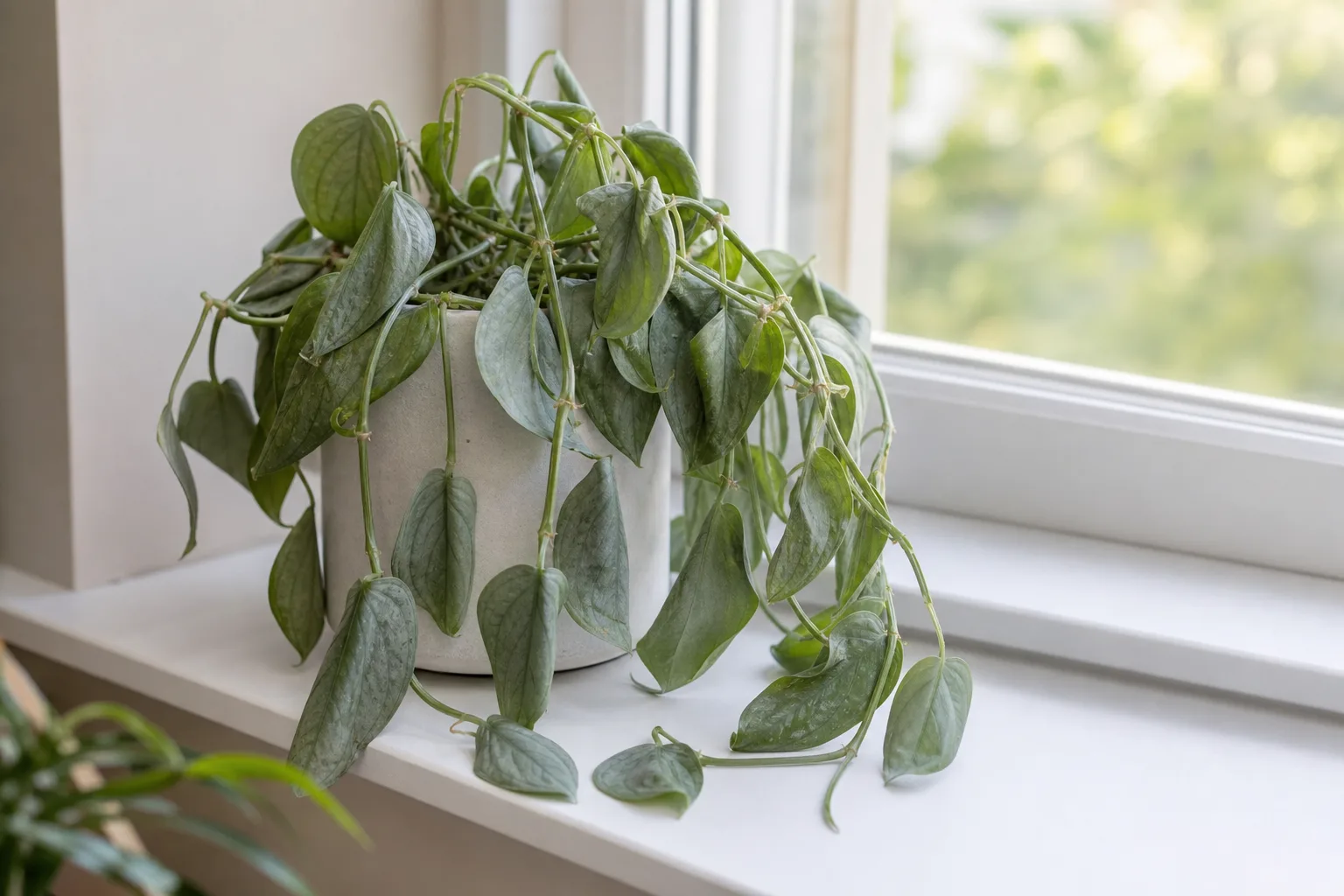
Wilting on Cebu Blue Pothos: Causes, Checks & Fixes
This guide covers wilting on Cebu Blue Pothos. See also the general Wilting guide, watering, and light pages for this plant.
Wilting on Cebu Blue Pothos: Causes, Checks & Fixes
Quick answer
Wilting on Cebu Blue Pothos (Epipremnum pinnatum ‘Cebu Blue’) means the narrow, arrow-shaped leaves have lost turgor-they hang limp on soft petioles instead of holding their usual firm arch. On this climbing aroid, wilt almost always traces to a water-pathway problem: roots too dry to supply moisture, roots too wet and damaged to absorb it, or temporary stress after repotting, heat, or cold drafts.
First step: lift the pot and press your finger 3–5 cm (1–2 inches) into the soil. A noticeably light, dry pot usually means underwatering-water thoroughly until runoff, then drain fully. A heavy pot with wet soil and limp leaves is a stop signal: more water will not fix uptake failure from overwatering or root rot. If you repotted within the last two weeks, temporary wilt with firm stems and acceptable moisture often resolves with stable light and one settling soak-see the recovery section below.
This page covers acute collapse. For gradual sag without sudden turgor loss, see drooping leaves on Cebu Blue Pothos.
What wilting looks like on Cebu Blue Pothos
Healthy Cebu Blue leaves are firm, glossy, and carry a distinctive silvery blue-green sheen under good light. When the plant wilts, entire leaves or whole vine sections go limp-they lose stiffness from petiole to tip. The blue coating may dull toward plain green under stress, which is one reason wilt on this cultivar is easy to spot if you know the plant’s normal color.
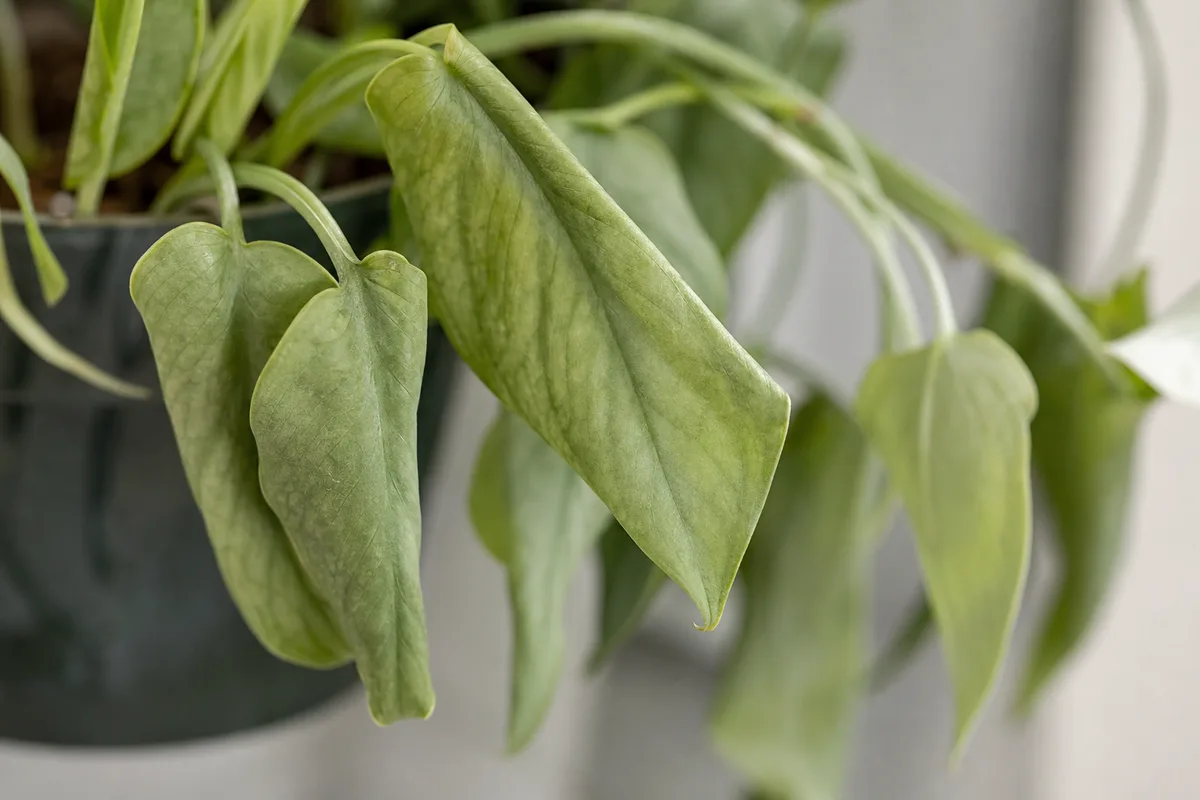
Limp wilted arrow leaves with dulled silvery-blue color and lost turgor on soft petioles - compare pot weight and soil moisture to split dry wilt from wet-soil root failure.
Common patterns by cause:
- Dry wilt (underwatering): Pot feels very light. Top 1–2 inches of mix are dry; soil may pull slightly from the pot wall. Leaves wilt but stay mostly green; edges may crisp if dryness persisted. Stems at nodes remain firm.
- Wet wilt (overwatering / root rot): Soil stays wet many days after watering. Leaves are limp despite moist mix. Lower leaves often turn soft yellow. Sour smell from the pot is a strong rot signal. Stem base may soften in advanced cases.
- Post-repot wilt: Limp leaves for several days after repotting with otherwise appropriate moisture. Firm stem tissue and no sour smell-usually transplant adjustment, not disease.
- Cold-draft wilt: Sudden limpness near a winter window, AC vent, or door draft while soil moisture reads normal. Often reversible once moved to stable warmth.
- Heat / afternoon wilt: Temporary droop in hot dry air that recovers overnight when soil moisture is adequate-distinct from chronic root failure.
One yellow lower leaf on an otherwise firm vine is often normal senescence, not whole-plant wilt.
Why Cebu Blue Pothos wilts
Less drought-forgiving than Golden Pothos
Cebu Blue belongs to Epipremnum pinnatum, not E. aureum (Golden Pothos). Both are forgiving aroids, but Cebu Blue typically shows wilt sooner under identical neglect-especially in bright light where the vine transpires faster, or in small pots that dry quickly. The species stores water in stems and leaves, yet chronic underwatering damages fine roots and makes the next wilt episode more severe.
The mixed-signal trap: limp leaves with wet soil
This is the diagnosis most growers miss. Pale, limp leaves can mean thirst-but they can also mean rotted roots from too much water. When roots decay from oxygen-starved, saturated mix, they cannot transport moisture upward even though the soil feels wet. Wilting with moist soil often means roots cannot absorb water because they are failing. Adding water deepens the problem.
Clemson HGIC notes that Pythium and Phytophthora-common oomycete pathogens behind aroid root rot-thrive when overwatering decreases oxygen available for root growth. Cebu Blue in heavy mix, oversized pots, or dim corners where soil dries slowly is especially prone to this wet-wilt cycle.
Low light slowing dry-down into accidental overwatering
In a dim corner, the pot may stay wet for two weeks while you keep a summer watering rhythm. Growth slows, water use drops, and mix stays saturated. The plant wilts from failing roots-not from thirst-while the surface still looks damp. Low light also fades the blue sheen and stretches internodes, which slows recovery even after you correct moisture.
Post-repot and root disturbance
Repotting disturbs fine feeder roots. For one to two weeks after transplant, a Cebu Blue may wilt despite correct moisture while roots re-establish. Oversized pots that hold excess wet mix around a small root ball make this worse. Wait five to seven days after repot before the first light soak, as described in the repotting guide.
Cold drafts and temperature swings
Cebu Blue prefers stable indoor temperatures between roughly 65 and 85°F (18 and 29°C). Cold glass, AC blasts, or sudden drops below about 55°F (13°C) reduce water uptake and can wilt foliage even when soil moisture is fine. Move the pot off winter sills and away from vent paths before rewriting your entire watering schedule.
Dry wilt vs. wet wilt vs. root-rot wilt
Use this table before you pick up the watering can:
| Signal | Dry wilt | Wet wilt | Root-rot wilt |
|---|---|---|---|
| Pot weight | Very light | Heavy | Heavy |
| Top 1–2 inches | Dry | Wet or cool | Wet, often sour-smelling |
| Leaf texture | Thin, papery; may curl inward | Soft, limp; may yellow low first | Soft, limp; yellow spreads upward |
| Stem at soil line | Firm | Usually firm early | May soften or darken |
| After thorough soak | Perks within hours | Stays limp | Stays limp or worsens |
| Urgency | Moderate-rehydrate promptly | High-stop watering | Urgent-inspect roots |
University of Maryland Extension emphasizes checking soil moisture at depth before acting-dry soil points toward dehydration, while wet soil with wilting suggests uptake failure, not thirst.
Lookalike symptoms to rule out
Wilting overlaps with several other Cebu Blue problems:
| Pattern | Likely issue | Key differentiator |
|---|---|---|
| Limp leaves, light dry pot | Underwatering | Dry top 1–2 inches; perks after soak |
| Limp leaves, wet soil, gnats | Overwatering | Heavy pot; surface stays damp |
| Limp leaves, wet soil, mushy roots | Root rot | Sour smell; stem base may soften |
| Gradual sag over weeks | Drooping leaves | Slower decline; less acute turgor loss |
| Yellow leaves without full collapse | Moisture imbalance or aging | Check soil before treating as wilt |
| Crispy edges, soil moist | Low humidity | Pot weight normal; dry winter air |
| Leggy pale vines, no acute wilt | Not enough light | Blue sheen faded; slow dry-down |
How to confirm the cause
Work through these checks in order:
- Pot weight - Lift the pot. Compare to how it felt right after a thorough watering. Very light confirms dry-side stress; heavy with limp leaves confirms wet-side stress.
- Top-inch probe - Insert a finger or chopstick 3–5 cm deep. Dry at depth with light pot → dry wilt. Cool damp throughout → wait or inspect for wet wilt.
- Stem firmness - Feel nodes and the base at soil level. Firm tissue fits drought or environmental wilt. Soft, dark tissue with wet mix → root or stem rot-unpot.
- Drainage audit - Standing water in saucer? Blocked holes? Oversized pot? These keep roots oxygen-starved.
- Recent timeline - Repot, move, heat wave, or draft in the last two weeks? Temporary wilt may resolve with stability, not aggressive treatment.
- New growth check - Firm new leaves emerging from the tip while older leaves wilt suggests partial root stress or uneven moisture-not total collapse.
Combine weight, finger depth, and stem feel before choosing a fix. One check alone misleads.
First fix for Cebu Blue Pothos
Make one correction based on what you confirmed-do not stack repot, fertilizer, and heavy pruning the same day.
If the pot is light and the top 1–2 inches are dry (underwatering)
Water thoroughly until a small amount runs from the drainage hole. Empty the saucer within 15 to 30 minutes. For a very dry root ball that repels water, a single bottom soak until the surface just moistens-then full drain-can help; full protocol in the underwatering guide.
If soil is wet and leaves are limp (overwatering / root rot)
Stop watering immediately. Remove standing water from saucers and cachepots. Place the plant in Cebu Blue Pothos light guide with gentle airflow. Let the top half of the mix approach dryness before any next drink. If decline continues, unpot and inspect roots-trim mushy brown tissue and repot into fresh airy mix only if firm roots remain. Penn State Extension notes that root rot limits water uptake and produces wilt despite wet soil. Workflows: root rot and overwatering.
If wilt followed repotting within two weeks (transplant shock)
Hold a steady watering rhythm-do not compensate with extra drinks. Keep bright indirect light, avoid fertilizer, and wait for new root growth. One light settling soak after five to seven days is enough if the top inch was dry; do not keep mix permanently damp.
If soil reads fine but a cold draft or heat blast is obvious
Move the pot to stable warmth between roughly 65 and 85°F (18 and 29°C), away from AC vents and cold glass. Maintain normal moisture checks-do not overwater “to help recovery.”
Recovery timeline
Recovery depends on cause and severity:
- Single underwatering episode: Leaves often regain firmness within 4–24 hours after a proper soak and drain. Crispy edge tissue may remain permanently; judge success by turgid new growth at the vine tip.
- Mild overwatering without root loss: One to two weeks after the wet cycle stops, limp leaves may stabilize. New blue-toned leaves confirm progress.
- Root rot with trimmed healthy roots: Several weeks in warm, bright conditions. Old collapsed leaves rarely re-turgid; focus on firm roots and new leaves.
- Post-repot wilt: Usually improves within 5–14 days if moisture and light stay stable and rot is not present.
Hold fertilizer until dry-down returns to a predictable pattern and new growth looks stable.
What not to do
Do not keep watering because leaves look limp when soil is already wet-that is how root rot accelerates on Cebu Blue. Do not drench daily after one dry spell; swinging from drought to swamp damages fine roots. Do not fertilize a wilted plant before confirming the water pathway is healthy. Do not repot on day one unless inspection shows mushy roots or failed mix. Do not mist leaves as a substitute for correct soil moisture-brief mist does not hydrate roots. When removing severely wilted leaves, remember Cebu Blue contains calcium oxalate crystals and is toxic to pets if chewed-wash hands after pruning and discard tissue out of reach.
How to prevent wilting next time
Build a rhythm around Cebu Blue’s actual biology:
- Water when the top 1 to 2 inches of mix dries-roughly every 7–10 days in active growth and 10–14 days in winter for many homes, always confirmed by finger depth and pot weight.
- Keep bright indirect light so transpiration and dry-down stay predictable; dim corners slow drying and invite overwatering wilt.
- Use well-draining perlite-amended mix and a pot with drainage holes-details in the overview and soil guide.
- Empty saucers after every watering so roots never sit in runoff.
- Avoid cold drafts and sudden temperature drops below about 55°F (13°C).
- Check pot weight twice weekly until you learn your room’s rhythm-light triggers a drink, heavy means wait.
Weekly calendar watering without soil checks is how healthy Cebu Blue vines develop winter rot and summer drought stress in the same home across seasons.
When to worry
Escalate immediately if:
- The stem base softens while soil stays wet
- Limp leaves spread rapidly over several days despite moist mix and sour smell
- The plant does not perk within 24–48 hours after confirmed dry-soil correction
- Most roots are mushy on inspection-salvage depends on remaining firm stem and root tissue
Firm stems, light dry pot, and limp green leaves are lower urgency-correct watering usually resolves that pattern within a day.
Conclusion
Wilting on Cebu Blue Pothos is a forked diagnosis, not a single fix. The arrow-shaped leaves go limp when roots cannot supply water-whether from dryness, rot, repot shock, or environmental stress. Lift the pot, probe the top 1–2 inches, and feel the stem base before you pour. Dry and light means soak and drain; wet and limp means stop and inspect; soft crown with sour soil means root rot, not thirst. Get that branch right and this vine recovers predictably; get it wrong and you either drown recovering roots or leave a thirsty aroid wilting in a dry pot.
Related Cebu Blue Pothos problems
- Overview - full indoor care hub
- Watering - finger, weight, and chopstick checks
- Underwatering - dry pot rehydration
- Overwatering - wet soil signs before full wilt
- Root rot - inspection, trim, and repot workflow
- Drooping leaves - gradual sag vs acute wilt on this page
When to use this page vs other Cebu Blue Pothos guides
- Cebu Blue Pothos watering guide - Use for routine moisture checks before assuming wilting is the main issue.
- Cebu Blue Pothos problems hub - Browse all 16 common issues on this species.
- Underwatering on Cebu Blue Pothos - Different entry point when symptoms overlap with wilting.
- Overwatering on Cebu Blue Pothos - Different entry point when symptoms overlap with wilting.
- Root Rot on Cebu Blue Pothos - Different entry point when symptoms overlap with wilting.