Not Enough Light on Cebu Blue Pothos: Causes, Checks & Fixes
Quick answer
Cebu Blue Pothos in too little light stretches toward windows, loses its silver-blue sheen, and grows long gaps between small leaves. First step: move it to the brightest indirect spot in your home-within a few feet of an east or west window-then wait two weeks before changing water or fertilizer.
Not Enough Light on Cebu Blue Pothos: Causes, Checks & Fixes
This guide covers not enough light on Cebu Blue Pothos. See also the general Not Enough Light guide, watering, and light pages for this plant.
Not Enough Light on Cebu Blue Pothos: Causes, Checks & Fixes
Quick answer
Not enough light on Cebu Blue Pothos (Epipremnum pinnatum ‘Cebu Blue’) shows up as long bare vines, small arrow-shaped leaves, and a fade from silver-blue to ordinary green. The plant leans toward the brightest corner of the room and may stall for months without a new leaf. This cultivar is sold for its glaucous blue sheen and eventual fenestrated adult foliage-both need bright indirect exposure, not the deep interior shade where generic pothos sometimes survive.
First step: move the pot to the brightest location in your home that never receives hot direct sun. An east window, a west window pulled back from the glass, or a few feet inside a south window with a sheer curtain usually works. Do not repot, fertilize, or increase watering on the same day. Give the plant two weeks in the new spot and judge the next leaf set, not the old stretched stems.
What not enough light looks like on Cebu Blue Pothos
Cebu Blue communicates light stress through internode spacing, leaf size, and color-not flowers. This species rarely blooms indoors. Watch for these patterns:
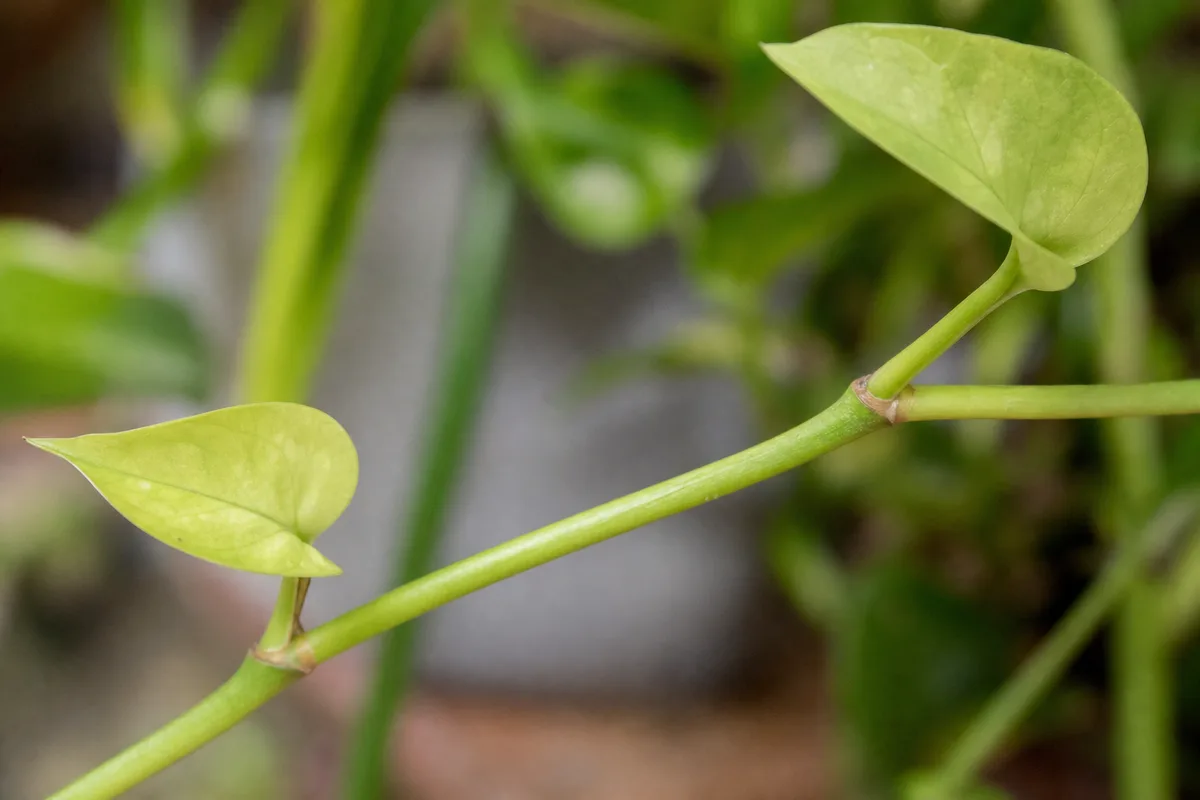
Stretched Cebu Blue stem with unusually long gaps between small pale juvenile leaves - compare with tighter node spacing on a brightly lit vine.
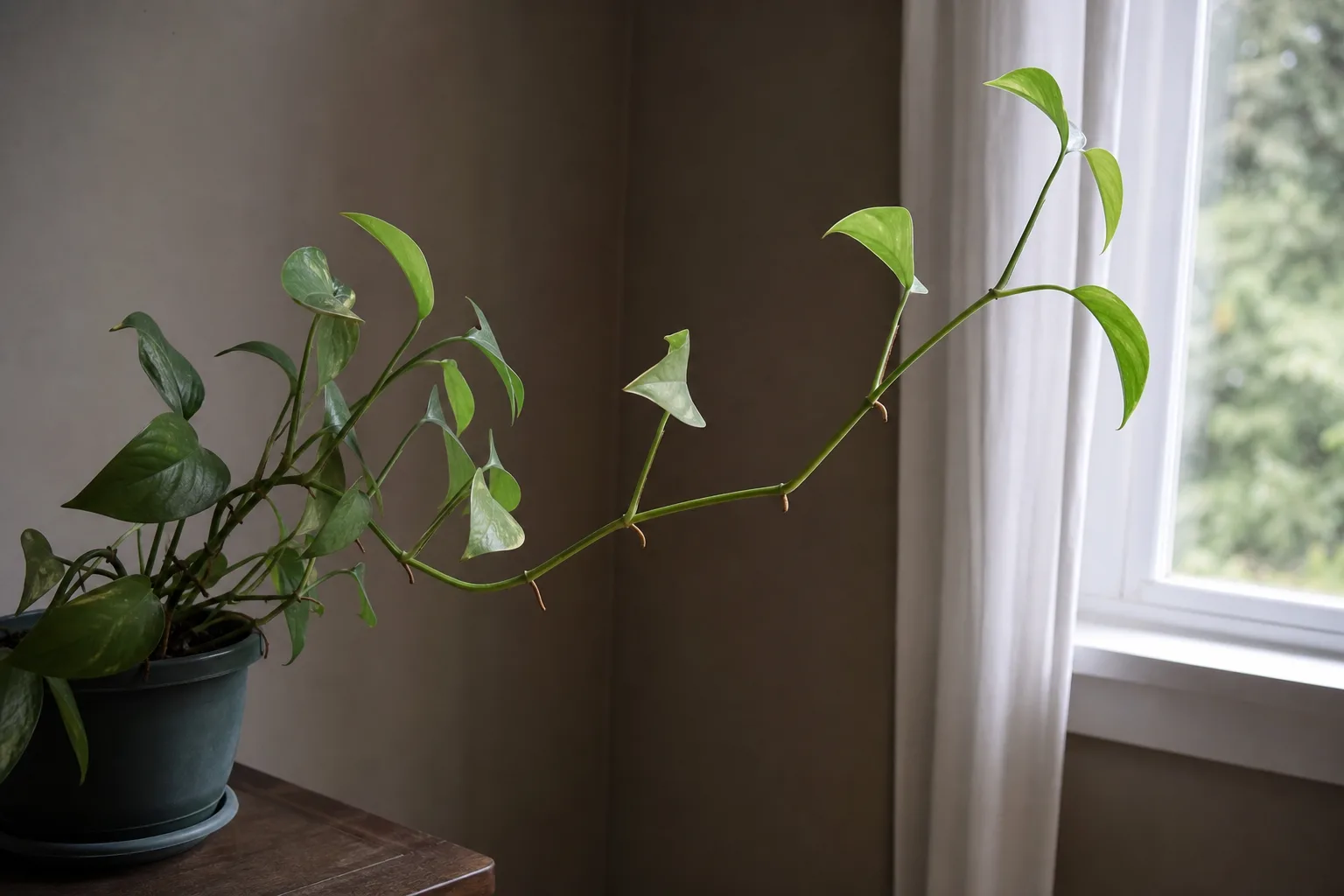
- Leggy reach - Vines lean or the whole plant tilts toward a window. Indoor plants stretch and lean toward light when intensity is too low. Stems grow unusually long between leaves, leaving bare sections that make hanging baskets look sparse.
- Loss of silver-blue color - Healthy leaves show a waxy blue-green or silvery cast. In dim rooms that sheen washes out to flat medium green. Pothos in low light eventually loses desirable leaf qualities such as brightness and variegation.
- Small juvenile leaves - New leaves stay arrow-shaped and compact instead of enlarging. At light levels around 50 foot-candles, new pothos leaves stay small; 150 fc or more maintains leaf size and color.
- Slow or stalled growth - Cebu Blue is a fast grower in good light. Months without a new node in an interior hallway or back bedroom usually means light, not dormancy.
- Yellow lower leaves with wet soil - Insufficient light reduces photosynthesis and plant vigor. The same Cebu Blue Pothos watering guide that worked in brighter light can leave mix soggy and yellow lower leaves-a pattern that mimics overwatering on Cebu Blue Pothos but starts with placement.
Crispy brown patches on sun-facing leaves are not the main low-light signature; those usually point to direct sun scorch. Too much direct light bleaches or scalds leaves. If only the window-side leaves are bleached or brown, you are dealing with too much light, not too little.
Why Cebu Blue Pothos gets not enough light
Epipremnum pinnatum is a tropical climbing vine native to Southeast Asia and the Pacific. In the wild it ascends tree trunks toward filtered canopy light. The ‘Cebu Blue’ cultivar from Cebu Island keeps juvenile arrow leaves when trailing but can produce larger, fenestrated adult leaves when climbing in bright conditions. Indoors, that translates to the brightest indirect spot you can manage-not a dim corner chosen because pothos are “easy.”
Several home conditions push Cebu Blue below its comfort zone:
- Interior placement for décor - Bookshelves, hallway hooks, and bathroom corners far from windows often fall below 100 foot-candles, the range many foliage plants need just to maintain quality.
- Assuming all pothos tolerate the same dim spots - Golden pothos may hang on in low light longer. Cebu Blue is often less forgiving about color and vine density; variegated and specialty pothos cultivars lose coloring in lower light.
- Winter daylight drop - The same window that worked in June may deliver half the intensity by December. Short days plus cloudy weather stall growth without any change in your care routine.
- Dirty glass, heavy curtains, or outdoor shade - Light intensity decreases rapidly with distance from the source and with anything that filters the pane.
- Low light plus unchanged watering - When the plant photosynthesizes less, it draws less moisture from the pot. Wet mix in a dark spot invites root stress and yellow leaves even though you have not increased water volume.
How to confirm the cause
Work through these checks before changing anything else:
- Window distance and direction - Stand where the pot sits. Can you see sky through the nearest window, or only a dim wall reflection? More than 1.5–2 m (5–6 ft) from a window is usually low light for active Cebu Blue growth.
- Lean test - If vines consistently point toward one light source, the plant is actively seeking more energy. Rotate the pot 180°; if new growth bends back toward the window within two weeks, light is the limiter.
- Soil dry-down speed - Stick a finger into the top 3–5 cm. If mix stays wet for many days while vines pale and droop-not crisp-low light may be slowing uptake. If mix is dry and leaves lose blue color and wilt, check underwatering on Cebu Blue Pothos too.
- New leaf inspection - Look at the newest unfurling leaf at each growing tip. Small leaves with long gaps behind them on an otherwise stable pot confirm chronic under-lighting. Mushy stems with sour smell point to rot instead.
- Season check - Did symptoms appear or worsen after October–March? Seasonal dimming is common even without moving the pot.
- Shadow test at midday - Hold your hand between the plant and the window around noon. A sharp, dark shadow suggests direct sun (risk of scorch). A faint or absent shadow means the spot is too dim for the blue color and compact growth you bought Cebu Blue Pothos overview for.
If the plant is pale and the pot dries in two days with crispy edges, suspect underwatering or low humidity before blaming light alone. If leaves are yellow with constantly wet mix in a bright window, inspect roots for rot-the fix is less water and better drainage, not more light.
First fix for Cebu Blue Pothos
Move the pot to brighter indirect light today.
Choose the brightest location that avoids hot direct rays on the foliage:
- East-facing window - Often ideal: strong morning light, softer afternoon.
- West-facing window - Pull the pot 0.5–1 m back from glass or use a sheer curtain to block harsh late-day sun.
- North-facing window - Acceptable if it is the brightest unshaded exposure in the room; supplement with a grow light in winter if growth stalls.
- South-facing window - Keep the vine behind a sheer curtain or 1–2 m inside the room so leaves never cook in midday sun.
Increase exposure gradually if the plant has lived in very dim light for months-a sudden jump into a hot south window can scorch tissue even though the plant wanted more light overall. A week at an intermediate bright shelf, then the final spot, is safer.
Hold watering steady for the first two weeks after the move unless mix is clearly soggy. Brighter light increases evaporation; recheck the top 3–5 cm before each drink rather than keeping an old calendar schedule.
Step-by-step recovery
Once the pot is in better light, support recovery in this order:
- Wait for the next leaf set - Do not prune heavily hoping to “reset” the plant. The diagnostic leaves are the next ones that unfurl at each tip.
- Rotate weekly - A quarter turn each week keeps new growth even and stops one-sided lean.
- Adjust watering to the new dry-down - When photosynthesis picks up, soil may dry faster. Water when the top 3–5 cm is dry, not on a fixed weekday.
- Add a moss pole if you want larger leaves - Trailing in low light keeps Cebu Blue in juvenile form. Bright light plus vertical support encourages bigger foliage and possible fenestration over time-neither happens in a dark hanging corner.
- Resume half-strength fertilizer only after new growth - Feed monthly at half strength during spring and summer once active growth returns. Skip fertilizer on a still-stressed plant.
- Trim only dead tissue - Remove fully brown or yellow leaves once the plant is stable. Keep green-but-stretched sections; they still photosynthesize while the vine rebuilds.
If natural light remains marginal-a basement office or north room far from glass-add a full-spectrum LED grow light 15–30 cm above the foliage for 12–14 hours daily. Raise the lamp if leaf edges bleach.
Recovery timeline
Expect visible improvement on the next one to two leaf sets, not an overnight bushiness change. Timelines:
- 1–2 weeks - Lean may slow; the plant stops looking worse. No fertilizer response yet.
- 3–6 weeks - Next leaves should show tighter spacing and stronger blue-green color if light is adequate.
- 2–3 months - Regular node production through the growing season suggests the fix worked. Old stretched internodes remain long permanently.
- Winter - Growth naturally slows. Judge whether the plant holds color and produces occasional new leaves, not summer speed.
If six weeks pass in a clearly brighter spot with no new growth and continuing yellowing on wet soil, unpot and inspect roots for rot-light was not the only problem.
Lookalike symptoms
| What you see | More likely cause | Quick check |
|---|---|---|
| Long vines leaning toward window | Not enough light | Move closer to bright indirect window |
| Crispy brown patches on sun-facing leaves | Too much direct sun | Pull back from glass or add sheer curtain |
| Brown tips only, vines otherwise full | Low humidity or salt buildup | Humidity, flush salts; light may be fine |
| Yellow leaves, soggy mix, sour smell | Overwatering / root rot on Cebu Blue Pothos | Stop watering; inspect roots |
| Wilting, dry mix, faded blue color | Underwatering | Water when top 3–5 cm dries |
| Slow growth in winter only | Seasonal rest | Normal if color stays fair and mix dries predictably |
Leggy growth and pale color together strongly favor light. A single yellow lower leaf on dry soil may be normal aging.
Mistakes to avoid
- Parking it in a dark corner because “pothos are low-light plants” - Cebu Blue is sold for color and form. Dim survival leads to stretch and plain green leaves.
- Jumping into direct south-window sun - Fixes legginess in theory but scorches the glaucous foliage. Bright indirect light is the target.
- Overwatering to perk up pale vines - Wet roots in low light worsen yellowing. Fix placement first; then match water to dry-down.
- Fertilizing a dim, stressed plant - Salt buildup on inactive roots adds stress. Wait for new leaf growth before feeding.
- Cebu Blue Pothos repotting guide on day one - Repotting does not create light. Change placement, observe, then repot in spring only if roots need space.
- Judging recovery on old stems - Stretched internodes never shorten. Success is compact new leaves.
Cebu Blue Pothos care cross-check
Light and water move together on this fast-growing vine. After you brighten placement:
- Watering - Every 7–10 days in spring and summer and 10–14 days in winter is only a guide. In brighter light the top 3–5 cm may dry faster; in winter dim light, slower.
- Soil - Well-draining mix with about 20% perlite keeps roots aerated when growth resumes. Heavy wet peat in a dark spot is a common failure combo.
- Support - A moss pole or trellis in bright light encourages the mature leaf form; trailing alone in dim light keeps juvenile foliage indefinitely.
- Temperature - Comfortable room range 18–29°C (65–85°F). Cold drafts plus dim light stall recovery.
When light is correct, the plant uses water predictably, holds silver-blue color, and produces nodes through the warm months-making every other care decision easier to read.
How to prevent not enough light next time
- Place new Cebu Blue purchases within a few feet of a window from day one, not in a holding spot “until you find the right place.”
- Rotate the pot weekly so vines grow evenly and you notice lean early.
- Clean windows in fall before daylight shrinks.
- Shorten watering when you move a plant to a dimmer winter location temporarily-less light means less water use.
- Use grow lights in rooms with north exposure or deep floor plans; 12–14 hours of supplemental light prevents winter stretch.
- Reassess after furniture moves - A shifted sofa or new blinds can drop intensity by half without you noticing.
Treat “Cebu Blue Pothos light guide” as a location you can verify with lean, color, and new leaf spacing-not a label on the nursery tag.
When to worry
Low light alone is rarely fatal, but these combinations need faster action:
- Many yellow leaves plus wet, sour mix in a dark room on Cebu Blue Pothos - Risk of root rot. Stop watering, improve light, and inspect roots if yellowing spreads.
- No new growth for six or more months through spring and summer in a spot you thought was bright - The location is still too dim or another stressor (pests, rot) is active.
- Continued collapse after four weeks in a verified bright indirect spot - Look for spider mites on leaf undersides, mealybugs at nodes, or soft brown roots from chronic overwatering in the old dim spot.
A slightly pale but stable plant in a hallway is a cosmetic and long-term vigor issue, not an emergency-unless wet soil and yellowing are accelerating at the same time.
When to use this page vs other Cebu Blue Pothos guides
- Cebu Blue Pothos watering guide - Use for routine moisture checks before assuming not enough light is the main issue.
- Cebu Blue Pothos problems hub - Browse all 16 common issues on this species.
- Leggy Growth on Cebu Blue Pothos - Different entry point when symptoms overlap with not enough light.
- Slow Growth on Cebu Blue Pothos - Different entry point when symptoms overlap with not enough light.
- Yellow Leaves on Cebu Blue Pothos - Different entry point when symptoms overlap with not enough light.