Overwatering on Golden Pothos: Causes, Checks & Fixes
Quick answer
Overwatering on Golden Pothos shows as limp heart-shaped leaves on damp heavy soil-the vine stores water in its stems, so wilt does not always mean thirst. First step: stop watering until the top 1–2 inches of mix feel dry, then confirm drainage holes are open.
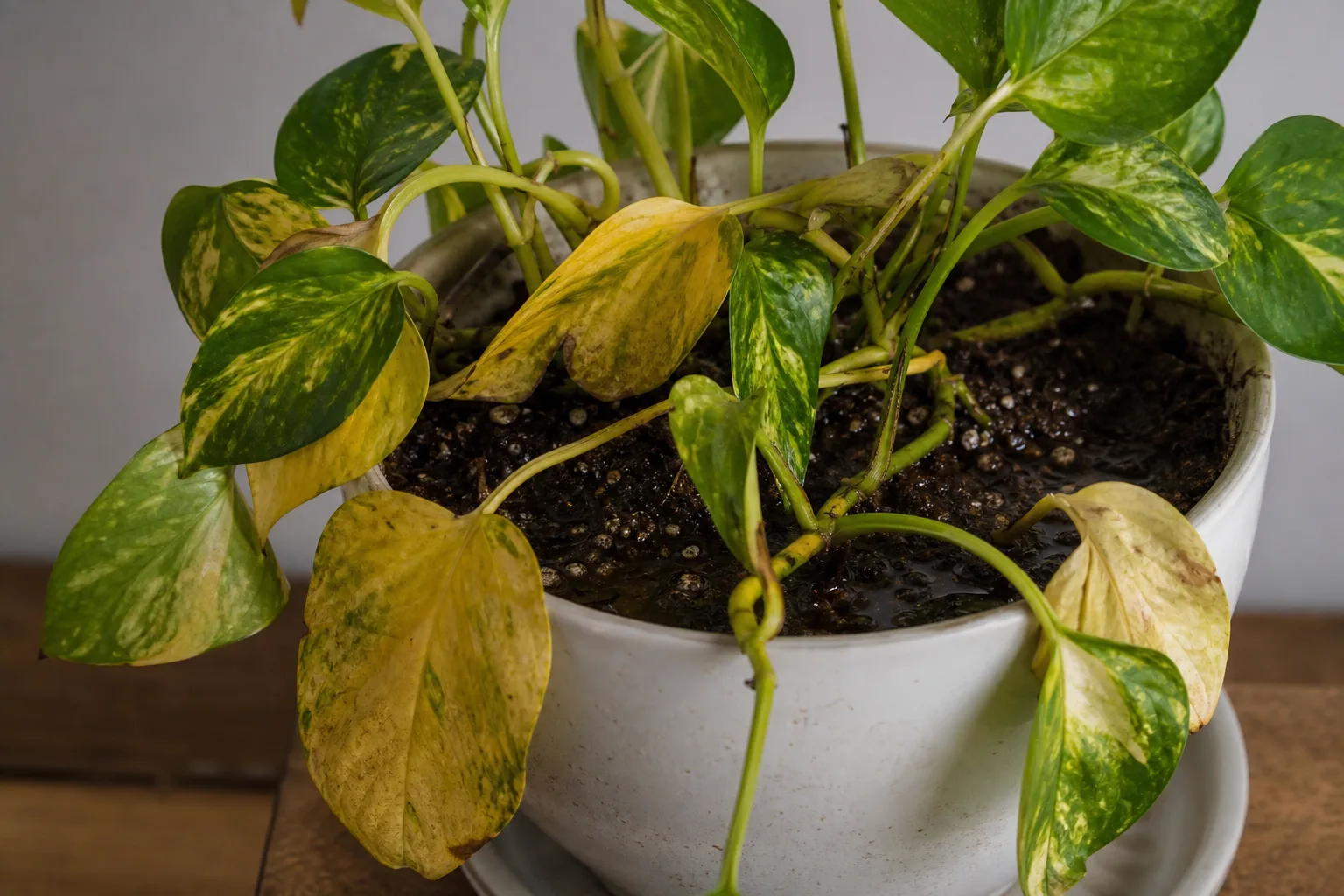
Overwatering on Golden Pothos: Causes, Checks & Fixes
This guide covers overwatering on Golden Pothos. See also the general Overwatering guide, watering, and light pages for this plant.
Overwatering on Golden Pothos: Causes, Checks & Fixes
Quick answer
Overwatering on Golden Pothos (Epipremnum aureum) means the root zone stays wet too long. This trailing tropical vine stores water in thick stems and heart-shaped leaves, so limp vines on damp soil are the signature trap-growers water again, and roots lose even more function.
First step: stop watering immediately. Lift the pot. If mix is wet and heavy, press your finger 1–2 inches deep near the pot edge. Wet clinging soil plus yellow lower leaves or a sour smell means treat overwatering as confirmed.
How this page fits the cluster: The wilting guide walks through dry-pot versus wet-pot first checks when vines droop. This page covers chronic wet mix and early root stress before decay is advanced-dry-down, drainage fixes, and severity-tiered recovery. If stems soften at the soil line or roots are mushy on inspection, move to the root rot guide for trim-and-repot rescue.
Overwatering vs. underwatering on Golden Pothos
| Pattern | Pot weight | Soil at 1–2 inches | Stem at soil line | What it usually means |
|---|---|---|---|---|
| Overwatering | Heavy | Wet, cool, clings | Soft or blackening | Failed roots on saturated mix |
| Underwatering | Light | Dry and crumbly | Firm and green | Turgor loss from drought |
| Low light + slow dry-down | Medium-heavy | Damp for weeks | Firm but thinning vines | Overwatering risk, rot may follow |
Wilting with moist soil often means roots cannot absorb water because they are decaying. Underwatered pothos wilts on a light dry pot and often perks within hours after a thorough soak.
What overwatering looks like on Golden Pothos
Dense trailing foliage slows how fast the soil surface dries, so roots can decline while upper leaves still look acceptable. Root rot and blackening of leaf margins can occur with overwatering on pothos-yellowing often spreads beyond a single aging leaf at the base.
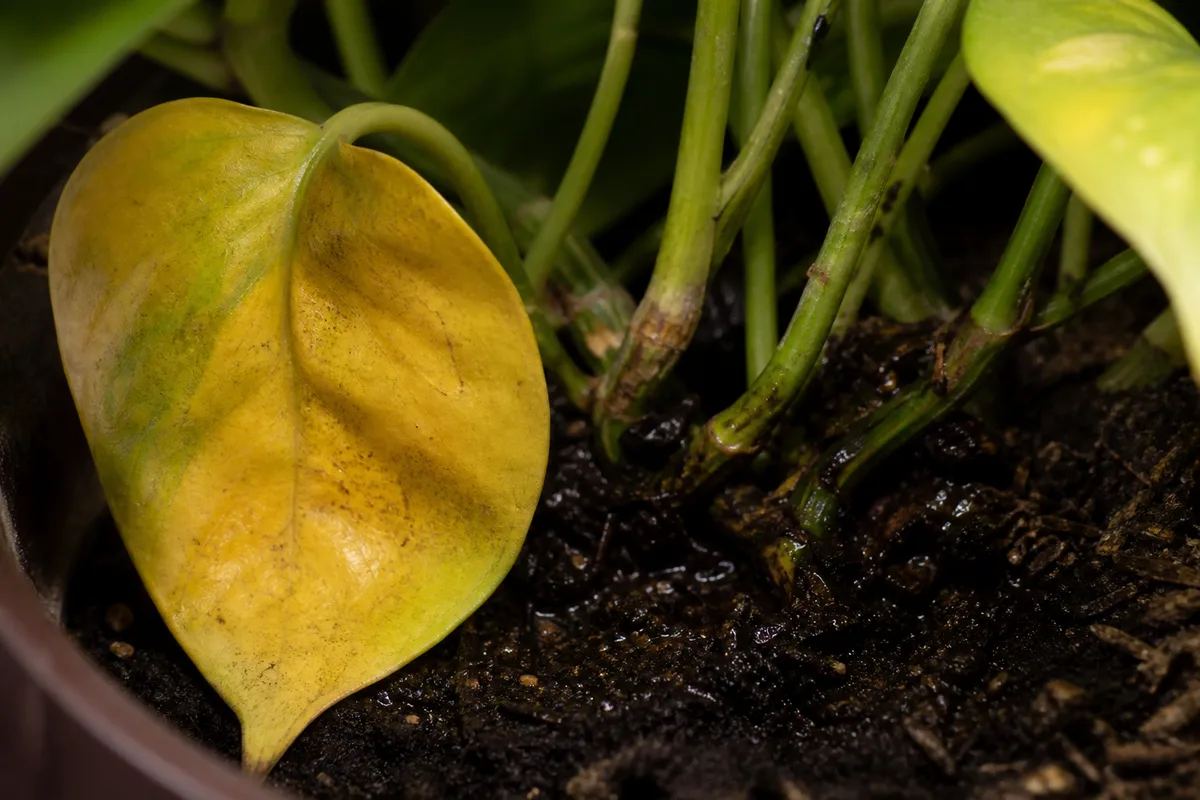
Overwatering symptoms on Golden Pothos - compare with healthy tissue on the same plant.
Early signs:
- Yellow lower leaves while mix stays damp-not gradual aging of one old leaf
- Limp heart-shaped leaves on wet soil that do not firm up after you water
- Sour or rotten smell when you lift the pot
- Fungus gnats near the soil line in a pot that never dries down
- Slowed new growth at nodes along trailing vines
- Blackening leaf margins or tips on variegated cultivars when salts and moisture stack
Advanced signs:
- Soft, mushy stems at or just above the soil line
- Brown or black tissue where vines meet wet mix
- Vine collapse with leaves turning brown and papery despite moisture
- Roots that slip off when touched-healthy pothos roots stay firm and white or tan
Why Golden Pothos gets overwatered
Golden Pothos is a vining aroid from warm tropical understory habitats. Indoors it tolerates missed waterings better than constant sogginess, but its lush look tricks growers into calendar watering.
Overwatering on wet mix. Root rot is a common houseplant issue caused by overwatering or poorly draining soil. Watering while the top 1–2 inches are still damp keeps the root zone oxygen-poor-overwatering decreases oxygen available for root growth.
Poor drainage and standing water. Blocked holes, dense peat-heavy mix, oversized pots, and saucers left full after bottom-watering keep the bottom anaerobic. Hanging baskets in cachepots trap runoff.
Low light and cool rooms. A pothos on a dim shelf or in a cool winter room uses less water per week. The same weekly rhythm that worked in summer leaves mix wet for weeks-overwatering, especially in winter, can rot the roots.
Trailing growth masking dry-down. Long vines shade the pot surface in hanging baskets. The top inch may look dry while the center stays wet, or the opposite-the surface stays damp while you assume the whole ball is fine.
Misreading stem-stored water. Thick pothos stems hold moisture for days. Firm leaves are not proof that roots are healthy when soil stays wet underneath.
How to confirm the cause
Work through these checks before repotting or trimming:
- Lift the pot before adding water. Heavy and wet confirms overwatering direction.
- Probe 1–2 inches deep near the pot edge. If wet and clinging, do not water again yet.
- Smell the mix when lifting-sour odor means inspect roots.
- Check stem firmness at the soil line. Soft blackening tissue escalates to unpotting.
- Watch for fungus gnats over constantly damp surface-nuisance and diagnostic clue.
- Note light and season. Cool dim winter rooms need longer dry-down between drinks.
- Root spot-check (if unsure) - Slide the plant out gently. Root rots with brown or nonexistent roots are most often due to overwatering on pothos. Firm white or tan roots with no sour smell may recover with dry-down alone.
If the mix is dry throughout, the pot is light, and leaves are crispy, see underwatering instead.
The first fix to try
Stop watering until the top 1–2 inches of mix feel dry. Confirm drainage holes are open and empty saucers within 30 minutes of every watering. Move to brighter indirect light if the plant sits in deep shade-slow evaporation worsens wet soil.
Do not fertilize, mist heavily, or repot on day one unless stems are already soft or roots are clearly mushy on inspection. Most early overwatering cases stabilize with dry-down plus better light alone.
Step-by-step recovery by severity
Mild overwatering (yellowing lower leaves, wet mix, firm stems)
- Hold water until the top 1–2 inches are dry, then water thoroughly once and pour off excess from the saucer within 30 minutes.
- Adjust placement - Bright, indirect light speeds recovery without scorching variegated leaves.
- Remove spent leaves - Yellow foliage will not re-green; snip at the petiole base once the plant is stable.
- Monitor new growth - A fresh glossy leaf at a node means roots are working again.
Moderate overwatering (persistent wet mix, multiple yellow leaves, fungus gnats)
- Scrape the top inch of moldy or gnat-infested surface soil and discard it.
- Let the pot dry until mix at 1–2 inches is dry-this may take one to two weeks in cool rooms.
- Set yellow sticky traps near the pot to reduce adult gnats while soil dries-fungus gnats breed in moist potting mix.
- Resume watering only when the finger test passes; never on a fixed weekday.
- Unpot and inspect if yellowing continues after two dry-down cycles-partially brown roots need trimming per the root rot guide.
Severe overwatering (soft stems at soil line, sour smell, mushy roots on unpotting)
- Stop watering and move to the root rot protocol-dry-down alone is unlikely to save the plant when tissue is mushy.
- Unpot, rinse roots, and trim all brown slimy tissue with clean scissors.
- Repot into fresh airy mix with perlite in a pot sized to the remaining root ball.
- Wait about one week before the first light watering so cut surfaces callus.
- If most roots are gone but firm vines remain, take node cuttings per the propagation guide.
Recovery timeline and what to watch
Leaves often perk within days to two weeks once soil oxygen returns and roots begin new white tips. Fully yellow blades drop and do not re-green-judge success by firm new leaves at nodes.
Stabilization often takes one to two weeks after you stop watering and the mix dries-wilting should ease before new leaves appear.
New leaf buds at vine tips are the best success signal. Expect glossy growth in two to four weeks during spring or summer active growth; winter recovery may take longer in cool, dim rooms.
Improvement: yellowing stops; new growth emerges; pot weight normalizes for your schedule; gnats decline as surface dries.
Worsening: stems soften at multiple nodes; black mush climbs the vine; sour smell intensifies; collapse on soggy mix with no new growth for a month-escalate to root rot rescue.
Lookalike symptoms
| What you see | Likely cause | Quick check |
|---|---|---|
| Limp leaves + wet heavy pot + soft yellow lower leaves | Overwatering | Stop watering; confirm 1–2 inch dry-down |
| Limp leaves + light dry pot + thin soft green leaves | Underwatering | Deep soak once; resume dry-down checks |
| Leggy pale vines + dry healthy mix | Low light | Move closer to window; do not water more |
| One or two yellow lower leaves + firm stems + normal dry cycles | Natural aging | Remove leaf; no schedule change needed |
| Soft stem base + sour smell + mushy roots | Root rot (advanced overwatering) | Trim and repot; see root rot guide |
| Scattered yellow after a recent move | Placement shock | Stabilize location; soil may be fine |
Wilting without wet soil usually points to thirst or draft-not this page. Yellow leaves with dry mix may be underwatering or low light-confirm moisture at depth before you pour.
Nutrient deficiency shows general pale yellow with dry mix and steady watering; confirm moisture first before feeding a stressed vine.
Mistakes to avoid
- Do not water when leaves droop on a heavy wet pot
- Do not fertilize a waterlogged plant
- Do not repot into a larger pot to help drying-that adds excess wet soil
- Do not assume wilt always means thirst on pothos with stem-stored water
- Do not ignore fungus gnats as only a pest problem-they signal chronic wet mix
- Do not leave standing water in saucers or cachepots after every drink
Golden Pothos care cross-check
Before changing fertilizer, pot size, or humidity hardware, confirm these basics match your environment:
| Factor | Overwatering risk when wrong | Fix |
|---|---|---|
| Pot size | Oversized pot keeps unused soil wet | Size up one inch at repot only |
| Mix | Heavy peat holds water for weeks | Add 20–30% perlite; refresh compacted mix |
| Light | Dim rooms slow drying | Bright indirect light; see light guide |
| Season | Winter schedule matches summer | Stretch checks to 14–21 days in cool months |
| Cachepot | Standing runoff re-wets roots | Lift inner pot; empty saucer after every drink |
| Hanging basket | Trailing vines shade pot surface | Probe center depth, not surface alone |
How to prevent overwatering next time
Water only when the top 1–2 inches of mix feel dry-use the probe, not a calendar. Let the well-drained potting medium dry out between waterings. Use airy well-drained potting mix in a pot sized to the root mass. Empty saucers and cachepots after every watering.
Provide bright indirect light so the plant uses water at a predictable rate. Reduce frequency in cool winter rooms. Lift before you pour-a noticeably lighter pot plus dry mix at 1–2 inches means it is safe to water again.
For full rhythm, see the watering guide. For the wilt-on-wet-soil branch, see wilting.
When to worry
Escalate immediately if stems dent at the soil line, soil smells rotten, or more than a third of roots are mushy on inspection. Those signs mean root rot is active-dry-down alone is unlikely to save the plant. Shift to the root rot protocol immediately.
Slow yellowing on one or two lower leaves with firm stems and mix that dries normally within a week can wait for a schedule adjustment.
If stems soften while mix stays wet for ten or more days, treat as urgent even before repotting-honest root trimming early gives the best chance on a trailing vine.
Related Golden Pothos guides
- Watering - dry-down protocol and seasonal rhythm
- Wilting - dry-pot vs wet-pot first checks
- Root rot - trim, repot, and node salvage when decay is confirmed
- Yellow leaves - lower-leaf yellowing patterns beyond wet soil
- Fungus gnats - wet-soil co-symptom and larval control
- Underwatering - light pot and recovery after drought
- Soil and repotting - mix and pot sizing for recovery
Conclusion
Overwatering on Golden Pothos is a moisture-timing problem, not bad luck. Confirm it with wet mix at depth plus limp heart-shaped leaves and bottom-up yellowing, then stop watering until the top 1–2 inches dry. Adjust light, drainage, and pot size so the mix breathes between drinks. Epipremnum aureum rewards dry cycles with firm new leaves at nodes; it rarely forgives roots that never get oxygen.
For species context and year-round watering rhythm, see the Golden Pothos overview and watering guide.