Yellow Leaves on Golden Pothos: Causes, Checks & Fixes
Quick answer
Yellow leaves on Golden Pothos are a symptom-not a diagnosis. First step: lift the pot and press your finger 4–5 cm into the mix. A heavy wet pot with soft yellow leaves points to overwatering; a light dry pot with crisp yellow leaves points to drought. One yellow leaf at the oldest node on a long trailing vine is often normal aging.
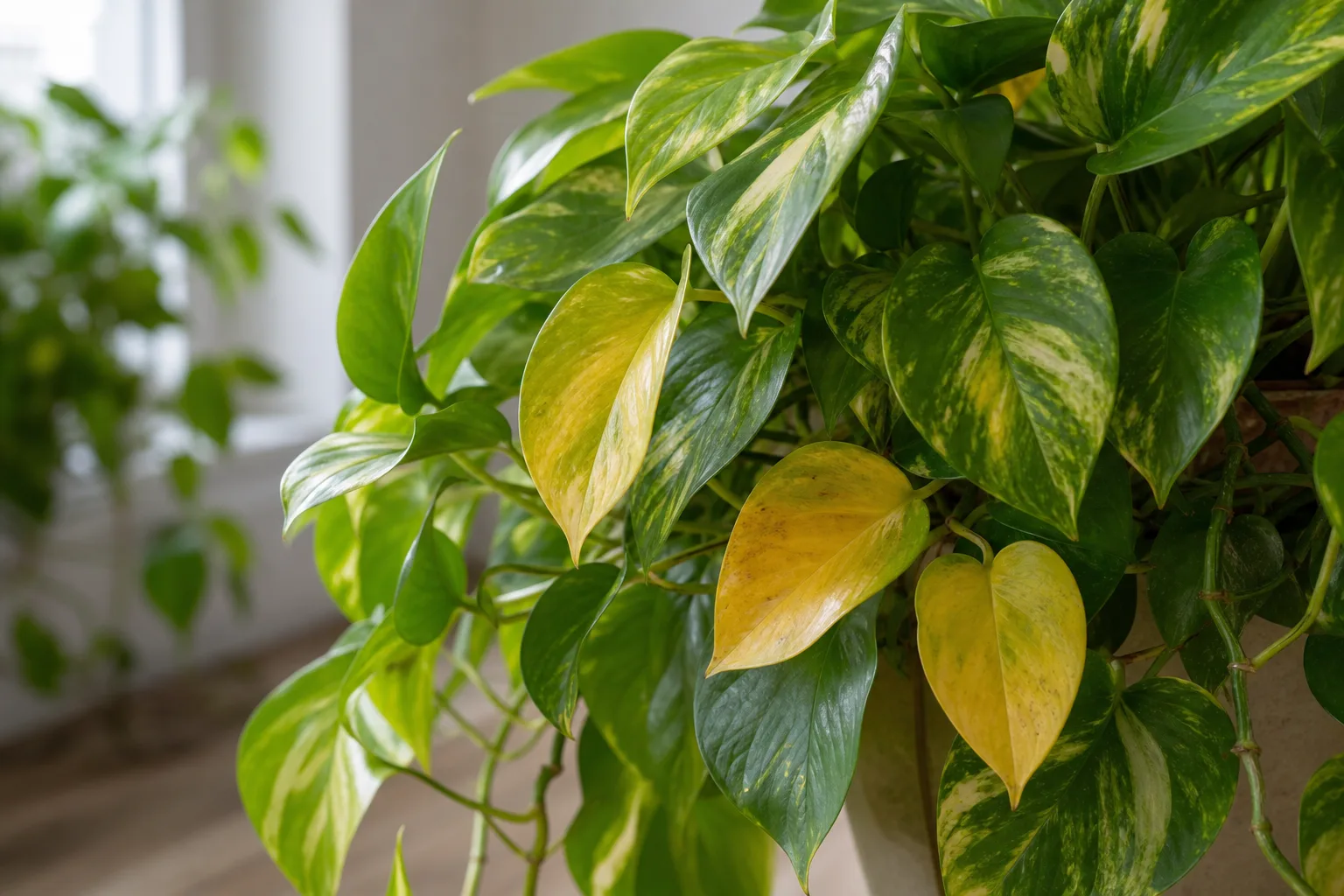
Yellow Leaves on Golden Pothos: Causes, Checks & Fixes
This guide covers yellow leaves on Golden Pothos. See also the general Yellow Leaves guide, watering, and light pages for this plant.
Yellow Leaves on Golden Pothos: Causes, Checks & Fixes
Quick answer
Yellow leaves on Golden Pothos (Epipremnum aureum) tell you something in the root zone, light level, or temperature has shifted-they are not a single disease with one cure. On this fast-growing trailing vine, the pattern matters as much as the color.
First step: lift the pot and check moisture 4–5 cm deep. A heavy, wet pot with soft yellow lower leaves usually means the mix has stayed damp too long-see overwatering on Golden Pothos if multiple leaves yellow at once. A light, dry pot with crisp yellow or brown-edged leaves fits underwatering. Fading gold variegation on new leaves with long gaps between nodes points to not enough light before full yellowing spreads. One yellow leaf at the oldest node on an otherwise healthy trailing stem is often normal vine senescence-not an emergency.
What yellow leaves look like on Golden Pothos
Golden Pothos leaves are heart-shaped with green and chartreuse-gold variegation. Yellowing rarely appears without other clues if you know what to compare.
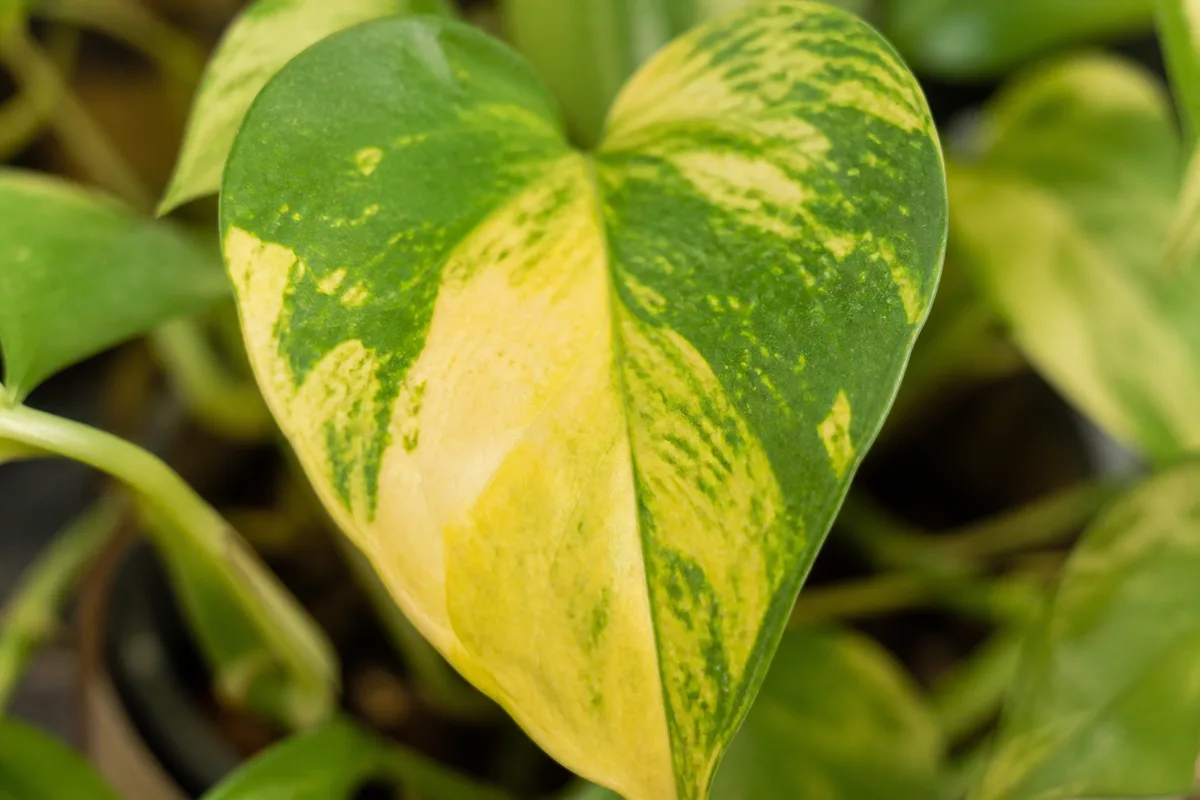
Yellow Leaves symptoms on Golden Pothos - compare with healthy tissue on the same plant.
Overwatering pattern - Lower leaves turn soft yellow while the pot stays heavy and damp. Stems may feel limp on wet soil-a trap because pothos stores water in thick stems and can look thirsty while roots fail. Root rot and blackening of leaf margins can occur with overwatering on saturated mix. Fungus gnats near constantly damp surface soil are a secondary signal.
Underwatering pattern - Leaves yellow with crisp brown edges or tips on a light dry pot. Vines may wilt briefly, then perk after a thorough soak. This is less common than overwatering on pothos but easy to confirm with pot weight.
Low-light pattern - Gold streaks fade on new leaves first; internodes stretch and recent growth looks smaller and greener. Full yellowing may follow if the plant sits in a dim corner where soil also dries slowly-light and water problems overlap on trailing baskets.
Normal node senescence - On a long trailing vine, the oldest leaf at a proximal node near the soil or basket rim may yellow over weeks while green leaves continue at the apical tip. Over time, leaves yellow and fall off, concentrating most leaves at the end of the stems-normal for vining Epipremnum, not rosette-style crown aging.
Cold-draft damage - Sudden yellowing, translucent patches, or drop after a cold night near a window or AC vent. Golden Pothos suffers below about 50°F (10°C) and hot or cold blasts from vents can dry out leaves and damage plant cells.
Why Golden Pothos gets yellow leaves
Golden Pothos is an understory climbing vine adapted to warm, filtered light and dry-down between rains. Indoors, yellow leaves usually trace to one of five branches:
Overwatering and poor dry-down - The most common cause. Calendar watering, blocked drainage, oversized pots, and dim rooms that slow evaporation keep the root zone oxygen-poor. Yellow leaves are often caused by overwatering on pothos; wet mix with multiple soft yellow leaves warrants root inspection before Golden Pothos repotting guide or fertilizing.
Underwatering - Extended drought shrinks the root ball’s ability to supply leaves. A light pot and dry top 4–5 cm with crisp yellowing fit this branch-distinct from soft yellow leaves on damp soil.
Insufficient light - Low light can cause loss of variegation on Golden Pothos. The plant compensates with more green tissue; faded gold on new leaves is often the first warning. Dim placement also slows water use, which raises overwatering risk even when you water less often.
Natural senescence along the vine - As trailing stems lengthen, the plant sheds the oldest leaf at basal nodes. Apical nodes keep producing new leaves-that is how you judge health on a vine, not by expecting a central crown to stay full.
Cold or draft stress - Brief exposure to cold window sills, winter glass, or direct AC airflow yellows leaves faster than gradual care mistakes. Move the pot before chasing fertilizer or pest sprays.
Lookalike symptoms to rule out
| Pattern | Pot weight | Soil at 4–5 cm | Leaf texture | New growth | Likely cause |
|---|---|---|---|---|---|
| Overwatering | Heavy | Wet, clings | Soft yellow, limp on damp mix | Slow or stunted at nodes | Wet roots-see overwatering |
| Underwatering | Light | Dry, crumbly | Crisp yellow/brown edges | Thin, may wilt | Drought-see underwatering |
| Low light | Medium | Often damp for weeks | Pale green, faded gold variegation | Long internodes, small leaves | Light stress-see not enough light |
| Normal aging | Normal | Appropriate for your rhythm | One old leaf yellowing | Green apical tips | Oldest node senescence on a long vine |
| Cold draft | Normal | Unchanged | Sudden yellow/translucent patches | May halt briefly | Temperature shock-relocate pot |
What yellow leaves are not: White webbing (spider mites), sticky residue (scale or aphids), or bleached scorched patches on sun-facing leaves (too much direct sun-not the same as stress yellowing).
How to confirm the cause
Work through these six checks before changing fertilizer, pot size, or watering habits:
- Pot-weight test - Lift the container. Heavy days after you last watered suggests slow dry-down or overwatering; very light suggests drought.
- Moisture depth - Press your finger 4–5 cm into the mix near the pot edge-not only the surface. Trailing vines shade the top inch in hanging baskets; the center may stay wet while the surface looks dry.
- Which leaves yellow - Lower leaves only on wet soil fits root stress. Upper/new leaves pale with faded variegation fits light. One old leaf at the lowest node on a long vine fits aging.
- Stem firmness - Soft blackening tissue at the soil line on damp mix escalates to unpotting-follow the root rot guide.
- Placement audit - Note distance from windows, AC vents, and drafty doors. Cold below ~50°F (10°C) can yellow leaves within days.
- New growth at apical nodes - Green new leaves at the leading vine tips mean the plant is still functioning; widespread yellowing reaching those tips means act now, not wait.
If wet soil and multiple yellow leaves persist after one full dry-down cycle, slide the plant out and inspect roots. Firm white or tan roots support a watering correction; mushy brown roots need trimming and fresh mix.
First fix for Golden Pothos (by confirmed cause)
Match one primary action to what you confirmed-do not stack repotting, fertilizer, and light moves on the same day.
If the pot is wet and heavy
Stop watering until the top half of the mix dries. Move to bright indirect light so the pot cycles moisture faster. Empty saucers within 30 minutes of any drink. If stems soften or mix smells sour, inspect roots per the root rot guide-do not add more water hoping leaves re-green.
If the pot is light and dry
One thorough soak until a little water runs from drainage holes, then discard saucer water. Resume the Golden Pothos watering rhythm-water when the top 4–5 cm feels dry, not on a fixed calendar.
If variegation faded and internodes stretched
Move to bright indirect light within 2–4 feet of an east or filtered west window. Do not increase watering in a dim corner-fix light first. Details in the not enough light guide.
If only one old leaf at a proximal node yellows
No emergency fix. Snip the fully yellow leaf at the node if it bothers you. Watch apical growth on the same vine-green new leaves confirm normal senescence.
If cold draft exposure is suspected
Relocate away from the cold source (window sill, vent, door). Avoid fertilizing or repotting until new leaves at the vine tips stay green for two weeks.
Recovery timeline
Fully yellow leaves will not re-green-they drop or you remove them. Judge recovery by new green leaves at apical nodes along the trailing stems, not by old blade color.
| Severity | What to expect |
|---|---|
| One overwatered drink on firm roots | Stabilization in 1–2 weeks after mix dries |
| Mild root stress on damp soil | 2–3 weeks for new turgid leaves at nodes |
| Severe root rot after trimming | Several weeks; some vines may not recover |
| Light correction after variegation fade | New gold streaks on fresh leaves in 2–4 weeks |
| Single-node senescence | Immediate once the old leaf drops; no further spread |
Signs you are on track: firm stems at the soil line, faster dry-down matching your light level, and compact new leaves with visible gold variegation.
Signs the problem is worsening: yellowing climbs toward apical tips, stems mushy on wet soil, or new leaves stay pale and small after four weeks in corrected light and water.
What not to do
- Do not fertilize yellow leaves on wet soil - Salt stress and root damage both yellow foliage; yellow leaves are often linked to overwatering before low fertility on pothos.
- Do not increase watering when leaves look pale in a dim corner - Fix light or dry-down first; dim rooms keep mix wet longer.
- Do not judge recovery by “center growth” - Golden Pothos is a vine; watch the lead stem’s apical nodes, not a rosette crown.
- Do not repot on day one unless roots are mushy or mix is sour-unnecessary disturbance on a stressed vine delays recovery.
- Do not discard fallen yellow leaves within pet reach - Golden Pothos contains calcium oxalate crystals toxic to cats and dogs if chewed.
How to prevent yellow leaves on Golden Pothos
- Water when the top 4–5 cm of mix feels dry and the pot has lost noticeable weight-often every 7–10 days in bright warm rooms, 14–21 days in dim or cool spots. Full workflow: Golden Pothos watering guide.
- Place the pot where bright indirect light keeps variegation strong and dry-down predictable-Golden Pothos light guide.
- Use airy, well-draining mix and pots with open drainage; empty saucers after every drink.
- Keep trailing vines away from cold windows and AC blasts in winter; avoid sustained exposure below ~50°F (10°C).
- Prune spent yellow leaves at nodes to reduce pest hiding spots and keep the display tidy.
- When you move a basket from a bright window to a dim hall, lengthen the dry-down interval-do not keep the same weekly schedule.
When to worry
Escalate immediately if:
- More than a third of leaves yellow within a week on wet heavy soil
- Stems soften or blacken at the soil line with a sour smell
- Yellowing reaches new growth at apical tips while mix stays damp
- The plant sat below ~50°F (10°C) and vines collapse-not just one leaf
Routine monitoring is enough if one old leaf yellows at the lowest node on a long trailing vine, stems stay firm, and green leaves keep emerging at the tip.
Related Golden Pothos problems
Use this page as the yellow-leaf diagnostic hub; branch to deeper guides once you know the cause:
- Golden Pothos overview - full care, pet safety, and troubleshooting hub
- Overwatering - wet-soil yellowing and dry-down fixes
- Root rot - mushy roots when wet soil yellowing advances
- Underwatering - light dry pot and crisp yellow leaves
- Not enough light - variegation fade and leggy vines before full yellowing
- Watering - prevention rhythm and pot-weight checks
- Light - keeping gold variegation strong
Conclusion
Yellow leaves on Golden Pothos are a pattern-recognition problem on a trailing tropical vine-not a mystery disease. Lift the pot, read wet versus dry, note whether gold variegation is fading on new growth, and distinguish one old leaf at a proximal node from widespread stress climbing the stem. Fix the confirmed branch first-usually dry-down, light, or warmth-and measure success by green new leaves at the apical nodes, not by waiting for yellow tissue to re-green.
When to use this page vs other Golden Pothos guides
- Golden Pothos watering guide - Use for routine moisture checks before assuming yellow leaves is the main issue.
- Golden Pothos problems hub - Browse all 16 common issues on this species.
- Overwatering on Golden Pothos - Different entry point when symptoms overlap with yellow leaves.
- Underwatering on Golden Pothos - Different entry point when symptoms overlap with yellow leaves.
- Not Enough Light on Golden Pothos - Different entry point when symptoms overlap with yellow leaves.