Watering Golden Pothos: Schedule, Soil Checks, and Mistakes
Watering Golden Pothos: Schedule, Soil Checks, and Mistakes
Watering Golden Pothos: Schedule, Soil Checks, and Mistakes
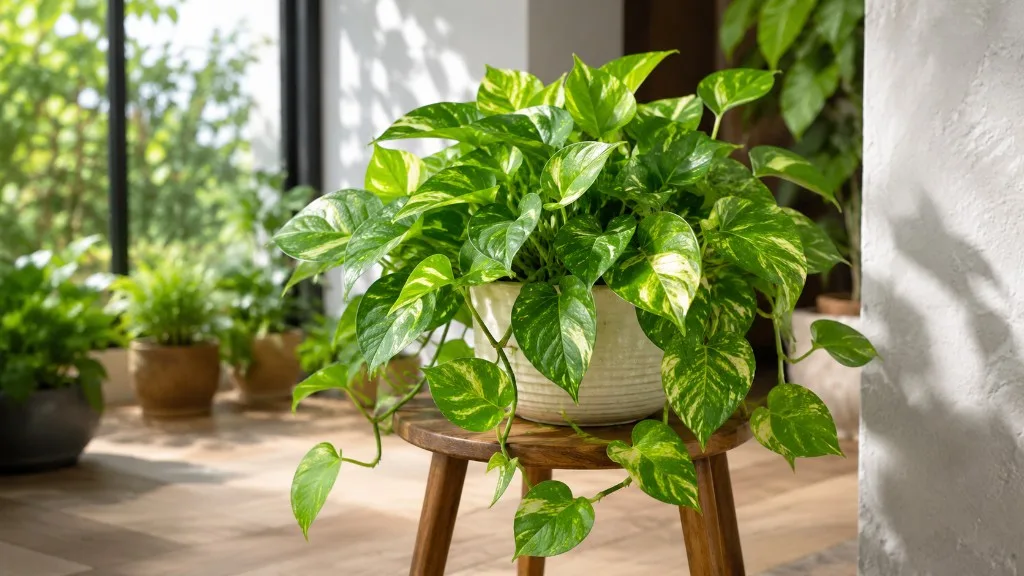
Golden Pothos looks indestructible until you water it like a fern. The trailing vines and glossy leaves suggest a tropical plant that wants constant moisture, but the roots tell a different story. Golden Pothos (Epipremnum aureum) stores water in its thick stems and leaves, tolerates missed weeks better than most houseplants, and punishes soggy soil with yellow leaves, mushy stems, and root rot on Golden Pothos that arrives quietly. The fix is not a calendar that says “water every Sunday.” The fix is a short routine: check the soil, water thoroughly when the root zone is ready, let the pot drain completely, and adjust for light, season, and pot size. This guide gives you the checks, the realistic schedules, and the mistakes that turn a lush devil’s ivy into a limp, bare vine hanging over a wet saucer.
Why Golden Pothos Forgives Mistakes - Until It Doesn’t
Golden Pothos earned its reputation as a beginner plant because it survives conditions that would kill pickier species. It tolerates low light, forgetful watering, and the dry air of heated apartments. That forgiveness creates a trap. Growers assume the plant wants frequent water because it looks tropical, or they assume it never needs attention because it bounced back once after a drought. Both assumptions lead to the same place: roots sitting in stale, oxygen-poor soil.
The core confusion comes from treating pothos like a moisture-loving peace lily or like a drought-proof snake plant. It is neither extreme. Wisconsin’s Division of Extension recommends a well-aerated growing medium and watering only when the soil surface is dry, allowing plants to dry out slightly between sessions. (Wisconsin Horticulture) The Royal Horticultural Society advises letting the top 2 cm (about 1 inch) of compost dry out between waterings and warns that keeping compost too wet causes roots to rot. (RHS Growing Guide) Those two reputable sources agree on the rhythm: partial dry-down, then a full drink - not permanently damp mix.
Golden Pothos also sends dramatic signals that beginners misread. Leaves droop noticeably when thirsty and often perk up within hours after a thorough watering. That droop-and-recovery cycle is one of the most reliable thirst indicators in houseplant care. The same droop appears when roots are failing from overwatering on Golden Pothos, but recovery does not follow the next watering session. Learning to pair droop with a soil check - not droop alone - separates the two situations before damage compounds.
As an aroid from the understory of tropical forests in Southeast Asia and the western Pacific, pothos evolved with filtered light, warm temperatures, and cycles of rain followed by drying. (Wisconsin Horticulture) Indoors, replicate that rhythm with drainage holes, a well-draining mix, and patience between waterings.
How Much Water Golden Pothos Actually Needs
A useful starting principle for all Golden Pothos is a thorough soak that wets the full root ball, followed by a dry-down period before the next session. In practice, that means watering slowly until moisture exits the drainage holes, waiting thirty seconds, and adding a little more if the mix absorbed the first pass unevenly. A half-cup dribbled on the surface every few days keeps the top wet while the center stays dry - then the plant droops, you add more sips, and the roots never get a coherent drink.
How much per session matters less than how completely you rewet the mix. Clemson HGIC recommends watering pothos when the top 1.5 to 2 inches of soil have dried out - if the soil is dry down to 1–2 inches deep, it is time to water. For a typical six-inch indoor pot, that often translates to roughly one cup to one pint of water, but pot size, mix composition, and root mass change the volume. Watch for drainage, not a measuring cup.
Container pothos has no ground-water reserve. A hanging basket in a warm window may need water sooner than a floor pot in the same room, but every container still follows the same dry-down rule.
The amount of time between sessions is where calendar advice breaks. A realistic starting range for indoor Golden Pothos in Golden Pothos light guide is every 7–10 days in summer and every 14–21 days in winter, always confirmed by soil checks first. Low-light placements stretch the winter interval further. A pothos on a dim bookshelf may go three weeks between waterings in a cool room without harm, while the same cultivar in a warm east window may need water weekly. Your room writes the schedule; the calendar only suggests when to start checking.
How Often to Water Golden Pothos Indoors
Indoor Golden Pothos usually needs watering every 7–14 days during active growth in warm, bright conditions, but the honest answer is always “when the top 1–2 inches of soil feel dry and the pot is noticeably lighter.” A plant in strong indirect light on a warm windowsill may dry in five to seven days. A plant in a north-facing office may hold moisture for two to three weeks in winter. The schedule is a guess until you confirm it against your pot for two weeks.
Check indoor pothos at least twice a week during the growing season - not to water by default, but to learn your plant’s rhythm. After fourteen days in the same spot with the same light, you will know whether your Golden Pothos behaves like a weekly plant or a biweekly plant. That personal baseline is more accurate than any blog chart because it accounts for your pot material, your mix, your humidity, and your light.
Indoor humidity between 30 and 50 percent is fine for pothos; the RHS notes that unlike many tropical houseplants, epipremnums do not need high humidity. (RHS Growing Guide) Very dry heated air can accelerate soil dry-down in small pots, but do not compensate by leaving soil constantly wet - low humidity plus soggy mix plus poor airflow invites fungus gnats and root problems.
Temperature affects the interval as much as light. Wisconsin Extension lists an ideal range of 70–90 °F (21–32 °C) for active growth. (Wisconsin Horticulture) In homes kept cooler than 65 °F (18 °C) in winter, growth slows and soil stays wet longer. Reduce watering frequency when the room cools even if the plant still looks green.
Finger Test, Chopstick Probe, and Pot Weight
The finger test is the fastest daily check. Press your finger into the mix 1–2 inches deep near the pot edge, not against the stem. If the soil feels cool and clings slightly to your skin, wait. If it feels dry and crumbly at that depth, water. If only the surface is pale and dry but your finger comes out with damp particles below, wait - surface colour lies, especially on peat-based mixes that lighten when the top half inch dries while the center stays moist.
A wooden chopstick or skewer works as a low-tech backup recommended by multiple horticulturists. Insert it vertically to mid-pot depth, wait sixty seconds, pull it out. Damp soil clinging to the lower half means wait. Dry wood with a light pot means water. This method catches dry pockets better than a quick surface glance.
The pot weight test is the most reliable signal for repeat growers. Lift the pot right after a thorough watering and notice the weight. Lift it every few days. A pot that feels dramatically lighter has lost much of its available moisture. Combine weight with the finger test when you are unsure: light pot plus dry top 1–2 inches equals water; heavy pot plus wilted leaves equals trouble, not thirst.
Golden Pothos has one dramatic signal that confuses beginners: temporary wilting. When the plant is genuinely dry, leaves may soften and droop - then perk up within a few hours after a thorough watering. That quick recovery is a hallmark of thirst. If wilting persists into the next morning despite wet soil, the problem is root damage from overwatering, not underwatering on Golden Pothos. Never water again until you verify drainage and soil moisture at depth.
Seasonal Watering Adjustments for Golden Pothos
Golden Pothos tracks seasons through temperature, day length, and growth speed more closely than the day of the week. A seasonal framework helps you anticipate change without locking into summer habits through winter.
In spring, active growth resumes as light strengthens and temperatures rise. Water when the top 1–2 inches dry, which may mean every 7–10 days for a bright-window plant. This is a good season to repot root-bound pothos or take cuttings, because the plant recovers quickly when roots are healthy and the mix drains well.
In summer, peak warmth and long days maximize water demand. A pothos in bright indirect light may need water every 6–10 days, sometimes more in very warm rooms or small pots. Check soil rather than assuming weekly is enough. Heat increases evaporation; it does not suspend the need for drainage.
In fall, cooler nights and shorter days slow growth. Stretch the interval between waterings and verify with soil checks. Overwatering becomes the bigger risk as evaporation drops and pots stay wet longer. Skip the urge to “keep up” with summer frequency.
In winter, indoor pothos in cool, dim rooms may need water only every 14–21 days, sometimes longer. Growth slows, but dry heating air can still pull moisture from small pots faster than you expect. Reduce frequency, not thoroughness - when you do water, water fully until drainage appears. Wisconsin Extension notes that fertilizing should pause in winter when the plant is not actively growing - the same logic applies to water: less input when less growth is happening. (Wisconsin Horticulture)
Active Summer Growth vs Winter Slowdown
Summer mistakes cluster around two extremes: forgetting the hanging basket in a hot window, and watering every Sunday out of habit even when the mix is still wet from Tuesday. Heat increases transpiration and evaporation; it does not mean roots want to sit in saturated soil. If pothos wilts at midday and perks up by evening without your intervention, that may be heat stress alone - still check soil before assuming thirst.
Winter slowdown is when most Golden Pothos die from kindness. Growers continue summer frequency in a cool room with weaker light, and the mix stays wet for weeks. Roots lose oxygen, decline quietly, and the plant yellows leaf by leaf. The RHS explicitly warns that overwatering, especially in winter, can rot the roots. (RHS Plant Guide) A pot that dried in seven days in July may take eighteen in January. Adjust by check, not by memory.
Watering Golden Pothos by Light Level and Placement
Light is the hidden dial on your watering schedule. Golden Pothos tolerates low light better than most houseplants, but low light means slower growth and slower dry-down. A pothos on a dim shelf uses less water than the same plant trained along a bright east window. Clemson HGIC and the RHS both tie best variegation and growth to bright indirect light - and bright light increases the plant’s water appetite proportionally.
In bright indirect light, expect the shorter end of the watering range: roughly every 7–10 days in warm months. In medium indirect light, a 10–14 day winter interval and 7–10 day summer interval is common. In low light, stretch toward 14–21 days between waterings in cool months - the risk shifts toward overwatering, not drought.
Pot Size, Material, and Growth Stage
Pot size changes the schedule immediately, often more than season. A four-inch nursery pot dries fast and may need water every five to seven days in summer sun. A ten-inch floor pot holds more buffer and may go 12–14 days between sessions in the same location. Clemson HGIC notes that a pothos in a small pot may need watering more frequently than one in a larger container, and that an oversized pot with excess wet mix around roots is a common rot trigger.
Pot material matters independently of size. Unglazed terracotta breathes and pulls moisture from the mix, shortening the dry-down window. Plastic and glazed ceramic retain moisture longer. A plastic pot in low light is the combination most likely to stay wet too long - check soil at depth, not on a calendar.
After Golden Pothos repotting guide into a larger container, expect slower dry-down until roots fill the new volume. Many growers overwater freshly repotted pothos because they keep the old schedule. Wait for the top 1–2 inches to dry even if that takes longer than before.
Fresh cuttings rooted in soil need evenly moist - not soggy - mix while roots establish. Mature trailing vines with dense root balls transpire heavily in warm weather and may surprise you with how fast a seemingly large pot dries. A root-bound pothos in a small pot can flip from too wet to too dry within days; that instability is a signal to repot, not to water more often without checking.
Top Watering vs Bottom Watering Golden Pothos
Both top watering and bottom watering work for Golden Pothos when the pot has drainage holes and you drain excess afterward. The method matters less than thoroughness and the dry-down cycle that follows.
Top watering is straightforward: pour slowly onto the potting medium until water runs from the bottom. This method flushes mineral salts that accumulate from tap water and fertilizer, which matters for long-term root health. Aim the stream at the soil, not the leaves, to avoid pointless wet foliage indoors.
Bottom watering sets the pot in a basin of water and lets the mix draw moisture up through the drainage holes over 10–30 minutes. Clemson HGIC describes this as a deep, even drink that can help when soil has dried unevenly. Bottom watering is useful when the mix has gone hydrophobic and water runs down the sides without wetting the center. After bottom watering, still check that the surface is moist and pour off any standing water in the saucer.
Whichever method you use, empty the saucer within thirty minutes. Standing water re-saturates the bottom root zone, blocks oxygen, and causes the classic paradox: wilting plant, wet soil. If you use a decorative cachepot, lift the inner pot to water, drain fully, then return it.
Signs You Are Overwatering Golden Pothos
Overwatering is the most common way to kill Golden Pothos because the plant looks thirsty while the roots are failing. Watch for these patterns together, not in isolation.
Wilting despite wet soil is the hallmark. Roots damaged by low oxygen cannot transport water, so leaves droop even though moisture is present. If you respond by adding more water, you accelerate the decline. Always pair wilt with a soil check at depth and a pot-weight check before pouring.
Yellow leaves, often starting with older lower leaves while the soil stays damp, frequently signal chronic overwatering. Wisconsin Extension links yellowing and blackening of leaf margins to overwatering, inadequate watering, or excess fertilizer salt buildup - which is why the full pattern matters. (Wisconsin Horticulture)
Soft, mushy stems near the soil line, brown mushy roots when you inspect, and a sour smell from the mix suggest advanced root rot. Stop watering, improve airflow, confirm drainage holes are open, and inspect roots if decline continues. Trim mushy brown roots, repot into fresh well-draining mix, and use a pot sized to the remaining root mass - not the former foliage volume.
Fungus gnats hovering near the pot surface often mean the top layer stays wet too long. They are a nuisance and a diagnostic: the mix is not drying fast enough for healthy root function.
If several signs align, pause watering and let the mix dry toward the top half before resuming a conservative schedule. Move the plant to brighter indirect light with good airflow - not direct sun - to help the mix dry. If leaves keep yellowing and the soil smells sour, unpot, trim mushy brown roots, and repot into fresh well-draining mix sized to the remaining root mass. Recovery is possible if roots are mostly firm and white; advanced rot may require propagation from healthy cuttings above the damage.
Signs Golden Pothos Is Thirsty or Underwatered
Underwatered Golden Pothos is usually more straightforward than overwatered pothos. The plant tells you earlier, and recovery is faster if you act before leaves crisp.
Dramatic drooping that resolves within hours after a thorough watering is classic drought stress for pothos. Leaves soften and hang; after a full soak and drain, they firm up by afternoon or the next morning. This is the famous droop test - one of the best beginner-friendly signals in houseplant care.
Dry, crumbly soil pulling away from the pot edge means the root ball went too dry. Water may run straight through cracks along the wall without wetting the center. Rewater in two passes ten minutes apart, or bottom-water until the surface darkens, then drain completely.
Crispy brown leaf edges and dull, slightly curled foliage follow repeated drought cycles. Golden Pothos tolerates missed water better than most plants, but boom-and-bust cycles stress roots and slow growth. A steady check-first rhythm prevents the cycle.
How long can you wait? Healthy Golden Pothos can often go two to three weeks in summer and four to six weeks in a cool winter room without serious harm, though growth stalls and lower leaves may yellow. Beyond that, leaf drop accelerates and recovery takes longer. The plant is drought-tolerant compared to ferns or peace lilies, but it is not a snake plant - do not treat months of neglect as a care strategy.
When rehydrating a very dry pot, water until drainage appears, wait ten minutes, water again, then drain completely. One quick splash rarely rewets a hydrophobic root ball.
Soil Mix and Drainage as Hidden Watering Factors
Your watering skill cannot overcome a bad mix. Golden Pothos wants well-draining standard potting mix with enough structure to hold air around the roots. Wisconsin Extension recommends a well-aerated medium. (Wisconsin Horticulture) Dense, aged indoor mix that has collapsed into a brick stays wet on top and repels water in the center - the perfect trap for well-meaning weekly watering.
A practical home blend for pothos might use quality potting mix amended with perlite or orchid bark for extra drainage. Target substrate pH around 6.0–6.5; normal indoor mix sits close enough that exact pH adjustment is rarely needed. The RHS suggests avoiding regular tap water in hard-water areas when possible, using rainwater or filtered water at room temperature to maintain compost acidity - a refinement, not a requirement for most growers. (RHS Growing Guide)
Drainage holes are non-negotiable in containers. Decorative pots without holes, or holes blocked by roots and debris, are the fastest path to overwatering symptoms despite careful attention. Elevate the pot above standing saucer water if you cannot empty immediately.
When the Mix Dries Too Fast or Too Slow
If the mix dries in two to three days every time, the pot may be too small, the plant may sit in direct sun, or terracotta and dry air may be accelerating evaporation - upsizing one pot size or moving back from hot glass can stabilize the rhythm. If the mix stays wet for more than ten days in a warm room, suspect too little light, an oversized pot, a dense mix, or a cachepot holding runoff before watering on schedule again.
Water Quality, Temperature, and Humidity
Golden Pothos is not picky about water source for most homes. Room-temperature tap water is fine for routine care. If your tap water is very hard and you notice white mineral crust on the soil surface, occasional top watering that flushes through the drainage holes helps, or use filtered water every few sessions.
Water temperature should be lukewarm - not cold from the tap in winter. Cold water shocks warm roots and can contribute to marginal leaf discoloration on sensitive cultivars.
Timing matters modestly. Morning watering gives incidental splashes time to dry during the day. Humidity between 30 and 50 percent suits Golden Pothos well; misting leaves is not a substitute for proper soil moisture.
Hanging Baskets, Moss Poles, and Trailing Vines
Placement form changes how fast soil dries even when light is equal. Hanging baskets expose more pot surface to air and often dry one to two days faster than floor pots in the same room. Check baskets on their own schedule; do not assume they match the pothos on your desk.
A moss pole or coir support kept lightly damp gives aerial roots attachment points and supplemental moisture. The RHS recommends keeping a moss pole damp so stems root into it. (RHS Growing Guide) That damp pole does not replace pot watering - the container mix still needs its own dry-down cycle. Over-misting the pole while the pot stays soggy doubles the water problem.
Long trailing vines transpire more leaf area in warm bright conditions. If the top of the pot dries quickly but lower roots stay wet in an oversized container, probe deeper with a skewer before assuming the whole root ball is ready.
Common Golden Pothos Watering Mistakes and Quick Fixes
The same errors appear in almost every overwatered pothos consultation. Recognizing them early saves the plant.
Watering on a calendar without checking soil is mistake number one. Weekly watering is a reminder to check, not permission to pour. Your plant’s interval changes with season, light, and pot size within the same room.
Leaving runoff in the saucer or letting a cachepot hold water re-saturates roots within hours. Fix: lift, drain, return. No exceptions.
Using a pot without drainage holes because the cover pot is pretty. Fix: keep the plant in a functional inner pot or drill holes. Golden Pothos cannot negotiate anaerobic soil.
Misting instead of watering when soil is dry. Leaves glisten; roots still thirst. Fix: water the soil.
Watering a wilted plant without checking moisture trains you to kill pothos with kindness. Fix: finger, skewer, or weight first - then water or troubleshoot roots.
Repotting into a much larger pot and keeping the old watering frequency. Fix: expect longer dry-down; check deeper.
Cachepots, Saucers, and Standing Water
Decorative cachepots are the silent cause of many “I only water once a week” failures. Water drains from the inner pot, collects in the outer shell, and the root zone never dries. The grower sees wilt, adds more water, and the plant drowns slowly.
The fix is mechanical: always remove the inner pot, water at the sink, let it drain for several minutes, wipe the cachepot dry, then reassemble. If you cannot maintain that habit, grow pothos only in pots with visible saucers you empty.
Saucers used as water reservoirs for “self-watering” behavior suit some plants; Golden Pothos is a poor candidate. Roots want air between drinks. A saucer with pebbles and a little standing water increases humidity slightly but does not replace proper watering technique.
Building a Simple Weekly Watering Routine
You do not need expensive tools to water Golden Pothos well. You need a repeatable loop.
Twice a week, walk your plants with one question: is the top 1–2 inches dry and is the pot lighter than after the last full watering? If yes to both, water thoroughly at the sink until drainage runs clear, drain five minutes, empty the saucer, return the plant. If no, walk away.
Once a month, note whether intervals are shortening or lengthening with the season. Adjust expectations before problems appear.
Once a year, or when water runs straight through dry soil, consider refreshing the top inch of mix or full repotting if roots circle the pot.
Keep a single dedicated watering day as a reminder, not a command. Many growers use Sunday to check all houseplants and water only those that pass the soil test. Golden Pothos fits that system perfectly because it rewards patience more than frequency.
Pair this page with your plant’s light, soil, and repotting guides when the same problem repeats - yellow leaves with wet soil are rarely solved by watering alone, and a trailing vine with bare stems usually wants more light or pruning, not more water.
Conclusion
Watering Golden Pothos well comes down to one habit: check the soil, then act. Let the top 1–2 inches of mix dry, give a thorough soak until water drains freely, empty the saucer, and stretch the interval in cool low-light months when growth slows. The plant’s famous droop tells you when it is thirsty - but only if the soil is dry and the roots are healthy. Wet soil plus wilt means stop watering and fix drainage, not pour again. Bright light, small pots, and summer warmth shorten the cycle; low light, large plastic pots, and winter coolness lengthen it. Build a twice-weekly check routine, trust your finger and the pot’s weight more than any calendar, and Golden Pothos rewards you with long trailing vines and firm, glossy leaves for years.
When to use this page vs other Golden Pothos guides
- Golden Pothos overview - Start here for whole-plant context before deep-diving this topic.
- Golden Pothos problems hub - Jump to symptom-specific fix guides when this care topic does not resolve the issue.
- Overwatering on Golden Pothos - Escalate here when watering adjustments are not enough.
- Underwatering on Golden Pothos - Escalate here when watering adjustments are not enough.
- Root Rot on Golden Pothos - Escalate here when watering adjustments are not enough.
Related Golden Pothos guides
- Golden Pothos overview
- Golden Pothos light
- Golden Pothos soil
- Golden Pothos propagation
- Golden Pothos fertilizer
- Golden Pothos repotting
- Overwatering on Golden Pothos
- Underwatering on Golden Pothos
- Root Rot on Golden Pothos
- Wilting on Golden Pothos
- Drooping Leaves on Golden Pothos
- Mold on Soil on Golden Pothos
Related tool
Try the Plant Watering Calculator with golden-pothos pre-selected to estimate needs for your setup.