Drooping Leaves on Golden Pothos: Causes, Checks & Fixes
Quick answer
Golden Pothos droops dramatically when thirsty-a light pot and dry mix 4–5 cm down usually means underwatering, and leaves often perk within hours after a thorough soak. Limp vines on wet soil with yellow lower leaves point to overwatering or root rot, not thirst. First step: check soil moisture at depth and pot weight before adding water.
Drooping Leaves on Golden Pothos: Causes, Checks & Fixes
This guide covers drooping leaves on Golden Pothos. See also the general Drooping Leaves guide, watering, and light pages for this plant.
Drooping Leaves on Golden Pothos: Causes, Checks & Fixes
Quick answer
Golden Pothos (Epipremnum aureum) communicates water stress through its leaves faster than most houseplants. Soft, limp vines on a light pot with dry mix 4–5 cm below the surface almost always mean thirst-the plant is not dying, it is asking for a drink, and drooping leaves are evidence the plant needs water. Leaves often firm up within hours after one thorough soak.
The opposite pattern is just as common: limp vines on heavy, wet soil with yellow lower leaves point to overwatering or root failure, not drought. Adding water makes that worse. Too little water may lead to leaves temporarily drooping; too much water leads to root rot-and pothos is better kept slightly too dry than too wet.
First step: push your finger 4–5 cm into the mix and lift the pot. Dry and light means water once until drainage runs. Wet and heavy means stop watering and inspect roots. That single pairing prevents most Golden Pothos droop mistakes. Full species context: Golden Pothos overview.
What drooping looks like on Golden Pothos
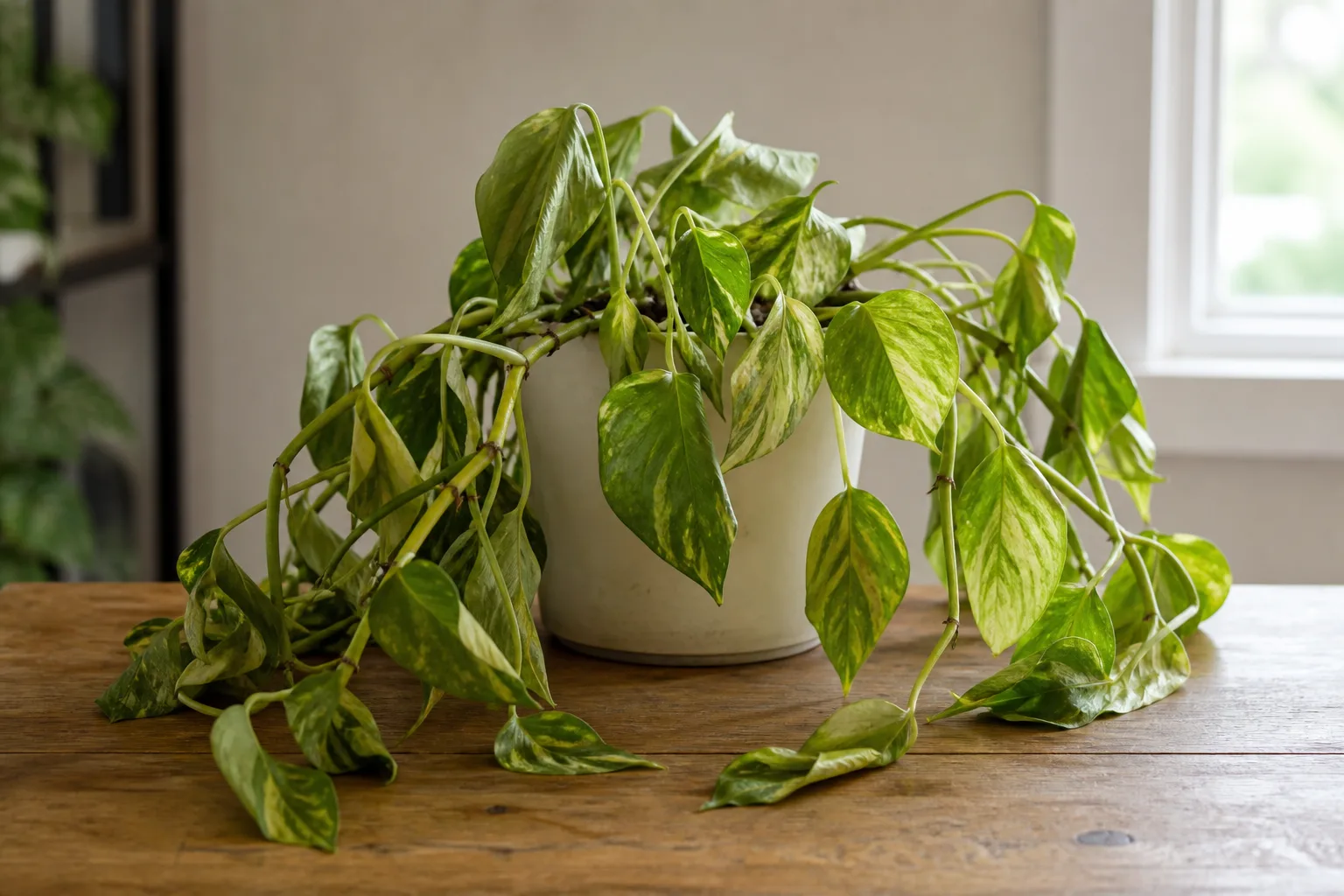
Drooping on pothos is not subtle. Vines that normally hold a gentle arch hang straight down, and leaves lose their waxy stiffness. The pattern depends on the cause:
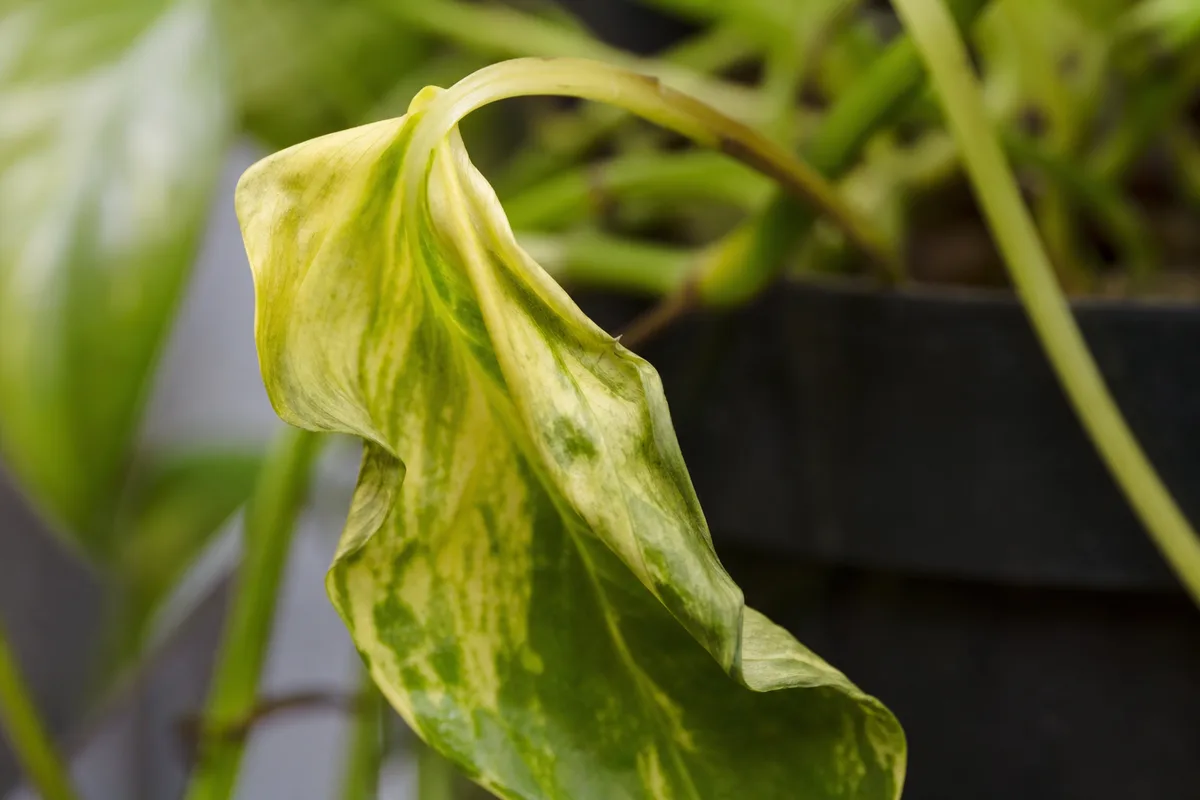
Drooping Leaves symptoms on Golden Pothos - compare with healthy tissue on the same plant.
Thirst collapse (most common):
- Soft, limp leaves that feel thin rather than firm
- Vines hanging flat instead of lifting slightly at the tips
- Light-colored, dusty dry mix 4–5 cm down; pot feels noticeably light when lifted
- Lower leaves on long hangers wilt first while upper growth still looks perky
- After a proper soak, leaves often regain turgor within 2–4 hours-the signature pothos rebound
Wet-soil limpness (opposite problem):
- Leaves stay limp even though soil is damp several centimeters down
- Yellow lower leaves on dark, heavy mix
- Pot feels heavy; saucer may hold standing water
- No perk-up after watering-wilt persists or worsens over days
- Possible sour smell, fungus gnats, or soft stems at the soil line
Root-bound thirst mimicry:
- Wilt returns every two to four days despite frequent watering
- Water exits drainage holes in seconds without darkening the mix
- Roots visible through drainage holes or circling the pot bottom
- Top of vine may look fine while lower leaves droop repeatedly
Cold-draft limpness:
- Translucent or water-soaked patches on leaves after a cold night
- Plant on a winter window sill or in a draft below about 50°F (10°C)
- Soil moisture normal; watering does not restore affected tissue
- Often follows a sudden temperature drop, not a missed watering
Variegated cultivars with more white in the leaves may droop slightly sooner than solid-green ‘Jade’ pothos in the same pot because they transpire more per leaf area.
Drooping vs. wilting on Golden Pothos
These words overlap in everyday speech, but on this site they point to different pages:
- Drooping leaves (this guide) covers the full diagnostic range-dry thirst, wet root failure, root-bound drainage, cold stress, and trailing-vine drying patterns. Use this page when vines look limp and you need to decide why.
- Wilting covers acute collapse and rapid turgor loss, often the same-day emergency version of what you see here.
- Underwatering goes deep on the dry-soil branch-rewetting hydrophobic mix, bottom watering, and repeat-drought recovery.
- Overwatering and root rot cover the wet-soil branch when limp leaves persist on damp mix.
If you already know the soil is bone dry, skip straight to underwatering. If soil is wet and yellowing, see overwatering.
Why Golden Pothos leaves droop
Pothos has large leaf surface area on thin stems relative to many houseplants. When roots cannot supply water as fast as leaves lose it through transpiration, turgor drops and vines flop. Several pothos-specific situations trigger that mismatch:
Dry-soil drought. Golden Pothos in Golden Pothos light guide can use a full pot of water in a week. Growers who wait for calendar reminders instead of checking dryness see dramatic collapse-let the well-drained potting medium dry out between watering, but not so long that every leaf hangs.
Fear-of-overwatering swings. Because yellow leaves on pothos usually mean too much water, cautious owners sometimes skip drinks until vines wilt-then overcorrect. The droop is real thirst, not rot, but the swing stresses roots over time.
Dim-corner chronic wet soil. A pothos in low light uses water slowly while the mix stays damp. Leaves can look limp from root stress on soil that never fully dries-even though the grower has not watered recently. Light and water are linked on this species.
Root-bound containers. Fast-growing pothos roots displace soil. Water channels through without soaking the mass; the plant wilts between frequent drinks. This mimics chronic underwatering even when you water often.
Cold exposure. Pothos prefers warm rooms between 60°F and 85°F. Below about 50°F, cell damage produces limp, sometimes translucent foliage that watering alone cannot fix.
Long trailing vines. A mature hanger with six feet of vine dries the pot unevenly-the lowest leaves are farthest from the root zone and wilt first when moisture runs short.
How to confirm the cause
Work through these checks in order. One moisture reading at depth beats guessing from how sad the vine looks.
| Check | Dry-soil thirst | Wet-soil root stress | Root-bound | Cold damage |
|---|---|---|---|---|
| Pot weight | Light | Heavy | Light to medium; water runs through fast | Normal |
| Soil 4–5 cm down | Dry | Damp to wet | Dry pockets despite surface watering | Normal moisture |
| Leaf texture | Soft, thin, green | Soft; yellow lower leaves common | Soft; may be green | Translucent patches |
| After one thorough soak | Perks within hours | Stays limp or worsens | Brief perk, wilt returns in days | No change |
| Recovery test | Yes-definitive | Stop watering instead | Repot needed | Move to warmth |
Step-by-step confirmation:
- Lift the pot - A light pot signals dry soil; heavy means moisture remains.
- Finger or skewer 4–5 cm deep - Dry with limp leaves supports thirst. Damp with limp leaves supports overwatering or root failure.
- The wet-soil paradox - Wilted leaves may indicate soil that is too dry or too wet. This pairing is the most important pothos diagnostic rule.
- Drainage test - Pour a small amount of water. Instant exit with a pale dry top suggests root binding or hydrophobic mix.
- Vine-length context - On long hangers, check whether only lower leaves droop while tips stay firm; that often means the pot dried while the top still looked fine.
- Temperature scan - Note cold window sills, winter drafts, or AC blasts in the last 48 hours.
- Root spot-check if still unsure - Slide the plant out. Firm white or tan roots on dry soil confirm thirst. Mushy brown roots on wet soil confirm rot.
First fix for Golden Pothos
Check soil moisture at 4–5 cm depth and pot weight-then act on what you find, not on how limp the vine looks.
- If dry and light: Give one slow, thorough watering until water runs from drainage holes, wait two minutes, water once more, then drain completely. Do not fertilize or repot today. Recheck leaf turgor in a few hours.
- If wet and heavy: Do not add water. Let the mix dry down, improve airflow, and inspect roots if yellowing spreads. See overwatering and root rot.
- If water races through instantly: Suspect root binding. Plan a repot within the week after the plant stabilizes; see repotting.
- If cold-damaged: Move to a stable spot above 65°F away from drafts. Trim fully translucent leaves; watering will not restore them.
One care change at a time. Stacking repot, prune, and fertilizer on a collapsed pothos obscures which fix worked.
Step-by-step recovery by cause
Dry-soil thirst:
- Top- or bottom-water until the full root ball is moist-bottom soak 20–30 minutes if water channels through dry mix.
- Empty the saucer after drainage finishes.
- Return to bright indirect light; avoid hot direct sun until leaves firm up.
- If wilt returns within three days on a light pot, the first soak may not have rewetted the center-repeat bottom watering once.
Wet-soil root stress:
- Stop watering until the top half of the mix dries.
- Confirm drainage holes are open and no cachepot holds standing water.
- If yellow leaves spread while soil stays wet, unpot and trim mushy roots; repot into fresh well-draining mix.
- Hold fertilizer until new growth looks healthy.
Root-bound thirst mimicry:
- After one confirming soak, repot into a container one size up with fresh mix and extra perlite.
- Water once after repotting, then resume the top-half-dry rhythm.
- Expect 1–2 weeks before the wilt-return cycle stops.
Cold-draft damage:
- Move away from the cold source; keep temperatures in the 60°F to 85°F range pothos prefers.
- Remove fully damaged leaves; firm green tissue on warm nodes will produce new growth.
- Resume normal watering only when soil dries at depth-cold stress is not fixed by extra water.
Recovery timeline
Thirst droop on dry soil: Leaves often regain turgor within 2–4 hours and look normal by the next morning. This rapid rebound is one of the clearest signs you had drought, not rot.
Moderate drought or root-bound mimicry: Vines stabilize in 1–3 days after proper rewetting or repotting. Old crisp edges stay brown; watch for firm blades and lifting petioles.
Wet-soil root stress: Recovery takes 1–3 weeks after correcting watering and trimming damaged roots. New growth should emerge glossy and turgid before you declare success.
Cold damage: Affected translucent tissue does not green again. New leaves at nodes may take 2–4 weeks once warmth stabilizes.
Signs recovery is working: Leaves feel thick again, stems lift without flopping, and new unfurling tips are glossy.
Signs the problem is worsening: Continued collapse after moist soil, spreading yellow on damp mix, sour smell, or soft stems-escalate to root inspection.
Lookalike symptoms to rule out
- Low humidity brown tips - Crisp margins with firm, turgid leaves and evenly moist soil; winter heater air, not drought.
- Yellow leaves - Often overwatering on pothos; may accompany wet-soil droop but yellowing alone can have other causes.
- Direct sun scorch - Bleached or brown patches on window-facing leaves; soil may be wet or dry. Move out of direct midday sun.
- Normal post-repot limpness - Brief droop for 1–2 days after repotting in warm rooms; should pass if roots were healthy and mix is evenly moistened.
What not to do
Do not water a drooping Golden Pothos when soil is already wet-that path leads to root rot, the main serious pothos problem.
Avoid daily shallow sips after drought; they wet the surface without rewetting the root ball.
Do not assume all drooping is underwatering without the 4–5 cm check-the wet-soil paradox catches more experienced growers than beginners expect.
Skip fertilizer on a collapsed plant until turgor returns and new growth appears.
Do not stack repotting, heavy pruning, and pesticide on the same day as recovery watering.
Avoid mistaking cold-damaged translucent leaves for thirst and drowning roots with extra water.
Golden Pothos is toxic to cats and dogs; keep trailing vines out of reach when inspecting stressed plants.
How to prevent drooping leaves next time
- Check the top half of the mix before every major watering-roughly 7–10 days in bright light, 14–21 days in low light, adjusted seasonally.
- Weigh the pot weekly; the light-to-heavy difference becomes obvious quickly.
- Match watering to light-bright warm shelves dry faster than dim corners; see Golden Pothos watering.
- Repot when water races through in seconds or roots circle the bottom-typically every one to two years for fast-growing pothos.
- Keep pots above cold window sills in winter; avoid temperatures below about 50°F.
- Empty cachepots after every watering so roots never sit in stale water.
- On long hangers, check dryness at the pot, not vine tip appearance-lower leaves droop first when the container runs short.
When to worry
Treat same-day if vines are limp on dark wet soil with spreading yellow leaves, sour smell, or soft stems-see root rot.
Act quickly if the entire plant collapsed on bone-dry soil for two weeks or more in active summer growth.
Escalate if leaves stay wilted 24 hours after the mix is evenly moist-persistent wilt on wet soil is not thirst.
If more than half the vines are crisp and brown with a failing root ball, take healthy stem cuttings from firm upper growth as backup while you correct the parent-propagation guidance is on the overview.
Golden Pothos care cross-check
Drooping is usually a water-direction or root-zone problem, not a mystery disease. Align these baseline variables and most repeat droop cycles stop:
| Variable | Target for stable vines |
|---|---|
| Light | Bright indirect; avoid prolonged direct midday sun |
| Water | Top half dry, then soak; empty saucer |
| Temperature | 65–85°F; protect from drafts below ~50°F |
| Pot | Drainage hole; repot before roots displace all soil |
| Humidity | Average home OK; very dry winter air may crisp tips without limp wilt |
Related Golden Pothos problems
- Golden Pothos overview - full care hub and watering rhythm
- Underwatering - dry-soil branch and bottom-watering recovery
- Overwatering - limp leaves on wet mix
- Root rot - wet-soil escalation
- Wilting - acute collapse
- Yellow leaves - often pairs with wet-soil droop
- Low humidity - firm leaves with crisp tips, not limp wilt
- Golden Pothos watering - moisture rhythm and pot-weight checks
Conclusion
Drooping leaves on Golden Pothos look alarming but usually tell a simple story once you read the soil. Dry and light means thirst-one thorough soak and hours-to-perk recovery. Wet and heavy means stop watering and inspect roots. Instant drainage means repot. Cold translucent tissue means warmth, not water. Check moisture at 4–5 cm, lift the pot, and let new turgid growth at the vine tips prove the fix worked.
When to use this page vs other Golden Pothos guides
- Golden Pothos watering guide - Use for routine moisture checks before assuming drooping leaves is the main issue.
- Golden Pothos problems hub - Browse all 16 common issues on this species.
- Underwatering on Golden Pothos - Different entry point when symptoms overlap with drooping leaves.
- Overwatering on Golden Pothos - Different entry point when symptoms overlap with drooping leaves.
- Root Rot on Golden Pothos - Different entry point when symptoms overlap with drooping leaves.