Small Flowers on Bougainvillea: Causes, Checks & Fixes
Quick answer
Small bougainvillea bracts usually mean the plant is blooming under stress-not blooming well. Insufficient direct sun is the top cause: bracts stay small, pale, and sparse in bright indirect light. First step: count direct sun hours on the foliage and move to six-plus hours of unfiltered sun before changing fertilizer or watering.
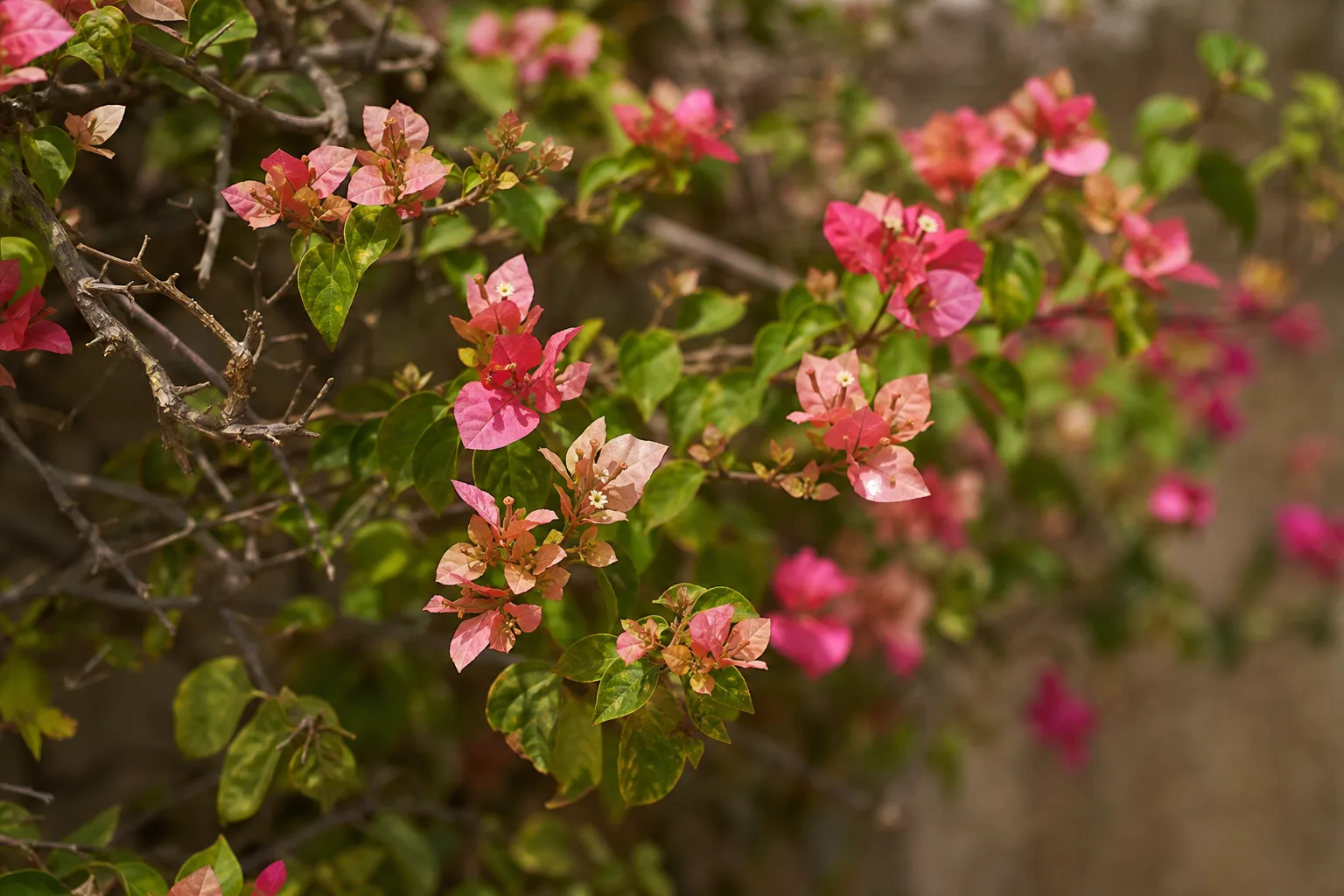
Small Flowers on Bougainvillea: Causes, Checks & Fixes
This guide covers small flowers on Bougainvillea. See also the general Small Flowers guide, watering, and light pages for this plant.
Small Flowers on Bougainvillea: Causes, Checks & Fixes
Quick answer
When growers say small flowers on bougainvillea, they almost always mean undersized, pale, or sparse bracts-the papery colorful modified leaves around tiny white true flowers-not miniature petals. Bougainvillea can technically “bloom” in marginal conditions, but bracts stay small, washed out, and thin compared with the dense clusters you see on a sun-soaked patio wall.
Insufficient direct sun is the lead cause. The plant needs a minimum of six hours of direct sun daily at the foliage itself, with eight or more hours ideal for heavy bract production. Bright indirect light keeps leaves alive but rarely delivers full-scale color.
First step: count direct sun hours on the plant-not on the window. If fewer than six hours of unfiltered sun strike the leaves, move the pot to your brightest south- or west-facing exposure or outdoors in open sky before adjusting fertilizer or watering. See the bougainvillea light guide for placement detail.
What counts as a “small” bougainvillea flower
The showy magenta, orange, red, purple, or white “flowers” are modified leaves called bracts that surround short-lived true flowers-much like poinsettia or dogwood. Clemson Extension describes these colorful bracts as the main ornamental feature, with the actual blooms small and white inside the cluster.
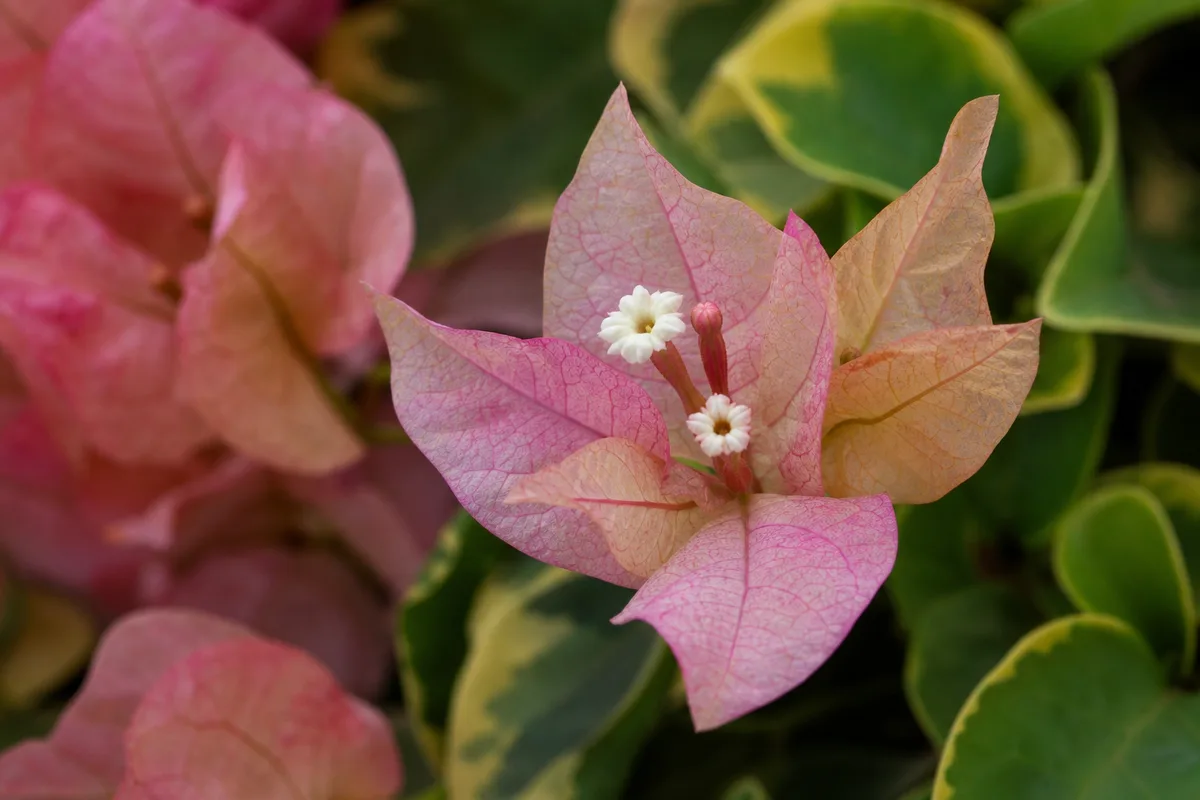
Undersized bougainvillea bracts - thin, pale, and widely spaced on a stem that stretched for light while trying to bloom.
Healthy full-sun bracts on a mature cultivar are papery, vividly colored, and form tight clusters along new wood-often covering several centimeters of stem with overlapping color. Undersized bracts look thin, small, widely spaced, or pastel compared with reference photos from the same cultivar in peak summer sun. They may appear on long bare stems with wide gaps between leaves-a sign the plant stretched for light while trying to bloom.
Small Flowers symptoms on Bougainvillea - compare bract size and cluster density with full-sun reference blooms.
Small bracts are not the same as:
- No bracts at all → see no flowers on bougainvillea
- Full-size bracts that lose color → see faded flowers
- Bracts forming then dropping before opening → see bud drop
Young plants and the first flush after Bougainvillea repotting guide often produce smaller bracts by default-that can be normal for one season if sun and care are otherwise sound.
Why bougainvillea produces undersized bracts
Insufficient direct sun (not just “some light”)
Bougainvillea is a full-sun subtropical climber from South America built for open, sun-baked exposure. Bract production is metabolically expensive; the plant allocates carbohydrates toward reproductive display only when light intensity supports it.
In bright indirect light-a covered patio alcove, a pot six feet from a south window, or an east sill with morning sun only-the vine may survive and even push a few bracts. Those bracts stay small, pale, and sparse because photosynthesis cannot fuel full pigment and scale. Clemson HGIC notes bougainvilleas flower sooner and more profusely under high light intensities-low light produces more leaves before flowers initiate.
This is the counter-intuitive diagnostic: blooming weakly is not blooming well. A bougainvillea with tiny pink bracts in a dim corner is telling you sun is marginal, not that the plant is healthy and merely “shy.”
High nitrogen and imbalanced fertilizer
Too much nitrogen encourages leaves instead of blooms, per UF/IFAS Gardening Solutions. Nitrogen drives stem elongation and leaf expansion; when nitrogen outpaces phosphorus and potassium, energy shifts to thorny vegetative shoots with undersized bract clusters at the tips-or no bracts at all.
High-nitrogen lawn fertilizer, full-strength 20-20-20, or frequent balanced feeds without dilution produce lush green growth that looks vigorous while bracts shrink cycle to cycle. See bougainvillea fertilizer for bloom-friendly NPK ratios and half-strength dosing.
Overwatering and constant moisture
Bougainvillea performs better when soil is left a little dry between deep soaks. Constant moisture keeps the plant in vegetative mode-pushing soft green growth at the expense of bract intensity. Overwatered roots also metabolize slowly, which weakens the next bloom flush even when some bracts appear.
The drought-stress bloom trigger is real: mild dry-down between waterings signals reproductive effort on a plant that already has adequate sun. But overwatering cannot be fixed by drying a shaded plant-sun comes first.
Immature plant, recent repot, or recent stress
A young vine, a freshly repotted container, or a plant moved abruptly from outdoor sun to a dim winter room often produces smaller bracts for one or two cycles while roots recover and new wood hardens. Bougainvillea flowers on new wood; energy diverted to root establishment or shock leaf drop delays full-scale bract development.
Slightly root-bound container plants often bloom more intensely than freshly repotted ones-the physical root constraint contributes to the same stress-signaling pathway as controlled dry-down. A brand-new large pot after repotting commonly shrinks bract display for weeks to months.
How to confirm the cause
Work through this checklist in order. Stop when one line clearly matches.
- Direct sun hours at the plant. Track whether unfiltered sun hits the leaves for six-plus hours daily. Use a full day including morning and afternoon-tree shade, eaves, and winter sun angle matter. Fewer than six hours strongly confirms light as the primary driver of small bracts.
- Bract pattern vs. foliage pattern. Small pale bracts on long stems with wide internodes point to light deficit. Small bracts at the tips of otherwise compact, deep-green thorny shoots point to high nitrogen or overwatering.
- Fertilizer history. List products used in the last 60 days and their NPK numbers. Lawn fertilizer, heavy balanced feeds, or weekly full-strength applications raise nitrogen suspicion.
- Watering rhythm. Does the top 3–5 cm of mix stay moist for days? Saucers holding water? That pairs with vegetative push and weak bracts. Appropriately dry soil between soaks with still-small bracts in good sun suggests immaturity or recent repot-less often chronic overwatering.
- Recent care changes. Repot, indoor move, hard prune, or heavy feed in the last four to six weeks explain a temporary bract-size drop without a new chronic problem.
- Lookalike check using the table below.
| Symptom | Small bracts (this page) | No flowers | Faded bracts | Bud drop |
|---|---|---|---|---|
| Bracts present? | Yes-undersized or pale | No or nearly none | Yes-full size, losing color | Buds form, then fall |
| Typical light | Some direct sun, under six hours | Bright indirect or shade | Adequate sun; aging or stress fade | Recent move or wet soil during bud set |
| Typical feeding | Often high N or heavy balanced | Any; light often primary | Normal; heat or age | Overwatering during initiation |
| First fix | Increase direct sun hours | Maximum sun + dry-down | Rule out heat/scorch; accept natural fade | Stabilize water and light |
| Related guide | This page | No flowers | Faded flowers | Bud drop |
First fix for small bougainvillea blooms
Increase direct sun exposure-one clear action before stacking other changes.
Move the container to the brightest placement available: on or within one to two feet of a south- or west-facing window indoors, or full open-sky exposure outdoors when temperatures stay above roughly 50°F (10°C). Acclimate over seven to fourteen days if the plant is coming from deep shade-sudden harsh midday sun on unacclimated leaves can scorch tissue, but the goal is more total direct sun, not a dimmer room.
After the sun upgrade, wait one full bloom cycle-often three to six weeks in warm weather-before judging bract size. Existing small bracts do not enlarge; watch the next flush on new wood.
Secondary fixes (after sun is addressed)
- Review NPK: Switch to a low-nitrogen bloom-oriented formula such as 6-8-10 or 10-20-10 at half label strength every two to four weeks during active growth, per Clemson HGIC guidance for half-rate feeding. Pause all fertilizer if white salt crust or brown tips appeared recently.
- Adjust watering: Water deeply when the top 3–5 cm of mix dries, then let the root zone approach dry again before the next soak. Avoid daily light sprinkles that keep soil constantly moist.
- Rule out immaturity: If the plant is under two years old or was repotted within six weeks, expect modest bract size for another cycle while roots settle.
What not to do
- Do not apply bloom booster on a stressed, wilted, or recently repotted plant before sun and roots are stable.
- Do not repot, hard-prune, and fertilize heavily the same week you move the plant-stacked shocks shrink the next bract cycle.
- Do not keep the vine in a dim indoor corner because “it still has a few small flowers”-that confirms the problem, not a solution.
- Do not use high-nitrogen lawn fertilizer hoping to “green it up” into bigger blooms-it worsens vegetative bias.
Recovery timeline
Light correction: After moving to six-plus hours of direct sun, expect the next bloom flush-not the current bracts-to show improved size and color intensity within three to six weeks in warm active growth. Indoor specimens with only marginal window sun may never reach outdoor bract scale without high-output supplemental lighting.
Fertilizer correction: After reducing nitrogen load, allow four to six weeks without heavy feeding if salt stress was present. The following flush on new wood is the fair test.
Post-repot recovery: Freshly repotted bougainvillea may show small bracts for one to two bloom cycles while roots colonize new mix. Patience beats repotting again.
Signs of improvement: Tighter bract clusters on new shoots, deeper color, shorter internodes on fresh growth, and bracts covering more stem length than the previous flush.
Signs the problem is worsening: Progressively smaller bracts each cycle while stems elongate, increasing thorny bare wood, yellowing leaves on wet soil, or total bloom cessation-escalate to not enough light or overwatering diagnostics.
How to prevent small bracts next cycle
- Deliver six to eight or more hours of direct sun at the plant through the warm season; see bougainvillea light for outdoor wall placement and grow-light options.
- Feed with low to moderate nitrogen and bloom-friendly phosphorus and potassium at half strength during active growth only; stop in late fall and winter.
- Water on soak-and-dry rhythm-let the top few centimeters dry between deep waterings rather than keeping mix constantly moist.
- Avoid repotting into oversized containers right before peak bloom season; slight root constraint in a well-draining pot often supports intensity.
- Prune long water sprouts after a bloom flush to redirect energy to new wood that carries the next bract cluster, per RHS guidance on flowering on current season’s growth.
For baseline culture, see the bougainvillea care overview, watering guide, and sibling flowering diagnostics at no flowers and faded flowers.
Conclusion
Small bougainvillea bracts are a scale and intensity problem, not a mystery disease. The plant is usually trying to bloom without enough photons, with too much nitrogen, or while recovering from recent stress. Count direct sun hours first, move to six-plus hours of unfiltered exposure, then tune NPK and watering. Judge success on the next bract flush, not the undersized clusters already on the vine-and distinguish small bracts from absent blooms, faded color, or bud drop using the lookalike table above before chasing the wrong fix.
When to use this page vs other Bougainvillea guides
- Bougainvillea watering guide - Use for routine moisture checks before assuming small flowers is the main issue.
- Bougainvillea problems hub - Browse all 20 common issues on this species.