Bougainvillea Soil Mix: Recipe & Container Tips
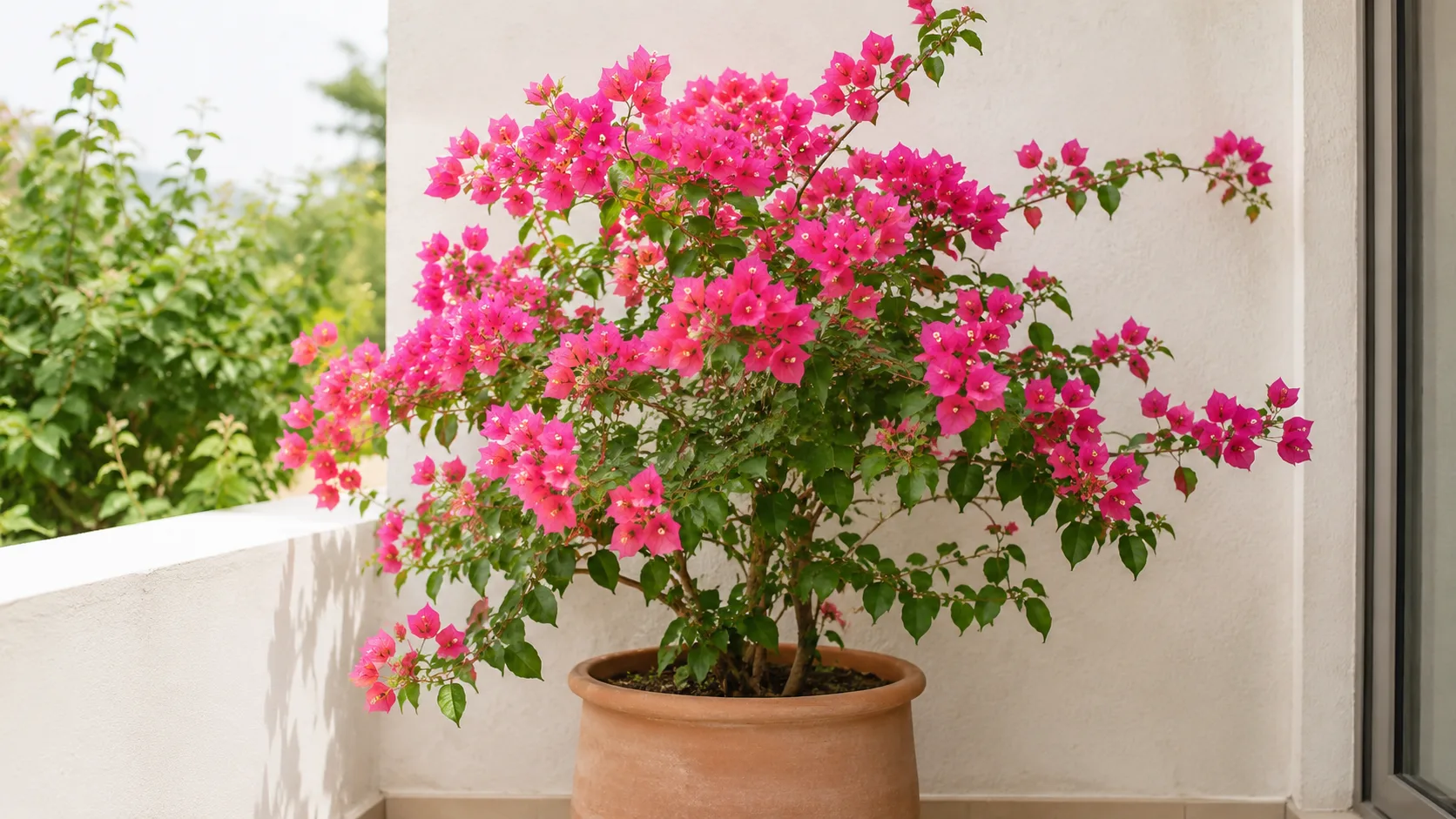
Bougainvillea Soil Mix: Recipe & Container Tips
Bougainvillea Soil Mix: Recipe & Container Tips
Bougainvillea is one of the few popular ornamentals that punishes kindness at the root zone. Give it rich, moisture-holding potting mix and a generous oversized container, and you often get lush green leaves with almost no color. Give it lean, gritty, fast-draining soil in a snug pot with a drainage hole, and the same plant may reward you with the papery bracts that justify the thorns. The frustrating part is that bougainvillea can look healthy in the wrong soil for months - until a wet week, a cool dim corner, or a repot into an even richer mix triggers root decline you cannot see until leaves yellow and bracts drop.
This guide covers the full soil picture for bougainvillea in containers and in the ground: the mix recipe that actually works, how fast drainage should be, pH and iron chlorosis, pot material and sizing, the mistakes that cause root rot on Bougainvillea, warning signs the mix is failing, and when to refresh rather than repot on reflex.
The Short Answer: What Soil Bougainvillea Actually Needs
Bougainvillea needs lean, gritty, fast-draining soil that dries predictably between waterings - not rich, moisture-retentive potting mix. Clemson University’s Home & Garden Information Center recommends bougainvillea in well-drained soil with a pH of just over 6.0 for outdoor culture. The University of Hawaii CTAHR specifies rich, well-drained, acidic soil with pH 5.5–6.0 and notes that soil constantly wet is unsuitable. For containers, Hawaii CTAHR recommends a 1:1 (by volume) peat:perlite base, amended with coarse sand or a small amount of soil to stabilize the pot - and warns that high-peat, high-water-retention media contribute to root rot.
A practical home mix: 40–50% quality peat- or coir-based potting soil, 25–35% perlite or pumice, and 15–25% coarse horticultural sand. The mix should feel gritty, not fluffy. Water should move through the pot within seconds of a full soak, not sit on the surface or pool in the saucer. Pair this with a container that has at least one large drainage hole, never sits in standing water, and is only slightly larger than the root ball - bougainvillea often blooms better when roots are somewhat constrained. Judge success by firm new growth, predictable dry-down between waterings, and bract color - not by how dark and moist the surface looks after you water.
Why Bougainvillea Soil Is Different From Most Houseplant Mixes
Most houseplant guides default to peat-heavy mixes that hold moisture because tropical foliage plants - pothos, philodendron, calathea - evolved in environments where roots stay consistently moist. Bougainvillea did not. It is a drought-tolerant climber from semi-arid and seasonally dry regions of South America, with delicate roots that rot quickly when oxygen is cut off by saturated soil. Clemson HGIC notes bougainvillea is extremely drought-resistant and thrives in almost any soil type that does not stay constantly wet. That single constraint changes everything about how you build a container mix.
Rich, organic, water-retentive soil encourages vegetative growth - more leaves, longer shoots, fewer flowers. Bougainvillea blooms when the plant is slightly stressed: lean soil, restrained watering, snug pot, strong sun. This is not an invitation to torture the plant, but it explains why a premium moisture-control potting mix that works beautifully for a fern can sabotage a bougainvillea on a sunny patio. The roots need air as much as moisture. A mix that stays wet for three or four days after every watering suffocates fine roots long before you see obvious wilt, and Phytophthora root rot - a common bougainvillea killer in soggy media - can establish invisibly in the lower third of the pot.
Regular bagged potting soil used straight from the bag is almost always too dense for bougainvillea in a container. You can start with it as a base, but you must amend heavily with inorganic grit. A useful rule: if the finished mix does not look noticeably lighter and grittier than what came out of the bag, you have not added enough perlite, pumice, or coarse sand.
What the Native Habitat Reveals About Drainage
Bougainvillea spectabilis and related species grow in open, sunny environments across Brazil, Peru, and Argentina - coastal scrub, hillsides, and disturbed ground where rainfall is seasonal and soils drain freely. Hawaii CTAHR notes bougainvillea tolerates hot dry locations with temperatures over 100°F and does best with at least 25 inches of annual rainfall, but emphasizes it does not thrive in soil that is constantly wet. The plant evolved to survive dry intervals between rain events, not to sit in a permanently damp root zone.
That habitat maps directly to container culture: you are not trying to recreate a bog garden or a moisture-retentive forest floor. You are trying to give roots brief access to water followed by a full dry-down, with plenty of air space in the mix between those cycles. Outdoor in-ground plantings in suitable climates can tolerate a wider range of soil textures - Clemson notes bougainvillea accepts almost any type that drains - but container culture amplifies every drainage mistake because the root zone is confined and evaporation is limited compared to open ground.
The Best Bougainvillea Soil Mix Recipe
The best bougainvillea soil mix is one you can reproduce consistently and that passes a simple drainage test every time you batch it. Exact ratios matter less than the finished texture: gritty, light, fast-draining, slightly acidic. Below are two tested recipes - a standard container mix and a leaner bloom-focused variant.
Base Ingredients and Ratios That Work
Standard container mix (recommended for most growers):
- 40–50% peat- or coir-based potting soil - provides structure and slight acidity; choose a quality bag without added water-retention crystals or heavy wetting agents.
- 25–35% perlite or pumice - non-negotiable; creates air pockets, prevents compaction, and speeds drainage. Pumice is heavier and helps stabilize tall, top-heavy plants in wind-exposed patios.
- 15–25% coarse horticultural sand - use builder’s sand or labeled horticultural sand, not fine beach sand, which compacts. Sand adds weight and further improves drainage.
Lean bloom-focused variant (for established plants in Bougainvillea light guide that flower poorly):
- 30% potting soil
- 35% perlite or pumice
- 25% coarse sand
- 10% pine bark fines - optional; adds acidity and keeps the mix open longer as peat breaks down.
Mix ingredients dry in a wheelbarrow or large tub until the texture is uniform. The finished batch should crumble in your hand without clumping wet, and individual perlite pieces should be visible throughout. When you fill a pot and water it, water should penetrate immediately rather than pooling on top - if it pools, your mix is still too dense.
Hawaii CTAHR’s container recommendation of 1:1 peat to perlite, with sand or a small amount of soil added for pot stability, aligns with this approach. That is roughly 50% organic base and 50% inorganic amendment before sand - a good benchmark if you prefer volume ratios over percentages.
DIY Mix vs. Store-Bought Cactus or Succulent Blends
Store-bought cactus and succulent mixes are often a workable shortcut for bougainvillea because they are pre-amended for fast drainage. Read the label: some commercial succulent mixes are still too peat-heavy for bougainvillea in humid climates or deep pots. If the bag lists mostly peat with a small fraction of perlite, cut it 50/50 with additional perlite and coarse sand before use.
A 50/50 blend of quality potting soil and commercial succulent mix is a practical middle ground for growers who do not want to batch three ingredients. Test drainage before planting - if water runs through in under ten seconds from a fully dry pot, you are in range. If it takes more than thirty seconds for water to exit the drainage hole after a full soak, add more perlite.
Avoid garden soil, topsoil, or heavy clay in containers. UF/IFAS notes bougainvillea tolerates clay, sand, and loam in the ground, but garden soil compacts in pots, holds water too long around confined roots, and introduces pathogens and weed seeds. Container bougainvillea should grow in a soilless or soil-lite medium, not dug earth from the yard.
Understanding Drainage Speed and Root Health
Drainage speed is the single most important soil property for bougainvillea. It is not the same as “having a drainage hole.” A pot with a hole but dense, water-retentive mix still holds a saturated zone at the bottom where roots suffocate. What matters is how quickly the entire root zone returns to a state where air can reach fine roots - typically within one to three days after a thorough watering in warm, sunny conditions, depending on pot size and climate.
Bougainvillea roots are surprisingly delicate despite the plant’s tough, thorny appearance above ground. They are highly susceptible to Phytophthora root rot in soggy conditions - Hawaii CTAHR identifies this as a primary threat in water-retentive media. Rot begins in the lower root mass where you cannot see it. Above-ground symptoms - yellowing leaves, leaf drop, failure to bloom, wilting despite wet soil - appear after significant root damage has already occurred. Prevention through fast-draining mix is far easier than recovery after rot sets in.
Excellent drainage also supports the slight root stress that encourages flowering. A mix that dries quickly in full sun forces the plant to allocate energy toward reproduction rather than vegetative expansion. That stress must stay within limits - chronic drought in concrete-like mix is not the goal - but a perpetually damp root zone is worse for both health and blooms.
How to Test Whether Your Mix Drains Fast Enough
Run this test before planting a new bougainvillea or after mixing a fresh batch:
- Fill a pot with your mix to the depth you will use for the plant. Do not compress excessively - firm lightly with your hands only.
- Water slowly until water runs freely from the drainage hole. Note whether water pools on the surface for more than a few seconds before penetrating.
- Lift the pot immediately after watering. It should feel heavy but not sloshy.
- Check again after 24 hours in your normal growing location. The top 3–5 cm should be approaching dry in full sun; the deeper mix should be moist but not squishy.
- Check after 48–72 hours. In warm, sunny patio conditions, the top half of a medium-sized pot should be dry enough that you would water soon. If the mix is still visibly wet and cold at depth after four days without rain or irrigation, it drains too slowly for bougainvillea.
If the test fails, do not plant yet. Empty the pot, add 20–30% more perlite or coarse sand to the batch, and retest. A one-minute version of this check during routine care: after watering, water should exit the drainage hole within seconds, and the saucer should be emptied within thirty minutes - never left full.
Soil pH, Iron Chlorosis, and Nutrient Availability
Bougainvillea prefers slightly acidic soil. Hawaii CTAHR specifies pH 5.5–6.0; Clemson recommends just over 6.0 for outdoor plantings. A practical target range for containers is pH 5.5–6.5, where iron and other micronutrients remain readily available to roots. When pH creeps above 7.0 - common in regions with alkaline tap water or limestone-derived garden soil - iron chlorosis appears: new leaves turn pale yellow while veins stay green, and growth stalls despite adequate feeding.
UF/IFAS Extension in Charlotte County notes that bougainvillea on high-pH alkaline soils often show chlorotic yellowing because micronutrients become locked up and unavailable. A soil test before planting in the ground is the best approach; for containers, a pH meter or test strips on a slurry of your potting mix takes under a minute and tells you whether adjustment is needed.
If pH is too high, small amounts of elemental sulfur, iron sulfate, or aluminum sulfate can acidify the mix - Hawaii CTAHR lists these options. An acidifying fertilizer used at label rates is a gentler ongoing approach for container growers. If chlorosis appears on an established plant, a chelated iron foliar spray can supply iron while you correct the root-zone pH, but foliar sprays are a bridge, not a substitute for getting the mix right. They can also stain concrete and stonework, so apply carefully on patios.
If pH drops below 5.0, phosphorus availability decreases, which can reduce blooming. This is uncommon in standard peat-based mixes but worth noting if you acidify aggressively. For most home growers using peat- or coir-based container mix with the recipes above, pH starts in the correct range and the bigger priority is drainage, not pH micromanagement.
Choosing the Right Container for Bougainvillea
The container is part of the soil system. A perfect mix in a pot with no drainage hole, or one sitting in a full saucer, behaves like bad soil within days. Drainage holes are non-negotiable - at least one large hole, preferably two on larger pots. Elevate the pot on feet or a wheeled caddy so water exits freely and the hole never seals against a patio surface.
Pot material changes how fast the mix dries. Terracotta is the classic choice for bougainvillea because porous walls allow evaporation from the sides, accelerating dry-down and reducing root-rot risk. The trade-off is weight and faster watering demand in hot weather - a bougainvillea in terracotta on a full-sun patio may need checking every day in summer. Plastic and fiberglass retain moisture longer, which can help in very hot, dry climates where terracotta dries too fast, but increases rot risk if the mix is already borderline dense. Fabric grow bags offer excellent aeration and drainage but dry quickly and may not suit top-heavy, thorny climbers without support.
Match material to your climate and attention level. In humid, cloudy regions, lean toward terracotta and a grittier mix. In arid, windy deserts, plastic with excellent drainage holes and a slightly moisture-retentive base may prevent chronic drought stress - but never let that slide into soggy soil.
Terracotta, Plastic, and Other Pot Materials
| Pot material | Drainage behavior | Best for |
|---|---|---|
| Terracotta | Fast side evaporation; mix dries quickly | Sunny patios, bloom-focused culture, growers who check pots daily |
| Glazed ceramic | Similar to terracotta if unglazed interior; glazed types retain more moisture | Decorative placement with amended gritty mix |
| Plastic / fiberglass | Slower side evaporation; moisture lingers longer | Hot dry climates, larger pots that would be immovable in terracotta |
| Fabric grow bags | Excellent aeration and drainage; dries fast | Temporary growing, nursery holding, mobility |
Regardless of material, never use a decorative outer pot without drainage as the primary root zone unless you treat it as a cachepot and remove the inner nursery pot to empty runoff after every watering. Bougainvillea in a sealed ceramic cylinder with no exit for water is a root-rot timer.
Pot Sizing: Why Bougainvillea Prefers Snug Containers
Bougainvillea is one of the few ornamentals that often performs better in a slightly undersized pot than in a generously oversized one. Clemson and multiple extension sources note that bougainvillea blooms well when somewhat root-bound. A pot only slightly larger than the root ball constrains vegetative expansion and encourages bract production - provided light, soil, and watering support the plant.
Oversized pots are a common soil-related mistake. When you repot a modest root ball into a pot with inches of unused mix on all sides, that extra mix stays wet long after the roots have taken what they need. The saturated zone around the root ball is exactly where Phytophthora thrives. Choose the smallest pot that comfortably fits the root mass with room for one season of growth - not the pot you hope the plant will eventually fill.
Practical sizing guide for container bougainvillea: dwarf cultivars like ‘Miss Alice’ or ‘Oo-La-La’ start well in a 14-inch (35 cm) container; medium varieties like ‘Rosenka’ suit 16–18 inches (40–45 cm); vigorous types like ‘Barbara Karst’ need 20 inches (50 cm) or larger at maturity. Upsize only when roots circle the pot densely and water runs through too fast to absorb - typically every two to three years, not annually.
In-Ground Soil vs. Container Mix: What Changes Outdoors
In USDA Zones 10–11 and similar frost-free climates, bougainvillea grows in the ground with far more forgiveness than in pots. Clemson notes it thrives in almost any soil type that does not stay constantly wet, and UF/IFAS lists tolerance for clay, sand, acidic, and slightly alkaline loam. Ground soil has natural drainage paths, soil biology that processes organic matter, and no confining walls - so a heavier texture is survivable.
Container culture removes those buffers. Every watering must drain through a finite volume with limited evaporation surface. Never use the same soil recipe indoors or on a patio that you would dig into a garden bed. In-ground amendments focus on opening heavy clay or stabilizing sandy soil, not achieving a soilless perlite-heavy texture. For clay sites, work coarse sand, composted pine bark, or grit into the planting hole and ensure the site does not collect standing water. For sandy sites, a modest amount of organic matter helps retain enough moisture between irrigations without creating a wet sponge.
If you grow bougainvillea in a pot outdoors in summer and move it indoors for winter, keep the same lean container mix year-round. Do not repot into richer soil when bringing it inside - the lower light and cooler temperatures already slow dry-down, and a moisture-retentive mix compounds the risk.
Amending Soil for Established Bougainvillea
Established bougainvillea do not need annual soil replacement if the mix still drains well and the plant grows vigorously. When performance slips - slow dry-down, surface crusting, sour smell, or declining bloom despite good sun and watering - amend or refresh rather than stacking fertilizer on a failing root zone.
For a plant that is not ready for a full repot, top-dressing is rarely enough for bougainvillea because the problem is usually compaction and breakdown in the lower root mass, not the top inch. Partial refresh: remove the top 5–8 cm of old mix, replace with fresh gritty blend matching your recipe, and water lightly. This helps surface drainage but does not fix a soggy bottom.
Full refresh without upsizing: slip the plant out, gently remove 20–30% of the outer root mass and old mix - especially the lowest third if it smells sour or feels mucky - and repot into the same container with fresh mix. Water once, let drain, and hold fertilizer for four to six weeks while roots recover. This is gentler than jumping to a much larger pot and often restores bloom vigor on a plant that has been sitting in broken-down peat for three years.
For in-ground plants with alkaline chlorosis, amend per soil test results with sulfur or iron products at extension-recommended rates. Foliar chelated iron provides temporary relief while soil amendment takes effect over months.
Soil Mistakes That Kill Bougainvillea in Containers
The most damaging soil mistakes are predictable and avoidable:
Using straight bagged potting soil without grit. Too dense, too wet, too rich. Amend at least 40% perlite and sand combined before planting.
Oversized pots with excess wet mix. More soil volume means longer saturation around a small root ball. Size the pot to the roots.
Gravel or pot shards at the bottom of the pot. This is one of the most persistent myths in container gardening. A gravel layer creates a textural interface that raises the saturated water table in the pot rather than lowering it - physics of capillary action, not opinion. If drainage is slow, fix the mix and the hole size, not the bottom layer.
No drainage hole or standing water in the saucer. A hole is useless if the pot sits in a full saucer or sealed cachepot. Empty runoff every time.
Garden soil in containers. Compacts, holds water, introduces disease. Use soilless container mix.
Bougainvillea repotting guide into richer mix to “help” a non-blooming plant. Often makes flowering worse. Lean out the mix and reduce pot size instead.
Repotting during peak bloom. Bougainvillea sets bracts on established wood; disturbing roots during a flush can drop flowers for weeks. Refresh mix in late winter or early spring before the main growth push, or after a bloom cycle ends.
Signs Your Bougainvillea Soil Is Wrong
Soil problems show up through the plant before you dig into the pot. Learn to read these signals:
Yellow leaves with green veins on new growth - classic iron chlorosis from alkaline or waterlogged mix where iron is unavailable. Check pH and drainage together; both can cause similar symptoms.
Leaf drop despite regular watering - often overwatering on Bougainvillea in slow-draining mix, not underwatering on Bougainvillea. Check whether soil at depth stays cold and wet four days after watering.
Lush green growth, no bracts - rich, wet soil plus adequate nitrogen produces leaves over flowers. Lean the mix, tighten the pot, and align watering with dry-down.
Wilting in afternoon sun with wet soil - root damage from rot or compaction; roots cannot take up water even when the mix is moist. Inspect roots when repotting; healthy bougainvillea roots are white to tan and firm, not brown and mushy.
Sour or swampy smell from the pot - anaerobic breakdown in saturated mix. Repot into fresh gritty soil and trim damaged roots.
White crust on soil surface - mineral buildup from hard tap water or over-fertilization in slow-draining mix. Flush with water, refresh top layer, and improve drainage.
Soil pulling away from pot edges - extreme dryness from mix that hydrophobes when it dries completely, common in old peat-heavy media. Refresh the mix; chronic drought stress reduces blooming.
When several signs appear together, fix soil and drainage before changing light or fertilizer. Bougainvillea symptoms overlap, but wet, dense mix is the most common root cause of decline in container culture.
When to Refresh or Repot the Potting Mix
Repot bougainvillea when there is a root-zone reason, not on a calendar. Valid triggers: roots densely circling the drainage hole; mix has broken down into fine, water-retaining dust; drainage that used to take seconds now takes minutes; sour smell; plant drying so fast you cannot keep up because roots fill the entire volume; or visible root rot on inspection.
Poor triggers: every spring by habit; a leaf yellowed once; you saw a bloom on Instagram and want to “encourage” the plant with fresh rich soil. Unnecessary repots set flowering back and introduce rot risk.
Best timing: late winter to early spring before active growth accelerates, or just after a bloom cycle ends. Avoid repotting when the plant is covered in bracts unless the mix is clearly failing - in that case, accept a temporary bloom loss to save the roots.
After repotting, water once thoroughly, drain fully, and hold fertilizer for four to six weeks. Roots need time to callus and establish in the new mix before feeding resumes. Keep the plant in the same light or slightly shaded for one week if you trimmed significant root mass.
Soil, Watering, and Blooming: How the Root Zone Connects
Soil texture and watering are inseparable for bougainvillea. Fast-draining mix in full sun dries quickly - you water more often but each watering is safer because the mix never stays saturated. Dense mix in the same sun dries slowly on the surface while staying wet at depth - you water less often but each watering carries higher rot risk. The correct rhythm is: water thoroughly when the top 3–5 cm is dry, then let the entire root zone approach dry before the next soak - not a fixed weekly schedule.
Bougainvillea blooming is driven by light first, but soil and watering gate whether that light translates into bracts. Full sun - minimum five to six hours of direct sunlight daily - is non-negotiable for serious flowering. Within that, lean gritty soil, restrained watering before bloom season, and a slightly snug pot create the mild stress that triggers color. Hawaii CTAHR and multiple growers note that a period of controlled dryness often precedes a flush of bracts. This is not neglect - it is calibrated stress in a mix that drains fast enough to prevent rot during the dry phase.
If you fix soil but the plant still will not bloom, look next at light intensity, night temperatures, and whether you are feeding too much nitrogen. Soil is the foundation, not the entire answer. A plant in perfect mix but deep shade will stay green and root-healthy without ever producing the show you want.
Conclusion
Bougainvillea soil comes down to one practical target: lean, gritty, fast-draining mix in a snug pot with a real drainage hole - not rich, moisture-holding potting soil in an oversized container. Build your batch from 40–50% quality potting base, 25–35% perlite or pumice, and 15–25% coarse sand. Test drainage before you plant. Target pH 5.5–6.5, but prioritize texture and dry-down speed over pH obsession. Choose terracotta or well-drained plastic based on your climate, size the pot to the root ball, and refresh the mix when it breaks down - not every spring on autopilot.
Read the plant, not the bag label. Predictable dry-down, firm roots, and bract color mean the soil system works. Yellow new leaves with green veins, sour smell, wilting in wet mix, and endless green growth without flowers mean the root zone needs correction. Fix drainage and pot size before you chase blooms with fertilizer or a bigger pot of rich mix - bougainvillea rewards restraint at the roots more than almost any other plant on the patio.
When to use this page vs other Bougainvillea guides
- Bougainvillea overview - Start here for whole-plant context before deep-diving this topic.
- Bougainvillea problems hub - Jump to symptom-specific fix guides when this care topic does not resolve the issue.
- Root Rot on Bougainvillea - Escalate here when soil adjustments are not enough.
- Mold on Soil on Bougainvillea - Escalate here when soil adjustments are not enough.
Related Bougainvillea guides
- Bougainvillea overview
- Bougainvillea watering
- Bougainvillea light
- Bougainvillea propagation
- Bougainvillea fertilizer
- Bougainvillea repotting
- Root Rot on Bougainvillea
- Mold on Soil on Bougainvillea
- Bougainvillea problems
Related tool
Try the Soil Mix Calculator with bougainvillea pre-selected to estimate needs for your setup.