Bougainvillea Repotting: When, How, and Mistakes
Bougainvillea Repotting: When, How, and Mistakes
Bougainvillea Repotting: When, How, and Mistakes
A bougainvillea in a slightly snug pot can explode with color. The same plant moved into a pot that is too generous often sits green and leafy for a season while you wonder what went wrong. Bougainvillea repotting is not a yearly housekeeping task like it might be for a fast-growing pothos. It is a structural intervention you perform only when the root system or the soil has genuinely outgrown the container - and when you do it, the pot size, soil mix, and timing matter as much as the technique itself.
This guide covers the full repotting picture for container-grown bougainvillea: when the plant actually needs a bigger home, why root restriction helps flowering, how to choose pot size and soil, a step-by-step procedure that minimizes shock, aftercare for the first six weeks, and the mistakes that turn a simple upgrade into weeks of leaf drop and stalled bracts.
The Short Answer: When and How to Repot Bougainvillea
Repot bougainvillea only when it is clearly root-bound or the soil has broken down - typically every two to four years, not on a fixed calendar. The strongest signals are roots circling densely at the pot base, roots emerging from drainage holes, water running straight through without wetting the mix, or growth stalling despite good light and feeding. The best window is early spring, just before active growth resumes, when the plant can recover quickly in warming temperatures.
When you repot, move up only one pot size - about 5 to 7.5 cm (2 to 3 inches) wider in diameter than the current container. Use a fast-draining, lean mix heavy on mineral components like perlite, pumice, or coarse sand rather than moisture-retentive organic soil alone. Handle the root ball gently, loosen only the outermost circling roots, and avoid planting deeper than the original soil line. Water once to settle the mix, then hold off on heavy watering and fertilizer for several weeks while the plant re-establishes. Expect mild leaf drop or a brief growth pause - that is normal transplant stress, not necessarily failure.
Why Bougainvillea Hates Unnecessary Repotting
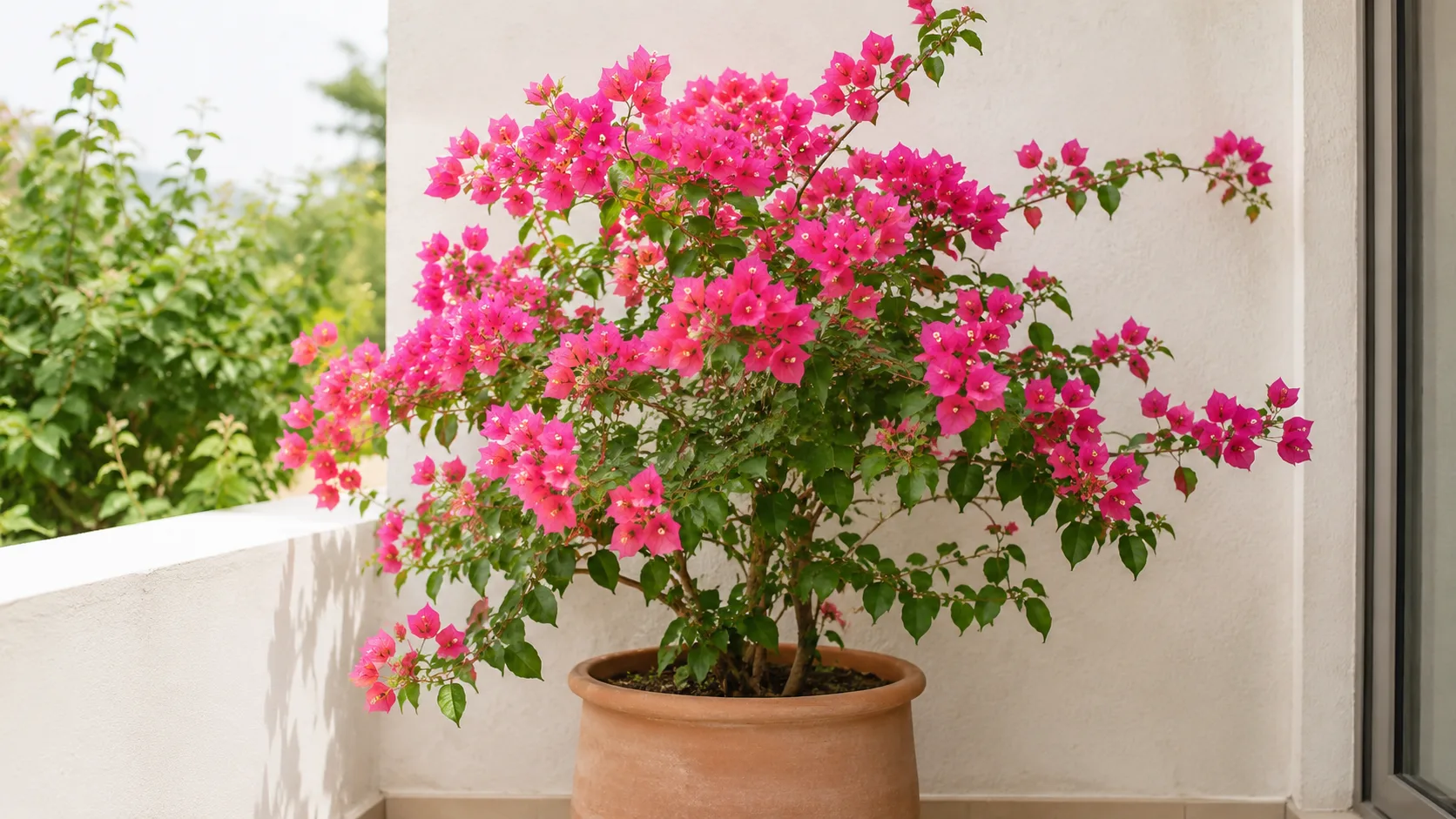
Bougainvillea is a woody, thorny climber from South America - primarily Brazil, Peru, and Argentina - that evolved for open, sunny, well-drained conditions. In the ground it can reach 3 to 12 metres as a climber; in containers it is usually kept to 1 to 2 metres through pruning and pot restriction. That container context changes everything about repotting. Unlike many houseplants that benefit from regular root-room upgrades, bougainvillea treats a snug root zone as a signal to shift energy from vegetative growth toward bract production - the papery, colorful modified leaves most people call the “flowers.”
Every time you lift bougainvillea from its pot, you interrupt that equilibrium - fine root hairs tear, energy shifts to repair instead of bracts, and an unnecessary repot trades a blooming plant for a recovering one. Bougainvillea roots are fine and fibrous despite the thorny exterior above ground. They rot quickly in wet soil and recover slowly from bare-rooting. Treat repotting as maintenance when something is wrong, not a reflex every spring.
How Root Restriction Drives Bract Production
The link between slight root restriction and heavier blooming is one of the most practical things to understand before you reach for a bigger pot. When roots fill most of the available soil volume, the plant experiences mild stress - not starvation, but a nudge away from unlimited vegetative expansion. In response, bougainvillea often produces more bracts on new growth, especially when combined with Bougainvillea light guide, warm temperatures, and a lean feeding program.
This is not an argument for keeping bougainvillea in a pot so small that it dries out twice daily or cannot absorb nutrients. There is a band between comfortably snug and severely root-bound where flowering performance peaks. Roots should circle lightly at the edges, not form a solid mat you cannot penetrate with a finger. The mix should still hold some moisture between waterings. If water races through in seconds and the plant wilts hours later, you have crossed from beneficial restriction into deprivation - and repotting is overdue.
Oversized pots break this balance in the opposite direction. Excess soil volume holds moisture the small root system cannot use quickly. Oxygen around the roots drops. The plant pushes leaves and stems instead of bracts because resources are abundant and there is no stress cue to flower. Gardeners who repot into “room to grow” containers often report lush green bougainvillea with few colors for the next season. The fix is rarely more fertilizer. It is usually correcting pot size and returning to a soak-and-dry Bougainvillea watering guide.
Signs Your Bougainvillea Actually Needs Repotting
Repotting decisions should be driven by observable root-zone problems, not guilt about how long the plant has been in the same pot. Check these signs before committing to a full repot.
Roots circling the bottom or sides of the pot are the clearest indicator. Slide the plant partway out of its container - water the day before so the root ball holds together - and look at the outer root layer. A few visible white tips at drainage holes are normal. A dense wall of roots matted against the pot wall means the plant has used the available space.
Water runs straight through without absorbing suggests the mix has broken down or the root mass has displaced most of the soil. You water thoroughly and moisture exits the bottom immediately while the top feels barely damp. That channeling pattern means fresh, structured mix and slightly more root room will help.
Fast drying or stalled growth can indicate crowding - the plant wilts in afternoon heat despite watering, or flatlines for a full season despite good light and feed. Inspect the root ball before repotting; these signs also trace to underwatering on Bougainvillea or insufficient sun.
Sour smell, mold, black mushy roots, or salt crust on the surface mean breakdown, rot, or fertilizer buildup. Repot into fresh mix urgently, trimming dead roots, even outside ideal season if needed.
Two or more of these signs together make a strong case for repotting. A single mild signal - one root tip at a drainage hole on an otherwise healthy, blooming plant - usually means wait another season.
When NOT to Repot Bougainvillea
Knowing when to skip repotting prevents more bougainvillea problems than any perfect soil recipe. Avoid a full repot when the plant is in peak bloom or loaded with developing bracts. Bougainvillea flowers on new growth, and root disturbance during active flowering often triggers bud and bract drop. If the display is the reason you grow the plant, wait until the flush finishes and you have lightly pruned back spent stems.
Do not repot in deep winter dormancy unless the situation is an emergency like root rot on Bougainvillea. Cold, short days, and low metabolic activity mean the plant cannot heal root damage efficiently. A root-bound plant that is otherwise healthy can wait until late winter or early spring. The Royal Horticultural Society recommends repotting container bougainvillea in early spring when increasing light and temperatures stimulate growth - that timing gives the plant months of active season to recover.
Skip repotting during extreme summer heat if you can. High temperatures add heat stress on top of transplant shock, especially for plants moved outdoors in full sun immediately after repotting. Early spring or early autumn before bringing a container indoors for winter are safer windows in hot climates.
Do not repot a new nursery plant immediately or because leaves yellow without checking overwatering on Bougainvillea, light, drafts, or pests first. A bigger pot on an overwatered plant in a dim corner makes rot more likely, not less.
Best Time of Year to Repot Bougainvillea
Timing is the variable most growers underestimate. The same repot performed in early spring versus mid-winter can mean the difference between two weeks of mild stress and two months of stalled growth.
Early spring - late February through April in the Northern Hemisphere - is the primary window. The plant is exiting dormancy, daylight is increasing, and new roots can grow into fresh mix before summer heat demands maximum uptake. For UK and other cool-climate growers who move containers outdoors for summer, March to April before the outdoor move combines repotting with the annual hardening-off routine. For USDA zones 10 to 11 where bougainvillea stays outdoors year-round, repot just before the spring growth surge.
Early summer works as a backup in mild climates if spring was missed and the plant is clearly root-bound. Avoid repotting during heat waves. Provide partial shade for one to two weeks after the move even if the plant normally lives in full sun.
Early autumn suits warm regions and container plants about to come indoors. Repotting six to eight weeks before frost allows partial establishment before lower light indoors. Pair with inspection for pests so you do not import problems into the house.
Winter repotting should be reserved for emergencies - severe root rot, a pot cracked beyond use, or a plant so root-bound it cannot wait until spring without decline.
Spring, Summer, and Winter Timing Compared
| Season | Suitability | Notes |
|---|---|---|
| Early spring | Best default | Rising light and warmth support fast root recovery; aligns with RHS guidance |
| Early summer | Acceptable backup | Avoid peak heat; shade during recovery |
| Early autumn | Good in warm zones | Allows partial establishment before overwintering indoors |
| Mid-winter | Avoid unless emergency | Slow metabolism limits healing; cold compounds stress |
| Peak bloom period | Avoid | High risk of bract drop regardless of season |
Choosing the Right Pot Size and Material
Pot selection is where bougainvillea repotting succeeds or fails silently. The goal is one modest upgrade, not a long-term home the plant will grow into over several years.
Measure the current pot’s inside diameter at the rim. The new pot should be 5 to 7.5 cm (2 to 3 inches) wider - one standard nursery size step. If your bougainvillea is in a 25 cm pot, move to 30 cm, not 40 cm. Depth matters less than width for most container bougainvillea, but the new pot should be deep enough that the root ball sits 2 to 3 cm below the rim with room for a thin top-dressing layer without overflow when watering.
Drainage holes are non-negotiable. Multiple holes are better than one. Bougainvillea roots suffocate in standing water. Do not rely on a layer of gravel at the bottom to compensate for a pot without holes - that practice does not improve drainage and reduces usable soil volume.
Terracotta is excellent for bougainvillea in sunny outdoor locations because it breathes, dries evenly, and adds weight against tipping in wind. It dries faster than plastic, which suits Bougainvillea overview’ preference for quick dry-down between waterings. Plastic works well for larger specimens you need to move, provided drainage is generous and you adjust watering for slower evaporation. Glazed ceramic can work if heavy and holed; monitor moisture more carefully because glaze reduces breathability.
Stability matters for top-heavy, vining bougainvillea. A narrow tall pot on a windy balcony invites disaster. Choose a pot with a wider base or add weight inside the bottom - never blocking drainage - if tipping is a concern.
Why One Size Up Is the Only Safe Upgrade
Jumping two or three pot sizes is the single most common bougainvillea repotting mistake. A large volume of fresh mix stays wet in the center long after the surface looks dry. Roots explore slowly into that wet zone. Fungal pathogens thrive. The plant above ground looks fine for weeks while roots decline - then yellowing, leaf drop, and soft stems appear suddenly.
One size up gives roots enough new territory to expand without drowning in unused soil. It preserves the mild restriction that encourages bracts. It also keeps the watering rhythm familiar - the pot still dries at a predictable rate once roots begin exploring the edges. If you repotted too large and see slow drying, chronic wet mix, and reduced blooming, the corrective action is often repotting again into an appropriately sized container with fresh, gritty mix - painful but effective.
The Best Soil Mix for Repotting Bougainvillea
Bougainvillea needs fast drainage and moderate fertility, not rich, moisture-holding potting soil designed for leafy tropicals. The RHS recommends peat-free, loam-based compost such as John Innes No. 3 for container bougainvillea - a structured base with better long-term stability than pure peat mixes. Most growers still amend that base for faster dry-down.
A reliable repotting mix formula:
- 40% quality potting soil or loam-based compost (John Innes 3 or a palm/citrus blend)
- 30% perlite or pumice for aeration and rapid drainage
- 20% coarse sand or horticultural grit for weight and pore space
- 10% compost or well-rotted organic matter for slow nutrient release
The exact ratios matter less than the result: when you water thoroughly, excess exits within seconds, and the mix feels light and gritty, not spongy. pH near 5.5 to 6.5 suits bougainvillea. Avoid heavy garden clay, pure peat without amendment, or moisture-control potting mixes with water-retaining crystals - all hold water too long for this species.
If repotting a plant that was blooming well in its old mix, note what worked. A slightly leaner version of the same structure is safer than a completely different, richer formula that triggers leaf growth at the expense of bracts. Never reuse old soil from a previous pot; it may carry pathogens, salts, and collapsed structure.
Tools and Materials to Gather Before You Start
Repotting bougainvillea goes smoothly when everything is within reach - partly because the plant has thorns and you do not want to hunt for scissors mid-job with sap on your gloves.
You will need: a new pot one size up with drainage holes; fresh mix prepared and slightly moistened so it is workable but not wet; clean hand pruners or scissors for dead roots; a hand trowel; gloves - thorns are sharp and sap can irritate skin; newspaper or a tarp for mess; a chopstick or dowel for settling soil without compacting; and a watering can with a narrow spout for the first settling drink.
Water the plant the day before repotting so the root ball holds together - slightly moist, not sopping wet.
Step-by-Step: How to Repot Bougainvillea Without Shock
Follow this sequence once you have confirmed the plant needs repotting and gathered materials. Work in shade or indoors away from direct sun during the procedure.
Step 1 - Prepare the new pot. Cover drainage holes with a single piece of mesh or a coffee filter if soil loss is a concern, but do not create a barrier that blocks water exit. Add enough fresh mix to the bottom so the top of the root ball will sit 2 to 3 cm below the rim, at the same depth as before.
Step 2 - Remove the plant from the old pot. Tip the container on its side. Tap the rim and sides firmly. Slide a trowel around the inner edge if the plant resists. Pull by the root ball base, not by thorny stems. If the plant is severely stuck, run a knife around the inside edge or cut the plastic nursery pot away rather than yanking stems.
Step 3 - Inspect the root ball. White or tan firm roots are healthy. Black, mushy, or sour-smelling roots need trimming. Note how densely roots circle the exterior.
Step 4 - Loosen outer roots only. Use fingers to gently tease the bottom and outer inch of circling roots. Do not bare-root the plant or wash all soil away. If roots form a solid mat, make two to four vertical cuts about 2 cm deep into the root ball sides with a clean knife, then loosen the flaps outward.
Step 5 - Trim dead tissue. Cut away black or mushy roots back to healthy white tissue. Sterilize blades between cuts if rot is present.
Step 6 - Position in the new pot. Center the root ball. Confirm the soil line matches the previous depth - never bury the crown or main stem deeper than before.
Step 7 - Backfill with fresh mix. Add mix in stages, shaking the pot lightly or using a chopstick to settle soil into gaps without packing tightly. Firm gently with fingertips; do not compress.
Step 8 - Water to settle. Water slowly until it runs freely from drainage holes. Empty any saucer after 30 minutes.
Step 9 - Place in recovery conditions. Move to bright indirect light or dappled shade for one to two weeks, even if the plant normally lives in full sun. Protect from wind and extreme heat.
Step 10 - Resume normal care gradually. Return to full sun after new growth appears firm. Reintroduce fertilizer only after four to six weeks if growth is active.
Handling the Root Ball With Minimal Disturbance
The less you disturb healthy roots, the faster bougainvillea recovers. Think of repotting as sliding the root mass into fresh mix with edge relief, not rebuilding the root system from scratch. Keep the original soil core intact around the central roots. That core holds beneficial microbes and protects fine root hairs.
Never let a repotted root ball sit exposed to sun or dry air mid-job - complete backfilling and the first watering promptly.
Root Pruning During Repotting: When It Helps and When It Hurts
Root pruning is controversial for bougainvillea because the species does not respond like hardy trees that tolerate aggressive root reduction. Light corrective pruning of dead or circling outer roots helps. Aggressive root shaving does not.
Trim dead, black, or mushy roots whenever you find them - that is hygiene, not optional styling. Cut back to firm white tissue with clean tools.
Tease and loosen circling outer roots rather than cutting them all off. The goal is to redirect growth outward into new mix, not to reduce root volume dramatically.
Vertical scoring of a tight root mat - two to four shallow cuts on the sides - can jump-start outward growth when teasing alone is insufficient. Keep cuts moderate; deep slashing removes too much uptake surface.
Avoid wholesale root reduction to force blooming - that is advanced bonsai work, not casual repotting. If rot forces you to remove more than 20 to 25 percent of root mass, use the same size or only slightly larger pot, shade-recover, and withhold fertilizer until new white root tips appear.
Aftercare: Watering, Light, and Fertilizer After Repotting
The first six weeks after repotting define success. Bougainvillea needs stability, not enthusiasm.
Watering: Give one thorough watering at repotting to settle mix. After that, water lightly and only when the top 3 to 5 cm feels dry. Roots are not yet exploring the full volume; excess water sits unused. Return to your normal soak-and-dry cycle once new growth is active and the plant has been in full sun for at least two weeks without wilting.
Light: Provide bright indirect light or partial shade for one to two weeks. Direct sun on a disturbed root system in a heat wave accelerates wilting. Gradually move back to full sun - bougainvillea needs minimum five to six hours of direct sunlight daily for strong growth and bracts long term.
Fertilizer: Hold fertilizer for four to six weeks minimum. Fresh mix often contains nutrients, and damaged root tips cannot handle salts well. When you resume, use a balanced or bloom-weighted liquid feed at half strength, then return to your normal growing-season schedule. Overfeeding a recovering plant pushes soft leaf growth instead of sturdy new wood and bracts.
Keep repotted plants away from cold windows and heat vents. Inspect leaf undersides weekly for aphids, which stress attracts.
Recovery Timeline and What Normal Transplant Stress Looks Like
Transplant shock on bougainvillea is common and usually temporary if pot size and watering are correct. Knowing the timeline prevents panic repotting or overwatering that turns shock into rot.
Days 1 to 3: Some leaf wilt or slight droop is normal. Bracts may fade faster than they would otherwise. Keep the plant in recovery light and avoid fertilizing.
Days 4 to 14: Expect some yellowing and leaf drop on older foliage. New buds may pause. This is the plant reallocating resources to root repair. If more than roughly one-third of leaves drop, check that the pot is not oversized and that soil is not staying wet.
Weeks 2 to 4: New growth tips should appear - small leaves, firm and green. White root tips visible at drainage holes confirm establishment. Gradually increase sun exposure.
Weeks 4 to 6: Full root exploration of the new mix typically completes. Resume normal watering rhythm and fertilizer. Bract formation on new wood may follow later in the season depending on pruning and light.
Beyond 6 weeks with continued decline: Sustained wilting, soft stems, sour soil smell, or spreading black roots indicate rot from overwatering or oversized pot, not normal shock. Unpot, trim rotten roots, repot into a appropriately sized container with fresh gritty mix, and shade-recover again.
Damaged leaves do not revert to green; judge recovery by new growth quality, not old foliage appearance.
Common Bougainvillea Repotting Mistakes and How to Avoid Them
General houseplant instincts - bigger pot, rich soil, immediate feed - work against bougainvillea. The most frequent errors: repotting too often; jumping two or three pot sizes so wet center soil quietly rots roots while the plant stays leafy and bract-shy; bare-rooting and stripping fine root hairs; repotting during peak bloom; planting too deep; fertilizing or returning to full sun immediately after the move; reusing contaminated soil. If mix stays dark days after watering and the plant wilts despite wet soil, the pot is likely too large - repot into a properly sized container rather than feeding harder. Wear gloves - thorns are sharp, sap irritates skin, and ingestion of any plant material may cause mild gastrointestinal upset in pets. Keep bougainvillea out of reach of curious animals.
Repotting vs. Top-Dressing: When a Full Repot Is Overkill
Not every soil problem requires lifting the entire plant. Top-dressing - scraping out the top 3 to 5 cm of old mix and replacing it with fresh gritty compost - refreshes nutrients and surface structure with minimal root disturbance. It suits bougainvillea when drainage is still good, roots are not circling severely, and the goal is salt reset or minor organic refresh rather than more root room.
Top-dress in early spring before growth accelerates. Water lightly after. Combine with a light root-zone probe: if a finger inserted near the pot wall meets solid roots all the way down, top-dressing is a bandage; full repotting is the real solution.
Choose full repotting when roots circle heavily, water channels through, the pot is physically too small for stability, or rot and sour smell are present. Choose top-dressing when the plant is blooming beautifully in a slightly snug pot and the mix still drains within your normal watering rhythm.
When in doubt, lean toward waiting one season and top-dressing rather than forcing a full repot. Bougainvillea tolerates mild root restriction far better than unnecessary disturbance.
Conclusion
Bougainvillea repotting rewards patience and precision more than aggressive intervention. Repot when roots or soil genuinely demand it - usually every two to four years - in early spring, into a pot only one size larger, with a gritty, fast-draining mix, handling the root ball gently and recovering the plant in partial shade before returning it to full sun. Skip repotting during peak bloom, deep winter, and heat waves unless rot forces your hand. Watch for oversized pots, overwatering after the move, and bare-rooting that strips fine roots. If the plant is blooming well in a slightly snug container with healthy drainage, top-dressing may be all you need for another season. Get the timing and pot size right, and bougainvillea recovers within weeks and returns to the bract show that makes the thorns worth it.
When to use this page vs other Bougainvillea guides
- Bougainvillea overview - Start here for whole-plant context before deep-diving this topic.
- Bougainvillea problems hub - Jump to symptom-specific fix guides when this care topic does not resolve the issue.
- Root Rot on Bougainvillea - Escalate here when repotting adjustments are not enough.
Related Bougainvillea guides
- Bougainvillea overview
- Bougainvillea watering
- Bougainvillea light
- Bougainvillea soil
- Bougainvillea propagation
- Bougainvillea fertilizer
- Root Rot on Bougainvillea
- Bougainvillea problems
Related tool
Try the Pot Size Calculator with bougainvillea pre-selected to estimate needs for your setup.