Underwatering on Bougainvillea: Causes, Checks & Fixes
Quick answer
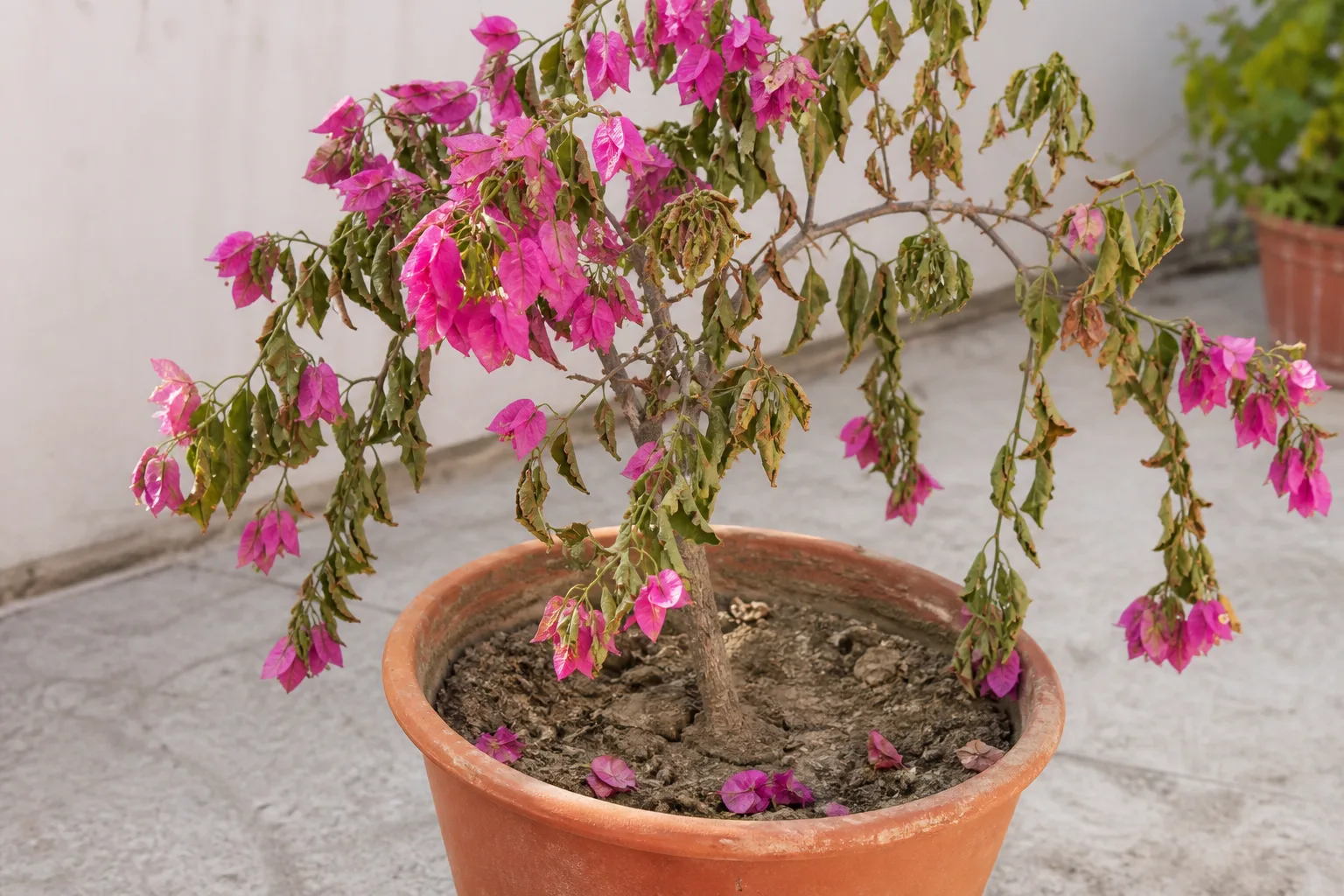
Underwatered bougainvillea shows a very light pot, limp leaves and bracts, and bone-dry soil several centimetres down. First step: water deeply until excess drains out, then wait until the top 3–5 cm dries before watering again.
Underwatering on Bougainvillea: Causes, Checks & Fixes
This guide covers underwatering on Bougainvillea. See also the general Underwatering guide, watering, and light pages for this plant.
Underwatering on Bougainvillea: Causes, Checks & Fixes
Quick answer
Bougainvillea is built for dry heat, but that does not mean it can survive with no water at all. When a pot dries out too far or too often, leaves and colourful bracts wilt, edges turn crisp, and the plant may shed foliage to conserve moisture.
First step: water deeply until excess runs from the drainage holes, then let the pot drain completely. Do not sprinkle the surface once and walk away-that rarely rewets a shrunken root ball. After the soak, resume checking the top 3–5 cm of mix and water again only when that zone feels dry.
What underwatering looks like on Bougainvillea
Bougainvillea responds to drought with visible water-conservation signals that differ slightly from generic houseplant wilt.
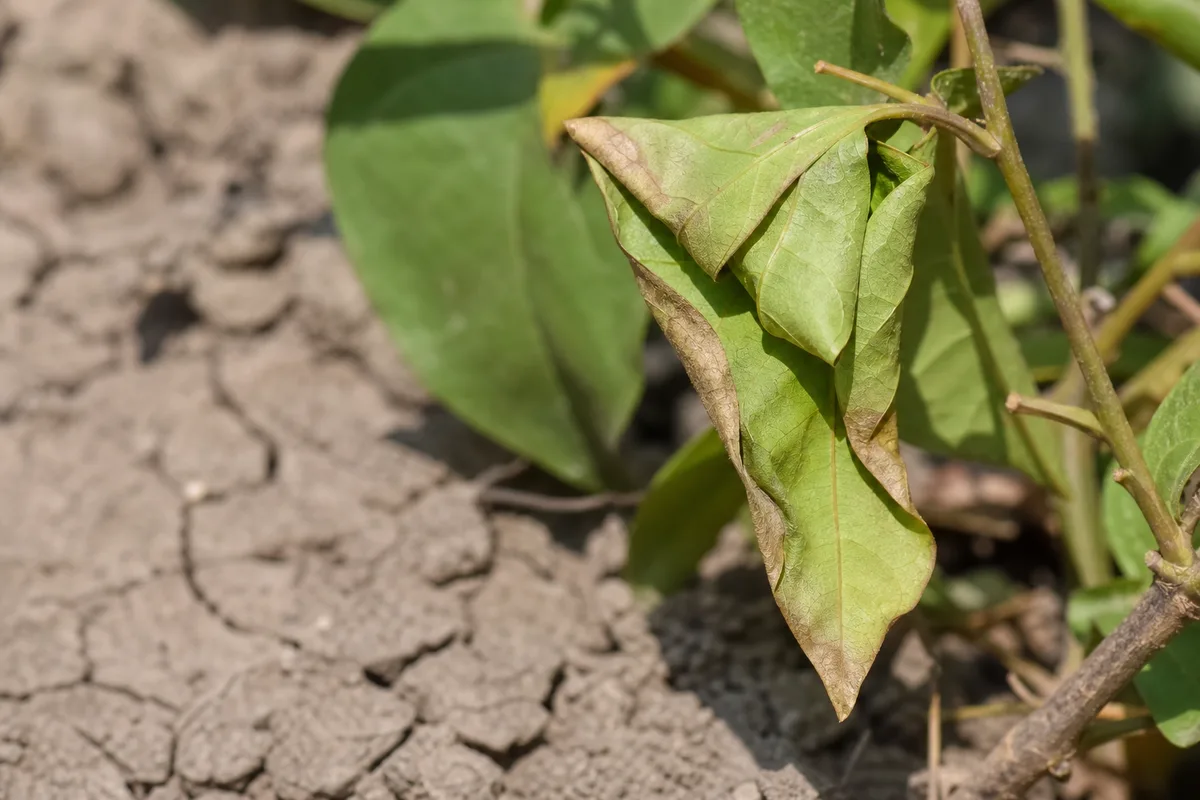
Underwatering symptoms on Bougainvillea - compare with healthy tissue on the same plant.
Early signs:
- Pot feels unusually light when lifted
- Leaves and bracts lose turgor and hang limply, especially on the newest growth
- True leaves may curl slightly before edges brown
- Soil surface looks pale and dusty; mix may pull away from the pot rim
Advanced drought:
- Bracts dry, fade, and drop before you expect normal colour fade
- Older leaves yellow, then fall-often starting at the base of stems
- Leaf margins turn brown and papery; tissue will not re-green
- New growth stalls or produces thin, undersized leaves
- In extreme cases, thin stems feel slightly flexible rather than firm
Unlike overwatering on Bougainvillea, the mix is dry several centimetres down, roots are firm and pale when you slide the plant out, and there is no sour smell from the soil. Bougainvillea’s thin leaves wilt quickly in Bougainvillea light guide, so symptoms can appear within hours on a hot balcony.
Why Bougainvillea gets underwatered
Bougainvillea comes from hot, dry regions of South America and is often described as drought tolerant. That reputation leads many growers to underwater container plants-especially after a bout of overwatering fear.
Common triggers on Bougainvillea overview:
- Misreading “drought tolerant” as “needs little water.” Bougainvillea prefers soil left a little dry between drinks, but roots still need periodic deep moisture. A plant in full sun with fast-draining mix uses water quickly.
- Small pots in maximum sun. A 25 cm container on a south-facing patio can dry through in a day or two during summer. Root-bound pots dry even faster because there is little mix to hold moisture.
- Hydrophobic, peat-heavy mix. When dry potting soil repels water, the surface looks briefly damp after a quick pour while the centre of the root ball stays bone dry.
- Seasonal rhythm confusion. Growers who cut back winter watering correctly may forget to increase checks when the plant moves outdoors and pushes new growth in spring.
- Intentional drought for blooms. Mild drought stress can encourage flowering on established plants, but pushing too far crosses into underwatering-bracts drop and leaves crisp before buds form properly.
- Wind and heat acceleration. Bougainvillea tolerates hot, dry locations fairly well, yet constant wind and reflected heat from walls or paving pull moisture from leaves faster than a sheltered indoor plant.
The paradox with bougainvillea is that both too much and too little water cause wilting. That is why soil moisture at root depth matters more than how the plant looks from across the patio.
How to confirm the cause
Work through these checks before you change anything else:
- Pot weight - Lift the container. A properly watered bougainvillea pot has noticeable heft. A chronically dry pot feels almost hollow.
- Soil probe - Push your finger or a dry chopstick into the top 5 cm. If it enters easily and comes out clean and dry, the root zone needs water. If soil clings and feels cool, hold off.
- Edge gap test - Dry mix shrinking away from the pot wall is a strong underwatering clue, especially in plastic containers.
- Root inspection - Slide the plant out carefully, watching for thorns. Healthy roots are firm and whitish. Mushy, dark roots point to overwatering or rot-not underwatering.
- Recent care history - Has the plant sat dry through a heatwave, been moved to a sunnier spot, or gone two weeks without water during active summer growth? That timeline supports drought stress.
- Bract versus leaf pattern - Underwatering often wilts bracts and new tips first. Uniform yellowing on older leaves with wet soil suggests a different problem.
If soil is dry, roots are firm, and the pot is light, underwatering is confirmed. Treat it before pruning, fertilizing, or Bougainvillea repotting guide.
First fix for Bougainvillea
Water deeply until excess runs freely from the drainage holes, then empty the saucer.
Place the pot in a sink, on grass, or on a patio where runoff will not sit under the container. Water slowly in two or three passes, pausing between each so the mix absorbs rather than channeling straight through dry gaps. Stop when water flows steadily from the bottom.
If water runs through immediately and the pot still feels light, the mix may be hydrophobic. Set the container in a tray of water for 30–45 minutes so the root ball wicks moisture from below, then let it drain fully. Repeat the deep soak once more the same day only if the pot remains abnormally light.
Do not fertilize, repot, or hard-prune a drought-stressed bougainvillea on day one. Rehydration comes first.
Step-by-step recovery
After the initial deep soak:
- Move to appropriate light - Keep the plant in full sun if it is already acclimated. Avoid moving a wilted container into deeper shade; bougainvillea needs strong light to recover and bloom. If midday sun is extreme during recovery, provide brief afternoon shade for the first two days only.
- Wait for turgor to return - Leaves and bracts often perk within several hours to one day after a proper soak. If they stay limp with wet soil, suspect root damage from prior overwatering instead.
- Establish a check rhythm - When the top 3–5 cm of mix feels dry, water deeply again. In hot summer weather this may mean every three to five days for a container in full sun; in cool winter rest it may stretch to seven to ten days or longer.
- Trim only dead tissue - Snip crisp brown leaf tips or fully desiccated bracts after the plant firms up. Leave green-but-wilted tissue alone; it may recover.
- Hold fertilizer briefly - Resume a balanced or bloom-oriented feed only after new growth looks turgid, typically one to two weeks post-recovery. Feeding drought-stressed roots can burn tender feeder roots.
- Monitor for two weeks - Track pot weight, soil dryness depth, and new tip growth. One consistent watering adjustment at a time makes it clear what helped.
Recovery timeline
Mild underwatering often shows improvement within hours to one day after a thorough soak-leaves regain stiffness and bracts lift. Moderate drought with some leaf drop typically needs one to two weeks before fresh growth at stem tips looks normal.
Severe or repeated dry cycles may delay flowering for the current season even after foliage recovers. Crisp brown margins on old leaves never revert to green; new leaves replace them over time.
Signs recovery is working:
- Pot weight stays moderate between waterings
- New leaves open fully sized, not thin or stunted
- Bract colour returns on fresh blooms
- Soil no longer pulls away from pot edges
Signs the problem is worsening or misdiagnosed:
- Wilting persists despite wet, heavy soil
- Stem bases turn soft or black
- Widespread yellowing continues after two proper soaks
- New growth remains stunted for more than three weeks
Lookalike symptoms
Overwatering and root rot on Bougainvillea - Also causes wilting and leaf drop, but soil stays wet, the pot feels heavy, and roots may be mushy and dark. Bougainvillea is especially prone to rot in dense, waterlogged mix. Always check moisture before adding more water to a wilted plant.
Heat and sun scorch - Brown, crispy patches on leaves exposed to intense reflected heat can resemble drought damage. Scorch often affects only the sun-facing side while soil moisture is adequate. Underwatering usually pairs with a very light pot and dry mix throughout.
Transplant or move shock - Leaf drop after repotting or moving indoors for winter is common even with correct watering. If soil moisture was appropriate and roots look healthy, give the plant stable light and a steady-but not excessive-water rhythm for two weeks.
Cold stress - Temperatures below about 5 °C damage bougainvillea and cause leaf drop unrelated to drought. Check recent weather if the plant lives outdoors through a cold snap.
Mistakes to avoid
- Daily light sprinkles - Surface moisture without deep root rewetting keeps bougainvillea in chronic deficit.
- Assuming wilt always means “add water” without checking - Wet-soil wilt needs drying out, not another soak.
- Immediate heavy fertilizing - Nutrients cannot fix dry roots and may cause burn.
- Repotting while collapsed - Extra root disturbance during drought stress slows recovery unless the mix is completely hydrophobic or root-bound to the point water cannot penetrate.
- Moving to deep shade to “help” a wilted plant - Bougainvillea weakens further without adequate sun.
- Letting a young plant dry like an established one - Newly potted bougainvillea needs more frequent deep watering until roots spread and the plant settles.
Bougainvillea care cross-check
Underwatering rarely happens in isolation. Confirm these basics match what a thirsty bougainvillea expects:
- Light - Full sun, at least five to six hours of direct light daily. Weak light slows recovery and reduces bloom even after watering is corrected.
- Drainage - Mix should be well draining with perlite or coarse sand; bougainvillea tolerates dry spells but not soggy roots.
- Pot size - Slightly root-bound containers can boost flowering, but an extremely tight root ball in summer heat dries out in hours. Repot in spring if water runs through without soaking the core.
- Season - Increase checks during active warm-season growth; reduce watering frequency in winter when the plant drops leaves and growth slows.
How to prevent underwatering
- Check the top 3–5 cm of mix, not the calendar. Heat, pot size, and wind change drying speed weekly.
- Learn your pot’s weight - A quick lift tells you more than glancing at the surface.
- Use pots with drainage holes and empty saucers within 30 minutes of watering.
- Refresh old peat-heavy mix that repels water instead of absorbing it.
- Water new plants more often until established, then shift to deep, less frequent soaks.
- Increase frequency in heatwaves - A bougainvillea in full sun during a string of 35 °C days may need water every two to three days in a small container even though it is “drought tolerant” in the ground.
When to worry
Most underwatered bougainvillea recover with one or two proper soaks and a steadier rhythm. Escalate care if:
- Stems feel hollow or snap dry at the base after rehydration
- The plant stays fully limp for more than 48 hours despite evenly moist (not soggy) soil
- More than half of mature stems show blackening at the crown-possible rot masked by initial drought
- You cannot rewet the root ball after two bottom-soaks and deep top-waters
If roots are mostly firm and white after a deep soak, the plant is worth continuing. Bougainvillea can regrow from hard pruning once stable moisture and full sun return.
Conclusion
Underwatering on bougainvillea is common precisely because the plant tolerates drought better than most ornamentals-but containers in full sun still need a reliable deep-Bougainvillea watering guide. Confirm dry soil and a light pot, soak thoroughly once, then adjust checks to match how fast your mix dries in your climate. Crisp old leaves may stay damaged, yet firm new growth and fresh bracts tell you the fix worked.
When to use this page vs other Bougainvillea guides
- Bougainvillea watering guide - Use for routine moisture checks before assuming underwatering is the main issue.
- Bougainvillea problems hub - Browse all 20 common issues on this species.
- Wilting on Bougainvillea - Different entry point when symptoms overlap with underwatering.
- Brown Tips on Bougainvillea - Different entry point when symptoms overlap with underwatering.
- Yellow Leaves on Bougainvillea - Different entry point when symptoms overlap with underwatering.