Yellow Leaves on Bougainvillea: Causes, Checks & Fixes
Quick answer
Yellow leaves on bougainvillea usually trace to overwatering on wet soil, iron chlorosis in alkaline or high-pH mix, cold or frost exposure, or normal lower-leaf aging on woody stems. First step: press into the top 3–5 cm of mix and lift the pot-wet and heavy means stop watering; dry and light means deep soak; yellow new growth with green veins points to iron deficiency.
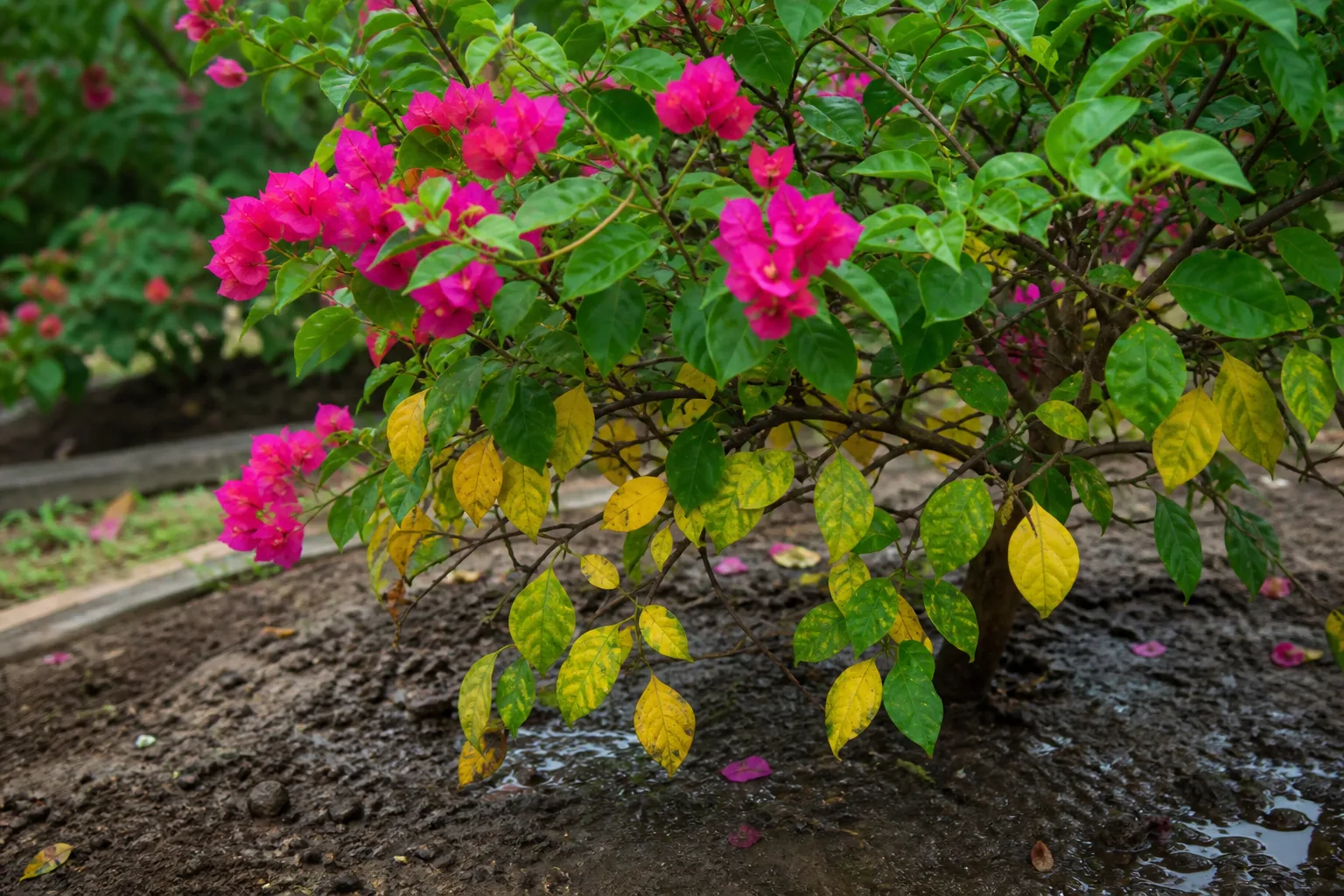
Yellow Leaves on Bougainvillea: Causes, Checks & Fixes
This guide covers yellow leaves on Bougainvillea. See also the general Yellow Leaves guide, watering, and light pages for this plant.
Yellow Leaves on Bougainvillea: Causes, Checks & Fixes
Quick answer
Yellow leaves on bougainvillea are a symptom, not a single diagnosis. This woody, thorny subtropical vine from South America evolved for full sun, fast drainage, and dry periods between rains-so the causes that yellow its foliage differ sharply from generic houseplant templates. On patio and garden bougainvillea, the leading triggers are chronic overwatering on wet soil, iron chlorosis in alkaline or high-pH mix, cold or frost damage, severe underwatering, excess nitrogen, and normal aging of older leaves on woody stems.
First step: check soil moisture at 3–5 cm depth and lift the pot before you fertilize or repot. Wet, cool mix with a heavy container → stop watering and read the overwatering branch below. Dry, lightweight pot with limp yellowing leaves → one deep soak, then resume the drench-and-dry cycle. Yellow new growth with dark green veins → suspect iron chlorosis, not thirst. Mass yellowing after a freeze or winter move → cold damage, not fertilizer deficiency.
What yellow leaves look like on Bougainvillea
Bougainvillea carries thin, broadly elliptical true leaves on thorny woody stems-not a rosette crown. Bracts (the colorful papery “blooms”) are modified leaves and can fade separately from true foliage; if only bracts lose color while stems stay firm and true leaves stay green, the issue may be seasonal bract drop rather than a health crisis.
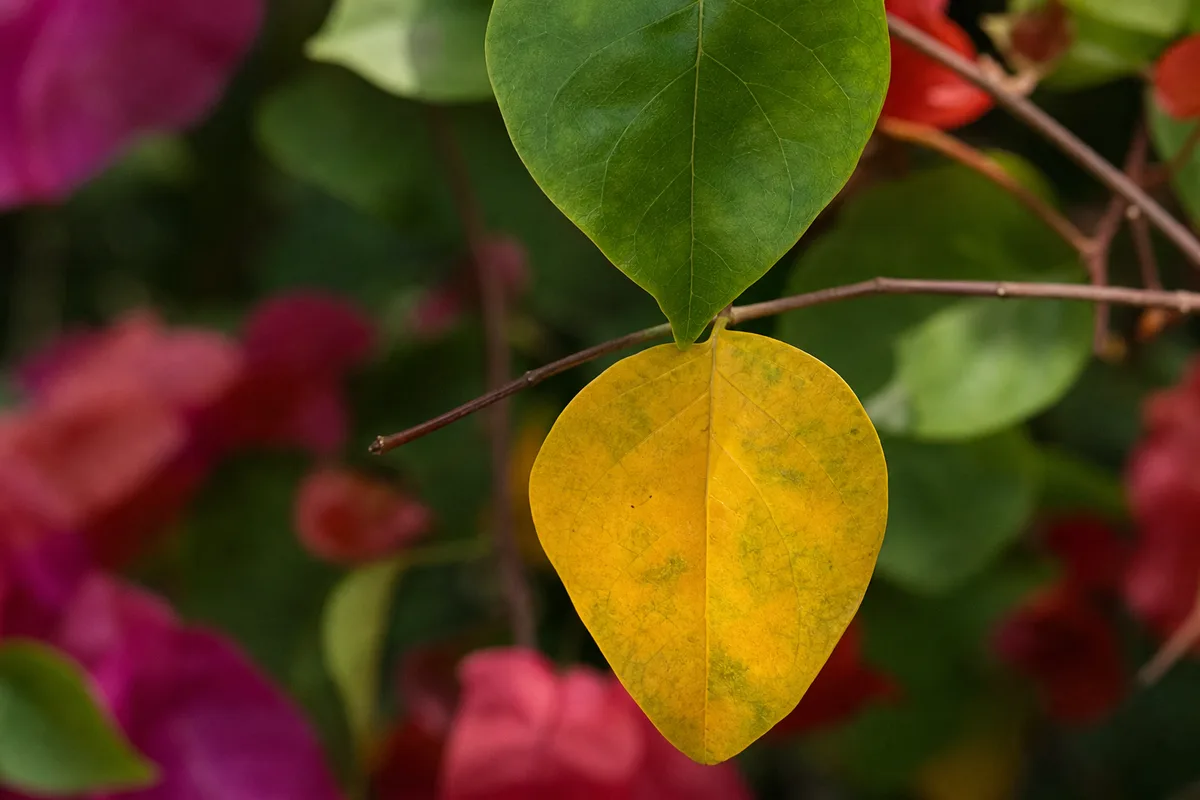
Yellow Leaves symptoms on Bougainvillea - compare with healthy tissue on the same plant.
Overwatering and root stress
- Yellow lower leaves that detach easily when touched
- Limp or wilted foliage while soil is wet and the pot feels heavy-the classic misread signal
- Mix stays dark and cool at the surface for many days after watering
- Lush green vegetative growth with few or no bracts when irrigation is too generous
- Sour or musty smell from mix; fungus gnats hovering near the soil line
- Often overlaps with overwatering on bougainvillea and root rot
Iron chlorosis (alkaline or high-pH soil)
- Interveinal yellowing on newer leaves-veins stay green, tissue between turns pale yellow or lime
- Affects new growth first while older leaves may stay darker green temporarily
- Common in containers watered with alkaline municipal tap or lime-heavy mixes
- Missouri Botanical Garden notes chlorosis can be a problem in alkaline soil on bougainvillea; Clemson HGIC recommends well-drained soil with pH just over 6.0 outdoors
Cold, frost, and winter move stress
- Sudden mass yellowing or leaf drop after night temperatures approach 5 °C (41 °F) or after hauling containers indoors without acclimation
- Tips may yellow first, then brown and crisp on exposed shoots
- RHS bougainvillea guidance notes plants overwintered above freezing with relatively dry compost will drop leaves-a seasonal pattern, not always disease
Underwatering and drought damage
- Yellowing with crisp brown edges, curling, and bone-dry mix pulling from pot sides
- Advanced drought: leaves yellow then drop in clusters; bracts wilt and fade
- More common in small containers in peak summer sun than on established in-ground vines
- See underwatering on bougainvillea when dry soil pairs with limp canopy
Normal lower-leaf aging
- One or two yellow leaves on older wood at the base or interior of the canopy over weeks or months
- Stems remain firm; new shoot tips stay green and continue extending
- No wet-soil smell, no interveinal pattern, no frost history-just slow turnover on a mature vine
Why Bougainvillea gets yellow leaves
Overwatering and wet soil (leading cause)
UF/IFAS Gardening Solutions states bougainvillea performs better when soil is left a little dry and that if your vine will not bloom, you should verify irrigation is not applying more water than the plant needs. Clemson HGIC describes bougainvillea as extremely drought-resistant and thriving in soil that does not stay constantly wet.
That biology makes overwatering the most common yellow-leaf story on containers and sprinkler-fed landscapes. Calendar watering, oversized pots, dense peat-heavy mix, saucers left full, and automatic drip on the same zone as thirstier shrubs all keep roots oxygen-starved. Damaged roots cannot absorb water efficiently-so the plant wilts on wet soil while lower leaves yellow and drop. Constant moisture also locks bougainvillea in vegetative mode: green leaves, suppressed bracts, and escalating root decline.
Iron chlorosis in alkaline or high-pH mix
Bougainvillea grows best in acid to slightly acid, well-drained soils. When pH climbs-common with hard tap water, limestone mulch, or alkaline municipal water-iron becomes less available even when present in the mix. New leaves develop the interveinal yellow pattern described above. This is not fixed by nitrogen fertilizer; excess nitrogen can worsen the vegetative flush while chlorosis persists.
Cold and frost damage
Bougainvillea is reliably perennial in USDA zones 9–11 and needs frost protection below roughly 5 °C (41 °F) . Unexpected freezes, cold snaps after warm weeks, or abrupt moves from patio to a dim heated room shock the evergreen canopy. Leaves yellow and drop as the plant sheds damaged tissue; exposed shoot tips may die back to live wood.
Underwatering and severe drought stress
Less common than overwatering on well-rooted patio plants, but real on small pots in extreme heat, travel neglect, or prolonged dry winters. When the root zone desiccates, older leaves yellow and drop as the vine conserves water. The diagnostic pair is dry lightweight pot plus crisp margins-opposite of wet-soil yellowing.
Excess nitrogen and vegetative push
UF/IFAS advises going easy on fertilizer because too much nitrogen encourages leaves instead of blooms. Heavy nitrogen during active growth can produce soft, pale new foliage that yellows under stress, while bract production stalls. Salt buildup from overfeeding in containers also scorches margins and stresses roots.
Normal lower-leaf aging and winter semi-dormancy
Woody vines shed older interior leaves as new shoots extend from stem tips and nodes. Winter slowdown-especially indoors with reduced light-can accelerate seasonal yellow drop without indicating root failure. Distinguish this from rapid mass yellowing on wet summer soil, which is almost always actionable stress.
Lookalike symptoms to rule out
| Pattern | Most likely cause | Key differentiator |
|---|---|---|
| Yellow lower leaves, wet heavy pot, wilt on moist soil | Overwatering / root stress | Soil stays damp days; may smell sour |
| Yellow new leaves, green veins, older leaves darker | Iron chlorosis | Interveinal on fresh growth; alkaline water history |
| Mass yellow after freeze or indoor move | Cold / transplant shock | Recent temperature swing; tips brown after yellow |
| Yellow with crisp edges, dry light pot | Underwatering | Mix pulls from sides; perks after one deep soak |
| Few yellow leaves on old wood only, green tips | Normal aging | Slow progression; firm stems |
| Pale stretchy growth, no bracts, shaded site | Not enough light | Long internodes; pot stays wet longer |
How to confirm the cause (6-step inspection)
Work through these steps in order before stacking treatments:
-
Finger test at 3–5 cm - Press into the top layer. Cool damp soil that stays dark for many days supports overwatering. Dusty dry soil supports drought or normal dry-down-not automatic thirst if the pot is light and only lower leaves age.
-
Pot weight - Lift the container right after you know it was last watered. A heavy pot days later with yellow lower leaves points to saturated root zone. A light pot with limp yellowing foliage points to underwatering.
-
Drainage check - Confirm open drainage holes, no standing water in saucers or cachepots, and no sprinkler head flooding the pot daily. Oversized pots stay wet in the center even when the surface looks dry.
-
Leaf pattern - Uniform yellow on lower leaves with wet soil → root stress. Interveinal yellow on new growth → chlorosis. Tip yellow progressing to brown after cold nights → frost. Scattered crisp yellow on dry soil → drought.
-
Bract and growth status - Lush leaves, no color, wet rhythm → overwatering plus possible excess nitrogen. Confirm full sun placement-minimum 5–6 hours direct sun-because shade slows water use and worsens soggy-soil yellowing.
-
Recent history - Note Bougainvillea repotting guide, fertilizer spikes, automatic irrigation changes, frost events, and winter moves indoors. Transplant shock yellows foliage for one to two weeks even with correct care afterward.
Wear gloves when inspecting lower yellow leaves-bougainvillea thorns at leaf axils can pierce skin during close handling.
First fix for Bougainvillea
Match your first action to what the 6-step check confirmed-do not fertilize, repot, and prune on the same day.
-
Wet heavy soil with yellow lower leaves → Stop watering until the top 3–5 cm dries and the pot lightens. Empty saucers. If decline continues after the mix dries, unpot and inspect roots per the root rot guide. This is the most common correct first fix on container bougainvillea.
-
Dry lightweight pot with limp yellowing leaves → One deep soak at the sink until water runs from drainage holes; drain fully before returning to sun. Resume the soak-and-dry rhythm-do not switch to daily splashes.
-
Interveinal yellow on new growth → Apply chelated iron per label directions for container ornamentals and review water pH. Avoid high-nitrogen feeds until new leaves open green. See the fertilizer guide for bloom-appropriate NPK.
-
Post-frost or cold-move yellowing → Move to a bright, frost-free spot; reduce watering while growth is slow; prune dead tips back to live wood after danger passes. Do not feed until spring growth resumes.
-
One or two yellow lower leaves on firm old wood → No emergency fix-remove spent leaves if they detach easily and continue normal dry-down watering.
Step-by-step recovery by confirmed cause
Overwatering recovery
- Stop irrigation; let top 3–5 cm dry completely.
- Move off automatic sprinklers or drip shared with thirsty plants.
- Empty saucers after any future soak; verify drainage holes.
- If yellowing spreads on drying soil, unpot-trim mushy roots, repot into same-size or smaller fast-draining mix only if rot is confirmed.
- Judge success by new green shoot tips within two to three weeks, not re-greening of old yellow leaves.
Chlorosis recovery
- Confirm interveinal pattern on new leaves.
- Apply chelated iron foliar or drench per product label.
- Acidify irrigation gradually if tap is alkaline; leach salts if overfeeding preceded symptoms.
- Expect new growth to emerge greener within one to two flushes; old chlorotic leaves may still drop.
Cold damage recovery
- Protect from further frost; keep minimum nights above 10 °C (50 °F) when overwintering per RHS guidance.
- Water sparingly while leafless or semi-dormant-cold plus wet soil worsens root stress.
- Prune dead stems to green tissue in late winter before the growth surge.
- Resume normal watering and light feeding only when new buds break in spring.
Recovery timeline
- Overwatering caught early - Yellow lower leaves drop; new green tips on woody stems often appear within two to three weeks after soil oxygen returns and watering rhythm corrects.
- Severe root rot - Recovery stretches weeks to months if firm white roots remain; partial dieback is common.
- Chlorosis - New leaves improve over one to two growth flushes after iron treatment; old yellow tissue may not re-green.
- Frost damage - Tip dieback resolves after spring pruning; full canopy fill may take a full growing season.
- Normal aging - Individual yellow leaves drop over days; no spread up the vine if culture is sound.
Fully yellow true leaves rarely turn green again-track recovery by stem-tip growth, bract formation on new wood, and firm woody stems-not by old leaf color.
What not to do
- Do not water yellow leaves on wet, heavy soil because the plant “looks thirsty”-that deepens root rot.
- Do not blast with nitrogen fertilizer to green up yellow foliage; it pushes leaves over bracts and can worsen chlorosis.
- Do not repot into a larger container while yellowing on wet soil-more mix holds more moisture around stressed roots.
- Do not keep bougainvillea on a daily sprinkler schedule shared with lawn or hydrangeas.
- Do not confuse fading bracts with true-leaf disease when stems and foliage are otherwise firm.
- Do not ignore thorns when stripping lower yellow leaves-wear gloves and use pruners.
How to prevent yellow leaves on Bougainvillea
- Run the soak-and-dry check from the watering guide: water when top 3–5 cm is dry and pot weight drops.
- Grow in full sun - at least 5–6 hours direct sun daily; shade slows transpiration and prolongs wet soil.
- Use fast-draining mix; bougainvillea does not tolerate constantly wet soil.
- Right-size containers - oversized pots stay wet in the center; root restriction in modest pots often improves bloom and drainage on patios.
- Feed lightly - half-rate balanced fertilizer in active growth; switch to bloom-friendly phosphorus when bracts are the goal per the fertilizer guide.
- Protect from frost before nights approach 5 °C (41 °F); overwinter bright and cool with reduced water.
- Treat alkaline water with chelated iron proactively if interveinal yellowing appeared last season.
When to worry
Treat as urgent when:
- Crown tissue softens at the soil line with wet mix and sour smell
- Most leaves yellow within 48–72 hours on consistently damp soil
- Wilting spreads despite dry surface-possible root collapse
- Blackened stems advance after freeze damage
Lower urgency: one or two yellow lower leaves on old wood with green extending tips, dry-down rhythm intact, and full sun-likely normal turnover.
Bougainvillea care cross-check
Yellow leaves rarely appear in isolation. Confirm these baseline factors match what this vine expects:
| Factor | Yellow-leaf risk when wrong |
|---|---|
| Water | Constant wet → lower yellow + no bracts; severe dry → crisp yellow edges |
| Light | Shade → pale growth, slow dry-down, weak recovery |
| Soil pH | Alkaline mix → interveinal chlorosis on new leaves |
| Drainage | Blocked holes or saucers full → chronic root stress |
| Temperature | Frost or cold room → mass drop after yellow |
| Feed | Excess nitrogen → lush leaves, poor color, salt stress |
Related Bougainvillea problems
- Bougainvillea overview - full-sun biology, bracts, and baseline care
- Watering guide - finger test, pot weight, and dry-down rhythm
- Overwatering - wet-soil yellowing and vegetative growth without bracts
- Root rot - mushy roots when yellow pairs with damp mix
- Underwatering - dry pot, crisp margins, wilt on light soil
- Not enough light - leggy pale growth and poor dry-down
- Fertilizer guide - nitrogen vs bloom feeds and iron needs
- Wilting - wet wilt vs dry wilt emergency triage
When to use this page vs other Bougainvillea guides
- Bougainvillea watering guide - Use for routine moisture checks before assuming yellow leaves is the main issue.
- Bougainvillea problems hub - Browse all 20 common issues on this species.
- Overwatering on Bougainvillea - Different entry point when symptoms overlap with yellow leaves.
- Underwatering on Bougainvillea - Different entry point when symptoms overlap with yellow leaves.
- Not Enough Light on Bougainvillea - Different entry point when symptoms overlap with yellow leaves.