Bougainvillea Fertilizer: When & How Much
Bougainvillea Fertilizer: When & How Much
Bougainvillea Fertilizer: When & How Much
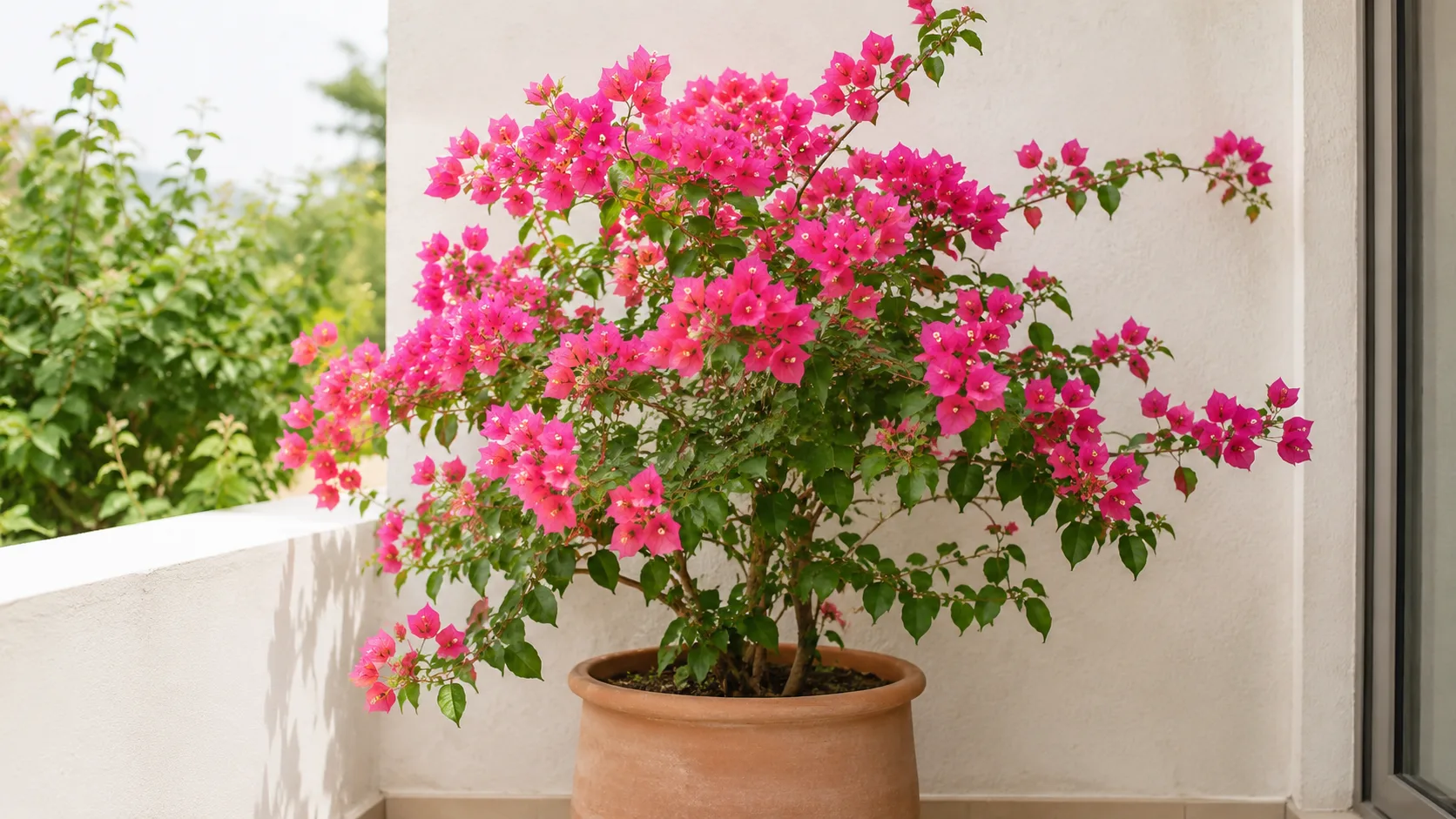
A bougainvillea covered in magenta, orange, or gold bracts is one of the most dramatic sights in a warm garden - and one of the most frustrating when your plant stays lush and green with almost no color. Fertilizer is often blamed in both directions: too little feeding and the vine looks pale and sparse; too much, especially with the wrong nitrogen balance, and you get exactly the opposite problem - vigorous leaves, shy bracts, and brittle roots sitting in salty soil. Bougainvillea fertilizer decisions are not about dumping nutrients on a schedule. They are about matching a lean-feeding, sun-loving, bloom-driven plant to the right NPK ratio, the right season, and a half-strength dose that supports color without pushing the vegetative growth that steals the show.
This guide covers the full picture: what nutrients bougainvillea actually uses, which formulas extension services and experienced growers rely on, how often to feed potted vs. in-ground plants, how much to dilute, what working vs. failing feeding looks like on the plant, and the mistakes that turn a flowering vine into a green thorny hedge.
The Short Answer: What to Feed and When
Feed bougainvillea during active growth - roughly spring through early fall - with a low-nitrogen, bloom-oriented fertilizer or a balanced formula applied at half the label strength. Good target ratios include 6-8-10, 10-20-10, or 6-12-12 bloom boosters, or 10-10-10 at reduced strength for maintenance. Clemson University’s Home & Garden Information Center recommends a general-purpose 10-10-10 at half the recommended rate once a month in early spring and midsummer for outdoor bougainvillea. Container plants in Bougainvillea light guide typically need feeding every two to four weeks during the warm season because nutrients leach with each watering. In-ground established plants often do fine with monthly to six-week applications.
Stop fertilizing in late fall and winter when growth slows and the plant rests. Never feed a dry, drought-stressed, or newly repotted bougainvillea - roots absorb poorly when damaged or dehydrated, and concentrated salts cause burn. UF/IFAS Gardening Solutions notes that too much nitrogen encourages leaves instead of blooms, which is the single most important fertilizer principle for this genus. If your plant is green, thorny, and flowerless despite good sun, check nitrogen load and watering before buying another product.
Why Bougainvillea Fertilizer Strategy Is About Blooms, Not Leaf Bulk
Bougainvillea is not a hungry foliage crop. In its native range across South America - Brazil, Peru, and neighboring regions - it evolved in bright, relatively lean conditions where periodic dry spells and restricted root zones often trigger heavy bract displays. The colorful “petals” you admire are modified leaves called bracts that surround tiny white tubular true flowers, much like poinsettia or dogwood. Bract production costs energy. So does pushing long thorny shoots and large green leaves. When nitrogen is abundant and water is generous, the plant allocates resources toward vegetative growth because that is the safer bet biologically. When light is strong, soil is slightly lean, and phosphorus and potassium are available, the balance shifts toward reproductive display - the bracts that make bougainvillea worth the thorns.
That is why fertilizer advice for philodendrons or lawn grass fails here. A high-nitrogen all-purpose feed or lawn formula will make your bougainvillea look healthy by conventional houseplant standards - deep green, fast elongating stems - while bract count stays flat. University of Hawaii Cooperative Extension research on bougainvillea culture states plainly that too much fertilizer promotes vegetative growth and inhibits blooming, and recommends formulations with NPK ratios of 1:1:1 or 2:1:2 without overapplying. The goal is not maximum biomass. The goal is controlled nutrition that supports bloom cycles without salt damage or rank growth.
Bracts, True Flowers, and What Nitrogen Changes
Understanding the anatomy prevents expensive guessing. The showy color comes from bracts - papery, long-lasting modified leaves in magenta, purple, orange, red, white, or yellow depending on cultivar. The actual flowers are small, white, and short-lived inside the bract cluster. Nitrogen drives chlorophyll production, stem elongation, and leaf expansion. Phosphorus supports root development, energy transfer, and flower - here, bract - initiation. Potassium underpins water regulation, enzyme function, and overall stress tolerance, which matters on a hot patio where the pot dries fast.
Push nitrogen too high relative to phosphorus and potassium and you change what the plant builds. Stems lengthen. Leaves enlarge. Thorny shoots multiply. Bract initiation slips down the priority list. That pattern - “beautiful green, no color” - is the signature fertilizer failure on bougainvillea, and it is often worsened by overwatering on Bougainvillea, which pairs naturally with heavy feeding in well-intentioned care routines. Fix the nitrogen balance and the Bougainvillea watering guide together; either one alone may not restore blooms.
NPK Basics: What Each Nutrient Does for Bougainvillea
Every fertilizer label shows three numbers - N-P-K - representing the percentage by weight of nitrogen, phosphorus, and potassium. For bougainvillea, the relative balance matters more than chasing the highest numbers on the shelf.
| Nutrient | Primary role for bougainvillea | Target approach | Risk if excessive |
|---|---|---|---|
| Nitrogen (N) | Leaf and stem growth, green color | Keep on the lower end relative to P and K | Lush foliage, delayed or sparse bracts |
| Phosphorus (P) | Root strength, bloom/bract initiation | Higher than N in bloom-focused feeds | Very high P alone does not fix low light or overwatering |
| Potassium (K) | Water balance, disease resistance, overall vigor | Balanced with P, moderate vs. N | Less common issue; deficiency shows as weak, stressed growth |
Hawaii CTAHR guidance for bougainvillea recommends 1:1:1 or 2:1:2 ratios - for example 8-8-8, 10-10-10, or a 2:1:2 variant - applied conservatively. Bloom-booster products labeled “Blossom Booster” or “Bloom Formula” typically run low nitrogen, elevated phosphorus and potassium, such as 6-8-10 or 10-20-10. Both approaches work when dilution and frequency stay moderate. The failure mode is almost always too much nitrogen applied too often at full strength, not a missing magic ratio.
How to Read a Fertilizer Label
Beyond the NPK triangle, check whether the product is water-soluble, liquid concentrate, granular slow-release, or organic amendment. Water-soluble and liquid feeds act fast and suit containers because you can dilute precisely and leach salts with plain water between applications. Controlled-release granules - 8-8-8 or 10-10-10 every three months in pots per Hawaii extension guidance - deliver nutrients slowly but can compound unpredictably in small pots if you also liquid-feed on top. Organic options like compost, worm castings, or bone meal release nutrients gradually and improve soil structure in ground plantings, but they are harder to dose in a 30 cm patio pot where leaching and salt buildup happen fast.
Also scan for micronutrients - iron, manganese, magnesium, zinc. Bougainvillea in alkaline or poorly drained soil sometimes shows interveinal chlorosis (yellowing between green veins) that looks like nitrogen deficiency but is actually iron lockout at high pH. A complete micronutrient blend at half the recommended rate twice yearly can help, per Hawaii extension recommendations, but only after you confirm the problem is not overwatering or root damage. The label’s “apply every 7–14 days” instruction is written for hungry annuals in ideal greenhouse conditions. On bougainvillea, treat that as a ceiling, not a target - half strength and less frequent application is the safer interpretation.
Best Fertilizer Types for Bougainvillea
The best fertilizer for bougainvillea is one that supports bract production without flooding the root zone with nitrogen salts. In practice, that means either a dedicated bloom booster or a balanced formula used lightly.
Bloom boosters (low N, higher P and K) - ratios like 6-8-10, 10-20-10, or 6-12-12 - are the direct choice when your plant has good sun, appropriate watering, and still refuses to color up. They align nutrients with the flowering/bract pathway rather than leaf expansion. Use them every two to four weeks at half strength during active growth for container plants.
Balanced maintenance feeds - 10-10-10 or 20-20-20 diluted to 50 percent of label strength - work well for established plants that already bloom reliably and need steady nutrition without a heavy phosphorus push. Clemson HGIC’s half-rate monthly spring and midsummer schedule fits this category for in-ground vines.
Organic and slow-release options suit in-ground plantings and large tubs where soil volume buffers salts. Topdress with controlled-release 8-8-8 or 10-10-10 every three months in containers, per Hawaii CTAHR, or amend planting beds with compost at the start of the season. Avoid stacking slow-release granules and weekly liquid feeds unless you are deliberately calculating total nitrogen input - doubling up is a common hidden cause of rank growth.
What to avoid: lawn fertilizers (typically very high nitrogen), fresh manure-heavy mixes in small pots, and foliar feeds as your primary nutrition on a thorny vine where spray coverage is uneven. Skip any “weed and feed” or pesticide-combo products entirely.
Bloom Boosters vs. Balanced Maintenance Feeds
Choose a bloom booster when the plant is healthy, well-lit, appropriately watered, mature enough to bloom, and still producing mostly leaves. The phosphorus-forward ratio nudges bract initiation without the nitrogen load of a general feed. Choose balanced 10-10-10 at half strength when the plant already cycles color and you are maintaining vigor between prunes, or when you are feeding a young establishing vine that needs moderate all-around growth before bloom expectations rise.
If you are unsure, start with half-strength 10-10-10 monthly and observe one full growth cycle. If stems elongate rapidly and bracts stay sparse, switch to a bloom formula and reduce nitrogen further. If leaves pale and growth stalls despite good sun and proper watering, a light balanced feed or micronutrient supplement is more appropriate than cranking phosphorus. Fertilizer is a dial, not a switch - and bougainvillea punishes both extremes.
When to Fertilize Through the Seasons
Bougainvillea follows warm-season physiology even in frost-free climates where it never goes fully dormant. Nutrient demand tracks day length, temperature, and active shoot growth, not a generic calendar on your phone.
Early spring is the restart point. When nights warm and new growth emerges - often March or April in temperate zones, earlier in USDA zones 9–11 - begin feeding at half strength. This coincides with increasing daylight and the first bloom flush in many regions.
Late spring through summer is peak demand. Container plants on hot patios may need feeding every two to three weeks if they are in full sun, actively growing, and blooming. In-ground vines with extensive root systems often need monthly to six-week feeding.
Early fall is the taper. Reduce frequency as growth slows and nights lengthen. A single light feed in early autumn may help a late flush in warm climates, but stop pushing nitrogen as the plant winds down.
Late fall through winter is the pause. Bougainvillea in cooler zones or indoors with shorter days cannot metabolize fertilizer efficiently during rest. Unused nutrients accumulate as salts and damage roots. Hold feeding until consistent new growth returns in spring.
Spring Ramp-Up, Summer Peak, and Winter Pause
A practical ramp looks like this: Week 1 of visible spring growth - one half-strength balanced or bloom feed after a thorough watering the day before. Weeks 2–20 of active season - container plants every two to four weeks; in-ground plants monthly. Six weeks before your average first cool night below 10°C (50°F) - last feed of the season. Winter - plain water only; no fertilizer even if a few leaves drop or the plant looks idle.
In frost-free subtropical climates - South Florida, coastal California, Hawaii - bougainvillea may bloom intermittently year-round and rest only briefly. You can maintain a lighter winter schedule - perhaps one half-strength feed every six to eight weeks - only if the plant shows active new shoots and is not drought-stressed. When in doubt, skip the feed. Bougainvillea tolerates lean soil far better than salty soil.
How Often to Feed Containers vs. Plants in the Ground
Container bougainvillea and in-ground bougainvillea live in different nutrient economies. A pot holds a finite volume of mix. Every watering carries dissolved salts to the drain hole or into a saucer. Roots explore a small zone. Nutrients deplete in weeks. A garden vine spreads roots through cubic meters of soil, buffers salts across a larger volume, and often survives on lean native soil - which is why neglected in-ground plants sometimes bloom profusely while pampered pots stay green.
| Growing context | Typical feeding frequency | Notes |
|---|---|---|
| Small to medium containers in full sun | Every 2–4 weeks at half strength | Leach with plain water monthly to prevent salt crust |
| Large tubs and half-barrels | Every 3–4 weeks | More soil volume = slightly longer between feeds |
| In-ground established vines | Monthly to every 6 weeks during active growth | UC Master Gardeners suggest balanced formula at half strength when the season begins and again in early summer |
| Newly planted or repotted | Wait 4–6 weeks after planting | Roots need recovery time; feeding too soon burns tender tissue |
UC Master Gardeners in San Luis Obispo County recommend fertilizing when the growing season begins and again in early summer with 5-5-5 or 10-10-10 diluted to half strength, with monthly feeding for container plants. That aligns with the container-vs.-ground split: pots need consistency; established landscape vines need less intervention. Adjust upward in frequency only if new growth is pale and the plant is in strong sun with proper dry-down watering. Adjust downward if you see salt crust, tip burn, or excessively long thorny shoots between bloom flushes.
How Much to Apply: Half-Strength Rules and Dose Logic
Half the label strength is the default safe dose for bougainvillea across university extension recommendations. Clemson HGIC specifies half the recommended rate. Hawaii CTAHR advises water-soluble formulas weekly or biweekly at half strength to maintain a low nutrient concentration rather than monthly full-strength dumps. The logic is consistent: bougainvillea is salt-sensitive, especially in containers, and frequent light feeding mimics the lean native soil more safely than rare heavy doses.
For liquid concentrates, mix at 50 percent of the label’s per-gallon rate unless your product is explicitly formulated for container ornamentals at lower baseline doses. For granular water-soluble powders, the same rule applies - if the label says one tablespoon per gallon, use half a tablespoon per gallon. For controlled-release granules in pots, apply at or below the label rate for containers and do not supplement with full-strength liquid the same week.
Volume per pot: think in terms of soil saturation, not plant height. A thorough feed should wet the entire root ball after the soil is already moist from a prior watering - never apply fertilizer to dust-dry roots. For a standard 25–30 cm nursery pot, enough diluted solution to see free drainage from the bottom is sufficient. You are not trying to flood the patio; you are replacing nutrients the plant used since the last cycle.
Monthly salt flush: once a month during the feeding season, water the pot with plain water at 2–3 times normal volume to leach accumulated salts. This single habit prevents more tip burn than any specialty product.
Step-by-Step: Fertilizing Bougainvillea Without Burning Roots
Timing and sequence matter as much as formula. Follow this order every time:
Step 1 - Check the plant state. Do not feed if the soil is bone dry, the plant is wilting from drought, leaves are dropping from recent Bougainvillea repotting guide, or a white salt crust covers the soil surface. Resolve those conditions first.
Step 2 - Water the day before. Moist soil buffers roots against sudden salt exposure. A lightly moist root zone absorbs nutrients evenly; dry soil wicks concentrate into local hot spots that burn fine roots.
Step 3 - Mix fertilizer at half strength. Measure carefully with a dedicated spoon or syringe. Consistency beats eyeballing - bougainvillea does not reward “a little extra for luck.”
Step 4 - Apply to moist soil, not foliage. Pour slowly around the root zone, avoiding thorny stems where possible. Foliar feeding is optional and secondary; root uptake is the main pathway.
Step 5 - Let drain fully. Empty saucers and cachepots so the plant does not reabsorb concentrated runoff.
Step 6 - Record the date. A simple note on your phone prevents accidental double-feeding two weekends in a row - one of the fastest routes to tip burn.
Step 7 - Observe for two weeks. New growth color, bract set, and soil surface condition tell you whether to maintain, reduce, or adjust formula for the next cycle.
If you are feeding an in-ground vine, spread evenly in the drip line - the soil under the outer canopy where feeder roots concentrate - not against the main trunk where concentration can damage bark and roots. Water in deeply after granular application.
Signs Your Fertilizer Routine Is Working
A well-fed bougainvillea does not look like a cornfield - it looks compact, colorful, and controlled. Positive signals include regular bract flushes on new wood after pruning, deep green mature leaves without exaggerated internode length between leaves on new shoots, steady but not explosive stem extension, and absence of salt crust on the soil surface. After a bloom cycle, new shoots should produce bracts again within a reasonable window once light and watering are correct - often several weeks in warm sun, depending on cultivar and climate.
Container plants should maintain root health when you slip the plant out: white or tan roots, not black mush. In-ground vines should show seasonal color waves rather than one endless green expansion. Micronutrient balance shows in uniform leaf color without widespread yellowing between veins. None of this requires perfection; bougainvillea is forgiving when feeding is light and consistent. The working routine feels almost boring - and that is the point.
Warning Signs of Over-Fertilizing and Under-Feeding
Over-fertilizing is more common and more damaging than under-feeding on bougainvillea. Watch for brown, crispy leaf tips and margins, sudden leaf drop after a feed, white or yellowish crust on the soil surface, stunted new growth despite rank older foliage, wilting when soil is still moist (salt-damaged roots cannot uptake water), and excessive thorny vegetative shoots with no bracts. Hawaii extension literature and UF/IFAS both list over-fertilization as a primary cause of bloom failure alongside overwatering and insufficient sun.
Under-feeding shows up more slowly: pale or yellow-green older leaves, small new leaves, weak thin shoots, long gaps between bloom flushes despite excellent sun and lean watering, and general lack of vigor in a container that has not been fed for a full year. Under-feeding is often confused with nitrogen excess because both can reduce blooms - but under-fed plants lack overall vigor and deep green tone, while over-fed plants look lush and aggressive with few bracts.
Rule out light and water before blaming fertilizer. A bougainvillea in shade will not bloom regardless of phosphorus. A waterlogged pot will yellow and drop leaves with or without feed. Fertilizer adjusts performance at the margin once sun and dry-down watering are correct.
Flushing Salt Buildup and Recovering a Burned Plant
If you see crust, tip burn, or post-feed wilt, act immediately:
Pause all fertilizer for four to six weeks minimum. The plant needs time to metabolize or shed salts, not another corrective dose.
Flush the container with plain water at two to three times the pot’s volume, letting it run freely through the drainage holes. Repeat once a week for two weeks if crust was heavy.
Move to stable conditions - full sun if possible, careful dry-down watering, no repotting unless roots are actively rotting from paired overwatering.
Trim only fully dead leaves and stems. Partially burned tissue will not green up; wait for new growth to judge recovery.
Resume feeding at half your previous strength only when new shoots emerge healthy and the soil surface stays clean for two weeks. One successful bloom cycle on reduced feed is your confirmation that the salt load dropped.
Badly burned roots may take one to two flushes of new growth to recover. Patience beats doubling fertilizer to “kick-start” the plant - that deepens the crisis.
Common Bougainvillea Fertilizer Mistakes
Most fertilizer failures on bougainvillea fall into a short list. Recognizing your pattern saves a season of green growth.
Feeding on a calendar without looking at the plant. Growth speed changes with heat, cloud cover, and pot size. A fixed “every Sunday” feed in a cool spell stacks salts while the plant is idle.
Using full label strength because the plant “looks hungry.” Bougainvillea responds to dilution, not concentration. Full strength is for different crops in different media.
Stacking products - slow-release granules, liquid bloom booster, and compost tea in the same month. Total nitrogen adds up invisibly.
Feeding to fix shade. No formula replaces five to six hours of direct sun daily. Fertilizer on a shaded plant produces leaves, not bracts.
Feeding before bloom-stress watering strategies. Many growers deliberately allow slight dry-down before bloom season to trigger color. A heavy feed right before or during that stress window disrupts the rhythm.
Ignoring thorns and repot timing. Repotting and feeding in the same week shocks roots. Space major interventions by at least a month.
Assuming yellow leaves always mean “feed more.” Chlorosis from alkaline pH, root rot on Bougainvillea from overwatering, and cold damage all mimic hunger. Diagnose before dosing.
The High-Nitrogen and Lawn-Fertilizer Trap
The most expensive mistake is free: using leftover lawn fertilizer or high-nitrogen all-purpose feed because it is already in the garage. Lawn products prioritize blade growth - exactly what you do not want on a bract crop. Standard 10-10-10 used at full strength monthly produces the same vegetative bias over time. The plant looks vigorous. Your neighbor asks why it never colors. Switch to half-strength bloom-oriented or balanced feed, confirm sun and dry-down watering, and prune back long water sprouts after bloom to redirect energy - bloom forms on new wood after a proper prune in many cultivars.
If you already applied high nitrogen heavily, do not apply bloom booster immediately to “balance” it. Flush, pause, let the plant process the nitrogen push, then restart lightly with low nitrogen when new growth looks normal.
How Fertilizer Connects to Light, Water, and Soil
Fertilizer is the last variable to optimize, not the first. Light drives photosynthesis; without strong sun, nutrients have nowhere productive to go except leaves and stems. UF/IFAS states bougainvillea will not flower without adequate direct sun, and that excess nitrogen worsens the foliage-over-bloom imbalance. Place feeding confidence only after the plant receives minimum five to six hours of direct sunlight daily.
Water modulates nutrient uptake and bloom timing. Overwatered bougainvillea stays vegetative and root-compromised; fertilizer amplifies the problem. The classic bloom trick - slightly drier soil before flowering season - conflicts with heavy feeding because dry, stressed roots uptake salts unevenly. Establish a dry-down rhythm first: water when the top 3–5 cm of mix is dry in containers, then layer fertilizer during active growth periods between those cycles.
Soil determines salt retention. Bougainvillea needs well-draining mix with perlite or similar aggregate; pH roughly 5.5–6.5 suits most cultivars. Heavy clay or peat-heavy mixes that stay wet cause root damage that fertilizer cannot fix. In alkaline soil, iron and micronutrients lock out - a complete micronutrient blend at half rate twice yearly may help per Hawaii extension guidance, but correcting pH and drainage comes first.
Change one variable at a time. If you move the pot to full sun, wait two weeks before increasing feed. If you repot into fresh mix, wait four to six weeks before resuming fertilizer. Stacked changes make it impossible to read the plant’s response and easy to burn roots you just disturbed.
Conclusion
Bougainvillea fertilizer success comes down to a few disciplined habits: low to moderate nitrogen, adequate phosphorus and potassium for bracts, half-strength doses, active-season feeding only, and a full stop in winter when growth rests. Container plants need more frequent light feeds; in-ground vines need less. Bloom boosters like 6-8-10 suit color-chasing; balanced 10-10-10 at half rate suits maintenance - but neither rescues a shaded, overwatered plant.
Read the plant, not the product label’s maximum dose. Bracts on new wood, clean soil surfaces, and firm green leaves without endless elongation mean your routine works. Brown tips, white crust, and thorny green expansion mean pull back, flush salts, and fix light and water before the next bottle. Bougainvillea forgives a missed month of feeding. It does not forgive a month of full-strength nitrogen in a small pot. When in doubt, feed less, sun more, and let the soil dry slightly between drinks - then watch whether color returns on the next flush.
When to use this page vs other Bougainvillea guides
- Bougainvillea overview - Start here for whole-plant context before deep-diving this topic.
- Bougainvillea problems hub - Jump to symptom-specific fix guides when this care topic does not resolve the issue.
- No Flowers on Bougainvillea - Escalate here when fertilizer adjustments are not enough.
Related Bougainvillea guides
- Bougainvillea overview
- Bougainvillea watering
- Bougainvillea light
- Bougainvillea soil
- Bougainvillea propagation
- Bougainvillea repotting
- No Flowers on Bougainvillea
- Bougainvillea problems
Related tool
Try the Fertilizer Dilution Calculator with bougainvillea pre-selected to estimate needs for your setup.