Bougainvillea Light: Best Sun & Warning Signs
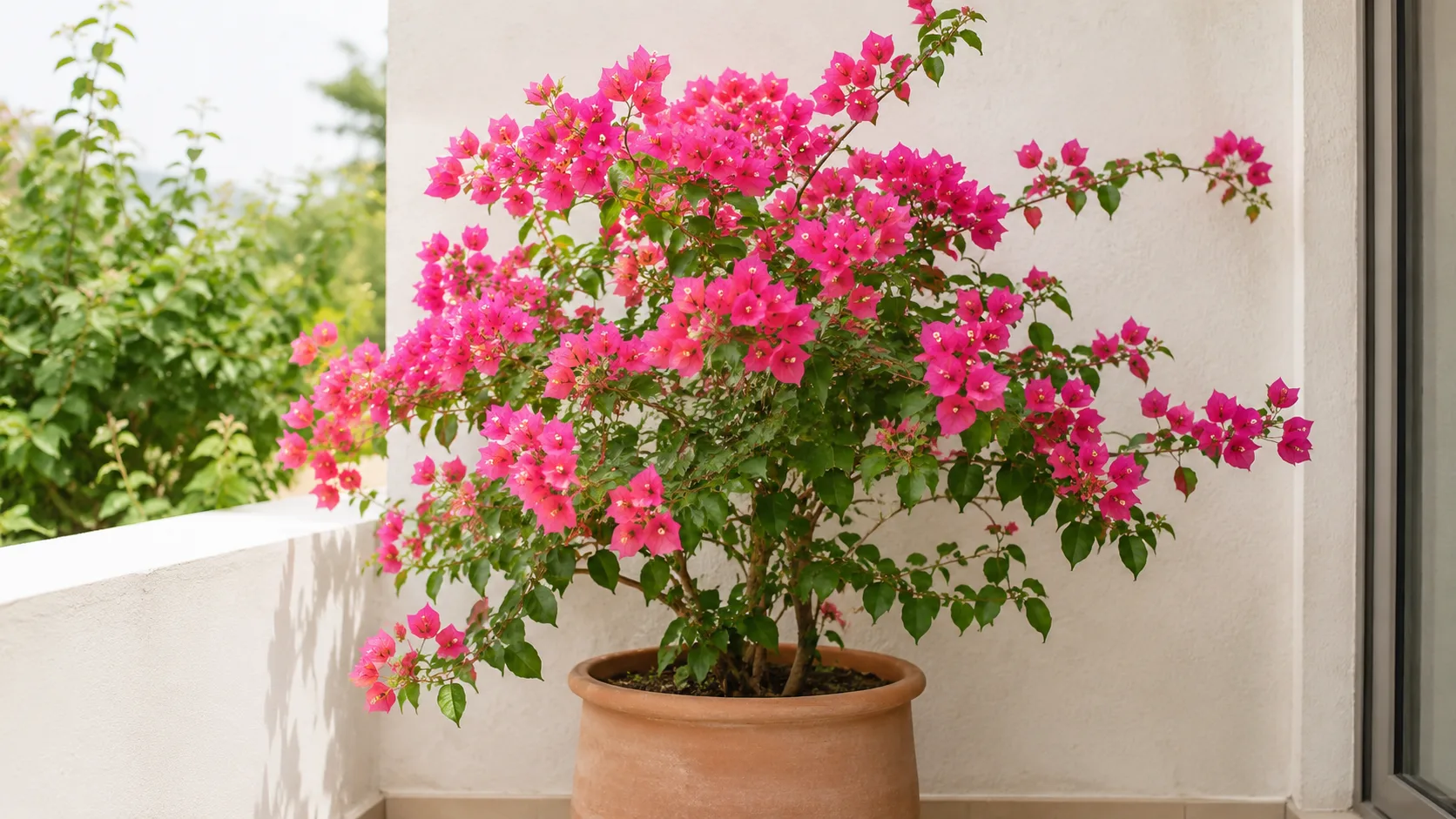
Bougainvillea Light: Best Sun & Warning Signs
Bougainvillea Light: Best Sun & Warning Signs
A bougainvillea can look like the most dramatic plant on the patio - until light is wrong. Then the same vine pushes out long thorny stems with wide gaps between leaves, drops half its foliage after you bring it indoors, or sits perfectly green for an entire season without a single papery bract. The frustrating part is that Bougainvillea tolerates mediocre light just long enough to make you think the placement is fine. It is not a pothos and not a peace lily. It is a full-sun subtropical climber from South America, and it will eventually tell you - through leggy growth, leaf drop, or silent refusal to bloom - whether it agrees with your sun exposure.
This guide covers the full light picture for bougainvillea: how many hours of direct sun it actually needs, the best outdoor and indoor placements, how much direct sun is safe, what too much and too little light look like on the plant, when to add a grow light, and how to move the pot without scorching foliage or triggering shock leaf drop.
The Short Answer: How Much Light Bougainvillea Needs
Bougainvillea grows best with full, direct sunlight - a minimum of six hours of direct sun daily at the plant itself, with eight or more hours ideal for heavy bract production. Horticultural sources including The Spruce, Epic Gardening, and Joy Us Garden consistently list full sun as the non-negotiable cultural requirement. In practical terms, that means placing the plant where unfiltered sunlight actually falls on the leaves for most of the day, not where the room looks bright to your eyes. A partially shaded patio, a spot that loses afternoon sun to a tree canopy, or a container three feet from a window is almost certainly under-lit for blooming - even if the vine survives there.
Outdoors in USDA zones 9–11, the best placement is a south- or west-facing wall, fence, or trellis where heat reflects off masonry and the plant receives direct sun from mid-morning through late afternoon. Indoors, place bougainvillea directly in front of your brightest south- or west-facing window in the Northern Hemisphere, as close to the glass as heat allows. A north-facing room without supplemental lighting is insufficient for long-term health and will not produce meaningful color. If your home cannot deliver six hours of direct sun naturally, a high-output full-spectrum LED grow light run 10 to 12 hours daily is the practical substitute. Judge success by compact new growth, firm leaves, and colorful bracts on new wood - not by whether the pot looks decorative in a dim corner.
Why Bougainvillea Demands Full Sun Unlike Most Houseplants
Light is not a background detail for bougainvillea. It is the main driver of stem spacing, thorn density, growth speed, carbohydrate storage, and - above all - whether the plant initiates the colorful bracts that surround its tiny true flowers. A bougainvillea in strong, appropriate light will use water quickly, push short internodes between leaves, and cycle through bloom flushes on new growth. A plant in dim light will drink slowly, stretch toward the nearest bright source, produce long bare stems with thorns and sparse foliage, and often look acceptable for months while quietly abandoning its flowering program entirely.
That matters because bougainvillea is frequently sold as a generic tropical patio plant that tolerates bright indirect light. Pothos, philodendron, and many ferns can look fine several feet from a window; bougainvillea cannot if you want the plant it was bred to be. Its semi-succulent leaves and woody stems evolved for open, sun-baked environments in South America, not forest understory. Get the light wrong and you get leggy etiolation, persistent green growth with no bracts, or shock leaf drop when you move the plant between indoor and outdoor conditions. Epic Gardening puts the distinction plainly: you are far more likely to lose a bougainvillea to overwatering on Bougainvillea than to overexposure to sun - and a lack of sunlight produces more green growth, not more color.
What the South American Habitat Tells Us About Placement
Native to Brazil, Peru, and Argentina, bougainvillea grows in warm, dry-to-seasonally-dry climates with intense solar radiation and excellent drainage. The plant did not evolve under dense canopy shade. It evolved where full tropical sun fuels the photosynthetic engine needed to produce lateral branches, woody structure, and the papery bracts that make the genus famous. Joy Us Garden notes that bougainvillea also loves heat - not enough sun equals not enough color, and afternoon shade is generally the wrong prescription for this genus.
That habitat maps to the brightest placement you can offer. Outdoors, aim for open-sky exposure against a warm wall. Indoors, deliver as much direct light as window glass allows - a south or west sill is the closest analogue most homes can provide.
What Full Sun and Direct Light Mean for Bougainvillea
“Full sun” outdoors means unfiltered sky light for most of the day. For bougainvillea, the practical threshold is six hours minimum, eight or more preferred - and the light must be direct, meaning sunbeams strike the leaves, not merely bounce around the room. Bright ambient light in a sunny kitchen is not the same as direct sun on the canopy. Gardenia.net’s bloom troubleshooting hierarchy starts with a simple question: is the plant receiving at least six hours of direct sun, ideally eight or more? Without that, bougainvillea stays leafy and never initiates bracts - bright light alone is not enough.
The better question indoors is not “direct or indirect?” in the abstract. It is: Does direct sunlight actually fall on the leaves for multiple hours, and is the plant close enough to the window or outdoors in open exposure to receive it? Intensity drops sharply with distance. A container on a shaded patio alcove or a pot on a sofa across the room from a south window is getting bright indirect light at best, regardless of how sunny the window looks. Bougainvillea needs the light on the plant, not near the plant.
Bracts, True Flowers, and Why Light Drives Color
The showy magenta, orange, red, purple, or white “flowers” on bougainvillea are actually bracts - modified leaves that surround the small, inconspicuous true flowers. Bract production is metabolically expensive. The plant allocates carbohydrates from photosynthesis toward reproductive structures only when light intensity signals that conditions support the effort. Insufficient light shifts energy toward vegetative growth: more stems, more thorns, more green leaves, and fewer bracts. High-nitrogen fertilizer amplifies the same problem by pushing foliage at the expense of flowering - but fertilizer cannot replace missing photons.
Bougainvillea blooms in cycles on new wood, often lasting three to six weeks per flush in warm climates. Light does not guarantee continuous color - seasonal rhythm, pruning timing, root constraint, and slight drought stress all play roles - but without adequate direct sun, no other adjustment will produce the display you bought the plant for. If your bougainvillea is green and growing but never colorful, light is the first variable to fix before you touch water, fertilizer, or pot size.
Best Outdoor Sun Exposure for Bougainvillea
The best outdoor placement for bougainvillea is the one that delivers the most direct sun for the longest period while providing heat and air movement. Unlike many ornamentals that appreciate afternoon shade in hot climates, bougainvillea handles full desert sun in Phoenix and Las Vegas without complaint - it is built for intensity that would scorch more delicate specimens. Where to Plant recommends six to eight or more hours of direct sunlight daily, with more always better for bract production.
South- or west-facing walls and fences are ideal because masonry absorbs heat during the day and releases it slowly at night, creating a microclimate that extends the warm conditions bougainvillea prefers. A reflective patio, light-colored stucco, or concrete surface beneath the pot can further increase bloom intensity. Train the vine on a trellis, pergola, or wire system so foliage spreads into the light rather than stacking in self-shade. Air movement reduces fungal leaf issues, so avoid stuffing the plant into a dead-air corner even if the sun angle looks correct.
Before planting, measure sun hours across seasons. A spot sunny at noon may fail the six-hour direct-sun test by mid-afternoon once trees leaf out or winter lowers the sun angle.
Best Window Placement for Bougainvillea Indoors
Indoor bougainvillea is always a compromise - but some compromises work better than others. The best window is the one that delivers the most direct sun for the longest period without overheating the root zone. Place the pot on the sill or within one to two feet of the glass, not on a side table six feet into the room. Rotate the pot a quarter turn every week or two so growth does not lean permanently toward the light source. Wipe dust from leaves monthly; clean foliage absorbs more usable light than dusty matte surfaces.
If the pot rim or dark container wall is hot to the touch at midday, pull the plant back slightly, shade the pot rather than the foliage, or switch to a lighter-colored container. Dark pots in extreme window heat can overheat roots even when the leaves tolerate the exposure - Gardenia.net notes that scorched leaves or stalled growth in hot weather sometimes trace to root-zone heat, not excess light on the canopy.
South, West, East, and North Windows Compared
A south-facing window in the Northern Hemisphere is the default recommendation for indoor bougainvillea. It delivers the strongest, longest direct sun path, especially in winter when outdoor plants come inside. Place the plant directly in front of south glass unless you see active scorching on acclimated leaves. In summer, a sheer curtain during the hottest two to three hours may prevent leaf burn while preserving enough daily intensity.
A west-facing window is the second-strongest option. West light is warmer and can scorch unacclimated leaves in midsummer, so new nursery purchases may need filtered west light for a few days before sitting fully in the beam. West windows are particularly useful in winter when the afternoon boost helps maintain metabolism during short days.
An east-facing window provides gentle morning direct sun followed by bright indirect light for the rest of the day. For bougainvillea, east exposure can maintain foliage and slow stretching compared to a dim room, but it is rarely enough to trigger meaningful bract production indoors. If your plant looks green on an east sill but has not colored after a full growing season of good care, insufficient total daily light is the most likely reason.
A north-facing window is inadequate for long-term bougainvillea health in most homes. The plant may survive for months with slow, dark green leaves and minimal new growth, but it will not thrive or bloom. Leggy internodes, failure to produce bracts, and persistent leaning toward any brighter source are predictable outcomes. If north is your only option, treat a grow light as required, not optional.
| Window direction | Typical light profile | Suitability for bougainvillea |
|---|---|---|
| South | Strong direct sun most of the day | Best default for foliage health and any indoor bract potential |
| West | Warm afternoon direct sun, intense in summer | Excellent with acclimation; filter peak summer heat if needed |
| East | Morning direct sun, then bright indirect | Foliage maintenance only; rarely enough for bracts indoors |
| North | Bright indirect at best, often dim | Inadequate long-term without grow lights |
Can Bougainvillea Take Direct Sun?
Yes - bougainvillea not only tolerates direct sun, it requires it for peak performance. This is one of the few ornamental vines where fear of leaf burn leads growers to give too little light rather than too much. The mistake most people make is placing bougainvillea where it receives bright ambient light without direct beams on the leaves, then wondering why the plant grows vigorously but never colors up. Gardenia.net’s sun test is blunt: if your bougainvillea gets bright light but not direct sun, expect leaves and few bracts. Direct sun is not optional for peak flowering.
Burn and stress happen when a plant moves suddenly from low nursery light or a dim interior spot into unfiltered midday sun, or when root-zone heat combines with intense exposure on unacclimated tissue. The distinction that saves most plants is acclimation and duration, not avoiding direct sun altogether. If leaves bleach only on the window-facing side during peak hours, filter or pull back slightly rather than relocating to a dim room - you likely need softer direct sun, not less total light. Never move a plant from a shaded patio or dim living room directly into unfiltered south or west sun at midsummer without a gradual transition over seven to fourteen days.
Warning Signs Your Bougainvillea Is Getting Too Much Light
Too much light - or more accurately, too much light too fast - shows up on bougainvillea as tissue damage rather than slow stretching. Because bougainvillea is built for intensity, outright sun stress is less common than on shade-adapted houseplants, but it still occurs after abrupt moves or extreme glass-augmented heat. The most common signs include bleached or silvery patches on sun-facing leaves; brown, crispy edges or tips that feel dry; curling or wilting during the brightest hours even when soil is appropriately dry; yellowing that appears suddenly after a move to a sunnier spot; and stalled new growth when root-zone heat in a dark container exceeds what the canopy can support.
Sun stress usually follows a placement change or seasonal intensification, and damage is often one-sided on window- or afternoon-facing leaves. If the pot is too hot to touch, shade the container, not the foliage.
How to Recover a Sun-Stressed Bougainvillea
Move the plant immediately to a spot with bright light but no harsh direct beam on damaged tissue - one foot back from the window, behind a sheer curtain, or to an east exposure temporarily. Do not compensate by overwatering; stressed leaves do not recover faster in wet soil, and bougainvillea roots are especially vulnerable to rot when metabolism drops. Leave partially damaged leaves in place unless they are fully brown and brittle; the plant may still photosynthesize with them while pushing new growth.
Give the plant two to four weeks in stable, slightly softer light before judging recovery. Old scorched tissue will not green up - watch for firm new shoots, then acclimate back toward full sun using the schedule below.
Warning Signs Your Bougainvillea Is Not Getting Enough Light
Insufficient light is the slower, quieter failure mode - and the most common one for bougainvillea grown indoors or on shaded patios. Bougainvillea can survive in dim conditions longer than it can survive scorch, which is why so many vines linger on covered porches looking “fine” while gradually becoming all thorns and no color. Warning signs include long, weak stems with wide spacing between leaves (leggy etiolation); abundant green vegetative growth with no bracts for an entire season; smaller, darker new leaves compared to older sun-grown growth; strong one-sided leaning toward the nearest bright source; slow or absent new growth for months during warm weather; rapid shedding of lower leaves as the plant abandons shaded tissue; and an overall sparse, stretched silhouette with more thorny wood than foliage.
Low light also slows transpiration, so soil stays wet longer and root problems follow. Fix light before you change fertilizer or watering. Recovery requires more direct sun, not just rotating the pot - move to the brightest window, relocate outdoors when warm, or add a grow light, then prune leggy stems to encourage branching on new wood.
Light, Bloom Cycles, and Why Green Leaves Without Bracts Mean Poor Placement
This is the point most light guides gloss over: a bougainvillea can look vigorously green in light that will never produce bracts. Light adequate for survival and light adequate for the colorful display are different thresholds. Bright indirect light - the standard recommendation for most houseplants - may keep bougainvillea leaves alive. It rarely triggers the bract flushes that justify the plant’s reputation.
Bougainvillea flowers on new wood in repeating cycles. Joy Us Garden describes bloom periods lasting roughly three to five weeks, followed by rest phases - so no color for a few weeks is normal even in perfect conditions. But persistent absence of bracts through an entire warm season almost always traces to insufficient direct sun, followed by overwatering and high-nitrogen fertilizer as secondary causes. Where to Plant ranks the troubleshooting order the same way: water, fertilizer, light - but notes that less than six hours of direct sun produces a green vine with no color regardless of watering discipline.
Indoor blooming also requires exceptional light, slight root constraint, and warm temperatures. Many indoor specimens never color meaningfully - that is normal. For bracts, prioritize full outdoor sun from late spring through early fall above roughly 50°F (10°C). Winter indoors is survival season; leaf drop after a bright-outdoor move is common shock, not death.
How Light Changes Watering and Fertilizing
Every light change changes how fast your bougainvillea drinks. A plant in strong south-window or full outdoor sun transpires actively and may need water every three to five days in a warm container during the growing season, always checking that the top few centimeters of mix are dry first. The same plant moved to a dim corner or brought indoors in winter might need water every seven to fourteen days - or less - because it is photosynthesizing and losing moisture more slowly. Water on soil dryness and plant metabolism, not on a fixed calendar that worked last month in a different spot.
Bright light also changes fertilizer response. High-nitrogen formulas in strong light still push foliage over bracts; in dim light, feeding cannot replace missing photons. Light, water, and fertilizer move together - adjust all three when you relocate the plant.
Grow Lights for Bougainvillea When Natural Sun Falls Short
When natural light is insufficient - north rooms, covered patios, short winter days, or apartments blocked by neighboring buildings - a high-output full-spectrum LED grow light is the most reliable fix. Bougainvillea needs more intensity than pothos or philodendron, so a decorative warm-white bulb will not substitute for a window. Aim for a fixture rated for vegetative or full-cycle growth, ideally delivering roughly 2,000 to 4,000 lumens per square foot at the canopy when manufacturer data is available.
Start with 10 to 12 hours of light daily on a timer. Place the fixture 12 to 24 inches (30 to 60 cm) above the top of the tallest growth for a standard household LED grow panel or bar light. Closer placement increases intensity but also heat; if leaves near the bulb look pale, tight, or slightly crisp at the tips, raise the fixture a few inches. Farther placement reduces intensity - if internodes stretch toward the bulb, lower it slightly or extend daily duration by an hour rather than cramming the plant against the heat source.
Choose a full-spectrum LED (4000K–6500K) and combine it with the brightest window available. Compact new growth within four to six weeks means the setup works. Grow lights maintain foliage health but rarely match outdoor bloom intensity.
Bougainvillea glabra vs. spectabilis vs. buttiana: Light Differences
Most bougainvillea sold in commerce are hybrids or selections among Bougainvillea glabra, B. spectabilis, and B. buttiana, plus dozens of named cultivars such as ‘San Diego Red’, ‘Miami Pink’, ‘Hugh Evans’, and ‘Java White’. Epic Gardening lists full sun as the requirement across major cultivars in USDA zones 9–11. Practical differences among species are smaller than marketing names suggest - all want maximum direct sun for best bract production.
B. glabra tends toward compact, repeat-blooming forms common in containers. B. spectabilis drives many large woody climbers. B. buttiana hybrids often deliver the most intense bract colors. None tolerate shade meaningfully - treat every bougainvillea as a full-sun plant and diagnose from growth behavior, not the cultivar name on a faded tag.
How to Move Bougainvillea Without Leaf Drop or Scorch
Bougainvillea reacts badly to sudden light changes - especially moves from bright outdoor patios into dim winter interiors, or from nursery shade into unfiltered south or west windows. You may see mass leaf drop within days, leaf curl, edge burn, or stalled growth even when the new spot is technically correct long term. The fix is gradual acclimation: increase or decrease brightness in small steps over seven to fourteen days so existing leaves adjust before exposure peaks or drops sharply.
When moving to brighter light, start farther from the window or behind a sheer curtain, then advance every four to five days. For outdoor summer moves, use morning sun first, then full exposure over two to three weeks. Reverse gradually when bringing plants indoors in fall, expect leaf drop, and water sparingly until new buds swell. Make one change at a time - do not repot, fertilize heavily, and relocate on the same weekend.
A Simple 7–14 Day Acclimation Schedule
For a plant moving from moderate indoor light to a bright south or west window, or from indoor conditions to a full-sun patio, use this schedule. Slow down if you see bleaching or mass leaf drop - hold the current step for extra days rather than pushing through damage.
Days 1–4: Place the plant at double your intended final distance from the window, or in morning sun only outdoors, or behind a sheer curtain. Water normally for outdoor plants; water sparingly for indoor transitions. Watch for bleaching, curl, or sudden yellowing.
Days 5–9: Move halfway to the final position, or extend outdoor exposure to include midday, or remove one curtain layer. Rotate the pot a quarter turn daily if light is strongly directional.
Days 10–14: Move to the final placement on or near the sill, or into full-day outdoor sun. Keep monitoring new growth for three more weeks before treating the move as complete.
If leaves bleach during acclimation, hold at the current step for several extra days rather than advancing. Firm new leaves and short internodes on fresh shoots are the green light to continue. Ongoing bleaching with no healthy new growth means the target spot may still be too intense at peak hours - filter midday sun while keeping morning and late-afternoon brightness. If the plant drops most leaves after an indoor move, keep it in the brightest spot available, reduce watering until new buds swell, and resist Bougainvillea repotting guide until active growth resumes.
Conclusion
Bougainvillea light needs come down to one practical target: as much direct sun as you can deliver at the plant itself - six hours minimum, eight or more for serious color - with gradual acclimation when exposure changes. A south or west wall outdoors, a south or west window on or near the sill indoors, supplemental grow lights in winter or dim rooms, and a careful outdoor-to-indoor transition each season give bougainvillea the best shot at compact growth and cyclical bract flushes. North windows, covered patios, and interior shelves are survival placements, not thriving ones.
Read the plant, not the room. Short internodes, firm leaves, and papery bracts on new wood mean the exposure works. Bleaching, one-sided crisp edges, and sudden curl after a move mean too much light too fast. Long bare stems, dark green leaves, and seasons without color mean too little. Change exposure gradually, adjust watering when light changes, and judge success by new growth and bracts on pruned wood - not by whether old damaged tissue greens up again, because it usually will not. Get the sun right and the rest of bougainvillea care becomes simpler; get it wrong and no amount of fertilizer or repotting will give you the waterfall of color you saw at the nursery.
When to use this page vs other Bougainvillea guides
- Bougainvillea overview - Start here for whole-plant context before deep-diving this topic.
- Bougainvillea problems hub - Jump to symptom-specific fix guides when this care topic does not resolve the issue.
- Not Enough Light on Bougainvillea - Escalate here when light adjustments are not enough.
- Leggy Growth on Bougainvillea - Escalate here when light adjustments are not enough.
Related Bougainvillea guides
- Bougainvillea overview
- Bougainvillea watering
- Bougainvillea soil
- Bougainvillea propagation
- Bougainvillea fertilizer
- Bougainvillea repotting
- Not Enough Light on Bougainvillea
- Leggy Growth on Bougainvillea
- Bougainvillea problems
Related tool
Try the Plant Problem Diagnosis Tool with bougainvillea pre-selected to estimate needs for your setup.