Leggy Growth on Bougainvillea: Causes, Checks & Fixes
Quick answer
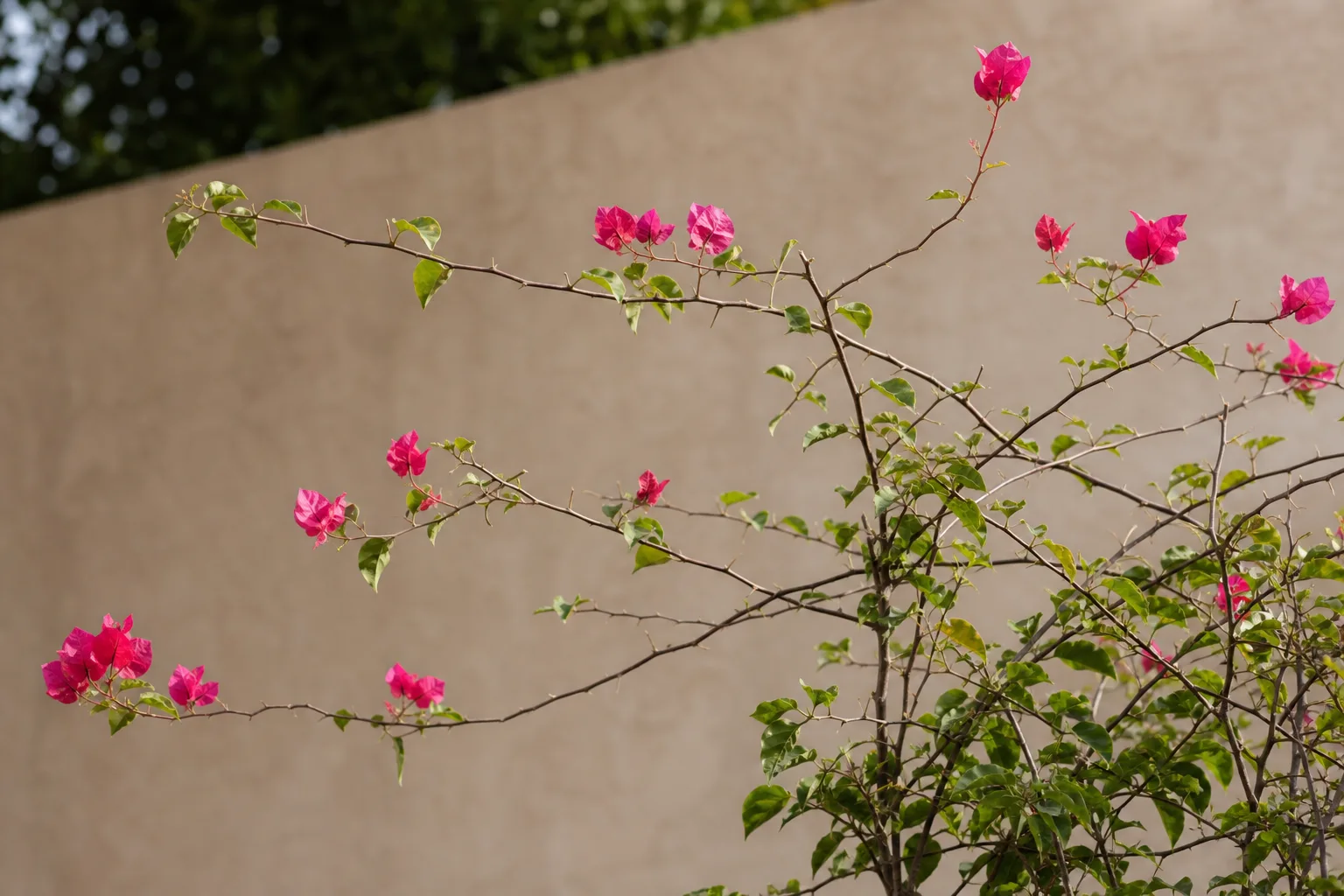
Leggy bougainvillea shows long thorny whippy shoots, wide gaps between leaves, and weeks without colorful bracts as the vine reaches toward the brightest light. First step: move the pot to full direct sun-six or more hours on the leaves-with gradual acclimation over 7–14 days.
Leggy Growth on Bougainvillea: Causes, Checks & Fixes
This guide covers leggy growth on Bougainvillea. See also the general Leggy Growth guide, watering, and light pages for this plant.
Leggy Growth on Bougainvillea: Causes, Checks & Fixes
Quick answer
Leggy growth on bougainvillea (Paper Flower, Bougainvillea spectabilis) means the vine is stretching toward light instead of building compact, bract-ready branches. You see long thorny whippy shoots, wide internode gaps, a persistent lean toward one bright direction, and often weeks without papery bracts even when the plant stays green.
First step: move the pot to the sunniest spot where leaves receive full direct sun for six or more hours during warm active growth-open south or west patio outdoors, or the brightest unobstructed window indoors with 7–14 days of gradual acclimation. Do not repot, fertilize, or hard-prune on the same day you change light.
For the broader low-light diagnosis-including bract failure, slow pot dry-down, and sun-hour counting-see not enough light on bougainvillea. When bracts alone fail without obvious ladder-like stretch, see no flowers on bougainvillea. This page focuses on what legginess looks like, how to confirm it, and when to tip-prune after sun improves.
What leggy growth looks like on Bougainvillea
Bougainvillea is a scrambling subtropical shrub built for open sun. In insufficient light it behaves like a vine searching for energy-not like a compact flowering shrub.
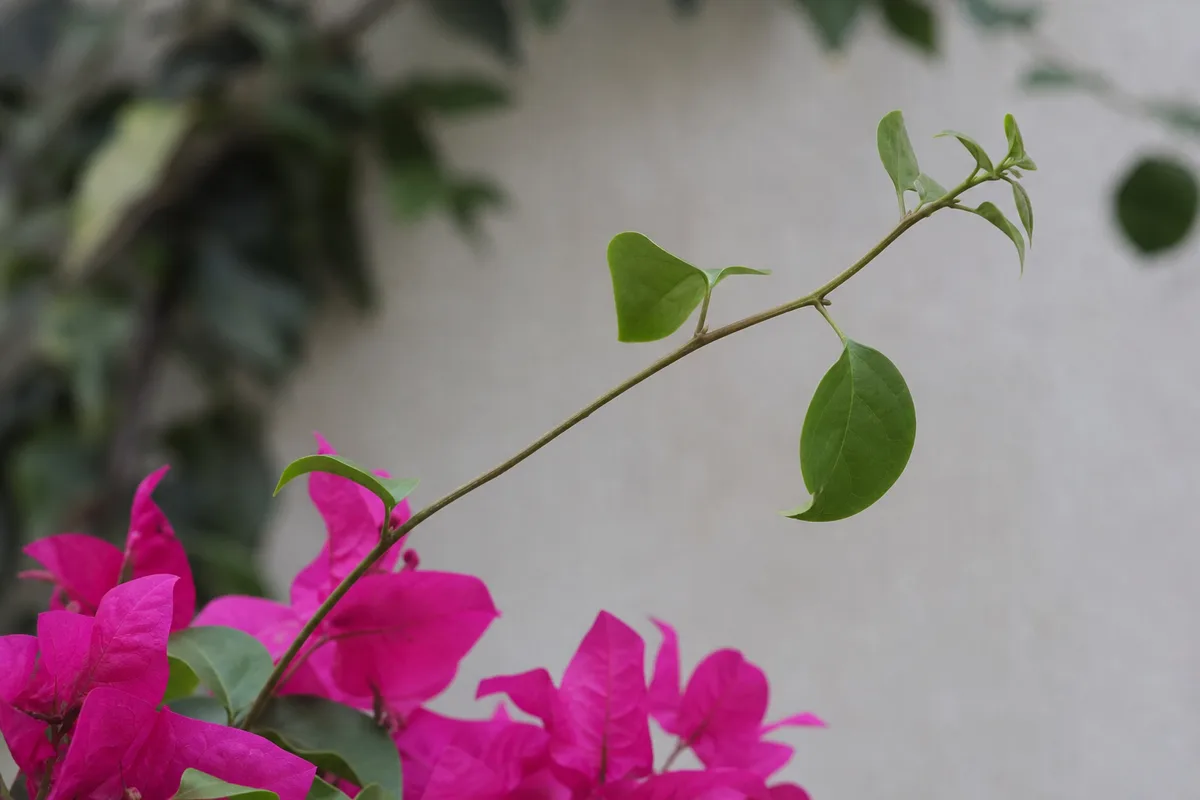
Leggy Growth symptoms on Bougainvillea - compare with healthy tissue on the same plant.
Watch for these patterns during warm months:
- Long thorny whippy shoots - new stems race upward or sideways, thin and flexible, with sharp thorns spaced along bare sections between leaf clusters.
- Wide internode gaps - compare the last two leaf pairs on a growing tip. Gaps of several inches or more on fresh wood confirm etiolation; full-sun bougainvillea typically carries much tighter spacing on active shoots.
- Lean toward one light source - the whole framework tilts toward a south window, doorway gap, or break in patio shade rather than growing evenly on all sides.
- Small, pale new leaves - fresh foliage opens undersized and lighter green compared with older sun-grown leaves lower on the same branch.
- Absent bracts for weeks - colorful modified leaves fail to appear on new tips despite regular feeding. UF/IFAS Gardening Solutions notes that without some direct sun, bougainvillea simply will not flower-green stretch without color is the classic report card. When bract failure dominates and stretch is mild, cross-check no flowers on bougainvillea.
- Bare interior, color only at wild tips - long leaders extend while the inner thorny mass stays leaf-heavy but bloom-free, a pattern pruning alone cannot fix without better light.
These signs differ from normal post-bloom whippy growth-a short burst of soft runners after bracts fade on an otherwise compact, full-sun plant. Chronic ladder-like stretch with no color cycle for weeks is etiolation, not a healthy post-flush phase.
Vigor varies by cultivar: Bougainvillea glabra and dwarf patio forms often stay somewhat bushier than large B. spectabilis vines in the same light, but every bougainvillea will stretch when direct sun on the leaves falls short.
Why Bougainvillea gets leggy growth
The primary cause is insufficient direct sun. Bougainvillea evolved in open tropical and subtropical conditions; when photons fall short, stems elongate toward the brightest available source-a process horticulturists call etiolation. Maryland Extension notes that indoor plants become spindly or leggy when they stretch to reach for more light. On bougainvillea that stretch is exaggerated because the genus expects full sun, not bright ambient room light.
Common triggers include:
- Shaded patio or middle-of-room placement - usable direct light drops sharply even a few feet from glass or under pergola slats.
- North windows or filtered glass - fine for cast-iron plants; far below what UC Master Gardeners define as full sun: at least six hours of sun per day for reliable bloom.
- Indoor overwintering without grow lights - the same south window delivers less December through February; stretch often worsens unless you supplement or accept slower growth.
- High-nitrogen feeding in shade - pushes soft foliage without bracts when light cannot support dense tissue. UF/IFAS Extension Nassau County notes that too much shade and nitrogen together resist blooming.
Low light also slows transpiration. Dim corners keep mix wet longer on a drought-tolerant plant, compounding stretch with yellow-leaf and root-stress risk-a reason legginess and not enough light overlap but leggy vines are often the first visible clue.
Lookalike symptoms to rule out
Before you cut or relocate, rule out these confusable patterns:
| Pattern | Likely cause | Key differentiator |
|---|---|---|
| Long bare shoots after bracts just faded | Normal post-flush stretch | Plant was compact and colorful weeks ago; whippy tips follow a bloom cycle on full-sun wood |
| Bleached or crispy patches on sun-facing leaves | Sunburn after sudden sun jump | Occurs days after moving from deep shade to harsh afternoon rays-not gradual ladder-like stretch |
| Slow growth, few new tips, no lean | Winter slowdown or cool room | Stretch pauses below about 15°C (59°F); pale etiolation in warm months still points to light |
| Yellow leaves + soggy soil in shade | Overwatering compounded by low light | Fix drainage and dry-down; see overwatering on bougainvillea if stems soften at the base |
| Uniform wilt + very light pot | Underwatering in hot sun | Soil is dry throughout; stems may be firm but limp-not thin and reaching |
| Green vine, no bracts, minimal stretch | Light deficit focused on bloom wood | See no flowers on bougainvillea when color failure leads the diagnosis |
If stems lean, internodes stretch, bracts fail in warm weather, and the mix dries slowly in a dim spot, leggy etiolation is the lead diagnosis.
How to confirm the cause
Work through these checks in order:
- Direct sun hours on the leaves - during active growth, count hours unfiltered sun actually hits foliage, not just the pot rim. Fewer than six hours strongly supports legginess from light deficit, matching Clemson HGIC guidance that bougainvillea requires full sun.
- Internode spacing on newest tips - measure gaps between the last two leaf pairs. Widening gaps on consecutive flushes confirm ongoing stretch.
- Bract history - if the plant colored outdoors in summer but stretched indoors or under a pergola, the site delivers less energy than the patio did.
- Pot weight after watering - in low light the mix may stay heavy for days while shoots still elongate. Firm roots with chronically damp soil in shade mean you need more light and a watering check-not bloom booster.
- Compare to post-flush whippy growth - if the vine was bract-heavy recently and only tips are soft and long, light may already be adequate; light tip-pruning per the bougainvillea pruning guide may suffice.
If three or more checks point to insufficient direct sun, proceed to the light fix before hard pruning.
First fix: move to full direct sun with gradual acclimation
Relocate the pot to the brightest location where leaves receive direct sun, and change nothing else for one week.
Outdoors after frost risk passes, that usually means full sun on an open south or west patio or against a warm wall. Missouri Botanical Garden lists full sun and notes that bougainvillea flowers bountifully in full sun with regular watering.
Indoors or on transitional days, use the unobstructed south or west window with the longest direct-sun stretch-but acclimate over 7–14 days. Start with morning sun or partial shade, add hours gradually, and watch for bleaching on leaves formed in dim light. A vine grown in shade can scorch if jumped straight into harsh afternoon rays.
Wear gloves when repositioning-bougainvillea carries sharp thorns at leaf axils. Rotate the pot a quarter turn every few days so branches do not set permanently toward one side.
Winter indoor stretch and grow lights
Short December-through-February days cut window intensity even on a south sill. Leggy stretch that worsens indoors while the plant looked compact on a summer patio is a seasonal light drop-not necessarily a watering failure.
If your best window still falls short in winter, add a full-spectrum grow light 12–18 inches above the canopy for 12–14 hours daily at roughly 2,000–4,000 lux at leaf level -enough to slow etiolation, though rarely equal to outdoor full sun. See the bougainvillea light guide for fixture placement, photoperiod, and acclimation detail. Accept slower winter growth and reduce watering to match lower transpiration.
Field note: In warm active growth, moving a shaded patio container to open south exposure typically produces visibly tighter internode spacing on the next one to two flushes of new tips within about two weeks-old bare leaders stay long until you prune them after that response.
Second fix: tip-prune whippy shoots after compact new growth
Pruning before light improves usually produces another round of weak stretch. Once new tips show tighter internodes in stronger sun-typically after 7–10 days-shorten the longest bare whippy leaders.
Bougainvillea blooms on current-season growth. The Royal Horticultural Society states it flowers on the current season’s growth and should be pruned after flowering cycles rather than sheared constantly. For leggy recovery:
- Tip-prune soft growing points by 1–6 inches (2.5–15 cm), cutting just above a healthy node with leaves remaining.
- Shorten severely bare whippy shoots by one-third to one-half back to a node with firm green tissue-only after the plant shows compact new tips, not on day one.
- Use clean bypass pruners and gloves - avoid hedge shears that strip bract-ready wood across the whole canopy.
Old elongated internodes never shrink back. Pruning redirects energy into lateral shoots that can carry bracts; it does not rewind stretch already formed. For structural cuts on severely bare specimens-including when to remove more than one-third of a leader-see the full bougainvillea pruning guide.
Recovery timeline
| Milestone | What to expect |
|---|---|
| 1–2 weeks | Lean may slow; newest leaf pairs open closer together and slightly darker in stronger direct sun. |
| 3–6 weeks | Active shoots thicken at tips; bract clusters may appear on compact new wood if temperature and dry-down align. |
| One season | Framework looks denser if light, watering, and post-flush tip work continue. Old bare leaders remain long until pruned. |
| After tip-prune post-response | Side shoots and fresh bloom wood often emerge within several weeks in strong summer sun. |
Judge success by new growth spacing and bract formation, not by old stretched stems shortening on their own.
What not to do
Do not prune heavily before light improves-you remove photosynthetic tissue while the plant still cannot build compact wood in shade. Do not move to “bright indirect” instead of direct sun-this genus needs sun on the leaves, not just a bright room.
Do not jump into full afternoon sun overnight after months indoors-sunburn lookalike bleaching follows. Do not water more because the vine looks weak-dim corners keep soil wet and invite root stress on a drought-tolerant plant.
Do not fertilize for “energy” when stretch is light-related-nitrogen pushes more soft foliage without bracts. Do not stack repot, hard prune, and relocation on the same week; bougainvillea dislikes multiple root and canopy shocks at once.
How to prevent leggy growth next time
Place containers where full sun is realistic through the warm season-sunny terrace or open balcony, not a covered porch with only filtered light. Confirm six or more hours of direct sun are available before you buy, and match watering to how fast the pot dries in that exposure.
Rotate pots weekly during indoor culture. After each bract flush fades, light tip-pruning per the pruning guide keeps whippy post-bloom runners from dominating the framework. When winter short days reduce window intensity, either supplement with grow lights or accept slower growth and cut watering accordingly.
For baseline culture, see the bougainvillea care overview, light guide, no flowers when bract absence dominates, and sibling not-enough-light page when wet-soil-in-shade patterns dominate the diagnosis.
When to worry
Leggy stretch alone rarely kills bougainvillea quickly, but weak light plus wet soil can. Escalate if leaves yellow while mix stays damp in a shady spot, stems soften at the base, or growth stalls for months despite feeding-that pattern may point to root trouble, not stretch alone.
If you cannot provide more natural direct sun and grow lights are not an option, the plant may survive as a long thorny green vine but will not color reliably-a placement limit, not a watering failure. In permanently shaded sites, choose a shade-tolerant alternative rather than fighting bougainvillea’s sun requirement.
Related bougainvillea guides
- Not enough light - broader low-light diagnosis and sun-hour checks
- No flowers - when bract failure leads without obvious stretch
- Pruning - structural rejuvenation and one-third shortening rules
- Light requirements - grow-light specs and outdoor placement
- Overwatering - wet soil compounded by shade
- Bougainvillea overview - species habit and baseline care