Overwatering on Bougainvillea: Causes, Checks & Fixes
Quick answer
Overwatered bougainvillea shows a heavy wet pot, limp leaves or bracts, and yellow lower foliage while the top 3–5 cm of mix stays damp. First step: stop watering immediately-do not add more water to wilted stems on wet soil. Let the mix dry, confirm drainage, and unpot if decline continues.
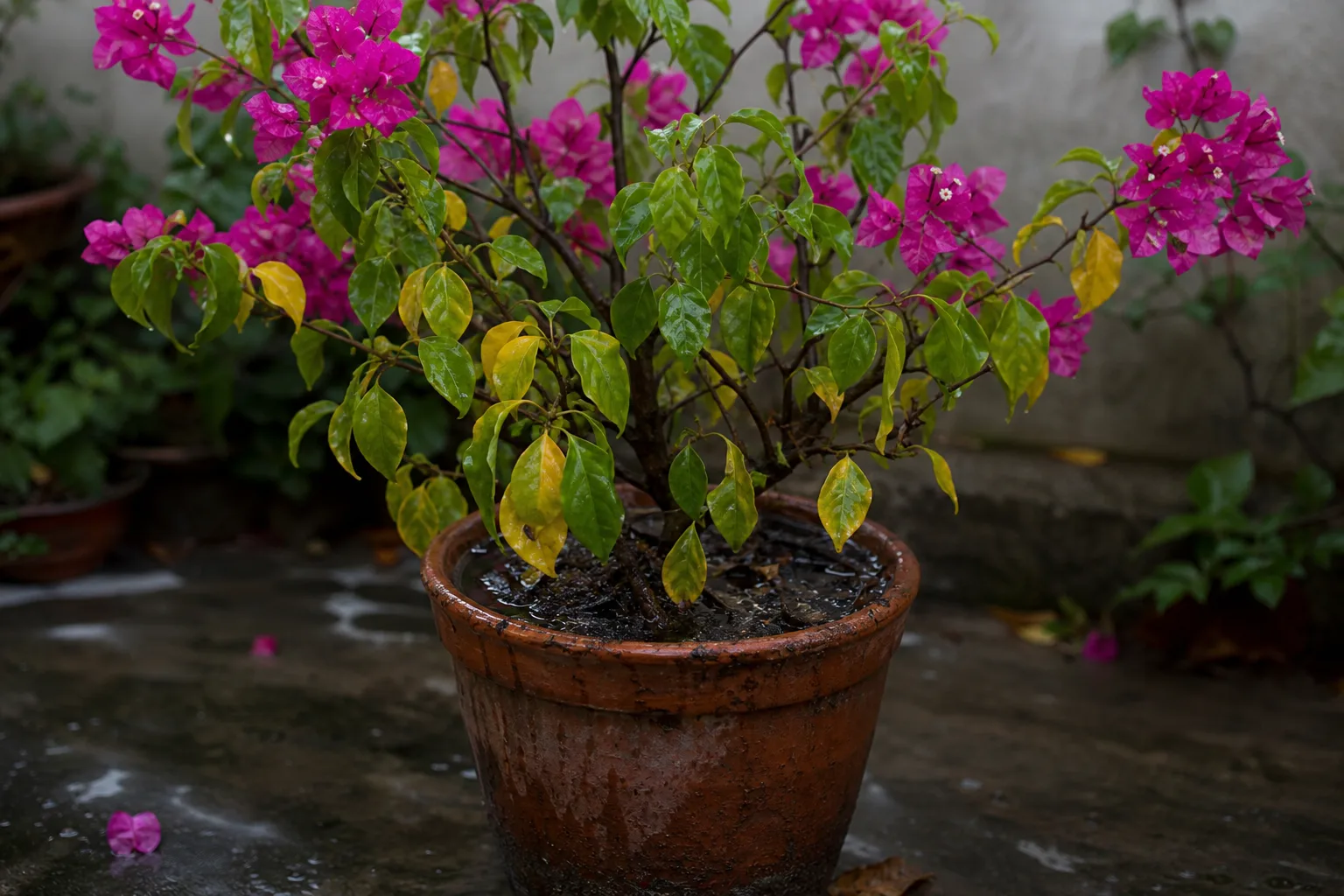
Overwatering on Bougainvillea: Causes, Checks & Fixes
This guide covers overwatering on Bougainvillea. See also the general Overwatering guide, watering, and light pages for this plant.
Overwatering on Bougainvillea: Causes, Checks & Fixes
Quick answer
Overwatering on bougainvillea is the most common cultural mistake on this drought-adapted woody vine-and the most dangerous because wilted stems look thirsty when roots are actually drowning. Bougainvillea spectabilis and related Bougainvillea spp. evolved in semi-arid regions of South America with an extremely fine root system that needs air between deep soaks, not constant moisture. Container culture on sunny patios, lawn-sprinkler zones, oversized pots, peat-heavy nursery mix, and winter watering on a summer schedule are the usual triggers.
First step: stop watering immediately. If the top 3–5 cm of mix feels cool and damp, the pot feels heavy for its size, and leaves or bracts are limp or yellowing, do not add more water to perk the plant. Let the mix dry, empty saucers, and inspect roots if decline continues after the surface dries. For the soak-and-dry baseline this vine needs, see the bougainvillea watering guide. If you already have mushy brown roots, escalate to the root rot guide.
The wet-wilt trap - why bougainvillea fools you
The signature overwatering paradox on bougainvillea is wilting on wet soil. Roots in saturated, oxygen-poor mix lose function and cannot absorb water efficiently-so stems go limp, leaves droop, and you reach for the watering can. That extra soak deepens the damage.
The decision rule is simple and worth memorizing:
| What you see | Soil and pot | What it means | First action |
|---|---|---|---|
| Wet wilt | Top 3–5 cm damp; pot heavy; may smell sour | Overwatering or advancing root rot | Stop watering; check drainage; unpot if decline continues |
| Dry wilt | Top 3–5 cm dusty; pot light; mix pulls from rim | Underwatering or intentional drought stress | One deep soak; resume soak-and-dry |
UF/IFAS Gardening Solutions notes bougainvillea performs better when soil is left a little dry and warns that irrigation systems may apply more water than the plant needs. Clemson HGIC adds that bougainvillea is extremely drought-resistant and thrives in soil that does not stay constantly wet. On this species, the wet-wilt branch is almost always kindness, not neglect.
What overwatering looks like on Bougainvillea
Bougainvillea is a thorny woody climber with thin true leaves and showy bracts on new growth. Overwatering symptoms follow stems and roots-not a central rosette crown.
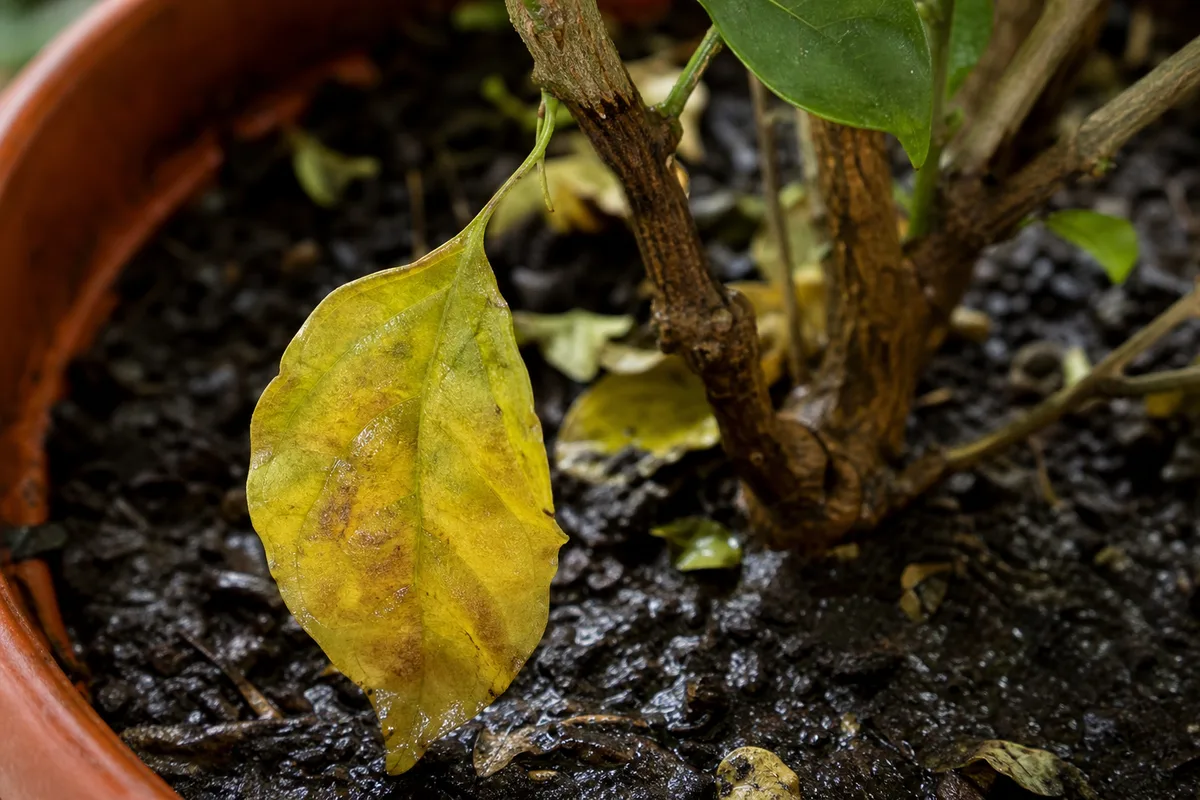
Overwatering symptoms on Bougainvillea - compare with healthy tissue on the same plant.
Early signs
- Limp leaves and bracts while mix stays wet and the pot feels heavy
- Yellow lower true leaves, often on older foliage along woody stems-see also yellow leaves on bougainvillea
- Leaf drop after a wet period, not the crisp drop of severe drought
- Soft, lush green growth with no bract colour despite full sun
- Soil surface stays dark and cool for many days after the last soak
- Fungus gnats hovering over constantly damp mix
- Musty or sour smell from drainage holes or when lifting the inner pot from a cachepot
Advanced signs
- Wilt that persists after you stop watering and the top layer begins drying-roots may already be decaying
- Bract loss or months without colour while irrigation stays generous-chronic moisture locks bougainvillea in vegetative mode; see no flowers on bougainvillea
- Mushy, dark roots on unpotting-escalate to the root rot guide
- Soft woody stem tissue at the soil line-urgent; main stem involvement often means the plant cannot be saved
What drought stress looks like instead
Slight leaf droop on an established plant in full sun with dry, lightweight mix can be normal before a bloom flush-growers often use drought stress to encourage blooming. Severe crisp wilt, brown leaf edges, and a dusty dry root zone point to underwatering, not overwatering. Always check moisture before you water wilted stems.
Why Bougainvillea gets overwatered
Bougainvillea is widely sold as a tough patio plant, but its toughness is drought tolerance, not wet-soil forgiveness. Several grower habits stack risk:
Misreading wilt as thirst. The wet-wilt trap above is the leading cause. Calendar sympathy watering after slight droop keeps mix saturated when roots need dry-down.
Automatic irrigation and lawn sprinklers. Bougainvillea on a zone that runs every two or three days for thirstier shrubs stays vegetative and flowerless. UF/IFAS Charlotte County Extension links over-watering with misdirected or overactive sprinklers to leaf drop and poor performance. Disconnecting from frequent automatic cycles is often the single highest-impact fix on patios.
Dense, peat-heavy potting mix. UF/IFAS production guidance warns that high-peat, high water-retention media contribute to root rot. Straight bagged potting soil without perlite and coarse sand holds water far longer than this vine tolerates in a confined pot.
Oversized pots after repotting. A pot much larger than the root ball holds a wet center long after the surface looks dry-the classic trap behind “I only watered when the top inch was dry.”
Winter overwatering in cool conditions. Growth slows, evaporation drops, and the same summer rhythm leaves mix cold and wet. Leaves yellow; you see wilt and add more water when damaged roots cannot absorb it.
Shade plus moisture. A bougainvillea in partial shade uses water slowly, stays wet longer, and resists flowering even if you underwater. Full sun is non-negotiable for recovery and bloom chemistry-not “brighter indirect light.”
How to confirm the cause
Work through these checks in order. Two quick tests beat guessing from leaf colour alone.
1. Finger test at 3–5 cm plus pot weight
Press into the top 3–5 cm (1–2 inches). If it feels cool and clearly damp and the pot feels heavy for its size while leaves yellow or wilt, overwatering is likely-either pre-rot or active decline. If the top is dry and the pot is light, fix thirst first per the underwatering guide.
Lift the container right after a known good soak so you learn what “wet” feels like, then compare daily. A heavy pot with limp foliage is the bougainvillea overwatering signature.
2. Drainage and saucer check
Confirm drainage holes are open and not blocked by roots or debris. Lift nursery pots out of decorative cachepots-standing water at the bottom re-saturates roots within hours. Empty saucers within 30 minutes of watering.
3. Smell and pest clues
A sour or musty odor from the mix, plus fungus gnats on constantly damp soil, support chronic overwatering even before you unpot.
4. Unpot if decline continues
If yellowing spreads or wilt persists after the top 3–5 cm has dried and the pot has lightened, slide the plant out carefully-wear gloves for thorns. Firm pale roots mean you caught overwatering early. Mushy brown roots mean root rot escalation.
5. Cross-check recent care
Ask whether automatic irrigation, daily summer rain in an undrained decorative pot, repotting into rich mix, or winter watering on a summer schedule preceded decline. Chronic overwatering without blooms often precedes rot-see the species overview for how drought culture ties to bract production.
Lookalike symptoms
| Pattern | Soil / pot | Stem and roots | Likely cause | Next step |
|---|---|---|---|---|
| Limp leaves on wet, heavy pot | Dark, cool surface; stays damp many days | Roots unknown until unpot; may smell sour | Overwatering (this page) | Stop water; fix drainage; unpot if needed |
| Limp leaves on dry, light pot | Top 3–5 cm dusty; pot lifts easily | Firm roots if checked | Underwatering | One deep soak; underwatering guide |
| Wet soil + yellow leaves, mushy roots | Heavy pot; sour smell | Brown slimy roots | Root rot | Root rot guide |
| Yellow new leaves, green veins | Moisture may be normal | Roots usually firm | Iron chlorosis (high pH) | Yellow leaves guide |
| Lush leaves, no bracts, wet rhythm | Constantly damp | Firm roots | Overwatering + possible excess nitrogen | Dry-down; check no flowers |
| Mass leaf drop after frost | Often normal moisture | Firm woody stems | Cold stress | Protect from frost; stabilize placement |
The first fix to try
Stop watering immediately-that is the single first action, not repotting, not fertilizer, not moving the plant around the patio.
Once watering stops:
- Empty saucers and remove cachepots so no standing water touches the bottom.
- Move to full sun and open air if the plant was in shade slowing evaporation-bougainvillea needs strong light to recover and bloom; do not park a wilted container in deeper shade “to help.”
- Let the top 3–5 cm of mix dry and the pot lighten before any next drink. This may take several days to two weeks depending on pot size, mix, and season.
- Confirm drainage holes are open. If water pooled in a saucer or cachepot, that alone may explain decline.
If leaves keep yellowing or wilt persists after the surface has dried properly, proceed to root inspection-not another soak.
Step-by-step recovery when roots may be damaged
When early dry-down is not enough, or unpotting reveals brown mushy roots:
- Unpot gently - Wear gloves for thorns. Tip the plant out or slide it from the nursery pot.
- Rinse away soggy old mix - Work under a gentle hose or tap so you can see root colour clearly.
- Trim all mushy, brown, or slimy roots with clean, sharp pruners. Cut back to firm white or tan tissue. Trim any soft stem tissue at the base to healthy wood. Sap may irritate skin-wash hands after handling.
- Let cut root surfaces air-dry for a few hours on newspaper in shade-not direct hot sun on exposed roots.
- Repot into fresh fast-draining mix in a pot only slightly larger than the remaining root mass, with open drainage holes. A practical recipe: 40–50% peat- or coir-based potting soil, 25–35% perlite or pumice, 15–25% coarse horticultural sand-well-drained soil with pH just over 6.0 is the outdoor baseline; details in the soil guide.
- Water once lightly to settle mix, drain fully, then wait until the top 3–5 cm dries before the next soak. Do not fertilize until you see new firm growth on woody stems.
For step-by-step repot technique after root surgery, see the repotting guide. If more than roughly one-third of the root mass is mushy or the main woody stem is soft at the soil line, recovery is unlikely-see root rot for urgency thresholds.
Recovery timeline and what to watch
Bougainvillea does not bounce back overnight. Damaged true leaves and faded bracts rarely re-green-they drop or stay yellow until new tissue replaces them.
Mild overwatering (firm roots, no trim needed): Stabilization often appears within one to two dry-down cycles in warm active growth-roughly 1–3 weeks in summer when the plant is in full sun. Look for firm new leaves on shoot tips and eventually new bracts, not recovery of every old leaf.
Moderate damage (partial root trim): Expect 3–6 weeks before confident new tip growth. Growth may be slow until the root system rebuilds. Reduce watering further in winter when evaporation is low.
Severe crown involvement: If the main woody stem is soft, collapse continues after repot, or new tips blacken, discard the plant and start fresh with corrected mix and irrigation.
Signs recovery is working:
- Pot lightens between soaks on schedule
- New shoot tips stay firm
- Yellowing stops spreading up stems
- Sour smell fades from mix
- First bract colour returns on new woody growth
Signs the problem is worsening:
- Stem softening climbs above the soil line
- Wilt returns on wet mix after you already stopped watering
- New growth blackens
- Roots re-mush within two weeks-usually means mix still too dense or watering resumed too soon
Mistakes to avoid
- Do not keep watering because leaves look wilted when soil is already wet. Wilt on saturated mix means roots are failing, not thirsty.
- Do not fertilize a waterlogged plant to “push growth”-salts stress damaged roots further.
- Do not repot into a larger pot hoping extra soil will dry faster-it usually stays wetter longer.
- Do not use dense garden soil, moisture-control potting mix straight from the bag, or a gravel layer instead of fixing mix texture throughout the pot.
- Do not move an overwatered plant to deep shade-bougainvillea weakens further without adequate sun.
- Do not yank thorny stems bare-handed during emergency root inspection-wear gloves and long sleeves.
- Do not confuse intentional drought wilt before blooming with overwatering wilt-check soil moisture and pot weight every time.
How to prevent overwatering next time
Prevention on bougainvillea is mostly irrigation and mix discipline:
- Water on dry-down, not calendar: deep soak when top 3–5 cm is dry and pot is lighter; full protocol in the watering guide.
- Use lean gritty mix that drains in seconds after a soak-never straight peat-heavy bagged soil in containers.
- Right-size pots-bougainvillea often performs better slightly root-bound than swimming in wet extra volume.
- Disconnect from lawn sprinklers and frequent automatic cycles; hand-water or drip on the plant’s dry-down schedule.
- Empty saucers within minutes of watering; never store pots in standing water.
- Reduce winter watering when growth slows and rooms are cool-wet cold mix is especially dangerous.
- Grow in full sun-minimum five to six hours of direct light daily; shade slows drying and worsens soggy-soil problems.
UF/IFAS production guidance summarizes the culture: keep bougainvillea on the dry side, especially for blooms-too much water promotes root rot and leaf drop.
When to worry
Treat as urgent when:
- The woody stem is soft or squishy at the soil line
- Most leaves collapse within days while mix stays wet
- Sour smell is strong and stems darken at the base
- Wilt persists on wet soil after you have stopped watering for a full dry-down cycle
Same-day unpot, trim, and repot-or discard if the crown is gone. For less advanced wet-soil symptoms without confirmed mushy roots, the steps on this page are usually enough before rot escalates.
Most mild overwatering cases recover with stopped irrigation, proper drainage, and a corrected dry-down rhythm. Escalate to the root rot guide if inspection reveals extensive mushy tissue. In humid climates with chronic patio rot, a local extension agent can help assess in-ground drainage and irrigation zoning.
Related bougainvillea guides
- Watering bougainvillea - soak-and-dry checks, seasonal rhythm, pot weight
- Underwatering on bougainvillea - dry-wilt branch and rehydration
- Root rot on bougainvillea - confirmed mushy roots and crown-soft thresholds
- Yellow leaves on bougainvillea - wet-soil yellowing and chlorosis
- No flowers on bougainvillea - chronic moisture and vegetative growth
- Bougainvillea overview - species context, light, and bloom culture
This guide was built from UF/IFAS Gardening Solutions bougainvillea, Clemson HGIC bougainvillea culture, UF/IFAS bougainvillea production guidance, Missouri Botanical Garden PlantFinder, and LeafyPixels bougainvillea watering and root-rot pages. Claims were checked against those sources before publication.