How to Propagate Bougainvillea: Stem Cuttings and Layering
How to Propagate Bougainvillea: Stem Cuttings and Layering
How to Propagate Bougainvillea: Stem Cuttings and Layering
Bougainvillea is not a plant you propagate on a whim between watering sessions. It is a woody, thorny tropical vine that can take weeks - sometimes months - to push roots from a severed stem, and it will punish sloppy technique with blackened cut ends and mushy stems before you ever see new growth. That slow pace frustrates beginners who expect pothos-speed results. It also rewards patience: one healthy parent plant can produce dozens of rooted offspring through stem cuttings or layering, and both methods are well within reach of a home gardener with clean tools, a warm bright spot, and realistic expectations.
This guide covers bougainvillea propagation from start to finish: how to choose between stem cuttings and layering, when to take material, how to prepare semi-hardwood stems, how to set up a rooting environment that balances humidity and drainage, how to layer a low branch while it is still attached to the parent, and how to care for new plants until they are ready for a permanent home in Bougainvillea light guide. It is written for gardeners growing bougainvillea on patios, balconies, warm-climate beds, and greenhouse benches - not for laboratory tissue culture.
What Makes Bougainvillea Different from Easy Houseplant Cuttings
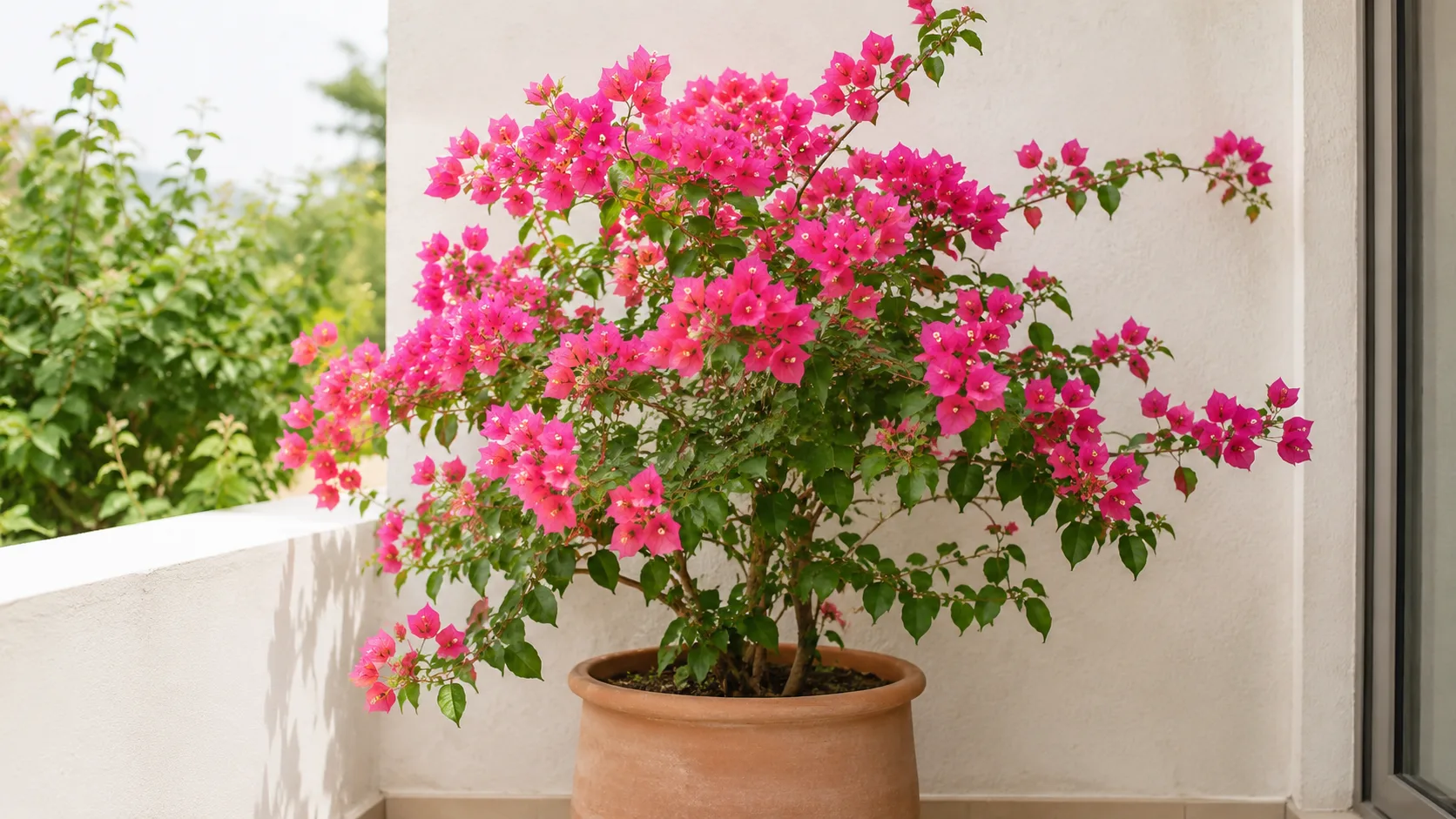
Before reaching for the pruners, it helps to understand what you are working with. Bougainvillea (Bougainvillea spectabilis, B. glabra, B. peruviana, and their many hybrids) belongs to the Nyctaginaceae family and originates from South America - Brazil, Peru, and Argentina. In cultivation it behaves as a fast-growing woody climber that can reach 3–12 meters on a trellis and stay compact at 1–2 meters in a container, provided it gets enough light and warmth. The showy pink, magenta, orange, or white “flowers” are actually bracts - modified leaves - wrapped around small, inconspicuous true flowers.
That woody structure changes propagation math. Soft-stemmed herbs like mint or coleus root from a node in days because their stems are full of water, low in lignin, and eager to form adventitious roots. Bougainvillea stems lignify quickly. A cutting taken from the wrong part of the branch - too green and floppy, or too brown and rigid - may sit for weeks without rooting, or rot before roots ever form. The plant also carries sharp thorns and a milky sap that can irritate skin, so gloves and clean blades are not optional extras; they are part of the basic workflow.
Bougainvillea also blooms on a seasonal rhythm tied to light and temperature. A stem actively pushing bracts has shifted energy toward reproduction, and cuttings taken from flowering growth root more slowly than stems in vegetative growth. The practical takeaway: propagate from firm, non-flowering shoots during active growth, keep the setup warm and humid without waterlogging the medium, and plan for a longer rooting window than you would with a typical houseplant.
Stem Cuttings vs. Layering: Picking the Right Method
Bougainvillea propagation at home usually comes down to two reliable methods: stem cuttings and layering. Both produce genetically identical clones of the parent plant. Seeds are possible but unpredictable because most garden bougainvilleas are hybrids that do not come true from seed. Grafting is used commercially for specific cultivars but is unnecessary for most home gardeners.
When stem cuttings are the better choice
Stem cuttings are the right move when you want multiple new plants from one pruning session, when the parent is in a pot or on a trellis where low branches are not available for burying, or when you need compact starts for containers. Cuttings also let you work indoors or on a propagation bench with controlled humidity. The trade-off is that severed stems have no ongoing supply of water and carbohydrates from the parent, so they depend entirely on stored energy and whatever moisture you provide until roots form.
Take cuttings when you are already pruning for shape, when you have space for several small pots under a humidity cover, and when you can check the medium every few days without disturbing the cuttings constantly. Expect a longer rooting period than layering, but gain flexibility in timing and quantity.
When layering wins
Layering keeps the stem attached to the parent plant while roots develop, which means the cutting does not fight dehydration on its own. For bougainvillea - a plant that can be slow to root from severed stems - that connection is a meaningful advantage. Ground layering works beautifully when a long, flexible branch reaches the soil or can be bent down to it. Air layering suits thicker branches higher on the plant that you cannot easily bury.
Choose layering when you want a high success rate on a single large specimen, when you are propagating a prized cultivar and cannot afford to lose cuttings, or when the parent has arching stems that naturally touch the ground. The downside is time and space: layered stems stay tethered to the parent for weeks or months, and you can only layer as many branches as you have room to bury or wrap.
The Best Season and Stem Type for Success
Timing is not about a calendar date alone; it is about whether the plant is actively growing. The strongest window for bougainvillea cuttings runs from late spring through mid-summer, when night temperatures stay consistently above 15°C (59°F), days are long, and new stems are firming up without turning fully woody. In frost-free subtropical and tropical climates, you can take cuttings during any warm month when the plant pushes clean vegetative growth. In cooler regions, late spring to early summer gives the best combination of warmth and day length.
Texas A&M AgriLife Extension Master Gardener propagation materials note that bougainvillea cuttings can technically be taken year-round, but cooler months often produce better results in hot climates because the cutting is not fighting extreme heat while trying to root. That advice reflects a broader pattern: bougainvillea roots more willingly when temperatures sit in the 20–27°C (68–80°F) range and the plant is not under drought or flowering stress.
Avoid propagating during peak flowering, immediately after a hard prune that left the parent weakened, or during winter dormancy in marginal climates. If the parent was recently shipped, repotted, or treated for pests, let it settle for two to three weeks before you take material. Stressed parents produce stressed cuttings.
For stem maturity, target semi-hardwood growth: stems that are firm enough to snap cleanly when bent, green to light brown, with visible nodes but without thick, grey, fully woody bark. Soft green tips root quickly but wilt easily. Fully hardwood sections root slowly in home setups but perform well in research trials with hormone treatment - more on that below.
Tools, Rooting Media, and Hormones Worth Using
You do not need a greenhouse bench to propagate bougainvillea, but a short list of well-chosen supplies will raise your success rate.
Start with sharp bypass pruners or a grafting knife, wiped with 70% isopropyl alcohol between cuts. Have 4–6 inch pots with drainage holes, a clear plastic bag or humidity dome, labels, and gloves for thorn protection. A bottom heat mat set to around 21–24°C (70–75°F) is optional but valuable in cool climates; warmth at the root zone speeds callus formation without baking the foliage.
For rooting media, prioritize drainage and sterility. A 50:50 blend of perlite and coco peat (or peat moss) is a reliable starting point. Coarse horticultural sand mixed with coco peat or farmyard manure also performs well; a 2016 study in the Nepal Journal of Agricultural Sciences found that sand combined with farmyard manure produced strong root length and, when paired with NAA at 3000 ppm, rooting percentages above 80%. Straight garden soil compacts, holds too much moisture, and often carries pathogens that attack fresh cuttings - avoid it for propagation.
Rooting hormone is optional but worth considering. Bougainvillea is not as eager to root as coleus or willow, and a light application of indole-3-butyric acid (IBA) can shorten the wait. Research results vary: one study on semi-hardwood bougainvillea in perlite found no significant difference in rooting percentage between untreated cuttings and IBA at 2000–4000 ppm, though 2000 ppm increased root count. Other trials report faster rooting and higher survival with IBA at 1000–2000 ppm, especially on hardwood material. For home use, dip the basal 2 cm of the cutting in a talc-based powder containing 0.1–0.3% IBA (products like Hormodin 1, Hormex #1, or Rootone) for five to ten seconds, tap off the excess, and plant immediately.
Semi-hardwood vs. hardwood cuttings explained
Semi-hardwood cuttings come from the current season’s growth that has begun to firm: the stem bends with resistance, the bark is green to light tan, and the nodes are prominent. This is the default choice for home bougainvillea propagation because it balances rooting speed with stem stability.
Hardwood cuttings are taken from older, fully lignified wood, usually in late fall or winter when the plant is semi-dormant in warm climates. They root more slowly but can produce more robust root systems. A 2022–2023 trial at the College of Agriculture, Loni, India, found that hardwood cuttings treated with IBA at 2000 ppm rooted in roughly 28 days with the highest root counts and survival rates in that study - outperforming semi-hardwood and softwood in those specific conditions. For most home gardeners without a controlled nursery environment, semi-hardwood remains the practical sweet spot; hardwood is worth trying if you have bottom heat, bright indirect light, and patience.
How to Take and Prepare Bougainvillea Cuttings
The quality of the cutting matters more than the brand of hormone or the color of the pot. Start with a healthy parent that has been watered normally - not drought-stressed, not sitting in soggy soil.
Select a 6–8 inch (15–20 cm) section of semi-hardwood stem with at least three to four nodes. Choose a branch that is not flowering and not heavily infested with pests. Make the first cut just above a leaf node on the parent plant to encourage tidy regrowth. Then cut the propagation piece just below a node at a 45-degree angle, which exposes more cambium tissue for rooting.
Strip the lower two-thirds of leaves, leaving one or two pairs at the top. Any leaf buried in the medium will rot. If the remaining leaves are large, cut each in half horizontally to reduce transpiration while keeping some photosynthetic tissue. Carefully remove thorns from the buried portion with snips. Some experienced growers lightly scrape the outer bark from the lowest 1–2 inches to expose the green cambium layer; this can speed root initiation but increases rot risk if the medium stays too wet - skip scraping if you are new to the process.
Optional but useful: let the cut end callus for one to two hours in a shaded, airy spot before planting. Plant within a few hours of cutting; do not let stems sit in the sun or dry out overnight.
Rooting Cuttings in Soil: Step-by-Step Instructions
Once the cutting is prepared, move quickly to planting. The longer a severed bougainvillea stem sits bare, the more moisture it loses.
Step 1: Moisten your rooting mix until it feels like a wrung-out sponge - damp throughout, not dripping.
Step 2: Fill a 4–6 inch pot with the mix, leaving half an inch below the rim.
Step 3: Poke a planting hole with a dibble, pencil, or finger 2–3 inches (5–7 cm) deep. Making the hole first keeps rooting hormone from rubbing off when you insert the stem.
Step 4: Dip the basal end in rooting hormone if using, then slide the cutting into the hole so at least two nodes are below the surface. Firm the mix gently around the stem.
Step 5: Water lightly to settle the medium around the cutting. The goal is contact, not saturation.
Step 6: Cover the pot with a clear plastic bag supported by stakes so the plastic does not touch the leaves, or place the pot inside a humidity dome.
Step 7: Set the pot in bright, indirect light - near an east-facing window, under shade cloth, or on a bright porch out of direct midday sun. Direct sun inside the bag will cook the cutting.
If you are rooting several cuttings, space them 2–3 inches apart in a larger tray or pot. Multiple cuttings in one container work well as long as each has enough leaf surface to photosynthesize and enough space that rot in one does not spread to neighbors.
Setting up humidity and bottom heat
Bougainvillea roots from cuttings when three environmental factors align: warmth, humidity, and oxygen at the stem base. The plastic bag or dome traps humidity and cuts water loss from the leaves. Vent the cover for ten to fifteen minutes every two to three days to prevent mold. If condensation completely fogs the bag, you may have too much moisture - crack it open longer.
A bottom heat mat under the pot speeds rooting by several weeks in cool homes. Set it to 21–24°C (70–75°F) and monitor with a soil thermometer if possible. Do not combine bottom heat with a soggy medium; warmth plus waterlogging is the fastest route to stem rot.
Watering during rooting is a light touch. Check the top inch of the mix every few days. Water only when it is approaching dry, using a small amount each time. Never let the pot sit in a saucer of water.
Ground Layering Bougainvillea at Home
Ground layering is the lowest-effort, highest-forgiveness method for many woody vines, and bougainvillea responds well when a flexible stem can reach the soil.
Step 1: In spring or early summer, choose a healthy, semi-hardwood branch that can bend to the ground without snapping.
Step 2: At a point 6–9 inches (15–23 cm) back from the tip, remove a narrow ring of bark about half an inch wide - a process called girdling - or make a shallow upward cut into the cambium. This wound is where roots will form.
Step 3: Dust the wound lightly with rooting hormone if you have it.
Step 4: Dig a shallow trench 1–2 inches (2–5 cm) deep, lay the wounded section in it, and cover with moist, well-draining soil or a mix of sand and compost.
Step 5: Anchor the buried section with a landscape pin, stone, or brick so it stays in contact with the soil. Leave the tip of the branch exposed and growing upward.
Step 6: Keep the buried zone consistently moist but not waterlogged. A light mulch over the trench helps retain even moisture.
Roots typically form over several weeks to a few months, depending on warmth and stem maturity. Test by gently tugging the buried section after eight to twelve weeks; resistance means roots have formed. Once rooted, sever the new plant from the parent with clean pruners, dig it with a generous soil ball, and pot or transplant it.
Air layering for branches above ground level
When the stem you want to propagate is too high to bend down, use air layering. Select a pencil-thick section of semi-hardwood. Make two parallel cuts around the stem about one inch apart, remove the bark ring between them, and dust the exposed cambium with rooting hormone. Wrap the wound in a handful of moist sphagnum moss, cover the moss with clear plastic, and seal both ends with tape or twist ties. Check every week and remoisten the moss if it dries.
When roots fill the moss - usually six to ten weeks in warm weather - cut below the root ball and pot the new plant. Air layering produces a larger starter plant than a typical cutting and is especially useful for mature specimens where low branches are not available.
Aftercare During Rooting and Early Growth
New bougainvillea plants need steadier, more conservative care than established vines. During the rooting phase, your job is to prevent extremes: not too wet, not too dry, not too dark, not too sunny.
Keep covered cuttings in bright indirect light until you see new leaf growth or feel resistance when you tug gently on the stem. New leaves are a better sign of success than roots you cannot see; bougainvillea often roots before it pushes top growth, but the reverse also happens - be patient with either pattern.
Once you remove the humidity cover, gradually increase light over one to two weeks. Bougainvillea wants full sun - at least five to six hours of direct sunlight daily - once established, but freshly rooted plants scorch if moved straight from a plastic bag to a south-facing wall. Move them into morning sun first, then extend exposure.
Hold off on fertilizer until the plant has been growing independently for four to six weeks and you see active new shoots. Feeding a rootless or newly rooted cutting can burn tender tissue. When you do feed, use a diluted balanced fertilizer at quarter strength.
Water rooted starts when the top 2–3 cm of mix is dry. Bougainvillea tolerates drought better than soggy soil at every stage of life. A young plant in a small pot may need water every few days in summer; in winter, stretch the interval significantly.
Moving to a Permanent Pot or Garden Bed
Transplant timing matters. Move a cutting to a larger pot when it has several new leaves and a root system that holds the soil ball together when you slip the plant from the pot. For many home setups, that point arrives three to six months after taking the cutting, though warm conditions with bottom heat can shorten the wait to eight to twelve weeks.
Choose a pot only one size larger than the current container. Bougainvillea blooms more freely when slightly root-bound, and an oversized pot full of wet, unused soil invites root rot on Bougainvillea. Use a well-draining mix with roughly 20% perlite and a pH around 5.5–6.5.
In the ground, plant only after the last frost in your zone and after the new plant has been hardened off to full sun. Bougainvillea is hardy in USDA zones 9–11 depending on cultivar and microclimate. Space garden plants to accommodate their mature spread on a trellis or fence.
Expect some transplant shock - a pause in growth for one to three weeks after moving. Keep watering restrained, provide bright sun, and resist fertilizing until new growth resumes.
How Long Until Roots Form - and How to Test Them
Honest timelines prevent premature abandonment of healthy cuttings. Bougainvillea propagation is slow compared with soft-stemmed herbs. Under warm, humid conditions with semi-hardwood material, the first roots may appear in four to eight weeks. In cooler homes without bottom heat, three to six months is a normal range before you see meaningful top growth. Texas Master Gardener guides describe waiting until four to six new leaves appear before Bougainvillea repotting guide, which can take an entire season.
To test for roots without destroying the cutting, wait at least six weeks, then give the stem a gentle upward tug. Resistance means roots are anchoring. If the stem slides out with no roots and the cut end looks healthy, replant it and wait longer. If the stem is black or mushy at the base, discard it and start fresh with new material.
Top growth - a new leaf bud opening, a slight firming of the stem, or a subtle green flush at a node - is often a more reliable success signal than digging up the cutting to check roots. Disturbing the root zone too early breaks fragile new roots and sets the plant back weeks.
Common Propagation Mistakes and How to Fix Them
Most failures trace back to a handful of repeatable errors.
Taking flowering stems. If the cutting had bracts or buds when you took it, rooting will be slow. Solution: take new cuttings from vegetative side shoots.
overwatering on Bougainvillea. Sour-smelling medium, black stem bases, and mold inside the bag mean too much moisture. Remove the cover for a day, let the mix dry slightly, and vent more often. If the stem is mushy, discard it.
underwatering on Bougainvillea and low humidity. Shriveled leaves with dry medium mean the cutting is losing water faster than it can replace. Mist lightly inside the bag, seal humidity again, and move the pot out of direct sun or drying drafts.
No drainage. Pots without holes or heavy garden soil cause waterlogging. Repot into a drained container with perlite-heavy mix if the cutting is still healthy.
Too much sun under plastic. Cooked, bleached leaves inside a sealed bag mean heat buildup. Move to bright shade immediately and vent the cover.
Constant disturbance. Digging up cuttings every week to check roots breaks progress. Trust the timeline and watch for top growth instead.
Skipping thorn and sap precautions. Painful scratches and skin irritation are avoidable. Wear gloves, wipe sap off skin promptly, and keep tools clean.
Varieties, Thorns, and Safe Handling
Most garden bougainvilleas are hybrids sold under color labels - ‘Barbara Karst’, ‘California Gold’, ‘Raspberry Ice’, and dozens more - rather than straight species. Propagation methods do not change much across cultivars: semi-hardwood cuttings and layering work on them all. What does vary is growth vigor, thorn density, and bract color, which only becomes apparent after the clone matures. If you are propagating a specific look, label every pot the day you take the cutting.
Thorns are the practical hazard that separates bougainvillea from softer houseplants. Wear thick gloves when handling stems, hold cuttings by the upper leafy section rather than the base, and keep a rag nearby to wipe sap off skin. The sap is not highly toxic, but it can irritate sensitive skin and eyes. Clean blades between plants if you suspect disease on any stem.
Water Propagation, Seeds, and Methods to Skip
Water propagation is popular on social media for houseplants, but it is a weak choice for bougainvillea. Woody stems tend to rot in standing water before they root, and the transition from water roots to soil stresses the plant. If you experiment anyway, use only the lowest nodes submerged, change the water every two to three days, and transplant to soil the moment roots reach 2–3 cm - but expect a lower success rate than soil rooting with humidity cover.
Seed propagation is viable for species bougainvilleas but unreliable for named hybrids, which is what most nurseries sell. Seeds need warmth and patience; seedlings may not match the parent’s bract color or growth habit.
Root division is not a standard bougainvillea method because the plant does not form a clumping crown you can split cleanly. Stick with cuttings and layering.
Conclusion
Bougainvillea propagation rewards gardeners who respect the plant’s woody nature and tropical pace. Stem cuttings give you quantity and flexibility: take semi-hardwood sections in warm active growth, plant them in a drained perlite-based mix, cover them for humidity, and wait with a light hand on the watering can. Layering gives you a higher-odds path on individual branches, especially when you can bury a wounded stem while it still draws energy from the parent.
Neither method is instant. Both beat buying mature specimens when you want multiples of a cultivar you already love. Match the method to your setup - cuttings for batch production on a bench, ground or air layering for a prized vine with reachable branches - and judge success by new leaves and firm resistance at the stem, not by how fast a pothos would have rooted in the same pot. Once roots are established, acclimate the young plant gradually to full sun, keep the soil on the dry side, and hold the fertilizer until growth tells you the roots are working. Get those steps right, and one bougainvillea on the patio becomes enough stock to fill a fence line over a single warm season.
When to use this page vs other Bougainvillea guides
- Bougainvillea overview - Start here for whole-plant context before deep-diving this topic.
- Bougainvillea problems hub - Jump to symptom-specific fix guides when this care topic does not resolve the issue.
Related Bougainvillea guides
- Bougainvillea overview
- Bougainvillea watering
- Bougainvillea light
- Bougainvillea soil
- Bougainvillea fertilizer
- Bougainvillea repotting
- Bougainvillea problems
Related tool
Try the Propagation Success Calculator with bougainvillea pre-selected to estimate needs for your setup.