Bougainvillea Pruning: When, How, and Mistakes to Avoid
Bougainvillea Pruning: When, How, and Mistakes to Avoid
Bougainvillea Pruning: When, How, and Mistakes to Avoid
Quick Answer
First action: put on leather gloves, then remove dead, damaged, or diseased stems back to live wood or the main trunk - before any shaping or bloom-focused cuts.
Bougainvillea blooms on current-season growth, so timing matters as much as technique. Do major structural work in late winter through early spring, just before the main growth push. After each bract flush fades, shorten spent shoots by about one-third to one-half or tip-prune soft new ends to prompt the next color cycle. Cut just above a healthy node, leave a short stub of 5–10 mm, and avoid hedge shears if you want bracts rather than a green thorn wall.
What Pruning Does for Bougainvillea
Left alone, a vigorous bougainvillea sends long whippy shoots toward the light. Color concentrates at the tips while the interior turns into a thorny green mass with little bloom. Pruning redirects that energy into manageable structure and fresh lateral shoots - the wood that actually carries bracts.
The job splits into two rhythms. Structural pruning in late winter sets height, opens the center, and removes old non-blooming wood before spring growth. Post-flush maintenance through the warm season removes spent flowering stems and lightly shapes new growth so the plant branches instead of racing upward. Skip the second rhythm and you get an impressive canopy from a distance and almost no color where you can see it up close.
Pruning cannot fix chronic shade, soggy roots, or heavy nitrogen feeding - those conditions produce leaves, not bracts. Treat pruning as shape and bloom-cycle management on a plant that already gets Bougainvillea light guide and dries slightly between waterings.
Bracts, True Flowers, and Current-Season Wood
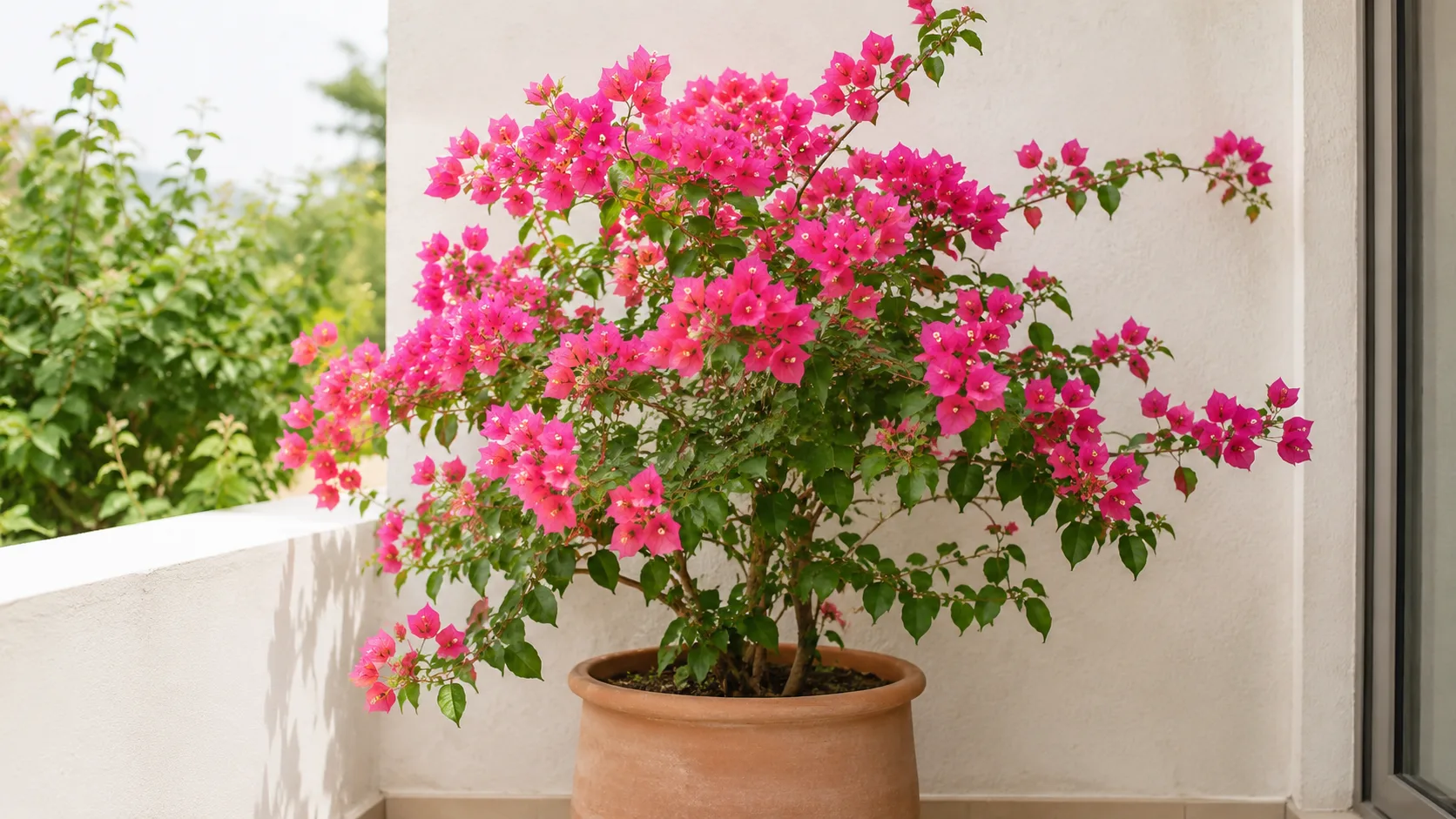
What most people call bougainvillea flowers are bracts - papery modified leaves in magenta, orange, red, purple, or white. The true flowers are small white tubes tucked inside the bract cluster. Bracts develop on relatively young shoots produced during the active warm season.
The Royal Horticultural Society states bougainvillea flowers on the current season’s growth and should be pruned in late winter or early spring before growth begins. After bracts fall, cutting long seasonal shoots back by about half can encourage a second flush of bracts in late summer on established plants. That biology is why post-flush tip work stimulates repeat color, and why repeated hedge shearing that clips soft tips removes the very wood preparing to bloom.
When to Prune Bougainvillea
Timing falls into three categories: annual structural work, post-flush maintenance, and anytime emergency cleanup. Mixing them up is the most common scheduling mistake.
Late-Winter Structural Window
The best window for major bougainvillea pruning is late winter through early spring, immediately before the main growth surge. BBC Gardeners’ World recommends late winter to early spring - around the end of February in mild climates - because bougainvillea bears flowers on current-season growth and needs shaping before that growth begins.
In frost-free subtropical regions (USDA zones 10–11), that often means late February through March. In zone 9 or desert climates with late cold snaps, mid-March through early April may be safer so tender new shoots are not exposed to surprise frost. This session is when you remove crossing wood, thin congested interiors, shorten main leaders, and tie fresh laterals to trellis or pillar supports.
Post-Flush Maintenance Through the Season
Once a bract display finishes and color dulls or bracts brown and drop, light pruning after flowering keeps the cycle going. Shorten bloomed shoots by roughly one-third to one-half, or tip-prune 1–6 inches (2.5–15 cm) of soft new growth, always cutting to a node with healthy leaves remaining.
Do not prune at peak display unless you accept losing the show you waited for. In frost-free climates, three to five distinct color periods between spring and autumn are realistic on full-sun, well-established plants that receive post-flush attention. In desert regions where daytime highs regularly exceed 95°F (35°C), restrict mid-summer work to minor tip cuts - major thinning in extreme heat stresses both plant and pruner.
UF/IFAS Gardening Solutions notes the best time to prune is late winter or early spring, and warns that pruning too late in summer may reduce flowers the following winter - another reason to finish heavy work before autumn in marginal climates.
When Not to Prune
Delay major cuts when the plant is drought-stressed, recently transplanted, frost-damaged, or actively wilting from root problems. Light corrective removal of dead tips is fine, but removing one-third or more of foliage on a struggling plant can stall recovery for a full season even though a healthy neighbor would bounce back in weeks.
Avoid late-autumn hard rejuvenation in zone 9 and cooler margins - fresh shoots pushed into cold nights often die back. Container plants overwintering indoors in dim light should not receive major shaping until they move back outdoors in spring.
What to Check Before You Cut
Walk the plant in good light before touching a blade. Note four things:
- Dead or frost-killed tips - gray, brittle stems with no green under scratched bark.
- Crossing and rubbing branches - bark wounds that invite slow healing in humid climates.
- Spent bract clusters - faded color on shoots ready for post-flush shortening.
- Your target form - climber on trellis, container specimen, standard tree-form, or wall espalier. Each form keeps a different skeleton.
Check soil moisture and recent stress too. If the plant dropped bracts suddenly after a watering change or move, fix that condition before stacking aggressive cuts on top.
The First Cut to Make
Remove dead, damaged, and diseased wood first - back to live green tissue under the bark or to the trunk or main leader. Trace problem branches to their origin and take them in one clean cut rather than shortening in stages.
This is sanitation, not bloom management. It opens sightlines into the interior so you can judge what remains, eliminates entry points for rot, and tells you how much live wood you actually have before structural decisions. Only after dead wood is cleared should you thin congested stems or shorten bloomed shoots.
How to Prune Bougainvillea Step by Step
Work from the inside out, not from a flat pass across the outer surface.
- Clear dead, damaged, and diseased stems back to live wood or main trunk.
- Remove crossing branches and selected old interior canes that no longer bloom - cut at their junction with a main leader.
- Shorten spent flowering shoots after bracts fade, cutting to a node 5–10 mm above a healthy bud.
- Tip-prune soft new ends lightly if you want denser branching - remove 6 inches (15 cm) or less.
- Tie fresh laterals to supports before they harden in the wrong direction.
Step back every few cuts to judge symmetry and airflow. Bougainvillea looks worse for about ten days after a moderate thin, then fills rapidly in warm bright conditions.
Thinning and Shape Control
Climbing bougainvillea on pergola or trellis needs a few permanent trunks and regularly renewed lateral shoots. Horizontal ties often produce more flowering side branches than vertical water sprouts. Early in the season, bending and tying vigorous young laterals can check excessive vigor and stimulate bract formation along tied wood - an approach the Royal Horticultural Society recommends for container and conservatory specimens.
Container plants on patios stay smaller but follow the same bloom biology. Root restriction in a pot can increase flowering pressure once slightly pot-bound, but recovery from hard cuts depends on consistent light and careful watering afterward. Shape to keep plants below doorway height and remove whips that tangle in railings.
Standards (single-trunk tree forms) require ongoing removal of shoots below the head and periodic shortening of crown branches. Espaliers need flat-plane thinning so the plant does not swallow the wall with a thorn mat three feet deep.
Cut Placement Above Nodes
A node is the slightly swollen point where a leaf or side branch attaches. New shoots emerge from buds at or just below your cut. Cut just above the node, leaving a stub of 5–10 mm - not a long naked internode that dies back, and not flush into the node where you damage the buds you need.
If a stem shows tiny new leaves or bud swell below a faded bract cluster, that node is your target. Angled cuts help shed rain from the bud on horizontal stems but matter less than precise node placement.
How Much You Can Safely Remove
For annual structural pruning on a healthy established vine, removing up to one-third of total length and volume in one late-winter session is a safe, widely used guideline. Many warm-climate plants tolerate one-half removal when health is good and timing precedes spring growth.
Post-flush tip pruning is measured in inches, not fractions of the whole plant. Taking 4–6 inches (10–15 cm) off a bloomed stem with several nodes remaining is standard maintenance. Scalping every shoot to the same height mid-summer delays bloom - it is not the same as post-flush renewal.
The limit is plant condition, not an arbitrary maximum. A drought-stressed or recently moved bougainvillea should receive light corrective cuts only until normal growth resumes.
Rejuvenation for Overgrown Vines
Neglected bougainvillea can swallow fences and bloom only at the roofline. Rejuvenation pruning resets the framework. In late winter, cut main stems back to 2–3 feet (60–90 cm) from the ground or trunk base, then select three to five of the strongest new shoots as the replacement framework and remove competing weak sprouts.
Established bougainvillea tolerates this level of cutting better than cautious half-measures repeated every year without thinning the interior. Expect little or no bloom the first season after severe rejuvenation; the payoff is manageable shape and reliable color on new wood the following year. The Royal Horticultural Society notes that while plants should respond to hard pruning, old plants are sometimes better replaced if stems are hollow or extensively dead.
If full rejuvenation feels too risky, staged renovation over two or three winters works: remove one-third of the oldest canes each year, shorten remaining leaders moderately, and post-flush tip prune through summer.
What Not to Cut
Do not remove the entire structural skeleton in one session unless you are deliberately rejuvenating. Preserve main trunks and primary laterals you have tied to supports.
Avoid cutting during peak bract display unless you accept losing the current show. Do not hedge-shear the outer surface - that technique removes soft flowering tips and replaces them with vegetative stubs (see mistakes below).
Skip heavy pruning on young newly planted bougainvillea until it has settled - light tip work and deadwood removal only. Do not cut into hollow or mushy stems hoping for recovery; trace back to solid wood or remove the cane at the base.
Tools, Thorns, and Safety
Bougainvillea stems carry sharp thorns and sap that may irritate skin. Leather gloves, long sleeves, and eye protection are essential for anything beyond a single soft tip pinch. Bypass pruning shears handle stems up to about half an inch (1.3 cm); loppers or a pole pruner reach high arches and thick older canes.
Keep blades sharp - dull tools crush woody tissue and slow healing on thorny stems already awkward to treat. Wipe blades with rubbing alcohol between plants if disease was present. Skip wound sealants; clean open cuts heal well in dry air. Have a tarp ready - thorny trimmings are miserable to rake later.
The ASPCA lists bougainvillea as mildly toxic to cats and dogs; ingestion can cause GI upset and sap may contribute to dermatitis. Keep cut stems and fallen bracts away from pets after pruning.
Semi-hardwood stem cuttings from summer pruning can root in 4–8 weeks if you want to reuse healthy trimmings - take 10–15 cm sections with several nodes, strip lower leaves, and root in well-draining mix. That is optional propagation, not a pruning requirement.
Aftercare and Recovery
Match intensity to plant health after any cut session. Light should stay strong - UF/IFAS emphasizes that bougainvillea needs full sun to flower; moving a freshly pruned container plant into shade to “reduce stress” often produces leggy shoots that bloom poorly.
Watering should remain consistent but not soggy. A plant stripped of half its foliage still needs steady moisture while new leaves expand, but bougainvillea prefers to dry slightly between drinks. Hold off on heavy fertilizer for two to three weeks after a major prune; high nitrogen pushes soft leafy growth and can delay bract formation. Resume balanced feeding once new shoots reach 2–3 inches (5–8 cm).
Clemson HGIC notes bougainvilleas are vigorous and respond well to pruning - but also that they flower best under high light, moderate temperatures, and conditions that favor bract initiation rather than excessive leaf production.
Signs Pruning Worked
Within two to four weeks in warm active growth, look for new shoots emerging near cut nodes and along stems that now receive more light. Leaves on that growth should be firm and medium green, not pale and stretched.
Light post-flush tip pruning on an established plant in zone 10 heat often produces the next bract show in four to six weeks. A major late-winter structural cut may yield the first serious color flush six to eight weeks after spring growth starts - longer on potted plants or after rejuvenation.
Signs You Cut Too Hard or Too Late
Warning signs include black or mushy cut ends, sudden leaf drop on uncut portions, or no bud swell after four weeks in warm bright conditions. Blackening often traces to dull tools, cuts during wet weather, or pre-existing disease. Whole-plant wilt after moderate pruning points to root rot on Bougainvillea, severe drought, or removing far more than one-third on a weak plant.
If you hedge-sheared repeatedly and see dense green growth with no bracts, recovery requires selective thinning - remove entire older stems back to the trunk, let new shoots elongate, then tip-prune after the first post-recovery bloom flush. That may take a full season.
Common Bougainvillea Pruning Mistakes
Hedge shearing is the classic bloom killer. Running shears across the outer surface to a flat plane removes soft tips that would mature into bract-bearing wood. Clemson HGIC describes bougainvilleas as often used as hedges in tropical areas because they respond well to pruning - but constant shearing trades color for a green thorn wall. For property-line screening where uniform height matters more than flowers, choose a different plant.
Other predictable errors: pruning at peak bloom, cutting too much on a stressed plant, leaving long stubs above nodes that die back unsightly, using dull tools on woody stems, never thinning the interior (only shortening exterior whips), and rushing cuts without thorn protection.
Conclusion
Bougainvillea pruning runs on a clear calendar: late-winter or early-spring structural work before the main growth surge, then light shortening or tip cuts after each bract flush to prompt repeat color on current-season wood. Remove dead, crossing, or hazardous branches whenever they appear; save heavy rejuvenation for the dormant window on healthy established plants.
Cut just above nodes with sharp bypass tools, wear thorn protection, and skip hedge shears if you want bracts. Watch for new shoots within two to four weeks in warm weather as proof your cuts landed correctly, and match removal intensity to plant health - up to one-third for maintenance, harder renewal only when structure demands it and roots are sound.
When to use this page vs other Bougainvillea guides
- Bougainvillea overview - Start here for whole-plant context before deep-diving this topic.
- Bougainvillea problems hub - Jump to symptom-specific fix guides when this care topic does not resolve the issue.
- Leggy Growth on Bougainvillea - Escalate here when pruning adjustments are not enough.
- Slow Growth on Bougainvillea - Escalate here when pruning adjustments are not enough.
- Brown Tips on Bougainvillea - Escalate here when pruning adjustments are not enough.