Brown Tips on Bougainvillea: Causes, Checks & Fixes
Quick answer
Brown tips on bougainvillea usually mean drought edge burn on a full-sun container that dried too far, or root stress from overwatering, salt buildup, cold, or spider mites. First step: check pot weight and the top 3–5 cm of mix-light and dry points to a deep soak; heavy and wet means stop watering and inspect roots.
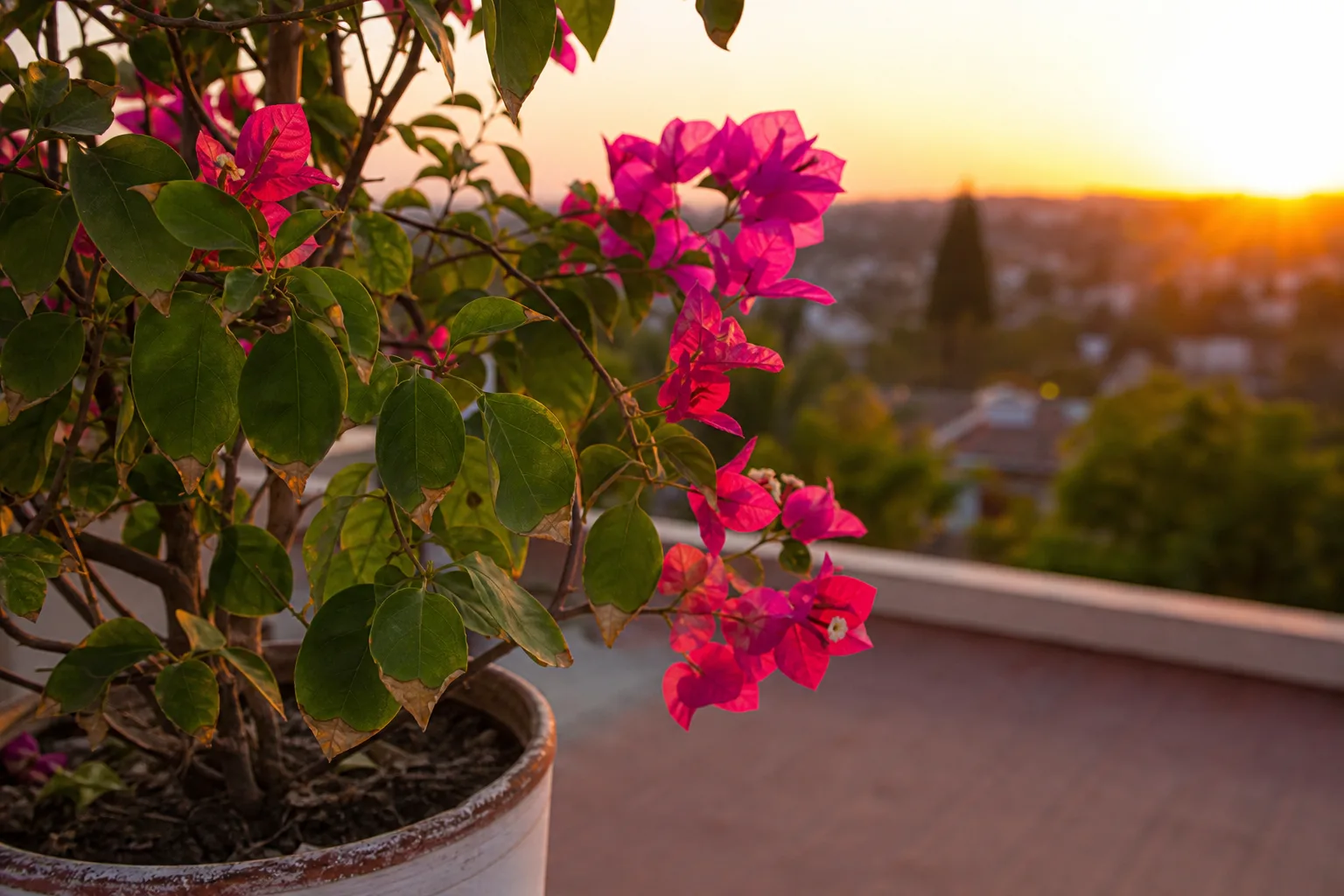
Brown Tips on Bougainvillea: Causes, Checks & Fixes
This guide covers brown tips on Bougainvillea. See also the general Brown Tips guide, watering, and light pages for this plant.
Brown Tips on Bougainvillea: Causes, Checks & Fixes
Quick answer
Brown tips on bougainvillea almost always mean true leaf margins turned tan and papery-not the colorful bracts fading after bloom. On a full-sun patio or terrace container, the most common cause is drought edge burn: the mix dried farther than the plant could hydrate its outer leaf tissue, especially during hot, windy weather.
First step: lift the pot and probe the top 3–5 cm of mix. A light pot with dry soil calls for one deep soak until water runs from drainage holes, then a return to dry-down checks per the bougainvillea watering guide. A heavy pot with cool, damp soil means stop watering, verify drainage, and read the overwatering branch-do not treat wet-soil wilt like thirst.
What brown tips look like on Bougainvillea
Bougainvillea’s showy “flowers” are modified leaves called bracts surrounding tiny white true flowers. Growers often search “brown tips” when they see damage on true leaves-the smaller green foliage between thorny stems-not when bracts age naturally.
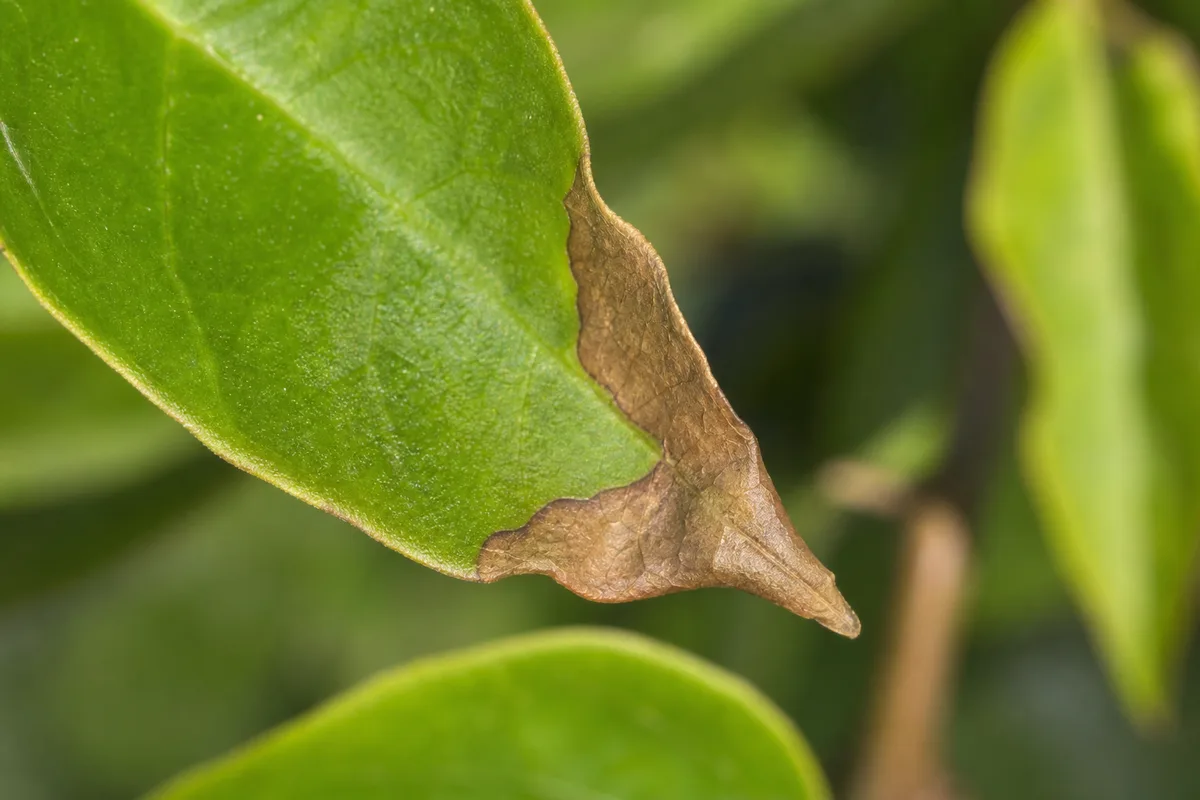
Brown Tips symptoms on Bougainvillea - compare with healthy tissue on the same plant.
Typical drought edge burn on leaves:
- Tan to brown papery tissue at margins and tips, while the leaf center stays green longer
- Damage often starts on older, sun-exposed leaves on the outer canopy
- Leaves may feel crisp at the edge but still firm in the center
- Pot feels noticeably light; mix is dry several centimetres down
Bract fade (usually normal, not “brown tips”):
- Colorful bracts bleach, pale, or dry papery after several weeks of display
- Pattern follows recent bloom flush, not random scattered leaf margins
- True leaves nearby remain green unless a separate stress is active
Photo callout - drought edge burn: Close-up of a full-sun container bougainvillea showing tan, papery margins on otherwise green true leaves, with a light dry pot beside it for scale.
Photo callout - overwatering yellow-drop: Lower true leaves yellowing and dropping while mix stays damp and the pot feels heavy-different from tip-only crisping on dry soil.
Do not confuse post-bloom bract senescence with leaf-tip disease. Fading bracts after a color flush are expected; spreading brown margins on new true leaves are a care signal.
Why Bougainvillea gets brown tips
Drought edge burn after dry-down (most common on containers)
Bougainvillea evolved in hot, dry regions of South America and is extremely drought-resistant. That does not mean leaf edges tolerate unlimited drying. In full sun, a container can lose moisture in a day or two. Leaf tips and margins desiccate first because they are farthest from the root water supply.
Mild edge crisping after intentional dry-down can precede bract flush on established plants-the same drought-stress pathway that encourages bloom. Excessive drying crosses into damage: widespread brown margins, bract drop, and leaf fall. The line is visible in new growth: useful stress keeps new leaves opening clean; damaging stress browns them as they expand.
Overwatering and root decline
Bougainvillea performs better when soil is left a little dry between deep soaks. Constant moisture suffocates roots, reduces water uptake, and produces yellow lower leaves, limp foliage on wet soil, and sometimes margin burn as roots fail. Calendar watering, oversized pots, and saucers left full are common triggers on patios.
Salt and fertilizer burn
Clemson HGIC recommends fertilizing at half the label rate once a month in active growth. Full-strength feeds, frequent nitrogen-heavy products, or accumulated salts in a small container can scorch leaf edges and tips. White crust on the mix surface and brown tips appearing soon after feeding point here.
Cold damage and night chilling
Bougainvillea needs protection from frost and freeze. Container plants near cold glass, exposed to sub-5 °C nights, or hit by a sudden cold snap show crisp brown leaf edges and patchy tan tissue unrelated to watering rhythm. Extension troubleshooting for indoor bougainvillea notes leaf-edge scorch from chilled roots and bright-day/cool-night swings as a common pattern in marginal climates.
Spider mites and pest stippling
In hot, dry canopy conditions, spider mites can stipple leaf surfaces and brown margins-often with fine webbing on undersides. This resembles drought burn but soil moisture may be adequate and damage includes speckled yellowing, not uniform papery margins alone. See spider mites on bougainvillea if webbing is present.
Lookalike symptoms to rule out
| What you see | Likely cause | Quick differentiator | First move |
|---|---|---|---|
| Tan papery leaf margins; light dry pot | Drought edge burn | Top 3–5 cm dusty dry; pot light | Deep soak once; resume dry-down checks |
| Yellow lower leaves; limp on wet soil | Overwatering / root stress | Pot heavy; mix cool and damp days after watering | Stop watering; check drainage and roots |
| Brown tips after recent heavy feed | Salt / fertilizer burn | White crust on soil; timing matches feeding | Flush pot; pause fertilizer |
| Crisp edges after cold night | Cold damage | Recent frost or cold window exposure | Move to warmer spot; protect from freeze |
| Speckled leaves + fine webbing | Spider mites | Underside stippling; mites visible with magnification | Isolate; rinse undersides; treat if confirmed |
| Papery fading bracts only | Normal bloom fade | Follows color flush; true leaves green | None needed unless bracts drop prematurely |
How to confirm the cause
Work through these five checks in order. Stop when one line clearly matches.
- Pot weight - Lift the container. Drought burn pairs with a light pot. Overwatering pairs with persistent heaviness even days after the last soak.
- Soil probe at 3–5 cm - Dry, dusty mix supports drought edge burn. Cool, clinging damp soil supports overwatering. See the watering guide for the finger and skewer method.
- Sun and exposure audit - Bougainvillea needs full sun - minimum six hours of direct light daily. Maximum sun accelerates drying in small pots; reflected heat from walls can add edge burn even when you watered recently.
- Recent feeding and salt signs - Note whether you applied fertilizer within the last two weeks. Look for white mineral crust on the mix surface or saucer.
- Margin pattern and pests - Uniform papery margins on dry soil differ from speckled stippling with webbing. Inspect leaf undersides with bright light. Check whether bracts alone are fading while true leaves stay green-that is usually normal senescence, not tip burn.
If soil is dry, roots are firm and pale when you slide the plant out carefully, and the pot is light, drought edge burn is confirmed. If soil is wet, roots are dark or mushy, and lower leaves yellow, shift to the overwatering path before adding water.
First fix for Bougainvillea
If the pot is light and the top 3–5 cm is dry: water deeply once until excess runs from drainage holes, let the pot drain completely, empty the saucer, and resume checking the top 3–5 cm before the next soak. Do not sprinkle the surface daily-that keeps roots in chronic deficit and preserves brown tips on old leaves.
If the pot is heavy and mix stays damp: stop watering until the top 3–5 cm dries. Confirm drainage holes are open, saucers are empty, and the plant is not sitting in a cachepot of runoff. If leaves keep yellowing on wet soil, inspect roots per root rot on bougainvillea.
If brown tips followed a heavy feed: flush the container with plain water until runoff flows freely two or three times during active growth, then hold fertilizer until new growth looks turgid. Resume at half strength per Clemson HGIC guidance.
If cold exposure is the trigger: move the pot away from cold glass or frost lines; protect from freezing nights. Do not compensate with extra water on cold, slow-evaporating mix.
If spider mites are confirmed: isolate, rinse leaf undersides thoroughly, and treat only after active pests are verified-see the spider mites guide.
Make one care correction at a time and read the plant’s response over the next seven to ten days.
Step-by-step recovery
After the first fix matched to your confirmed cause:
- Hold fertilizer until new growth opens firm and green-feeding stressed roots worsens edge burn.
- Keep full sun if the plant is already acclimated. Bougainvillea weakens in shade even while recovering. Avoid moving a drought-stressed patio pot into deep shade “to rest.”
- Trim dead edges optionally - Snip fully crisp brown tips after turgor returns if appearance matters. Leave green tissue alone; it still photosynthesizes.
- Track new leaves, not old ones - Old brown margins never re-green. Success is clean new true leaves and fresh bracts without repeat edge burn.
- Adjust seasonal rhythm - Increase check frequency in hot summer growth; reduce watering in winter when growth slows, but do not let a small active container stay bone dry for weeks.
Recovery timeline
Mild drought edge burn on an otherwise healthy container often stabilizes within several days to two weeks after one proper soak and a corrected dry-down rhythm. Old crisp margins stay brown; judge progress on the next flush of true leaves.
Overwatering-related browning takes two to four weeks or longer if roots were damaged-recovery sign is new growth on firm stems, not instantly re-greening old leaves.
Fertilizer burn may show improvement on the next leaf generation after flushing and pausing feeds-typically one to two weeks in warm active growth.
Cold-damaged tissue does not revert; wait for new warm-season growth after temperatures stabilize above frost risk.
Signs recovery is working:
- Pot weight cycles predictably between light-dry and heavy-after-soak
- New true leaves open without immediate margin burn
- Bracts return on new wood when sun and dry-down rhythm suit the plant
Signs the problem is worsening:
- Brown margins spread to most new leaves within one week
- Crown or stem bases soften while soil is wet
- Wilt persists on soggy mix after you stopped watering
- Fine webbing and stippling increase despite watering adjustments
What not to do
- Do not water on a calendar when tips brown-check pot weight and soil depth first.
- Do not soak a wilted plant on wet, heavy soil-that deepens root decline.
- Do not fertilize to “green up” brown tips on stressed roots.
- Do not repot, hard-prune, and feed on the same day-stacked stress obscures which fix helped.
- Do not treat fading bracts like leaf disease when true foliage is healthy.
- Do not move a full-sun bougainvillea indoors to dim light to fix edge burn-that slows recovery and invites soggy-soil problems.
How to prevent brown tips next time
- Run the dry-down rhythm from the watering guide: deep soak when the top 3–5 cm is dry, then wait again.
- Match pot size to sun exposure - Small containers in afternoon sun dry fast; check more often in heatwaves.
- Use well-drained mix with perlite or coarse bark; bougainvillea thrives in soil that does not stay constantly wet.
- Feed lightly - Half-rate fertilizer monthly in active growth; flush salts occasionally in containers.
- Place for full sun per the light guide - at least six hours of direct sun on the foliage.
- Empty saucers within 30 minutes of watering; never leave roots in standing runoff.
- Protect from frost and cold window chill in winter; reduce water frequency when growth slows but avoid cold-plus-wet soil.
When to worry
Escalate same-day if:
- Stems soften at the crown with sour-smelling wet mix - possible advancing rot
- More than half the canopy shows new leaf margin burn within a week despite corrected watering
- Wilting persists 48 hours on evenly moist (not soggy) soil after a confirmed drought soak - inspect roots
- Blackened stems spread from tips toward the base after a freeze
Lower urgency when a few older leaf margins crisp after a hot dry spell and new growth opens clean once you resume deep soaks. Bougainvillea in full sun will always sacrifice some edge tissue before center wilt-that is visible economics of drought tolerance, not automatic plant death.
Bougainvillea care cross-check
Brown tips rarely happen in isolation. Confirm these basics match what a patio bougainvillea expects:
| Factor | Edge-burn risk when wrong |
|---|---|
| Light | Too little sun slows recovery; max sun in small pots accelerates drying |
| Water | Dry-down too long → margin burn; constant wet → root failure |
| Drainage | Saucers full or dense mix → overwatering symptoms |
| Feed | Heavy nitrogen or salt crust → tip scorch |
| Temperature | Cold roots + bright days → edge scorch indoors |
Related Bougainvillea problems
- Bougainvillea overview - hub care and troubleshooting
- Watering guide - dry-down rhythm and pot checks
- Light guide - full-sun placement and scorch signs
- Fertilizer guide - half-rate feeding and bloom-friendly NPK
- Underwatering - light pot, dry mix, limp bracts
- Overwatering - wet soil, yellow lower leaves
- Root rot - mushy roots on heavy wet mix
- Spider mites - stippling and webbing on dry canopies
Conclusion
Brown tips on bougainvillea are a diagnostic pattern, not a single disease. On a sunny patio container, drought edge burn after dry-down is the lead cause; overwatering, salt burn, cold, and spider mites produce overlapping but distinguishable signs once you check pot weight, soil moisture at 3–5 cm, and whether bracts or true leaves are affected. Fix one confirmed stressor, judge recovery by new clean growth, and align prevention with full sun plus the dry-soak rhythm this genus expects.
When to use this page vs other Bougainvillea guides
- Bougainvillea watering guide - Use for routine moisture checks before assuming brown tips is the main issue.
- Bougainvillea problems hub - Browse all 20 common issues on this species.
- Low Humidity on Bougainvillea - Different entry point when symptoms overlap with brown tips.
- Underwatering on Bougainvillea - Different entry point when symptoms overlap with brown tips.
- Overwatering on Bougainvillea - Different entry point when symptoms overlap with brown tips.