Drooping Leaves on Bougainvillea: Causes, Checks & Fixes
Quick answer
On established bougainvillea, slight leaf droop on dry soil is often normal drought stress-not an emergency. Limp leaves on wet, heavy soil usually means overwatering or root damage. First step: feel the top 3–5 cm of mix and lift the pot-dry and light means water deeply; wet and heavy means stop watering and read the overwatering pathway.
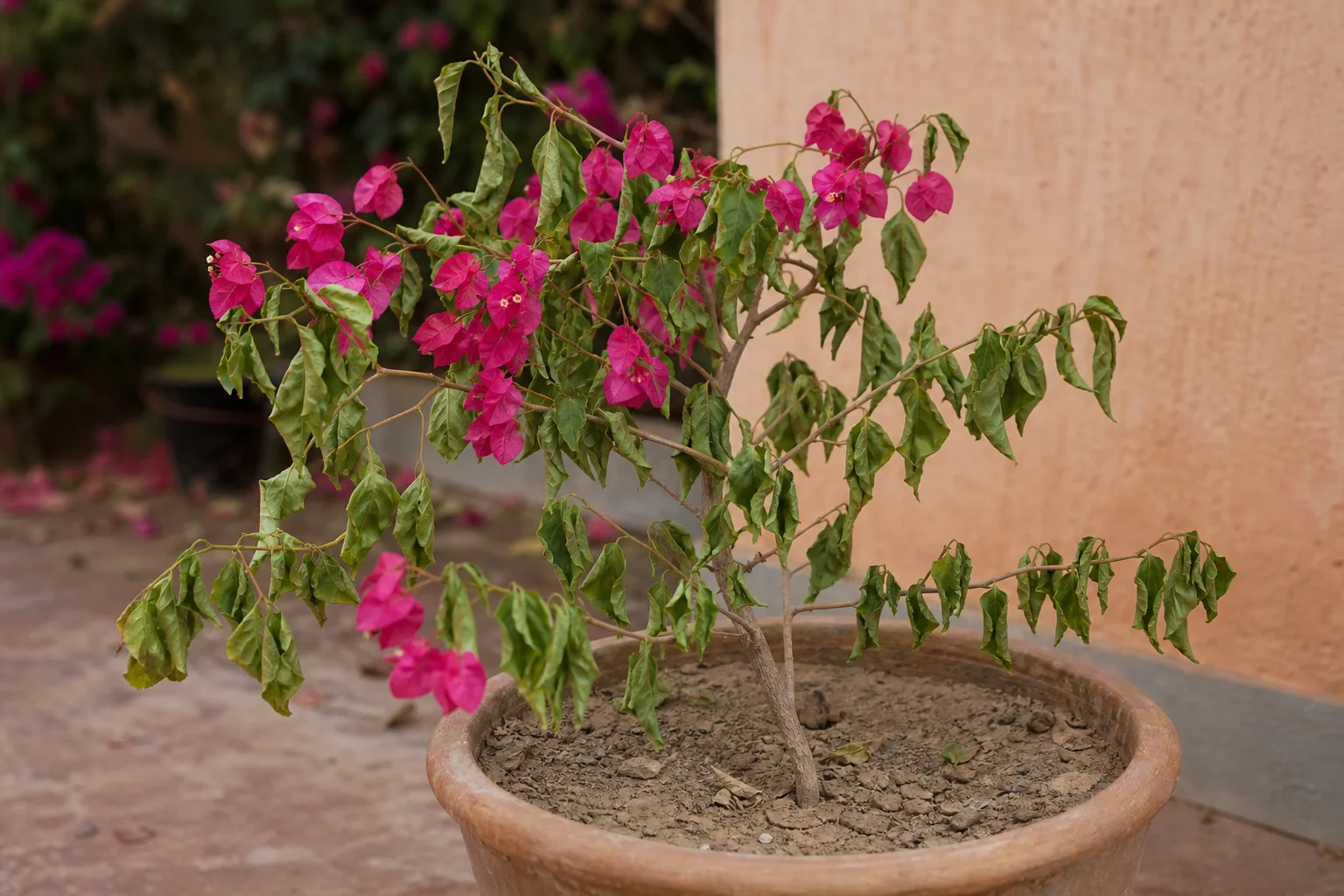
Drooping Leaves on Bougainvillea: Causes, Checks & Fixes
This guide covers drooping leaves on Bougainvillea. See also the general Drooping Leaves guide, watering, and light pages for this plant.
Drooping Leaves on Bougainvillea: Causes, Checks & Fixes
Quick answer
When bougainvillea leaves hang softer than usual, the first question is not “what fertilizer fixes this?” but whether the root zone is dry, wet, or cycling normally. This subtropical vine from South America evolved for full sun, fast drainage, and dry periods between rains-and on established plants, slight droop on dry soil is often part of healthy culture, not a crisis.
First step: press your finger into the top 3–5 cm of mix and lift the pot. Dry surface plus a noticeably lighter container means the plant is ready for one deep soak-see the bougainvillea watering guide for the full drench-and-dry rhythm. Wet, cool mix with a heavy pot while leaves stay limp means stop watering and follow the overwatering pathway-roots may be failing even though the soil is moist.
Drooping vs wilting on bougainvillea
These two URLs on LeafyPixels target different severity bands on the same turgor-loss spectrum.
Drooping leaves (this page) means early or partial sag: petioles angle downward, leaf blades feel softer, but stems usually stay green and somewhat firm. The plant still looks alive and may recover within hours once you match water to soil status.
Wilting (wilting on bougainvillea) means advanced collapse: limp stems, crisp or curled leaf margins, widespread hang, and sometimes yellowing or drop. Wet-soil wilt is especially urgent because it signals root damage, not thirst.
Normal dry-down droop on an established vine in full sun sits between the two-enough sag that you notice it, on dry mix, that firms after one thorough watering. UF/IFAS production guidance notes growers sometimes allow plants to dry just to the point of wilting to induce flowering, with the explicit warning that excessive drying causes leaf drop and dormancy. Home growers should treat that wilt point as a secondary signal, not a daily target, until they know their plant well.
Is slight droop normal? Drought stress and bloom cycles
Yes-on established bougainvillea in containers or in-ground, mild leaf droop when the upper soil has gone dry is often normal drought stress, not a disease. UF/IFAS Gardening Solutions states bougainvillea performs better when soil is left a little dry and that excess irrigation is a common reason vines stay green without color. UF/IFAS Extension Charlotte County advises keeping plants on the dry side for healthy roots and plentiful bracts.
That dry-side rhythm matters for droop diagnosis. When soil dries after a deep soak, leaves may soften slightly before you water again-internal signals that can precede bract production on new wood. That is different from neglect: if leaves go crisp, brown at edges, or drop in clusters, you crossed from useful stress into damage.
Newly planted bougainvillea is the exception. Roots near the surface dry quickly; these plants need steadier moisture until established. Do not interpret every sag on a six-week-old liner as a bloom trigger-check soil daily and water when the top layer dries, without letting the root ball bake to severe wilt.
What drooping looks like on bougainvillea
Normal dry-down droop (dry soil)
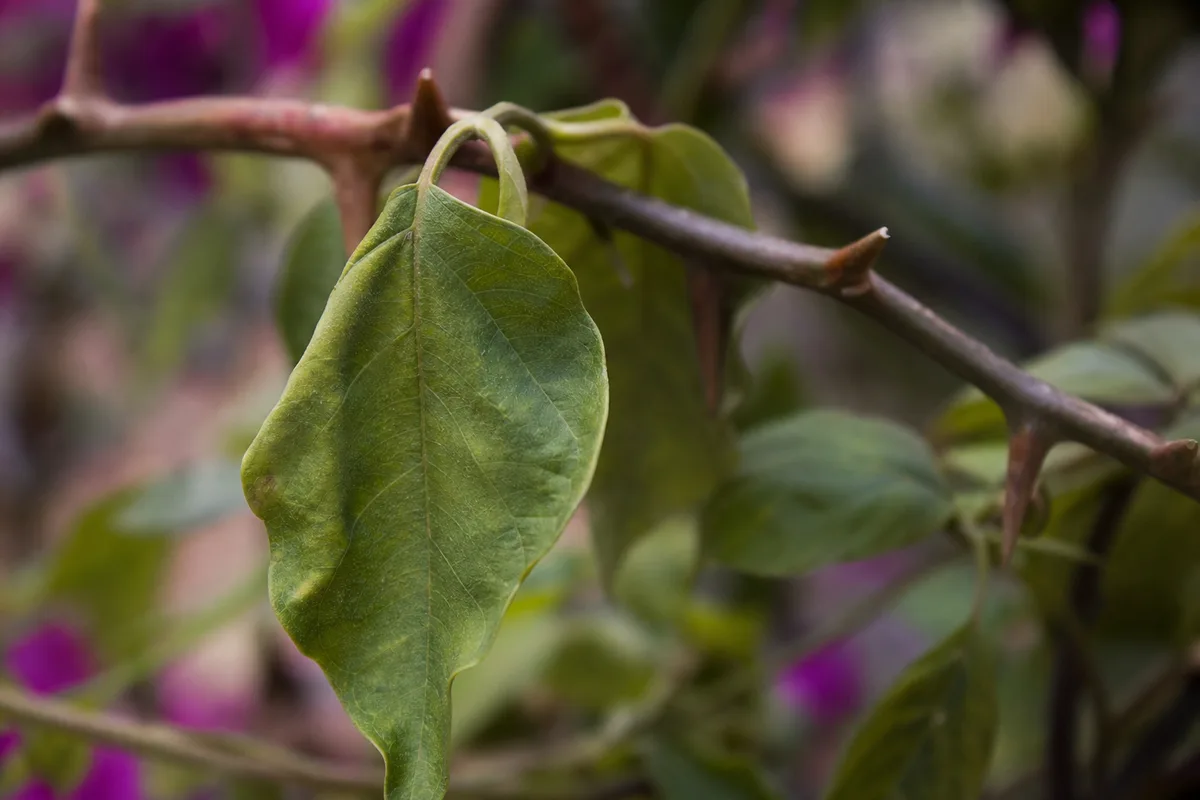
Drooping Leaves symptoms on Bougainvillea - compare with healthy tissue on the same plant.
- Leaves hang softly but stay mostly green
- Top 3–5 cm of mix feels dry; pot feels lighter than after the last soak
- Often on established plants in full sun between scheduled waterings
- Firms within a few hours after one deep watering with full drainage
- May appear alongside the pre-bloom dry-down window described in the watering guide
Overwatering droop (wet soil)
- Limp leaves while mix stays wet for many days
- Pot feels heavy; surface may look dark and cool
- Lower leaves may yellow; sour smell or fungus gnats suggest chronic saturation
- Adding water does not firm foliage-the classic “wilting on wet soil” pattern from UC Master Gardener guidance
- Often follows automatic irrigation, daily saucer water, or winter watering on a summer schedule
Underwatering droop (very dry soil)
- Crisp or curled leaf edges, not just soft hang
- Mix pulls away from pot edges or feels bone dry deep down
- Pot is very light; plant may droop all day, not only at noon
- Recovers within hours of a thorough soak if roots are still healthy
- Prolonged drought leads to leaf and bract drop, not just sag
Heat and midday droop
- Noticeable afternoon sag on hot sunny days
- Leaves firm overnight without extra water if soil moisture was adequate
- Common on south- and west-facing walls and dark containers that heat root zones
- Distinct from chronic underwatering, which stays limp into morning
Transplant and repot shock
- Drooping within days of repotting or root disturbance
- Soil moisture may be correct but fine roots were damaged
- Usually temporary if drainage is good and you avoid stacked stress
- See repotting guidance before repotting a drooping plant on wet soil
Lookalike symptoms to rule out
| What you see | Soil / pot | Likely cause | First move |
|---|---|---|---|
| Soft sag, green leaves, dry top 3–5 cm, light pot | Dry | Normal dry-down or mild thirst | Deep soak once; drain saucer |
| Limp all day, crisp edges, very light pot | Very dry | Underwatering | Soak at sink; resume dry-down checks |
| Limp leaves, wet mix, heavy pot, yellow lowers | Wet | Overwatering / root stress | Stop watering; inspect roots if decline continues |
| Afternoon sag only, firm by morning | Moderate | Heat / transpiration | Do not water blindly; verify with finger test |
| Drooping after repot, mix evenly moist | Moist but not soggy | Transplant shock | Shade lightly; avoid fertilizer; wait 1–2 weeks |
| Soft sag + wet soil + soft crown base | Wet | Root rot urgency | Stop water; inspect crown; see root rot |
If symptoms match advanced collapse rather than early sag, switch to wilting on bougainvillea for severity-specific triage. If the primary issue is too little direct sun with chronic soggy mix, see not enough light alongside watering fixes.
Why bougainvillea leaves droop
Bougainvillea leaves lose turgor-the internal water pressure that keeps tissue firm-when roots cannot supply water as fast as leaves lose it through transpiration, or when damaged roots fail to uptake even from wet soil.
Drought stress on a dry-side plant
Bougainvillea tolerates drying and prefers irrigation a little on the dry side. In full sun, containers can move from “just watered” to “ready again” in a few days. Slight droop is the visible edge of that cycle. It is expected on patio pots between deep soaks-not a sign to switch to daily light sprinkles.
Overwatering and root oxygen loss
Too much water makes roots soggy and dysfunctional. UC Master Gardeners note that excess water causes roots to rot while leaves curl or yellow-classic confusion because the plant looks thirsty while soil is wet. Bougainvillea does not thrive in constantly moist mix, especially in cool seasons when evaporation slows.
Underwatering after travel or heat spikes
Too little water produces wilt and leaf drop to conserve moisture-the opposite error. Desert heat, small pots, and missed watering during travel can dry a root ball faster than a bougainvillea owner’s houseplant habits expect. The fix is one deep rehydration, not panic daily splashes that never reach the center.
Heat and root-zone temperature
Bougainvillea handles high air temperatures when roots are healthy, but dark containers in blazing sun can overheat roots while leaves transpire heavily. Midday droop that recovers overnight often reflects temporary water demand, not a broken watering calendar.
Recent repot or root disturbance
Repotting breaks fine roots. Even with correct moisture, the canopy may droop until new root tips establish. Stacking repot, hard prune, and fertilizer on the same week worsens this.
How to confirm the cause
Work through these checks in order-soil status before any watering decision:
- Finger test at 3–5 cm depth - Dry supports watering or normal dry-down; persistently damp supports overwatering suspicion.
- Pot weight - Light pot plus dry surface means soak; heavy pot plus limp leaves means do not water.
- Time-of-day pattern - Afternoon-only sag that firms by morning suggests heat; all-day limp suggests water mismatch.
- Recent watering history - Automatic sprinklers, daily saucer refills, and “I watered because it looked sad” on wet soil are overwatering clues.
- Stem and crown firmness - Soft, dark tissue at the base with wet mix is urgent; firm green stems with dry mix is routine.
- New vs established plant - Young plantings need steadier moisture; mature vines follow dry-down logic.
- Light context - Vines in shade hold moisture longer and droop less from drought but more from rot if overwatered; full-sun pots dry faster. Confirm six-plus hours of direct sun for outdoor bloom culture-not bright indirect patio shade.
First fix for bougainvillea
Match one action to what the pot and soil actually show-never water by leaf appearance alone.
- If the top 3–5 cm is dry and the pot feels light: Water deeply once until excess runs from drainage holes, let the pot drain completely, empty the saucer, then wait for the next dry-down before soaking again. This single correction fixes most benign droop on established plants.
- If mix is wet and the pot is heavy with limp leaves: Stop watering immediately. Move off automatic irrigation, improve drainage, and inspect roots if yellowing spreads or the crown softens. Do not “give it a drink because it looks thirsty.”
- If soil is extremely dry with crisp wilt: Soak at the sink until mix rehydrates evenly; resume normal drench-and-dry checks.
- If only afternoon droop on otherwise moist, firm morning leaves: Wait. Re-check the next morning before adding water.
Make one change, then observe for 24–48 hours. Bougainvillea responds quickly when the diagnosis is correct.
Recovery timeline
| Cause | What to expect | Sign of success | Sign of failure |
|---|---|---|---|
| Normal dry-down | Firms within hours after one deep soak | Leaves stiffen; new tips stay green | Crisp edges or leaf drop after watering |
| Mild underwatering | Perk-up within same day after thorough soak | Pot weight normalizes; no further crisping | Repeated wilt within 24 hours on wet mix |
| Overwatering (early) | Several days to 2 weeks after drying mix | New growth; no spreading yellow | Worsening limp on wet soil; soft crown |
| Heat midday droop | Overnight firmness without extra water | Morning leaves hold angle | Daily worsening despite correct moisture |
| Repot shock | 1–3 weeks if not overwatered | New leaf unfurling | Continued decline on soggy mix |
Old drooped leaves may not return to perfect rigidity; judge recovery by firm new growth and stable dry-down cycles, not by every older leaf re-standing.
What not to do
- Do not water because leaves droop without checking soil-wet-soil droop is the most common misstep on bougainvillea.
- Do not move the plant to “bright indirect light” indoors as a droop fix; insufficient direct sun worsens soggy-soil problems and weakens the vine. Aim for maximum direct sun per the light guide.
- Do not fertilize a drooping plant before water status and roots are stable-especially on wet mix.
- Do not repot, prune hard, and spray pesticides the same day you notice sag; stacked stress hides which fix worked.
- Do not confuse intentional dry-down for blooming with weeks of severe wilt and leaf drop-the first is culture; the second is damage.
How to prevent drooping leaves next time
- Run two or three weekly pot checks during active growth: finger at 3–5 cm depth plus pot weight.
- Water on soak-and-dry rhythm, not calendar autopilot-disconnect from sprinkler zones that keep mix moist.
- Grow in full sun with well-drained mix at pH 5.5–6.5; empty saucers after every watering.
- Reduce winter watering when growth slows-cold plus wet mix causes limp yellow foliage that looks like thirst.
- Use the site’s watering, soil, and overview guides as baseline culture so droop stays a signal, not a recurring crisis.
When drooping is urgent
Treat droop as urgent when:
- Leaves stay limp on persistently wet soil and the crown feels soft
- Yellowing spreads quickly on lower and middle leaves despite your “rescue” watering
- Sour smell from mix or visible mushy roots when you inspect
- Severe crisp wilt and leaf drop continue after a proper deep soak on dry mix
- Drooping follows cold injury below about 50°F (10°C) combined with wet soil
For advanced wet-soil collapse, read root rot on bougainvillea and underwatering when the pot is dry and light.
Related bougainvillea problems
- Watering bougainvillea - drench-and-dry cycle and normal dry-down droop
- Overwatering - limp leaves on wet soil
- Underwatering - crisp wilt on dry mix
- Wilting - advanced collapse vs early droop
- Root rot - wet-soil urgency
- Not enough light - shade plus moisture overlap
- Bougainvillea care overview
Conclusion
Drooping leaves on bougainvillea are usually a water-status message, not a mystery disease. Dry soil plus light pot calls for one deep soak and patience through the next dry-down. Wet soil plus heavy pot calls for stopping water, not sympathy watering. Afternoon sag that firms overnight is often heat, not thirst. Learn that rhythm-aligned with full sun and fast drainage-and droop becomes a useful check instead of a panic trigger. When collapse is severe or soil stays wet despite your best dry-down, escalate to the wilting and root-rot guides before stacking more treatments.
When to use this page vs other Bougainvillea guides
- Bougainvillea watering guide - Use for routine moisture checks before assuming drooping leaves is the main issue.
- Bougainvillea problems hub - Browse all 20 common issues on this species.
- Underwatering on Bougainvillea - Different entry point when symptoms overlap with drooping leaves.
- Overwatering on Bougainvillea - Different entry point when symptoms overlap with drooping leaves.
- Root Rot on Bougainvillea - Different entry point when symptoms overlap with drooping leaves.