Mold on Soil on Bougainvillea: Causes, Checks & Fixes
Quick answer
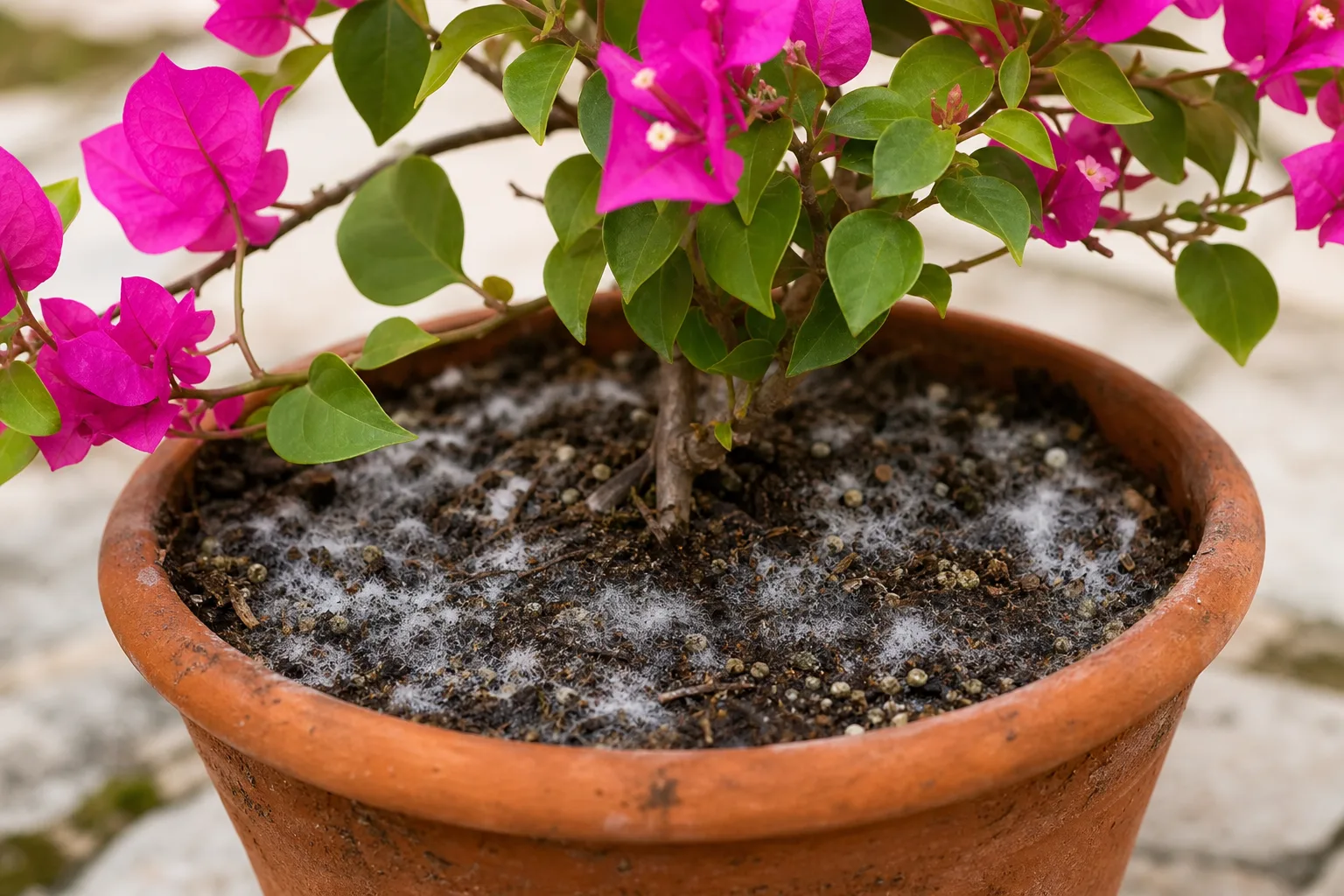
White or gray fuzz on Bougainvillea potting mix is harmless surface mold on damp organic matter-not infection of your colorful bracts. Wear gloves for thorns, scrape the top layer, and let the top 3–5 cm dry before you water again.
Mold on Soil on Bougainvillea: Causes, Checks & Fixes
This guide covers mold on soil on Bougainvillea. See also the general Mold on Soil guide, watering, and light pages for this plant.
Mold on Soil on Bougainvillea: Causes, Checks & Fixes
Quick answer
White or gray fuzz on Bougainvillea potting mix is usually harmless surface mold-not a sign that your colorful bracts are infected. The fuzzy growth sits on damp organic matter at the soil line; healthy bracts and firm woody stems above the mix should look normal unless a separate stress is active. On this drought-loving tropical vine, mold almost always means the top of the mix stays wet too long-often from low winter light, an oversized pot, peat-heavy mix, or unchanged watering after the plant moved indoors.
First step: wear gloves (thorns are sharp), scrape off the visible mold, and let the top 3–5 cm of mix dry before you water again. Do not repot, fertilize, or spray fungicide on day one unless you already smell rot or find mushy roots. Fix the moisture rhythm first; the mold is telling you about the environment, not attacking healthy tissue. For the soak-and-dry baseline this vine needs, see the bougainvillea watering guide. Chronic wet soil with yellow leaves points to overwatering; mushy roots mean the root rot guide.
What mold on soil looks like on Bougainvillea
Surface mold appears on the potting mix, not on the papery bracts or thorny stems. Healthy Bougainvillea should still show firm woody stems and hold bracts unless a separate stress is active.
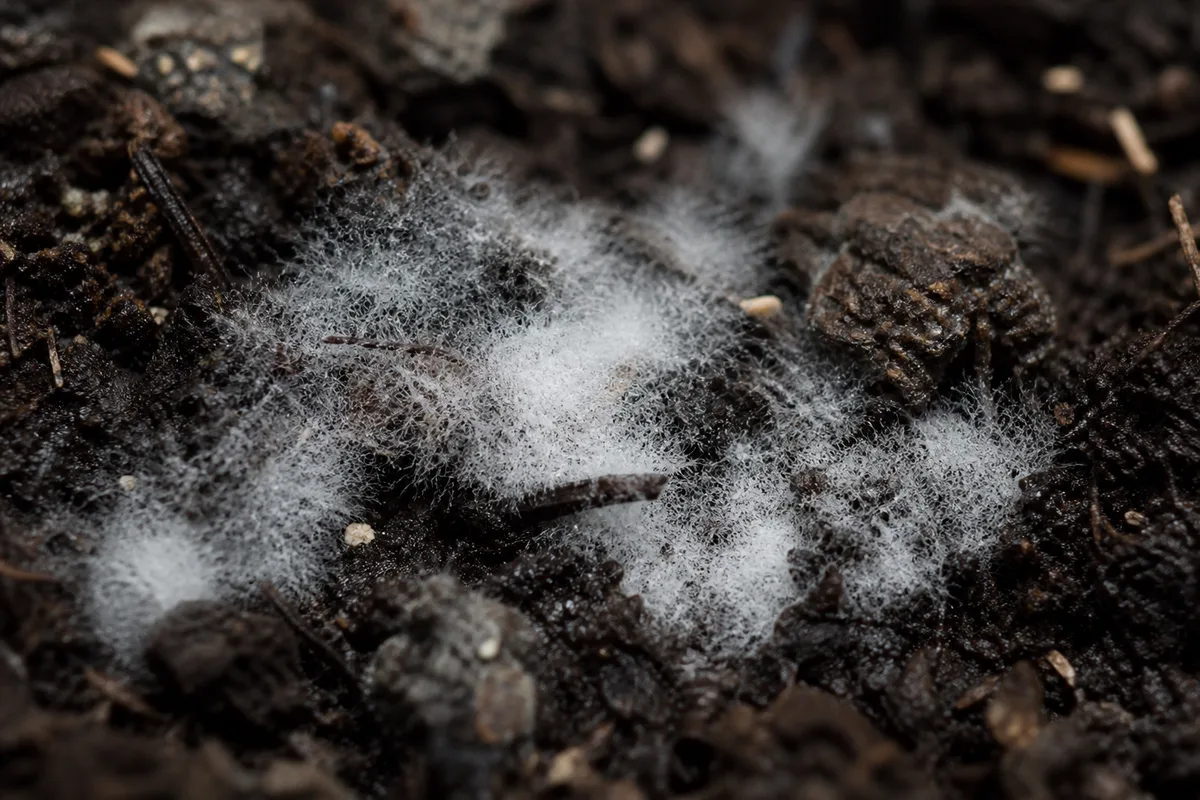
Mold on Soil symptoms on Bougainvillea - compare with healthy tissue on the same plant.
Typical mold patterns on Bougainvillea pots:
- White, gray, or occasionally yellow-tan fuzzy patches on the soil surface
- Thread-like mycelium spreading across damp mix after watering
- Mold reappearing within a few days if the top layer never dries
- Surface staying cool and clinging to your finger days after the last drink
- Fungus gnats hovering when you water-often in the same chronically wet pots; see fungus gnats on bougainvillea
- Fallen bracts, leaf bits, or compost fines on the surface where mold anchors
What is usually not soil mold:
- Gray fuzzy spots on wet, injured leaf tissue or spent bracts-that is more often botrytis on damaged tissue, not potting mix
- Fine webbing on leaf undersides-spider mites, not soil fungus
- Black sooty film on upper leaves-honeydew from aphids or whiteflies; see aphids on bougainvillea
- Bracts dropping with yellow leaves while soil stays wet-overwatering stress, which may coexist with mold but is not the mold itself
Bougainvillea’s thorny stems and woody growth can look dramatic when stressed, but soil mold by itself rarely causes overnight collapse. If leaves yellow and go limp while mix stays wet, treat that as a root-moisture problem first-not just a surface scrape.
Lookalike quick-reference
| What you see | Location / texture | Likely cause | First action |
|---|---|---|---|
| White/gray fuzzy threads | Soft, on damp soil surface | Harmless saprophytic mold on wet organic mix | Scrape top layer; dry down 3–5 cm |
| Gray fuzz on spent bracts | Wet injured bract tissue, not soil | Botrytis on damaged tissue | Remove spent bracts; improve airflow |
| Black sooty film | Upper leaf surfaces, not soil | Aphid/whitefly honeydew | Check aphids; treat pests |
| Fine webbing | Leaf undersides | Spider mites | Separate issue from soil mold |
| Yellow mushroom caps | Rising from mix | Saprotrophic flower-pot fungi | Remove caps; fix wet soil |
| Yellow limp leaves + sour smell | Wet mix throughout | Advancing root rot | Unpot same day; trim mushy roots |
| Hard white crust | Soil surface, not fuzzy | Mineral/salt buildup from tap water | Flush concern; not organic mold |
Why Bougainvillea gets mold on soil
Mold on houseplant soil is typically a saprophytic fungus feeding on decaying organic matter in the mix. It is a symptom of environment, not a leaf disease-and on Bougainvillea the usual trigger is how long the soil surface stays damp relative to how fast this sun-loving plant uses water.
Plant-specific reasons this species grows surface mold:
- Wet feet in a drought-tolerant vine - Bougainvillea grows best in well-drained, acid soils and tolerates hot, dry locations. Clemson HGIC notes it is extremely drought-resistant and thrives in almost any soil type that does not stay constantly wet. When the surface stays soggy, saprophytic fungi colonize organic particles while roots sit in conditions this plant hates.
- Overwatering on a calendar - Many growers water every few days year-round. Bougainvillea wants the top 3–5 cm dry between drinks in containers. Overwatering cuts off oxygen to roots and keeps the surface wet enough for mold to thrive-see overwatering on bougainvillea when yellow limp leaves stack with fuzz.
- Peat-heavy or compost-rich mixes - UF/IFAS production guidance warns that high-peat, high-water-retention media contribute to root rot on Bougainvillea. Organic potting media feeds saprophytic fungi when it never dries at the surface. This vine needs gritty, fast-draining mix-see the bougainvillea soil guide for a 40–50% potting base with 25–35% perlite and 15–25% coarse sand.
- Oversized containers - Extra soil volume without matching roots stays wet at the center while mold shows on top first. Bougainvillea often flowers better with slight root restriction, but a pot far too large becomes a mold incubator.
- Low light during winter - Plants brought indoors or kept on dim porches use water slowly. Unchanged watering in short winter days extends wet surface periods-the same setup that causes leggy growth and poor bract color; see not enough light.
- Organic debris on the surface - Fallen bracts, leaves, and bark fines give mold an easy food base on already-damp mix.
The mold may be harmless on its own, but the wet conditions that grow it are the same ones that invite fungus gnats and root rot on container Bougainvillea.
How to confirm the cause
Work through these checks before you change anything else. Wear gloves-Bougainvillea thorns are sharp even during soil work.
- Surface moisture - Insert your finger to the second knuckle (about 3–5 cm). If the top layer feels wet, cool, or clings to your skin, the mold has a moisture source. Bougainvillea’s watering trigger is dry at the surface, moist below-not permanently wet on top.
- Pot weight - Lift the container. A heavy, cold pot many days after watering confirms slow dry-down or poor drainage.
- Light and season - Note if the plant moved indoors, lost sun hours, or sits in a humid corner. Unchanged watering in dimmer winter light is the classic mold setup for sun-loving vines.
- Drainage audit - Confirm open drainage holes, no plugged bottom, and no standing water in an outer cache pot or full saucer.
- Plant health check - Stems should be firm and woody. Yellow limp leaves, bract drop, sour smell, or gnats in large numbers suggest the wet soil is stressing roots-not just growing harmless surface fuzz.
- Root peek if worried - Slide the root ball out gently. Firm whitish to tan roots with surface mold only mean cosmetic mold on wet mix. Brown mushy roots mean escalate to the root rot guide.
If the top 3–5 cm is dry, the pot is light, stems look firm, and mold appeared once after a heavy watering, a single scrape-and-dry cycle may be enough.
First fix for Bougainvillea
Scrape off the top 1–2 cm of moldy soil, discard it, and do not water again until the top 3–5 cm of mix feels dry to your finger.
Use a spoon or small trowel, avoid inhaling dust if you are mold-sensitive, and wash hands after handling. Move the pot to the brightest spot you can provide-full sun outdoors or the sunniest window indoors-so the surface can dry faster. Tilt the pot to drain any trapped saucer water.
Do not reach for cinnamon, baking soda, or commercial fungicide as the first move. Those may hide the symptom without fixing why the mix stayed wet. Do not repot on day one unless roots are already mushy or the mix smells rotten.
Winter dry-down by pot size and light
| Situation | Typical time for top 3–5 cm to dry |
|---|---|
| Small pot (15–20 cm), full summer sun on balcony | 3–7 days |
| Medium pot (25–30 cm), bright south window indoors | 7–14 days |
| Large pot (35+ cm), dim winter corner | 14–21+ days-signals overwatering risk |
| Peat-heavy nursery mix in humid room | Often >14 days even in summer-consider grittier repot |
Documented recovery example: A 25 cm ‘Barbara Karst’ bougainvillea in peat-heavy nursery mix developed white fuzz four days after a generous winter drink on a dim enclosed porch (January 2026). Bracts above the soil line stayed vivid; woody stems felt firm. The grower scraped the top layer, moved the pot to the sunniest south-facing window available, and tracked pot weight daily without watering. By day nine the surface was dusty and the pot felt roughly one-third lighter; mold did not return after resuming soak-and-dry watering in March. The first new bract cluster appeared four weeks later.
Step-by-step recovery
After the first scrape and dry-down:
- Track dryness daily - Mark when the top 3–5 cm dries. Active summer growth in full sun may need water every three to seven days; cool dim months indoors may stretch to ten to fourteen days per the watering guide.
- Water thoroughly, then stop - Soak until a little runs from drainage holes, then empty the saucer within thirty minutes. Bougainvillea wants a deep drink followed by real dry-down-not shallow sips that keep only the surface wet.
- Refresh the surface if needed - Once the mix is dry at the top, add a thin layer of dry gritty mix to replace what you removed-only if the surface was heavily colonized. Match the soil guide recipe: roughly 40–50% potting base, 25–35% perlite, 15–25% coarse sand.
- Improve airflow - Space the pot slightly from crowded plant walls or humidity trays so the soil surface can breathe. Full sun at leaf level does not require a constantly wet surface.
- Address fungus gnats together - If small flies appear when you water, let the top layer stay drier longer and use yellow sticky traps for adults while you fix moisture. Gnats and mold share the same wet-soil habitat-see fungus gnats on bougainvillea.
- Repot only if mold keeps returning on firm roots - Chronic recurrence with compacted, sour mix or an oversized pot may need fresh gritty medium and a right-sized container per the repotting guide. Trim only mushy roots; leave firm woody roots intact. Avoid repotting during peak bloom unless the mix is clearly failing.
Hold fertilizer until new growth looks stable. Stressed roots do not need extra nitrogen while you correct moisture-and high nitrogen pushes leaves over bracts anyway.
Recovery timeline
A single mold flare after one heavy watering often clears within one to two weeks once the top 3–5 cm dries reliably between drinks. Surface fuzz should not return if the dry-down rhythm holds.
If mold reappears within three to five days, the underlying moisture problem is still active-expect another one to two weeks of adjusted watering and brighter placement before the surface stays clean.
Judge success by a mold-free soil surface, firm stems, and fresh green shoots or new bract clusters-not by old leaf blemishes. Severe root damage from prolonged wet soil can push full recovery into the next growing season and may reduce flowering until roots rebuild.
Mistakes to avoid
Do not scrape mold and immediately water again because the plant “looks thirsty.” Check the top 3–5 cm first-Bougainvillea can show wilt-like stress from both too much and too little water; the overwatering guide covers the wet-wilt trap.
Do not keep the plant in a dim corner while waiting for the surface to dry. Brighter sun speeds healthy dry-down and matches this vine’s needs.
Do not repot into a much larger pot to “fix” mold. Extra wet soil volume makes recurrence more likely.
Do not assume mold is harmless and ignore gnats, sour smell, or yellow limp leaves. Surface mold and root failure can coexist when soil stays wet too long.
Do not use vinegar or heavy fungicide drenches as a first response. They can disrupt the mix without solving drainage and watering rhythm.
Do not handle soil work bare-handed-thorn punctures and sap irritation are common on Bougainvillea.
How to prevent mold next time
Water when the top 3–5 cm of mix dries-not on a fixed weekday. Water less frequently but check soil moisture first; lift the pot-light means dry, heavy means still moist. See the bougainvillea watering guide for seasonal intervals.
Use pots with drainage holes and empty saucers after every watering. Right-size containers: an inch or two of fresh gritty mix around the root ball at repot time is enough.
Choose well-draining mix with perlite or coarse sand so the root zone drains while the surface can dry between drinks. Avoid peat-heavy blends that stay damp on top-the soil guide has full ratios.
Keep full sun where possible-minimum five to six hours of direct light daily-so Bougainvillea uses water predictably and blooms well per the light guide.
Remove fallen bracts and debris from the soil surface promptly-they are mold food on damp mix.
Space pots for gentle airflow, especially on crowded balconies where many containers sit close together.
Reduce watering sharply in winter when growth slows. Water freely in summer and sparingly in winter is the rhythm that prevents chronic surface wetness indoors.
Brief outdoor rain is fine when drainage is open and the mix is gritty; shelter pots that sit in full saucers or cachepots until the surface dries if fuzz returns after every storm.
When to worry
Treat as urgent when mold comes with rotten smell, stems soft at the soil line, rapid yellowing across multiple leaves while mix stays wet, or mushy roots on inspection. Those signs mean root stress may already be active-follow the root rot guide within a day, not just scrape again.
Worry less about a one-time white fuzz patch on an otherwise healthy plant after a single overwater, especially if the top 3–5 cm dries within a week and stems stay firm.
If mold, gnats, and sour soil persist after six weeks of corrected watering in brighter light, repot with fresh gritty mix and trim only dead roots. If more than half the root mass is mushy, the plant may not be saveable-take firm cuttings from healthy shoots if any exist per the propagation guide.
Conclusion
Mold on Bougainvillea soil is usually a moisture and airflow signal, not a death sentence for your colorful bracts. Scrape the surface, let the top 3–5 cm dry, and place the pot where it can use water at a sun-loving pace. Confirm with weight, smell, and root firmness when symptoms stack up-and you can keep this drought-tolerant vine healthy without growing a fuzzy wet blanket on top. When wet soil is the deeper issue, the overwatering and root rot guides carry the escalation path.
Related Bougainvillea problems
- Bougainvillea overview - species hub, normal care rhythm, and bloom expectations
- Overwatering - wet-wilt trap, heavy pot, yellow leaves when mold is an early moisture warning
- Root rot - mushy roots and sour smell when scraping is not enough
- Fungus gnats - tiny flies sharing the same wet-surface habitat as mold
- Aphids - sooty mold lookalike on upper leaves from honeydew
- Watering - top 3–5 cm dry checkpoint and seasonal soak-and-dry rhythm
- Soil - gritty mix ratios and drainage for container bougainvillea
- Not enough light - slow winter dry-down when the vine sits far from glass
When to use this page vs other Bougainvillea guides
- Bougainvillea watering guide - Use for routine moisture checks before assuming mold on soil is the main issue.
- Bougainvillea problems hub - Browse all 20 common issues on this species.
- Fungus Gnats on Bougainvillea - Different entry point when symptoms overlap with mold on soil.
- Overwatering on Bougainvillea - Different entry point when symptoms overlap with mold on soil.
- Root Rot on Bougainvillea - Different entry point when symptoms overlap with mold on soil.