Faded Flowers on Bougainvillea: Causes, Checks & Fixes
Quick answer
On bougainvillea, the showy color comes from papery bracts-not large petals-and some fading is normal when a bloom flush ends after three to six weeks. If young bracts look washed out or the vine stays lush green with dull color, check direct sun first (six-plus hours on the leaves), then whether soil stays wet too long or nitrogen-heavy feeding is pushing leaves over bracts.
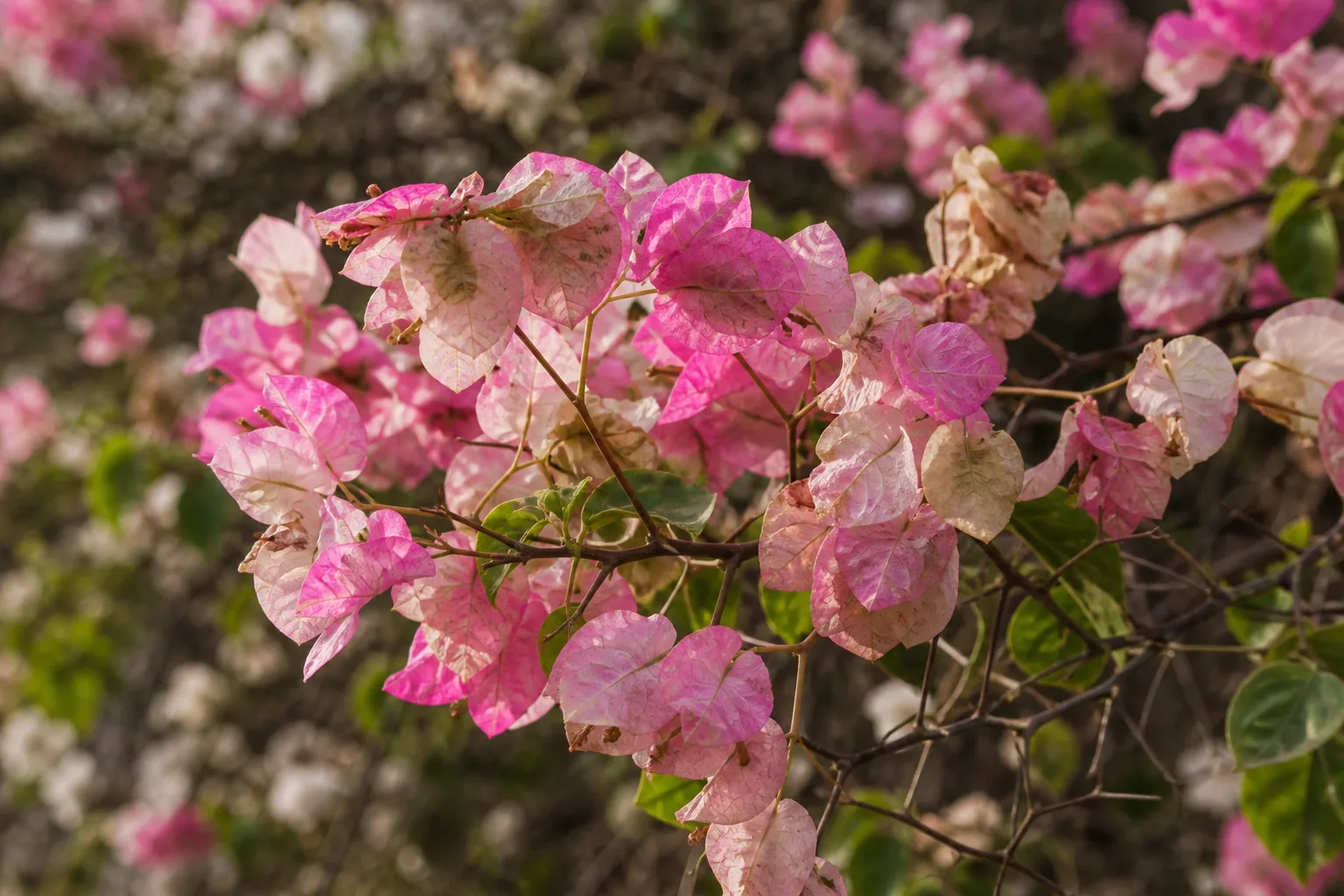
Faded Flowers on Bougainvillea: Causes, Checks & Fixes
This guide covers faded flowers on Bougainvillea. See also the general Faded Flowers guide, watering, and light pages for this plant.
Faded Flowers on Bougainvillea: Causes, Checks & Fixes
Quick answer
When growers search for faded flowers on bougainvillea, they are almost always watching bracts lose intensity-the papery magenta, orange, red, or purple modified leaves that surround tiny white true flowers-not traditional petals wilting. Some fading is completely normal at the end of a bloom cycle. Other dulling is a correctable care mistake you can fix before the next flush.
First step: decide whether the fade is normal senescence or premature dulling. If bract clusters have been vivid for several weeks, the tiny white flowers inside have finished, and the oldest bracts are turning papery brown while newer tips on the same shoot still look fine, you are watching a natural end-of-flush fade-deadhead spent clusters and wait for the next cycle. If young bracts look washed out mid-flush, the whole plant sits lush green with weak color, or color collapsed soon after you moved the pot indoors, treat insufficient direct sun as the lead suspect before stacking other fixes. See the bougainvillea light guide for the six-plus-hour direct-sun threshold.
Normal vs stress fade: at-a-glance checklist
Run through this list before you change watering, fertilizer, or placement.
Signals normal end-of-flush senescence (no emergency fix):
- Bracts have been vivid for roughly three to six weeks and only the oldest clusters are browning
- Tiny white true flowers inside spent clusters have finished
- Newer shoot tips on the same branch still carry acceptable color
- Green leaves and thorny stems look healthy; no sudden whole-plant collapse
Signals premature dulling (investigate care):
- Young bracts bleach mid-flush while stems keep extending
- The entire vine loses saturation during warm active growth-not just old tips
- Color collapsed within two to four weeks of moving from nursery sun to shade or indoor glass
- Mix stays damp four or more days after watering, or the vine is lush green with weak bracts everywhere
When the first list fits, deadhead and wait. When the second list fits, audit direct sun before touching fertilizer or repotting.
What faded flowers look like on Bougainvillea
The colorful display on bougainvillea comes from modified leaves called bracts-long-lasting, papery structures in fuchsia, red, orange, yellow, white, or purple that outshine the plant’s small tubular true flowers, much like poinsettia or dogwood. Faded flowers on this plant therefore means bract color loss, not large petals curling at the edges.
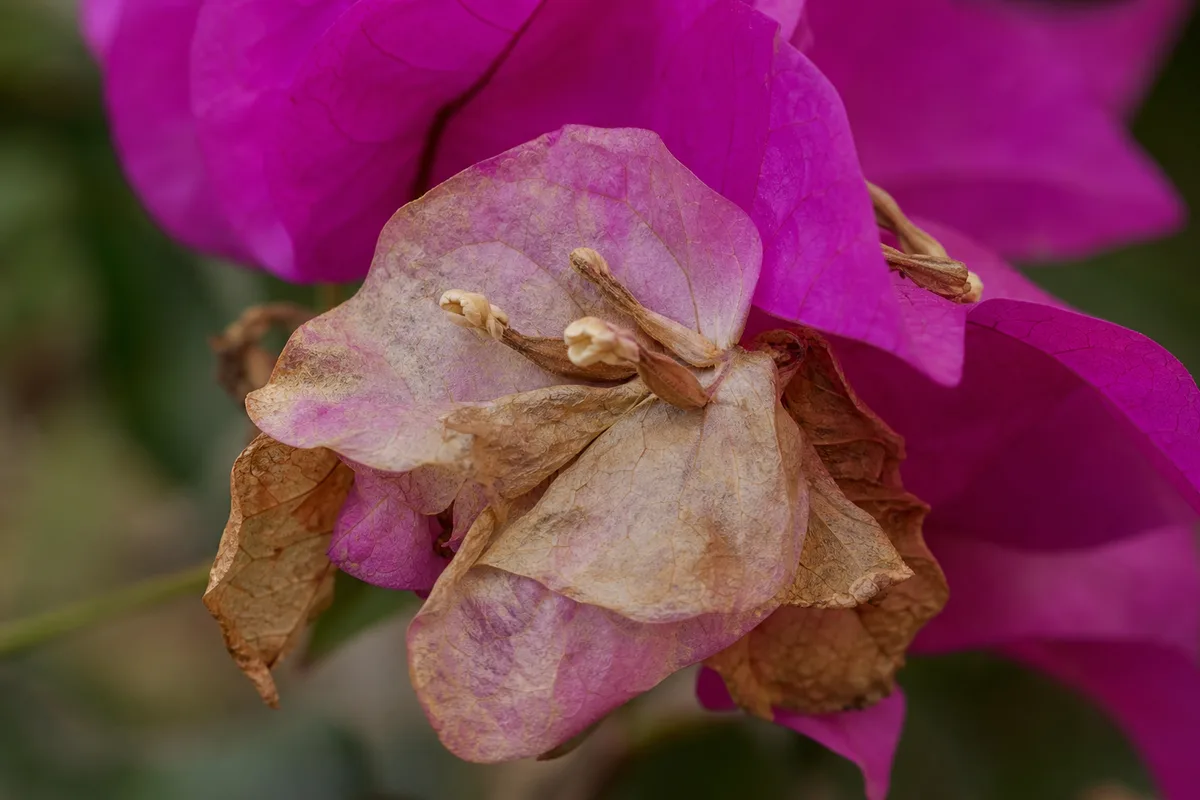
Faded Flowers symptoms on Bougainvillea - compare with healthy tissue on the same plant.
Normal end-of-cycle fade (expected)
After a strong flush in full sun, individual bract clusters gradually bleach toward tan or brown, feel dry and papery, and drop cleanly over one to three weeks. The vine may look less dramatic while green leaves and thorny stems remain healthy. This pattern follows three to six weeks of peak color on many outdoor specimens in warm weather. The RHS bougainvillea guide notes that bracts mature, persist for a period, then fall-after which growers cut back long growth to encourage a second flush.
Premature or stress-related dulling (needs action)
Stress dulling looks different from orderly senescence:
- Young bracts lose saturation mid-flush-magenta turns muddy pink, orange looks peachy and thin-while stems stay green and growing
- Entire plant loses color at once during active growth season, not just the oldest clusters
- Lush dark-green vine with no vivid bracts anywhere for weeks-overlap with no flowers on bougainvillea when color never appears
- Sudden fade after moving from a sunny nursery bench to a shaded patio or dim indoor room
- Winter indoor dulling when days shorten and glass delivers far less direct sun than outdoor summer exposure
Pale, stretched shoots reaching toward a window with wide gaps between leaves point toward light starvation-see not enough light when stretching dominates.
Bract stages: what to look for on your vine
Walk the plant cluster by cluster. Texture and pattern often tell the story before you need reference photos.
Stage 1 - Peak flush: Bracts feel papery but springy, color saturates the cluster edge to edge, and tiny white true flowers show at the centers. This stage can hold for several weeks on outdoor plants in full sun.
Stage 2 - Mid-flush dilution: Color softens evenly across a cluster-orange shifts peach, magenta turns dusty rose. On orange and yellow cultivars, some mid-flush softening is normal biology. When every cluster dulls at once during Stage 2, suspect light, water, or nitrogen-not cultivar alone.
Stage 3 - End-of-cycle senescence: Oldest clusters turn tan-brown, feel brittle, and detach with a light touch. Younger tips on the same shoot may still hold color. That mix of brown old tips and vivid new tips is the hallmark of normal fade.
Stage 4 - Stress dulling: The whole plant loses saturation while shoots extend with wide leaf gaps, or color never deepened after a shady move. Bracts look thin and watery-not dry-brown and papery like Stage 3.
Why Bougainvillea bracts lose color
Bougainvillea bract color depends on light intensity, bloom-cycle biology, water rhythm, and nitrogen balance. The same vine can show brilliant color one month and look tired the next without being diseased.
Normal post-pollination senescence
Bracts exist to advertise the tiny true flowers to pollinators. Once those flowers are pollinated and the flush ages, pigment fades and bracts senesce-a normal reproductive timeline, not a care failure. Research on Bougainvillea spectabilis cultivars shows bract color dilutes to varying degrees during flowering, with pigment composition shifting as bracts mature. You cannot re-brighten spent tissue; the plant must produce new wood for the next vivid display.
Insufficient direct sun (most common correctable cause)
UF/IFAS Gardening Solutions states that sun is critical-the more direct sun the vine receives, the more blooms and bracts it produces. Without direct sun, bougainvillea may survive but color washes out or never intensifies. The UC Master Gardener Program of Contra Costa County defines full sun as at least six hours per day for reliable bloom. Bract production is metabolically expensive; dim bright-indirect patio shade or a pot three feet from a window often yields green growth with pale, sparse bracts. This is the first check when young bracts dull prematurely-not when only the oldest clusters brown at the end of a flush.
Overwatering and too-comfortable roots
Bougainvillea performs better when soil is left a little dry and blooms best under a drench-and-dry rhythm. Constant moisture-from daily saucer water, automatic irrigation every few days, or oversized pots that never dry-keeps the plant in vegetative mode: abundant green leaves, weak or absent bract color. UF/IFAS Extension Charlotte County advises keeping bougainvillea on the dry side for plentiful blooms and healthy roots. Wet comfort dulls color the same way it suppresses bloom initiation on the no flowers page.
Excess nitrogen fertilizer
Too much nitrogen encourages leaves instead of blooms. Clemson HGIC warns that bougainvillea responds to fertilizer but that rank vegetative growth can come at the expense of the colorful bract display. High first-number NPK formulas, lawn fertilizer overspray, or weekly full-strength all-purpose feeds produce deep green thorny shoots with washed-out or missing bracts even when light is borderline adequate. Extension guidance also notes that bract color can be influenced by nutrition and moisture together-not light alone.
Intense midday sun on exposed bracts
Bracts that formed under strong light can bleach from peak pigment when they sit in relentless midday sun on a west wall or inside hot greenhouse glass. The RHS bougainvillea guide recommends moving plants to cooler conditions with protection from direct sun once bracts show full color so they persist longer. This differs from shade starvation-color was vivid first, then washed out during the hottest weeks. Light afternoon shelter on an otherwise sunny site can slow bleaching without starving the vine of the six-plus hours it needs overall.
Sudden light reduction after purchase or seasonal move
A bougainvillea flushed brilliantly at a nursery in open full sun often fades within days to weeks when placed on a partially shaded patio or brought indoors for winter. The bracts on existing wood were formed under high light; they cannot maintain peak pigment in weaker conditions. Short winter days and south glass that only delivers bright indirect light indoors produce seasonal dulling that reverses when the plant returns to outdoor sun in spring-not necessarily permanent failure.
Cultivar and age differences
Orange and yellow cultivars may show faster visible dilution during a flush than some pink selections as bracts age-normal cultivar biology, not always a care error. Older woody stems without recent tip growth rarely carry new vivid bracts until you prune to stimulate fresh wood per bougainvillea pruning guidance.
Lookalike symptoms to rule out
| What you see | Likely issue | Differentiating check |
|---|---|---|
| Oldest bracts brown; tips on same shoot still vivid | Normal senescence | Flush age 3–6 weeks; tiny flowers finished |
| All bracts pale mid-flush; long internodes; lean toward light | Insufficient direct sun | Count hours sun hits leaves; see light guide |
| Vivid bracts bleach mid-summer on west wall; leaves healthy | Sun bleaching | Color peaked then faded in heat; not dry-brown senescence |
| Lush green vine; damp mix days after watering | Overwatering | Top 2–3 in wet 4+ days; see watering guide |
| Fast thorny shoots; deep green leaves; weak bracts | High nitrogen | Review fertilizer NPK; see fertilizer guide |
| Bracts formed then dropped before fully opening | Bud drop | Color never fully developed; see bud drop |
| Bracts present but small and thin, not fully faded | Small flowers | Weak display, not end-of-cycle brown; see small flowers |
| Zero bracts anywhere for months | No flowers | Total absence, not fade; see no flowers |
How to confirm the cause
Work through these checks in order. Stop when one clearly explains the pattern.
-
Flush age - Note when the current bract clusters first opened vivid color. If three to six weeks have passed in warm weather and only the oldest clusters are browning while new tips still look acceptable, normal senescence is likely. No emergency intervention beyond deadheading.
-
Direct-sun audit - Track whether unfiltered sun hits the leaves for at least six hours on a typical warm-season day. A spot sunny at noon but shaded by 3 p.m. fails. Compare to the bougainvillea light guide if young bracts dull mid-flush or the whole plant washed out after a move.
-
Soil dry-down check - Press the top 2–3 inches (5–7 cm). If it stays cool and damp four or more days after your last deep soak, overwatering is contributing to dull color. Lift the pot-a heavy container with a dry surface still means wet roots inside.
-
Fertilizer history - Review products applied in the last six months. High first-number NPK, lawn feed nearby, or weekly full-strength all-purpose formulas fit green vine with weak bracts. Bloom boosters cannot replace missing sun.
-
Recent move timeline - Did color collapse within two to four weeks of shifting from nursery sun to shade, or from patio to indoor winter glass? Light reduction explains fade on existing bracts; new wood tells you whether corrected placement restores intensity.
-
Season - Short winter days and cool indoor rooms naturally produce paler, shorter-lived bracts. Do not diagnose permanent failure from a December indoor specimen; plan for spring outdoor recovery.
First fix for Bougainvillea
If bracts are uniformly brown and dry at the end of a normal flush: deadhead spent clusters back to the first healthy node below the fade. That is the correct first action for orderly senescence-not repotting, not fertilizer, not extra water.
If young bracts look washed out mid-flush, or the whole plant dulls while still actively growing: move the pot to a placement that receives at least six hours of direct sun on the leaves each day-or as close to that threshold as your site allows. Outdoors, choose the warmest, sunniest wall or fence with open sky exposure. Indoors, place the pot on the brightest south or west sill, not across the room. If the plant lived in deep shade, acclimate over 7–14 days to avoid scorching unacclimated leaves.
If bracts peaked vivid then bleached on a blazing west wall while leaves stay healthy: add light afternoon shelter-a lattice screen or dappled shade after peak heat-without moving the vine into deep shade.
Do not repot, fertilize, or hard-prune on the same day you fix light. Once sun is honest, address watering second: let the top 2–3 inches dry between deep soaks per the watering guide. Address nitrogen third: pause high-N feeding; resume with a low-nitrogen bloom formula at half strength only after new firm growth appears in corrected light per the fertilizer guide.
Step-by-step recovery
After normal senescence
- Pinch or snip dry brown bract clusters back to healthy wood.
- Apply light tip pruning on overly long bloomed shoots if the vine looks leggy-see pruning guide.
- Allow a dry-down cycle before the next deep soak; slight drought stress after a flush can trigger the next color wave.
- Wait four to eight weeks in warm active growth for new bract clusters on fresh tips.
After premature dulling from light, water, or nitrogen
- Increase direct sun as described above; verify six-plus hours on the canopy.
- Correct watering-deep soak when top 2–3 in dry; empty saucers; disconnect automatic irrigation that keeps mix wet.
- Pause high-nitrogen fertilizer for four to six weeks; flush salts if crust appears on soil surface.
- Deadhead any remaining spent brown bracts so the plant is not maintaining senescent tissue while recovering.
- Judge progress on new shoot tips only-old faded bracts will not re-intensify.
After sun bleaching on an otherwise sunny site
- Add afternoon shelter during the hottest weeks while keeping morning-to-midday sun.
- Deadhead any fully bleached clusters that feel papery and dry.
- Watch new flushes on pruned tips for whether color holds longer with moderated afternoon exposure.
Recovery timeline and rebloom expectations
| Confirmed cause | What improvement looks like | Typical timeline |
|---|---|---|
| Normal end-of-flush senescence | Brown bracts removed; new tips begin coloring on next cycle | Next flush in 4–8 weeks in warm sun after deadheading |
| Light increase (shade → full sun) | Shorter internodes; richer color on new bract clusters | 4–8 weeks for first strong new flush |
| Overwatering corrected | Mix dries predictably; new bracts saturate on fresh wood | 3–6 weeks after dry-down stabilizes |
| Nitrogen reduced | Less rank shoot extension; color returns on new growth with adequate sun | 4–8 weeks; fertilizer alone is slow without photons |
| Sun bleaching moderated | New clusters hold saturation longer through summer heat | Next flush after afternoon shelter added |
| Seasonal indoor winter dulling | Maintenance foliage; pale or sparse indoor bracts | Next outdoor warm-season flush when light returns |
Spent bracts on old wood do not turn vivid again. Recovery means new bract clusters on new growth. If nothing colors after eight weeks of verified six-plus hour sun and corrected watering through late spring or summer, reassess whether the site can deliver enough intensity for this full-sun genus.
What not to do
Do not treat normal brown end-of-cycle bracts as disease and spray fungicides-they are senescing tissue. Do not increase watering when color fades hoping to “refresh” the plant; wet soil dulls future flushes. Do not apply high-nitrogen fertilizer on faded bracts before fixing sun and dry-down-you will get more green leaves, not richer color.
Do not expect bright indirect light to restore peak pigment; bougainvillea needs direct sun on the canopy for strong bract color. Do not shear the plant like a hedge mid-flush; you remove soft wood carrying bracts. Do not move from deep shade to unfiltered midday sun in one day without acclimation.
Avoid leaving pots in standing water saucers or on irrigation shared with thirstier shrubs. Do not confuse spent brown bracts with sun scorch on green leaves-scorch shows bleached or crispy foliage patches, not orderly bract browning after a flush.
How to prevent faded bracts next time
Treat full sun plus controlled drought as default culture. Six-plus hours of direct sun on the canopy per the light guide, dry-down between deep soaks per the watering guide, and low-nitrogen feeding at half strength during active growth per the fertilizer guide keep bracts vivid longer on each flush.
Deadhead spent bracts promptly after each cycle rather than leaving papery brown clusters for months-they drain visual impact and can harbor pests. Light tip-prune bloomed shoots after bracts fade to stimulate the next color wave on fresh wood. Keep containers only slightly larger than the root ball so soil dries fast enough to support bloom rhythm.
On west-facing walls, plan afternoon shelter once bracts reach peak color so summer heat does not bleach them prematurely. Acclimate plants gradually when moving between indoor winter storage and outdoor summer sun. Accept that some mid-flush dilution on orange cultivars may be normal biology; focus on whether new wood opens with strong color in corrected conditions.
When to worry
Escalate beyond standard fade troubleshooting if:
- Yellow leaves, sour soil, and wilting on wet mix accompany color loss-inspect roots before chasing bloom products; see overwatering and root rot.
- Bracts and buds form then abort before opening repeatedly-see bud drop rather than simple senescence.
- Every young bract dulls mid-flush after a full growing season with verified six-plus hour sun and corrected watering-rare; consult your county extension office for cultivar-specific or disease questions.
- Mass leaf drop after drought stress means you dried too far; rehydrate once and resume gentler dry-down.
Normal end-of-flush brown bracts are expected. Premature whole-plant dulling in peak summer sun with wet soil and heavy feeding is the pattern to fix-not panic over every papery bract that finishes its cycle.
Weekly bract check during bloom season
During warm months when flushes are active, spend thirty seconds at each watering: note which clusters are at peak, which are browning normally at Stage 3, and whether new tips are opening with strong color. Catch premature dulling in week one-whole-plant washout mid-flush is far easier to reverse after a sun or dry-down correction than after a month of comfortable shade and wet soil.
Related Bougainvillea guides
| Topic | Guide |
|---|---|
| Sun hours, windows, grow lights, acclimation | Bougainvillea light needs |
| Dry-down rhythm and drought-stress bloom trigger | Bougainvillea watering |
| Low-N bloom formulas and nitrogen mistakes | Bougainvillea fertilizer |
| Post-flush pruning and bloom-on-new-wood timing | Bougainvillea pruning |
| Zero bracts, not faded bracts | No flowers |
| Bracts form then abort | Bud drop |
| Weak bract size, not end-of-cycle fade | Small flowers |
Conclusion
Faded flowers on bougainvillea means bracts losing intensity-and the first question is whether that fade is normal senescence after a three-to-six-week flush or premature dulling from too little direct sun, too much water, excess nitrogen, or summer bleaching on an exposed wall. Deadhead spent brown clusters and wait for new wood when the flush simply finished. Move to six-plus hours of direct sun, dry soil between deep soaks, and lean feeding when young bracts wash out mid-season. Old faded bracts never re-brighten; judge recovery on the next vivid flush on new shoots, not on spent tissue. Align culture with the site’s bougainvillea light and watering guides and color returns on the cycle this sun-loving vine was built for.