Bud Drop on Bougainvillea: Causes, Checks & Fixes
Quick answer
Bougainvillea drops bracts and buds when light, temperature, or watering shifts during an active flush-especially after moving indoors, overwatering, or cold nights below about 50°F (10°C). First step: confirm the plant still gets six or more hours of direct sun and let the top of the mix dry before the next drink.
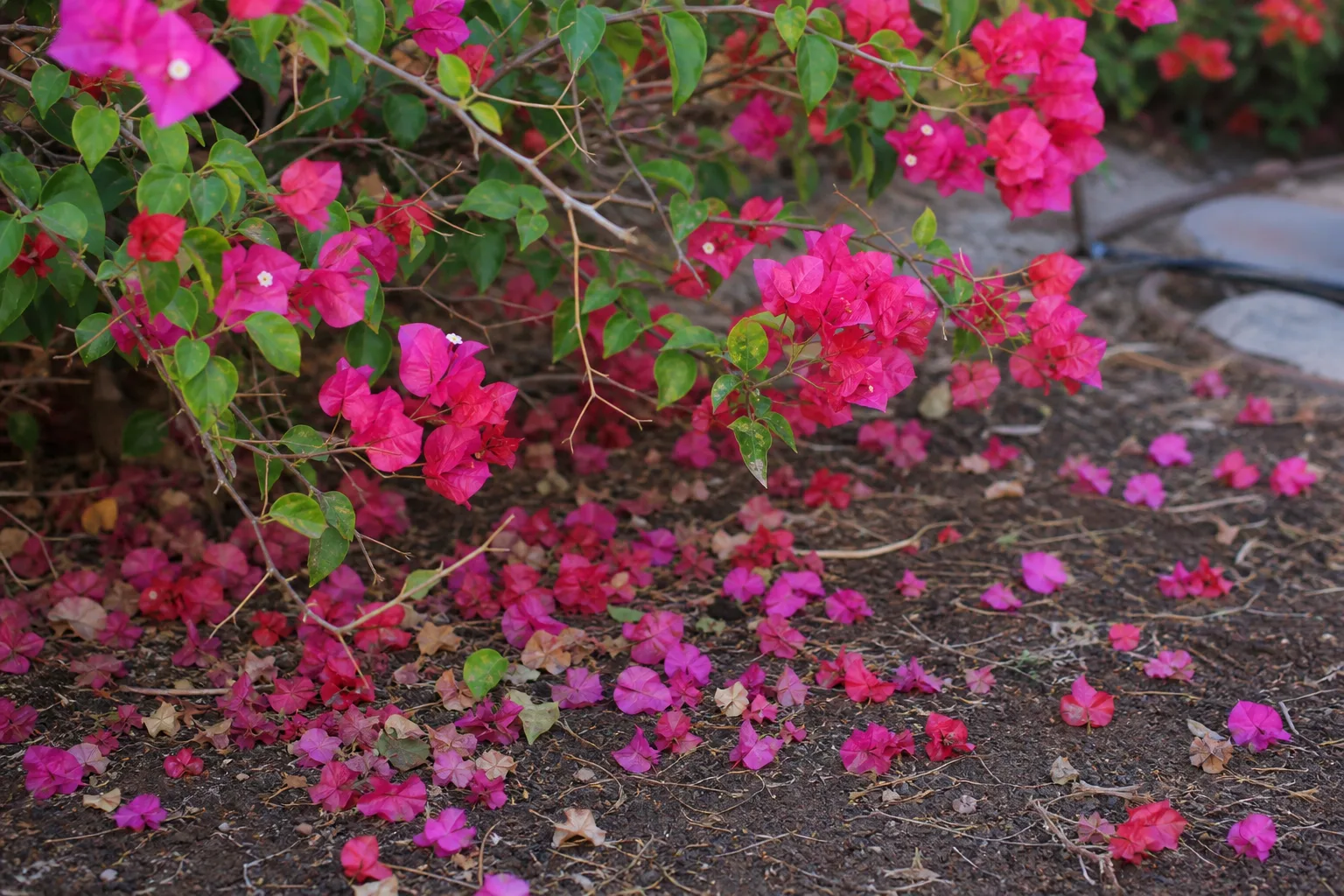
Bud Drop on Bougainvillea: Causes, Checks & Fixes
This guide covers bud drop on Bougainvillea. See also the general Bud Drop guide, watering, and light pages for this plant.
Bud Drop on Bougainvillea: Causes, Checks & Fixes
Quick answer
Bougainvillea drops bracts and buds when something in the environment shifts during an active flowering flush-most often insufficient direct sun, cold night temperatures, overwatering on Bougainvillea, high-nitrogen fertilizer, or relocation shock after moving a patio plant indoors for winter. The colorful “flowers” on bougainvillea are actually modified leaves called bracts surrounding tiny true flowers. Bract production is metabolically expensive; the plant aborts buds quickly when conditions no longer support bloom.
First step: verify the plant receives at least six hours of direct sun daily on the leaves themselves, and let the top few centimetres of mix dry before watering again. Do not repot, prune heavily, or switch to high-nitrogen feed while bracts are still forming. Stabilize light and watering for two to three weeks before judging whether a second flush will appear on new wood.
What bud drop looks like on Bougainvillea
On a healthy flush, papery bracts open in clusters along new woody stems and hold color for several weeks-often three to six weeks per cycle outdoors in warm climates, and up to eight weeks on a well-lit container. Premature bud drop looks different: bracts yellow, wrinkle, or dry before reaching full color; tiny true flowers never open; or entire clusters fall while surrounding stems still look green.
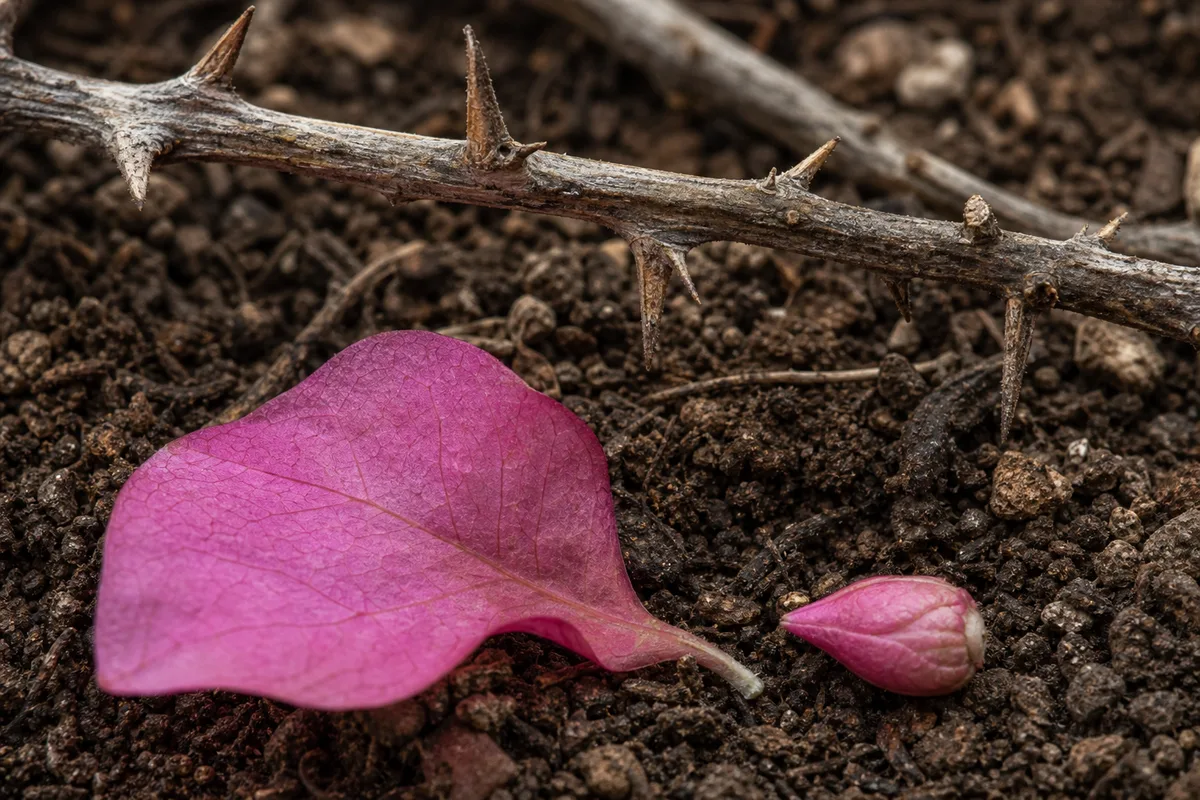
Bud Drop symptoms on Bougainvillea - compare with healthy tissue on the same plant.
You may see bracts drop one cluster at a time after a sudden environmental change-common after bringing a full-sun patio pot to a dim indoor window. Leaf drop sometimes accompanies bract abort when nights turn cold or roots stay wet too long. Stems may continue pushing new tips, but those tips stay small and green without initiating bracts.
Natural bract senescence is normal after a completed flush. Bracts fade to papery tan or pale versions of their peak color, then drop together while the plant rests briefly before new growth. This is not a crisis if sun hours stayed high, watering was appropriate, and no cold snap or repot occurred mid-flush. The distinction matters: premature abort during bud formation needs a care correction; post-bloom fade needs patience for the next cycle on new wood.
Why Bougainvillea drops bracts and buds
Insufficient direct sun and indoor winter shock
Bougainvillea is a full-sun subtropical vine. Without direct sun on the leaves for most of the day, the plant shifts energy toward vegetative growth and aborts bracts rather than finishing bloom. Low light and shady areas cause plants to drop their bracts-this is one of the most predictable abort patterns.
Indoor winter storage is a classic trigger. A plant that colored beautifully on a south-facing patio loses intensity when moved inside for frost protection. Even a bright room without direct sunbeams on the canopy is often enough to abort an active flush within days. Shock leaf and bract drop after relocation is widely reported by growers and linked to over-watering, insufficient sun, and cold temperatures in combination.
Night temperature swings and cold stress
Bougainvillea prefers warm nights during active growth. Production guidelines recommend a minimum of 65°F (18°C) at night and 75–95°F during the day for best flowering. The RHS advises a minimum night temperature of 10°C (50°F) for container plants under glass, with leaf drop likely if storage falls below that threshold.
When evening temperatures dip during an active bud set-common on patios in early spring or fall, or near drafty windows indoors-bracts and leaves abort together. This is environmental, not disease. Container plants feel cold swings faster than in-ground vines against a warm wall.
Water stress - overwatering vs. controlled dry-down
Bougainvillea evolved for excellent drainage and periodic dryness. Overwatering keeps roots oxygen-starved, promotes rot, and triggers leaf and bract drop. UF/IFAS notes that too much water promotes root rot and causes leaves to drop-the same root stress aborts buds before bracts finish opening.
Paradoxically, slight drought stress can stimulate flowering in commercial production: growers often allow plants to dry just to the point of wilting to induce bloom. Excessive drying, however, causes leaf drop and dormancy. The problem for home growers is usually the opposite-babying the plant with frequent water while bracts form, especially in cool indoor air where evaporation is slow.
High-nitrogen fertilizer and oversized pots
UF/IFAS is direct: too much nitrogen encourages leaves instead of blooms. Commercial guidelines warn that over-fertilization adds growth but inhibits blooming. A recent dose of lawn fertilizer, balanced 20-20-20, or any high-nitrogen feed during bract set often produces lush green tips with no color.
An oversized pot also delays bloom because the plant channels energy into roots instead of reproductive structures. Slightly root-bound containers often bloom better-sudden repot into a much larger pot during an active flush commonly aborts bracts.
Bougainvillea repotting guide, heavy pruning, and relocation during active flush
Bougainvillea blooms on current season’s growth. Disturbing roots, cutting back hard, or moving the plant while bracts are forming breaks the hormonal balance needed to hold buds. Repot in early spring before growth accelerates-not mid-flush. If you must move a container for frost, choose the brightest direct-sun spot available and accept that some abort may occur; stabilize conditions rather than stacking corrective treatments.
How to confirm the cause
Work through these checks in order:
- Sun audit - Does direct sunlight fall on the leaves for at least six hours daily? A bright room without sunbeams on the canopy fails this test even if the window looks sunny.
- Recent move timeline - Did the plant come indoors, shift to shade, or rotate away from its sun wall within the last two weeks? Relocation shock fits abort that started suddenly after the move.
- Night temperature - Have evenings dropped below about 50–65°F (10–18°C) during bud set? Drafty windows and early-fall patio nights are common triggers.
- Soil moisture pattern - Is the mix staying wet for many days between waterings? Squeeze a handful from mid-pot; soggy, cool, dark mix points to overwatering abort. Dust-dry mix with limp leaves suggests excessive drought stress.
- Fertilizer history - Any high-nitrogen feed in the last month? Check label NPK; first number much higher than the third fits foliage push over bracts.
- Pot size vs. root mass - Did you repot recently into a much larger container? Root disturbance plus extra wet soil fits abort after repot.
- Natural fade vs. abort - Did bracts hold full color for several weeks before fading evenly? That is normal senescence. Yellowing and falling during bud formation is premature abort.
- Pest spot-check - Aphids or spider mites on new tips can distort buds. Inspect leaf undersides and young shoots; treat pests only after confirming sun and water are stable.
| Pattern | Likely cause | First direction |
|---|---|---|
| Abort started days after indoor move | Light shock + temperature shift | Maximize direct sun; stabilize watering |
| Bracts drop with yellow leaves after cold nights | Temperature stress | Warm placement; protect from drafts |
| Wet soil, limp stems, bracts falling | Overwatering / root stress | Dry down; check drainage |
| Lush green tips, no bracts after feeding | High nitrogen | Pause feed; resume low-N bloom formula later |
| Bracts faded after weeks of full color | Normal post-flush senescence | Wait for new wood; maintain sun |
First fix for Bougainvillea bud drop
Move the plant to the brightest direct-sun exposure you can offer-outdoor Bougainvillea light guide if frost allows, or directly in front of your strongest south- or west-facing window-and stop watering until the top 3–5 cm of mix feels dry.
This single step addresses the two most common abort drivers: insufficient direct sun and overwatering during a bloom flush. Outdoors, place the pot where unfiltered sun hits the leaves for most of the day. Indoors, sit the container on or within one foot of south or west glass-not across the room in “bright” ambient light.
After repositioning, wait two to three weeks before changing fertilizer, repotting, or pruning. Bougainvillea responds to one stable correction at a time. If nights are forecast below 50°F (10°C), move to the warmest bright spot overnight rather than a dim room.
Step-by-step recovery
Once sun and dry-down are in place:
- Acclimate gradually if moving from deep shade to full outdoor sun-increase exposure over seven to fourteen days to avoid scorching leaves while still raising daily light totals.
- Water deeply, then let dry - Soak until water runs from drainage holes, then wait until the top few centimetres are dry before the next drink. Do not water on cool nights when evaporation is minimal.
- Hold fertilizer for two weeks - Resume with a low-nitrogen, higher-potassium bloom formula only after new growth looks firm and the abort has stopped spreading.
- Avoid repot until after the flush cycle - Root disturbance during recovery often aborts the next wave of buds.
- Prune only dead or fully brown bract stems - Leave green wood that may still push a secondary flush on warm-climate plants.
- Add supplemental light indoors if six hours of direct window sun is impossible-a high-output full-spectrum LED 10–12 hours daily maintains foliage but rarely matches outdoor bloom intensity alone.
- Protect from ethylene sources indoors - Ripening fruit, gas appliances, and closed garages with poor ventilation can stress sensitive plants; keep bougainvillea in ventilated bright space.
Recovery timeline
If the cause was a recent indoor move or short cold snap, bract abort often stabilizes within one to two weeks once sun and warmth return-though dropped bracts do not reattach. Expect the next visible bract clusters on new wood in three to six weeks in warm conditions with adequate light. Cool winter indoor storage may pause color entirely until spring lengthening days; semi-deciduous leaf drop in low winter light is normal on stored plants and not always a crisis.
Judge success by firm new shoots, short internodes, and fresh bract initiation-not by old clusters re-coloring. Severe root rot from chronic overwatering may take several months to outgrow and can require trimming dead roots before any bloom returns.
Lookalike symptoms and causes to rule out
Bud drop overlaps with several sibling problems:
- No flowers / no new bracts on Bougainvillea - The plant never initiates buds, usually from chronic low light or persistent overwatering. See the no-flowers guide if green growth continues without any bract clusters forming.
- Faded flowers - Bracts lose intensity after weeks of open color; this is often normal senescence, not abort. Fading that starts early during bud swell points back to light or temperature stress.
- Small flowers - Bracts open but stay undersized, usually from partial sun or excess nitrogen-not the same as clusters falling before opening.
- Wilting or drooping leaves - Uniform limpness with dry soil is drought; with wet soil is root stress. Bract drop may accompany either but needs the moisture diagnosis first.
- Pest damage - Distorted young bracts with sticky residue or webbing suggest aphids or spider mites rather than pure environmental abort.
Mistakes to avoid
Do not repot into a larger container while bracts are aborting-extra wet soil volume worsens root stress. Do not apply high-nitrogen fertilizer to “help” a plant that dropped buds; that pushes more green growth. Do not move a recovering plant back to a dim interior corner because leaves scorched slightly during acclimation-filter peak midday sun if needed, but do not trade direct sun for shade.
Do not water on a calendar while the mix is still damp; bougainvillea aborts easily when roots sit wet in cool indoor air. Do not prune heavily mid-flush hoping to force rebloom-you may remove the wood that was about to flower. Do not confuse normal post-bloom bract shed with an ongoing problem requiring repeated interventions.
Bougainvillea care cross-check
Stable bract retention requires the same foundation as the light and watering guides: full direct sun, well-drained mix, and dry-down between waterings. Bougainvillea blooms in cycles on new wood, often profiting from high light intensity, moderate temperatures, and longer nights in early spring-conditions that differ sharply from generic houseplant “bright indirect light” advice.
Slightly root-bound plants in appropriately sized pots often hold blooms better than freshly repotted specimens swimming in excess soil. Keep nitrogen modest during flush periods; phosphorus and potassium support bract development without the foliage surge that cancels bloom. When storing indoors for frost, choose the brightest direct-sun window and water sparingly through dormancy rather than treating the plant like a tropical foliage houseplant.
How to prevent bud drop next time
Maintain six or more hours of direct sun through the entire flush-do not move to shade mid-bloom for convenience. Acclimate over seven to fourteen days when shifting between patio and indoor winter storage. Repot in early spring before new growth accelerates, not while bracts are forming.
Use a low-nitrogen bloom fertilizer on an established schedule during active outdoor growth; go easy on fertilizer overall because excess nitrogen is a common bloom inhibitor. Allow the top of the mix to dry between waterings, especially in cool seasons. Protect container plants from night temperatures below about 50°F (10°C) during bud set when possible.
Inspect weekly during flush periods for pests on new tips, and tie long stems to supports so wind does not snap wood carrying bract clusters. Accept that a completed flush will shed bracts naturally-plan for the next cycle on new growth rather than intervening repeatedly during normal fade.
When to worry
Escalate if bracts abort while soil stays soggy for more than a week, stems soften at the base, or sour-smelling mix accompanies widespread leaf drop-that pattern overlaps with root rot, not simple environmental abort. Unpot and inspect roots before fertilizing or repotting again.
Act quickly if an entire container defoliates after a hard frost or prolonged sub-50°F (10°C) exposure-warm the brightest spot available and reduce watering until new shoots appear. Firm green stems with aborting bracts after a recent move are lower urgency; stabilize sun and dry-down first.
Conclusion
Bougainvillea bud drop is usually an environmental abort-light loss, cold nights, wet roots, or nitrogen push-not a mysterious disease. Confirm whether bracts fell prematurely during formation or faded naturally after weeks of color. Move to maximum direct sun, let the mix dry appropriately, and hold off on repot, heavy prune, and high-nitrogen feed until new wood initiates the next flush. Prevent recurrence by keeping sun hours high through the bloom cycle and acclimating gradually when patio plants move indoors for winter.
When to use this page vs other Bougainvillea guides
- Bougainvillea watering guide - Use for routine moisture checks before assuming bud drop is the main issue.
- Bougainvillea problems hub - Browse all 20 common issues on this species.