Slow Growth on Bird's Nest Fern: Causes, Checks & Fixes
Quick answer
Bird's nest fern is a slow-to-moderate grower - one to several new fronds per warm season in good light is normal. First step: move the pot 12–24 inches closer to bright indirect light and judge the next unfolding crown frond, not the old leaves.
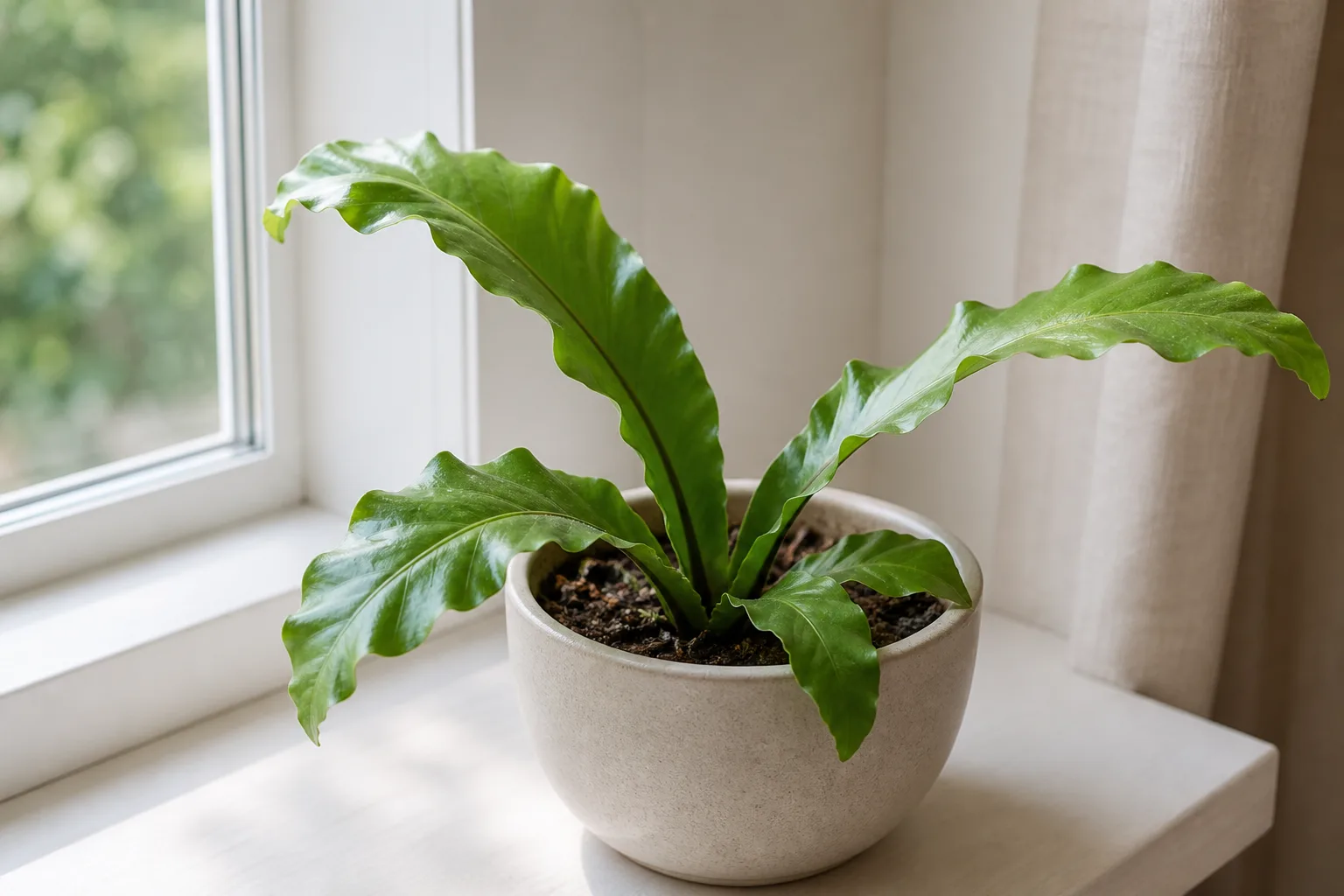
Slow Growth on Bird's Nest Fern: Causes, Checks & Fixes
This guide covers slow growth on Bird's Nest Fern. See also the general Slow Growth guide, watering, and light pages for this plant.
Slow Growth on Bird's Nest Fern: Causes, Checks & Fixes
Quick answer
Slow growth on bird’s nest fern (Asplenium nidus) is often normal, not a crisis. This species is a slow-growing tropical fern that builds one architectural rosette from a single central crown. Indoors it typically adds one to several new fronds per warm season in good light - not the weekly leaf flush you see on pothos or philodendrons. A firm, glossy rosette that looks unchanged for a month in winter is usually resting, not dying.
First step: move the pot 12–24 inches closer to your brightest safe window and watch the next unfolding frond from the crown. Bird’s nest fern wants bright, filtered indirect light - the kind near an east window or a bright north exposure - not ambient room glow six feet from the glass. Do not repot, fertilize, or change your watering schedule until you have given the plant a fair light trial and read what the crown produces.
For baseline culture, see the Bird’s Nest Fern overview. If new fronds are pale and small rather than simply infrequent, cross-check not enough light - the most common indoor limiter behind a growth stall.
Why Bird’s Nest Fern grows slowly (and when that is normal)
Bird’s nest fern evolved as an epiphyte on tree trunks in humid tropical rainforests. Its metabolism is tuned for filtered canopy brightness, steady warmth, and high ambient moisture - not for fast vertical mass production. Clemson HGIC notes these ferns grow slowly and can be repotted every few years in spring when new growth appears. That pace is species-normal, not neglect.
The rosette architecture explains the timeline. All new fronds emerge from one central meristem - the crown. There are no independent stems or offsets on a standard single-crown plant. Growth you can measure is almost entirely new frond count and unfurl speed, not expansion of mature outer blades. A plant that looks “stuck” may be producing tissue you have not noticed yet: a tight fiddlehead can sit in the crown for weeks before visibly opening.
Normal slow growth includes:
- One to four new fronds over spring and summer in bright indirect light
- Little to no crown activity from late fall through early spring as days shorten
- Outer fronds staying firm and green while the center pauses
- Indoor fronds reaching roughly 18–24 inches long over years, not weeks
Abnormal stall means zero new crown fronds through an entire warm season, new fiddleheads that abort or stay tiny, or a rosette that loses gloss and firmness while growth stops. That pattern usually traces to insufficient light, low humidity, cool drafts, root stress, or crown damage - not to the fern simply being a slow grower.
What slow growth looks like on Bird’s Nest Fern
On this fern, slow growth has a distinct signature centered on the crown, not the outer rim:
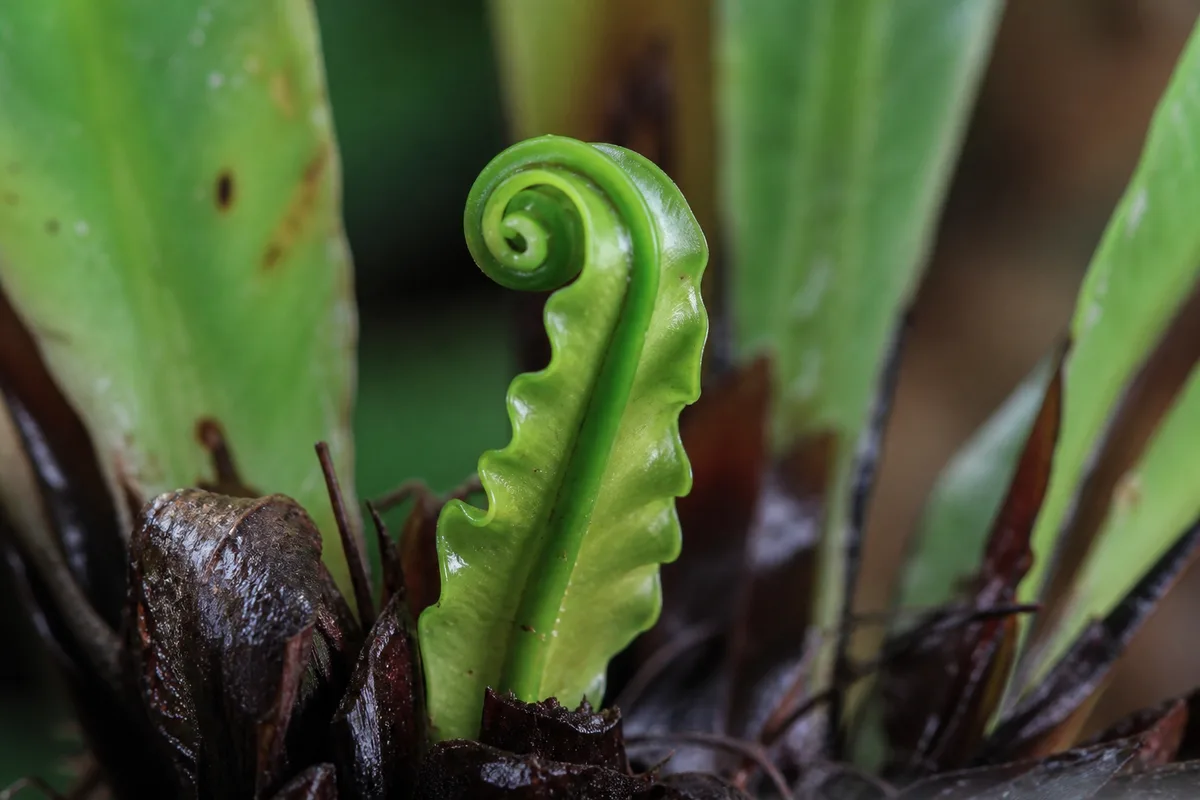
Slow Growth symptoms on Bird’s Nest Fern - compare with healthy tissue on the same plant.
- No new fiddlehead visible at the rosette center for many weeks during spring or summer
- New fronds, when they appear, smaller, thinner, or slower to unfurl than fronds produced in brighter months
- Static rosette size - the plant neither widens nor gains height despite months of stable care
- Firm, green mature fronds around the edge while the center stays quiet (healthy pause vs decline)
- Soil that stays wet unusually long in a dim spot, sometimes with yellowing lower fronds
What slow growth is not, by itself: crispy scorched patches from direct sun, sudden collapse of multiple fronds, or a soft mushy crown with sour soil. Those patterns point to overwatering, root rot, or crown rot - not normal species pace.
Bird’s nest fern does not flower indoors. A stalled rosette is never a bloom problem on this foliage fern - do not chase heavy fertilizer to “force” flowers that will not appear.
How this differs from not enough light, leggy growth, and watering problems
Slow growth overlaps with other bird’s nest fern issues but is not identical to them:
| Pattern | Likely issue | Where to read next |
|---|---|---|
| Infrequent fronds, firm green rosette, dim but stable spot | Normal pace or mild light limit | This page - brighten placement first |
| Small pale new fronds, lean toward window, wet soil lasting longer | Insufficient light | Not enough light |
| Wide gaps between fronds, stretched stipes, lopsided rosette | Leggy reach for light | Leggy growth |
| Limp fronds on heavy wet soil, yellowing base | Overwatering / root decline | Overwatering |
| Light pot, dusty dry surface, shrunken root ball | Underwatering | Underwatering |
| Soft crown, sour mix, fronds collapsing inward | Crown or root rot | Root rot |
| Brown crisp edges, firm fronds, slow unfurling in heated winter air | Low humidity | Low humidity |
This page focuses on growth pace and stall diagnosis. When pale small new fronds are the main signal, the not enough light guide goes deeper on placement and shadow tests.
Why Bird’s Nest Fern growth stalls abnormally
Insufficient bright indirect light indoors
The label “low-light tolerant” causes more bird’s nest fern stalls than almost any other myth. The plant can survive in a dim corner, but survival is not active growth. Clemson HGIC recommends bright, indirect light in east- or north-facing rooms for healthy indoor culture. In marginal light, photosynthesis drops, crown activity slows, and the pot stays wet longer because the plant uses less water - a overlap covered on the light guide.
Winter growth pause
Shorter photoperiods and cooler room temperatures slow tropical fern metabolism from late fall through early spring. Soil dry-down stretches. Crown output may pause for weeks while outer fronds look unchanged. That quiet period is expected - not the same as a warm-season stall in a bright window.
Low humidity and dry heating-season air
This fern evolved in constantly humid forests. Clemson HGIC recommends a humidifier nearby in winter or a pebble tray where the pot sits above - not in - standing water. Below roughly 50–60% relative humidity, especially with indoor heating running, new fronds may unfurl slowly or stall with brown edges even when light and watering are otherwise acceptable. See low humidity when edge browning accompanies the stall.
Cool temperatures and drafts
NC State Extension lists ideal temperatures of 60–70°F for active growth. Sustained exposure below about 10–13°C (50–55°F) stresses tissues and slows crown output. Air-conditioning vents, single-pane winter glass, and open doors near the pot extend stall timelines even when light is adequate.
Root-bound or oversized pot
Severe root crowding can limit new frond production until the plant is repotted in spring. Conversely, an oversized decorative pot holds excess wet mix around a small root ball, slowing dry-down and suppressing root function - a common hidden brake on growth. Clemson HGIC suggests repotting every few years in spring when new growth appears. See the repotting guide before upsizing containers hoping to force speed.
Under-fertilization in growing season
Bird’s nest fern is not a heavy feeder, but years in unchanged mix without any spring–summer feeding can produce smaller new fronds. Clemson HGIC recommends monthly fertilizing from late spring through summer at half the label rate for houseplant ferns. Feeding a stressed or winter-dormant plant does not accelerate growth and can salt the mix.
Recent repot shock
Repotting during active growth or into a much larger container can pause crown output for several weeks while roots settle. Combine repotting with a major light move or feeding burst and the stall can look alarming even when the plant is otherwise healthy.
Crown rot from overwatering
Chronic overwatering - especially water poured into the central rosette - can destroy the only meristem that produces fronds. Early crown rot sometimes masquerades as “slow growth” before collapse. If the crown feels soft while soil stays wet, treat as overwatering or root rot urgency, not a pace question.
How to confirm the cause
Work through these checks in order before repotting, feeding, or pruning:
- Season. Note the calendar. Minimal crown activity from November through February in a temperate indoor climate is often normal winter quiet. Evaluate stall severity only across spring and summer.
- Newest frond vs older fronds. Compare the unfolding center fiddlehead to the last fully opened frond. Smaller, paler, or much slower new tissue with greener mature fronds strongly suggests light is the limiter - confirm with the not enough light checks.
- Distance and direction. Measure feet from window glass and which exposure the pot faces. Deep interior placement or a north room with obstructed glass is higher risk than one to three feet from an east window.
- Hand-shadow test at frond height. Around midday, hold your hand between the window and the plant. Bright indirect light gives a soft, fuzzy shadow. Almost no shadow means the spot is likely too dim for normal warm-season growth.
- Soil dry-down speed. Press the top inch of mix. Soil that stays wet for many days while growth is slow often means the plant is photosynthesizing less in low light - fix placement and watering together per the watering guide.
- Crown firmness. Gently check the central growing point. Firm dry crown tissue with stable outer fronds supports a cultural limit. Soft wet crown tissue with sour soil points to rot - not slow growth.
- Humidity and heat context. Heated winter air without supplemental humidity can slow unfurling even in acceptable light. Note crisp brown margins on new or outer fronds.
- Pot size and root check. Lift the pot after a normal dry-down. Very light soil with limp fronds suggests underwatering. Very heavy soil for weeks suggests overwatering. Roots circling densely at drainage holes may need spring repotting - not an emergency winter upsize.
If the rosette is firm, pest-free, and simply adds one frond per summer in a hallway with no real window exposure, the stall is likely fixable light limitation - not species failure.
First fix for Bird’s Nest Fern
Move the pot to the brightest location that still avoids harsh direct afternoon sun on the fronds. For most homes that means one to three feet from an east window, a bright north exposure, or behind a sheer curtain on filtered south or west glass. Clemson HGIC places bird’s nest fern in bright, indirect east- or north-facing light - that intensity supports steady crown output better than a decorative shelf across the room.
Make this light correction alone first. Do not repot, fertilize, and relocate to hot direct glass on the same day. If the plant lived in very dim light for years, ease it closer over one to two weeks and watch the newest frond - sudden scorch is possible on unacclimated tissue.
Once active growth resumes in late spring, you may add one half-strength houseplant fertilizer application per month through summer per Clemson guidance - but only after you see a swelling fiddlehead, not while the plant is winter-quiet.
Step-by-step recovery
- Relocate toward brighter filtered light using the distance targets above. Rotate the pot a quarter turn weekly once growth resumes for even crown output.
- Adjust watering to match new light. Brighter placement increases water use. Resume the top-inch dry rule from the watering guide - water along the outer pot edge, never into the crown.
- Raise humidity if winter heating or dry air accompanies slow unfurling. A humidifier beats occasional misting for consistent results.
- Feed lightly in late spring after a new fiddlehead appears - half-strength monthly through summer only. Skip feed entirely from fall through winter.
- Repot in spring only if needed - roots at drainage holes, mix that no longer drains, or severe crowding. Use airy tropical mix and a pot only one size larger. See repotting.
- Wait one full warm season before judging failure. New fronds often appear over spring and summer, not within days of a light move.
Recovery timeline
In bright indirect light, many bird’s nest ferns produce one to several new fronds over a single growing season. After a light upgrade in early spring, the first visible fiddlehead movement may take four to eight weeks; full unfurling of that frond can take additional weeks on this slow species.
Existing fronds do not accelerate after you improve care. Recovery means the next crown fronds emerge firmer, glossier, and closer to full size - not taller or wider old blades. Through winter, expect little to no crown change; that pause is normal.
If nothing new appears after a full spring and summer in improved bright indirect light with correct edge watering and moderate humidity, inspect roots for hidden rot or extreme pot bind before adding more fertilizer.
Lookalike symptoms
Normal winter rest. Dry-down slows, crown is quiet, outer fronds stay firm and green. Resume normal rhythm in spring - no emergency repot.
Not enough light (deeper dive). Overlaps with slow growth but often adds pale small new fronds, lean, and chronic wet soil in dim corners. Fixing light addresses both - see not enough light.
Leggy growth. Wide rosette gaps and elongated stipes reaching toward glass - structural stretch, not just infrequent fronds. See leggy growth.
Underwatering stress. Very light pot, dusty dry surface, limp fronds. Growth stops because drought stress limits tissue production - not because the species is slow.
Crown or root rot. Soft crown, sour wet mix, yellowing spreading from the base. Growth stops because the meristem or roots are failing - unpot before assuming dormancy.
What not to do
Do not pour water into the central rosette to “wake up” growth. Clemson HGIC warns to water along the outer edge so water does not enter the crown - pooled moisture there invites rot on the only growth point.
Do not fertilize heavily in fall or winter when the crown is inactive. Salt buildup stresses fine roots without producing fronds.
Do not repot into a much larger container hoping to force speed. Excess wet soil around a small root mass slows drying and can stall growth further.
Do not judge recovery by old frond size. Watch the crown only.
Do not compare your bird’s nest fern to fast-growing tropical vines. Different architecture, different timeline.
Bird’s Nest Fern care cross-check
Slow growth usually means one core condition is below what this epiphytic fern uses best:
- Light: Bright filtered indirect for active crown output; dim survival is not growth. Light guide
- Water: Top inch dry, edge watering, saucers emptied - per watering guide
- Humidity: Target 60–80% when possible; heated winter air slows unfurling
- Feed: Half-strength monthly late spring through summer only - fertilizer guide
- Temperature: Roughly 16–27°C (60–80°F) active range; protect from sustained cold below 10–13°C (50–55°F)
Bird’s nest fern rewards consistent filtered brightness and crown protection more than frequent intervention.
How to prevent chronic slow growth
Place new plants where they receive the best safe indirect light in the room from day one - not where the pot looks best on a dark bookshelf.
Track seasonal rhythm: reduce water and skip feed in autumn and winter; resume light feeding only when a fiddlehead swells in spring.
Repot every two to three years in spring when new growth appears - not annually. Slight root confinement is acceptable; severe bind without drainage warrants a one-size-larger repot.
Run a weekly crown check: any new fiddlehead swelling, firmness of the center, and whether soil dry-down still matches light levels. Small course corrections beat crisis repots.
For full culture context, see the Bird’s Nest Fern overview.
When to worry
Slow growth alone is low severity for bird’s nest fern. Escalate if:
- The crown center turns soft or mushy while growth stops
- Yellowing spreads from lower fronds inward while soil stays wet
- New fiddleheads appear then collapse - possible crown rot or pest damage
- The plant sits in sustained cold below 10°C (50°F) and fronds dull or damage
Otherwise, a stable rosette that adds a frond or two per warm season in reasonable light is doing what this slow species does.
Practical checks
Urgency check
Not urgent if fronds are firm and green with no odor, pests, or wet rot signs. Urgent if soft crown, sour soil, or rapid yellowing accompany the stall.
Best inspection order
For bird’s nest fern, inspect season and light exposure first, then newest crown frond quality, soil dry-down speed, humidity context, crown firmness, and root crowding - in that order - before repotting or feeding.
Severity note
This issue is marked low for bird’s nest fern. Slow growth is often expected behavior, especially in winter or moderate light - not a death sentence.
Slow growth escalation point
Inspect roots if no new crown frond appears after a full spring and summer in improved bright indirect light with correct edge watering, moderate humidity, and light late-spring feeding.
When to use this page vs other Bird’s Nest Fern guides
- Bird’s Nest Fern watering guide - Use for routine moisture checks before assuming slow growth is the main issue.
- Bird’s Nest Fern problems hub - Browse all 16 common issues on this species.
- Not Enough Light on Bird’s Nest Fern - Different entry point when symptoms overlap with slow growth.
- Leggy Growth on Bird’s Nest Fern - Different entry point when symptoms overlap with slow growth.
- Yellow Leaves on Bird’s Nest Fern - Different entry point when symptoms overlap with slow growth.