Low Humidity on Bird's Nest Fern: Causes, Checks & Fixes
Quick answer
Low humidity on Bird's Nest Fern shows as crispy frond edges and slow fiddlehead unfurling while soil moisture is still acceptable-common near heat vents in winter. First step: check relative humidity at foliage height with a hygrometer; if below 50%, run a humidifier nearby or set the pot on a pebble tray with the base above the water line.
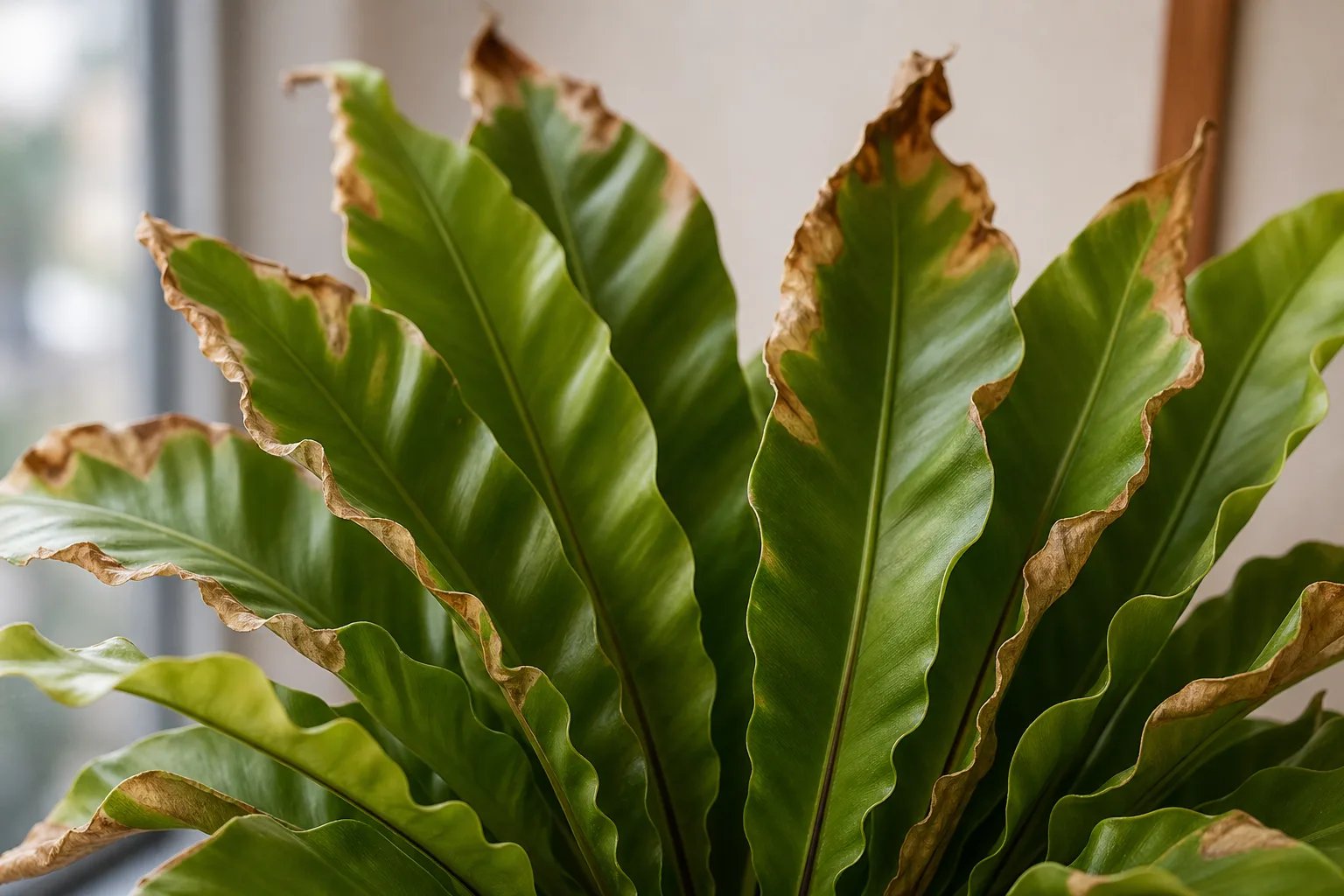
Low Humidity on Bird's Nest Fern: Causes, Checks & Fixes
This guide covers low humidity on Bird's Nest Fern. See also the general Low Humidity guide, watering, and light pages for this plant.
Low Humidity on Bird's Nest Fern: Causes, Checks & Fixes
Quick answer
Low humidity on Bird’s Nest Fern (Asplenium nidus) means the air around the plant is too dry for this tropical epiphyte to replace moisture lost through its broad, undivided fronds. The classic pattern is crispy brown edges on otherwise green fronds while the top inch of soil still reads lightly moist-especially in heated winter rooms, near radiators, or beside forced-air vents.
First step: measure relative humidity at foliage height with a hygrometer. If RH is below 50% and symptoms match dry air-not a dry pot-raise ambient moisture with a humidifier nearby or a pebble tray with the pot base above the water line. Move the fern off heat vents before you add extra water to the roots.
For acute whole-frond limpness with a light dry pot, see wilting on Bird’s Nest Fern or underwatering. This page owns dry-air stress when soil moisture is still acceptable.
What low humidity looks like on Bird’s Nest Fern
Healthy Bird’s Nest Fern fronds are glossy, wavy, and firm from base to tip. When humidity is too low, damage usually starts at the margins and tips-they turn tan or brown and feel papery while the midrib and center of the frond stay greener longer. Unlike ferns with finely divided leaflets, you will see clean edge burn on whole strap-shaped fronds rather than scattered pinnae dieback.
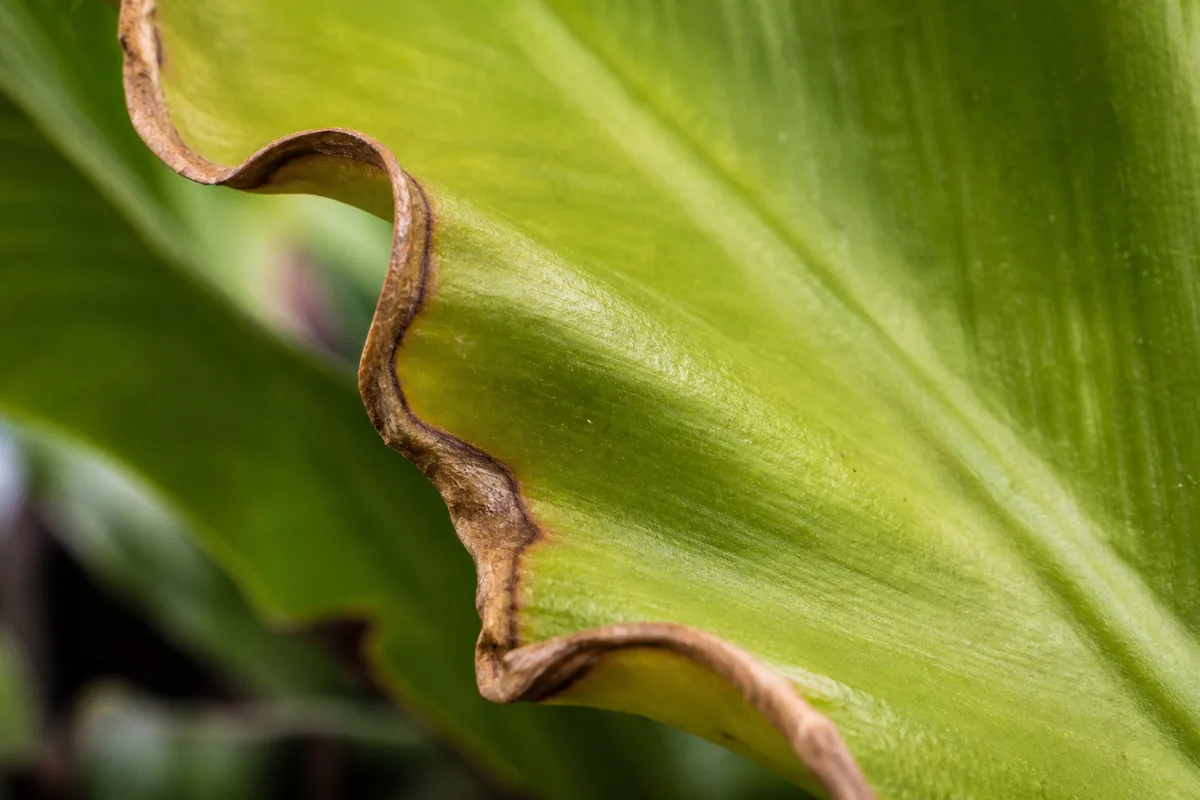
Low Humidity symptoms on Bird’s Nest Fern - compare with healthy tissue on the same plant.
Common patterns:
- Winter heat stress: Crisping appears after heating season begins. Plants on windowsills above radiators or beside HVAC vents show damage on the exposed side first.
- Moist soil, crispy edges: The top inch near the pot edge feels lightly damp and pot weight is normal, but margins brown anyway-a hallmark of air moisture failure, not thirst.
- Slow fiddleheads: New fronds emerging from the central nest unfurl slowly, stall, or emerge with crinkled edges when air is persistently dry.
- Pale dull fronds: Foliage loses gloss and looks tired even when watering rhythm has not changed-often combined with dry air and heat pull.
Normal one lower frond yellowing at the base while the crown stays firm is aging, not humidity stress. Uniform edge crisping on multiple fronds in a dry room is.
Why Bird’s Nest Fern struggles in low humidity
Tropical epiphyte biology
In rainforests across tropical Asia, Australia, and the Pacific, Bird’s Nest Fern grows as an epiphyte on tree trunks. Its funnel-shaped rosette catches leaf litter and holds a humid microclimate at the crown. NC State Extension describes the plant as a litter trapper whose rosette creates its own compost layer in humid forest air. Indoors, that constant ambient moisture is gone-your room’s relative humidity becomes the ceiling.
NC State Extension also notes that Bird’s Nest Fern does not tolerate dry conditions and may need a pebble tray of water to provide adequate humidity outside the tropics. The species is easier than maidenhair ferns indoors, but it is still a moisture-loving fern-not a succulent that prefers desert air.
Winter heating and forced-air drafts
Clemson HGIC’s indoor fern guidance states that humidity in houses is very low during winter and ferns need extra attention in that season. Central heating can drop indoor relative humidity to 20–35%, far below what tropical foliage prefers. Bird’s Nest Fern near a heat register loses moisture from frond surfaces faster than roots in moist soil can replace it.
Forced-air vents, fireplace heat, and single-pane winter windows create localized dry zones. A fern that thrived in summer humidity can crisp within weeks of heating season without any change to your watering calendar.
Air conditioning and summer dry spells
Air conditioning removes moisture from room air. A fern beside a cold AC vent may show edge burn in summer even when outdoor humidity is high. The symptom pattern matches winter heat stress-environmental dryness at the foliage, not necessarily dry soil.
Grouped-plant microclimate loss
Growers often cluster tropical plants to share humidity. Moving a Bird’s Nest Fern to an isolated shelf, a dry office, or a new room with fewer plants removes that shared buffer. Damage can follow a relocation even when watering stays identical.
Lookalike symptoms to rule out
Low humidity overlaps with several other Bird’s Nest Fern problems. Use this table before treating:
| Pattern | Likely issue | Key differentiator |
|---|---|---|
| Crispy edges, moist top inch, normal pot weight | Low humidity | RH below ~50%; near heat vent or dry winter room |
| Crispy edges, very light pot, dry soil | Underwatering | Top inch dusty; perks after edge watering |
| Brown tips only, recent tap-water change | Brown tips | Fluoride/chlorine or overfeeding pattern |
| Yellow base fronds, wet soil many days | Overwatering | Sour smell; limp fronds despite moisture |
| Whole frond limp, dry pot | Wilting from thirst | Turgor loss; not margin-only crisping |
| Gradual sag, not edge burn | Drooping leaves | Slow decline over weeks |
The high-value scenario extension guides describe: “Soil probe says moist but frond edges crisp in January near a heat register” → raise RH, not water.
How to confirm low humidity is the cause
Work through this six-step confirmation workflow:
- Hygrometer reading - Place a meter at frond height near the plant for 24 hours. Below 40% RH strongly supports dry-air stress; 50–70% is the comfortable target range for this species in most homes.
- Top-inch soil test - Press about 1 inch deep near the pot edge. Lightly moist soil with crispy margins points to humidity. Dusty dry soil points to underwatering instead-or both if heating dried the pot faster than usual.
- Pot weight - Lift the pot. Normal weight with edge burn supports air moisture failure. Very light weight supports thirst.
- Microclimate scan - Note heat vents, radiators, fireplace proximity, AC blow paths, and winter window drafts within 3 feet of the foliage.
- Season and timing - Did crisping start when heating turned on, after a move, or when AC began running? Seasonal triggers support environmental diagnosis.
- New growth check - Inspect the central nest. Slow, crinkled fiddleheads with acceptable soil moisture fit low humidity. Soft brown crown tissue fits crown rot from center watering-see the watering guide.
One check alone misleads. Combine hygrometer data, soil moisture, and placement before changing care.
First fix for Bird’s Nest Fern
Make one humidity correction first-do not simultaneously repot, fertilize, and overhaul watering.
Raise ambient relative humidity
Run a small humidifier on a low setting several feet from the plant-not aimed directly into the rosette funnel. Clemson HGIC recommends using a humidifier nearby in winter for Bird’s Nest Fern. Target 50–70% RH at foliage height; many heated rooms need several hours of humidifier run time daily to reach that band.
Or set the pot on a pebble tray: Fill a wide tray with pebbles and water, then place the pot on top so the pot base stays above the water line. Clemson HGIC’s pebble-tray method keeps roots from sitting in standing water while evaporation raises local humidity. Refresh tray water weekly and wash pebbles occasionally to limit algae.
Relocate off dry heat paths
Move the fern at least 3–6 feet from heat vents, radiators, and fireplace blow paths. If it must live on a windowsill, use a spacer so fronds do not rest on hot glass or cold winter pane surfaces. Grouping with other plants can add a few percentage points of local humidity, but it rarely replaces a humidifier in a dry room.
Keep watering stable-do not overwater to compensate
Dry air increases transpiration, but adding extra water to crispy leaves is a common mistake. UF/IFAS Gardening Solutions notes that bird’s nest fern is not drought-tolerant-so do not let soil go bone dry-but chronic overwatering while chasing humidity symptoms causes root problems. Follow the top-inch rule in the watering guide.
Recovery timeline
Recovery is gradual and judged by new fronds, not old tissue:
- After humidifier or pebble tray setup: Expect one to two weeks before new fiddleheads unfurl without crisping. Old brown margins remain permanently.
- Mild winter edge burn: Stabilization often comes within one to two care cycles once RH stays above 50% and heat exposure drops.
- Combined dry air and slight underwatering: Fix humidity and correct watering together; recovery may take two to four weeks if fine roots were stressed.
- Severe widespread crisping: Several weeks. Remove fully dead fronds only after conditions stabilize-avoid heavy pruning on the same day you add humidity equipment.
Hold fertilizer until new growth looks firm and glossy again.
What not to do
Do not overwater because frond edges look dry when soil is already moist-that invites root rot on a fern that Clemson HGIC warns should never sit in saucer water. Do not mist repeatedly into the central rosette-water pooling in the nest promotes crown rot where new fronds emerge. Do not run a humidifier jet into the funnel; raise ambient room humidity instead. Do not confuse low RH with fluoride brown tips-if only tips brown after tap-water changes, see brown tips. Do not stack Bird’s Nest Fern repotting guide, pruning, and pesticide on the same day as humidity fixes. Do not expect old crispy tissue to green up-success is new healthy growth from the crown.
How to prevent dry-air stress next winter
- Monitor RH weekly from October through March in heated homes; a $10 hygrometer prevents guesswork.
- Start humidifier season early-before crisping spreads across multiple fronds.
- Keep the fern off vent paths year-round; summer AC can dry air too.
- Maintain the watering rhythm from the watering guide-even moisture at the roots plus adequate air moisture at the fronds.
- Group plants on a humidity tray or plant shelf for shared buffer in moderately dry rooms.
- Bathroom or kitchen placement can help if bright indirect light is still adequate-see the light guide before moving solely for humidity.
Clemson HGIC’s indoor fern sheet notes that fine, thin-leafed ferns need about 50 percent humidity, while broader-leaved types like Bird’s Nest Fern are easier-but winter household air still falls short without help.
When to worry
Escalate if:
- New fiddleheads stop emerging and the crown feels soft-inspect for crown rot, not humidity alone
- Crisping spreads to entire fronds within days while soil stays wet-rule out root rot and overwatering
- RH stays above 60% but edges keep browning-suspect fluoride, overfeeding, or salt buildup per brown tips
- Webbing or stippling appears on frond undersides-dry air can worsen spider mites; treat pests separately
Moist soil, firm crown, and margin-only crisping in a dry winter room are lower urgency-humidifier or pebble tray plus relocation usually stabilizes the plant within two weeks.
Conclusion
Low humidity on Bird’s Nest Fern is an air-moisture problem, not a watering calendar problem-though the two stresses often arrive together in heated winter homes. Crispy edges with acceptable soil moisture, slow fiddleheads, and hygrometer readings below 50% RH tell you the epiphyte is losing moisture to dry air faster than its roots can replace it. Measure first, then raise RH with a humidifier or pebble tray, move off heat vents, and keep edge-watering steady. Old burned margins will not heal; watch the crown for new glossy fronds-that is the proof your fix worked.
Related Bird’s Nest Fern problems
- Watering - top-inch rule, edge technique, and crown-rot prevention
- Brown tips - fluoride, overfeeding, and overlapping edge burn
- Underwatering - dry pot vs dry air disambiguation
- Wilting - acute turgor loss and mixed-signal diagnosis
- Drooping leaves - gradual sag without margin crisping
- Overview - full indoor care hub including 50–70% humidity target
When to use this page vs other Bird’s Nest Fern guides
- Bird’s Nest Fern watering guide - Use for routine moisture checks before assuming low humidity is the main issue.
- Bird’s Nest Fern problems hub - Browse all 16 common issues on this species.
- Brown Tips on Bird’s Nest Fern - Different entry point when symptoms overlap with low humidity.