Brown Tips on Bird's Nest Fern: Causes, Checks & Fixes
Quick answer
Brown tips on Bird's Nest Fern usually mean dry air, fluoride or salt in tap water, or fertilizer buildup-not thirst when soil is already moist. First step: check whether brown is on frond margins only (not the crown center), then measure relative humidity at foliage height with a hygrometer.
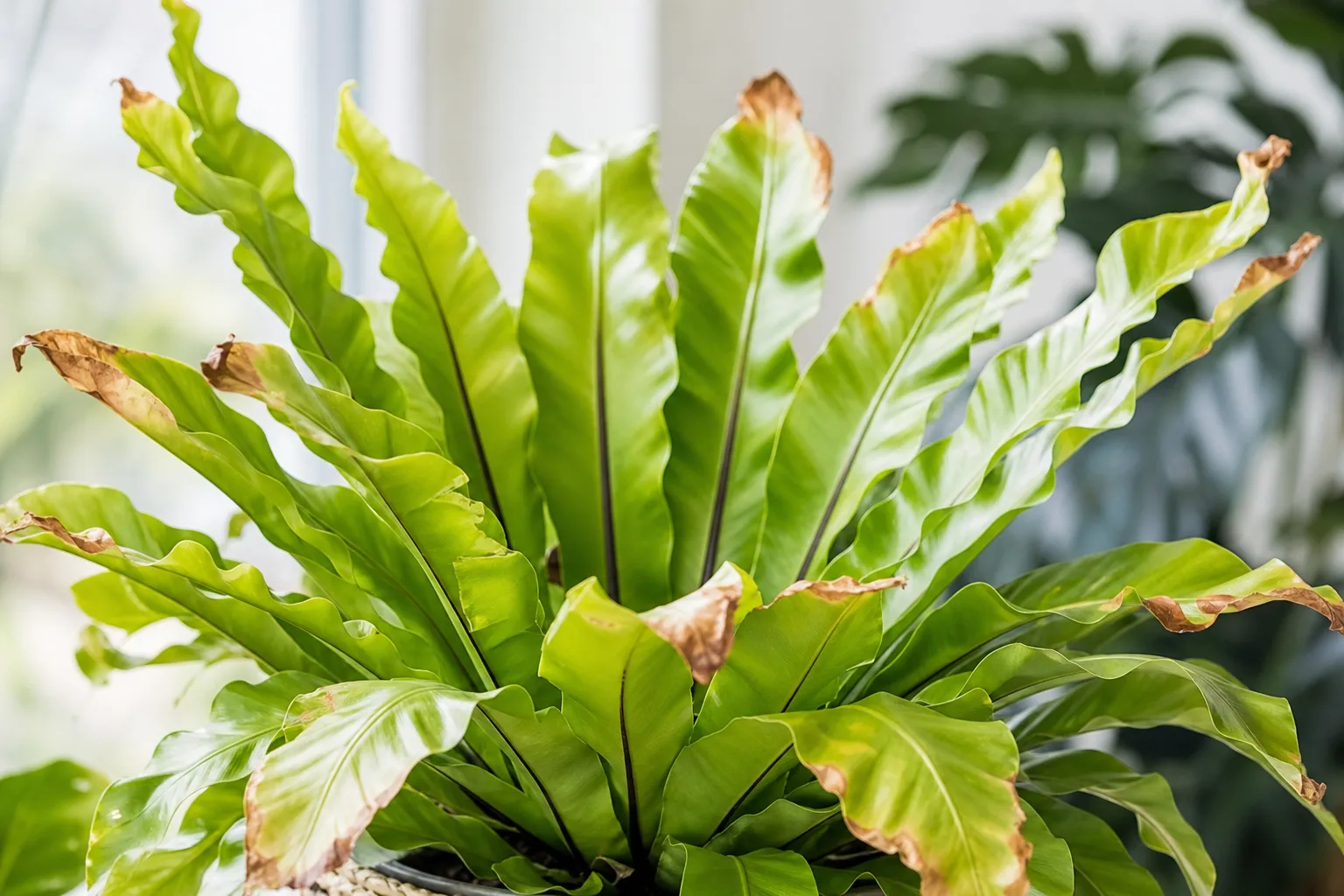
Brown Tips on Bird's Nest Fern: Causes, Checks & Fixes
This guide covers brown tips on Bird's Nest Fern. See also the general Brown Tips guide, watering, and light pages for this plant.
Brown Tips on Bird's Nest Fern: Causes, Checks & Fixes
Quick answer
Brown tips on Bird’s Nest Fern (Asplenium nidus) almost always mean the frond margins are losing moisture faster than the roots can resupply it - or that salts and fluoride are accumulating at the leaf edges. The pattern is tan-to-brown crispy margins or tips on strap-shaped fronds while the midrib stays greener. It is different from crown collapse, where the brown, soft tissue sits at the center of the rosette where new fronds emerge.
First step: confirm the brown is on frond margins only, not the crown center, then measure relative humidity at foliage height with a hygrometer. If RH reads below 50% and the top inch of soil is still lightly moist, dry air is the most likely cause - run a humidifier nearby before you change watering. If humidity is acceptable but margins look sharply burned, switch to filtered or rainwater and pause fertilizer.
For edge-watering technique and moisture rhythm, see the Bird’s Nest Fern watering guide. If the crown center is soft or mushy, go to root rot immediately - margin fixes will not help crown decay.
What brown tips look like on Bird’s Nest Fern
Bird’s Nest Fern has broad, undivided fronds - not the finely divided pinnae of a Boston fern. When margins stress, you see clean edge burn on whole strap-shaped leaves: the outer rim turns tan, then papery brown, while the center of the frond may stay glossy green for weeks.
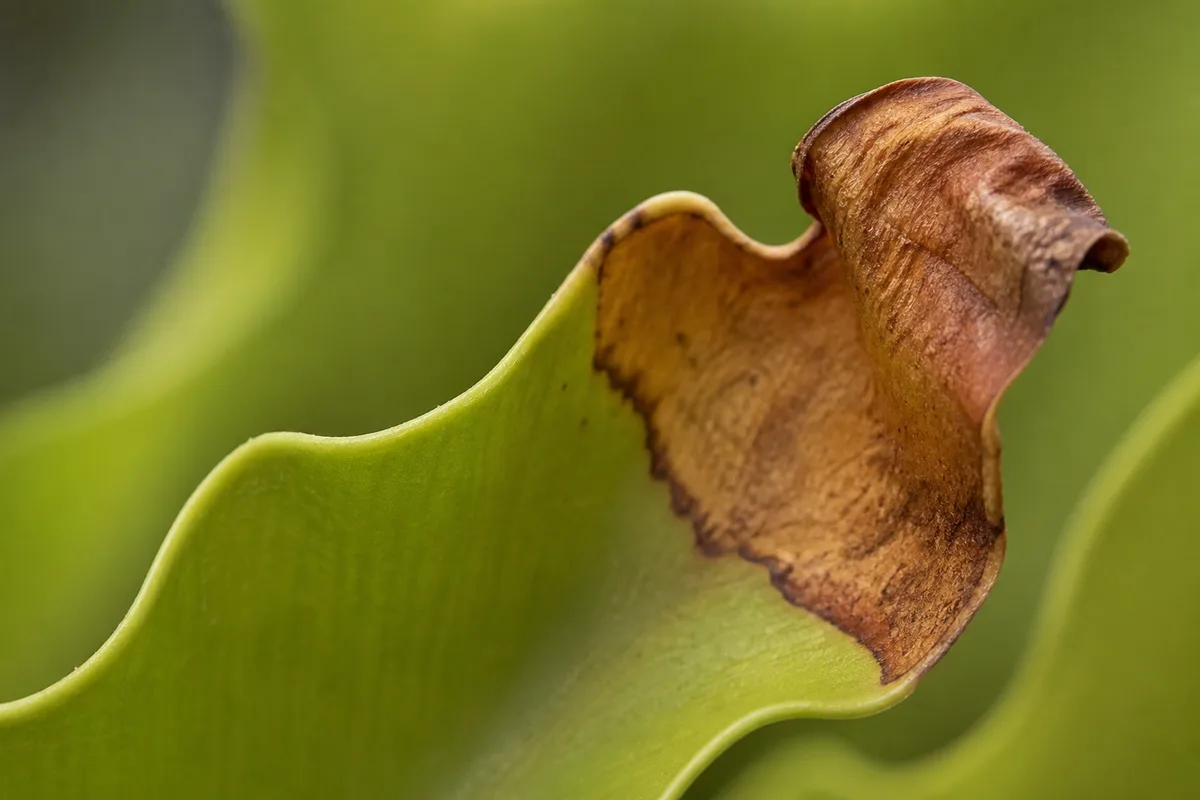
Brown Tips symptoms on Bird’s Nest Fern - compare with healthy tissue on the same plant.
Common margin-burn patterns:
- Gradual wide browning along the frond edge, often worse on fronds nearest a heating vent or south window - typical of low humidity in a room that still holds moist soil
- Narrow, sharply defined brown tips that look dipped in dye, on fronds that otherwise look healthy - often fluoride or salt buildup from tap water or fertilizer
- Brown patches on the frond face, not just the edge - usually direct sun scorch through glass; move the plant before treating humidity
- Uniform crisping on multiple fronds with a light, dry pot throughout - more often underwatering than margin burn from dry air
What it is not: A single lower frond yellowing and dropping on an otherwise firm plant is often normal senescence. Brown, soft tissue at the nest center where fiddleheads emerge is crown rot, not tip burn - that belongs on the overwatering and root rot guides.
Why Bird’s Nest Fern gets brown tips
In nature, Bird’s Nest Fern grows as an epiphyte on tree trunks across tropical Asia, Hawaii, and Australia. Rainforest air keeps humidity high while fine, shallow roots pull steady moisture from bark and trapped leaf litter. Indoors, the broad frond canopy transpires heavily, but forced-air heating, AC drafts, and winter windows drop relative humidity to 30–40% in many homes - far below what undivided tropical fronds tolerate.
Margins burn first because tips are last in the water line
Frond tips and margins sit farthest from the root zone. When air is dry or roots are stressed, those edges dehydrate first. That is why Bird’s Nest Fern can show crispy margins even when the top inch of soil reads moist - the problem is transpiration loss in dry air, not necessarily a dry root ball.
Tap water fluoride and fertilizer salts
Ferns are sensitive to fluoride and chlorine in municipal tap water. Fluoride does not evaporate when tap water sits overnight; it accumulates in soil and leaf tissue over months. Combined with overfeeding, salts concentrate at frond margins and produce sharp brown edges. Clemson HGIC recommends half the label fertilizer rate for ferns during the growing season - full-strength doses on a slow grower push salt injury faster than on fast tropicals.
Winter heating and the glazed-pot trap
A Bird’s Nest Fern in a glazed cachepot near a radiator can hold moist soil while air at frond height stays desert-dry. The plant looks watered but still crisps at the edges. This is one reason margin burn and low humidity overlap - confirm RH before you add more water.
Lookalike symptoms to rule out
| What you see | Soil moisture | Likely cause | First direction |
|---|---|---|---|
| Crispy margins, moist top inch, RH below 50% | Lightly moist | Low humidity / dry winter air | Humidifier or pebble tray; move off heat vent |
| Sharp narrow brown tips, good humidity | Moist | Fluoride or salt from tap water / fertilizer | Filtered or rainwater; pause feed; flush salts |
| Crispy edges, light pot, dry throughout | Dry | Underwatering | Edge-water thoroughly; see underwatering guide |
| Brown patches on frond face | Any | Direct sun scorch | Move 3+ ft from south/west glass |
| Soft brown nest center, sour smell | Often wet | Crown rot / overwatering | Stop watering; see root rot |
How to confirm the cause
Work through this checklist in order. Stop when one cause fits clearly - do not stack fixes on the same day.
- Locate the brown. Margin or tip only, with a firm crown? Continue here. Soft brown center at the rosette? Switch to root rot - margin advice will not help.
- Measure RH at foliage height. Hold a hygrometer beside the frond tips for several minutes. Below 50% with moist soil strongly supports dry-air stress. Above 50% with sharp tip burn points to water quality or fertilizer salts.
- Check the top inch of soil near the pot edge - not the nest center. Lightly moist soil plus low RH confirms humidity. Hard, dusty, pulling-away soil suggests thirst instead.
- Review water source. Municipal tap with fluoride? Recent full-strength fertilizer or white crust on the soil rim? Both increase salt and fluoride margin burn.
- Scan light exposure. South- or west-facing glass within a few feet can scorch frond faces even when humidity is fine.
- Lift the pot. A heavy, cool pot with crispy margins and low RH means the roots are wet enough - do not add water until humidity is addressed.
First fix for Bird’s Nest Fern
Apply one fix based on what you confirmed. Wait one to two weeks before adding a second change so you can read the plant’s response.
If RH is below 50% and soil is moist
Run a humidifier near the plant (target roughly 50–70% RH at foliage height) and move the pot off heat vents and AC drafts. Clemson HGIC recommends a nearby humidifier in winter or a pebble tray with the pot base above the water line. A pebble tray helps locally; a humidifier is more reliable in dry whole-room conditions.
Do not pour water into the nest center while chasing humidity - that invites crown rot. Do not mist directly into the rosette for the same reason.
If humidity is fine but margins are sharply burned
Switch to filtered, distilled, or collected rainwater for the next several waterings and stop all fertilizer until a new frond emerges clean. Fluoride in tap water does not evaporate from an open container overnight. If white crust sits on the soil surface, flush the pot with plain water at the outer edge several times over two weeks - see the fertilizer guide for salt-flush detail.
If the pot is light and soil is dry throughout
Water thoroughly along the outer edge until excess drains, then empty the saucer. Crispy edges from chronic dryness recover slowly. This is underwatering, not the humidity pattern above.
If frond faces show brown patches in direct sun
Move the plant to Bird’s Nest Fern light guide - east or north window, or several feet back from south/west glass. Trim scorched tissue only if it is fully dead and papery.
Recovery timeline
Bird’s Nest Fern is a slow grower - new fronds may take two to four weeks to begin unfurling after conditions improve, and several more weeks to reach full size.
- Existing brown margins will not re-green. Judge success by new fiddleheads emerging without crisping
- Humidity fixes often show cleaner new tissue within one to two weeks once RH stays stable above 50%
- Salt or fluoride correction may need two to three monthly water cycles with filtered water before margins on new fronds stay clean
- Underwatering recovery can take three to six weeks if fine roots were damaged by chronic dryness
If no new growth appears after six to eight weeks with corrected care, inspect roots during the next scheduled repot - hidden rot can mimic margin burn from the surface.
What not to do
- Do not increase fertilizer when tips brown - salts worsen margin burn on fine fern roots
- Do not mist into the central nest to fix humidity - trapped moisture promotes crown rot where new fronds emerge
- Do not pour water into the rosette center while troubleshooting - water along the outer pot edge only
- Do not trim every brown frond at once - mature fronds still photosynthesize; remove only fully dead, papery tissue
- Do not stack Bird’s Nest Fern repotting guide, flushing, fertilizer changes, and relocation on the same day - change one variable, then watch new growth
How to prevent brown tips next time
Build a routine that matches how Asplenium nidus actually grows indoors:
- Keep RH at roughly 50–70% at foliage height in winter - humidifier beats crown misting
- Water along the outer edge when the top inch dries; never flood the nest center
- Use filtered or rainwater if your tap is heavily fluoridated
- Feed at half label strength monthly in late spring through summer only - see the fertilizer guide
- Keep the fern in bright indirect light, away from south/west glass and heat vents
- Empty saucers within 15–30 minutes after watering so roots get oxygen as well as moisture
For the full watering rhythm, humidity traps, and seasonal adjustments, start with the Bird’s Nest Fern overview and watering guide.
When to worry
Treat as urgent if:
- The crown center feels soft under gentle pressure or smells sour
- New fronds stop emerging while lower fronds yellow on wet soil
- Brown spreads from the center outward, not from margins inward
Those patterns indicate crown rot or root failure, not correctable margin burn. Move to root rot and pause all watering until you inspect the root zone.
Margin-only browning that spreads slowly across several fronds in a dry winter room is common and usually responds to humidity and water-quality correction - frustrating, but not an emergency if the crown stays firm.
When to use this page vs other Bird’s Nest Fern guides
- Bird’s Nest Fern watering guide - Use for routine moisture checks before assuming brown tips is the main issue.
- Bird’s Nest Fern problems hub - Browse all 16 common issues on this species.
- Low Humidity on Bird’s Nest Fern - Different entry point when symptoms overlap with brown tips.
- Underwatering on Bird’s Nest Fern - Different entry point when symptoms overlap with brown tips.
- Overwatering on Bird’s Nest Fern - Different entry point when symptoms overlap with brown tips.