Bird's Nest Fern Repotting: When, How, and Mistakes to Avoid
Bird's Nest Fern Repotting: When, How, and Mistakes to Avoid
Bird's Nest Fern Repotting: When, How, and Mistakes to Avoid
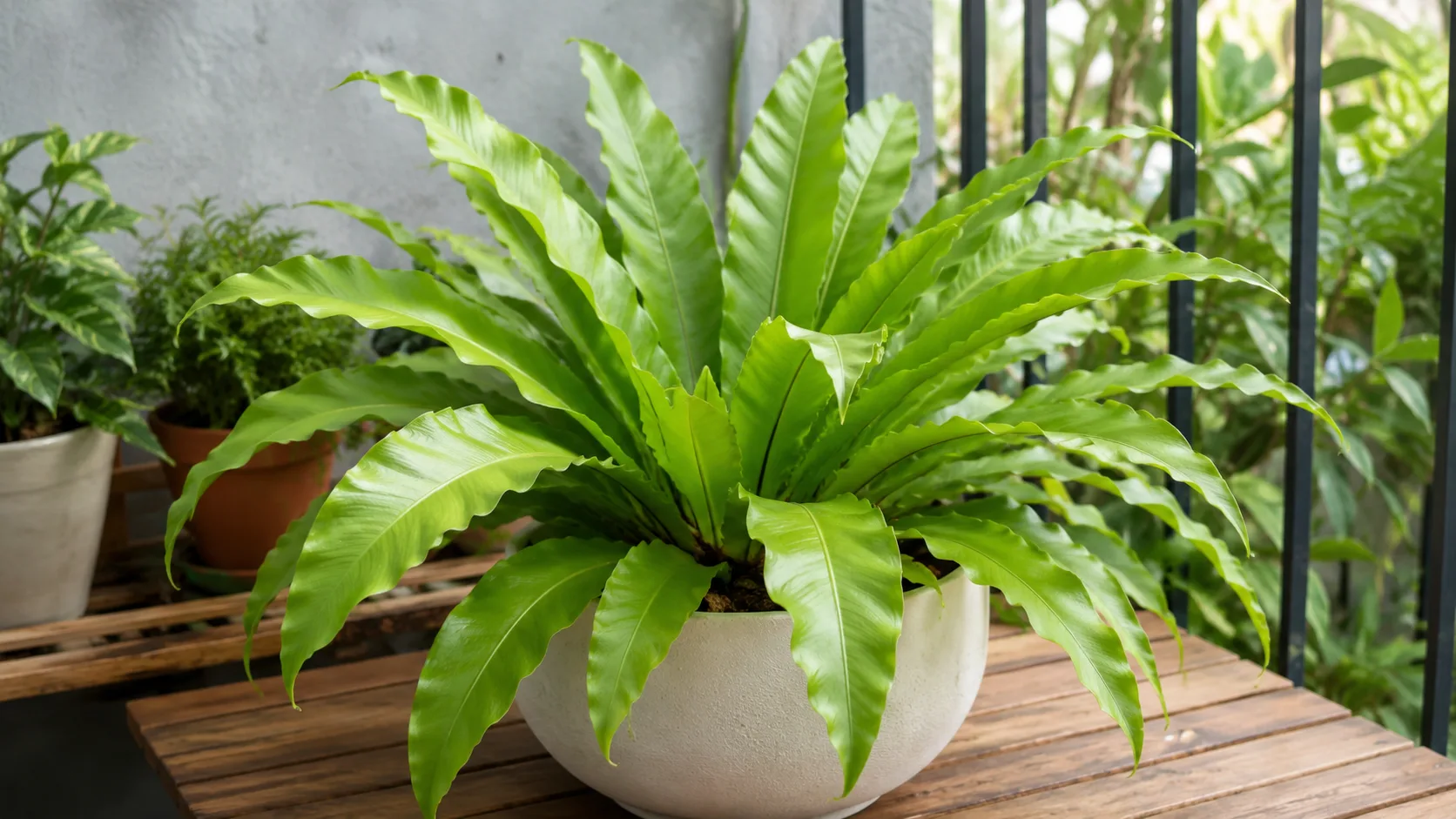
Bird’s nest fern repotting looks like a standard houseplant upgrade until you remember what the plant actually is. Asplenium nidus is a slow-growing tropical epiphyte that anchors itself in thin layers of humus on tree trunks and branches-not in deep, heavy soil. Indoors it still forms a funnel-shaped rosette with a vulnerable central crown where new fronds unfurl. Repot when the root zone or mix clearly needs attention, not because a calendar says so, and never treat the job like repotting a pothos. Get the timing, pot geometry, crown depth, and soil structure right, and recovery is usually quiet. Bury the rosette, jump two pot sizes, or water into the center after transplant, and you can lose months of growth to crown rot that no amount of misting will fix.
This guide covers when repotting is actually warranted, why epiphytic roots change every decision, the best season to work, pot and mix rules that prevent rot, a full step-by-step routine, aftercare, and the mistakes that cause the most unnecessary damage.
Why Repotting Bird’s Nest Fern Is Different From Most Houseplants
Most beginner repotting advice assumes a terrestrial root system: deeper is fine, a bigger pot speeds growth, and disturbing roots is harmless because the plant rebounds fast. Bird’s nest fern breaks all three assumptions. NC State Extension describes A. nidus as an epiphytic herbaceous perennial with a slow growth rate, fragile foliage that should be handled gently, and a preference for rich, moist, porous soil with acidic pH below 6.0. Clemson University’s Home & Garden Information Center notes that bird’s nest ferns grow slowly and can be repotted every few years in spring when new growth appears-a timeline measured in seasons, not weeks. (Clemson HGIC)
That combination-epiphyte, slow, crown-sensitive-means repotting is maintenance for root health and mix quality, not a growth hack. Many healthy specimens go two to three years between full repots if the substrate stays open and watering remains predictable. Treating bird’s nest fern like a fast colonizer that wants maximum soil volume is one of the fastest routes to a soggy root zone and a rotting crown.
The Epiphyte Root Habit and Shallow Root System
In the wild, bird’s nest fern catches falling leaf litter in its rosette and composts it in place-a litter-trapping funnel that feeds the plant without deep anchoring roots. NC State Extension notes this debris-trapping habit and the plant’s epiphytic lifestyle across its native range from Indonesia and Malaysia through tropical Australia and the Pacific. (NC State Extension) Indoors, the roots mirror that biology: they spread wide and relatively shallow, probing the upper layers of mix for air and moisture rather than drilling deep.
Practical consequences follow directly. A deep, narrow pot holds a column of wet soil below the active root zone that the plant never uses but that stays anaerobic long enough to damage roots. A wide, shallow container matches the geometry of the rosette and keeps the root mass closer to the surface where you can monitor moisture. When repotting, you tease circling roots at the bottom and outer edge; you do not bare-root and scrub the plant like a succulent division. Fine fern root hairs absorb water and nutrients; stripping them extends shock by weeks.
The epiphyte habit also explains why dense standard potting soil fails after repotting even when you chose the right pot size. Wild roots breathe in loose humus on bark. Packed indoor mix suffocates them, holds moisture against the crown, and mimics the conditions that lead to bacterial and fungal problems NC State lists among common issues for Bird’s Nest Fern overview. (NC State Extension) Repotting is your chance to reset that air-to-moisture balance-not simply to add more volume.
Crown Position Is the Make-or-Break Rule
If you remember only one rule from this entire guide, make it this: keep the crown at or slightly above the final soil line. The crown is the central rosette where fiddleheads emerge. Burying it-even 1–2 cm of mix packed over the growing point-traps moisture exactly where new tissue is most vulnerable. The same risk applies when watering: Clemson HGIC specifically recommends watering along the outer edge of the pot to prevent water from entering the center of the plant. (Clemson HGIC) After repotting, when roots are disturbed and the plant is stressed, crown moisture is more dangerous than at any other time.
Should you bury the crown when repotting bird’s nest fern? No. Plant at the same depth it was growing before, with the base of the fronds visible above the mix. If the old soil line was correct, replicate it exactly. If the plant was already too deep in its nursery pot-a common commercial practice-use repotting to raise the crown slightly rather than compensate by piling mix higher around the sides. A crown sitting a few millimeters above the surface is safer than one buried for aesthetics.
This rule interacts with pot shape. In a wide shallow pot, the crown naturally sits near the top of the container where air moves. In a deep pot, growers often backfill high on the sides to stabilize the plant, accidentally creating a bowl that collects water toward the center. Build a firm but airy base beneath the root ball so the crown stays high without wobbling, rather than mounding mix around the fronds like a volcano.
When Bird’s Nest Fern Actually Needs Repotting
The right question is not “how long have I owned this pot?” but “what is the root zone doing?” Bird’s nest fern sends quieter signals than a pothos with roots bursting from every hole. Learn to read physical cues and mix condition together. Two or more signs at once mean you should plan a repot in the next active growth window-not necessarily today, unless the plant is actively declining from root problems.
Signs Your Fern Has Outgrown Its Pot
Watch for these reliable indicators:
- Roots emerging from drainage holes or circling tightly at the soil surface
- Water running straight through the pot within seconds, leaving the core dry
- Soil drying much faster than it did last season-sometimes every two to three days after a thorough watering
- Top-heavy instability where the shallow root plate cannot hold the frond mass upright
- Sour, compacted, or crusted mix that no longer absorbs water evenly
- Stalled new frond production despite appropriate light and feeding during the growing season
- Pale or yellowing older fronds that correlate with root congestion rather than a sudden light or watering change
A single surface root is not an emergency. A plant that needs watering every other day in dim winter light, while sitting far from a window, is telling you the root mass has outgrown the soil volume-or the mix has collapsed. Clemson HGIC also warns against letting the pot sit in a saucer of water, which can cause root rot on Bird’s Nest Fern-a risk that rises sharply when old mix is exhausted and new roots have nowhere to spread. (Clemson HGIC)
Do bird’s nest ferns like to be root bound? Mildly snug roots are acceptable for a slow epiphyte, but severe binding is a problem, not a goal. When roots displace most of the soil, water behavior becomes erratic: flood-through dry cores, salt buildup, and stalled frond size. The useful middle ground is comfortably full, not desperately cramped.
Routine Refresh vs Full Repot
Not every soil problem requires a bigger pot. Top-dressing-removing the top 2–3 cm (1 in) of degraded mix and replacing it with fresh, airy substrate each spring-often suffices when the root ball still fits the container and drainage remains good. This refresh supplies new organic matter, reduces salt crust, and improves surface aeration without resetting the entire root environment.
Reserve full repotting-lifting the plant, inspecting roots, moving to a larger container-for when:
- The root ball is visibly dense and circling
- The pot is physically too small for stable growth
- Drainage has clearly failed despite surface refresh
- You are treating active root rot or sour, anaerobic mix
How often should you repot bird’s nest fern? Young plants under about two years old benefit from annual spring repotting as they establish, because their root systems expand steadily even when frond growth looks slow. Mature specimens in stable conditions typically need a full repot every two to three years, matching Clemson’s “every few years” guidance. (Clemson HGIC) Calendar repotting every spring regardless of condition stresses stable plants and buys little benefit.
Best Time of Year to Repot Bird’s Nest Fern
Season matters because fern roots regenerate fastest with warmth, Bird’s Nest Fern light guide, and active frond production. Repotting during dormancy or low light forces the plant to sit in disturbed, moist mix while it cannot repair roots efficiently. NC State Extension lists ideal temperatures of 60–70°F (15–21°C) for active growth. (NC State Extension) Work inside that comfort band whenever possible.
Spring and Early Summer: The Safest Window
Early spring through early summer is the default window in most homes-roughly when overnight temperatures stay consistently above 15°C (59°F) and you see new fiddleheads unfurling from the central rosette. Clemson HGIC ties repotting directly to this moment: spring, when new growth appears. (Clemson HGIC) That is not decorative advice. New frond emergence means vascular flow and root tip activity are ramping up, so the plant can seal damaged root surfaces and colonize fresh mix before dry winter air arrives.
If your fern spent summer outdoors in shade-a practice Clemson notes is possible after frost danger passes-complete any repotting before moving it back indoors, or wait until the following spring. Bringing a freshly repotted plant into a heated, lower-humidity interior in fall stacks two stresses at once. If you must choose between repotting in late summer and waiting until March, late summer wins only when the plant is clearly root-bound and still actively growing; otherwise wait.
When Winter or Fall Repotting Is Justified
Avoid major repotting in late fall and winter unless the situation is urgent. Cold soil, shorter days, and reduced evaporation keep disturbed mix wet longer, which slows recovery and raises rot risk. The exceptions are worth naming because they are common:
- Active root rot with sour-smelling mix and mushy root tissue
- Severe root-binding where the plant cannot hold moisture at all
- Physical instability where the pot tips and fronds tear
- Pest or disease contamination of old mix that requires full substrate replacement
If you must repot in winter, keep the plant warm (18–24°C / 65–75°F), in bright indirect light, and water more conservatively than you would in spring. Skip fertilizer entirely until new growth looks normal. Fall is reasonable for top-dressing only, not for upsizing, unless you live in a frost-free climate where the plant stays actively growing year-round.
Choosing the Right Pot and Soil Mix
Pot and soil choices do more work than the actual lifting and shifting. Bird’s nest fern needs drainage, shallow geometry, and modest volume increase-not the biggest decorative planter that fits the shelf.
Pot Size and Shape Rules That Prevent Crown Rot
The safe rule: increase pot diameter by only 1–2 inches (2.5–5 cm)-one nursery pot size. A plant in a 15 cm (6 in) pot moves to 17–20 cm (7–8 in), not 25 cm (10 in). Oversized containers retain moisture the shallow root system cannot absorb quickly, raising both root rot and crown rot risk.
Shape matters as much as size. Choose a wide, shallow pot over a tall, narrow one. The rosette spreads horizontally; roots follow that pattern. A shallow pot keeps the crown elevated relative to the water table in the mix and makes it easier to water along the outer edge without flooding the center. Depth is only a problem when it creates unused wet soil below the roots.
Every pot needs drainage holes. If you use a decorative cachepot, never let the inner pot sit in drained water-Clemson explicitly warns against saucers holding standing water. (Clemson HGIC) Plastic retains moisture longer and suits dry homes; terracotta breathes faster and can help heavy waterers in bright, warm rooms. Match material to your habits, not only to aesthetics.
Soil Mix for Aeration, Acidity, and Moisture Balance
Bird’s nest fern wants a loose, organic-rich, well-draining mix that stays acidic and never compacts into a wet block. NC State Extension recommends rich, moist, porous soil with high organic matter and acidic pH below 6.0. (NC State Extension) Clemson HGIC advises rich, well-drained soil high in organic matter, such as potting soil labeled for indoor or tropical plants. (Clemson HGIC) Standard dense bagged mix usually needs amendment.
A reliable home blend:
- 40% coco coir or peat moss for moisture retention and acidity
- 30% perlite or pumice for air channels
- 30% fine orchid bark for long-term openness and epiphyte-like structure
Target roughly pH 5.0–6.0. Avoid straight garden soil, heavy compost, or unamended all-purpose mix that turns to mud when watered. The finished blend should feel springy and crumbly when slightly moist-like a wrung-out sponge with structure, not sticky clay.
Moisten the mix lightly before repotting so it is damp but not wet. Dry dusty mix pulls moisture from tender roots; soggy mix compacts when you backfill. When you squeeze a moist handful, it should hold shape briefly then fall apart-not ooze water.
Tools and Pre-Repot Checklist
Gather everything before you unpot a plant with fronds that tear if you look at them wrong. Running mid-job to find scissors turns a controlled repot into crown damage and dried roots.
You will need:
- New pot with drainage holes, cleaned with hot water
- Fresh mix, pre-moistened lightly
- Clean scissors or pruning shears for dead roots only
- Drop cloth or tray-fern fronds shed debris and snap under pressure
- Chopstick or pencil for settling mix without packing
- Watering can with a narrow spout for controlled outer-edge watering
- Optional humidifier or pebble tray for post-repot humidity support
One day before repotting, water lightly if the mix is bone dry so the root ball holds together. Do not soak heavily unless you are rescuing hydrophobic soil. Do not fertilize for at least four to six weeks after repotting; fresh organic mix carries baseline nutrients, and salt burn on cut roots shows up as brown frond margins within days.
Pet note: Clemson HGIC lists ferns as non-toxic to pets. (Clemson HGIC) Repotting still scatters soil and bruised plant tissue; keep curious cats and dogs away from the work area and wipe spills promptly. Ingesting potting mix-not the fern itself-is the practical risk during repotting.
Handle fronds by supporting the root ball, not by grabbing leaves. NC State Extension warns that foliage is fragile and should be handled gently. (NC State Extension) A cracked frond will not heal; prevention is the only cure.
Step-by-Step: How to Repot Bird’s Nest Fern
Work on a stable surface at roughly pot height. Bird’s nest fern is not heavy like a fiddle-leaf fig, but the frond span is awkward and the crown is easy to crush.
Step 1 - Prepare the new pot. Add enough fresh mix to the bottom so the crown will sit at or slightly above the final soil line, with 1–2 cm (½–1 in) of headspace below the rim for watering.
Step 2 - Remove the plant. Tip the pot and slide the root ball out with gentle pressure on the sides. If it will not budge, run a knife around the inside edge of a plastic nursery pot. Never yank by the fronds.
Step 3 - Inspect the roots. Healthy fern roots are firm and pale tan to white. Trim black, mushy sections back to solid tissue with clean tools. Tease circling roots at the bottom and outer edges only.
Step 4 - Position the plant. Center the rosette in the new pot. The crown must remain visible and dry-capable-not buried, not below the rim of the soil mound.
Step 5 - Backfill. Pour mix around the sides and tap the pot gently to settle without compacting. Use a chopstick to guide mix under the root ball if needed, not to ram soil tight.
Step 6 - First watering. Water along the outer edge until excess drains freely, then empty the saucer. Do not pour water into the central rosette. If the mix sinks and exposes roots, top up once.
Step 7 - Recovery placement. Move the plant to bright indirect light-an east- or north-facing window is ideal per Clemson guidance-and maintain elevated humidity for the first week if your air is dry. (Clemson HGIC)
Removing, Inspecting, and Teasing the Root Ball
The most common repotting damage comes from over-cleaning roots. Bare-rooting a healthy bird’s nest fern strips fine absorbing hairs and extends shock by weeks. Keep a soil buffer around the central root plate unless you are treating rot. When you find rot, remove all affected tissue even if the plant looks smaller afterward-a smaller healthy root system in an appropriately sized pot beats a large rotten one swimming in an oversized container.
Can you divide bird’s nest fern when you repot? Usually no. Unlike clumping terrestrial ferns, bird’s nest fern typically grows as a single rosette from one crown. Division is not a standard maintenance step. Attempting to split a single-crown specimen often damages the growing point beyond recovery. Propagation is better handled through spores or, in commercial settings, tissue culture-not casual kitchen division during repot.
When roots are densely circling, focus on the bottom third and outer rim. Score a tight root mat lightly with clean fingers or a blunt tool; you do not need to eliminate every curve. The goal is to redirect growth outward into fresh mix, not to bare the entire root plate.
Planting Depth, Backfilling, and First Watering
Planting too deep is the silent killer. The crown-where fronds emerge-should sit at the same level as before repotting, or fractionally higher if the plant was already too deep. Deep planting traps moisture against the stem base and duplicates the conditions Clemson warns about when water sits in the plant’s center. (Clemson HGIC)
After backfilling, check that the plant stands upright without rocking. Wobble means the mix is too loose at the base or the pot is oversized relative to roots. Add mix beneath the root ball, not piled against the crown. First watering should moisten new mix completely but not flood a plant that was pre-watered yesterday-you may need less volume than you expect.
Never pack soil with your palms. Firming creates anaerobic zones fern roots cannot tolerate. Let gravity and a gentle tap do the settling. If you use a chopstick, insert it vertically along the pot wall, not through the crown.
Aftercare, Recovery Timeline, and When to Resume Normal Care
Transplant shock on bird’s nest fern usually shows as slight frond droop, paused fiddlehead emergence, or one older frond yellowing-not instant collapse. Mild symptoms often clear within one to two weeks if light, humidity, and temperature stay stable. Full root re-establishment typically takes four to six weeks in spring; winter recoveries can take longer.
For the first month:
- Keep bright indirect light; avoid sudden moves into harsh direct sun through glass
- Water when the top 2–3 cm (1 in) of mix approaches dryness-Clemson’s top-inch guideline-always along the outer edge, never into the rosette (Clemson HGIC)
- Hold fertilizer for four to six weeks minimum; resume at half strength monthly during the growing season when new growth looks normal
- Skip pruning except to remove fully brown, dead fronds at the base
- Maintain 50–70% humidity if central heating dries the air; a humidifier is more reliable than misting, which wets foliage briefly and can invite fungal issues on damaged tissue
Why is my bird’s nest fern wilting after repotting? Check soil moisture first. Wilting with wet mix usually means overwatering on Bird’s Nest Fern, an oversized pot, or buried crown-not harmless shock. Wilting with dry mix may mean roots were damaged or the plant cannot take up water yet; outer-edge watering in small amounts is safer than flooding the center. If multiple fronds yellow progressively or the crown feels soft, unpot again and inspect for rot.
Resume normal feeding when you see a new fiddlehead unfurling at normal size and water use returns to a predictable rhythm. New growth is the recovery signal that matters. Old damaged fronds will not revert to perfect green; fresh fronds emerging firm and glossy mean the root zone is working again.
Common Bird’s Nest Fern Repotting Mistakes to Avoid
Most failures repeat a short list of errors. Avoid these and you eliminate the majority of post-repot disasters.
Jumping two or more pot sizes. Excess soil stays wet; roots stall; fronds yellow from oxygen loss, not “adjustment.”
Burying the crown. Even a thin layer of mix over the rosette invites crown rot. Plant at the same depth or slightly higher.
Watering into the center after repotting. This defeats the entire outer-edge watering habit Clemson recommends and pools moisture on disturbed tissue.
Bare-rooting healthy plants. Tease, do not scrub. Preserve the root ball core and its fine hairs.
Using dense, unamended potting mix. Compacted soil suffocates epiphytic roots and holds water against the crown.
Packing soil tightly during backfill. Air channels matter more than stability theater. Tap gently; never compress.
Repotting in cold, dark winter without urgency. Slow recovery and rot risk rise together.
Fertilizing immediately. Salt burn on cut roots shows up as brown frond margins within days.
Pulling the plant by fronds. Mechanical damage on fragile foliage never heals and invites secondary infection.
Using a pot with no drainage because the ceramic pot is pretty. Cachepots are fine; sealed bottoms are not.
Trying to divide a single-crown specimen when you only needed one size up. Division is propagation, not maintenance-and often fatal for bird’s nest fern.
Ignoring humidity after repot. Dry heated air during recovery amplifies wilt that would otherwise pass in a week.
Conclusion
Bird’s nest fern repotting rewards patience and restraint more than enthusiasm. Repot when roots, drainage, or mix quality demand it-usually in spring or early summer, with a pot only one size larger, wide and shallow rather than deep, and a loose acidic mix of coir, perlite, and orchid bark that drains fast while holding even moisture. Keep the crown at or above the soil line, water along the outer edge, disturb roots only as much as necessary, and expect a short pause in frond production rather than instant payoff. Top-dress in spring when the pot still fits; skip division unless you are working with a genuinely multi-crown specimen-which most houseplant bird’s nest ferns are not. If you remember one rule above the rest, make it this: protect the rosette like the growing point it is, and give the roots airy humus-not a deep swamp they cannot use.
When to use this page vs other Bird’s Nest Fern guides
- Bird’s Nest Fern overview - Start here for whole-plant context before deep-diving this topic.
- Bird’s Nest Fern problems hub - Jump to symptom-specific fix guides when this care topic does not resolve the issue.
- Root Rot on Bird’s Nest Fern - Escalate here when repotting adjustments are not enough.
Related Bird’s Nest Fern guides
- Bird’s Nest Fern overview
- Bird’s Nest Fern watering
- Bird’s Nest Fern light
- Bird’s Nest Fern soil
- Bird’s Nest Fern propagation
- Bird’s Nest Fern fertilizer
- Root Rot on Bird’s Nest Fern
- Bird’s Nest Fern problems
Related tool
Try the Pot Size Calculator with birds-nest-fern pre-selected to estimate needs for your setup.