Bird's Nest Fern Fertilizer: When, How Much, and Mistakes
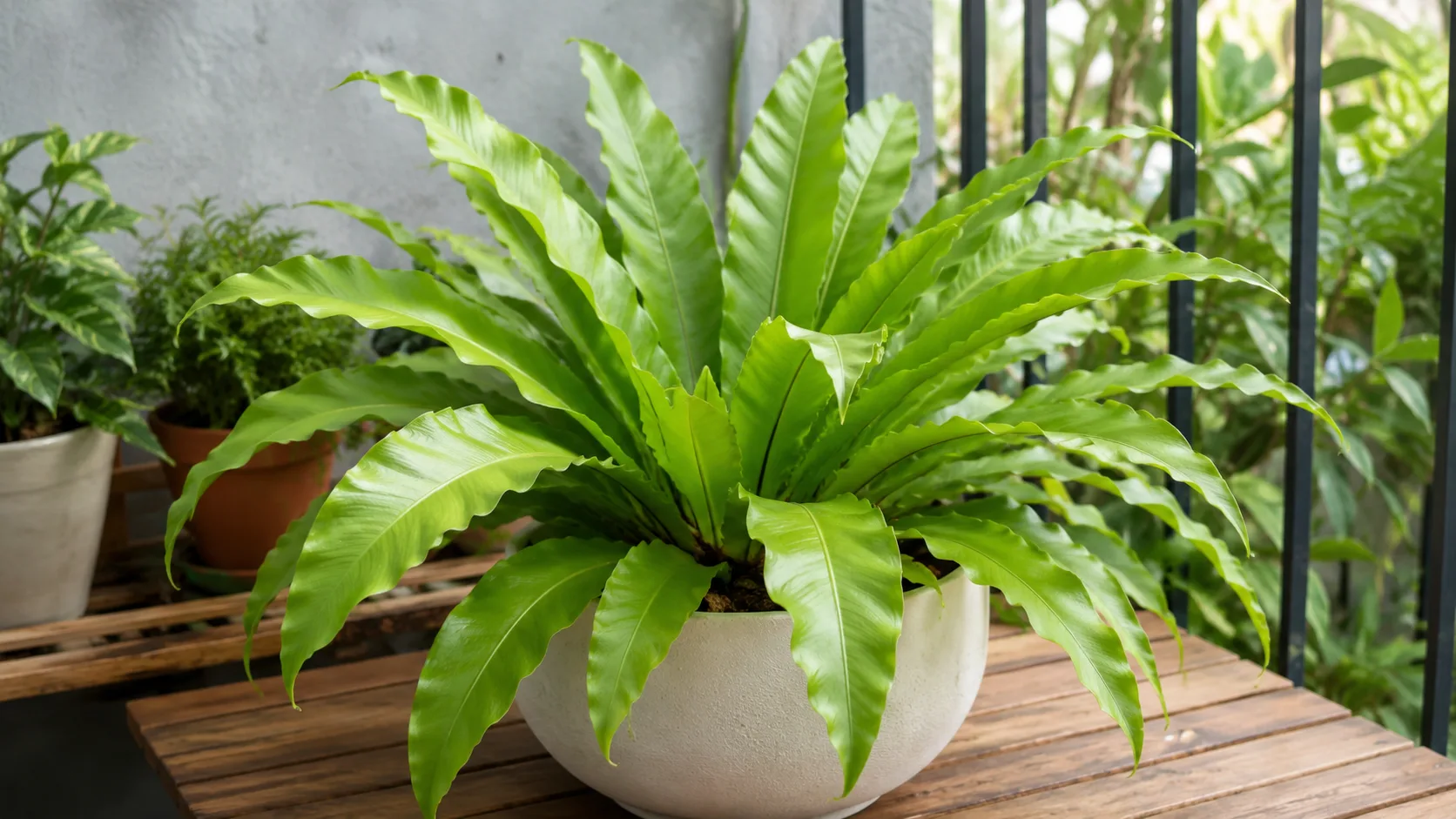
Bird's Nest Fern Fertilizer: When, How Much, and Mistakes
Bird's Nest Fern Fertilizer: When, How Much, and Mistakes
Bird’s Nest Fern is one of the most forgiving houseplants for light and watering mistakes - and one of the least forgiving for fertilizer mistakes. Asplenium nidus and its popular cultivars such as Crispy Wave, Osaka, and Victoria grow slowly indoors, often adding only a handful of new fronds per year. That slow pace is not a problem waiting for a heavy feed. It is the plant’s normal rhythm. Container life still depletes the potting mix over time, so light, well-timed nutrition supports healthy frond color and steady unfurling. The wrong dose, the wrong season, or the wrong application spot can brown frond tips within days.
The central idea is restraint. In the wild, Bird’s Nest Fern grows as an epiphyte perched on tree trunks in humid tropical forests, catching leaf litter in its funnel-shaped rosette and drawing moisture and nutrients from rain, debris, and the air. NC State Extension describes it as a litter trapper whose rosette composts fallen material to feed itself - a very different nutrition profile from a potted houseplant sitting in peat-based mix. Indoors, you replace what leaches out with a dilute liquid feed during active growth, not a heavy monthly pour that would suit a fast-growing foliage plant like a Bird of Paradise.
This guide covers when to feed, how much to dilute, which product types make sense, how to apply fertilizer without rotting the crown, and what to do when brown tips or white crust on the soil tell you salts have already won.
Why Bird’s Nest Fern Needs Less Fertilizer Than You Think
Most houseplant fertilizer advice is written for moderate to fast growers: pothos, monsteras, philodendrons, and other plants that add visible length every few weeks in good light. Bird’s Nest Fern does not behave that way. Clemson Cooperative Extension HGIC notes that these ferns grow slowly and can go several years between repots. NC State Extension lists the growth rate as slow and recommends only dilute liquid fertilizer during active growth periods - not year-round heavy feeding.
That matters because fertilizer does not create growth on demand. It supplies macronutrients and micronutrients that the plant uses when it is already metabolically active. A Bird’s Nest Fern pushing a new frond from the central rosette in summer can use a modest nutrient boost. The same plant in a dim winter corner, barely drinking water, cannot process extra nitrogen and potassium efficiently. Unused salts accumulate at the root zone and along the soil surface, and ferns show salt injury faster than many broad-leaf tropicals because their roots are relatively fine and their fronds display marginal burn early.
Another reason to feed lightly is biology, not laziness. Epiphytic ferns evolved in environments where nutrients arrive in small, intermittent doses dissolved in rainwater - not in concentrated weekly pours. The rosette shape that gives Bird’s Nest Fern its name is functional: trapped organic debris breaks down at the crown and feeds the plant gradually. Your job indoors is to mimic that low, steady availability during the months when new fronds are actually forming, not to dump a full label dose because the plant “looks fine.”
Finally, fertilizer only works when the rest of the care stack is in range. Bird’s Nest Fern wants Bird’s Nest Fern light guide, evenly moist but not waterlogged soil, warm stable temperatures, and humidity above what most forced-air heating delivers. If fronds are pale and stunted because the plant sits ten feet from a north window, more 20-20-20 will not fix the problem. If fronds are yellowing and soft because the crown has been watered directly and rot has started, fertilizer accelerates decline. Feed plants that are already growing, not plants you are trying to rescue.
What NPK Means for Asplenium Frond Growth
Fertilizer labels display three numbers: N-P-K, the percentages of nitrogen, available phosphate, and soluble potash. Nitrogen supports chlorophyll production and overall green color in fronds. Phosphorus contributes to root function and general plant energy metabolism. Potassium helps regulate water movement and enzyme activity. Bird’s Nest Fern is grown almost exclusively for foliage, not flowers - ferns reproduce via spores, not blooms - so the feeding goal is healthy, glossy, fully expanded fronds with strong midribs, not a bloom booster strategy.
Balanced Formulas for Indoor Ferns
For routine indoor care, a balanced complete fertilizer is the safest default. Clemson HGIC recommends a houseplant fertilizer at half the label rate for ferns, applied monthly during the growing season from late spring through summer. That aligns with the most common commercial guidance: 10-10-10 or 20-20-20 water-soluble products, diluted and applied to moist soil around the outer edge of the pot.
The two NPK numbers differ in concentration, not philosophy. Twenty-twenty-twenty is twice as strong as ten-ten-ten at the same measured volume. Always read the label and measure - guessing is how frond tips get scorched. A balanced formula supplies nitrogen for green color, phosphorus and potassium for root and frond function, and - if you choose a quality houseplant product - trace micronutrients such as iron, manganese, and magnesium that peat- or bark-based fern mixes may not hold long term.
Bird’s Nest Fern does not need specialty high-nitrogen “leaf booster” formulas. Excess nitrogen relative to what the plant can use in low light pushes soft tissue that is more vulnerable to tip burn and mechanical damage. It also increases salt load without increasing the number of fronds you see each year. Slow growth is normal; the win is quality fronds, not speed.
| Product direction | Typical NPK | Best use for Bird’s Nest Fern |
|---|---|---|
| Balanced liquid houseplant | 10-10-10 or 20-20-20 | Default for all indoor specimens |
| Gentle complete with micronutrients | Any balanced ratio with minors listed | Plants in coir/bark mixes, RO water users |
| High-nitrogen lawn or garden feeds | 24-8-16 and similar | Avoid - too strong, wrong profile |
Why Urea-Free Matters for Ferns
Many experienced fern growers prefer low-urea or urea-free soluble fertilizers when feeding lightly in small pots. Urea is a common nitrogen source in inexpensive soluble products, but plants must convert urea before uptake, and that conversion depends on soil biology and moisture conditions. In a small indoor pot with a coarse, airy fern mix, ammoniacal or nitrate nitrogen sources are often more predictable for steady uptake.
This is not an absolute rule - a carefully diluted complete fertilizer with some urea can work if you feed lightly and flush salts regularly. It is a useful label check when you are choosing between two otherwise similar houseplant products. If your frond tips brown despite conservative feeding, switching to a urea-free formula and reducing strength further is a reasonable experiment after you rule out low humidity, fluoride in tap water, and crown watering habits.
Micronutrients matter more than many growers expect, especially for plants that have lived in the same pot for two or more years. Pale new fronds with dark green older fronds can indicate iron or magnesium issues in depleted mix - but they can also mean overwatering on Bird’s Nest Fern, cold drafts, or too much direct sun. Confirm the cultural basics before chasing a nutrient cure.
The Best Fertilizer Types for Bird’s Nest Fern
Product form matters for ferns more than for many houseplants because application control and salt management dominate outcomes. Bird’s Nest Fern is not brand-loyal; it responds to conservative dilution, seasonal pauses, and crown-safe technique.
Liquid Water-Soluble Fertilizers
Liquid or water-soluble fertilizers are the best default for indoor Bird’s Nest Fern. You control the concentration every time, you can skip a month instantly when the plant is stressed, and you can follow a feed with a plain-water flush to leach salts. Clemson HGIC’s half-strength monthly schedule maps cleanly onto a measuring spoon and a watering can - no buried granules continuing to release in October when growth has stalled.
Choose a product labeled for houseplants or indoor plants that lists N-P-K plus micronutrients. Mix fresh solution each application; do not store diluted fertilizer for weeks, as microbial growth and chemical settling can throw off the dose. Room-temperature water is fine. Apply slowly around the outer rim of the pot, where roots actively absorb moisture, and let a little excess drain from the bottom before emptying the saucer.
For growers who want maximum safety on a first attempt, quarter label strength once every four to six weeks in spring and summer is a valid conservative path. Many fern specialists land there for salt-sensitive species. Clemson and NC State guidance support half strength monthly as the standard middle ground when the plant is clearly growing in adequate light. Both approaches work; the failure mode is always full strength applied too often, not the difference between quarter and half on a healthy plant.
Slow-Release, Granular, and Organic Options to Use Carefully
Slow-release pellets and granular fertilizers are hard to recommend for typical indoor Bird’s Nest Fern pots. Granules can sit against the central rosette if scattered carelessly, holding concentrated salt right where crown rot risk is highest. Slow-release products continue discharging nutrients through cooler months when the plant is not using them, and you cannot remove the product once it is mixed into the soil. If your potting mix already includes a starter fertilizer charge - common in commercial blends - adding slow-release on top is an easy way to double-stack salts after Bird’s Nest Fern repotting guide.
Organic options such as very dilute seaweed extract, fish emulsion, or worm-casting tea can supplement trace nutrition, but they are poor substitutes for a measured complete fertilizer when you need predictable N-P-K. Organic liquids vary in strength batch to batch, and fish emulsion in particular can leave odor and attract pests if overused indoors. If you prefer organics, treat them as an occasional summer tonic at very weak dilution, not as weekly food.
Foliar feeding - spraying fertilizer on fronds - is unnecessary for Bird’s Nest Fern and risky for the crown tissue. Ferns absorb nutrients primarily through roots. Wet fertilizer solution sitting in the rosette invites rot, the same way watering into the crown does. Keep nutrition in the soil at the pot edge.
When to Fertilize Bird’s Nest Fern by Season
Bird’s Nest Fern follows a warm-season growth rhythm indoors even though it stays green year-round. Feed when metabolism is up: new fronds unfurling, water use increasing, and stable warmth - not when the calendar flips to March on a plant that is still barely growing.
Spring and Summer Feeding Windows
Start feeding in late spring, when you see the first credible new frond spear emerging from the central rosette and the pot dries on a slightly faster rhythm than it did in winter. For many Northern Hemisphere homes, that is May through August, though bright, warm rooms can justify an April start. Clemson HGIC specifies monthly feeding from late spring through summer at half the label rate.
Through peak summer, maintain that monthly schedule if growth is visible. Some growers in very bright bathrooms or grow-tent setups with steady warmth and humidity push to every four weeks at quarter strength instead of half - functionally similar salt load, easier margin for error. If you miss a month because of travel, do not double the next dose. Bird’s Nest Fern does not need catch-up feeding; resume the normal schedule at normal strength.
Taper in late summer as days shorten. Move from monthly to every six to eight weeks in early fall if the plant is still producing fronds, then stop. The goal is to match declining growth, not to keep pouring nutrients into a plant that is winding down.
How often should you fertilize Bird’s Nest Fern during active growth? For most indoor plants in moderate to bright indirect light, once every four weeks with a balanced liquid fertilizer at half label strength is the standard answer. Conservative growers can use quarter strength every four to six weeks. Both are safer than weekly feeding.
Autumn and Winter Pause
Stop fertilizing from autumn through early spring in typical indoor conditions. Bird’s Nest Fern may remain green, but growth slows dramatically as light drops and indoor heating dries the air. The plant cannot use extra nutrients efficiently, and salts accumulate. Resume only when new spring growth is unmistakable - a fresh frond unfurling, faster dry-down, and warmer stable room temperatures - not because you feel the plant “should” wake up.
Should you fertilize Bird’s Nest Fern in winter? No, for the vast majority of homes. Exception: if you grow under strong supplemental lights with consistent 70°F (21°C) temperatures and the plant is actively producing fronds through winter, a single very weak feed every eight weeks might be justified. That is a specialty setup, not a living-room default.
How Much Fertilizer to Use
“How much” splits into concentration (how strong the solution is) and frequency (how often you apply it). Bird’s Nest Fern tolerates feeding well only when total salt load over time stays low.
Quarter-Strength vs Half-Strength Dilution
Half label strength is the extension-backed starting point. If the bottle recommends 1 teaspoon per gallon for houseplants, use ½ teaspoon per gallon. Clemson HGIC explicitly says to use half the recommended rate on the label for ferns.
Quarter label strength is the extra-conservative choice many fern growers prefer when plants are young, recently repotted, or growing in small pots under moderate light. If the label says 1 teaspoon per gallon, use ¼ teaspoon per gallon. At this dilution, monthly feeding in summer is usually enough; some growers stretch to every six weeks.
Never apply full label strength to Bird’s Nest Fern in a container. Full strength might be tolerable for outdoor landscape plants in open soil; it is excessive for a slow epiphyte in a six-inch pot where evaporation concentrates salts at the soil surface. When in doubt, go weaker and watch the next frond. A healthy unfurling spear with even green color tells you the dose is workable.
Matching Dose to Light and Growth Rate
Light is the throttle. A Bird’s Nest Fern on a bright east windowsill or under grow lights metabolizes nutrients faster than the same cultivar in a dim corner ten feet from a window. Increase frequency slightly in high light only if you see steady new fronds; decrease to every six to eight weeks or skip feeding entirely in low light even during summer.
Pot size and root mass matter because salts concentrate in small volumes. A young plant in a four-inch pot needs less total fertilizer per month than a mature specimen in an eight-inch pot, even at the same dilution. After repotting into fresh mix, pause feeding for four to six weeks unless you know the mix is completely unfertilized. Many commercial fern blends include a starter charge; feeding immediately on top is a common post-repot burn trigger.
| Season | Light level | Suggested practice |
|---|---|---|
| Late spring–summer | Bright indirect or grow lights | Half strength monthly, or quarter strength every 4–6 weeks |
| Late spring–summer | Low to moderate indirect | Quarter strength every 6–8 weeks, or skip if no new fronds |
| Early fall | Any | Taper to every 6–8 weeks, then stop |
| Autumn–winter | Any | No feeding |
| After repotting | Any | Wait 4–6 weeks unless mix is inert |
Step-by-Step: How to Feed Without Damaging the Rosette
Bird’s Nest Fern’s central rosette is a crown - the point where new fronds emerge. Water and fertilizer pooling there cause rot faster than almost any other care error. Application technique matters as much as dilution.
Step 1: Confirm the plant should be fed. Look for an unfurling frond or recent healthy new growth, moist-but-not-soggy soil history, no repot in the last month, no active scale outbreak, and no black mush at the crown. Stressed plants get plain water, not fertilizer.
Step 2: Check soil moisture. Do not apply concentrated fertilizer to bone-dry soil. Dry roots take up fluid quickly and encounter a salt spike at the root interface. If the top two to three centimeters of mix are dry, water lightly with plain water first, wait thirty to sixty minutes, then feed. Many growers fertilize the day after a normal watering - that rhythm works well.
Step 3: Mix at half or quarter strength. Measure fertilizer into the watering can; do not pour by eye. Stir thoroughly. Use room-temperature water.
Step 4: Apply at the soil edge, not the crown. Tilt the pot slightly and pour slowly around the outer circumference of the root ball, where fine roots absorb moisture. Never dump solution directly into the central funnel. Picture how rain runs down a tree trunk past an epiphytic fern - nutrients arrive at the root zone, not the unfurling spears.
Step 5: Water until a little drains, then empty the saucer after thirty minutes so the plant is not sitting in concentrated runoff.
Step 6: Flush salts periodically. During months when you are actively feeding, replace one normal watering every four to six weeks with a plain-water flush - water until several pot-volumes drain through - to leach accumulated salts. This step is boring and effective. Fern growers who feed carefully but never flush still see progressive brown tipping by late summer.
Signs Your Bird’s Nest Fern Is Under- or Over-Fed
Nutrient symptoms overlap with watering, humidity, and water-quality problems. Check light and moisture before blaming fertilizer, because Bird’s Nest Fern shows similar frond edge damage when air is too dry, tap water is high in fluoride, or the crown has been kept wet.
Under-fertilization signs are subtle on slow growers. Watch for pale new fronds compared to older ones, smaller than expected new leaves despite adequate light and water, and general stagnation in a plant that has not been fed in two or more years while sitting in old, leached coir or peat mix. Bird’s Nest Fern can look acceptable for a long time on residual pot nutrition, then slowly lose vigor. If the plant is in bright indirect light, watered correctly, and still producing undersized wavy fronds on a Crispy Wave or Osaka cultivar, a modest balanced feed during summer is reasonable.
Over-fertilization signs are sharper and more common:
- Brown or crispy frond tips and margins, especially on newer fronds soon after feeding
- White or yellowish crust on the soil surface, pot rim, or drainage hole
- Stunted or deformed new fronds that unfurl partially and stop
- Sudden widespread tip burn after a repot that stacked fertilizer sources
- Wilting despite moist soil when fine roots have been salt-damaged
If you suspect overfeeding, stop fertilizer immediately. Flush the pot thoroughly with plain water two to three times over two weeks, allowing full drainage between flushes. Remove visible white crust from the soil surface gently without burying the crown. Wait for the next healthy frond to unfurl before resuming at quarter strength every six to eight weeks.
Common Bird’s Nest Fern Fertilizer Mistakes
Most Bird’s Nest Fern fertilizer failures are repeatable. They come from treating a slow fern like a hungry tropical foliage plant.
Feeding the Crown and Dry Soil
Pouring fertilizer into the central rosette mirrors the worst watering habit for Bird’s Nest Fern overview. The crown holds debris in nature, but indoors it also holds stagnant liquid. Fertilizer solution in the funnel feeds rot organisms and burns tender emerging fronds. Always feed at the pot edge.
Applying fertilizer to dry soil is the second fast burn route. The concentration at root surfaces spikes when water suddenly carries salts to thirsty tissue. Houseplant guides across extension services recommend moist soil before feeding for salt-sensitive species. The same rule applies after repotting, shipping stress, or a cold window episode when roots are repairing.
Another error is feeding to fix non-nutrient problems. Brown frond edges from low humidity or fluoride/chlorine in tap water will not heal because of 10-10-10. Yellowing from chronic overwatering is not a nitrogen deficiency. Small, deformed fronds from inconsistent moisture are not solved by doubling fertilizer. Diagnose the culture first.
Ignoring Salt Buildup in the Pot
Even perfect half-strength monthly feeding leaves residues when water evaporates from the soil surface. Indoor growers who feed all summer but never flush often see progressive tip browning that reducing frequency alone does not fix. The plant is living in accumulated salts, not necessarily receiving too much today.
Slow-release pellets in small indoor pots are a related mistake. They seem convenient, but release continues whether the fern is growing or resting, and you cannot dial them back mid-season. Feeding every watering with any concentration - even weak - accelerates buildup in pots that do not drain freely. Bird’s Nest Fern does better with a clear monthly event and plain water between feeds.
Doubling the dose after a missed month does not accelerate the next frond. It delays it while roots recover. Using garden or lawn fertilizer because it was on the shelf is another trap - those products are formulated for outdoor soil volumes and high nitrogen demand, not a six-inch fern pot.
Fertilizing in winter because the plant is still green is perhaps the most common calendar mistake. Evergreen does not mean actively growing. Pause until spring spears appear.
Conclusion
Bird’s Nest Fern fertilizer is a lesson in less doing more. Feed a complete balanced liquid fertilizer at half label strength about once a month from late spring through summer, or go quarter strength every four to six weeks if you want extra margin on a salt-sensitive plant. Stop in autumn and winter, never pour into the crown, always apply to moist soil at the pot edge, and flush with plain water every month or two while you are actively feeding. Choose urea-free products when practical, skip slow-release granules in small pots, and read brown frond tips plus white soil crust as salt problems - not invitations to feed stronger.
Get light, watering, and humidity right first. Bird’s Nest Fern is slow by design; fertilizer supports glossy, well-formed fronds when the plant is already growing, it does not force speed. When in doubt, skip a month. Your fern will forgive a missed feed far more readily than an extra one.
When to use this page vs other Bird’s Nest Fern guides
- Bird’s Nest Fern overview - Start here for whole-plant context before deep-diving this topic.
- Bird’s Nest Fern problems hub - Jump to symptom-specific fix guides when this care topic does not resolve the issue.
Related Bird’s Nest Fern guides
- Bird’s Nest Fern overview
- Bird’s Nest Fern watering
- Bird’s Nest Fern light
- Bird’s Nest Fern soil
- Bird’s Nest Fern propagation
- Bird’s Nest Fern repotting
- Bird’s Nest Fern problems
Related tool
Try the Fertilizer Dilution Calculator with birds-nest-fern pre-selected to estimate needs for your setup.