Bird's Nest Fern Light Needs: Best Window, Sun, and Warning
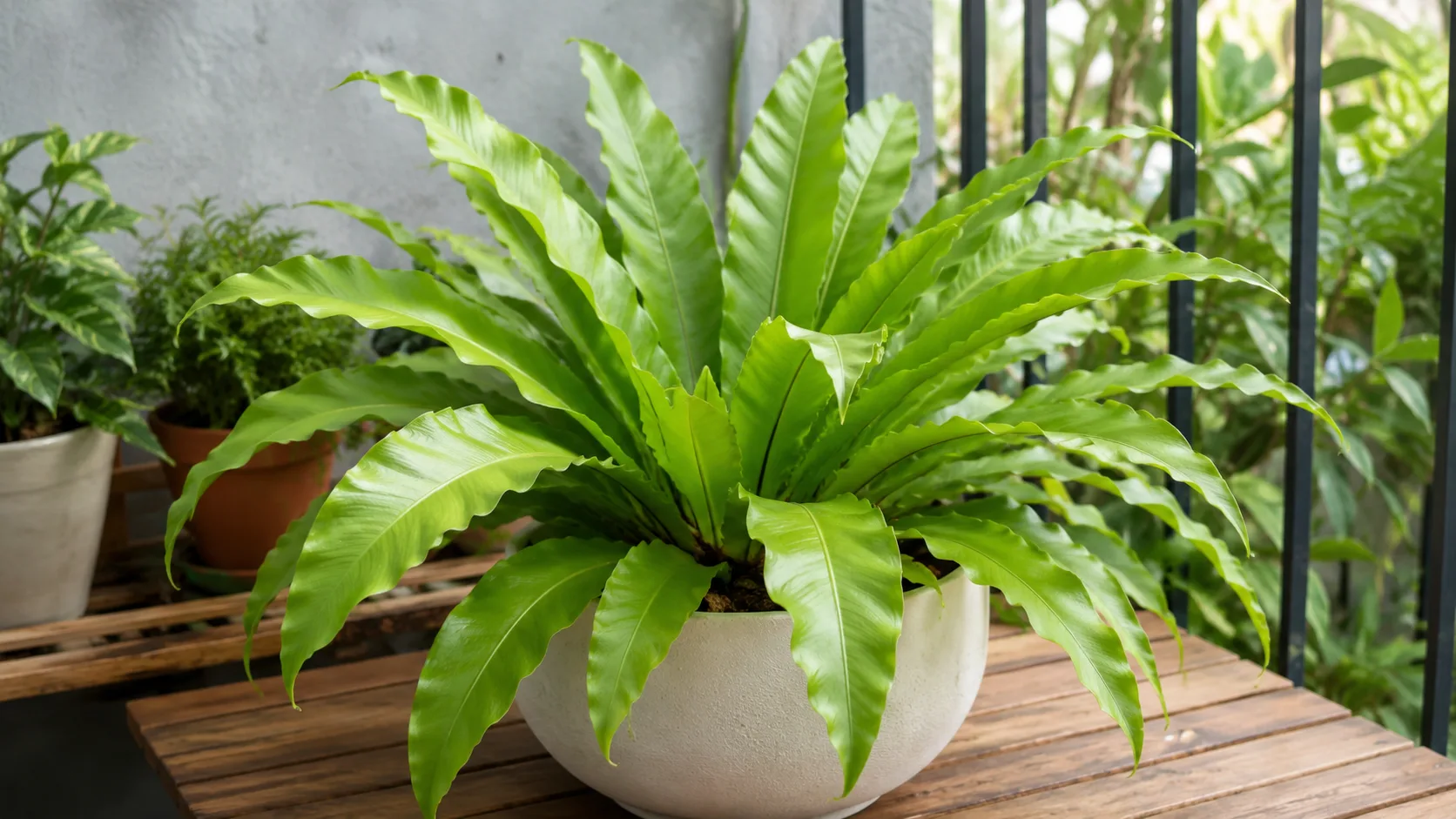
Bird's Nest Fern Light Needs: Best Window, Sun, and Warning Signs
Bird's Nest Fern Light Needs: Best Window, Sun, and Warning Signs
The Short Answer on Bird’s Nest Fern Light
Bird’s nest fern (Asplenium nidus) grows best in bright, indirect light - the kind you get a few feet back from an east-facing window, near a bright north window, or behind a sheer curtain on a south or west exposure. Clemson University’s Home & Garden Information Center recommends placing the fern in a room with bright, indirect light, especially in east- or north-facing rooms, and avoiding heat vents that dry the air. (Clemson Home & Garden Information Center) University of Florida IFAS describes bird’s nest fern as suited for indoor growing in bright indirect light and notes that in the landscape it is planted in shade. (Ask IFAS - Powered by EDIS)
The practical target for most homes is bright, filtered indirect light - bright enough that you can read comfortably near the plant without hot sun landing on the fronds, as Clemson HGIC recommends. Direct afternoon sun through glass is the most common cause of scorched, bleached, or crispy leaves. Deep shade in a corner far from any window usually produces pale, slow, floppy new growth and raises the risk of overwatering on Bird’s Nest Fern because the pot stays wet too long.
Judge light by new frond quality, not by how bright the room feels to your eyes. Healthy bird’s nest fern should unfurl firm, glossy, evenly green leaves from the central rosette at a slow to moderate pace. If the newest fronds look good, the placement is working. If they bleach, crisp, or stay small and washed out, adjust the distance from the window before changing water, soil, or fertilizer.
Why Bird’s Nest Fern Needs Bright but Filtered Light
Bird’s nest fern is often sold as a “low-light plant,” and that label causes more damage than almost any other care myth. The plant can survive in lower indoor light better than sun-loving succulents, but survival is not the same as thriving. A fern that merely hangs on in a dim hallway may keep old fronds for months while producing almost no new growth, and that weak plant is far more vulnerable to root problems, pests, and sudden environmental changes.
The reason comes from where the species evolved. Asplenium nidus is native to humid tropical rainforests across Oceania, Southeast Asia, Hawaii, and parts of East Africa, where it grows as an epiphyte on tree trunks and branches rather than in open ground. In those forests, light is filtered through layers of canopy. It can still be bright - brighter than many indoor corners - but it is diffuse, shifting, and never the harsh, magnified beam that hits leaves through a south-facing window at midday.
What Rainforest Canopy Light Means Indoors
Canopy light is not darkness. It is dappled brightness: strong enough to fuel steady photosynthesis, but softened so leaves do not overheat or lose moisture faster than the roots can replace it. Indoors, the closest match is usually an east window with gentle morning sun, a north window in a bright room, or a filtered south or west window where sheer fabric or partial blinds break up the beam.
Human eyes are poor light meters. We adapt quickly to dim rooms, so a corner that feels “fine” for reading may be too weak for a fern trying to push out new fronds. The better question is not “Is there a window nearby?” but “Does usable light actually reach the plant for several hours a day?” Distance matters enormously. A bird’s nest fern on a table six feet from a bright window receives a fraction of the light it would get one foot from the glass.
How Epiphyte Biology Shapes Light Tolerance
As an epiphyte, bird’s nest fern collects moisture and organic debris in its nest-shaped rosette, but its roots still need air as much as water. Bright light increases transpiration - the plant loses water through its fronds - which is manageable when humidity is steady and the mix drains well. In harsh direct sun, transpiration can outpace root uptake, and the broad, relatively thin fronds scorch before the plant can acclimate.
The fronds themselves tell the story. Bird’s nest fern leaves are wide and relatively unprotected compared with succulents that evolved for full desert sun. Missouri Botanical Garden notes that Asplenium nidus is grown as a houseplant in bright indirect light and emphasizes rich, well-drained soil and careful watering. (Missouri Botanical Garden) That combination - bright but filtered light, even moisture, good drainage - is the indoor version of its natural perch in a humid, shaded tree crown.
Best Window Placement for Bird’s Nest Fern
The best window for bird’s nest fern is one that delivers steady, cool, indirect brightness without baking the fronds in afternoon sun. Compass direction is a useful starting point, but trees, buildings, overhangs, tinted glass, and how far the pot sits from the glass all change the result. Two homes with “east windows” can give completely different outcomes. Use direction as a map, then let the plant’s newest fronds confirm whether the map is right for your room.
Place the pot close enough that the fern receives real light, not just ambient room glow. For most setups, that means 1 to 4 feet from the window glass, depending on exposure and season. Rotate the pot a quarter turn every week or two if growth leans hard toward the glass. Keep leaves from pressing against cold winter glass or hot summer panes, because temperature stress can mimic light damage.
East and North Windows
An east-facing window is often the easiest winning placement. Morning sun is lower in the sky, cooler, and shorter in duration than afternoon sun. Many bird’s nest ferns tolerate direct morning light on the sill until late morning, especially in spring and fall. If new fronds open glossy and evenly green, the east window is doing its job. If you see bleaching on the sun-facing side by midday, pull the pot back 12 to 18 inches or add a light sheer curtain.
A north-facing window can work well in a bright, open room because it provides consistent diffuse light without harsh direct beams. North light is lower risk for scorch, but it can become too weak in winter or in rooms blocked by neighboring buildings or heavy tree cover. If the plant keeps old fronds but new ones are small, pale, or slow, the north window may be safe yet insufficient. Move the fern closer to the glass, supplement with a grow light, or shift to a brighter filtered exposure rather than accepting permanent slow growth.
South and West Windows With Filtering
South and west windows are not automatically wrong, but they demand more management. South windows deliver the strongest midday light in the Northern Hemisphere. West windows add hot, drying afternoon sun that can scorch bird’s nest fern fronds in minutes during summer. Clemson HGIC’s guidance to use bright indirect light and avoid heat sources applies doubly here, because hot glass plus strong sun compounds stress.
The workable approach is distance plus diffusion. Set the fern 3 to 6 feet back from an unfiltered south or west window, or keep it closer behind a sheer white curtain that cuts intensity while preserving brightness. White walls and light floors can bounce extra light into the room, which helps, but they do not replace the need to block direct beams. If you can feel heat building on the fronds when you hold your hand at leaf level, the plant is too exposed.
How Much Direct Sun Can Bird’s Nest Fern Handle?
Bird’s nest fern should not sit in direct midday or afternoon sun. Brief, gentle morning sun through an east window is often tolerable, especially for a plant already acclimated to that exposure, but strong direct sun - particularly from south or west windows between late morning and mid-afternoon - commonly causes irreversible frond damage. Unlike some succulents, this fern does not thicken its leaves or produce protective pigments fast enough to handle sudden intense light.
Direct sun damage shows up as bleached patches, crispy brown areas on the sun-facing frond surface, or collapsed, wilted tissue even when the soil is moist. The damage is localized to exposed sections because the cells have been overheated and desiccated. Old scorch marks do not heal. Only new fronds grown after you correct the light will look healthy, which is why prevention matters more than repair.
If you want to experiment with slightly brighter light - for example, moving a plant from a dim office to a brighter living room - do it gradually over 10 to 14 days, shifting the pot a few inches every few days and watching the newest unfolding frond. A plant grown in low greenhouse light has tender fronds that burn easily on a sunny windowsill on day one. Gradual acclimation gives the plant time to adjust without sacrificing the display fronds you already have.
Low-Light Limits in Dim Rooms
Bird’s nest fern can tolerate lower light, but tolerance has a ceiling. In a genuinely dim interior spot - far from windows, in a hallway, or in a room with one small north window blocked by furniture - the plant often enters a slow survival mode. Old fronds may remain green for a long time while new growth becomes smaller, paler, thinner, or slow to unfurl. Petioles may elongate slightly as the rosette reaches toward the brightest direction.
Low light also changes the rest of the care routine. A fern photosynthesizing less uses less water. Soil that stayed appropriately moist in brighter light can stay wet too long in a dim corner, leading to root stress and yellowing that is easy to misread as a watering mistake alone. Before watering on schedule, check whether the limiting factor is actually light. Moving the plant 2 feet closer to a window often fixes “mystery yellowing” faster than changing the watering interval.
There is a practical floor. If you cannot comfortably read a book near the plant without a lamp during the day, the spot is probably too dark for healthy long-term growth. Decorative placement in a dark shelf may look good for a few months, but the fern will gradually weaken. For those locations, a compact full-spectrum grow light is not optional equipment - it is the replacement for the window the room lacks.
Reading Light Levels Without a Meter
You do not need expensive equipment to place bird’s nest fern well, but you do need a repeatable test instead of guessing from room aesthetics. Two quick methods work in most homes: the hand-shadow test and a rough foot-candle mental model.
For the hand-shadow test, hold your hand flat between the window and the plant at frond height around midday. In bright indirect light, you should see a soft, fuzzy shadow with no hard, dark edges. A sharp, high-contrast shadow means direct sun is hitting the test point - too strong for bird’s nest fern. Almost no shadow means the spot is likely too dim for strong new growth.
Bird’s nest fern generally performs well in bright, filtered indirect light indoors - bright enough to read by, not bright enough to cast harsh shadows, as Clemson HGIC describes. Phone light-meter apps are imperfect but useful for comparing spots relative to one another. Test the windowsill, one foot back, three feet back, and six feet back. You will often find a dramatic drop with distance, which explains why a plant “by the window” in photos is actually on the floor across the room.
Seasonal Light Changes Through the Year
Indoor light is not static. Winter brings shorter days, a lower sun angle, and weaker intensity, especially on north and east exposures. A bird’s nest fern that thrived 2 feet from an east window in June may need to stay closer to the glass in January to receive a similar usable dose of light. Growth often slows naturally in cooler, dimmer months, but persistent pale new fronds in winter usually mean the plant wants more brightness, not more fertilizer.
Summer reverses the risk profile. The same south or west window that felt manageable in March can become dangerous by July, when longer days and higher sun angles push more heat through the glass. Sheer curtains, slightly greater distance from the window, or moving the fern to an east exposure for the hottest months are all reasonable seasonal adjustments. Outdoor shade placement is possible in frost-free climates after acclimation, but UF IFAS notes that bird’s nest fern must be brought indoors before nighttime temperatures drop below about 50°F (10°C). (Ask IFAS - Powered by EDIS)
Treat season changes like a slow dial, not a sudden jump. When days lengthen in spring, you can move the fern slightly closer to its light source over a week or two. When summer heat peaks, ease it back or add filtering. The goal is stable frond quality through the year, not maximum light in winter followed by scorch in summer.
Using Grow Lights for Bird’s Nest Fern
When natural light is weak, inconsistent, or blocked, a full-spectrum grow light can keep bird’s nest fern healthy. Grow lights are especially useful in offices, apartments with shaded courtyards, and rooms where the only window is far across the space. They also solve the winter slump on north exposures without moving furniture every season.
The setup does not need to be elaborate. A standard full-spectrum LED fixture positioned 12 to 24 inches above the fronds is a practical starting point for a tabletop fern. Run the light on a timer for about 10 to 12 hours per day, mimicking a reasonable day length. Avoid 24-hour lighting; plants still benefit from a regular dark period, and constant light can stress foliage over time.
Setup, Distance, and Daily Hours
Start conservatively. If new fronds look tight, pale, or slightly bleached after a week under the fixture, raise the light a few inches or shorten the daily period by an hour. If fronds lean toward the lamp and new growth is small, lower the fixture slightly or add an hour of runtime. Heat matters as much as brightness. If the top of the rosette feels warm to the touch, the lamp is too close even if the color looks fine.
Pair grow lights with stable humidity. Bird’s nest fern in brighter artificial light still transpires, and dry air plus strong light produces brown edges faster than either factor alone. Clemson HGIC suggests using a humidifier in winter or a pebble tray where the pot sits above the water line. (Clemson Home & Garden Information Center) Light and humidity work as a pair, not isolated settings.
How Light Changes Watering and Humidity Needs
Light and water are linked whether you use a window or a grow lamp. Brighter light increases water use because the plant photosynthesizes more and loses more moisture through its fronds. A bird’s nest fern moved from a dim corner to an east window will often need watering slightly sooner, even though the soil mix and pot are unchanged. Ignore that shift and you may underwater a suddenly more active plant.
Dimmer light reduces water use. The same Bird’s Nest Fern watering guide that worked in summer near a bright window can leave soil soggy in a darker winter spot, encouraging root problems. Clemson HGIC warns against letting the pot sit in a saucer of water and recommends watering along the outer edge of the pot rather than flooding the central rosette. (Clemson Home & Garden Information Center) In low light, that caution matters more because evaporation is slower.
Humidity buffers light stress. At 50 to 70% relative humidity, bird’s nest fern tolerates brighter placements better than in dry, heated air. If you must keep the plant near a brighter window, add humidity support before you accept chronic brown tips as “normal.” Dry air plus strong light is one of the fastest paths to crispy frond margins.
Warning Signs of Too Much Light
Too much light usually announces itself on the sun-exposed frond surfaces first. Watch for these patterns together rather than in isolation:
- Bleached or whitish patches on fronds that face the window, especially during or after sunny hours
- Crispy brown areas along sun-hit sections, sometimes with a papery texture
- Sudden wilting or collapse of frond tips despite moist soil, caused by rapid water loss and heat load
- Curling or folding of fronds during the brightest part of the day
- New fronds that emerge pale, stunted, or damaged when the plant was recently moved to a harsher spot without acclimation
If you see active scorching, move the plant back from the window or add a sheer curtain the same day. Trim only fully dead tissue if needed for aesthetics; partially damaged fronds can still photosynthesize. Wait for the next one or two new fronds before deciding whether the new placement is safe.
Warning Signs of Too Little Light
Too little light is slower and easier to overlook because old fronds can stay green for months while the plant weakens internally. Key signals include:
- Small, pale, or dull new fronds that take a long time to unfurl
- Slow or stalled growth even during warm months with otherwise stable care
- Strong lean toward the brightest direction, with the rosette asymmetrical
- Thin, floppy frond texture compared with firm, glossy new growth in better light
- Soil that stays wet for unusually long periods, sometimes followed by yellowing lower fronds
Low-light stress is not an emergency in the same way scorch is, but it is cumulative. Correct it by moving the plant closer to the window, adding a grow light, or removing obstacles that block the beam. Give the plant three to four weeks in the improved spot before judging results, because the next unfolding frond is the first reliable report card.
Too Much vs Too Little Light: A Quick Comparison
| Clue | Too much light | Too little light |
|---|---|---|
| New frond color | Bleached, yellow-white patches; sun-facing burn | Pale, dull green; smaller than expected |
| Frond texture | Crispy, papery scorch on exposed areas | Thin, soft, sometimes floppy |
| Growth speed | May stall after sudden scorch event | Consistently slow; few new fronds |
| Soil drying | Faster in bright, hot spots | Slower; pot stays damp longer |
| Plant posture | Fronds may curl in midday sun | Rosette leans toward window |
| Typical cause | South/west sill without filter; sudden move to sun | Dark corner; far from window; winter dimming |
| First fix | Pull back, filter sun, acclimate gradually | Move closer, add grow light, reduce watering |
How to Move and Acclimate Bird’s Nest Fern Safely
Sudden light changes are one of the most common reasons a healthy-looking store fern declines in the first month at home. Greenhouse-grown plants are adapted to steady, filtered brightness. A windowsill with afternoon sun is a different climate entirely.
When upgrading light - for example, from a dim shelf to an east window - move the pot closer over 10 to 14 days in small steps. When reducing light after scorch, make the correction immediately, then stabilize care for several weeks. Change only one major variable at a time. If you are fixing light, do not simultaneously repot, fertilize heavily, or overhaul watering unless the plant is in active danger.
After any move, judge success by the next unfolding frond, not by old leaves. Bird’s nest fern does not repair damaged frond tissue, so older blemishes can make you think the fix failed when the plant is already recovering. Mark the date of the move on a note card if that helps you wait long enough for a fair reading.
Avoid placing the fern where hot air from radiators, fireplaces, or HVAC vents hits the fronds. Clemson HGIC specifically recommends keeping bird’s nest fern away from heat vents and fireplaces. (Clemson Home & Garden Information Center) Dry, hot air can brown margins even when light levels look correct on paper.
Conclusion
Bird’s nest fern light care comes down to one idea: give bright, filtered brightness like rainforest canopy light, not dark corners and not harsh sunbeams. For most homes, that means an east window, a bright north exposure, or a south or west window softened by distance or a sheer curtain. Aim for enough light that new fronds emerge firm, glossy, and evenly green at a slow to moderate pace, and use the newest frond as your primary diagnostic tool.
Direct midday and afternoon sun scorches the broad fronds quickly, while chronic low light produces pale, slow growth and sets up watering problems the plant cannot outgrow. If natural light is weak, a full-spectrum grow light on a 10- to 12-hour timer is a practical substitute. Whenever you change light, adjust watering expectations and watch humidity, because brighter plants use more water and dry air magnifies stress.
Move the plant gradually, read the fronds honestly, and fix light before you chase fertilizer or Bird’s Nest Fern repotting guide. Get the window right and bird’s nest fern becomes a steady, architectural houseplant. Miss the light window and even perfect watering will not keep the rosette looking its best.
When to use this page vs other Bird’s Nest Fern guides
- Bird’s Nest Fern overview - Start here for whole-plant context before deep-diving this topic.
- Bird’s Nest Fern problems hub - Jump to symptom-specific fix guides when this care topic does not resolve the issue.
- Not Enough Light on Bird’s Nest Fern - Escalate here when light adjustments are not enough.
- Leggy Growth on Bird’s Nest Fern - Escalate here when light adjustments are not enough.
Related Bird’s Nest Fern guides
- Bird’s Nest Fern overview
- Bird’s Nest Fern watering
- Bird’s Nest Fern soil
- Bird’s Nest Fern propagation
- Bird’s Nest Fern fertilizer
- Bird’s Nest Fern repotting
- Not Enough Light on Bird’s Nest Fern
- Leggy Growth on Bird’s Nest Fern
- Bird’s Nest Fern problems
Related tool
Try the Plant Problem Diagnosis Tool with birds-nest-fern pre-selected to estimate needs for your setup.