Yellow Leaves on Bird's Nest Fern: Basal Drop vs. Crown
Quick answer
Yellow fronds on Bird's Nest Fern usually mean wet soil too long, dry mix, low light, low humidity, or normal aging of the oldest basal fronds. First step: press the top inch of mix near the pot edge and lift the pot-heavy damp soil with multiple yellow lower fronds points to overwatering; light dry soil with pale limp fronds points to thirst or humidity stress; one yellow bottom frond on a firm crown is often harmless senescence.
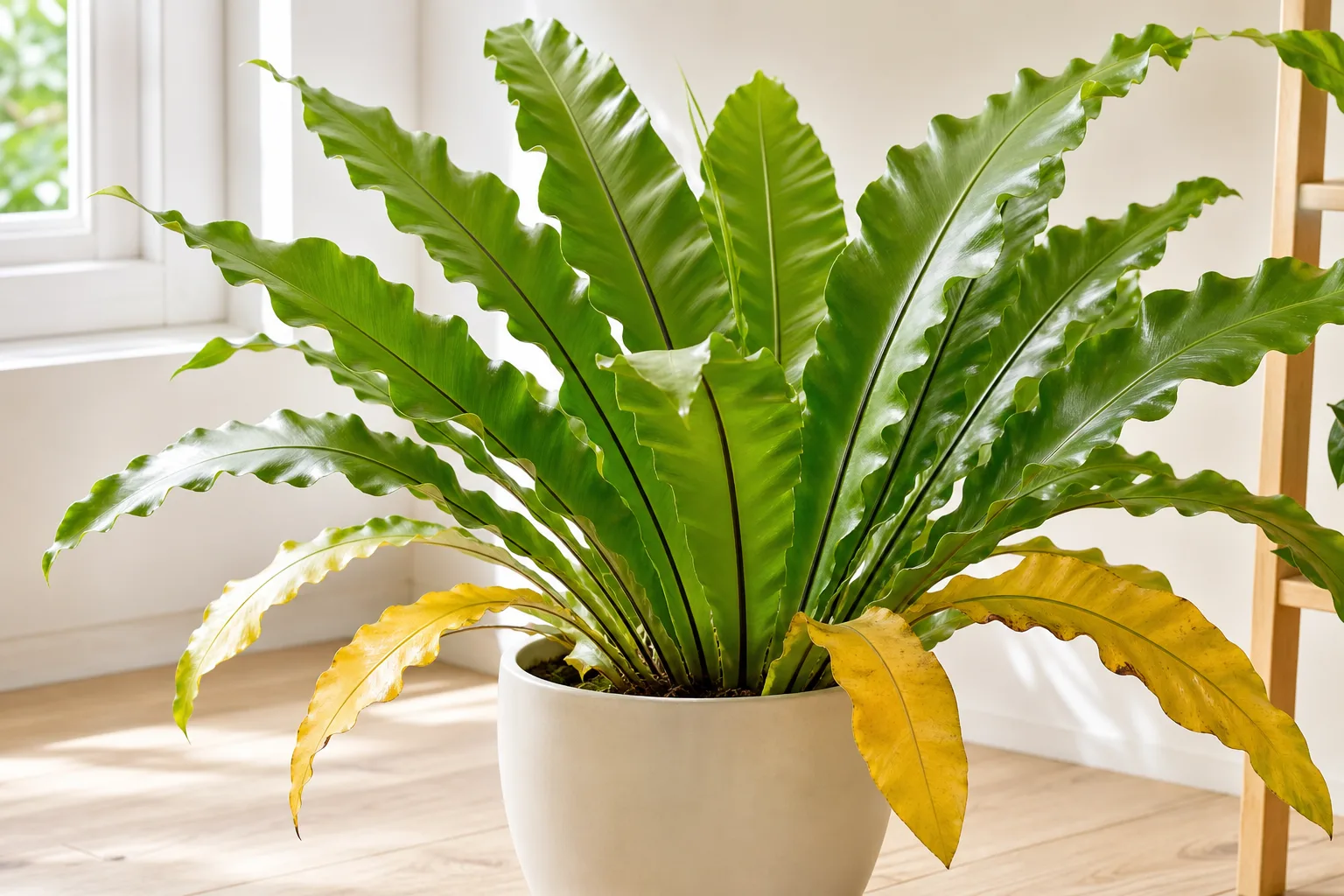
Yellow Leaves on Bird's Nest Fern: Causes, Checks & Fixes
This guide covers yellow leaves on Bird's Nest Fern. See also the general Yellow Leaves guide, watering, and light pages for this plant.
Yellow Leaves on Bird's Nest Fern: Causes, Checks & Fixes
Quick answer
Yellow fronds on Bird’s Nest Fern (Asplenium nidus) are a symptom, not a single diagnosis. The same yellow color can mean normal aging of the oldest basal fronds, roots stressed by wet soil, chronic dryness, too little usable light, or dry indoor air-and those causes need different first responses.
First step: check soil moisture at the top inch near the pot edge and lift the pot before you fertilize, repot, or change light.
- Heavy damp pot, cool mix, multiple yellow lower fronds → pause watering and read the overwatering guide
- Light dry pot, pale limp fronds, crispy edges → one thorough edge-watering and review underwatering or low humidity
- One yellow bottom frond, firm crown, normal dry-down over weeks → likely harmless senescence; remove the spent frond and keep watching new center growth
- Pale dull fronds in a dim corner with otherwise appropriate moisture → move to brighter indirect light per the not-enough-light guide
This page is the multi-cause entry for yellowing. If wet soil is clearly the only problem, the overwatering page goes deeper on drainage, cachepots, and center-watering mistakes. For baseline technique, see the watering guide.
What yellow fronds look like on Bird’s Nest Fern
Bird’s Nest Fern grows undivided, strap-like fronds from a central nest-no long petioles like a pothos. Yellowing therefore shows on the frond blade itself, usually starting at the base of the rosette or across the whole frond, not as isolated spots on divided leaflets.
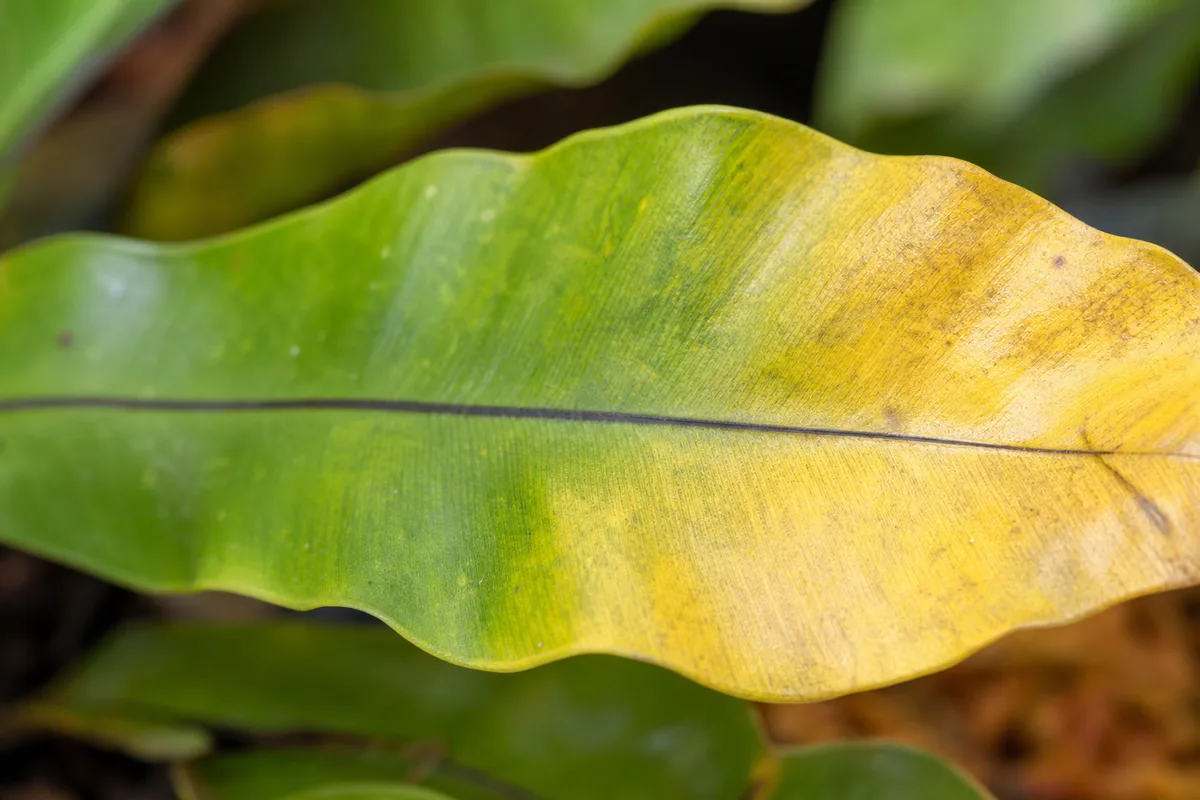
Yellow Leaves symptoms on Bird’s Nest Fern - compare with healthy tissue on the same plant.
Normal basal aging (often harmless)
- One or two lowest fronds turn evenly yellow over weeks or months
- Crown center stays firm; new fiddleheads still emerge
- Mix dries on a predictable cycle-not constantly wet, not bone dry throughout
- Yellow frond feels papery and dry, not mushy
This is how rosette ferns shed older tissue while the growing point stays active. Removing the spent frond is cosmetic, not emergency surgery.
Wet-soil yellowing (most common stress pattern)
- Several lower fronds yellow while mix stays damp for many days
- Pot feels heavy and cool long after the last watering
- Fronds look limp and dull even though soil is wet-damaged roots cannot move water efficiently
- Sour smell from the drainage hole, fungus gnats, or moisture pooling in the nest center after center watering
- Yellowing may climb toward younger fronds if wet cycles continue
That pattern overlaps heavily with overwatering. Wet soil is the leading indoor trigger for yellow fronds on this species.
Dry-soil or humidity stress
- Pale yellow-green fronds, sometimes with crispy brown edges on an otherwise thin blade
- Light pot when lifted; top inch dusty dry-or the whole root ball has pulled away from the pot wall
- Crown may look slightly wilted but still firm, not mushy
- Common in heated winter rooms or near AC vents
UF/IFAS notes bird’s nest fern is not drought-tolerant and should not be allowed to dry out completely. Chronic dryness damages fine epiphytic roots and shows as pale, weak fronds-not always crisp brown tips alone.
Low-light paling
- Overall pale yellow-green tone across multiple fronds, not just the lowest ones
- Plant sits far from windows or in a north-facing room with little reflected light
- Fronds may look smaller or slower to unfurl; growth stalls
- Soil moisture can look “fine” while the plant weakens-light stress and root stress sometimes overlap
Clemson HGIC recommends bright, indirect light such as an east- or north-facing room indoors. Too much direct sun can also turn fronds yellow, so dim corners and harsh sun both weaken foliage-just in different ways.
Crown stress (urgent)
- Yellowing paired with brown mushy tissue at the nest center
- Crown dents under gentle pressure; new fiddleheads stop emerging
- Often follows repeated watering into the rosette center
That is crown rot territory-move to the root rot guide without waiting for more yellow fronds.
Why Bird’s Nest Fern gets yellow fronds
The funnel rosette traps the wrong kind of moisture
In nature, Bird’s Nest Fern grows as an epiphyte on tree trunks across tropical Asia, Hawaii, and Australia. The funnel-shaped rosette catches debris and humidity-not irrigation poured into the crown. Indoors, owners often water into the nest because it looks like a bowl. Clemson HGIC specifically warns to water along the outer edge so water does not enter the center where new fronds emerge. Trapped moisture there yellows and collapses tissue from the growing point outward-distinct from a single aging basal frond.
Fine roots and the canopy-to-soil desync
Epiphytic roots are fine and shallow. They want moisture and oxygen at the same time in porous mix. A broad frond canopy transpires at one rate while dense peat in a glazed pot dries at another. Surface color can mislead: dark damp-looking top layer with a soggy root zone below causes lower fronds to yellow while you think you are “keeping it moist.” NC State Extension notes it does best in rich, moist, porous soil and does not tolerate dry conditions-but evenly moist is not the same as waterlogged.
Winter slow dry-down and calendar watering
In cool dim months, the same weekly schedule that worked in summer keeps pots wet too long. NC State lists ideal indoor temperatures around 60–70°F. Cooler roots function slowly; mix lingers damp; lower fronds yellow from oxygen-starved roots even when you water “correctly” by the calendar.
Low humidity without soil problems
Ferns evolved in humid rainforest air. Dry heated homes can pale and yellow fronds even when watering rhythm looks acceptable-especially if airflow from vents hits the foliage. That overlaps with low humidity and sometimes brown tips from salt or edge dryness.
Salt buildup from overfeeding
Heavy or frequent fertilizer on stressed roots can yellow fronds through salt accumulation-often with brown crisp margins. Do not reach for fertilizer when fronds yellow; confirm moisture, light, and roots first.
Lookalike symptoms to rule out
| What you see | Likely cause | Where to read next |
|---|---|---|
| One yellow lowest frond, firm crown, normal dry-down | Normal basal senescence | Remove frond; monitor center growth |
| Multiple yellow lower fronds, heavy wet pot | Overwatering / early root stress | Overwatering |
| Pale limp fronds, light dry pot | Underwatering | Underwatering |
| Pale fronds, appropriate moisture, dim location | Low light | Not enough light |
| Yellow-green fronds, dry air, winter heat | Low humidity | Low humidity |
| Yellow base plus brown crisp edges only | Salt or edge burn | Brown tips |
| Wet mix, soft crown, sour smell | Crown or root rot | Root rot |
| Yellow lower fronds with tiny flying insects | Fungus gnats from wet mix | Fungus gnats |
Yellow fronds with wet heavy soil are a watering problem until proven otherwise. Yellow fronds with a light dry pot usually are not.
How to confirm the cause
Work through these six checks in order:
- Count the pattern - Is only the oldest bottom frond yellow, or are several lower fronds fading at once? Single basal yellow on a firm plant often means aging. Widespread lower yellow with wet soil means root stress.
- Pot weight - Lift the container. Heavy and cool days after watering supports overwatering. Noticeably light supports drought or chronic under-watering.
- Moisture at the top inch - Press a finger about one inch deep near the pot edge, not into the crown. Clemson HGIC recommends watering when this layer feels dry. Cool clinging mix means wait before adding water. Hard dusty mix pulling from the pot wall means the plant has gone too dry.
- Crown firmness - Look into the nest center. Firm growing point with dry yellow basal fronds is very different from soft brown mushy crown tissue. Softness escalates to root rot.
- Light and location - Note distance from the brightest indirect window. Pale even yellowing across fronds in a dim corner fits low light even when soil checks look acceptable.
- Recent care changes - New cachepot? Winter heat blast? Moved from bright shop light to dim office? Repotted into heavy peat? The last change often explains sudden yellowing better than mystery disease.
If checks point to wet soil only, continue on the overwatering page for drainage and center-watering correction. If the pot is light and dry with limp pale fronds, see underwatering before assuming rot.
First fix for Bird’s Nest Fern
Match your first action to what the top-inch soil check and pot weight show-do not fertilize, repot, or move the plant until that read is clear.
That single diagnostic pause prevents the two most common mistakes: adding water to an already wet pot because fronds look limp, or feeding yellow fronds hoping to green them up when roots are the real problem.
If soil is wet and the pot is heavy
Stop all watering until the top inch of mix dries and the pot feels noticeably lighter. Blot visible moisture from the rosette center if you have been center-watering. Empty saucers and cachepots. Resume only with thorough edge watering when dry-see the watering guide.
If soil is dry and the pot is light
Water thoroughly once along the outer edge of the pot until excess runs from the drainage hole, then drain completely. Do not pour into the nest center. After that single rescue drink, return to the top-inch dry-down rhythm-Clemson HGIC says not to let the soil dry out completely between waterings, which means evenly moist after proper dry-down, not perpetual drought.
If only one basal frond is yellow on a firm plant
Remove the spent frond at the base and keep your existing watering checks. No other intervention is needed if new fiddleheads continue to emerge firm and green.
If fronds are pale in a dim spot with otherwise OK moisture
Move to the brightest indirect location available-never direct hot sun on stressed fronds. Acclimate over a week if the jump in light is large.
Do not stack Bird’s Nest Fern repotting guide, fertilizer, and relocation on day one unless inspection shows mushy roots or blocked drainage.
Step-by-step recovery by confirmed cause
Overwatering / wet-soil yellowing
- Pause watering until the top inch dries.
- Blot the crown if center moisture was present.
- Empty standing water from saucers and cachepots; confirm drainage holes are open.
- Hold fertilizer until new growth looks healthy for two weeks.
- Resume edge-watering when dry; one proper drink is not overwatering-frequency on wet mix is.
- Remove fully yellow lower fronds once the crown is stable.
- Inspect roots if yellowing continues after one full dry cycle-see root rot if tissue is mushy.
Underwatering / chronic dryness
- Water thoroughly once at the soil perimeter; drain fully.
- Review whether winter heating or a too-fast-draining mix is pulling moisture away from fine roots.
- Adjust rhythm to top-inch dry-down without letting the entire root ball desiccate.
- Expect slow recovery-damaged roots rebuild before fronds plump up.
Low light
- Move to Bird’s Nest Fern light guide within fern limits.
- Keep watering rhythm steady-do not compensate with extra water.
- Watch for new fiddleheads with better color over several weeks.
Normal basal senescence
- Snip the yellow basal frond when fully spent.
- Continue normal care checks; no watering change required if dry-down was already appropriate.
Low humidity (when soil checks pass)
- Add a humidifier, pebble tray, or group plants-Clemson HGIC suggests humidifier or pebble tray in winter.
- Keep misting light and avoid pooling water in the nest center.
- See the low humidity guide if edges crisp too.
Recovery timeline
Stabilization after correcting wet soil often takes one to two weeks-yellowing should slow and the crown should stay firm.
New fiddleheads unfurling firm and glossy are the best success signal. Expect them in three to eight weeks during warm active growth, sometimes longer in a cool winter room. Bird’s nest fern is a slow-growing species; old yellow fronds will not re-green-judge progress by center growth, not basal color.
Worsening signs: crown softens, nest center browns, sour smell intensifies, yellowing climbs rapidly with constantly wet mix-escalate to root rot immediately.
What not to do
Do not fertilize yellow fronds hoping to green them-salt buildup can worsen yellowing on stressed roots. Do not increase watering when soil is already wet and heavy. Avoid pouring water into the rosette center during recovery even if fronds look thirsty.
Do not repot on day one unless inspection shows rot or blocked drainage-extra wet soil volume in an oversized pot slows dry-down. Do not pull partly green fronds off the plant; wait until tissue is fully yellow.
Do not treat yellowing as always normal-multiple lower fronds yellowing with wet soil is a stress signal, not senescence. Do not confuse this fern with drought-tolerant succulents; UF/IFAS says it should not dry out completely, but that does not mean keeping mix soggy.
How to prevent yellow fronds next time
Match watering to how fast your pot dries in your light. Water when the top inch of soil feels dry-often roughly every 7 to 10 days in warm bright months and every 10 to 14 days in cooler slower months for many indoor plants, but the calendar is only a reminder to check.
Always water along the outer edge, under the frond skirt, until water runs from the hole. Never let the pot sit in standing water. Empty saucers within 15 to 30 minutes.
Place the fern in bright indirect light, protect it from heating vents, and address dry winter air with humidity support. Remove spent basal fronds promptly. Lift the pot weekly during your first month in a new home-store-bought ferns are often overwatered before sale.
For the full seasonal rhythm and moisture checks, use the watering guide.
When to worry - crown rot escalation
Escalate immediately if the crown dents under light pressure, the nest center is brown and mushy, the mix smells strongly sour, or roots are brown and slimy on inspection. Those signs mean yellow fronds are a surface symptom of decay-not a watering tweak alone.
If the crown stays firm, only lower fronds are affected, and yellowing slows after one proper dry cycle, you are likely on track. One yellow basal frond on an otherwise healthy rosette can wait.
Severe crown collapse with no new fiddlehead emerging is often not reversible. Edge watering and dry-down discipline prevent more yellow fronds than any rescue after rot sets in.
Bird’s Nest Fern care cross-check
| Care factor | Healthy target | Yellow-frond warning sign |
|---|---|---|
| Watering | Top inch dry before next edge-watering | Heavy wet pot; limp fronds despite moisture |
| Crown | Firm center; dry nest surface | Pooling water; soft brown nest tissue |
| Light | Bright indirect; avoid direct sun | Pale yellow-green fronds in dim corners |
| Humidity | Moderate to high; pebble tray or humidifier in winter | Pale fronds with crispy edges; dry heated air |
| Fertilizer | Light feed only on healthy plants | Yellowing after heavy or frequent feeding |
| Aging | Oldest basal fronds shed slowly | One dry yellow bottom frond; firm crown |
Related Bird’s Nest Fern problems
- Watering guide - baseline technique, seasonal rhythm, and moisture checks
- Overwatering - wet-soil deep-dive when yellowing follows heavy damp mix
- Root rot - when wet soil has become confirmed decay
- Underwatering - pale fronds with dry light pots
- Low humidity - dry-air stress without soggy soil
- Not enough light - pale weak fronds in dim rooms
- Brown tips - salt or edge burn lookalike
- Bird’s Nest Fern overview - hub for all care topics
Conclusion
Yellow fronds on Bird’s Nest Fern reward a simple sort: one aging basal frond versus multiple stressed lower fronds with wet or dry soil versus pale weakness in dim dry air. Read the top inch and pot weight first, match one fix to that read, and judge recovery by new growth, not old frond color. When the crown softens or roots turn mushy, switch to the root rot guide without delay.
When to use this page vs other Bird’s Nest Fern guides
- Bird’s Nest Fern watering guide - Use for routine moisture checks before assuming yellow leaves is the main issue.
- Bird’s Nest Fern problems hub - Browse all 16 common issues on this species.
- Overwatering on Bird’s Nest Fern - Different entry point when symptoms overlap with yellow leaves.
- Underwatering on Bird’s Nest Fern - Different entry point when symptoms overlap with yellow leaves.
- Not Enough Light on Bird’s Nest Fern - Different entry point when symptoms overlap with yellow leaves.