Fungus Gnats on Bird's Nest Fern: Causes, Checks & Fixes
Quick answer
Fungus gnats on Bird's Nest Fern mean the soil surface stays wet too long - common when a funnel-shaped rosette traps debris and a glazed cachepot hides standing water. First step: stop watering until the top inch of mix dries at the pot edge.
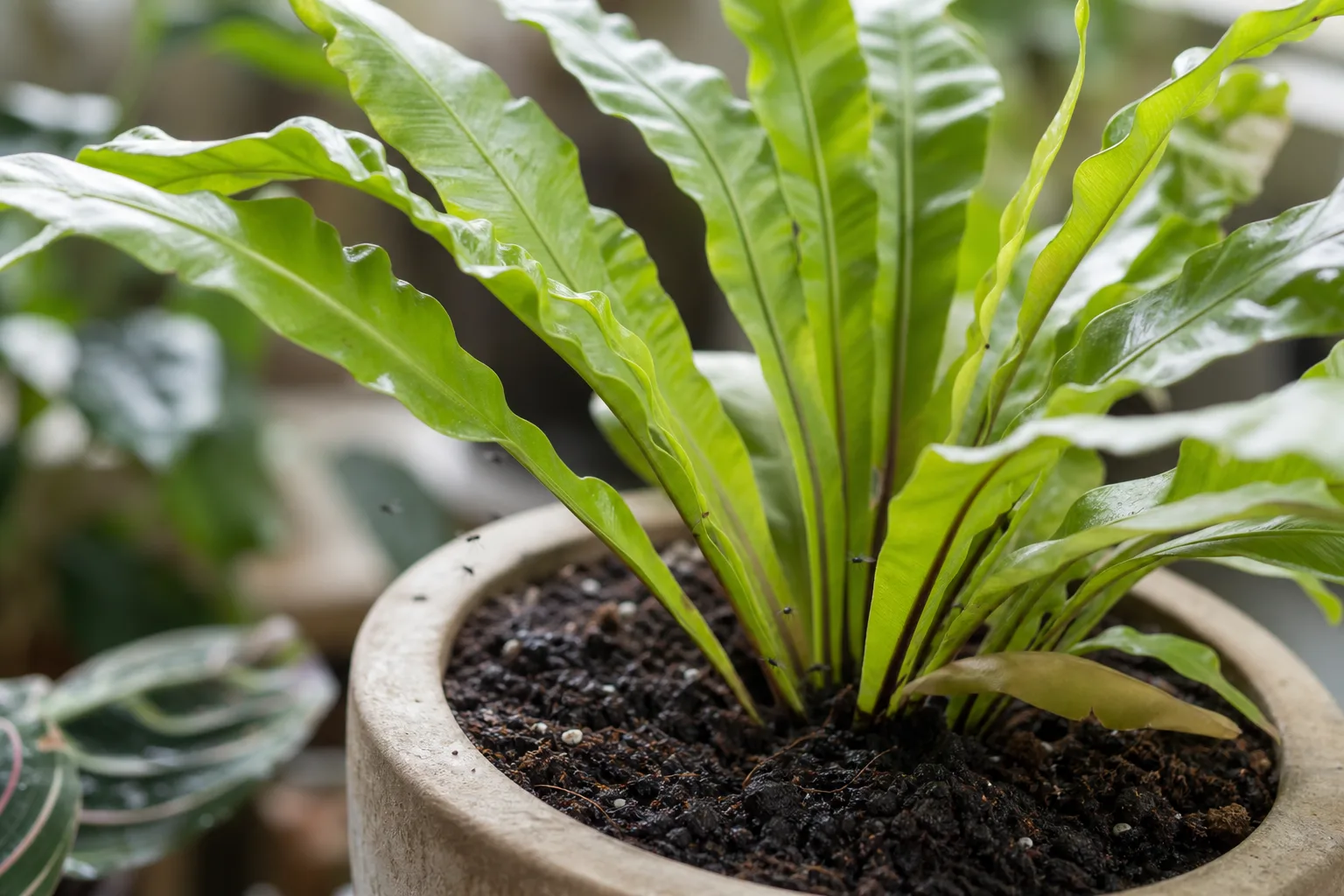
Fungus Gnats on Bird's Nest Fern: Causes, Checks & Fixes
This guide covers fungus gnats on Bird's Nest Fern. See also the general Fungus Gnats guide, watering, and light pages for this plant.
Fungus Gnats on Bird's Nest Fern: Causes, Checks & Fixes
Quick answer
Fungus gnats on Bird’s Nest Fern (Asplenium nidus) are small flies whose larvae breed in persistently damp organic potting mix - not on the plant’s smooth, waxy fronds. On this fern they almost always signal overwatering, slow dry-down, or trapped runoff in saucers and cachepots. The funnel-shaped rosette collects fallen debris and holds humidity at the crown, while fine epiphytic roots sit shallow in the mix; when the surface peat never dries, adults lay eggs in that top layer and larvae feed on fungi and decaying organic matter.
First step: stop watering until the top inch of mix feels dry at the pot edge - the same dry-check standard in our Bird’s Nest Fern watering guide. Do not let the entire root ball desiccate; Clemson HGIC advises not allowing soil to dry out completely between waterings. The goal is a dry surface with lightly moist roots below - enough to break the gnat cycle without triggering drought stress on a fern that does not tolerate dry conditions.
If mushy roots, a soft crown, or sour-smelling mix appear during inspection, move to the root rot guide - this page covers gnat control before decay is confirmed.
What fungus gnats look like on Bird’s Nest Fern
The fern itself often looks mostly fine at first. Gnats are a soil and moisture problem, not a leaf pest. Look for flies at the pot rim under the frond skirt, not on glossy frond surfaces - that placement is the quickest visual clue that larvae are in the mix, not that fronds are under attack.
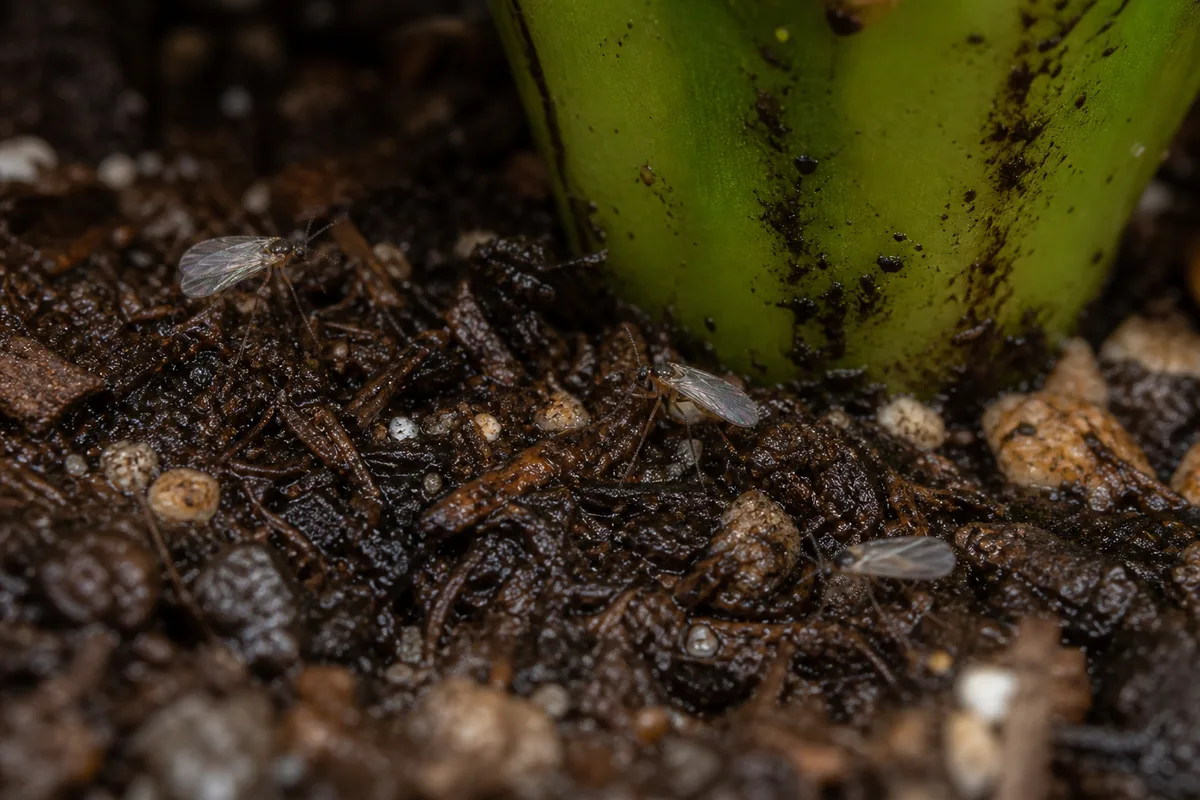
Fungus Gnats symptoms on Bird’s Nest Fern - compare with healthy tissue on the same plant.
- Adults - Tiny dark or gray flies, roughly 1/8 inch long, that scatter when you water, lift the frond skirt, or disturb the pot rim. They hover near the soil line, windows, and lamps - not in clouds on glossy frond surfaces.
- Larvae - Translucent, worm-like immatures with dark heads in the top inch of peat-based mix. Scrape the surface at the pot wall with a spoon or skewer - if you see glossy worms in damp peat, breeding is active in this container.
- Soil clues - Surface stays dark and damp five or more days after one drink. A green algae film or white fuzzy growth on wet peat often appears alongside gnats - see mold on soil when surface fuzz is the main symptom.
- Plant stress (later) - Yellow lower fronds, limp waxy leaves despite wet mix, stalled fiddleheads at the crown, or a sour smell from the drainage hole when chronic wet roots combine with larval feeding.
Bird’s Nest Fern fronds do not get stippling, webbing, or sticky residue from gnats. If you see those patterns, look for spider mites or aphids instead. Smooth, entire fronds with no pest marks but flies at the pot rim point squarely at wet culture.
Why Bird’s Nest Fern gets fungus gnats
Fungus gnats breed wherever organic potting mix stays continuously moist near the surface. Adults lay eggs in that layer; larvae feed on fungi, decaying peat, and sometimes tender feeder roots. The flies are not species-specific - they follow water. Bird’s Nest Fern setups make wet surface layers more likely in several distinct ways:
The rosette traps debris and humidity
In nature, Asplenium nidus grows as an epiphyte on tree trunks across tropical Asia, Hawaii, and Australia. The funnel-shaped rosette catches falling leaves and organic matter, creating a compost layer that stays lightly moist in humid rainforest air. Indoors, that same geometry collects potting fines, dead frond bits, and splash residue at the crown - extra organic food for larvae when the mix below stays wet.
Shallow roots and uneven dry-down
Fine, shallow roots want steady access to moisture and oxygen at the same time. In a glazed pot with dense peat, the broad frond canopy transpires at one rate while the upper mix dries at another. Bottom-watering into a cachepot that never gets emptied can leave the surface soggy for days even when the owner thinks they watered conservatively. A dark damp rim with a separately flooded nest center is a common pattern after center watering - see overwatering when limp fronds and yellowing base leaves join the flies.
Setup mistakes that keep the surface wet
- Calendar watering without checking the top inch at the pot edge
- Decorative cachepots or sleeves hiding standing water after bottom-watering
- Center watering into the nest, which adds moisture independent of edge dry-down
- Oversized pots where a modest root ball sits in a large wet zone
- Heavy peat-heavy mix without bark or perlite that holds water at the surface
- Low light or cool rooms slowing evaporation while watering continues on schedule - NC State lists ideal indoor temperatures around 60–70°F, and chilled roots function poorly in lingering wet mix
Because Bird’s Nest Fern is not drought-tolerant, owners who see limp fronds often water again - exactly when the surface needs the opposite if it is already saturated.
The gnats are the visible alarm. The underlying risk on Bird’s Nest Fern is the same wet-soil stress that causes overwatering, mold on soil, and root rot - not the flies themselves on a mature fern.
Mounted vs. potted Bird’s Nest Fern
On mounted or bark-mounted displays, the root pad dries from all sides and surface peat is minimal - fungus gnats are less common, though the nest center can still hold water if misted heavily. Potted ferns depend on edge watering and saucer discipline because only the top of the mix is exposed to air. If your fern is mounted, focus on nest drainage after misting and check neighboring potted plants as the fly source before treating the mount.
Fungus gnats vs. other small flies
| What you see | Likely pest | Quick check |
|---|---|---|
| Flies rise from pot when watered; run on soil surface | Fungus gnats | Wet top inch; larvae in mix |
| Flies near kitchen compost or drain, not plants | Fruit flies or drain flies | Breeding site away from ferns |
| Stocky flies on wet soil in greenhouse trays | Shore flies | Often on algae-coated media |
| Tiny flies only near one wet pot on a shelf | Fungus gnats | Neighboring dry pots may be innocent |
How to confirm the cause
Work through this five-step checklist before adding traps or drenches:
- Fly behavior - Do insects rise from the pot when you water or lift the frond skirt? Do they hover at the soil line and windows? That pattern fits fungus gnats breeding in this container.
- Moisture at the top inch - Press a finger about one inch deep near the pot edge, not into the crown. Clemson HGIC recommends watering when this layer feels dry. If the upper zone is still cool and damp while you water on schedule, overwatering is confirmed regardless of fly count.
- Pot weight and drainage - A heavy pot days after watering, a full saucer, or blocked drain holes support chronic surface moisture. Lift the nursery pot out of any cachepot and check for trapped runoff.
- Crown and frond pattern - Moisture pooling in the nest center, brown tissue, or softness under gentle pressure point to center-watering damage overlapping wet culture. Yellow lower fronds with heavy wet soil strengthen an overwatering link.
- Larval check - Scrape the top inch of mix at the pot wall or unpot one side. Glossy worm-like larvae in damp peat confirm active breeding - not just stray flies from elsewhere.
If flies appear but the top inch is bone dry at the edge and the pot is light, the infestation may be coming from a neighboring wet plant - identify which pot still holds moisture.
Gnats vs. mold vs. rot urgency decision table
| Sign | Fungus gnats only | Mold on soil | Crown / root rot |
|---|---|---|---|
| Where you see it | Flies at pot rim; larvae in top inch | White/gray fuzz on soil surface | Soft brown nest center; mushy roots on unpot |
| Crown feel | Firm and green | Firm and green | Soft, collapsing, or brown |
| Smell | None or earthy from wet peat | Musty when surface disturbed | Sour or rotten from drainage holes |
| Bird’s Nest Fern fronds | Usually upright; smooth, unmarked | Upright; mold stays on soil | Collapse despite wet mix; new growth stops |
| Urgency | Low–medium - fix surface dry-down within days | Low - scrape + dry surface | High - unpot same day if crown is soft |
| First fix | Stop watering until top inch dries at edge | Scrape fuzzy layer + edge water | Stop watering; inspect roots - see root rot |
If only flies and a wet surface appear on a firm crown, you likely caught the problem at the culture stage. Soft crown tissue plus sour smell means unpot today, not another sticky-trap cycle.
Surface-dry vs. full desiccation vs. center-watering
| Approach | What you do | Risk on Bird’s Nest Fern | Gnat impact |
|---|---|---|---|
| Surface dry-down | Pause until top inch at pot edge feels dry; lower mix stays lightly moist | Safe default - matches Clemson top-inch rule | Breaks egg-laying zone; larvae lose habitat |
| Full pot desiccation | Let entire root ball go bone dry for days | Fine epiphytic roots die; fronds wilt and may not recover | May kill some larvae but damages the fern |
| Center watering into nest | Pour into funnel while rim looks dry | Trapped moisture at crown; invisible wet zone | Surface at edge may read “dry” while nest stays soggy - gnats persist |
The correct gnat fix on this fern is almost always surface dry-down with edge watering, not drought-stressing the whole pot or flooding the rosette because the rim looked dry.
Quick symptom comparison on Bird’s Nest Fern
| Symptom cluster | Likely issue | Where to read next |
|---|---|---|
| Flies + wet surface + firm crown | Fungus gnats from moisture culture | This page |
| Wet mix + white fuzz on soil, few flies | Mold on soil | Mold on soil |
| Heavy wet pot + limp fronds + yellow base | Overwatering | Overwatering |
| Flies + soft crown + sour smell + mushy roots | Advancing rot | Root rot |
First fix for Bird’s Nest Fern
Stop watering until the top inch of mix feels dry at the pot edge and the pot feels noticeably lighter.
Use a finger or dry skewer at that depth near the wall - not a calendar. For many homes that means skipping one or two planned drinks. Empty any standing water in saucers and lift out of cachepots. This one change removes the habitat larvae need and makes the soil less attractive to egg-laying adults.
Do not mist heavily into the crown, bottom-water continuously, or pour into the nest center while gnats persist. Half measures keep the surface damp enough for the life cycle to continue. Clemson HGIC advises watering along the outer edge so water does not enter the rosette center - that rule applies doubly while correcting gnats.
Step-by-step treatment
After the first dry cycle, layer fixes in this order based on severity:
- Maintain surface dry-down rhythm - Water only when the top inch at the pot edge feels dry per the watering guide. Give a thorough drink around the perimeter until excess drains, then empty saucers within 15 to 30 minutes. Never flood the nest center.
- Set yellow sticky traps - Place traps near soil level under the frond skirt to catch adults and monitor progress. Traps reduce egg-laying; they do not replace drying the mix.
- Improve light and airflow within fern limits - Move to the brightest indirect spot available. Gentle airflow helps the surface dry evenly. Never jump to direct hot sun on stressed waxy fronds.
- Refresh the surface layer - Scrape algae-crusted or moldy top peat and replace with a thin layer of fresh porous mix, or top-dress with fine sand or gravel to speed surface drying on stubborn pots.
- Biological larval control (if flies persist two weeks) - Bacillus thuringiensis israelensis (BTI), available in products like Gnatrol or Mosquito Bits, targets fungus gnat larvae when used as a soil drench per label directions. Apply at the pot edge and outer soil surface - never pour BTI or any treatment into the central rosette. Several applications spaced five to seven days apart are usually needed because BTI does not affect eggs or adults. BTI complements drying; it does not replace it.
- Inspect roots if decline continues - If fronds keep yellowing after one full dry cycle, unpot and look for firm pale roots versus brown mushy tissue. Escalate to the root rot guide if decay is present.
Skip hydrogen peroxide drenches as a solo fix while keeping soil soggy - they briefly knock larvae but do not fix the culture gnats exploit.
Recovery timeline
Expect one to two weeks for adult counts to drop sharply once the top inch dries consistently between every watering. Larvae already in the mix hatch in overlapping waves, so a few stragglers near windows are normal briefly. Full control often takes three to four weeks because of overlapping gnat generations.
Example recovery pattern (June 2026): A Bird’s Nest Fern in a 6-inch glazed cachepot that was bottom-watered weekly kept a wet surface for roughly 12 days. After switching to edge-watering only when the top inch dried, adding two yellow sticky traps (roughly 15 adults caught in week one, fewer than five by week three), and skipping two planned drinks, adult counts dropped noticeably by week two. A new firm fiddlehead unfurled around week four once the moisture rhythm stabilized - old yellow lower fronds did not re-green, which is normal.
Signs you are winning:
- Fewer flies when you water or lift the frond skirt
- Top soil at the pot edge light in color and dry to the touch at one inch before each drink
- Firm crown with a new glossy frond emerging
- Sticky traps catching fewer adults each week
Signs the problem is deepening:
- Yellow fronds spreading up the rosette while soil stays wet
- Soft, brown tissue at the nest center
- Sour smell from drain holes
- Fly swarms increasing weekly despite dry surface attempts
Mature Bird’s Nest Fern rarely dies from gnats alone. Death comes when wet roots and crown rot go untreated - treat moisture as the primary disease and gnats as the messenger.
What not to do
Do not let the entire root ball desiccate while fighting gnats - dry the surface, not the whole pot. Fine epiphytic roots die when the entire mix goes bone dry.
Do not pour water, BTI, or pesticides into the central rosette - new fronds emerge from that point and trapped moisture promotes crown rot. Avoid foliar pesticide sprays on smooth waxy fronds where droplets can leave permanent water spots in bright light.
Do not water because fronds look limp while the top inch is still wet - Bird’s Nest Fern wilts from root damage in soggy mix too. Do not rely on peroxide or cinnamon alone while keeping a peaty surface constantly damp. Do not stop treatment after three days when adults dip; eggs still in soil will hatch.
Do not repot into an oversized container “to fix gnats” - extra wet soil volume makes surface dry-down harder on shallow roots.
How to prevent fungus gnats next time
Water when the top inch at the pot edge feels dry, not on a fixed weekday. Match winter frequency to slower growth in cooler rooms. Always water along the outer edge under the frond skirt until excess drains, then empty saucers or cachepots within 15 to 30 minutes.
Remove fallen frond debris from the rosette so it does not decay into larval food. Refresh compacted peat that stays wet a week after one drink - see the soil guide for porous mix ratios. Quarantine new ferns six weeks and inspect soil near the base before placing them beside established plants. Keep a sticky trap near soil level in high-risk seasons as an early monitor, not a cure.
When gnats mean overwatering or root rot
Gnats alone on a firm crown usually mean correctable moisture culture - dry the surface, fix drainage, and resume edge-watering on a healthy cycle.
Escalate immediately when:
- The crown dents under light pressure or browns at the center
- The mix smells strongly sour at the drainage hole
- Lower fronds yellow and collapse while the pot stays heavy
- Unpotting reveals brown mushy roots
Those signs mean wet soil has progressed beyond a gnat nuisance - follow the overwatering pause protocol first, then the root rot guide if decay is confirmed.
If gnats persist weekly for four or more weeks despite proper surface dry-down, empty saucers, sticky traps, and BTI at the pot edge, unpot and inspect roots rather than repeating the same cycle. Contact your local extension office or master gardener helpline if the plant keeps declining after corrected watering and root inspection - advanced crown rot may need professional diagnosis.
Related Bird’s Nest Fern problems
- Overwatering - when wet soil, limp fronds, and yellowing base leaves are the main concern
- Mold on soil - white or green fuzz on the surface, often with the same wet culture
- Root rot - soft crown, sour mix, mushy roots
- Watering - edge-watering technique and moisture checks
- Bird’s Nest Fern overview - full care hub
FAQs
Can I let my Bird’s Nest Fern dry out completely to kill fungus gnats?
Dry only the top inch of mix at the pot edge - not the entire root ball. Bird’s Nest Fern is not drought-tolerant and fine epiphytic roots die if the whole pot desiccates. Let the surface dry between drinks while the lower mix stays lightly moist, which breaks the gnat breeding zone without triggering wilt.
Should I water into the nest if the soil surface looks dry?
No. Pour along the outer edge under the frond skirt, never into the central rosette where new fronds emerge. A dry-looking rim with a damp nest center is a crown-rot risk, not a signal to flood the funnel. See the watering guide for edge-watering technique.
Are fungus gnats a sign my Bird’s Nest Fern has root rot?
Gnats alone usually mean wet surface mix, not advanced rot. Escalate when the crown feels soft, the mix smells sour, lower fronds yellow while soil stays heavy, or unpotting reveals brown mushy roots. Those patterns overlap with overwatering and need the root rot guide.
When is fungus gnats urgent on Bird’s Nest Fern?
Act quickly if a cloud of flies appears with a soft brown nest center, fronds collapse despite wet soil, or gnats persist weekly even after a proper surface dry-down. Chronic wet culture on this fern can slide from nuisance flies to crown rot within days.
How do I prevent fungus gnats on Bird’s Nest Fern next time?
Water when the top inch at the pot edge feels dry, empty cachepots within 30 minutes, avoid center watering, and refresh algae-crusted surface mix. Yellow sticky traps near soil level catch adults early. BTI drenches at the pot edge - never in the rosette - help if larvae persist after moisture is fixed.
When to use this page vs other Bird’s Nest Fern guides
- Bird’s Nest Fern watering guide - Use for routine moisture checks before assuming fungus gnats is the main issue.
- Bird’s Nest Fern problems hub - Browse all 16 common issues on this species.
- Overwatering on Bird’s Nest Fern - Different entry point when symptoms overlap with fungus gnats.
- Mold on Soil on Bird’s Nest Fern - Different entry point when symptoms overlap with fungus gnats.
- Root Rot on Bird’s Nest Fern - Different entry point when symptoms overlap with fungus gnats.