Aphids on Bird's Nest Fern: Causes, Checks & Fixes
Quick answer
Aphids on Bird's Nest Fern cluster on unfurling fronds at the central rosette. First step: isolate the plant and wipe or rinse visible insects off tender growth-without flooding the crown.
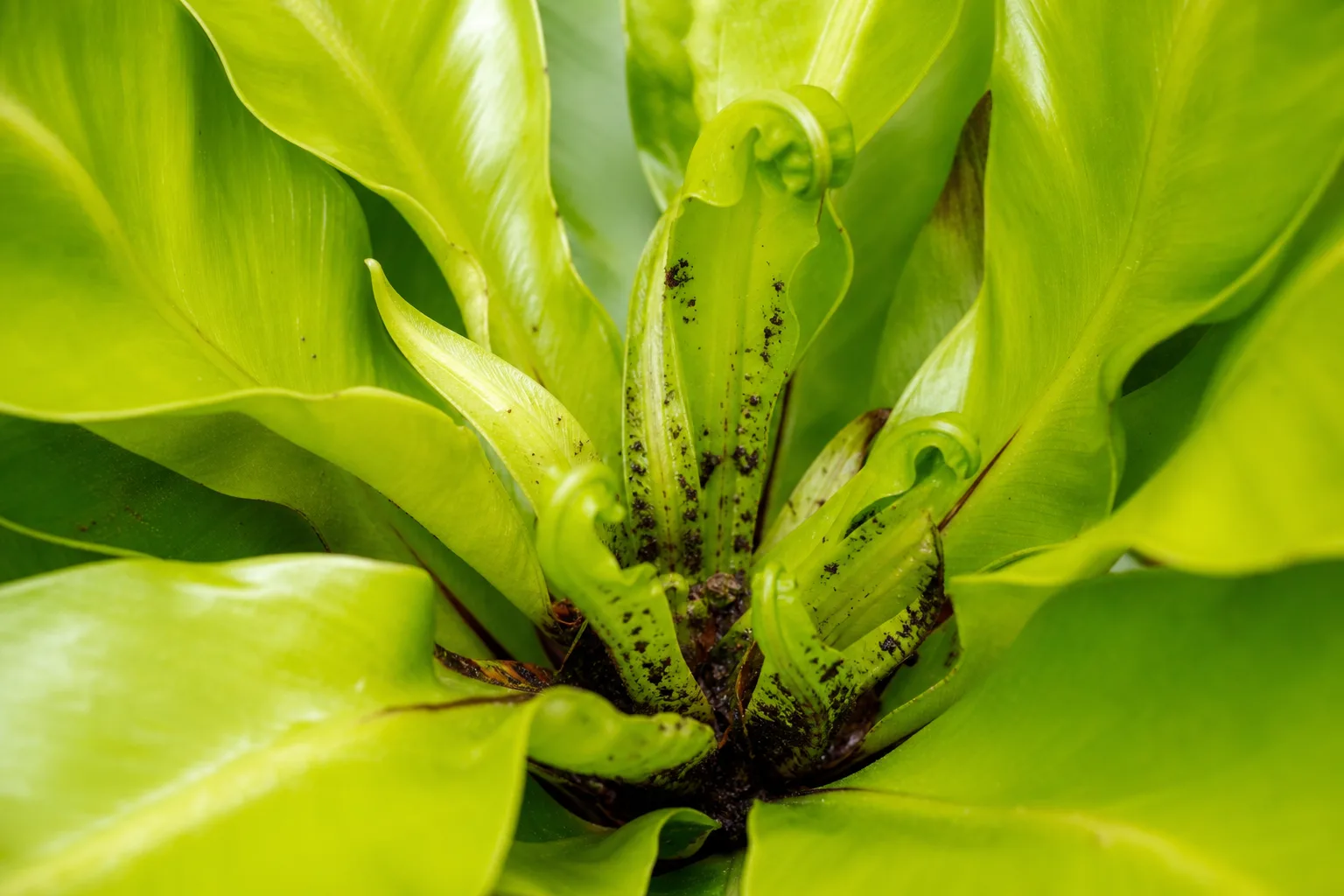
Aphids on Bird's Nest Fern: Causes, Checks & Fixes
This guide covers aphids on Bird's Nest Fern. See also the general Aphids guide, watering, and light pages for this plant.
Aphids on Bird's Nest Fern: Causes, Checks & Fixes
Quick answer
Aphids on Bird’s Nest Fern (Asplenium nidus) are small sap-sucking insects that colonize the softest tissue on the plant-the fronds still unfurling from the central rosette. You may see green, black, or pale clusters at the base of new leaves, sticky honeydew on glossy fronds, or ants climbing the pot.
First step: isolate the plant and remove every aphid you can see from emerging growth. Use a damp cloth, cotton swab, or a gentle directed rinse on infested fronds only. Do not flood the crown nest; this fern is watered at the soil edge for a reason, and a soapy soak sitting in the rosette invites crown trouble on top of the pest problem.
Confirm live insects before reaching for sprays. Bird’s Nest Fern has fragile foliage and is sensitive to many pesticides, so mechanical removal is the safest opening move.
What aphids look like on Bird’s Nest Fern
Unlike divided ferns with lacy pinnae, Bird’s Nest Fern carries single, strap-shaped fronds with wavy margins and a prominent dark midrib. Aphids do not chew holes; they pierce tissue and drain sap. On Bird’s Nest Fern overview, damage shows up where growth is newest and most tender.
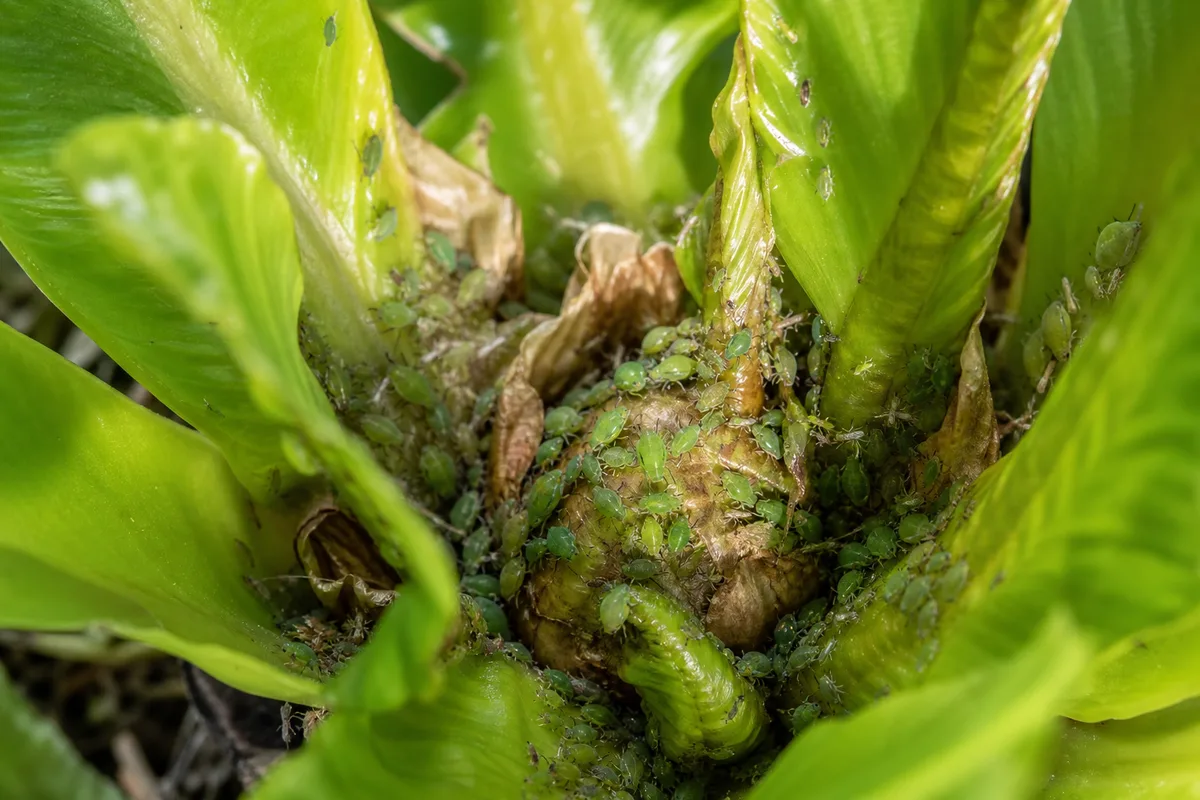
Aphids symptoms on Bird’s Nest Fern - compare with healthy tissue on the same plant.
Typical signs include:
- Clusters at the rosette center on fiddleheads and the base of fronds still uncurling
- Small pear-shaped insects about 1/16 to 1/8 inch long, often green but sometimes black, brown, or pale
- Sticky, shiny honeydew on leaf surfaces or the pot rim-aphids excrete honeydew that can attract ants and sooty mold
- Black sooty mold growing on honeydew if the infestation sits for weeks
- Distorted or puckered new fronds when feeding is heavy
- Ants on the container or nearby surfaces, often a clue that honeydew is present even when aphids are hard to spot
Do not confuse the fern’s normal brown sporangia lines on mature frond undersides with pests. Those lines run in herringbone rows from midrib to margin and are stationary. Aphids move when disturbed and gather in groups rather than forming straight parallel rows.
Why Bird’s Nest Fern gets aphids
Aphids are common indoor pests that arrive on new plants, open windows, or infested neighbors. They reproduce quickly in warm rooms, and females can birth live young without mating-populations can jump from a few insects to a coating on new growth within a week or two.
This fern is a particular target for three plant-specific reasons:
1. The central rosette is a buffet of soft tissue. Fronds emerge slowly from a tight nest. Until each leaf fully expands, the tissue at the crown stays tender-exactly what aphids prefer. Aphids feed on soft, new plant growth, and on Bird’s Nest Fern that means the heart of the plant, not old mature fronds at the outer ring.
2. Fast, nitrogen-rich growth invites colonization. Bird’s Nest Fern fed heavily during warm months pushes lush new fronds. Overfed plants produce soft shoots that aphids exploit. This is a fern you already fertilize lightly at the soil edge; extra nitrogen makes pest pressure worse, not better.
3. Stress does not stop aphids-it helps them. Low humidity, drafty heat vents, and irregular watering weaken the plant without removing the pests. A fern stressed by dry air may show brown tips while aphids continue feeding on the one zone still producing soft tissue: the center.
Bird’s Nest Fern does not flower indoors. If an article mentions aphids on “flower buds,” that advice does not apply here. Focus on emerging fronds and midrib bases instead.
How to confirm the cause
Work through these checks before you spray anything:
- Roset center first - Gently spread emerging fronds apart with your fingers and look for colonies at the base of unfurling leaves. Use a hand lens or phone macro mode if the insects are pale.
- Movement test - Brush the colony with a cotton swab. Aphids are slow but mobile. Scale insects stay put; mealybugs leave a white smear when crushed.
- Honeydew check - Run a finger along the midrib of a new frond. Sticky residue that gathers dust or sooty mold points to sap feeders, not humidity damage alone.
- Ant trail - Follow ants on the pot or shelf back to the plant. Ants are often associated with aphid infestations because they harvest honeydew.
- Neighbor scan - Inspect other houseplants within a few feet. Aphids on ferns frequently hitchhiked from a nearby succulent, herb, or new purchase.
- Recent changes - New plant without quarantine? Moved outdoors for summer? Open window near the fern? Any of these raise the odds of a true aphid diagnosis over environmental leaf curl.
If you find no insects, no honeydew, and no new colonies after two inspections a week apart, reconsider low humidity curl, overwatering on Bird’s Nest Fern yellowing, or mealybugs hidden deeper in the crown before committing to a pest treatment cycle.
First fix for Bird’s Nest Fern
Isolate the plant and physically remove aphids from emerging fronds.
Move the pot away from other plants. Then, working frond by frond:
- Wipe colonies with a damp cloth or cotton swab dipped in plain water
- For stubborn clusters at the crown, use a swab with 70% isopropyl alcohol on the insects only-avoid soaking the nest center
- Alternatively, rinse individual fronds under lukewarm running water in a sink, tilting the pot so water runs off the leaves and does not pool in the rosette
Hold the base of each frond while you wipe or rinse so you do not tear the fragile tissue. Knocking aphids off with a strong water stream works on sturdy plants; on Bird’s Nest Fern, use a gentler, targeted rinse rather than blasting the whole crown.
Recheck in three to four days. Aphids reproduce fast; one thorough wipe rarely ends the problem if eggs or crawlers remain.
Step-by-step recovery
If manual removal does not keep populations down, escalate in this order:
1. Repeat physical removal twice weekly
Commit to at least two weeks of scheduled checks at the rosette center. Crush or wipe every colony you find. Change cloths between plants so you do not spread crawlers.
2. Spot-test insecticidal soap on one frond
Bird’s Nest Fern is sensitive to chemical insecticides, and insecticides are typically damaging to ferns. NC State notes fragile foliage and susceptibility to chemical sprays. If you use soap:
- Choose a product labeled for houseplants, not dish detergent
- Spray one older frond at the outer ring and wait 24–48 hours
- If that frond shows burn, browning, or collapse, stop soap and return to wiping and alcohol touch-kills only
When the spot test passes, apply soap lightly to infested fronds and midrib bases where insects sit. Cover insects directly-insecticidal soap works on contact and has no residue after drying. Repeat every five to seven days until you find no live aphids for two consecutive checks.
3. Manage ants if present
Ants protect aphids from predators. Wipe honeydew trails, set the pot on a moat of soapy water if ants climb the container, and keep the plant isolated until ant traffic stops. Controlling ants alone will not cure aphids, but it helps natural enemies and your own monitoring.
4. Trim only when necessary
If a new frond is heavily distorted and still tiny, you may remove it with clean scissors to drop pest numbers. Do not shear healthy outer fronds for cosmetic reasons-the plant needs foliage to recover. Never cut into the crown itself.
5. Hold fertilizer until new growth is clean
Resume light monthly feeding only after two weeks with no live aphids and no new honeydew. Feeding while insects are active produces more soft tissue for them to colonize.
Recovery timeline
With consistent removal, you should see fewer insects within one week and no new honeydew within two weeks if you are catching crawlers before they mature.
Clean new fronds emerging from the center are the best recovery signal. Expect that signal within two to four weeks after treatment starts, depending on how warm the room is and how thoroughly you cleared the rosette. Old fronds with permanent curl or yellow patches will not fully heal-watch the nest, not the outer ring.
Call the infestation controlled when you complete two weekly inspections with zero live aphids and no fresh stickiness. Maintain isolation one more week after that before returning the plant to its usual spot.
Lookalike symptoms
- Mealybugs on Bird’s Nest Fern - White cottony tufts in the crown and leaf bases, not scattered pear-shaped insects. Alcohol on a swab smears pink when crushed.
- Scale insects - Brown or tan immobile bumps on midribs and frond bases. They do not move when poked.
- Spider mites on Bird’s Nest Fern - Fine stippling and webbing, usually worse in dry air. Mites are nearly microscopic; aphids are visible without magnification.
- Low humidity brown tips - Dry, crisp margins on older fronds without honeydew or insect clusters. Fix humidity and watering; pests are absent on inspection.
- Natural sporangia - Brown lines on frond undersides in regular rows. Not sticky, not clustered, not mobile.
What not to do
Do not flood the central rosette with rinse water, soap, or alcohol. This fern is watered at the soil edge because standing moisture in the nest causes crown rot. Pest treatment should follow the same rule.
Do not apply full-strength neem oil, pyrethrin sprays, or systemic insecticides as a first response. UF/IFAS and NC State both warn that standard insecticides can damage fern fronds. Bird’s Nest Fern is not a tough foliage plant that tolerates aggressive chemical drenches.
Do not assume one soap spray finished the job. Aphids inside curled young fronds are sheltered from contact sprays. Prune heavily curled growth or keep wiping manually until the tissue opens.
Do not return the plant to the collection immediately after a single treatment. Winged aphids disperse when crowded; isolation protects neighbors.
Do not increase fertilizer to “help the plant fight back.” That produces more tender growth for aphids.
Bird’s Nest Fern care cross-check
While treating pests, keep baseline care steady-big swings in light, water, or humidity add stress on top of feeding damage.
- Water at the pot edge when the top 2–3 cm of mix is dry; never pour into the nest
- Maintain 50–70% humidity if dry air is browning tips while aphids persist on new growth
- Keep medium indirect light; avoid moving the plant into direct sun during recovery
- Reduce feeding until the infestation is clearly over
A fern that is properly watered and humid is better able to push clean new fronds once insects are gone.
How to prevent aphids next time
- Quarantine new plants for at least two weeks before placing them near your fern
- Inspect the rosette weekly during active growth-aphids are easiest to stop when colonies are small
- Wipe dust from fronds occasionally so you can spot honeydew and insects early
- Feed lightly with half-strength balanced fertilizer monthly in spring and summer only
- Check neighbors after bringing plants indoors from patios or greenhouses
Because Bird’s Nest Fern is non-toxic to cats and dogs, you can isolate and wipe it on a kitchen counter-but still wash hands after handling alcohol or soap, and keep pets from chewing treated foliage until sprays have dried.
When to worry
Escalate care if:
- Multiple emerging fronds are coated and new growth stalls for more than a month
- Sooty mold covers large frond areas, blocking light to tissue that cannot be wiped clean
- The crown feels soft or smells sour after repeated wet treatments-suspect crown rot, not aphids alone
- Winged aphids appear on several plants at once-treat the collection systematically
A mature Bird’s Nest Fern with firm roots and several healthy outer fronds can survive a bad aphid outbreak if the crown keeps producing clean fiddleheads after treatment. If the center collapses or stops unfurling entirely while fronds yellow from the base up, root or crown problems may have joined the pest issue-inspect drainage and rosette moisture before assuming more sprays will help.
When to use this page vs other Bird’s Nest Fern guides
- Bird’s Nest Fern watering guide - Use for routine moisture checks before assuming aphids is the main issue.
- Bird’s Nest Fern problems hub - Browse all 16 common issues on this species.
- Mealybugs on Bird’s Nest Fern - Different entry point when symptoms overlap with aphids.
- Spider Mites on Bird’s Nest Fern - Different entry point when symptoms overlap with aphids.
- Yellow Leaves on Bird’s Nest Fern - Different entry point when symptoms overlap with aphids.