Mealybugs on Bird's Nest Fern: Causes, Checks & Fixes
Quick answer
Mealybugs on Bird's Nest Fern hide at frond bases and in the nest cup-not on the smooth wavy frond faces. First step: isolate the plant and inspect where fronds meet the central rosette with a hand lens before applying any liquid treatment.
Mealybugs on Bird's Nest Fern: Causes, Checks & Fixes
This guide covers mealybugs on Bird's Nest Fern. See also the general Mealybugs guide, watering, and light pages for this plant.
Mealybugs on Bird's Nest Fern: Causes, Checks & Fixes
Quick answer
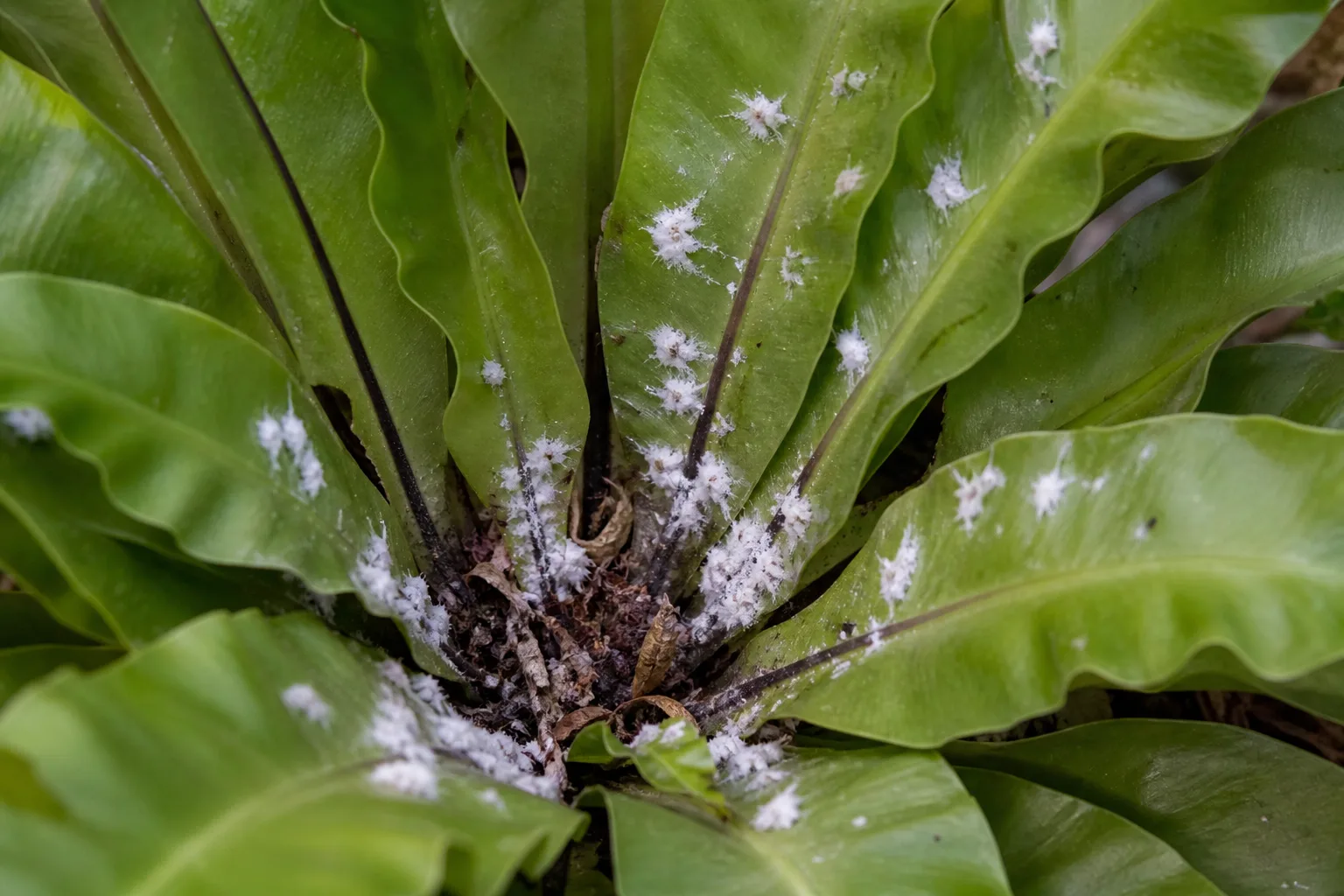
Mealybugs on Bird’s Nest Fern (Asplenium nidus) are white cottony sap feeders that colonize frond bases and the central nest cup-the sheltered crevice where new fronds unfurl. Unlike fuzzy-leaved plants, Asplenium has smooth, wavy fronds; mealybugs stand out as cottony patches where fronds meet the rosette, not scattered across the upper frond surface.
First step: isolate the pot and inspect frond bases and the nest cup with a hand lens. Confirm live insects before spraying. Never flood the nest cup with water or soap-water along the outer pot edge, not into the center, because standing moisture in the crown invites rot while you are trying to kill pests.
For species basics and care hub navigation, see the Bird’s Nest Fern overview. Bird’s Nest Fern is non-toxic to cats and dogs-still keep pets away during alcohol or soap application until fronds dry.
What mealybugs look like on Bird’s Nest Fern
Healthy Bird’s Nest Fern fronds are glossy, undivided, and wavy from base to tip. Mealybugs break that clean look in specific, sheltered zones:
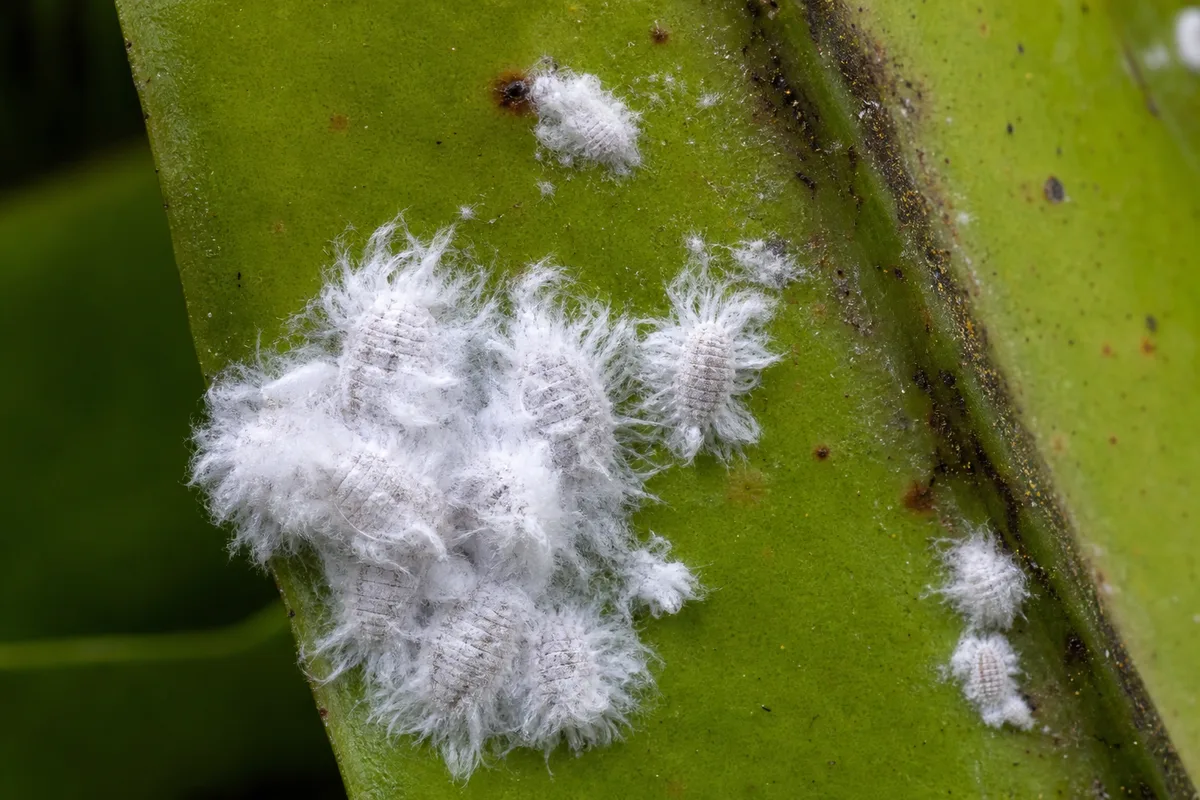
Mealybugs symptoms on Bird’s Nest Fern - compare with healthy tissue on the same plant.
- White cottony masses at frond bases and inside the nest cup lip where fronds overlap
- Slow flat insects when cotton is pulled back-mealybugs are mobile but sluggish
- Sticky honeydew on lower fronds, the pot rim, or nearby surfaces
- Ant trails toward the nest cup-ants protect mealybug colonies for honeydew
- Stunted or distorted new fronds curling abnormally when feeding is heavy at the crown
- Sooty mold on honeydew-coated fronds-wipes off; not inherent frond disease
Mealybugs rarely cover the broad upper frond faces where you look first-they hide in the architecture that makes this fern distinctive. During inspection, gently lift the outer fronds and peer into the cup lip with a hand lens or phone macro mode. Cottony clusters often sit where a frond base meets the next inner frond, not on the exposed blade surface.
Do not confuse the fern’s normal brown sporangia lines on mature frond undersides with pests. Those lines run in herringbone rows from midrib to margin, are stationary, and are not accompanied by honeydew or ants. Mealybugs form irregular cottony clumps and smear when crushed.
Mealybugs vs. lookalike symptoms
| Sign | Mealybugs | Scale | Edema / leaf spot | Spider mites |
|---|---|---|---|---|
| Texture | Cottony, insects inside | Hard immobile bumps | Flat water-soaked or brown patches | Fine stipple dots, webbing |
| Location | Frond bases, nest cup | Mid-frond veins, stems | Frond face | Frond undersides, nest rim |
| Alcohol test | Insects brown and smear | Shell unchanged | No insects | No cottony mass |
| Honeydew | Sticky residue present | Sometimes | None | None |
| Movement | Slow when exposed | None | None | Fast specks on paper tap |
Both mealybugs and scale can share the same sheltered frond-base real estate on this species. Scale feels like hard bumps you cannot wipe away; mealybugs crush into a pinkish smear. Compare with scale and aphids, spider mites with webbing and stippling, and mold on soil as a separate wet-mix issue.
Why Bird’s Nest Fern gets mealybugs
Mealybugs are common indoor pests that thrive in warm conditions and sheltered plant locations. On Bird’s Nest Fern, three plant-specific factors stack the odds:
1. The nest cup architecture creates perfect shelter. UC IPM notes that mealybugs often live in protected areas such as the crown of a plant or in branch crotches. Bird’s Nest Fern’s rosette is essentially a permanent crotch-a humid pocket where fronds overlap and airflow is still. Soft-bodied mealybugs dry out quickly in open air; the nest lip keeps them hydrated between feedings.
2. Broad, undivided fronds offer discrete axil zones. Each strap-shaped frond meets the rosette at a tight junction. Mealybugs colonize those axils rather than the large glossy blade where they would be exposed. This is different from lacy ferns where pests can hide among pinnae-here, knowing where to look (bases, not faces) is the diagnostic skill.
3. Indoor warmth favors year-round reproduction. Greenhouse and houseplant mealybugs can persist through all life stages indoors where temperatures stay mild. Bird’s Nest Fern in a warm living room never gets the cold break that slows outdoor populations.
Most outbreaks begin on newly purchased ferns, plants summered in outdoor shade, or neighbors in a stagnant corner. Chronic overwatering does not cause mealybugs, but weak roots from overwatering slow recovery once insects arrive. Dim corners with poor airflow extend colony survival between treatments-mealybugs in still air dry out less slowly after alcohol dabs.
How to confirm the cause
Work through these checks before you spray anything:
- Nest cup and frond-base scan - Gently spread outer fronds and inspect where each frond meets the rosette. Use a hand lens on cottony specks at the cup lip.
- Alcohol smear test - Touch a cotton swab dipped in 70% isopropyl alcohol to one cluster. Mealybugs discolor and leave a waxy smear; scale shells stay hard; dust wipes clean with no insect underneath.
- Movement check - Pull back cotton with a toothpick. Nymphs lack wax initially and can move, but settled adults are sluggish. No movement plus hard shell points to scale.
- Honeydew and ant trail - Sticky residue on frond bases or pot rim supports sap feeders. Follow ants back to the plant-they often indicate active honeydew even when mealybugs are hidden deep in the cup.
- Neighbor scan - Inspect other houseplants within a few feet, especially ferns, hoya, and philodendron-common mealybug hosts indoors per UC IPM.
- Recent changes - New plant without quarantine? Moved indoors from a patio? Any raises the odds of a true mealybug diagnosis over environmental spotting.
- Crown firmness - Press the nest center gently between treatments. Firm tissue with cotton at bases is a pest-only problem. Soft, sour-smelling tissue suggests crown rot overlapping with pests-see root rot before more wet treatments.
If you find no cottony masses, no honeydew, and no live insects after two inspections a week apart, reconsider edema spots, natural sporangia lines, or spider mites before committing to a multi-week treatment cycle.
First fix for Bird’s Nest Fern
Isolate the plant and dab visible mealybugs with a cotton swab dipped in 70% isopropyl alcohol-target frond bases only, not the open nest cup interior.
Move the pot away from other plants. Then, working frond by frond:
- Support each frond at the base while you swab axils where cottony clusters sit
- Dab directly onto insects, not broad frond faces-UC IPM recommends alcohol dabbed on mealybugs with a cotton swab, with a spot test first
- Use a small soft brush dipped in alcohol for colonies at the cup lip you cannot reach with a swab
- Never pour alcohol, water, or soap into the nest center-the same crown-dry rule that governs routine watering applies to pest treatment
Spot-test one frond base and wait 48 hours before treating the whole plant. Test on a small part of the plant first and monitor for leaf burn. After dabs, let fronds air-dry in a spot with gentle airflow-do not mist the crown or seal the plant in a humid cabinet while alcohol evaporates.
Repeat dabs every five to seven days for two to three cycles. One pass rarely clears hidden cup insects.
Step-by-step recovery
If alcohol dabs do not keep populations down, escalate in this order:
1. Repeat crown-safe alcohol dabs on schedule
Commit to at least two to three weekly passes targeting frond bases and cup lip only. Mealybugs lay eggs in cottony sacs; repeat applications are needed because contact treatments have no residual activity after drying.
2. Remove heavy cotton masses by hand
Gently pull accessible cotton clusters with tweezers where you can reach without tearing frond bases. Dispose of debris in a sealed bag-not the compost pile indoors.
3. Spot-test insecticidal soap on one outer frond base
Bird’s Nest Fern has fragile glossy foliage and ferns are sensitive to pesticide sprays. Before broad application:
- Choose a product labeled for houseplants, not dish detergent
- Mist one frond base at the outer ring and wait 24–48 hours
- If that tissue shows burn or collapse, stop soap and return to alcohol dabs only
When the spot test passes, apply soap lightly to frond bases where mealybugs sit. The soap solution must wet the insect during application-residue after drying has no effect. Repeat every four to seven days until two consecutive weekly checks find no live insects.
4. Improve airflow without drying the fern out
During active treatment, stagnant humid air slows alcohol evaporation on frond bases and can leave tissue wet longer than necessary-a setup that raises phytotoxicity and crown-rot risk on this species. Run a gentle fan on low several feet away so air circulates around the pot without blasting fronds. This is not the same as lowering humidity: Bird’s Nest Fern still benefits from 50% or higher RH at foliage height per the low-humidity guide, but the frond-base zone where you dab alcohol needs to dry within an hour.
Do not increase humidity with constant crown misting during an active mealybug outbreak-that keeps cup tissue damp and favors both mealybugs and rot.
5. Water at soil edge only
Keep the nest cup dry throughout recovery. Water when the top inch of mix is dry, directing moisture along the pot perimeter per Clemson HGIC Bird’s Nest Fern guidance. Wet crown tissue plus pest damage is how overwatering and mealybug stress compound into crown failure.
6. Hold fertilizer until new growth is clean
Resume light monthly feeding only after two weeks with no live mealybugs and no fresh cottony clusters. High nitrogen coupled with regular irrigation stimulates tender growth where mealybugs prefer to lay eggs.
7. Wash hands and isolate until two clean weekly checks
Mealybugs travel slowly but hitchhike on tools, pots, and hands. Keep the fern isolated until you complete two weekly inspections with zero live insects, then one buffer week before returning it to its usual spot.
Recovery timeline
Cottony clusters often shrink within one week of consistent crown-safe dabs. New frond damage from feeding stops once colonies clear-existing distorted frond tips do not revert. Expect two to three weekly passes for hidden cup insects.
Clean new fronds emerging from the center are the best recovery signal. Expect that within two to four weeks after treatment starts, depending on how deep colonies sat in the cup lip. Old honeydew-stained frond tissue will not re-green-watch the nest, not the outer ring.
Call the infestation controlled when you complete two weekly inspections with zero live mealybugs, no fresh cottony masses, and no new honeydew on emerging growth.
What not to do
Do not pour water or soap into the nest cup to rinse pests. Standing moisture in the crown invites rot-the same failure mode covered on the overwatering and root rot pages.
Do not use heavy horticultural oil or full-strength neem drenches on glossy fronds. Oils coat the broad blade surface and UF/IFAS warns that insecticides are typically damaging to ferns. Alcohol dabs and cautious soap at frond bases are safer opening moves.
Do not ignore ants-they indicate active honeydew sources and may protect mealybugs from natural enemies outdoors; indoors, ants are a clue to keep scouting the cup.
Do not increase humidity with constant misting during active treatment. Raise baseline RH with a humidifier if the room is dry, but avoid wetting the crown directly while alcohol or soap is drying on frond bases.
Do not return the plant to the collection after a single dab session. Mealybugs hide in unreachable cup tissue; isolation protects neighbors including aphid-prone and spider-mite-prone houseplants in the same room.
Do not blast fronds with forceful water that pools in the nest. Bird’s Nest Fern is not a Boston fern you can shower overhead-targeted swabs beat crown flooding on this species.
Bird’s Nest Fern care cross-check
While treating mealybugs, keep baseline care steady-big swings in light, water, or humidity add stress on top of feeding damage.
| Care factor | During mealybug treatment |
|---|---|
| Water | Along pot edge when top inch is dry; never into nest - watering guide |
| Humidity | 50–70% RH at foliage height; humidifier preferred, not crown misting - low humidity |
| Airflow | Gentle fan circulation so frond bases dry after alcohol dabs |
| Light | Bright indirect; avoid hot direct sun on alcohol-treated tissue |
| Fertilizer | Hold until two weeks mealybug-free |
| Isolation | Until two clean weekly inspections plus one buffer week |
A fern that is properly watered, humidified, and aired is better able to push clean new fronds once mealybugs are gone.
How to prevent mealybugs next time
- Quarantine new ferns for at least two weeks before placing them near your collection
- Inspect frond bases weekly during watering-cottony specks are easiest to catch at the cup lip before colonies spread
- Keep the nest cup dry and follow watering guidance at the soil edge
- Maintain gentle airflow in the room so stagnant corners do not extend mealybug survival between checks
- Check neighbors after bringing outdoor plants indoors for the season
- Isolate at the first cotton speck-one hidden egg sac can restart an outbreak in warm indoor air
Because Bird’s Nest Fern is non-toxic to cats and dogs, you can isolate and treat it on a kitchen counter-but wash hands after handling alcohol or soap, and keep pets from chewing treated foliage until applications have dried.
When to worry
Escalate care if:
- The nest cup smells sour or feels mushy after wet treatments-suspect crown rot overlapping with mealybugs. Firm, dry crown tissue with cotton only at bases is a pest problem; soft brown center tissue with foul odor is a root or crown rot emergency. Stop all liquid treatments in the cup, improve drainage, and inspect roots before more sprays.
- Colonies cover every new frond emerging from the center despite three weekly alcohol cycles-soap spot-testing at frond bases may be necessary
- Ants farm mealybugs at the crown and populations rebound within days of dabbing-hidden egg sacs deeper in the cup may need professional disposal or plant discard
- Three full treatment cycles fail with live insects still visible at the nest lip
A mature Bird’s Nest Fern with firm roots and several healthy outer fronds can survive a bad mealybug outbreak if the center keeps producing clean growth after treatment. If the nest collapses, stops unfurling entirely, or yellows from the base up while the crown softens, pest treatment alone will not save the plant-inspect for rot before assuming more dabs will help.
For severely infested plants with no clean new growth after a full treatment cycle, discarding may be more practical than risking your entire collection-UC IPM recommends removing heavily infested houseplants when physical control cannot clear the population.
When to use this page vs other Bird’s Nest Fern guides
- Bird’s Nest Fern watering guide - Use for routine moisture checks before assuming mealybugs is the main issue.
- Bird’s Nest Fern problems hub - Browse all 16 common issues on this species.
- Yellow Leaves on Bird’s Nest Fern - Different entry point when symptoms overlap with mealybugs.
- Slow Growth on Bird’s Nest Fern - Different entry point when symptoms overlap with mealybugs.
- Spider Mites on Bird’s Nest Fern - Different entry point when symptoms overlap with mealybugs.