Mold on Soil on Bird's Nest Fern: Causes, Checks & Fixes
Quick answer
White mold on Bird's Nest Fern soil means the surface stays wet too long - often when the funnel-shaped rosette traps debris and a cachepot hides standing water. First step: scrape the fuzzy top layer, let the upper inch dry at the pot edge, and never pour water into the nest center.
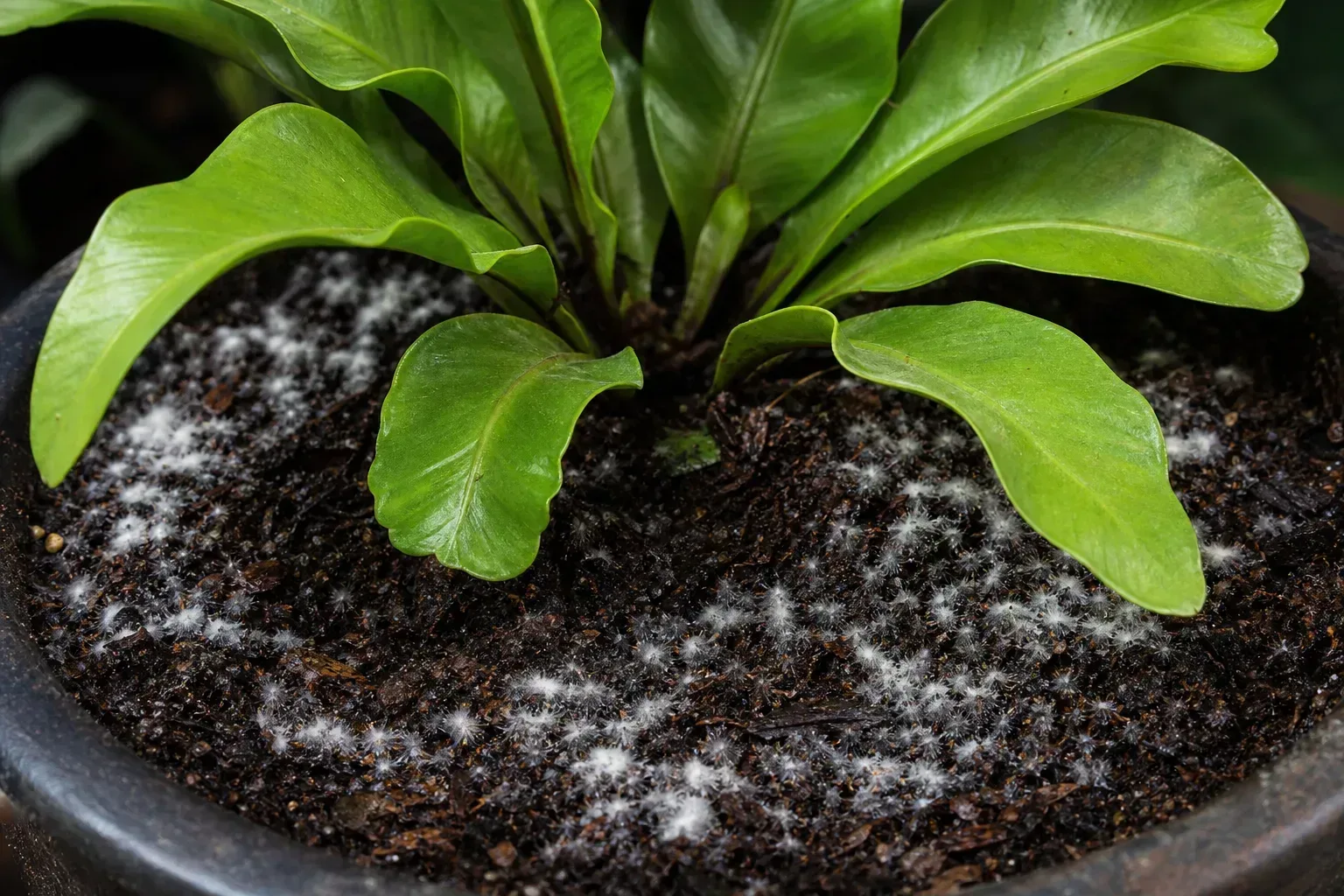
Mold on Soil on Bird's Nest Fern: Causes, Checks & Fixes
This guide covers mold on soil on Bird's Nest Fern. See also the general Mold on Soil guide, watering, and light pages for this plant.
Mold on Soil on Bird's Nest Fern: Causes, Checks & Fixes
Quick answer
White or gray fuzz on Bird’s Nest Fern (Asplenium nidus) potting mix is usually saprophytic mold on a wet organic surface - not a disease attacking the fronds. On this epiphytic fern, mold often traces to a chain you can fix: the funnel-shaped rosette collects fallen leaf bits and holds humidity at the crown, overhead mist or center splashes drip onto the soil rim, and a glazed cachepot or full saucer keeps the top layer from drying between drinks.
First step: scrape the fuzzy top quarter-inch of mix, let the upper inch dry at the pot edge, and resume watering along the outer rim only - never into the nest center. Clemson HGIC advises watering along the outer edge of the pot so water does not enter the rosette, where trapped moisture promotes crown rot.
For baseline technique, see the Bird’s Nest Fern watering guide. If the nest center feels soft or the mix smells sour during inspection, move to the root rot guide - this page covers cosmetic surface mold before decay is confirmed.
What mold on soil looks like on Bird’s Nest Fern
Surface mold on Bird’s Nest Fern appears as:
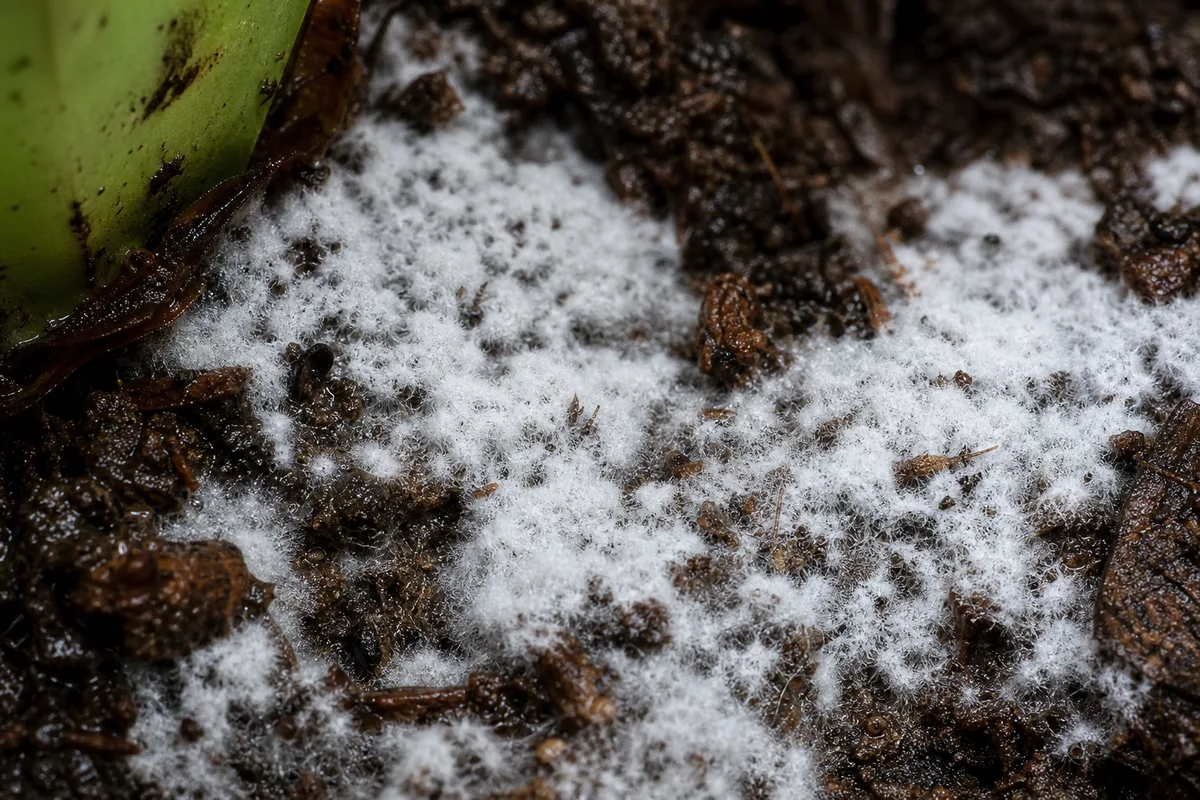
Mold on Soil symptoms on Bird’s Nest Fern - compare with healthy tissue on the same plant.
- White, gray, or pale green fuzzy patches on the soil top - flat and powdery, not structured cotton balls
- Re-growth within days after scraping if the surface still never dries
- Musty smell when disturbed - distinct from the sour odor of advanced root rot
- Co-occurrence with fungus gnats hovering near the pot base
- Firm green crown and upright fronds when mold is the only issue - the plant often looks healthy above the fuzz
Mold stays on soil. It does not form waxy cotton clusters tucked into the frond bases - that pattern points to mealybugs instead.
Why Bird’s Nest Fern soil gets moldy
Bird’s Nest Fern is marketed as a moisture-lover, which is only half the story. NC State Extension notes it does best in rich, moist, porous soil and does not tolerate dry conditions. Evenly moist roots are not the same as a permanently wet soil surface - and mold grows on the surface, not in healthy root tissue.
The rosette nest collects debris and humidity
In nature, Bird’s Nest Fern grows as an epiphyte on tree trunks across tropical Asia, Hawaii, and Australia. Clemson HGIC describes it as an epiphyte that gets water and nutrients from the air rather than soil in the wild. The funnel-shaped rosette catches fallen leaves and organic matter into which debris typically accumulates, creating a compost layer that stays lightly moist in humid rainforest air. Indoors, that same shape traps spent frond bits, dust, and mist runoff onto the soil rim. Saprophytic fungi feed on decaying organic matter in constantly damp potting mix - harmless to living plants, but a clear signal that the top layer stays wet too long.
Center watering and overhead splashes
Pouring water into the nest - or misting fronds so runoff pools in the funnel - keeps the crown and nearby soil surface saturated. Surface mold beside a dry-looking pot edge often means the nest and rim stayed wet even when the lower mix seemed reasonable. Edge watering along the outer rim under the frond skirt is the safer default for potted plants.
Setup mistakes that trap surface moisture
- Calendar watering without checking the top inch - the rhythm that works in summer can swamp the surface in a cool January room when growth slows and soil dries more slowly
- Decorative cachepots or sleeves hiding standing water after bottom-watering
- Peat-heavy mix that holds water at the surface while the pot feels heavy below
- Low light and poor airflow around the broad frond canopy - still air at soil level slows evaporation
- Overwatering overlap - chronic wet culture that also drives fungus gnats and can slide into root rot if unchecked
Mounted vs. potted Bird’s Nest Fern
On mounted or bark-mounted displays, the root pad dries from all sides and surface mold is less common - though the nest center can still hold water if misted heavily. Potted ferns depend on edge watering and saucer discipline because only the top of the mix is exposed to air. If your fern is mounted, focus on nest drainage after misting rather than scraping soil.
Lookalike symptoms to rule out
| What you see | Likely cause | Key difference from surface mold |
|---|---|---|
| White/gray fuzz on soil only | Saprophytic surface mold | Scrapes off easily; firm crown; no sour smell |
| Green slimy film on soil top | Algae in low light + wet surface | Flat green sheet, not fuzzy; often with chronic overwatering |
| Cottony clusters at frond bases | Mealybugs | Structured white patches on plant tissue, not flat soil fuzz |
| Black mushy tissue in nest center | Crown rot | Soft brown crown; new fronds stop emerging - see root rot |
| Tiny flies at soil level | Fungus gnats | Larvae need wet organic surface - see fungus gnats guide |
| Yellow limp fronds + sour smell + wet heavy pot | Root rot / advanced overwatering | Priority is rot treatment, not scrape-only - see overwatering |
How to confirm the cause
Work through these checks before treating:
- Visual ID - Flat fuzzy patches on soil surface only; scrape easily with a spoon. Mold on living fronds is a different problem.
- Crown firmness - Press the nest center gently. Firm tissue with only soil fuzz suggests cosmetic mold. Soft, brown, or collapsing center means crown rot - stop scraping and escalate.
- Top-inch moisture - Press your finger about 1 inch deep near the pot edge. Clemson HGIC recommends watering when this layer feels dry. If the top inch stays damp for many days after watering, mold will return.
- Pot weight - Lift the pot. A heavy, cool pot days after watering confirms slow dry-down - the same condition that grows mold and gnats.
- Smell test - Musty when you scrape mold is normal. Sour or rotten from the drainage hole suggests root decay, not surface fungus alone.
- Debris check - Look for fallen frond bits, algae crust, or peat moss matting on the surface feeding the mold.
If all six point to firm crown + wet surface only, proceed with the scrape-and-dry fix below. If crown softness or sour smell appears, switch to the root rot guide first.
Mold vs. rot vs. mealybug decision table
| Sign | Surface mold | Crown / root rot | Mealybugs |
|---|---|---|---|
| Where you see it | Fuzzy film on soil top only | Soft brown nest center; mushy roots on unpot | White cotton on frond bases and petioles |
| Crown feel | Firm and green | Soft, collapsing, or brown | Firm; pest clusters on tissue |
| Smell | Musty/earthy when scraped | Sour or rotten from drainage holes | None from soil |
| Bird’s Nest Fern fronds | Usually upright and healthy | Collapse despite wet mix; new growth stops | Localized damage near cotton clusters |
| Urgency | Low - culture fix within days | High - unpot same day if crown is soft | Medium - isolate and treat pests |
| First fix | Scrape + dry top inch + edge water | Stop watering; unpot and inspect roots | Isolate; treat frond clusters, not soil scrape alone |
If only the soil surface is fuzzy and the crown stays firm, you likely caught cosmetic mold early. Soft crown tissue plus sour smell means unpot today, not another scrape cycle.
First fix for Bird’s Nest Fern
Scrape the moldy surface, improve airflow, and adjust top-layer moisture - do not drought-stress the root ball.
Remove the top quarter-inch of fuzzy soil and dispose of it in the trash - not an indoor compost pile. Top-dress with a thin layer of fresh airy mix (peat, perlite, and fine bark) if the surface was heavily crusted.
Let the new surface dry before the next watering while keeping the lower root zone lightly moist through a full edge-watering drink when you do water. UF/IFAS notes bird’s nest fern should not be allowed to dry out completely - the fix targets surface wetness, not desiccating the entire pot.
Improve airflow around the pot base - space plants, run a fan on low nearby (not directly blasting fronds), and remove fallen debris from under the frond skirt weekly.
Empty saucers and cachepots after every watering. Standing water keeps the surface soggy and invites root problems on this fern.
Step-by-step recovery
- Scrape moldy surface soil with a spoon; bag and discard the fuzz.
- Inspect the crown - blot any moisture from the nest center; note softness or browning for escalation.
- Top-dress lightly with fresh porous mix if the surface was compacted or algae-crusted.
- Verify drainage - confirm holes are open; lift the nursery pot out of any decorative outer pot until recovery is stable.
- Pause watering until the top inch at the pot edge feels dry - check with finger and pot weight.
- Resume edge watering along the outer rim under the frond skirt; never into the nest.
- Monitor for gnats - deploy yellow sticky traps at soil level if flies appear; see the fungus gnats guide if they persist after proper dry-down.
- Escalate if needed - sour smell, mushy roots, or crown collapse during cleanup means pivot to root rot treatment instead of repeating scrape cycles.
Recovery timeline
Surface mold should clear within a few days once the growing media surface dries between waterings and saucers stay empty. Re-growth within a week means the surface is still too wet - tighten dry-down further without letting the entire root ball go bone dry.
Frond health should remain stable throughout - mold removal alone does not stress Bird’s Nest Fern if moisture balance holds. New growth from the crown - a firm fiddlehead unfurling - is the best sign roots stayed healthy.
If yellow lower fronds appeared alongside chronic wetness, they rarely re-green. Watch for new fronds rather than expecting old tissue to recover.
What not to do
Do not pour water into the nest to rinse mold - crown rot risk outweighs any cosmetic benefit.
Do not drench with fungicide for harmless saprophytic surface mold on an otherwise healthy plant - drying the surface fixes the cause.
Do not let the entire root ball dry out to kill mold - Bird’s Nest Fern is not drought-tolerant and fine epiphytic roots die in desiccated mix.
Do not cover soil with impermeable decorative stones that trap moisture at the surface.
Do not ignore re-growth - mold returning within days always means the watering rhythm or drainage setup still needs correction, not another scrape alone.
How to prevent mold on soil next time
Water when the top inch at the pot edge feels dry, then give a full drink along the outer rim. Treat calendar schedules as reminders to check soil, not autopilot rules - winter rooms often need longer intervals.
Let the surface soil dry as much as possible between waterings without letting the plant wilt. That balance - moist roots, briefly dry surface - is the same adjustment that prevents fungus gnats and surface mold together.
Remove fallen frond debris during weekly care. Empty cachepots within 15 to 30 minutes after bottom-watering. Use porous mix with perlite and bark so the surface can breathe.
Bottom-watering works for Bird’s Nest Fern when managed carefully - it reduces crown splashing - but only if the pot drains fully afterward and you still verify top-inch dryness before the next cycle.
When to worry
Worry when mold cleanup reveals mushy roots, sour odor, or a soft brown nest center - pivot to root rot treatment immediately. Surface mold on a firm green crown is a culture fix, not a crisis.
Also escalate when mold persists weekly for four or more weeks despite proper surface dry-down, empty saucers, and edge watering - that pattern often means hidden standing water, compacted mix, or chronic overwatering deeper in the pot. Unpot and inspect roots rather than repeating scrape cycles.
Contact your local extension office or master gardener helpline if the plant keeps declining after corrected watering and root inspection - advanced crown rot may need professional diagnosis.
Bird’s Nest Fern care cross-check
| Factor | Target for mold prevention | If wrong, also check |
|---|---|---|
| Watering | Top inch dry at pot edge; edge only, never nest center | Watering guide |
| Drainage | Holes open; saucers empty within 30 minutes | Overwatering |
| Debris | Clear fallen fronds from soil rim weekly | Rosette nest litter section above |
| Airflow | Gentle movement at pot base; not stagnant shelf | Low humidity if frond edges crisp |
| Light | Bright indirect - low light slows dry-down | Not enough light |
| Pests | Gnats = wet surface signal | Fungus gnats |
Related Bird’s Nest Fern guides
- Bird’s Nest Fern overview - species basics and care hub
- Watering - edge-watering technique and top-inch dry rule
- Overwatering - wet culture before rot advances
- Root rot - crown softness and mushy root rescue
- Fungus gnats - flies sharing the same wet-surface cause
- Mealybugs - cotton clusters on fronds, not soil fuzz
- Yellow leaves - frond damage from chronic wetness
- Not enough light - placement that slows dry-down
FAQs
Can I pour water into the nest to wash off mold on Bird’s Nest Fern?
No. The central rosette is where new fronds emerge, and water trapped there promotes crown rot on Asplenium nidus - a much more serious problem than cosmetic surface mold. Scrape mold from the soil surface, water along the outer pot edge under the frond skirt, and blot any accidental splashes from the nest center.
Should I bottom-water Bird’s Nest Fern to prevent soil mold?
Bottom-watering can reduce crown splashing and keep the surface drier between drinks, but only if you remove the pot from standing water within 15 to 30 minutes and still check the top inch at the pot edge before the next cycle. A cachepot that traps runoff recreates the same wet-surface conditions that grow mold and fungus gnats.
How can I confirm mold on soil on Bird’s Nest Fern?
White or gray fuzzy patches on the soil surface that scrape off easily - with a firm green crown and no sour smell - confirm harmless saprophytic mold. Escalate if the nest center feels soft, fronds collapse despite wet mix, or unpotting reveals brown mushy roots; those patterns point to overwatering or crown rot instead.
Will damaged Bird’s Nest Fern leaves recover from mold on soil?
Surface mold does not damage fronds directly. Mold disappears once the top inch dries and debris is cleared. Yellow or limp fronds that appeared alongside chronic wetness may not re-green - recovery shows as new firm fiddleheads unfurling from a dry, healthy crown after you fix the watering rhythm.
When is mold on soil urgent on Bird’s Nest Fern?
Urgent when mold pairs with a soft brown nest center, sour-smelling mix, or mushy roots - treat as possible crown rot or root decay, not a scrape-only fix. Surface mold alone on an otherwise firm plant is low urgency; correct edge watering and airflow within a few days.
Conclusion
Choose your path based on what inspection reveals - not on how alarming white fuzz looks on the soil surface.
Scrape-only path: Firm green crown, musty-not-sour smell, and fuzzy soil that scrapes off easily. Scrape, dry the top inch at the pot edge, resume edge watering, and expect the surface to clear within days.
Unpot same-day path: Soft brown nest center, sour odor from drainage holes, or mushy roots during cleanup. Stop scrape cycles and follow the root rot guide immediately.
Four-week escalation path: Mold returns weekly despite corrected dry-down, empty saucers, and edge watering. Unpot and inspect for compacted mix, hidden standing water, or chronic overwatering - or contact your local extension office if the plant keeps declining.
Surface mold on Bird’s Nest Fern is usually a moisture-culture warning on an epiphyte that wants moist roots but not a permanently damp top layer or flooded nest. Get edge watering and surface dry-down right and the fuzz typically clears without heroic measures.