Drooping Leaves on Bird's Nest Fern: Causes, Checks & Fixes
Quick answer
Drooping Bird's Nest Fern fronds are limp, arching blades that lose turgidity-most often from underwatering, overwatered roots, crown rot, or dry indoor air. First step: lift the pot and press the top inch of mix; if soil is wet and heavy, stop watering and check crown firmness before adding more water.
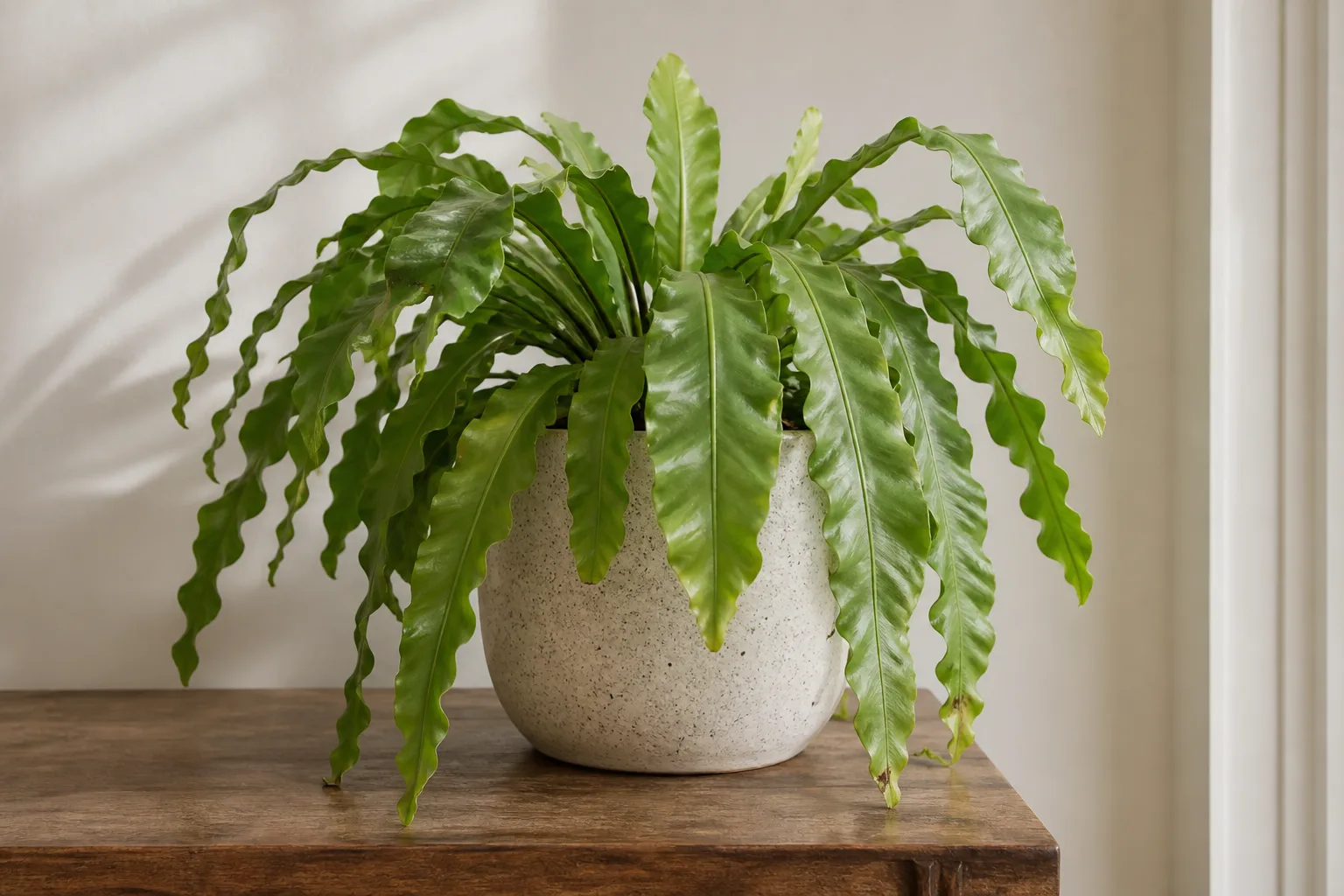
Drooping Leaves on Bird's Nest Fern: Causes, Checks & Fixes
This guide covers drooping leaves on Bird's Nest Fern. See also the general Drooping Leaves guide, watering, and light pages for this plant.
Drooping Leaves on Bird's Nest Fern: Causes, Checks & Fixes
Quick answer
Drooping on Bird’s Nest Fern (Asplenium nidus) means limp, arching fronds that hang below their normal glossy curve instead of forming a firm funnel-shaped rosette. The same symptom can mean opposite problems: thirst when the mix is dry and light, or root stress and crown rot when soil stays wet and heavy. Clemson HGIC advises watering when the top inch of soil feels dry, watering along the outer pot edge-not into the nest center-and never letting the pot sit in standing saucer water.
First step: lift the pot and press the top inch of mix. If the pot feels heavy and soil clings to your finger, stop watering and check whether the crown center is firm. If the pot is light and the surface is dusty-dry, give a thorough drink along the soil edge-not into the rosette. For the full wet-vs.-dry rhythm, see the Bird’s Nest Fern watering guide-this page focuses on limp-frond diagnosis, the thirst paradox, and crown checks.
Drooping vs wilting vs normal frond drop
Bird’s Nest Fern problem pages overlap because limp foliage shows up in many stress patterns. Use this scope guide:
| What you see | Most likely issue | Start here |
|---|---|---|
| Gradual limp arch over days to weeks, fronds still green or pale | Drooping leaves (chronic moisture or humidity drift) | This page |
| Sudden collapse of multiple fronds, often after a care change or center watering | Wilting (acute stress event) | Wilting |
| Limp fronds on constantly wet soil, yellow lower fronds, gnats | Overwatering / root decline | Overwatering |
| Pale limp fronds, light pot, shrunken dry root ball | Underwatering | Underwatering |
| Crispy brown edges with otherwise firm fronds | Low humidity or salt | Low humidity |
| One or two oldest outer fronds browning and laying flat while crown stays firm | Normal senescence | No fix needed-remove only when fully dry |
Drooping on this fern usually develops gradually as watering rhythm, humidity, or root health drifts out of sync with the broad frond canopy. Wilting covers faster collapse after a single mistake-flooding the crown, leaving the pot in a full cachepot, or a heating-vent blast. Both pages share the wet-soil paradox; this guide emphasizes confirmation before you pour.
What drooping fronds look like on Bird’s Nest Fern
Healthy Bird’s Nest Fern holds broad, wavy, glossy green fronds in an upright funnel rosette. Drooping fronds lose turgidity-the blade arches downward or folds along the midrib instead of curving crisply from the crown. Patterns owners report:
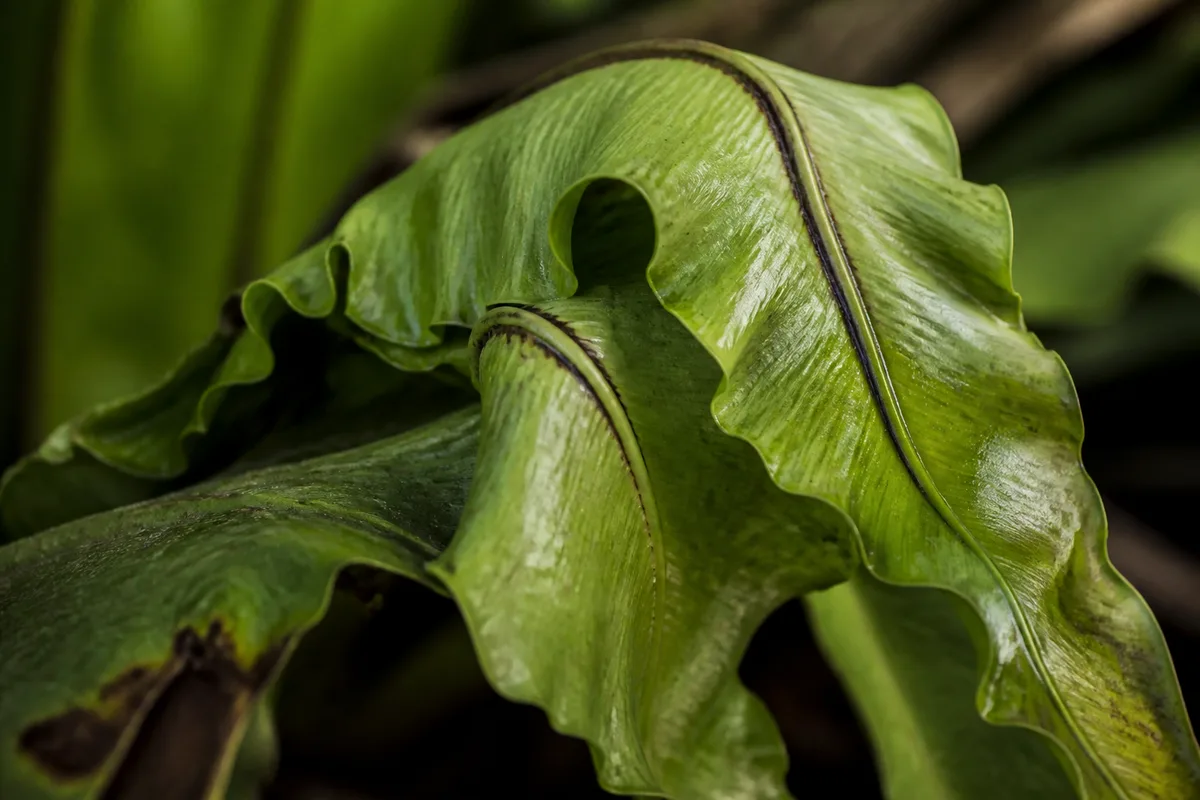
Drooping Leaves symptoms on Bird’s Nest Fern - compare with healthy tissue on the same plant.
- Limp arch on otherwise green fronds - tissue looks tired but not yet yellow or brown
- Pale washed-out blades - common when chronic dryness damages fine roots before edges crisp
- Yellowing at the frond base on still-moist soil - often root oxygen loss, not simple thirst
- Several fronds drooping together while the crown still feels firm - may be underwatering, low humidity, or recent repot stress
- Center fronds collapsing inward with soft crown tissue - crown rot, not ordinary droop
- Outer ring of older fronds laying flat while new center growth stays upright - can be normal aging mixed with stress; check soil before treating
Bird’s Nest Fern is an epiphytic fern with fine, relatively shallow roots supporting a wide frond canopy. The visible plant and hidden root zone can be out of sync-a surface that looks fine may hide damaged roots, and limp fronds can appear while lower soil still holds moisture.
Why Bird’s Nest Fern fronds droop
Ranked causes on Asplenium nidus indoors:
Underwatering and uneven dry-down (common). Bird’s Nest Fern is not drought-tolerant and does best in evenly moist, porous mix. NC State Extension notes it does not tolerate dry conditions. Letting the entire root ball desiccate-especially near a heating vent, in a small pot, or in very bright dry air-kills fine root tips. Fronds go limp and pale before crispy margins appear.
Overwatering and root oxygen loss (the paradox). Limp fronds on wet, heavy soil usually mean roots cannot take up water, not that the plant needs more. Calendar watering, oversized pots, dense peat mix, and cachepots that hold standing water all keep roots saturated. Clemson HGIC warns not to let the pot sit in saucer water because that can cause root rot. Yellow lower fronds, fungus gnats, and sour-smelling mix often accompany this pattern. See overwatering and root rot when wet-soil droop persists after drying.
Crown rot from center watering. New fronds unfurl from the central nest. Water poured into that funnel sits against the growing point and promotes decay that looks like sudden multi-frond drooping. Clemson HGIC specifically advises watering along the outer edge to keep water out of the plant center. Soft, dark, or mushy crown tissue with wet soil is a different emergency than thirst.
Low humidity and dry air. Indoor heating strips moisture from broad frond surfaces. Edges may crisp first, but chronic dry air can leave whole blades limp even when soil moisture is adequate-especially in winter. Cross-check low humidity if droop pairs with brown tips without wet-soil signs.
Light and temperature stress. Too much direct sun can scorch and wilt tissue; too little light slows growth so soil stays wet longer, indirectly causing root stress. NC State lists ideal indoor temperatures around 60 to 70°F and notes too much sun may yellow the plant or stop growth. Ferns near fireplaces or heat vents dry unevenly-top of mix crusts while the core stays damp.
Repot shock or root disturbance. Bird’s Nest Fern grows slowly and resents rough handling. Limp fronds for one to two weeks after Bird’s Nest Fern repotting guide may be transplant pause if crown tissue stays firm and soil moisture is balanced.
Wet soil vs dry soil - confirmation table
Use pot weight plus the top-inch test before any fix:
| Check | Wet-soil droop (overwatering / root stress) | Dry-soil droop (underwatering) |
|---|---|---|
| Pot weight | Heavy days after last watering | Noticeably light |
| Top inch of mix | Cool, dark, clings to finger | Dry, dusty, pulls away from pot wall |
| Frond color | Yellowing bases, sometimes edema | Pale, thin, slightly wrinkled blades |
| Crown feel | Firm early; soft if crown rot advanced | Usually firm |
| Smell / gnats | Sour odor or fungus gnats possible | Uncommon |
| First action | Stop watering; improve drainage; inspect roots if decline continues | Water thoroughly along outer edge; empty saucer |
If both tests are ambiguous-surface dry but pot still heavy-probe deeper with a bamboo skewer or lift the plant slightly from the pot lip to feel root-ball moisture before choosing a fix.
How to confirm the cause
Work through this checklist in order:
- Pot weight - Compare to how the pot felt right after a good watering last month. Light means thirst; heavy means pause.
- Top-inch finger test - Dry surface with light pot confirms underwatering. Wet surface with heavy pot confirms overwatering risk.
- Crown firmness - Gently press the center where new fronds emerge. Firm is reassuring; soft or mushy means crown rot-do not water into the nest.
- Frond pattern - All fronds limp vs. only oldest outer fronds. Outer-only often mixes senescence with stress.
- Recent care changes - Center watering, new cachepot, moved near a vent, or skipped checks for two weeks.
- New growth - A firm glossy frond unfurling from the crown suggests the plant still has a healthy growing point.
Lookalike symptoms to rule out
Normal older-frond senescence - One or two bottom fronds yellow and lay flat while the crown produces upright new growth. Remove only fully dry fronds; do not change watering for senescence alone.
Leggy stretch in dim light - Wide rosette gaps and elongated stipes, not necessarily limp tissue. See leggy growth.
Root rot escalation - Sour smell, black mushy roots, crown collapse. Limp fronds on wet soil that do not improve after a dry-down need root inspection.
First fix for Bird’s Nest Fern
Confirm soil moisture, then make exactly one correction:
-
If soil is wet and heavy: Stop watering immediately. Empty any saucer or cachepot water. Move to Bird’s Nest Fern light guide if the plant sits in deep shade-slow evaporation worsens wet soil. Do not pour water into the rosette center. Recheck crown firmness daily.
-
If soil is dry and the pot is light: Water thoroughly along the outer edge of the pot under the frond skirt until water runs from the drainage hole. Clemson HGIC recommends watering when the top inch is dry and keeping water out of the center. Empty the saucer within 15 to 30 minutes.
Do not fertilize, repot, and prune on the same day. One clear correction lets you read the plant’s response over the next week.
Step-by-step recovery by confirmed cause
After underwatering
- Water along the soil perimeter with room-temperature water.
- Empty drainage saucer; never leave the pot soaking.
- Mist the air around the plant or add a pebble tray if humidity is very low-do not flood the crown.
- Wait 24–48 hours and reassess frond firmness.
- Resume the top-inch dry rule from the watering guide.
After overwatering
- Stop watering until the top inch dries-often 7 to 14 days in cool rooms.
- Confirm drainage holes are open; remove decorative cachepot liners that trap water.
- If fronds keep declining on drying soil, unpot and inspect roots-trim only mushy tissue.
- Repot only if roots are rotting; otherwise let the current mix dry on a brighter indirect shelf.
After crown rot suspicion
- Stop all irrigation into the center.
- Blot visible moisture from the crown with a dry cloth.
- Improve airflow; avoid misting the nest.
- If tissue is soft and spreading, follow root rot escalation-crown damage may not recover.
After low humidity
- Add a humidifier or pebble tray-pot above water, not touching it.
- Keep soil evenly moist per the top-inch rule; dryness plus low humidity compounds limp fronds.
- See low humidity for edge-browning patterns.
Recovery timeline
Thirst-related droop on a firm-crowned fern often shows firmer fronds within hours to two days after a proper edge watering. Overwatered ferns need one to three weeks of dry-down before new growth looks healthy; damaged lower fronds may stay yellow. Crown rot recovery is uncertain-judge success by a new center frond unfurling glossy and firm, not by old blades standing upright again. NC State describes slow growth on this species, so patience after correcting moisture is normal.
What not to do
Do not water limp Bird’s Nest Fern when soil is already wet-damaged roots cannot use more moisture and crown rot risk rises. Do not pour water into the nest center to “perk up” fronds. Do not move the fern into direct sun as a rescue-that scorches epiphytic fronds. Do not fertilize stressed plants hoping for stiffness. Do not remove green fronds unless they are fully dead; the plant needs photosynthetic surface while recovering.
How to prevent drooping fronds
Adopt the rhythm from the watering guide: check the top inch twice weekly, water along the pot edge when dry, and empty saucers every time. Keep bright, indirect light-east or north windows, or filtered south-and avoid heat vents that desiccate fronds while leaving core soil damp. Use porous tropical mix in a pot sized to the root ball, not an oversized decorative container. Rotate the pot monthly for even growth. During winter heating, add humidity before fronds go limp from dry air alone.
When to worry
Escalate beyond basic moisture correction when:
- The crown center feels soft or mushy with wet soil
- Multiple fronds collapse within a few days after center watering or cachepot flooding
- Soil smells sour or rotten despite surface dryness
- No new center frond appears for several weeks after you corrected watering
- Limp fronds persist on drying soil for more than two weeks
Those patterns point to root rot or advanced crown decay rather than a simple dry-down cycle. For broader plant health context, see the Bird’s Nest Fern overview.
Related Bird’s Nest Fern problems
- Watering - primary rhythm hub and wet-vs.-dry logic
- Overwatering - limp fronds on heavy wet pots
- Underwatering - pale limp fronds on light dry pots
- Root rot - sour soil, mushy roots, crown collapse
- Wilting - sudden acute collapse
- Low humidity - crispy edges and limp blades in dry air
When to use this page vs other Bird’s Nest Fern guides
- Bird’s Nest Fern watering guide - Use for routine moisture checks before assuming drooping leaves is the main issue.
- Bird’s Nest Fern problems hub - Browse all 16 common issues on this species.
- Underwatering on Bird’s Nest Fern - Different entry point when symptoms overlap with drooping leaves.
- Overwatering on Bird’s Nest Fern - Different entry point when symptoms overlap with drooping leaves.
- Root Rot on Bird’s Nest Fern - Different entry point when symptoms overlap with drooping leaves.