Wilting on Bird's Nest Fern: Causes, Checks & Fixes
Quick answer
Wilting on Bird's Nest Fern usually means the fronds lost turgor from underwatering, damaged roots in wet soil, crown rot from center watering, or dry air-not a single cause. First step: lift the pot and press the top inch of soil; a light dry pot needs edge watering, but limp fronds with wet heavy soil mean stop watering and inspect roots or the crown.
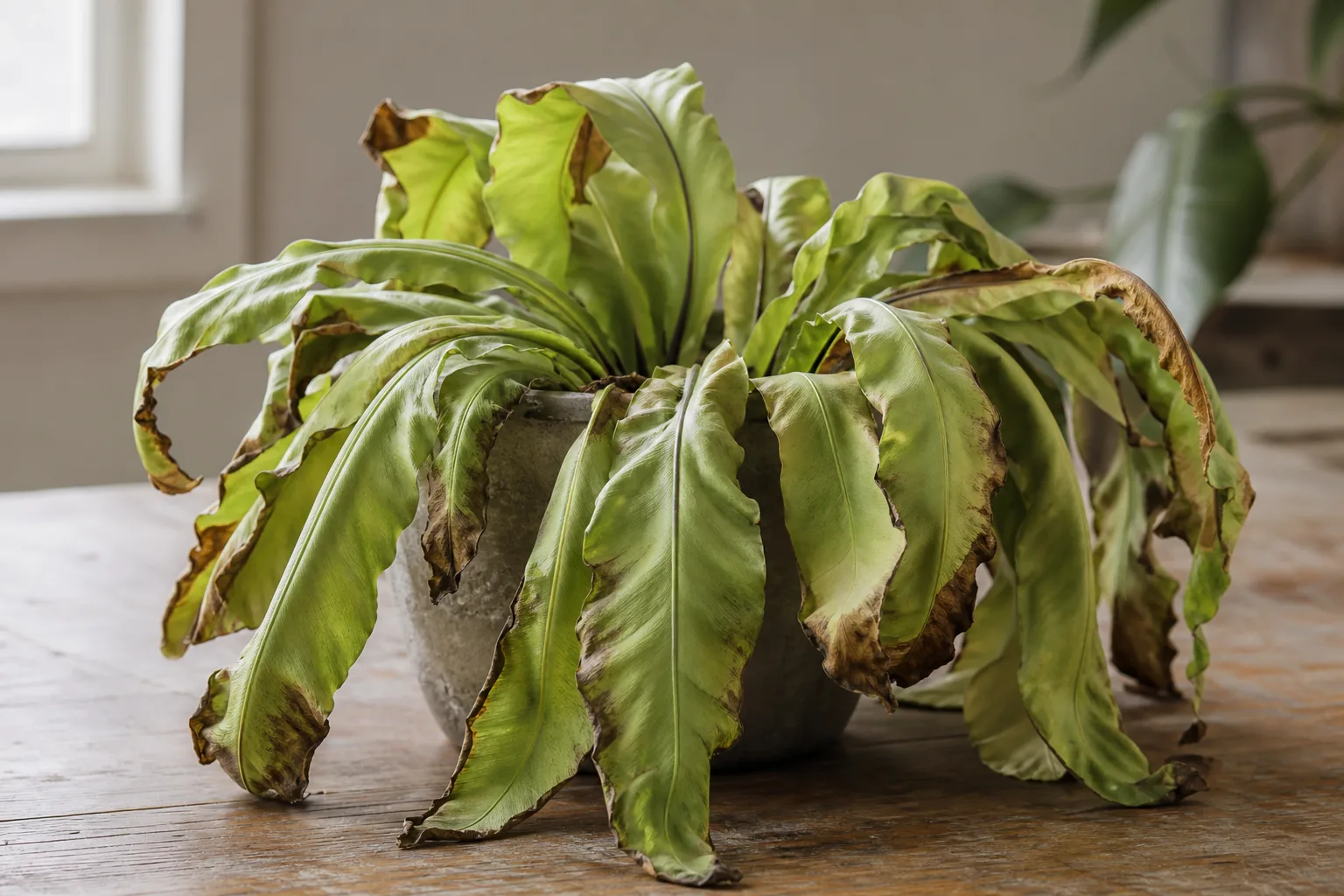
Wilting on Bird's Nest Fern: Causes, Checks & Fixes
This guide covers wilting on Bird's Nest Fern. See also the general Wilting guide, watering, and light pages for this plant.
Wilting on Bird's Nest Fern: Causes, Checks & Fixes
Quick answer
Wilting on Bird’s Nest Fern (Asplenium nidus) means the broad, undivided fronds have lost turgor-they hang limp instead of holding their usual glossy arch. On this epiphytic fern, that almost always traces to a water-pathway problem: roots too dry to move moisture, roots too wet and damaged to absorb it, crown rot from water sitting in the central nest, or very dry air pulling moisture from frond surfaces faster than roots can replace it.
First step: lift the pot and press your finger about 1 inch into the soil near the pot edge. A noticeably light, dry pot with dusty top mix usually means underwatering-water thoroughly along the outer rim, never into the crown, and drain fully. A heavy pot with wet soil and limp fronds is a stop signal: more water will not fix uptake failure from root rot or crown damage. If the nest center feels soft or brown, treat crown rot as the priority before any other fix.
For baseline culture and seasonal watering rhythm, see the Bird’s Nest Fern overview.
Wilting vs. drooping leaves - which page to use
Both symptoms look similar on this rosette fern, but they answer different questions:
| What you see | Best fit |
|---|---|
| Sudden collapse of multiple fronds after center watering, cachepot flooding, or a heating-vent blast | This page - wilting |
| Gradual limp arch over days to weeks, fronds still mostly green | Drooping leaves |
| Limp fronds on constantly wet soil, yellow lower fronds, sour smell | Overwatering |
| Pale limp fronds, light pot, shrunken dry root ball | Underwatering |
| Crispy edges with otherwise acceptable soil moisture | Low humidity |
| Limp fronds 3–10 days after Bird’s Nest Fern repotting guide, crown still firm, soil balanced | Repot shock - see lookalike table below |
| One old lower frond yellowing while crown stays firm | Normal senescence - not an emergency |
Wilting is the acute “something changed fast” symptom. Drooping is often slower posture loss. Start here when the plant looked firm yesterday and collapsed today.
What wilting looks like on Bird’s Nest Fern
Healthy Bird’s Nest Fern fronds are firm, wavy, and glossy. When the plant wilts, entire fronds go limp-they lose stiffness from base to tip and may look pale or dull green rather than rich emerald. Unlike plants with separate leaflets, you will not see one segment droop while others stay perky; the whole undivided frond typically softens together.
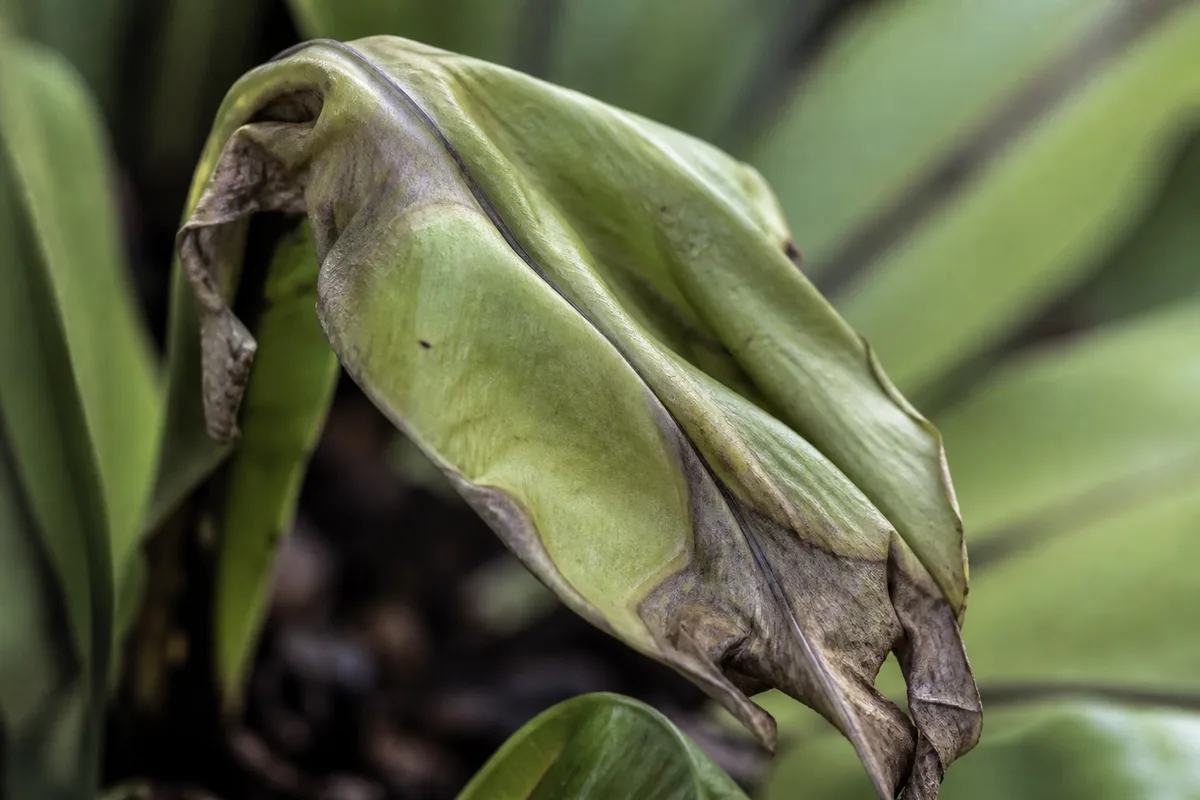
Wilting symptoms on Bird’s Nest Fern - compare with healthy tissue on the same plant.
Photo check (dry thirst): Pot looks undersized for the frond spread, mix has pulled slightly from the pot wall, and fronds hang like wet ribbon but tissue stays mostly green. Crown center should still feel firm when you press gently.
Photo check (wet uptake failure): Pot feels heavy days after the last watering, lower fronds may yellow at the base, and limp blades stay pale despite dark moist soil. A sour smell from drainage holes is a strong rot signal.
Common patterns by cause:
- Underwatering: Pot feels very light. Top inch of mix is dry; soil may shrink slightly from the pot wall. Fronds wilt but tissue stays mostly green; crispy brown edges may appear if dryness persisted. Crown center usually stays firm.
- Overwatering / root rot: Soil stays wet many days after watering. Fronds are limp despite moist mix. Lower fronds may yellow at the base. A sour smell from the pot is a strong rot signal. Crown may still be firm in early stages.
- Crown rot: Brown or black mush at the center nest where new fronds emerge. Soft crown tissue, stopped new growth, and collapse spreading outward from the middle. Often follows repeated center watering or water pooling in the rosette.
- Low humidity / heat stress: Frond edges crisp while soil moisture is acceptable. Wilting may worsen near heating vents or in very dry winter air. Pot weight and soil checks read normal.
Normal older frond senescence at the very base is not wilting-one lower frond yellowing and dropping while the crown stays firm and new fronds emerge is expected aging, not an emergency.
Why Bird’s Nest Fern wilts
Fine epiphyte roots and fast dry-down
In nature, Bird’s Nest Fern grows as an epiphyte on tree trunks in humid tropical forests. Its roots are fine and shallow relative to the broad frond canopy. Indoors, that means the visible plant and the hidden root zone can be out of sync-a surface that looks fine while roots are desiccated, or fronds that look thirsty while lower soil stays saturated.
NC State Extension notes that Bird’s Nest Fern does not tolerate dry conditions and prefers rich, moist, porous soil. When the root ball dries too far, fine roots lose function quickly and fronds wilt even though green tissue remains. Recovery depends on rehydrating at the soil edge without flooding the crown.
The mixed-signal trap: limp fronds with wet soil
This is the diagnosis most growers miss. Pale, limp fronds can mean thirst-but they can also mean rotted roots from too much water. When roots decay, they cannot transport moisture to fronds even though the mix feels wet. Adding water makes the problem worse. Clemson HGIC warns against letting the pot sit in a saucer of standing water because that can cause root rot. Limp foliage plus wet soil should trigger root inspection, not another drink.
Crown rot from center watering
The nest-shaped rosette invites a dangerous habit: pouring water into the center. New fronds emerge from that point, and trapped moisture promotes crown rot-browning, softening, and collapse of the growing point. Clemson HGIC specifically advises watering along the outer edge of the pot to keep water out of the plant’s center. Crown rot wilting is different from root-level wilt because the damage sits at the growth point; severe collapse there is often not recoverable.
Edge vs. center watering (text guide): Imagine the pot as a clock face. Pour slowly at 3 o’clock and 9 o’clock under the frond skirt so water travels down the outer root zone and exits the drainage hole. Never aim the stream at 12 o’clock into the funnel-shaped nest-that is where new fiddleheads emerge and where standing moisture causes crown decay.
Low humidity and environmental stress
Bird’s Nest Fern tolerates average household humidity better than many ferns, but very dry winter air below roughly 30 to 40 percent can pull moisture from frond surfaces. Heat vents and hot draft paths compound the effect. Soil may read moist while edges crisp and fronds look tired-a pattern that overlaps with low humidity stress more than underwatering alone.
UF/IFAS Gardening Solutions states that bird’s nest fern is not drought-tolerant and should not be allowed to dry out-another reason chronic underwatering and sudden wilt episodes are common when growers treat it like a snake plant.
Repot shock after root disturbance
Bird’s Nest Fern grows slowly and has fragile foliage that should be handled gently. After repotting, fine roots need time to re-establish contact with fresh mix. Clemson HGIC Indoor Ferns advises not feeding new or repotted ferns for six months and repotting overcrowded plants in early spring when new growth appears. Limp fronds for several days after a careful repot-with firm crown tissue and balanced soil moisture-often reflect transplant pause, not the same emergency as crown rot or chronic wet soil.
Lookalike symptoms to rule out
Wilting overlaps with several other Bird’s Nest Fern problems. Use these checks before treating:
| Pattern | Likely issue | Key differentiator |
|---|---|---|
| Limp entire fronds, light dry pot | Underwatering | Dry top inch; firm crown; perks after edge watering |
| Limp fronds, wet soil, sour smell | Overwatering / root rot | Heavy pot; yellow base fronds; mushy roots on inspection |
| Soft brown nest center, no new fronds | Crown rot | Crown collapse; often after center watering |
| Crispy edges, soil moist enough | Low humidity | Pot weight normal; winter heat or dry air |
| Gradual sag over weeks, not sudden | Drooping leaves | Slow decline; less acute turgor loss |
| Limp fronds 3–10 days after repot, firm crown | Repot / transplant shock | Recent repot; balanced moisture; no sour smell |
| One old lower frond yellowing | Normal senescence | Crown firm; new fronds still emerging |
| Yellowing with wet soil, no limp yet | Overwatering early stage | Catch before full wilt |
Wilting with moist soil often means roots cannot absorb water because they are decaying-a pattern that applies to many indoor plants but is especially confusing on ferns where limp fronds look thirsty.
How to confirm the cause
Work through these five checks in order:
- Crown firmness - Gently touch the center nest where new fronds emerge. Firm and dry-looking is normal. Soft, brown, or collapsed tissue means crown rot-do not water the center; see the crown branch below.
- Top-inch soil test - Press about 1 inch deep near the pot edge. Cool damp soil means wait before watering. Lightly dry at that depth means a drink is appropriate if the pot is also light.
- Pot weight - Lift the pot. Compare to how it felt right after a thorough watering. Very light with dry top inch confirms underwatering. Heavy with limp fronds confirms wet-soil stress.
- Drainage and saucer - Is standing water in the saucer or cachepot? Has soil stayed wet for a week? Blocked drainage and oversize pots keep roots oxygen-starved.
- Recent watering method - Did water go into the rosette center? Was the plant repotted in the last two weeks? Has it sat near a heat vent? Center flooding, transplant stress, and dry air are separate branches from simple dry-soil thirst.
One check alone can mislead. Combine crown feel, finger depth, and pot weight before choosing a fix.
Dry vs. wet wilt - decision table with urgency
| Pattern | First action | Urgency | Watch for improvement |
|---|---|---|---|
| Light pot, dry top inch, firm crown | Edge-water thoroughly; empty saucer within 30 min | Moderate - rehydrate same day | Fronds firm within 24–48 hours |
| Heavy pot, wet soil, limp fronds, firm crown | Stop watering; empty saucer; bright indirect air | High - inspect roots if no stabilization in 5–7 days | New frond unfurling from firm crown |
| Soft or brown nest center, wet or dry soil | Blot center moisture; edge-water only going forward | Urgent - crown collapse may be irreversible | Any new glossy center frond |
| Acceptable soil, crispy edges, tired fronds | Raise humidity; move off heat vent | Low to moderate | Edges stop spreading; fronds regain gloss |
| Limp fronds 3–10 days post-repot, balanced moisture | Hold steady light and humidity; no fertilizer | Low - wait out transplant pause | New growth within 2–3 weeks |
First fix for Bird’s Nest Fern
Make one correction based on what you confirmed-do not stack repot, fertilizer, and heavy pruning the same day.
If the pot is light and the top inch is dry (underwatering)
Water thoroughly along the outer edge of the soil under the frond skirt until water runs from the drainage hole. Empty the saucer within 15 to 30 minutes. Do not pour into the crown as a rescue. For a very dry root ball, a single bottom soak until the surface just moistens-then full drain-can help; details are in the underwatering guide.
If soil is wet and fronds are limp (overwatering / root rot)
Stop watering immediately. Remove standing water from saucers and cachepots. Place the plant in Bird’s Nest Fern light guide with gentle airflow. Let the top half of the mix approach dryness before any next drink. If decline continues, unpot and inspect roots-trim mushy brown tissue and repot into fresh airy mix only if firm roots remain. Full workflow: root rot on Bird’s Nest Fern and overwatering.
If the crown center is soft or brown (crown rot)
Do not mist or water the nest center. Gently blot external moisture if present. Improve watering technique going forward-edge only. If only a small area is affected and new fronds still emerge, dry the center and watch closely. If the crown has collapsed and growth stopped, the plant may not survive; prevention through edge watering is far more reliable than late repair.
If soil is fine but edges crisp (humidity / heat)
Address dry air with a humidifier or pebble tray (pot above the water line). Move the fern away from heat vents. Keep the watering rhythm stable-do not compensate for humidity stress by overwatering roots.
If fronds wilted after recent repot (transplant shock)
Hold soil evenly moist-not saturated-and keep bright indirect light stable. Do not fertilize repotted ferns for six months per Clemson HGIC Indoor Ferns guidance. Avoid moving the plant again or pulling fronds. Judge recovery by a new center frond emerging over the next two to three weeks, not by old collapsed blades re-firming overnight.
Recovery timeline
Recovery depends on cause and severity:
- Single underwatering episode: Fronds often regain firmness within 24 to 48 hours after a proper edge watering and drain. Crispy edge tissue may remain permanently; judge success by turgid new growth from the crown.
- Mild overwatering without root loss: One to two weeks after the wet cycle stops, limp fronds may stabilize. New fronds emerging from a firm crown are the positive signal.
- Root rot with trimmed healthy roots: Several weeks to months. Old collapsed fronds may never re-turgid; focus on firm roots and new fronds.
- Crown rot: Limited recovery if the growing point is destroyed. Partial browning with ongoing new fronds may stabilize with corrected technique; full crown collapse is usually fatal.
- Repot shock: Three to fourteen days of limp posture is common when crown tissue stays firm and moisture is balanced.
Recovery snapshot (March 2026, indoor grower): A 6-inch Bird’s Nest Fern in a glazed cachepot wilted overnight after a weekend away-the pot felt feather-light, top mix was dusty, and three outer fronds hung limp while the crown stayed firm. Edge watering until runoff, saucer emptied at 20 minutes, and a pebble tray added near a north window. By Tuesday morning (roughly 36 hours) two fronds had regained their arch; a new center fiddlehead unfurled by day five. Crispy tips on the oldest frond never recovered-that tissue was permanent, but new growth confirmed the water pathway was healthy again.
Hold fertilizer until soil dry-down returns to a predictable pattern and new growth looks stable.
What not to do
Do not pour water into the rosette center when fronds wilt-that is how crown rot starts on this species. Do not keep watering because leaves look limp when soil is already wet-that deepens root rot. Do not drench daily after one dry spell; swinging from drought to swamp stresses fine fern roots. Do not fertilize a wilted plant before confirming the water pathway is healthy. Do not repot on day one unless inspection shows mushy roots or failed mix; unnecessary disturbance adds stress. Do not confuse normal lower frond drop with whole-plant wilt.
How to prevent wilting next time
Build a rhythm around the habits that matter most for Bird’s Nest Fern:
- Water when the top inch of soil dries, along the pot edge only-never into the nest center.
- Empty saucers after every watering so roots never sit in runoff.
- Check pot weight twice weekly until you know your room’s dry-down speed; light triggers a drink, heavy means wait.
- Keep humidity reasonable in winter; see low humidity if edges crisp while soil reads fine.
- Use porous, well-draining mix and a pot with drainage-details in the overview and watering guide.
Weekly calendar watering without soil checks is how healthy ferns develop winter rot and summer drought stress in the same home across seasons.
When to worry
Escalate immediately if:
- The crown center softens or turns brown and new fronds stop emerging
- Limp fronds spread rapidly while soil stays wet and smells sour
- The plant does not perk within 48 hours after confirmed underwatering correction
- Most roots are mushy on inspection-salvage depends on remaining firm crown and root tissue
Firm crown, dry light pot, and limp green fronds are lower urgency-correct edge watering usually resolves that pattern within a day or two.
Conclusion
Wilting on Bird’s Nest Fern is a diagnostic puzzle, not a single fix. The fronds go limp when roots cannot supply water-whether from dryness, rot, crown damage, transplant stress, or environmental pull on the foliage. Lift the pot, check the top inch of soil, and feel the crown before you pour. Dry and light means edge water and drain; wet and limp means stop and inspect; soft crown means crown rot, not thirst. Get that fork right and this fern recovers predictably; get it wrong and you either drown recovering roots or leave a thirsty epiphyte wilting in a dry pot.
Related Bird’s Nest Fern problems
- Watering - top-inch rule, edge technique, and crown-rot prevention
- Underwatering - dry pot rehydration and bottom-soak protocol
- Overwatering - wet soil signs before full wilt
- Root rot - inspection, trim, and repot workflow
- Low humidity - crispy edges with acceptable soil moisture
- Drooping leaves - gradual sag vs acute wilt on this page
- Overview - full indoor care hub
When to use this page vs other Bird’s Nest Fern guides
- Bird’s Nest Fern watering guide - Use for routine moisture checks before assuming wilting is the main issue.
- Bird’s Nest Fern problems hub - Browse all 16 common issues on this species.
- Underwatering on Bird’s Nest Fern - Different entry point when symptoms overlap with wilting.
- Overwatering on Bird’s Nest Fern - Different entry point when symptoms overlap with wilting.
- Root Rot on Bird’s Nest Fern - Different entry point when symptoms overlap with wilting.